REVIEW · POMPEII
Pompeii: Exclusive Private Walking Tour with an Archaeologist
Book on Viator →Operated by Hili Travel s.r.l. · Bookable on Viator
Pompeii feels personal with one guide. This exclusive private walk pairs you with an archaeologist who helps the site click, not just sit there as ruins. You’ll cover a tight, high-impact route in about 2 hours, in English, with a plan that’s built for understanding.
What I really like is the focus on big ideas at each stop: elite domestic life, public bathing, social reality, then the city’s civic center. I also like that it’s structured like an easy on-ramp—short stops, strong context, and plenty of time to keep walking afterward.
One thing to watch: the entrance part of the puzzle. The tour includes the guide, but you’ll still need your own Pompeii entry ticket, and a small bit of extra effort may be needed to find the meeting point smoothly.
In This Review
- Key highlights
- A Private Archaeologist Walk That Keeps Pompeii Understandable
- The route: from Menander’s house to the forum
- Casa del Menandro: elite art in a single insula
- Stabian Baths: the oldest big public bath complex in the city
- Lupanar: the brothel wall paintings and social reality
- Casa del Fauno and Teatro Grande: power, performance, and sightlines
- Via dell’Abbondanza and Foro de Pompeya: where the city met
- Price and value: what $421 per group really buys
- Finding your guide and keeping tickets straight
- Who this Pompeii tour fits best
- Should you book this Pompeii private archaeologist tour?
- FAQ
- How long is the private walking tour?
- Is this tour private or shared?
- Is Pompeii entry included in the price?
- Where does the tour start?
- What language is the tour offered in?
- How many people can be in a group?
- Can I get a full refund if I cancel?
Key highlights
- Archaeologist-led, English-speaking guide: you’re not just following arrows; you’re getting interpretation.
- A tight route for 2 hours: Casa del Menandro, Stabian Baths, Lupanar, Casa del Fauno, Teatro Grande, Via dell’Abbondanza, Foro.
- Exclusive private group: it’s just your party (up to 12), so questions don’t get lost.
- Big “wow” variety: mansions, baths, a brothel, theatre, and the main square in one pass.
- Guides with real personality: people mention humor and charisma from archaeologist guides like Clelia, Ines, Leonardo, Paolo, and Lello/Lilo.
A Private Archaeologist Walk That Keeps Pompeii Understandable
Pompeii can be overwhelming fast. Streets fork, buildings blur, and the brain goes into museum mode: read sign, move on, forget later. This tour is built to stop that.
Because you’re walking with an archaeologist, each stop comes with a reason. You learn what you’re looking at, how it worked, and why it mattered in a daily-life city. That context makes the ruins feel less random.
It also helps that the group stays private. With a group limited to up to 12 people, your guide can pace the talk around what you want to see—especially if you’re traveling with teens or you just don’t want a long, slow day.
Other private Pompeii tours we've reviewed in Pompeii


The route: from Menander’s house to the forum
The itinerary is a “best of Pompeii” circuit, with time-boxed visits so you actually get through the highlights. Expect about 20 minutes at the first two stops, 30 minutes for the Lupanar, then shorter passes through the rest (roughly 10–20 minutes each).
You start at Coffee Shop Vittoria, Via Mare (80045 Pompei NA). The tour ends back there, which is handy because Pompeii’s entrance area is where your brain naturally wants to reset.
A smart planning note: even though the individual stops are marked as admission ticket free, the tour itself does not include the Pompeii archaeological area entry ticket. So you’ll still want to get that sorted before you arrive.
Casa del Menandro: elite art in a single insula
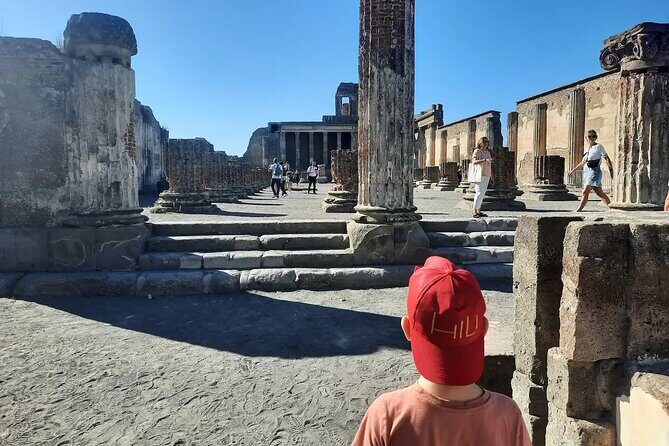
Casa del Menandro—House of Menander—is one of Pompeii’s standout wealthy residences. This place is famous for its architecture, decoration, and contents, and it covers around 1,800 square metres. That’s a lot of house, and in Pompeii, size usually means power.
Your time here is short, so the guide’s job is crucial. A good archaeologist will help you see how a wealthy Pompeian home worked as a social stage: where people entered, where they gathered, and what the lavish decoration was really saying. Instead of just pointing at walls, the guide connects the dots to living habits.
One practical drawback: because it’s such a large house, you don’t get every room. You’ll get the best parts and the explanation, but if you love wandering slowly and reading every single detail, you may want extra time after the tour.
Stabian Baths: the oldest big public bath complex in the city
Then you shift gears to the Stabian Baths (Terme Stabiane). These are the oldest and largest of Pompeii’s public baths, and construction dates back to around 125 BC—meaning you’re looking at an ancient system that had serious staying power.
Baths in Roman cities weren’t just about hygiene. They were meeting places, social hubs, and places where you could work on your body and your status in public. When your guide frames it that way, the room layout stops being random: you start seeing the flow and the purpose.
Since this stop is about 20 minutes, you’ll want to listen for the quick orientation—where warmth stages happen, what areas are more public, and how the bath complex fit into daily schedules. Even a short visit can feel like a full mini-lesson here.
Lupanar: the brothel wall paintings and social reality
Next comes the Lupanar, Pompeii’s brothel. The main hook is the erotic paintings on its walls, but the bigger value is what the guide can explain around it: how this kind of business functioned, and what it reveals about the city’s social life.
This is one of those stops where Pompeii’s famous shock factor can either become gossip—or become understanding. With an archaeologist guide, it stays grounded. You’re not there for salacious tourism; you’re there because this space documents real commerce and real behavior in a city at a specific time.
A small consideration: if your group has kids, people who feel uncomfortable with sexual imagery may want to decide in advance how much attention to pay at this stop. The stop is about 30 minutes, so it’s enough time to move through with context but still short enough to keep things from dragging.
Other archaeologist-led tours in Pompeii






Casa del Fauno and Teatro Grande: power, performance, and sightlines
From domestic wealth you move to another big-ticket home: Casa del Fauno. This grand Hellenistic palace dates to the 2nd century BC, during the Samnite period (180 BC). It’s known for its peristyle framing—a reminder that Pompeii didn’t just have Roman styles; it absorbed and adapted older Mediterranean tastes.
This stop is about 20 minutes, so again, you won’t see everything. But the value is that you compare. Menander shows one form of elite display; the Faun house shows another. When a guide does this well, you start recognizing patterns of wealth and design.
Then you step into the theatre world at Teatro Grande, the biggest theatre in Pompeii. The theatre matters because it’s where the city’s public culture shows up in stone—performances, crowds, and civic life.
Even if you only spend about 10 minutes here, your guide can help you understand the scale and why the theatre’s size signals importance. It’s also one of the better places to mentally picture how Pompeii gathered people.
Via dell’Abbondanza and Foro de Pompeya: where the city met
After the big buildings, you walk through the city’s circulation and civic heart.
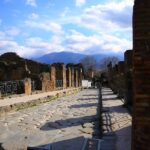
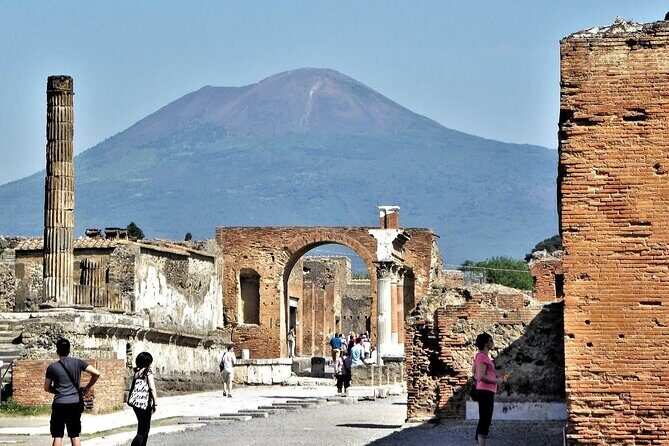
Via dell’Abbondanza is described as the best preserved street in Pompeii. That preservation is the point: you can better imagine how people moved, how shops and entrances lined the route, and how everyday life translated into stone.
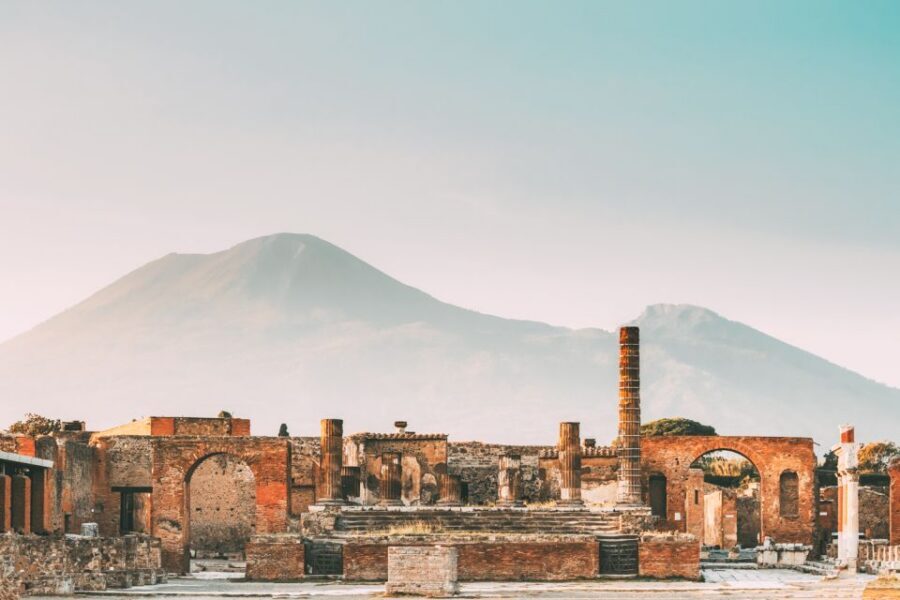
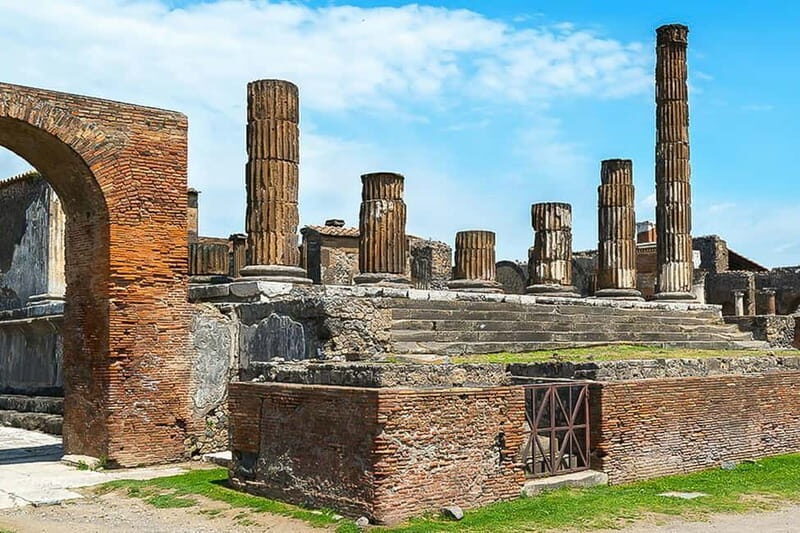
Then comes the Foro de Pompeya—the city’s most important square. This is where civic power lived: public meetings, ceremonies, and the kind of spaces that tell you what mattered to the community. With about 10 minutes here, it won’t feel like a full museum tour, but it’s a strong finale because you end in the place where the city’s story starts to look complete.
If you have energy afterward, this is also where you can branch out on your own. A guide who points out the right next lanes can save you a lot of wandering.
Price and value: what $421 per group really buys
At $421.03 per group (up to 12), you’re paying for a private archaeologist-led format, not a ticketed group shuffle. In practice, that can be excellent value if you have a family or a small group that wants control over pace and questions.
Two things make this pricing make sense:
- You’re paying for expert interpretation across multiple major stops in a short window.
- You’re getting exclusivity. With Pompeii’s crowds, private access and a tighter route can be worth more than you’d expect.
One more plus: the duration is about 2 hours. That’s a sweet spot if you’re also trying to fit in other sights, or if your legs want Pompeii without the all-day commitment.
Just remember the separate entry ticket. If you’re comparing options, include that into your total budget so the price feels clearer.
Finding your guide and keeping tickets straight
Meeting points can be the weak link in any walking tour, and this one starts at Coffee Shop Vittoria on Via Mare. The tour ends back at the same place, so at least the finish is predictable.
Here’s the practical advice I’d give you: when you book, double-check your confirmation message for the exact meeting instructions. Keep your phone handy in case you need to call or message quickly.
Also do your ticket homework. The guide covers the tour; you buy your Pompeii entry ticket separately. Build in a little buffer time so you’re not stuck in line before the walk begins.
One more nuance: there’s mention of simpler crowd navigation in some cases, described as an express pass experience. That isn’t something you should assume, but it’s worth asking before you arrive if that’s part of your specific booking.
Who this Pompeii tour fits best
This tour fits well if you want structure. If you like clear stops, short explanations, and a route that keeps you moving, you’ll probably enjoy it.
It’s also a strong match for:
- Families with teens who can handle a few topics that are real life (including the Lupanar stop).
- Travelers who hate spending the first hour of a ruin visit trying to figure out what matters.
- Groups that would rather ask questions than read every sign.
If you’re the type who wants to wander slowly and read everything, you might still book this—but plan extra time before or after so you can go deeper on the stops that grab you.
Should you book this Pompeii private archaeologist tour?
I’d book it if you want Pompeii with less guesswork and more meaning. The mix of Casa del Menandro, Stabian Baths, Lupanar, Casa del Fauno, Teatro Grande, Via dell’Abbondanza, and the Foro is a smart way to cover major slices of city life in about 2 hours.
I’d hesitate only if your group strongly prefers total freedom and long self-guided time, or if you’d rather avoid Pompeii’s more adult subject matter at the Lupanar. For most people, it’s a great balance: fast enough to stay lively, structured enough to make the ruins feel understandable.
Also, given demand (this is often booked about 57 days in advance), it’s worth reserving early so you get a time that works with the rest of your day around Pompeii.
FAQ
How long is the private walking tour?
The tour lasts about 2 hours.
Is this tour private or shared?
It’s private. Only your group participates.
Is Pompeii entry included in the price?
No. Pompeii archaeological area entry tickets are not included, even though the individual stops list admission ticket free.
Where does the tour start?
The meeting point is Coffee Shop Vittoria, Via Mare, 80045 Pompei NA, Italy.
What language is the tour offered in?
The tour is offered in English.
How many people can be in a group?
The price is per group for up to 12 people.
Can I get a full refund if I cancel?
Yes, you can cancel up to 24 hours in advance for a full refund. If you cancel less than 24 hours before, the amount paid is not refunded.