REVIEW · POMPEII
Complete Pompeii Skip the Line Tour with Archaeologist Guide
Book on Viator →Operated by Walks - Italy & Spain · Bookable on Viator
Pompeii hits hard fast. This skip-the-line visit turns the ruins into daily life, guided by an archaeologist in a small group with reserved entrance that saves real time. You’ll walk the streets, hear how people lived nearly 2,000 years ago, and get context that’s hard to piece together on your own.
I also like that the tour is designed for staying power. You get headsets when needed, photo stops built in, and an itinerary that focuses on big-picture highlights without pretending you’ll see everything in 2 to 3 hours. One possible drawback: there’s a long stretch with few breaks, and at least one experience note points out that bathroom access can be limited for most of the tour.
In This Review
- Key points you’ll care about most
- Pompeii with an archaeologist guide: what you actually get
- Skip-the-line entry and small-group pacing
- Stop by stop: from the bakery to Main Street
- The preserved streets and the bakery remains
- Photo stops that don’t derail the flow
- Pompeii’s Main Street
- Temple, Forum, and everyday commerce you can picture
- Temple of Apollo and the civic rhythm
- The Roman Forum area
- An ancient supermarket-like stop
- Cemetery, brothel, and the careful ethics of what you see
- Cemetery traces
- Brothel stop, if age appropriate
- Ongoing excavation and preservation
- Plaster casts: the moment Pompeii becomes personal
- Roman Baths and the final stretch of photo stops
- 2 hours vs 3 hours: which option fits your day
- Price and value: what you’re really paying for
- How to meet the group and not lose your day
- Should you book this Pompeii skip-the-line tour?
Key points you’ll care about most
- Skip-the-line entry helps you start seeing Pompeii sooner
- Archaeologist-led commentary makes daily life feel close
- Small groups (15 or fewer) keep the pace human and questions possible
- Stops you can picture: bakery, Main Street, baths, forum areas, and more
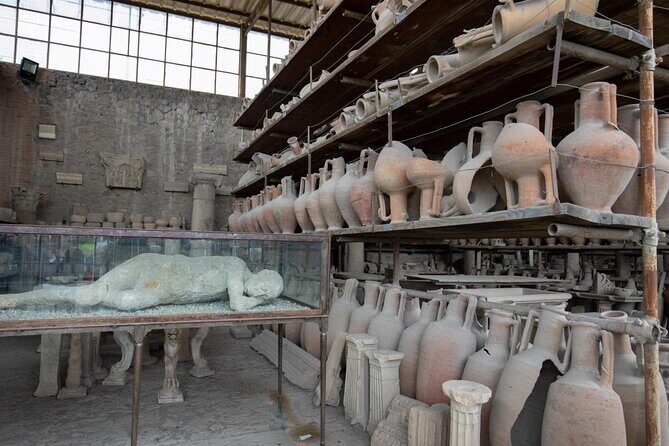
- Plaster casts add an emotional layer to the story of 79 AD
- Express option exists if you only have about 2 hours
Pompeii with an archaeologist guide: what you actually get
Pompeii isn’t just stone ruins. It’s a city that got frozen mid-day, mid-routine, mid-crisis. On this tour, the guide’s job is to translate what you’re seeing into what it likely meant for the people who lived there.
What makes that valuable is the focus on ordinary life. You’re not only walking past famous structures. You’re also learning how real households ate, shopped, and spent time in public spaces. The guide also adapts the route as new discoveries and preservation updates show up, which keeps the tour from feeling like a scripted checklist.
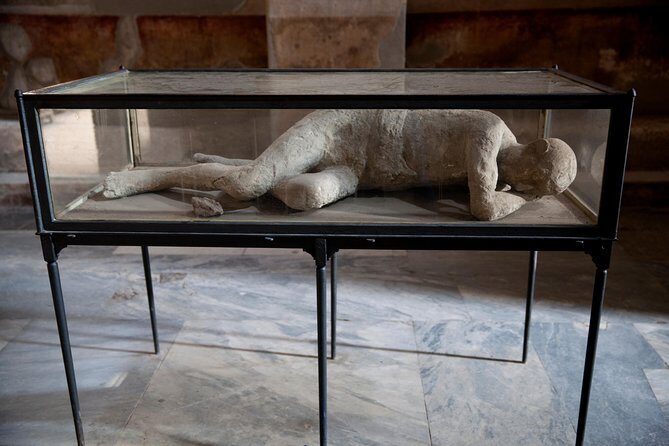
You’ll also get the emotional anchor that makes Pompeii unforgettable: the plaster casts of people caught in the eruption. The tour doesn’t try to soften it. Instead, it gives you a clear sense of the timeline and the human reality behind the spectacle.
Other skip-the-line Pompeii tours in Pompeii


Skip-the-line entry and small-group pacing
You start at Via Villa dei Misteri, 1, 80045 Pompei, then head into the Archaeological Park. The whole point of the skip-the-line setup is simple: you avoid the slow, friction-heavy entrance process and spend your limited time on the ruins themselves.
This works particularly well because Pompeii is a busy, outdoor site. Even with a small group, you’ll be walking through crowds at points. The advantage is that you’re not pushed into a giant herd where you lose track of what you’re looking at.
The group limit is 15 people or fewer, and you’ll often hear the same theme in guide-led tours: you can ask questions, and the pace stays readable. Headsets are included when needed, which helps in open plazas and busier corridors where sound carries poorly.
Stop by stop: from the bakery to Main Street

The itinerary is built around the idea that Pompeii makes more sense when you move through it like a city, not like a museum.
The preserved streets and the bakery remains
Early on, you’ll see the remains of a Roman bakery where the food is still almost intact. That detail matters. It turns Pompeii from ruins into a functioning place with real daily rhythms. Instead of abstract Roman life, you get a tangible example of what people ate and how food production worked.
Photo stops that don’t derail the flow
You’ll have several guided segments paired with photo stops. That’s helpful because Pompeii photos can turn into a time sink if everyone decides they need their own angle every few meters. Here, the pauses feel planned enough that you still move through the highlights without your day collapsing into waiting.
Other archaeologist-led tours in Pompeii




Pompeii’s Main Street
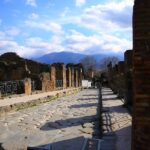
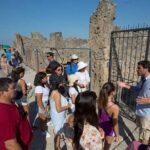
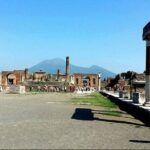
Then you hit Main Street, the kind of spine that helps you picture where foot traffic went, where commerce likely happened, and how people moved through the city. This stop is also great for orientation. If it’s your first time in Pompeii, it’s the moment where you start thinking in routes and neighborhoods rather than random buildings.
Temple, Forum, and everyday commerce you can picture
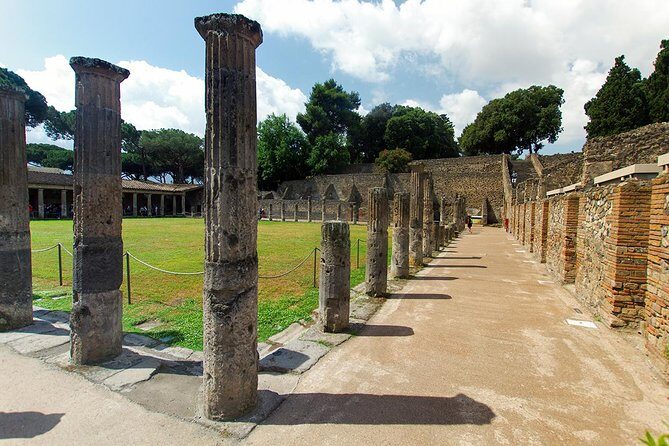
Pompeii includes several landmarks that people recognize from textbooks. The tour uses those anchors to explain the city’s layout and social life.
Temple of Apollo and the civic rhythm
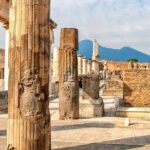
You’ll see the Temple of Apollo. A temple stop can feel cold if you just look at columns. With an archaeologist guide, it becomes a clue about public space and how religion and community intertwined in daily life.
The Roman Forum area
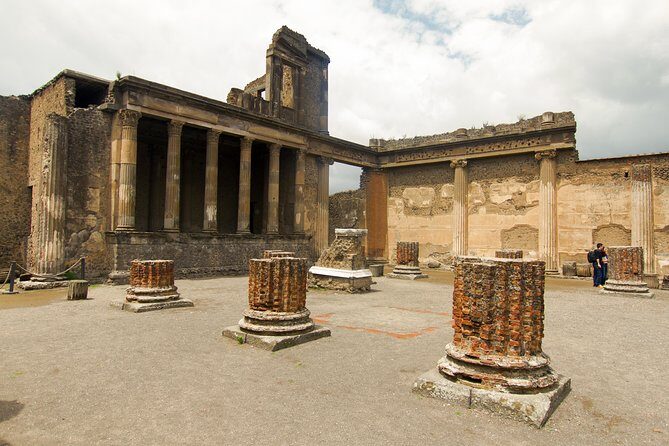
Next comes the Roman Forum. This is where the city shows its civic side. Expect explanations that help you understand why forums mattered: public discussion, power, and the everyday business of city life.
An ancient supermarket-like stop
You’ll also visit an area described as an ancient supermarket. That’s a vivid comparison for a reason. It helps you see trade and storage as practical, repeatable activities rather than a one-time event. The guide’s commentary ties these commercial spaces back to what ordinary people needed day after day.
Cemetery, brothel, and the careful ethics of what you see
Some Pompeii tours stay polite and skip the more difficult parts. This one doesn’t ignore them, but it also handles them with the proper framing.
Cemetery traces
You’ll visit a cemetery area. This matters because it expands the story beyond the eruption moment. You get a glimpse into how people handled death and remembrance in a city with daily routines.
Brothel stop, if age appropriate
There’s also mention of a brothel stop, but only if age appropriate. If you’re traveling with kids or teens, this is exactly the kind of note that helps you plan. It’s also a reminder that Pompeii includes adult themes, and the tour is aware of that.
Ongoing excavation and preservation
The tour also points out that only about a third of Pompeii remains uncovered, and preservation is still active. That’s important context because it explains why you might see areas covered over, fenced, or under work. It also sets expectations: you’re seeing a slice of a much larger city under careful recovery.
Plaster casts: the moment Pompeii becomes personal
The plaster casts are often the highlight that people remember most clearly. On this tour, they come with explanation of what you’re seeing and when it happened.
You’ll learn how the casts capture people at the moment of death. That’s not comfortable. It’s not meant to be. But it’s a key part of what makes Pompeii different from other Roman sites: it compresses the past into a human scene.
One caution from practical experience: the casts can be hard to absorb emotionally and physically because they’re part of an active walking route. If you’re sensitive to tragedy, take a slow moment here. Don’t rush the viewing just because you feel pressure to keep up.
Roman Baths and the final stretch of photo stops
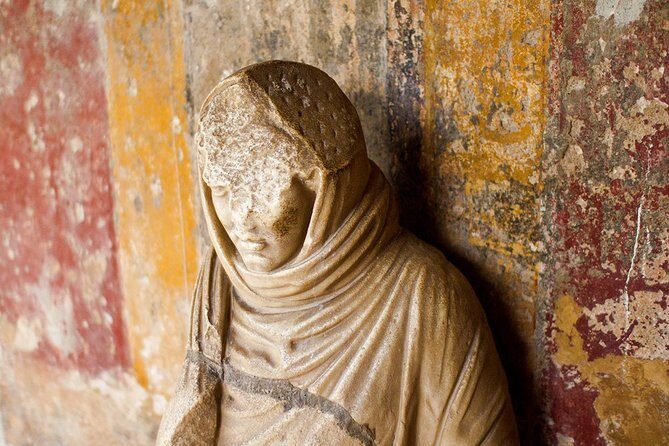
Later, you’ll reach the Roman Baths area. Baths are one of the best places to understand how Roman life worked in shared, everyday settings.
What I like about pairing baths with earlier stops is that it builds a pattern. You see food and commerce, then movement along the street, and then leisure and hygiene in a public setting. That flow helps you remember Pompeii as a living city rather than a collection of monuments.
Photo stops continue through the final sections. The good news is that these pauses help you capture key views without losing your place in the group. The not-so-good news is that Pompeii is outdoors, so sun, heat, and crowds still influence how much you truly enjoy the last half.
2 hours vs 3 hours: which option fits your day
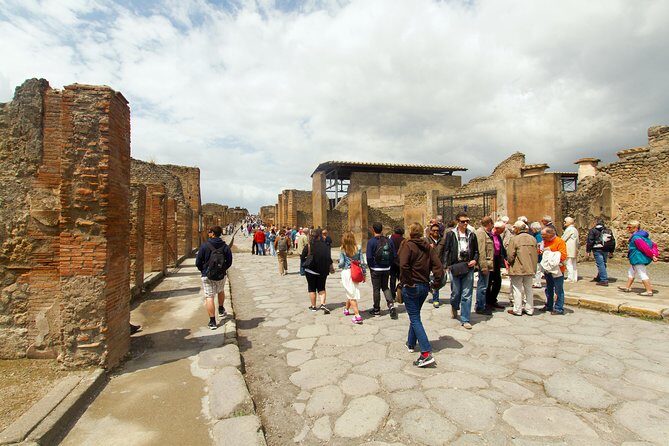
You can book either a fuller route or a shorter Express option that takes about 2 hours. Choosing the right length depends on what you want from the site.
Go full tour if:
- This is your first time in Pompeii
- You want the wider spread of highlights and more explanation
- You’d rather not feel rushed through the emotional stops
Choose Express if:
- Your schedule is tight
- You mainly want the highlights and a strong first orientation
- You plan to come back later with a map and explore further on your own
A practical note: guides often still recommend where to go next after the tour, so even if you do Express, you may leave with a smarter plan for your extra time inside the park.
Price and value: what you’re really paying for
At $71.38 per person, this tour sits in the mid-range for Pompeii guided experiences. The value comes from what’s bundled:
- Official guide time (and not just a generic route leader)
- Pre-reserved entrance tickets
- Headsets when needed
- A small group limit that keeps the experience workable
If you plan to go in during a busy time, the skip-the-line concept can pay off fast because Pompeii entrance lines eat time and energy. Also, an archaeologist guide changes the cost equation. You’re paying for interpretation: why certain spaces mattered, how daily life likely worked, and what the eruption evidence actually means.
If you’re the type of person who can’t stand reading labels and wants stories and context as you walk, this price is easier to justify.
How to meet the group and not lose your day
Meeting details can be the difference between a smooth start and a stressed scramble. The start point is Via Villa dei Misteri, 1, and the tour ends inside Pompeii’s Archaeological Site.
A few practical tips that matter in real life:
- Look for the group leader at the entrance area. One important tip from the field: the directions some paperwork gives may lead you near a building close to the station first. Be ready to go farther toward the actual entrance outside.
- Wear walking shoes. Sandals can turn into a bad idea on uneven ground.
- Bring water and some form of sun protection. Pompeii can feel relentless in hot weather.
- If rain is possible, consider an umbrella.
- Plan your bathroom timing before you start. One note from an experience: there can be limited bathroom access during a stretch that lasts close to 3 hours.
Should you book this Pompeii skip-the-line tour?
Book this tour if:
- You want an archaeologist guide to explain how everyday life worked
- You only have a couple of hours and want the strongest highlights
- You prefer small-group walking with headsets rather than getting swallowed by crowds
- You want the emotional impact of the plaster casts placed in context, not just shown
Skip it (or consider another plan) if:
- You need frequent bathroom stops or very short walking segments
- You’re hoping to see absolutely everything. This is a highlight-focused route, not an entire-city sweep
- You dislike slow pacing caused by planned pauses and crowd movement
If Pompeii is on your bucket list, this is one of the best ways to make it make sense quickly. You’ll leave with clear mental pictures of daily life, not just a pile of photos.