REVIEW · POMPEII
Pompeii 2h Small-Group Tour with Expert Archaeologist
Book on Viator →Operated by Mondo Guide Srl · Bookable on Viator
Pompeii in two hours is doable. This small-group walk hits the sights you’ll wish you’d studied more, from theaters to fancy villas to the city’s daily-life hubs. You’ll move through an ancient Roman city frozen in time by Vesuvius, with a guide keeping the story clear even when the site feels huge.
I especially like the fast, guided route—you get a sense of where everything sits and why it mattered, without spending your whole day wandering. I also like that your plan is built around major stops (Odeon/Teatro Piccolo, Teatro Grande, baths, and key houses), so you’re not guessing what to prioritize.
The main consideration: Pompeii is physically exposed in places, and the experience is only about two hours. If you’re hoping for deep archaeology training at every stop, or you need a super kid-focused show, this may feel a bit brief or uneven depending on your guide.
In This Review
- Quick take: what makes this Pompeii tour click
- Two hours at Pompeii: why this route works
- Where you meet and how to start without stress
- Stop-by-stop: what you’ll see in the two-hour loop
- Archaeological Park of Pompeii: the story behind the ruins
- Odeon – Teatro Piccolo: the smaller theater stop
- Teatro Grande: Pompeii’s main theater
- House of Menander: luxury you can walk through
- Stabian Baths (Terme Stabiane): oldest thermal complex vibes
- Lupanar: the brothel stop with famous name recognition
- Via dell’Abbondanza: the city’s main street feel
- House of the Faun: large, impressive, and worth the time
- Foro de Pompeya (main square): where public life landed
- Basilica: the sheltered portico for merchants and activity
- Guides make or break the experience: what I’d watch for
- Price and value: what $32.67 buys you here
- Family-friendly? Yes, but read the room
- Who should book this Pompeii tour (and who shouldn’t)
- Should you book this Pompeii 2-hour tour?
- FAQ
- How long is the Pompeii tour?
- What language is the tour in?
- Where do we meet?
- Does the price include admission tickets?
- Is it suitable for families with kids?
- When is Pompeii admission free?
- What if the tour is canceled or I need to change plans?
Quick take: what makes this Pompeii tour click
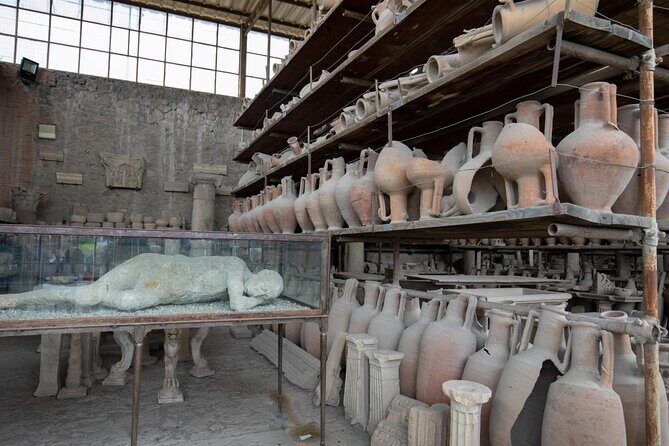
- Expert-led highlights, not random walking: You hit the big-name areas in a tight loop.
- Major buildings, quick explanations: From Teatro Grande to the Basilica portico, you get context fast.
- Family-friendly on most days: Many guides handle kids well, but engagement can vary by group and guide.
- Shade and pace matter: Several guides adapt to heat, older legs, and bad weather.
- Headphones may be used in some cases: One negative experience flagged hearing issues when the group size changed.
Two hours at Pompeii: why this route works
Pompeii can feel like an endless open-air museum. That’s the problem: when you go solo, you spend energy figuring out where you are instead of understanding what you’re seeing. This tour is built to solve that. In about two hours, you follow a logical route through the most recognizable sections of the city.
The best part is that the guide doesn’t just point. They translate. A theater isn’t only “a theater.” It’s where people gathered, how crowds worked, and what daily entertainment looked like in a Roman city. A house isn’t only “a house.” It’s a window into social rank, decoration choices, and how people lived around courtyards and shared space.
And because it’s a small-group format with a max size of 30, you’re usually not stuck with a wall of people blocking your view at every turn. Still, you’re in Pompeii—so plan for real crowds. Your guide’s job is to help you keep moving and keep your bearings.
Other archaeologist-led tours in Pompeii


Where you meet and how to start without stress
The meeting point is Ristorante Suisse, Piazza Esedra, 10/13, 80045 Pompei (NA), Italy. The tour ends back at the meeting point, which helps when your brain is already juggling train times, bus times, and walking routes.
If you’re traveling from Naples or the Amalfi Coast, this area is convenient because it’s near public transportation. You don’t want the first step of your Pompeii day to be a scavenger hunt.
A practical note: the tour is often booked about 39 days in advance on average, so if you’re visiting in high season or on a popular day, booking ahead is smart. You’ll also want a mobile ticket ready on your phone since the tour includes a mobile ticket.
Stop-by-stop: what you’ll see in the two-hour loop
This tour’s route is basically a greatest-hits album of Pompeii. The time at each stop is short, but each one is chosen so you see multiple “types” of places: public entertainment, private wealth, everyday infrastructure, and parts of the city that are famous for being… human.
Archaeological Park of Pompeii: the story behind the ruins
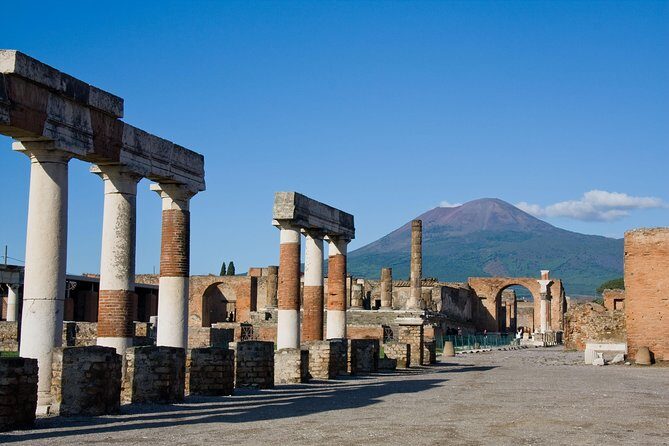
Your first stop is the Archaeological Park of Pompeii, where Mount Vesuvius is the giant backstory. The guide sets the scene: Pompeii as a Roman city that was preserved after the eruption in 79 AD.
Even at a highlight pace, this start matters. If you don’t understand why the city survived in such a detailed way, the later stops can feel like cool ruins without a clear thread. You’ll also spend time on famous areas with frescoes, which is where Pompeii often grabs people—because you can still see traces of real decoration from real rooms.
Possible drawback here: since it’s only around 10 minutes, you’ll want to be ready to look closely. Bring your curiosity, not a checklist of every exact detail.
Odeon – Teatro Piccolo: the smaller theater stop
Next is the Odeon / Teatro Piccolo, a smaller theater. This stop is a great warm-up. It helps you understand how Roman entertainment spaces worked at different scales.
Think of it as the guide giving you a mental diagram: this is what a performance space looked like, and this is how a smaller venue fits into the city’s layout and culture. If Teatro Grande is the big stage, Teatro Piccolo is the practice room you didn’t know you needed.
Other small-group tours we've reviewed in Pompeii





Teatro Grande: Pompeii’s main theater
Then you move to Teatro Grande, described as the most important theater in Pompeii. This is one of the places where a guide makes a visible difference. The building lines up in ways that are hard to interpret alone, especially if you’re just moving fast for photos.
What you should watch for: how the space is designed for crowds. You’ll start to connect the theater with the social side of Roman life—people gathering, performing, reacting, and returning to the rhythms of the city after the show.
House of Menander: luxury you can walk through
One of the most impressive stops is the House of Menander. This house is known for its architecture, decoration, and contents. In a two-hour tour, this is your “wow, real home life” moment.
A good guide helps you read the house layout instead of treating it like a single room you pass through. You’ll get a sense of wealth signals—where attention goes, how decoration supported status, and how spaces were organized around daily movement.
Time here is about 15 minutes, which is enough to catch the main patterns if you keep your eyes up and ask questions when something seems confusing.
Stabian Baths (Terme Stabiane): oldest thermal complex vibes
Next is the Stabian Baths, an older thermal complex located between major crossroads and streets. Baths in Roman cities were more than washing. They were social hubs and a key part of urban infrastructure.
The tour’s timing keeps it focused—about 15 minutes—but baths are visual. You’ll see enough to understand the scale and the idea that these spaces were designed for repeated daily use.
One practical tip: if it’s hot, baths are a good mental break. There’s often more shade and structural variety than on open streets.
Lupanar: the brothel stop with famous name recognition
Then you’ll visit the Lupanar, described as the most famous brothel in Pompeii. This stop is brief (around 10 minutes), but it’s a major cultural reference point for many visitors.
The value isn’t only shock value. A guide can help connect this space to how the city functioned—how commerce, street life, and daily movement intersected. If you prefer your Pompeii content focused more on art and homes than on scandal, just mentally prepare that this stop is part of the highlight package.
Via dell’Abbondanza: the city’s main street feel
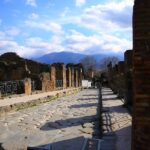
You also stop at Via dell’Abbondanza, a major street. This is where the tour shifts from “buildings you can stare at” to “city you can feel.”
Walking even a short segment of a main thoroughfare helps you understand how people moved. It’s easier to grasp the city layout when you’re not only looking down at individual sites.
House of the Faun: large, impressive, and worth the time
Another standout is the House of the Faun. It’s described as one of the largest and most impressive private residences in Pompeii.
This is a strong choice for a short tour because you’ll feel the difference between a wealthy home and a normal street-level space. Again, the guide matters: your job here is to notice how the house reads as a designed environment, not a random collection of rooms.
Foro de Pompeya (main square): where public life landed
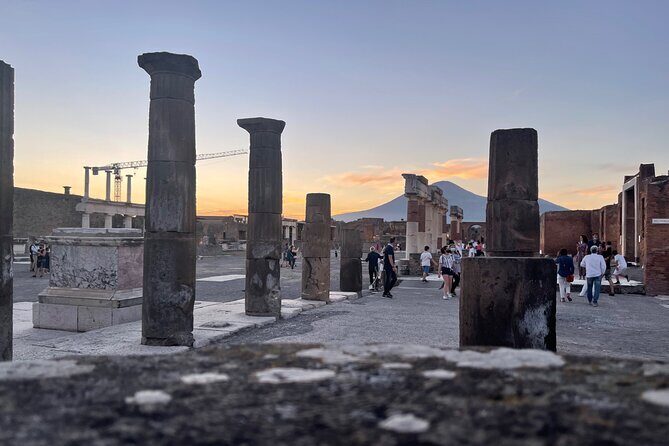
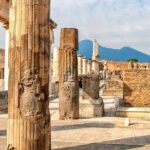
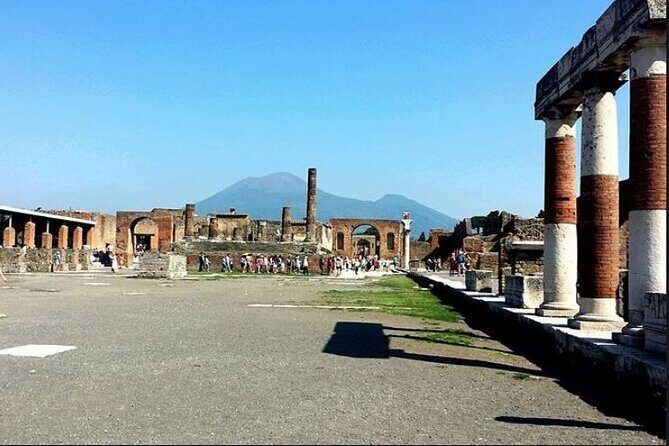
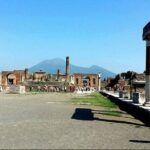
Then comes Foro de Pompeya, the ancient main square. This is the city’s “public face,” and it’s where everything starts to connect. When you’ve seen entertainment, houses, and baths, the forum gives you the center point for politics, commerce, and everyday public activity.
Time is about 15 minutes, so treat this as your structure-building stop. If you want to understand Pompeii as a living city, the forum is where that clicks.
Basilica: the sheltered portico for merchants and activity
Your last stop is the Basilica, an open portico that sheltered merchants and other activities. Even without a lecture, a portico teaches you something about Roman life: people needed covered space for daily business and crowd flow.
This final stop is a good “wrap” for the loop, bringing you back from the individual buildings to how the city worked as a whole.
Guides make or break the experience: what I’d watch for
Across the experiences people shared, the strongest theme is the human factor—the guide’s voice, pacing, and how they connect the ruins to daily life.
Many guides are praised for being funny, engaging, and able to adapt. Names that came up include Luca (storytelling and pacing), Gianluca (a moderate pace for older legs), Roberta (informative and funny, helping get around crowds), Manuela (entertaining and educational), Clare (excellent English and strong care for kids), Patrizia (patient with children), and Mafilda (engaging and lively).
There’s also practical adaptability. One guide was noted for staying in shade during heat. Another handled hail and sideways rain by finding covered spots to keep the tour going. That kind of on-the-ground thinking is exactly what you want when Pompeii weather goes sideways.
Now the downside: a couple of experiences flagged that the tour wasn’t as archaeology-focused as expected, and one negative experience involved a guide making jokes about kids that didn’t feel appropriate. Another issue was a group-size mismatch that turned a small-group promise into a larger group with audio headsets—one person had trouble hearing.
So here’s my practical advice: if your needs are very specific—kids who need high engagement, or hearing concerns—think about that before you choose a short highlights tour, and be ready to adjust expectations.
Price and value: what $32.67 buys you here
At $32.67 per person, you’re paying for three things: a guided route, admission coverage as part of the visit, and time saved. The itinerary indicates admission ticket inclusion for the stops you enter, which is important because Pompeii admissions can be the difference between “plan done” and “plan chaos.”
Also, the timing is a big value driver. You get the highlights in around two hours, which is ideal if Pompeii is part of a bigger trip (Sorrento, Naples, the coast) and you don’t want to lose your whole day.
That said, this is still a highlights route. If you want a longer, more detailed archaeological deep-dive, you may feel like you’re skimming. But for most first-timers, this kind of structure is exactly how you avoid the common mistake: seeing a lot of ruins but remembering very little.
The tour even mentions an option to upgrade to a private tour. If your goal is slower pacing, more questions, or a more tailored path, the private format is often where you get it.
Family-friendly? Yes, but read the room
This tour is marketed as family-friendly, and multiple experiences praised guides for handling kids well—especially ages around 7 to 13. Guides were described as patient and capable of keeping children engaged, including families with a 10-year-old and a 10–12 range.
Still, there are two cautions. One negative experience reported that the tour did not feel kid-suited and that the guide’s humor landed poorly. Another family-friendly note is that if you need a fully child-focused performance style, a two-hour highlight loop is still, at its core, an adult-structured route through Pompeii.
My take: if you bring kids, go in with a realistic goal. You’re buying structure and stories, not a theme park show. Pack water, plan for sun, and be ready to take quick breaks. You’ll get the most out of it when everyone is looking for patterns and asking simple questions.
Who should book this Pompeii tour (and who shouldn’t)
Book it if:
- You want the best-known Pompeii areas in a tight schedule.
- You like the idea of an organized route that saves you from getting lost.
- You want a guide to explain what you’re looking at—especially in the theaters, baths, and forum.
Consider skipping or swapping to something longer if:
- You’re chasing deeper archaeology detail, not just a guided highlight pass.
- You need a highly kid-adapted format with lots of built-in breaks and activities.
- Hearing sensitivity is an issue for your group, since one experience mentioned headphone trouble when group size changed.
Should you book this Pompeii 2-hour tour?
If Pompeii is on your “must see” list but your schedule is tight, I think this is a smart pick. The structure is the value: you see the big public spaces, the major theaters, key houses, and signature sites like the baths and the Lupanar, all in a time frame that lets you still enjoy wandering afterward if you want.
If you’re the type who hates rushing, or you’re hoping for heavy archaeology training at every stop, you might feel boxed in. Also, because the experience quality can depend on the guide, it’s worth paying attention to how your guide supports kids and adapts to heat or weather.
For many people, this is the best first step into Pompeii. It helps you come away with a map in your head, not just photos on your phone.
FAQ
How long is the Pompeii tour?
It’s about 2 hours.
What language is the tour in?
The tour is offered in English.
Where do we meet?
You meet at Ristorante Suisse, Piazza Esedra, 10/13, 80045 Pompei NA, Italy, and the tour ends back at the same meeting point.
Does the price include admission tickets?
The stops listed include admission ticket inclusion during your visit.
Is it suitable for families with kids?
It’s described as family-friendly, and many guides are praised for being good with children, though experiences can vary by guide and group.
When is Pompeii admission free?
Pompeii entrance is free on the first Sunday of each month, and entrance is also free for people under 18 with a valid ID or passport.
What if the tour is canceled or I need to change plans?
There is free cancellation up to 24 hours in advance for a full refund, and the operator can also cancel if minimum numbers aren’t met, offering an alternative or a full refund.