REVIEW · POMPEII ARCHAEOLOGICAL SITE
Pompei: Pompeii Private Tour
Book on GetYourGuide →Operated by Tempio Travel Pompei Tickets · Bookable on GetYourGuide
Pompeii gets real with a private archaeologist. You’ll get skip-the-line Pompeii entrance ticket express and a 3-hour walk through a UNESCO-listed city built around 700 BC and erased in 79 AD. I like the way the best guides (think Marina, Giada, Daniela, and Dr Daniella) translate hard ruins into everyday Roman life and even help with crowd flow. One thing to consider: at 3 hours, you’ll have to choose, and the most detailed time is usually reserved for two big stops like the Amphitheatre or the Villa of Mysteries.
This is a private group format, so you’re not wrestling for hearing distance or watching your guide disappear into a sea of headsets. Meeting at the Tempio Travel agency by the Circumvesuviana station also keeps things grounded and practical. And yes, it’s still Pompeii—meaning you’ll cover a lot of ground among stone corridors, doorways, and stairways.
The main tradeoff is simple: it’s priced as a private experience (listed at $407.83 per group up to 1), so it’s not “cheap group tour” math. If you’re traveling as a couple or with friends, you’ll want to confirm how group sizing works when you book.
In This Review
- Key points to know before you book
- Pompeii in 3 hours: why this private format works
- Skip-the-line Pompeii entrance ticket express: saving energy for the walking
- From 7th-century BC to 79 AD: how the story is framed
- The two big highlights: Amphitheatre and Villa of Mysteries
- Guides matter more than you think: Marina, Giada, Daniela, and Dr Daniella
- Meeting point at Tempio Travel: how to start without stress
- What to bring (and what not to bring) at the gates
- Price and value: what $407.83 per group up to 1 buys you
- Who this tour suits best
- Final verdict: should you book this Pompeii Private Tour?
- FAQ
- How long is the Pompeii private tour?
- Does the price include the entrance ticket?
- Is this a skip-the-line experience?
- Is it truly private?
- What languages are the guides available in?
- Where do we meet, and where does the tour end?
- What should I bring, and what can’t I bring?
- Can we visit the Amphitheatre and the Villa of Mysteries?
- Is entrance free on the first Sunday of the month?
- What are the cancellation and payment options?
Key points to know before you book
- Skip-the-line access is built in with Pompeii entrance ticket express
- Private 3-hour visit with a live archaeologist guide
- Two detailed highlight options, often the Amphitheatre and/or the Villa of Mysteries
- Guides adjust pace and focus for kids and for visitors who prefer a slower rhythm
- Crowd-smart routing is a real part of the value (not an afterthought)
- Multiple language options: Spanish, English, French, German, Italian
Pompeii in 3 hours: why this private format works
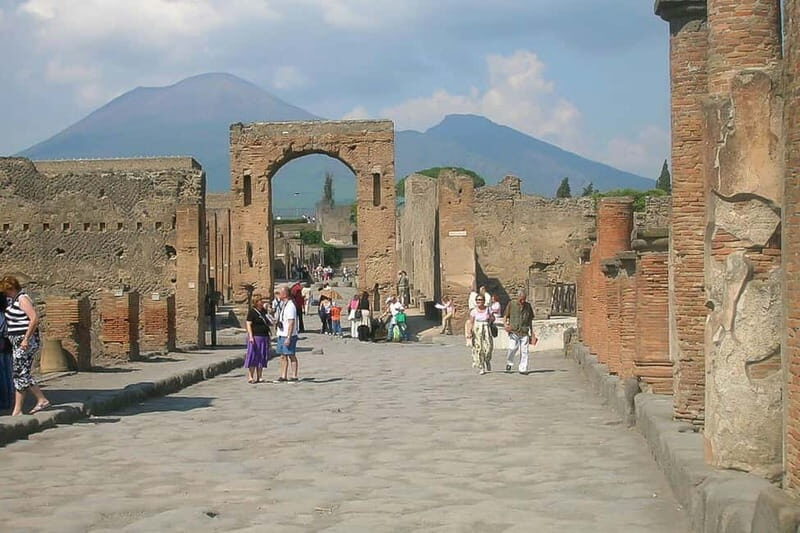
Pompeii is famous for a reason, but it’s also overwhelming. The ruins sprawl, the streets loop, and it’s easy to feel like you’re just moving from doorway to doorway. What I like about this setup is that the tour isn’t about speed. It’s about meaning.
You’re guided through the heart of a city that once covered about 66 acres. The visit starts with what came before the tragedy—the city’s beginnings in the 7th century BC—then shifts into how Roman life played out in art, trades, and daily routines. That storyline matters because it turns “pretty ruins” into a place you can picture.
This tour is also private, so your guide can match your group’s tempo. In practice, that shows up as less time wasted re-orienting, and more time spent learning what you’re actually looking at—especially at a site where signage alone can’t do the job.
If you're still narrowing it down, here are other tours in Pompeii Archaeological Site we've reviewed.


Skip-the-line Pompeii entrance ticket express: saving energy for the walking
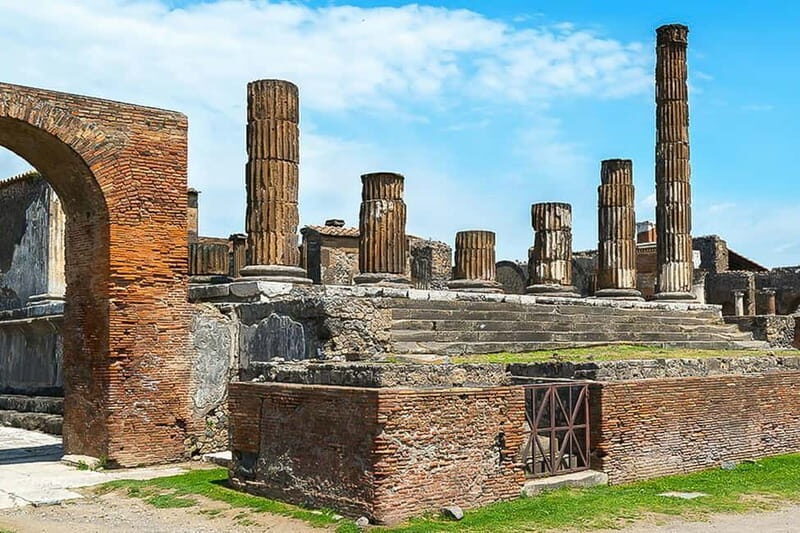
The headline benefit here is skip-the-line access via Pompeii entrance ticket express. At Pompeii, time is physical. If you lose 30–60 minutes in line, you lose it again in heat, fatigue, and attention span. With this ticket setup included, you get more of your 3 hours on the ground where it counts.
That said, “skip-the-line” doesn’t mean zero waiting for everything. You’ll still need to get through site entry procedures. But the point remains: fewer delays means you’re more likely to start promptly and keep your guide from rushing at the end.
For me, this is the biggest practical value of the tour. The guide can only interpret what you have time to see—and at Pompeii, that’s always the limiting factor.
From 7th-century BC to 79 AD: how the story is framed
The tour is built around the major eras that shaped Pompeii’s physical layout and its cultural vibe. You begin with the city’s founding period—the 7th century BC—which helps you understand that Pompeii wasn’t designed and built all at once. It grew, evolved, and developed neighborhoods over time.
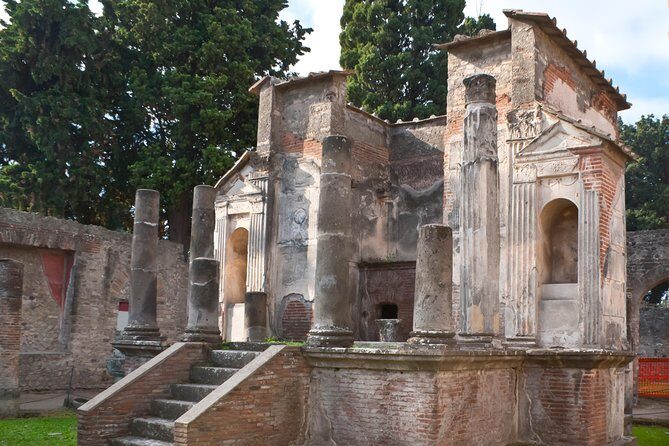
Then you move into the Roman world—how people lived, worked, decorated spaces, and organized daily life. This matters because Pompeii isn’t just temples and famous artifacts. It’s bakeries, workshops, street-level routines, and the way people used public and private space.
Finally, the narrative lands on the disaster: Pompeii was destroyed in 79 AD by the eruption of Mount Vesuvius. Your guide doesn’t just name the event; the tour’s structure helps you see why the ruins were preserved so vividly—and what that preservation allows us to learn today.
One of the reasons this works so well in a private setting is that you can ask follow-up questions when something clicks. A good guide will pace those answers to keep you moving, not to turn the tour into a lecture marathon.
The two big highlights: Amphitheatre and Villa of Mysteries
A great Pompeii tour is partly about what you see and partly about how long you can linger where it matters. This experience offers the chance to spend detailed time on two of the site’s most important places.
Two commonly named options are:
- the Amphitheatre
- the Villa of Mysteries
Why these two? Both help you understand Pompeii beyond the postcard view.
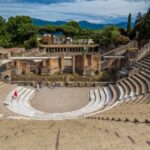
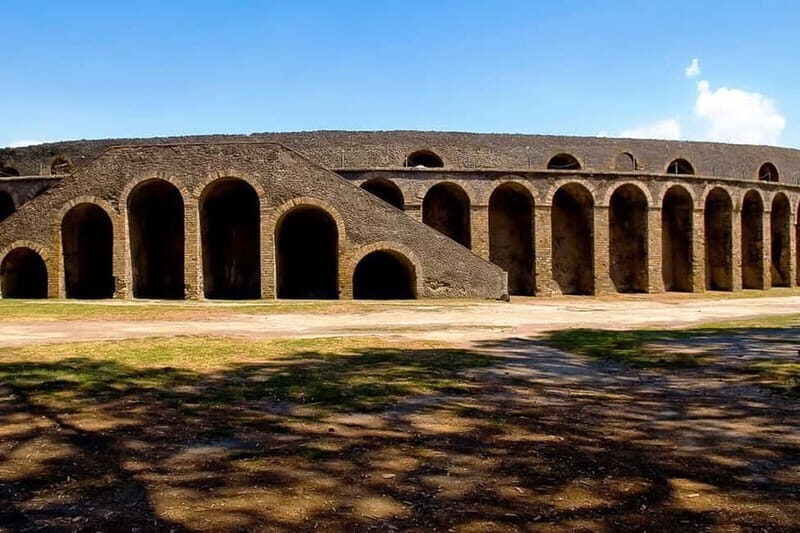
The Amphitheatre gives you a “social Pompeii” lens—how public entertainment worked and how crowds would have moved through the city. Even if you’re not a theater person, you’ll usually find that seeing the scale and the design makes the Roman public world feel tangible.
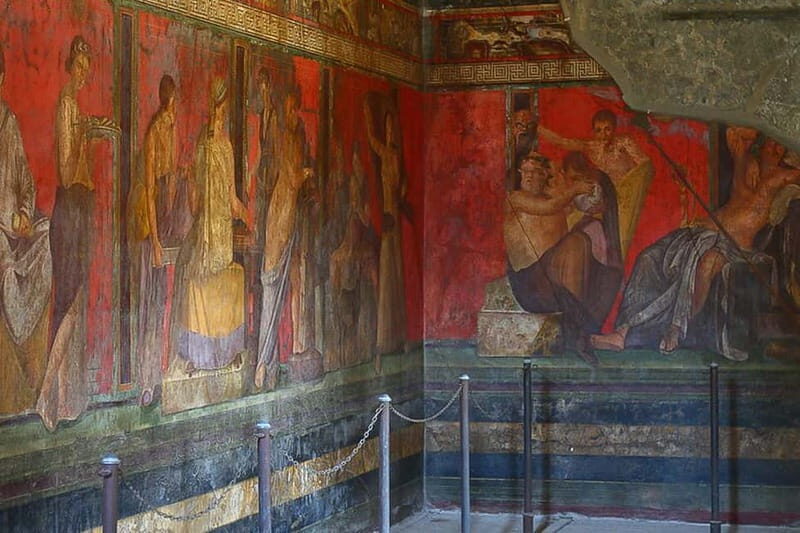
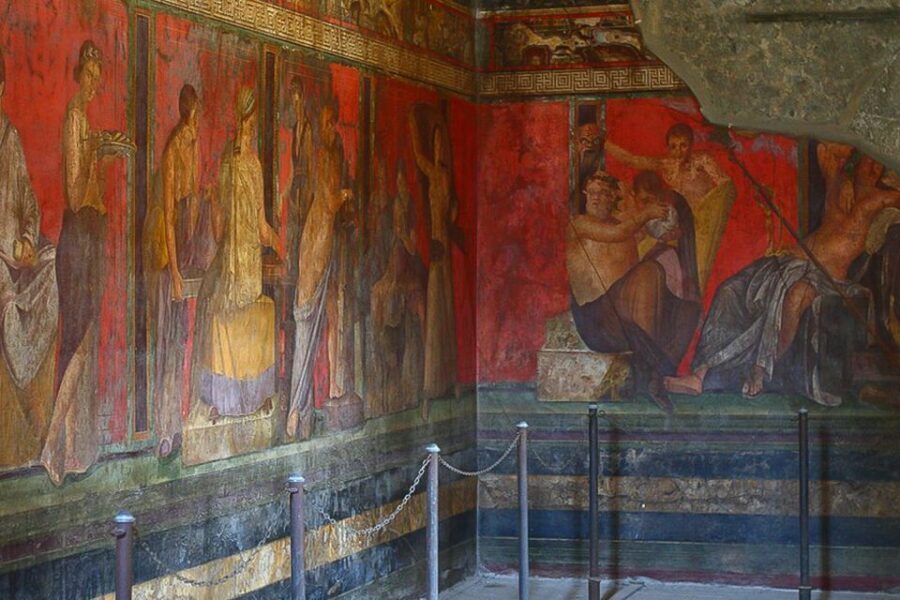
The Villa of Mysteries is different. This is where art and symbolism start to feel personal. It’s a place where Roman decoration isn’t just decoration. It signals beliefs, storytelling, and status—all the stuff that can be hard to spot when you’re walking quickly or reading a plaque from two steps away.
In a 3-hour tour, your guide will typically choose the best pair based on your interests and the flow of visitors that day. If one of these is a must for you, say so right away when you meet.
Guides matter more than you think: Marina, Giada, Daniela, and Dr Daniella
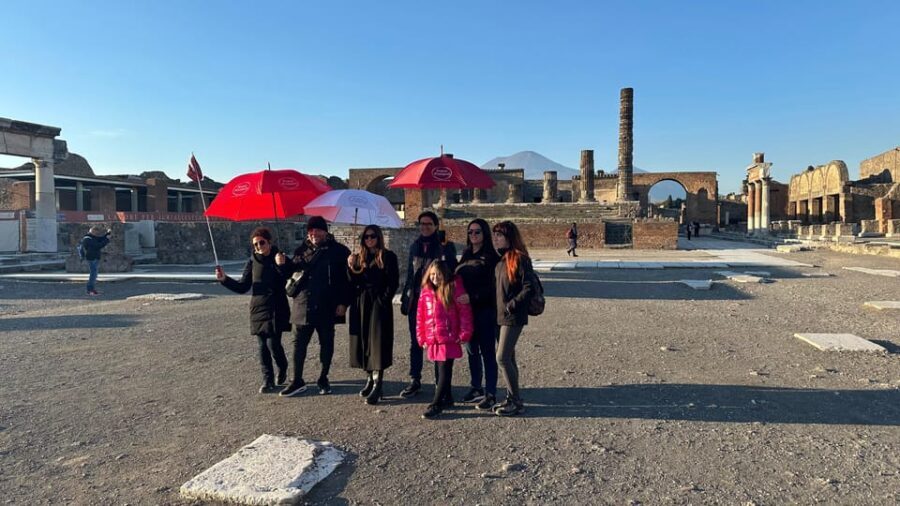
At Pompeii, the difference between an okay tour and a great one usually comes down to the guide’s style and focus. The strongest part of this experience is that the tour is led by a live archaeologist guide who’s good at turning ruins into lived-in spaces.
Several guide names stand out from the history of this experience: Marina, Giada, Daniela, Dr Daniella, Mariachiara, and Alessandra. Across them, you see the same pattern: they connect Roman-era details to how humans behave today—then back that up with what you can actually see in front of you.
Another highly praised strength is crowd handling. A private guide can adjust routes and avoid bottlenecks, which keeps the walking smoother and your attention from getting stuck on the logistics of other groups. You’ll also get help picking what to prioritize in a site so large it can feel endless without a plan.
If you’re bringing kids (or you’ve got anyone who learns best through stories and visuals), this tour format can also work well. Some guides have used tools like an iPad to add context with pictures or interactive materials—useful when you want the kids engaged without lowering the educational bar.
For older visitors, there’s also a clear upside: a good guide can adapt pace so you still finish feeling informed instead of wrung out.




Meeting point at Tempio Travel: how to start without stress
You meet at the Tempio Travel agency at the Pompeii ruins Circumvesuviana train station. This is smart because it ties the tour to a common arrival method—getting off the train and walking to the exact pickup spot.
The tour ends back at the meeting point. That’s another small but important thing: you won’t be stranded figuring out how to get yourself back out of the ruins area.
Where people often lose time at Pompeii is confusion about where a tour actually starts. To avoid that, show up a bit early, keep your phone accessible, and have your ID ready.
What to bring (and what not to bring) at the gates
The basics are straightforward:
- Bring a passport or ID card.
- No luggage or large bags are allowed.
This matters because Pompeii can be a test of “small bag discipline.” If you’re traveling from Naples or another stop, it’s worth packing light for this day so you’re not dealing with restrictions at the entrance.
Plan your day with the understanding that your 3 hours are timed for an on-foot visit. The private format helps you move with purpose, but it doesn’t eliminate the reality that you’ll be walking among ruins.
Price and value: what $407.83 per group up to 1 buys you
The listed price is $407.83 per group up to 1 for a 3-hour private visit. That number looks hefty next to typical group tours, so the real question is value.
Here’s where this tour earns its keep:
- You get a private archaeologist guide, not a shared experience.
- Your entry is handled with the Pompeii entrance ticket express included.
- The guide helps you spend your limited time on high-impact stops and keeps you from wasting energy on “what am I looking at?” moments.
If you’re the only person in your booking and you’d rather not herd with strangers, you’re paying for control—time control, attention control, and route control. For solo travelers who want a guided plan in a huge UNESCO site, that can feel like a fair exchange.
If you’re traveling with multiple adults, it may be worth checking how the pricing scales with group size, because the listing specifies up to 1. The value could improve—or the cost could surprise you—depending on how Tempio Travel packages private groups.
Bottom line: this isn’t a budget “grab-and-go” Pompeii ticket. It’s a buy-you-time-and-meaning purchase.
Who this tour suits best
This private Pompeii tour is a strong fit if:
- you want skip-the-line access and a guided plan inside a very large site
- you prefer private pacing, with room for questions
- you care about the “how people lived” side of Roman history, not just famous landmarks
- you’re bringing kids or multigenerational visitors and want a guide who can adapt
It may be less ideal if:
- you’re trying to keep costs extremely low
- you prefer to wander independently without a structured story
- your group wants lots of “optional wandering” time, since 3 hours is designed for focused coverage and key stops
Final verdict: should you book this Pompeii Private Tour?
If you’re excited to understand Pompeii rather than just photograph it, I’d book this. Private guide + skip-the-line entry + a clear 3-hour framework is the winning combination, especially at a site where crowds and confusion can eat up your attention.
I’d make one careful decision before booking: confirm whether Amphitheatre or the Villa of Mysteries is your priority (or both). This tour can spend detailed time on two major places, but you’ll get better results if your guide knows what you want to see most.
FAQ
How long is the Pompeii private tour?
The tour lasts 3 hours. Starting times depend on availability.
Does the price include the entrance ticket?
Yes. The tour includes the Pompeii entrance ticket express along with the tour and the archaeologist guide.
Is this a skip-the-line experience?
Yes. The experience includes skip-the-line access through the entrance ticket express.
Is it truly private?
Yes. It’s a private group tour.
What languages are the guides available in?
Guides are available in Spanish, English, French, German, and Italian.
Where do we meet, and where does the tour end?
You meet at the Tempio Travel agency at the Pompeii ruins Circumvesuviana train station. The tour ends back at the same meeting point.
What should I bring, and what can’t I bring?
Bring a passport or ID card. Luggage or large bags are not allowed.
Can we visit the Amphitheatre and the Villa of Mysteries?
The tour offers the possibility to visit in detail two of the most important places on the site, which can include either the Amphitheatre or the Villa of Mysteries.
Is entrance free on the first Sunday of the month?
Yes, entrance is free on the first Sunday of each month, but tickets can’t be reserved ahead of time, so entry isn’t guaranteed.
What are the cancellation and payment options?
There’s free cancellation up to 24 hours in advance for a full refund. You can also reserve now & pay later to keep your plans flexible.