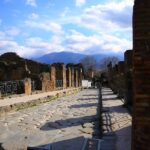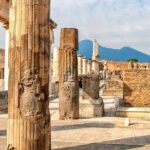
Pompeii hits different when you can actually see it up close. This wheelchair-accessible tour is built around a special route of about 2 km, so you’re not just rolling past the ruins. I especially like the skip-the-line entry (less time stuck in lines, more time with the sites) and the way the guide connects the dots between daily Roman life and the big set pieces like the Forum and Theater. One thing to watch: getting to the meeting area can be tricky for some mobility setups, so I’d plan your route to the Amphitheatre start point carefully.
You’ll spend about 2 hours inside Pompeii with a guide, moving along Pompeii’s most memorable areas: main streets, thermal baths, homes (domus), the Gladiators’ Gym, mills, the Lupanare, and the Forum, plus stops tied to the Theater and pleasure houses. It’s a tight format, but that can be a win if your time in Naples region is limited and you want the highlights without losing half a day to logistics.
The overall value really depends on what you want from Pompeii. If you’re hoping for a super flexible, long self-guided wander, this guided route is more structured than that. But if you want the core experience with access support and an efficient, guided path, it’s a strong pick.
In This Review
- Key highlights worth knowing
- Why Pompeii feels different on a wheelchair-friendly route
- Amphitheatre of Pompeii start: the moment you get rolling
- The guided Pompeii walk: streets, bath life, and domus homes
- Forum and Theater: public life, performance, and the big-city feeling
- Gladiators’ Gym and mills: work and training you can picture fast
- Lupanare and pleasure houses: what the guide helps you read in the details
- Skip-the-line entry: the value of time you can spend on the ruins
- Guide support for mobility needs: what makes the difference
- Price and logistics: is $254.67 worth it?
- Who should book this Pompeii wheelchair-accessible tour
- FAQ
- Is this Pompeii tour wheelchair accessible?
- How long is the tour?
- Where does the tour start, and where does it end?
- What’s included in the tour price?
- Does the tour include skip-the-line entry to Pompeii?
- Is there free cancellation?
- Should you book this wheelchair-accessible Pompeii tour?
Key highlights worth knowing
- Wheelchair-friendly route over about 2 km designed to make major areas reachable
- Skip-the-line admission so your time goes to ruins, not queues
- Guided storytelling on daily life from bath culture to work and public spaces
- Main Pompeii icons included like the Forum, Theater, thermal baths, and Forum areas
- Private tour for your group means less waiting and fewer crowds in your immediate space
- Real guide support for mobility needs has been specifically praised by guests
Why Pompeii feels different on a wheelchair-friendly route
Pompeii is one of those places that can be either magical or exhausting, depending on how you move. What I like here is the design intent: the experience follows a special walking route of about 2 km that’s tailored to make the park feel accessible. Instead of you constantly negotiating uneven ground or missing the best sights because a route is too hard, the tour focuses on getting you to the major areas that tell the story.
And because it’s guided, you get context while you’re there. Pompeii isn’t just stone and streets—it’s everyday life frozen in time. A good guide makes that visible fast: how people lived, how they cleaned and relaxed in the thermal baths, what public life looked like around the Forum, and how entertainment and work fit into a normal day.
Still, I’d keep one practical caution in mind: access isn’t only about what happens inside the ruins. One guest who is wheelchair users found it difficult to reach the start in the first place, because the commute to the Amphitheatre involved multiple trains. That doesn’t mean the tour fails, but it does mean you should treat the meeting point as a real part of the trip—plan your route early and give yourself extra margin.
Other skip-the-line Pompeii tours in Pompeii


Amphitheatre of Pompeii start: the moment you get rolling
The tour begins at the Amphitheatre of Pompeii, at Piazza Immacolata, 80045 Pompei NA, Italy. Ending is simple: it finishes back at the same meeting point. That’s helpful for accessibility, because it removes one big headache—figuring out where to go next while tired.
Since it’s a private tour/activity (only your group), you’re less likely to feel rushed by the pace of a giant group. You also avoid that uncomfortable situation where you’re stuck behind someone who’s moving faster or slower than you are. With mobility needs, those small differences matter.
You’ll also get a mobile ticket, and confirmation comes at booking time. Near public transportation, the meeting area can be easier than far-off trailheads, but it can still take some thought to get yourself there comfortably. If you’re managing a wheelchair, scooter, or a mobility aid, I’d map the final stretch to the Amphitheatre and assume you may need a bit more time than you think.
The guided Pompeii walk: streets, bath life, and domus homes
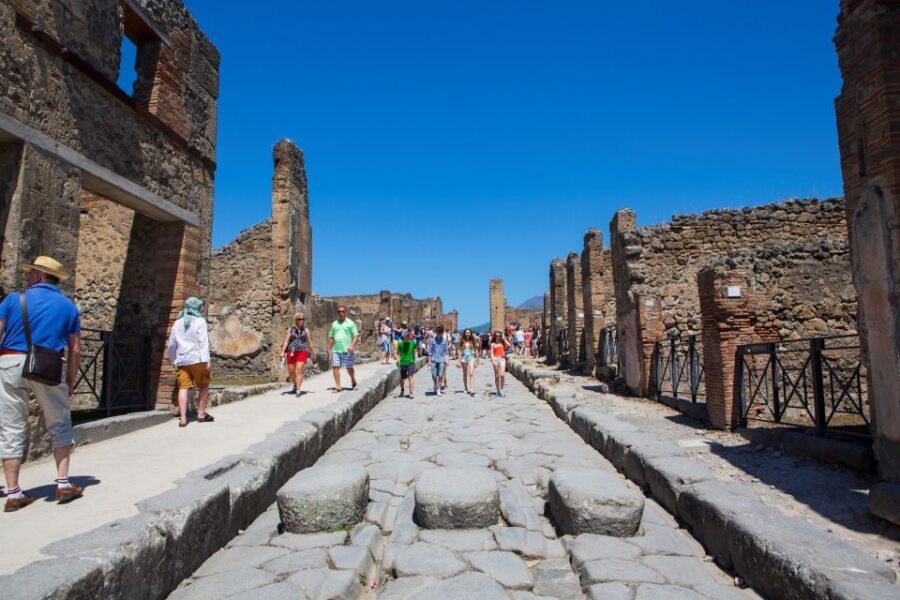
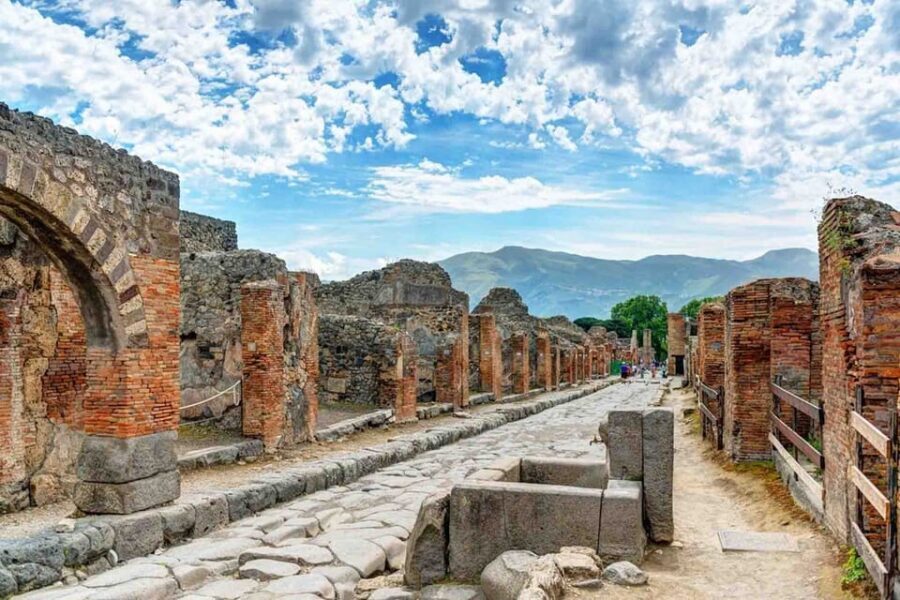
Once you’re inside the Pompeii Archaeological Park, the guide’s job is to make the ruins feel like a living city. The route starts with the kind of scenes you want early: main streets that help you understand how people moved through town, not just where the big monuments are.
One standout cluster is the thermal baths. Pompeii’s bath culture is one of the most practical ways to understand how Romans spent time. Instead of reading about it later, you see the space while your guide connects it to real habits—cleaning up, socializing, and the rhythm of a day that wasn’t built around modern ideas of privacy and leisure.
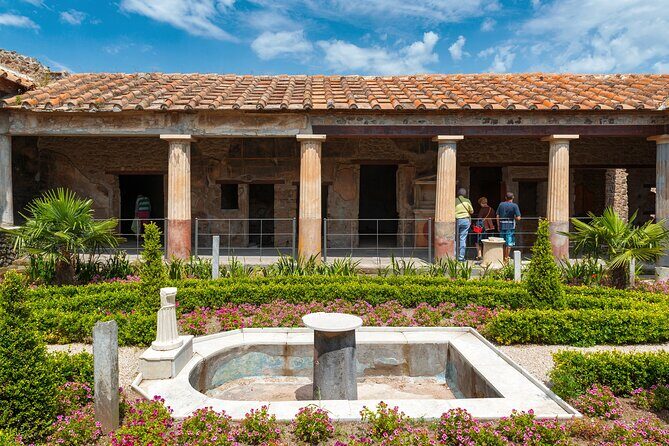
You’ll also visit parts of private life, including a domus (a house). This is where Pompeii stops feeling like a museum exhibit and starts feeling like a city. You get a sense for domestic layout and how these homes were built around daily routines.
What I like is the guide’s pacing: you’re not stuck on one site for too long. In two hours, you get a spread of locations—enough to feel like you saw the city—without the burnout that can happen when you try to cover everything alone.
Potential drawback: if you’re the kind of traveler who loves to linger, sketch, photograph, or read every sign slowly, you’ll feel the time limits. This is built for efficiency. You’ll see a lot, but you’ll be moving along a plan.
Forum and Theater: public life, performance, and the big-city feeling
A trip to Pompeii feels incomplete without the public spaces, and this route includes them. You’ll reach the Forum, the heart of civic life. Here, the guide helps you connect what you see to how Romans organized society—where people gathered, where announcements and business happened, and how the city broadcast power and identity through architecture.
Then there’s the Theater, which is the right balance of spectacle and structure. Theater spaces aren’t just for shows; they tell you how entertainment was built into civic culture. In Pompeii, that connection is extra powerful because you’re seeing the framework of life from nearly 2,000 years ago.
The practical value of including the Forum and Theater on a guided, accessible route is simple: these are usually the areas people most want to see, and they often require more planning when mobility is limited. Having them built into the path saves you from the frustration of discovering late in the day that the places you care about are too hard to reach.
Gladiators’ Gym and mills: work and training you can picture fast
Pompeii isn’t all public speeches and dramatic street scenes. You’ll also see stops tied to labor and training, including the Gladiators’ Gym and mills.
The Gladiators’ Gym is fascinating because it shifts your brain from politics and leisure to preparation, discipline, and performance. Even if you don’t think of Pompeii as a sports city, this kind of site makes it clear that entertainment wasn’t only a distraction—it was an industry with routines behind it.
The mills add another reality check. When you see where grinding and food processing happened, you understand why cities like Pompeii were constantly busy. It’s the kind of detail that makes the city feel inhabited rather than staged.
Because the tour is about two hours, these work-focused stops are often more about understanding than wandering. You’ll get the big idea quickly—how these spaces functioned—so you leave with a clearer mental model of how Romans organized daily tasks.

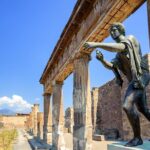


Lupanare and pleasure houses: what the guide helps you read in the details
One of the most famous stops is the Lupanare, known for its erotic frescoes. This is where you have to bring the right expectations: Pompeii is unfiltered by modern politeness. You’ll see a side of Roman life that’s not just about grand architecture.
The good part is that the guide helps you interpret what you’re seeing. Instead of it becoming awkward guessing games, you get a framework for context—what these spaces were for, how they fit into the economy of the city, and why Pompeii records this kind of human behavior as clearly as it records daily meals and bath routines.
I also like how the tour includes pleasure houses as part of the highlight set. It keeps Pompeii from feeling one-note. You leave with a broader view of the city’s social life, not just its public image.
Skip-the-line entry: the value of time you can spend on the ruins
Skip-the-line entry matters at Pompeii because queues can swallow your schedule fast. This tour includes the skip-the-line ticket, plus the guided tour, so you’re not just paying for access—you’re paying for time efficiency.
Let’s do the simple value math. At $254.67 per person for about 2 hours, the price isn’t low. But the ticket plus a guide is included, and the time saved from lines is real. If you’re traveling with limited mobility and you’d rather spend effort on the sites themselves than on waiting, that’s when the cost starts to feel more reasonable.
Also, because it’s a private experience for your group, you’re paying for an organized route rather than DIY chaos. That can be the difference between a smooth day and one that feels stressful.
Guide support for mobility needs: what makes the difference
The strongest praise in the experience is about the guide helping mobility guests actually see Pompeii—not just pass through it.
I’ve seen guides named Mariano and Momma praised for doing exactly that. The theme is consistent: they take a practical approach to pacing and sightlines. Instead of assuming everyone views things the same way, they help you get the view your body can manage, and they keep the explanation going so you still get the full story.
That matters a lot at Pompeii. Some spots are visually meaningful only if you stand or angle the view correctly. A guide who thinks about access issues helps your experience stay connected. Instead of thinking, I hope I can see this, you can focus on understanding what you’re looking at.
So when you book, I’d choose this option with confidence if you want a guide-driven experience. It’s not just about getting in. It’s about making sure the visit works for your mobility setup.
Price and logistics: is $254.67 worth it?
At $254.67 per person for an approximately 2-hour guided visit, you’re paying for three things at once: admission (skip-the-line), a guide, and an access-friendly route.
Here’s how I’d judge the value before booking:
- If you’re short on time and want the key Pompeii areas in one outing, this format is efficient.
- If you need a guided, tailored route of about 2 km, the price starts to make sense because you’re buying reduced friction.
- If you prefer long, independent exploring, you might find you paid for structure you don’t use.
It also helps to remember that accessibility-friendly touring often costs more for planning and support. When the goal is to make major highlights reachable, you’re not just paying for words—you’re paying for a plan that works.
Who should book this Pompeii wheelchair-accessible tour
This is a good match if you:
- want the major Pompeii highlights without trying to manage a whole day alone
- use a wheelchair or scooter and want a route designed around accessibility
- prefer guided context so Pompeii feels clear, not confusing
It may not be the best match if you:
- want to spend much longer in each area and roam freely
- are easily stressed by the commute details to the Amphitheatre meeting point
- want a fully self-paced experience with no structure
If you fall in the middle—some flexibility, but also real access needs—this strikes a solid balance.
FAQ
Is this Pompeii tour wheelchair accessible?
Yes. The experience is described as tailored along a special route of about 2 kilometers to make Pompeii accessible to everyone.
How long is the tour?
It runs for about 2 hours.
Where does the tour start, and where does it end?
The meeting point is the Amphitheatre of Pompeii, Piazza Immacolata, 80045 Pompei NA, Italy, and the activity ends back at the meeting point.
What’s included in the tour price?
A guided tour and a skip-the-line admission ticket are included.
Does the tour include skip-the-line entry to Pompeii?
Yes, skip-the-line ticket entry is included.
Is there free cancellation?
Yes. Free cancellation is available up to 24 hours in advance for a full refund.
Should you book this wheelchair-accessible Pompeii tour?
If you want Pompeii’s big highlights in a smooth, mobility-aware format, I’d book it. The combination of skip-the-line entry, a guide-led route over about 2 km, and access support for major areas like baths, domus, the Forum, Theater, and even the Lupanare makes this a practical way to get the real Pompeii experience without turning your day into logistics.
Just be smart about one thing: plan your route to the Amphitheatre meeting point ahead of time, especially if you’re traveling by rail or need a careful approach to getting there. Do that, and you’ll spend your energy on the ruins instead of the getting-there part.