REVIEW · POMPEII
Pompeii Skip-the-line Tour with Archaeologist Guide
Book on Viator →Operated by Raphael Tours & Events · Bookable on Viator
Pompeii makes sense fast with the right guide. This short, skip-the-line walking tour turns the ruins into a real Roman city story, with an archaeologist-style approach and a focus on what you’re seeing. I especially liked the way guides such as Lello (described as working on the digs) use humor and confidence to keep the facts moving.
My second big win: it’s an efficient 2-hour route that hits major stops without wasting time wandering, and the small-group feel helps you actually hear and ask questions. You’ll walk on original streets with wagon-wheel ruts and the kind of ground that makes you pay attention (lava rock shows up, so shoes matter).
One consideration: this is still a walking tour on uneven ancient surfaces, and you need to get yourself to Pompeii first. If you’re late or miss the tour, there are no refunds, so plan extra buffer time and don’t show up at the last second.
In This Review
- Key highlights I’d bet on
- Skip-the-line at Pompeii: guided entry, not a solo ticket
- Your 2-hour route in Pompeii’s Archaeological Park
- The forum: where Roman politics and religion meet
- Theater and bathhouse: entertainment and social life on the same stones
- Cobblestones, lava rock, and the Vesuvius story you can walk through
- Gymnasium, gladiators’ barracks, and the commercial side of Pompeii
- Lupanare (brothel): Pompeii’s most popular stop, handled with context
- Meet your archaeologist guide: small group energy with real expertise
- What to wear and how to pace yourself for lava-rock walking
- Is $71.35 worth it? The value equation for Pompeii
- Should you book this Pompeii archaeologist tour?
Key highlights I’d bet on
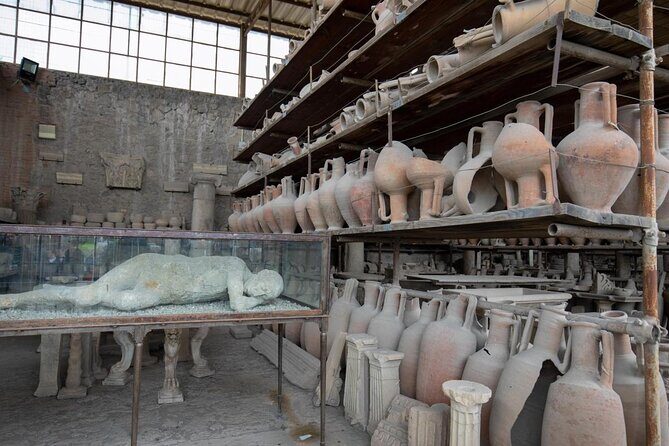
- Archaeologist-led narration that explains what you’re looking at, not just where it is
- Skip-the-line entry tied to your guided confirmation (not a standalone ticket)
- A compact hits-the-best circuit: forum, theater, baths, gymnasium, gladiator areas, and Lupanare
- Real street texture underfoot, including cobblestones and lava rock
- Clearer listening with ear sets so you don’t strain to hear in the crowds
- Small group size (max 16) for a more personal pace and easier questions
Skip-the-line at Pompeii: guided entry, not a solo ticket
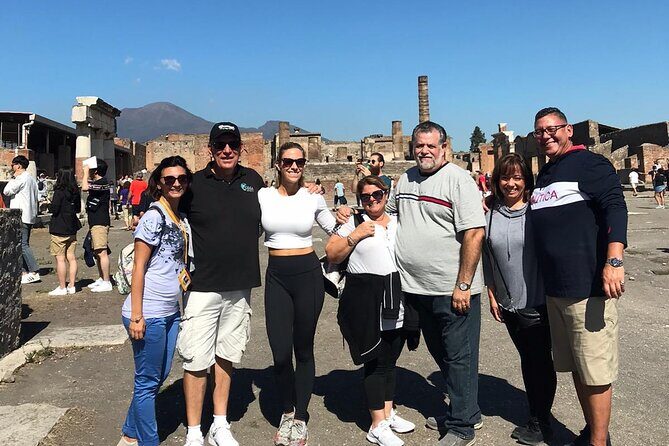
At Pompeii, the biggest value of a skip-the-line tour is not magic. It’s logistics. You still meet in town, you still walk into the Archaeological Park, and you still see the same ruins—just with an expert shepherd to keep you from losing time at entrances.
Here, your guided tour confirmation is what matters. This is not a standalone ruin admission pass you can use on your own. You’ll meet the guide not far from the entrance to the Pompeii archaeological site, then go in with the group. Admission tickets are included, but the experience is set up to be used with your guide, so show up at the meeting point on time.
Another practical plus: the tour group size is capped at 16 travelers, which usually means you’re not squeezed into a mega-line of bodies. People can hear better, and the pacing stays human. If you’re worried you’ll be talking over each other in a loud space, that’s less of a problem here because ear sets are provided, according to what guests reported.
And you’ll want to be realistic about timing. You’re doing a walking tour across ancient ground. If you’re late or miss the tour, there’s no refund, so arrive with a safety margin—Pompeii can be busy, and finding the exact meeting spot is easier when you’re not rushing.
Other skip-the-line Pompeii tours in Pompeii


Your 2-hour route in Pompeii’s Archaeological Park
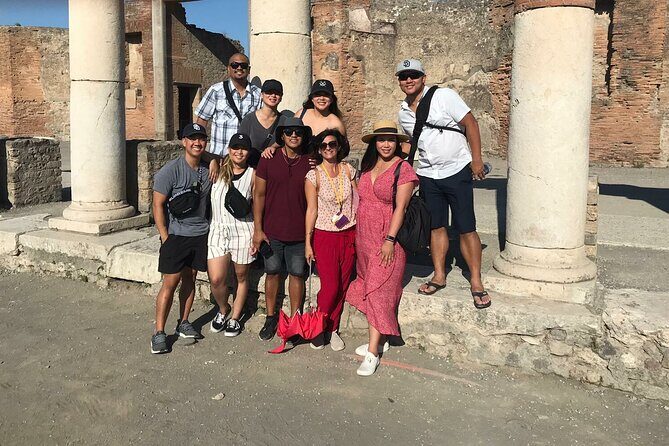
This tour is built to give you orientation fast. In roughly 2 hours, you cover a meaningful slice of Pompeii’s layout—enough to understand how the city worked and enough of the “main attractions” that you won’t feel like you only saw one corner.
As you walk ancient streets, your guide will point out details that most people miss. Expect attention to the physical city—cobblestones and the ruts left by wagon wheels—and then the meaning behind those features. The story thread is the same throughout: Pompeii before AD 79 and what the eruption did to preserve it.
You’ll see stops tied to daily life and public life, including:
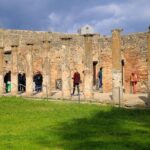
- the forum (politics + religion in one place)
- the theater (Roman entertainment)
- a thermal bathhouse (bathing, exercise, and gossip)
- areas linked with sports/training like the gymnasium
- remnants of local businesses like food and clothing shops
- barracks connected to gladiators training and living
- the Lupanare, Pompeii’s famous brothel area
Even if your time in Pompeii is limited, this route tends to land the ideas that make the rest of the site easier to explore on your own later.
The forum: where Roman politics and religion meet
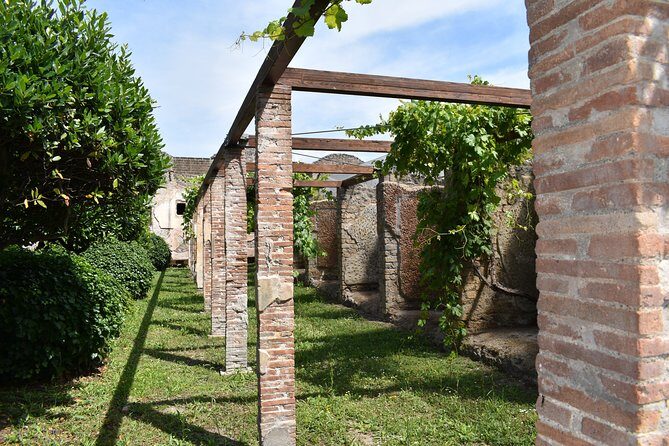
The forum is the “center of gravity” of any ancient Roman city, and Pompeii is no exception. On this tour, it’s where you’ll understand how power worked in everyday public spaces.
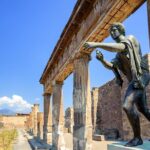
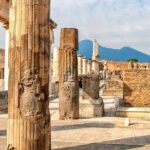
You’ll walk through ruins that include the ruins of temples and civic buildings, and your guide will connect what you see to what happened there. Think: priests and politicians sharing the same stage. The forum is where government and religion overlap, not in a vague way, but in the way the city is built.
What I like about having a guide here is that you don’t just stare at piles of stone. You learn how to read the layout—where civic movement likely happened, where religious functions likely took place, and why this area mattered. That’s the difference between visiting Pompeii and understanding Pompeii.
Theater and bathhouse: entertainment and social life on the same stones
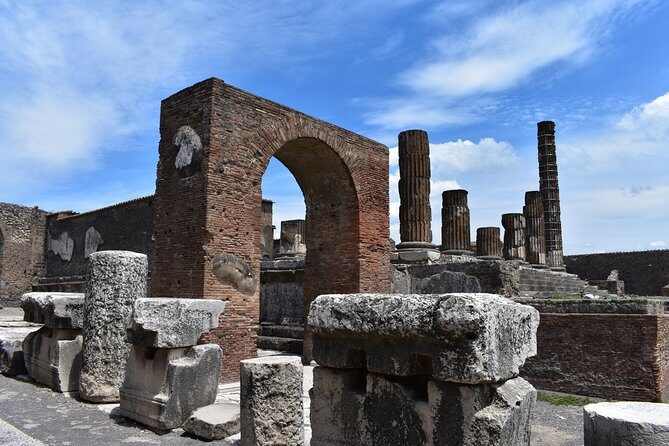
Pompeii isn’t only about tragedy. It’s also about routine. That’s why the theater and thermal bathhouse stops are so important.
In the theater area, you’ll get a real sense of what the Romans did for fun. The theater is described as a place once used for performances of tragedy and comedy. Even with only ruins left, the guide’s explanation helps you picture the sounds and crowd energy that once filled it.
Then comes the bathhouse—one of the most human-scale places you’ll see. You’ll visit a thermal bathhouse, where residents would go regularly to bathe, exercise, and yes, gossip. That last part is key. Bathhouses weren’t private hygiene stations; they were social hubs. Your guide’s job is to translate the space back into daily life.
If you’ve ever wished that ruins felt less cold, these are the stops that help most. They’re about people doing ordinary things—except Pompeii froze the moment under volcanic fallout.
Cobblestones, lava rock, and the Vesuvius story you can walk through
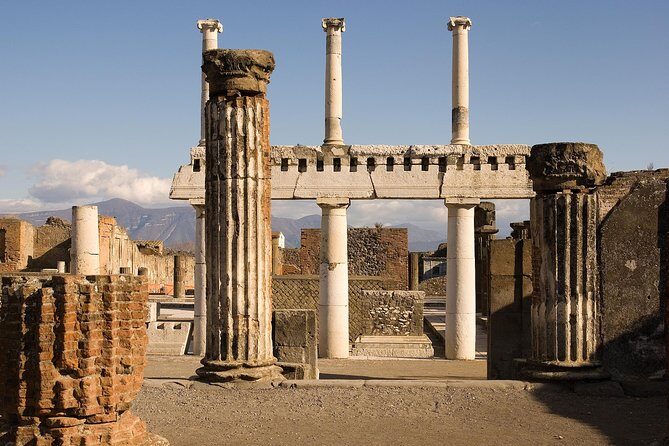
Pompeii’s eruption history is often taught as dates and disaster. This tour makes it more grounded because you move through a city that still shows how it functioned.
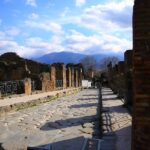
You’ll walk on original Roman cobblestones and you may notice the wagon-wheel ruts left in the street surface. Those ruts matter because they hint at the rhythm of commerce and movement. It’s easier to grasp daily logistics when you see physical evidence of travel and transport.
The eruption of Mt. Vesuvius in AD 79 is part of the tour’s core explanation. Your guide uses what you see—public buildings, streets, and preserved spaces—to make the eruption feel like an event that interrupted real lives, not a distant textbook fact.
Also, don’t ignore the ground itself. You’ll be walking on lava rock, and it can feel different underfoot than modern pavement. This is why the tour strongly suggests comfortable shoes, and a hat for sun if you’re visiting in warmer months.
Other archaeologist-led tours in Pompeii





Gymnasium, gladiators’ barracks, and the commercial side of Pompeii
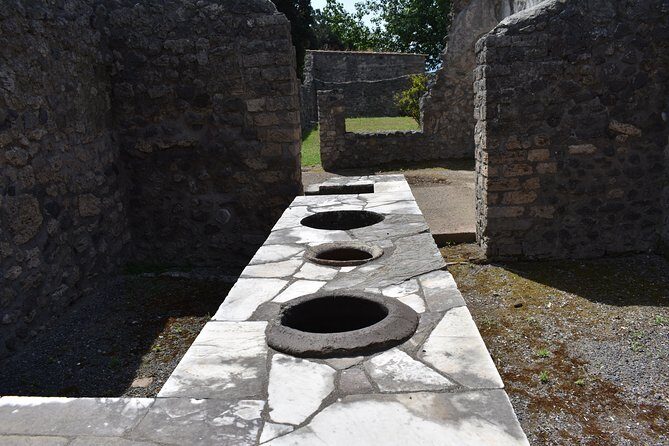
Pompeii was a working city, so the best guided tours also show you how the place paid for itself and trained its fighters.
During the walk, you’ll pass areas connected to the gymnasium and the barracks where Roman gladiators once trained and lived. That mix is fascinating: physical culture next to public spectacle. It helps you understand that entertainment wasn’t random; it was organized and supported.
You’ll also get a look at remains of local businesses, including spaces that functioned like restaurants, bars, and shops selling items such as food and clothing. This is the kind of detail that changes how you remember a site later. Instead of thinking only about famous rooms, you start thinking about economic life—who worked where, what people bought, and how the city served residents and visitors.
One practical reason a guide is valuable in these sections: ruins are easy to misread when you don’t have context. A professional guide will point out what to look for so you don’t skip past key clues.
Lupanare (brothel): Pompeii’s most popular stop, handled with context
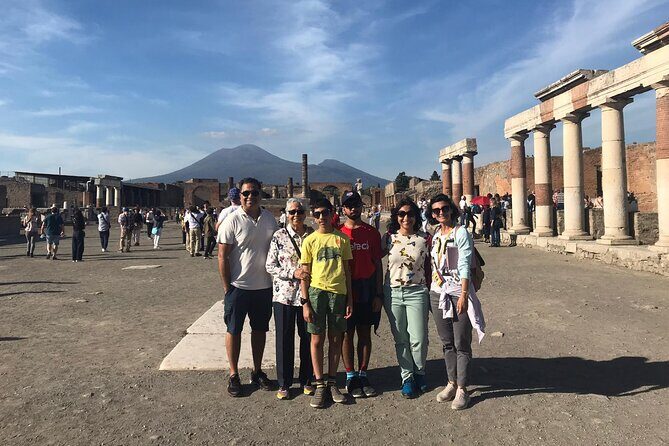
The Lupanare, Pompeii’s brothel area, is one of those places you’ll hear about even if you don’t plan to. On this tour, you’ll see the rebuilt brothel, which makes the setting more understandable.
This stop tends to hook people because it’s so specific. But the best thing about having a guide here is that it’s not treated as shock value. You learn what the attraction means in context—what it tells you about Roman society, how such a business fit into city life, and what survives in the record.
If you’re sensitive to explicit subject matter, you can still find the content manageable because the focus stays on historical interpretation, and you’re moving with a guide rather than wandering into the topic blindly.
Meet your archaeologist guide: small group energy with real expertise
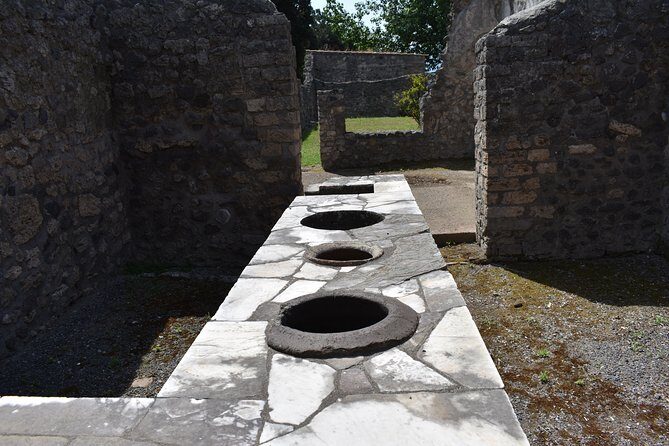
The quality of this tour hinges on the guide, and the names you’ll hear in this experience come up again and again for a reason.
Lello is described as witty, energetic, and highly knowledgeable, with deep experience working on the excavations. In one report, Lello had worked on the site for ten years; in another, a guide like Lello was described as having decades of experience. That kind of background shows up in the details—like spotting features the average person won’t notice and explaining how different parts of Pompeii connect.
Other guides also show up with their own style. Italo is described as passionate and informative, and Cela is described as knowledgeable and personable. Several accounts mention the guides answering questions and keeping the group engaged, including families with teenagers and children.
You’ll also notice the way the guide manages attention to the site itself. One guest specifically noted how their guide reminded people about maintaining the integrity of the ruins and not treating the spaces like a picnic spot. That’s not just “rule talk.” It signals that you’re in good hands and that the guide is invested in protecting what you came to see.
What to wear and how to pace yourself for lava-rock walking
This tour’s comfort checklist is straightforward, and it’s worth following because the ground is part of the experience.
Do:
- wear comfortable shoes with grip
- bring a hat for sun if it’s warm
- plan to move continuously for about 2 hours
Know:
- you’ll be walking on uneven ancient surfaces, including lava rock
- the pace is designed to fit major highlights into a short window, so you won’t get long solo wandering time
Timing tip: the tour can run at different times, and the 5 pm tour is noted as lasting 2 hours. If you’re pairing Pompeii with another stop the same day, give yourself a buffer for walking time and post-tour exploring.
Is $71.35 worth it? The value equation for Pompeii
At $71.35 per person, you’re paying for three things: a local guide, admission tickets, and that skip-the-line, guided-entry structure.
If you go solo, Pompeii is impressive—but also easy to treat like a photo set. The ruins can look similar if you don’t know what each space was used for. On this tour, that’s the payoff. You get explanations tied to the forum, theater, bathhouse, gladiator areas, commercial remnants, and the Lupanare, all in a compact time frame.
You’re also paying for someone to help you avoid common time-wasters. A small group and guided entry mean you spend less time figuring things out at the entrance and more time learning what matters inside.
I’d call it a strong value if:
- it’s your first time in Pompeii
- you have limited time (2 hours is a realistic chunk even on busy days)
- you want historical context without sacrificing the “walk and see” part
It might feel less worth it if:
- you already know Pompeii well and want to roam freely for longer
- you dislike guided pacing and prefer long independent exploration
Should you book this Pompeii archaeologist tour?
Book it if you want a fast, meaningful introduction that helps the ruins click. The combination of archaeologist-style guiding, skip-the-line entry, and a route that covers the forum, theater, baths, gladiator areas, and the Lupanare is exactly what many first-timers need.
I’d especially recommend it for couples and families who want an educational walk that still feels entertaining. The small group size helps the guide connect with everyone, and ear sets make it easier to follow along.
Don’t book it if you’re looking for a long, slow, self-directed stroll. Pompeii is huge, and this is designed for a compact highlights circuit.
If you’re ready to walk on ancient streets, pay attention, and let a specialist translate the stones into daily life, this tour is a very solid choice.