REVIEW · POMPEII
Tour in the villa of Poppea with an archaeologist
Book on Viator →Operated by Svelaria guided tours · Bookable on Viator
Villa di Poppea at Oplontis feels like Pompeii’s quieter cousin. You get an archaeologist-led look at the ruins, focused on what you can actually see. The frescoes in situ and the volcanic damage make the site easy to read, even in a short visit.
I especially love how the tour keeps you on the important details: frescoes you can view where they once lived and the calm, walkable pace through the villa space. The guidance by Ilaria also stands out, because she explains what you’re looking at without rushing you.
The main thing to plan for is the extra cost of entrance tickets (€7 per person), which aren’t included in the tour price. If you’re budgeting tightly, add that in before you book.
In This Review
- Key things I’d block time for
- Villa di Poppea at Oplontis: the calmer side of Pompeii
- Your 90-minute plan with an archaeologist guide
- Frescoes in place: why you’ll want to slow down here
- What the guide adds (and how it helps your brain)
- Entrance ticket cost: the one line item you must add
- Price and value: when $238.28 per group makes sense
- Logistics that matter on the ground
- Who this tour fits best
- Should you book this Villa di Poppea archaeologist tour?
- FAQ
- How long is the tour?
- Where does the tour start?
- Is the tour private?
- What is included in the price?
- Are entrance tickets included?
- What language is the tour offered in?
- What is the group size limit?
- Do I need to use a mobile ticket?
- When will I get confirmation after booking?
- Can I cancel and get a full refund?
Key things I’d block time for
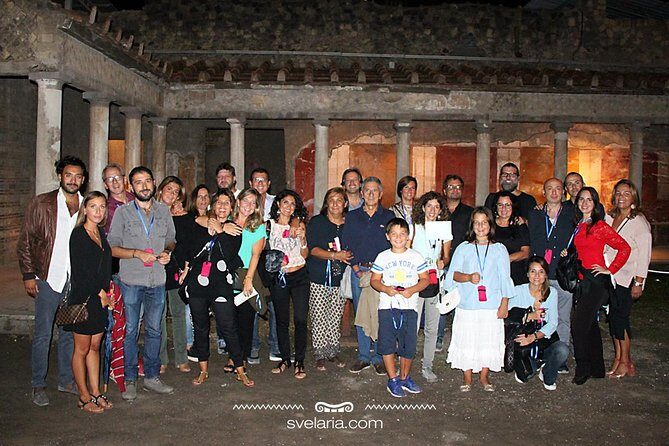
- Frescoes in situ you can see in their original positions
- Volcanic layers of lava that make the disaster feel tangible
- A quiet villa walk that doesn’t feel like a big crowd scramble
- An official guide and private format for your group only
- Short, focused timing at about 1 hour 30 minutes
Villa di Poppea at Oplontis: the calmer side of Pompeii
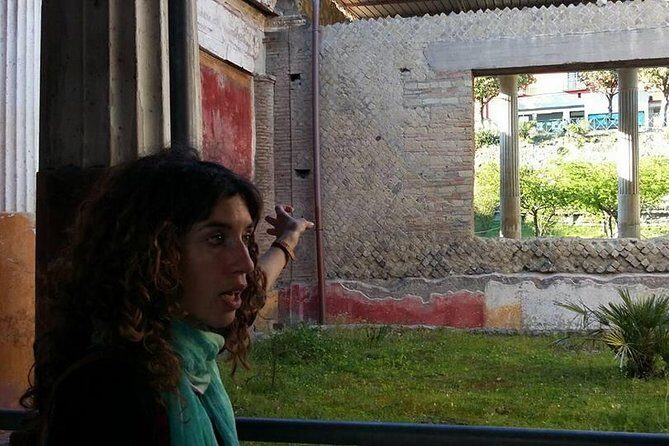
Oplontis, where Villa di Poppea sits, is one of those rare Pompeii-area sites that can feel less like a race and more like a careful look. In about 90 minutes, you’re not trying to cover everything—you’re trying to understand what survives. That framing matters, because it turns the visit from sightseeing into something closer to pattern-spotting.
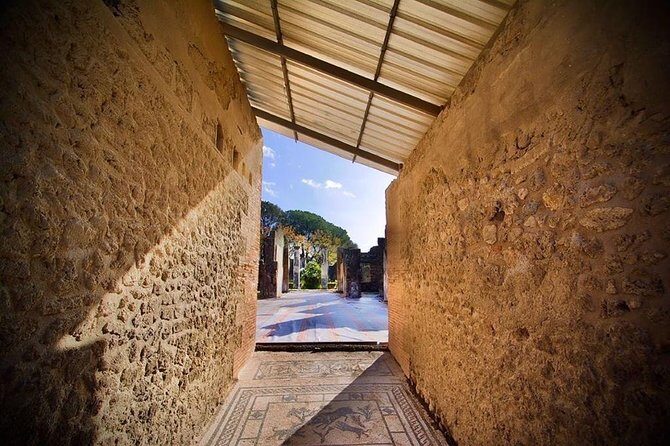
This is also a visual ruin. You’re meant to notice surface-level clues: painted walls, the space they occupied, and the way volcanic layers affected what remains. When you’re guided, those clues start to connect. Even if you don’t consider yourself a “ruins person,” you’ll have a simple way to follow along: look, pause, listen, look again.
And if you’ve visited other big Pompeii sites that feel hectic, you’ll likely appreciate the slower rhythm here. The tour format supports that. It’s private—so there’s no constant crowd jostling your line of sight—and the focus stays on the key features of the villa rather than a long checklist of stops.
Other archaeologist-led tours in Pompeii


Your 90-minute plan with an archaeologist guide
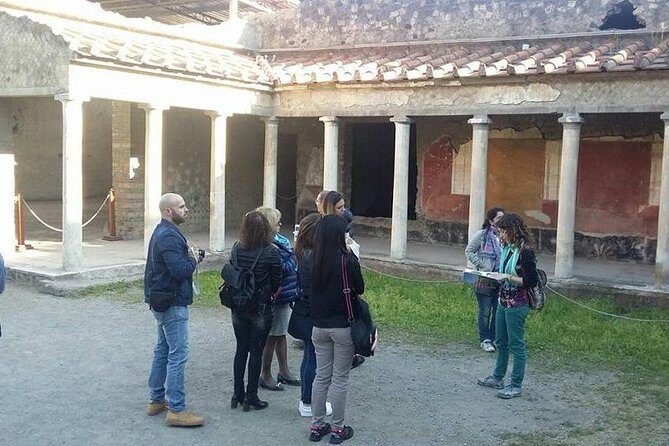
This tour is built around a single, central stop: Villa di Poppea at the Scavi di Oplontis site. You’ll start at Scavi di Oplontis – Villa Poppea (Via Sepolcri, 80058 Torre Annunziata NA, Italy). The tour ends back at the meeting point, so you don’t have to think about transit to a second location.
Because it’s one-stop, the time feels concentrated. You’re not spending your entire hour-plus walking between distant areas, guessing where to look, and trying to keep up with a moving crowd. Instead, the guidance can stay anchored to the same set of walls, rooms, and damage patterns.
You’ll have an official guide, and the experience is private for your group. That “private” part matters more than people expect. If your group has mixed interests—one person loves art, another is more into geology, another just wants the story of what happened—an archaeologist-style approach helps everyone find their angle. You’re not pushed through the space like a conveyor belt.
One practical point: the tour time is listed at about 1 hour 30 minutes. That’s long enough to slow down, but short enough that it won’t drag if you want a focused stop between bigger Pompeii plans.
Frescoes in place: why you’ll want to slow down here
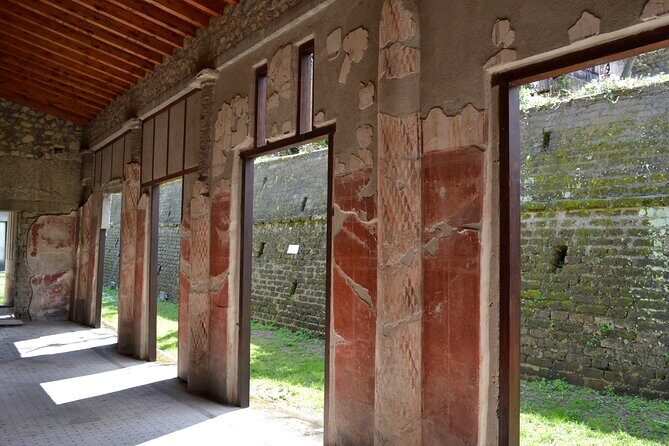
The highlight for me is straightforward: you’re there to see frescoes in situ—painted surfaces where they remain part of the room. That’s a big difference from museum viewing. In a ruin, the placement of art tells you how people likely used the space, how they moved through it, and what kind of atmosphere they wanted.
What you’re likely to notice quickly is how much the frescoes still communicate, even after a catastrophe. The colors may not look like a new painting, but the structure and placement still read as deliberate. A good guide helps you avoid the common trap: seeing the art as random decoration instead of a designed element of daily life.
The reviews and the on-site focus also point to a second visual anchor: the visible layers of lava. Volcanic layers are not just background. They explain why the ruin preserved certain elements the way it did, and why other parts didn’t survive. When your guide ties the lava layers to what you’re seeing on the walls, the site stops being only pretty—and starts becoming understandable.
If you’re the type who likes to take photos, you’ll appreciate that the tour’s goal isn’t quantity. You can spend real time looking at one wall section and still feel like you’re getting your money’s worth. That’s the win with a guided, single-site visit.
What the guide adds (and how it helps your brain)
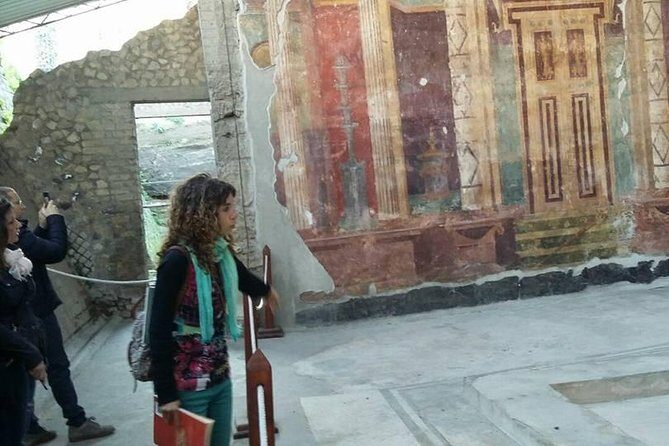
An archaeologist-led tour is at its best when it gives you a way to interpret the scene without overloading you. Here, the best results come from explaining what you’re looking at right now.
Ilaria’s name comes up in accounts of the tour, and the reason matters: she helps turn passive looking into active observation. When a guide points out what’s preserved, what’s missing, and what damage patterns can tell you, you’re suddenly not guessing. You’re reading.
You may also see some artefacts displayed from the site. That’s a helpful contrast to the walls. Frescoes are one story; recovered items are another. Together, they let you build a fuller picture in a short visit.
And because this is a private tour, you can usually ask quick questions without feeling like you’re holding everyone up. If you’re curious about what survived, why certain rooms got preserved, or how lava layers connect to what you see, this is the kind of setting where that conversation tends to click.
Entrance ticket cost: the one line item you must add
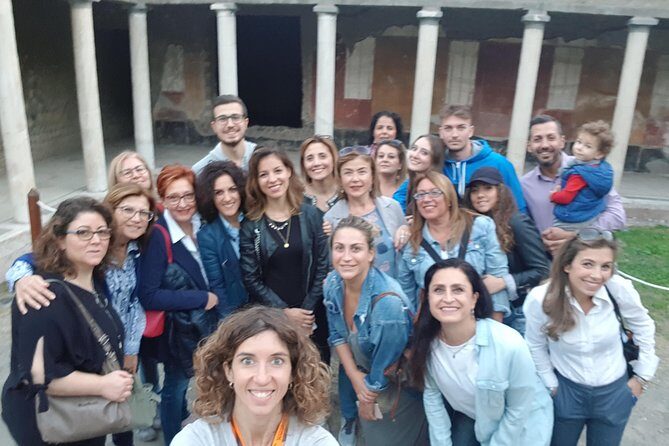
The tour price covers the guide and the private format, but entrance tickets are not included. You’ll pay €7 per person for admission separately.
This is important for budgeting, because it changes the real per-person total. The tour itself is priced at $238.28 per group (up to 15). If you’re splitting among several people, your per-person guide cost drops fast. If you’re booking just for two or four, you’ll still get the private experience, but the guide portion becomes a heavier share of your total spending.
My practical advice: before you decide, write down your party size and calculate the full amount:
- Tour price per group
- Plus €7 per person entrance ticket
That simple math is how you avoid surprise at the site.




Price and value: when $238.28 per group makes sense
Let’s talk value in real terms. A private archaeologist tour priced per group can be a bargain—or not—depending on how many people you bring.
At $238.28 per group up to 15, this is often best if:
- you’re traveling with friends or family you can coordinate with
- you want a calmer, guided experience rather than hopping through ruins solo
- you’re the planner type who likes to buy one ticket and simplify the day
If you’re a couple booking just the two of you, it’s still workable, but the value becomes more about your priorities than the math. You’re paying for:
- an official guide
- a private walking pace
- a focused single-site visit (so you’re not spending your time chasing details)
So ask yourself one question: do you want an informed guide to interpret frescoes and volcanic layers, or do you plan to wander on your own? If you want interpretation, the pricing can feel fair. If you only need access and a quick look, self-guided might be cheaper.
Also consider timing. This experience is commonly booked about 54 days in advance on average, which suggests it can be easier to get your preferred time if you reserve early rather than waiting for the last week.
Logistics that matter on the ground
The meeting point is Scavi di Oplontis – Villa Poppea, Via Sepolcri, 80058 Torre Annunziata NA, Italy. You start there and finish right back there, which helps if you’ve got onward plans in the area.
The experience uses a mobile ticket, so you’ll want your phone charged and ready. The tour is offered in English, and confirmation is sent within 48 hours of booking, depending on availability.
If you rely on public transportation, good news: the site is listed as near public transportation. And if you travel with a service animal, service animals are allowed.
One more practical note: the tour says most travelers can participate. Still, because you’ll be walking through ruins, you’ll want to dress for uneven ground and plan for more time than a flat museum visit. It’s not listed as inaccessible, but ruins always mean your feet are doing some work.
Who this tour fits best
I think this one is a strong match if you fall into any of these groups:
- You care about art and interpretation, not just photos.
- You want a Pompeii-area experience that doesn’t feel like a crowded marathon.
- Your group has mixed interests—fresco art people and disaster-history people can both be happy here.
- You like private tours where you can ask questions without feeling rushed.
It also works well as a complement to bigger Pompeii plans. If you’re doing Pompeii proper and want one extra stop that’s more about quality of attention than breadth of coverage, this fits that role nicely.
Should you book this Villa di Poppea archaeologist tour?
Book it if you want a guided, focused look at frescoes in situ and the way volcanic layers shape what you see. The private format and official guide add up to a visit that feels more like understanding than just viewing.
Don’t book it if your goal is only entry and quick wandering, and you’d rather keep costs low. Also pause on your budget if your group is small, because you’ll still pay the group tour amount plus €7 per person for admission.
If you like calm ruins, clear explanations, and art you can actually locate inside a room, this tour is a smart use of your time.
FAQ
How long is the tour?
The tour lasts about 1 hour 30 minutes.
Where does the tour start?
It starts at Scavi di Oplontis – Villa Poppea, Via Sepolcri, 80058 Torre Annunziata NA, Italy.
Is the tour private?
Yes. It’s a private tour, and only your group participates.
What is included in the price?
The tour includes an official guide and the private tour experience.
Are entrance tickets included?
No. Entrance tickets cost €7.00 per person and are not included.
What language is the tour offered in?
The tour is offered in English.
What is the group size limit?
The price is per group, up to 15 people.
Do I need to use a mobile ticket?
Yes. The experience includes a mobile ticket.
When will I get confirmation after booking?
Confirmation is received within 48 hours of booking, subject to availability.
Can I cancel and get a full refund?
Yes, free cancellation is available. You can cancel up to 24 hours in advance for a full refund.