REVIEW · POMPEII
PompeiI Exclusive Tour with your Archaeologist in a Small Group
Book on Viator →Operated by Grand Tour Experience · Bookable on Viator
Pompeii gets a lot easier to understand. This small-group Pompeii tour pairs fast walking with real archaeological explanations, so the ruins stop feeling random. I especially love the priority entry setup that helps you avoid a long gate wait, and I like that the route is built around the Forum and daily-life spots, not just quick photo stops.
One thing to plan for: the Pompeii archaeological park admission is not included in the $30.25, so you’ll need to budget the separate entry fee.
If you want Pompeii that actually clicks, this is a smart way to do it.
In This Review
- Key things I’d circle before you go
- Pompeii in two hours: why an archaeologist helps you read the ruins
- Meeting at Via Villa dei Misteri and finding your guide near Porta Marina
- How the priority entry + tour ticket system works (so you don’t get stuck)
- Two hours, the essentials: what your route is built around
- Temple to Forum: Pompeii’s public center in plain language
- Tempio di Venere (Temple of Venus)
- Basilica
- Sanctuary of Apollo
- Forum and Temple of Jupiter
- From Macellum to bathhouses: how Pompeii fed itself and cleaned up
- Macellum (market building)
- Terme del Foro (Forum Baths)
- Thermopolium of Vetuzio Placido (old diner)
- Street power and Roman neighborhoods: Via dell’Abbondanza
- Houses and theater: what the wealthy lived in and how Romans performed
- Casa del Fauno and the Houses of Vettii
- Theater (Teatro Grande)
- Price and value: $30.25 is only half the story
- Potential drawbacks to consider before you book
- Who this tour suits best (and who might want a different plan)
- Should you book this Pompeii archaeologist tour?
- FAQ
- Is the Pompeii archaeological park entry ticket included?
- What does the Viator ticket cover?
- How long is the tour?
- Where do we meet, and where does the tour end?
- What group size should I expect?
- Is the tour offered in English?
- What happens if weather is poor?
Key things I’d circle before you go
- Archaeologist-led guiding that explains not only what you see, but how it’s interpreted
- Priority line entry to reduce time stuck at the gate
- A tight two-hour loop covering the Forum and key landmarks
- Stops focused on daily life, from bathhouses to street food sellers
- Well-paced small group size (max 15) for questions and photo time
Pompeii in two hours: why an archaeologist helps you read the ruins
Pompeii is a big place. Even if you know the names of Roman structures, it’s easy to wander, point, and still feel lost. This tour works because it teaches you how to look: what each building meant, where it sat in the city, and why archaeologists believe what they believe.
You’ll also notice the difference in the way the guide talks. Instead of repeating labels, the best guides on this format connect details back to Roman routines and how evidence is studied. Some guides (like Antonio, Ornella, Riccardo/Ricardo, Rafael/Raffaele, and PierLuigi) have a habit of answering questions in a way that turns Pompeii from scenery into a story you can follow.
Two hours is also a gift. You won’t see everything. But you will see the most important anchors—places tied to worship, government, commerce, and everyday comfort—so you leave with a mental map. Then you can explore on your own with actual direction.
Other archaeologist-led tours in Pompeii

Meeting at Via Villa dei Misteri and finding your guide near Porta Marina
The tour starts at Via Villa dei Misteri, 1, 80045 Pompei NA, Italy, and it ends back there. From the start, you’re in a good spot for getting moving quickly without a long transit shuffle.
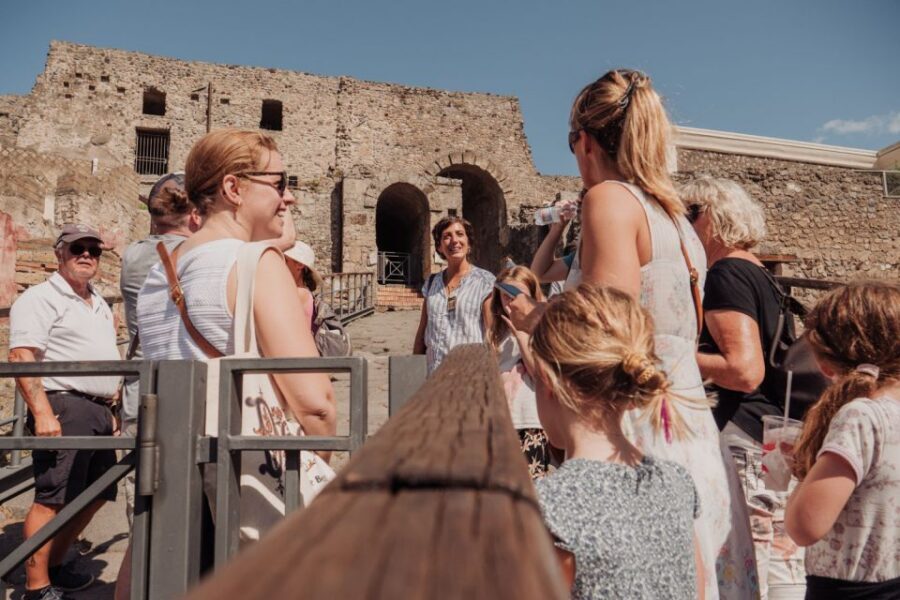
At the park entrance, your guide meets you outside the archaeological area at Porta Marina Superiore and holds a sign for the tour (Pompeii Vip). That matters because Pompeii entrances can feel confusing if you’re juggling tickets, directions, and a crowd.
The timing is built around getting you in efficiently. There’s a separate priority line to help reduce the usual gate frustration. The practical payoff: you spend more time inside the ruins, and less time waiting with everyone else who showed up without a plan.
How the priority entry + tour ticket system works (so you don’t get stuck)
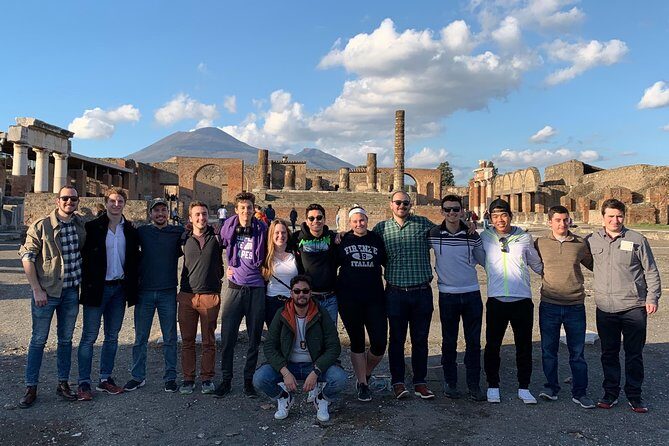
Here’s the key logistics point: your booking includes a ticket to join the tour, not the entry ticket for the Pompeii archaeological park. The site admission fee is separate (listed as €19 per adult, with free under 18).
The operator sends a link the afternoon before your tour to help you buy entrance tickets online, and they also help you on-site if needed. One detail that trips people up: don’t assume your tour confirmation equals entry into Pompeii Scavi. It does not. Think of it as two layers:
- Tour ticket: lets you join the guided group
- Site admission: the official entrance fee for the archaeological park
If you’re the type who likes certainty, buy the site ticket ahead using the link they send. If you prefer to handle it onsite, plan to buy it with the guide’s help rather than rushing at the last second.
Two hours, the essentials: what your route is built around
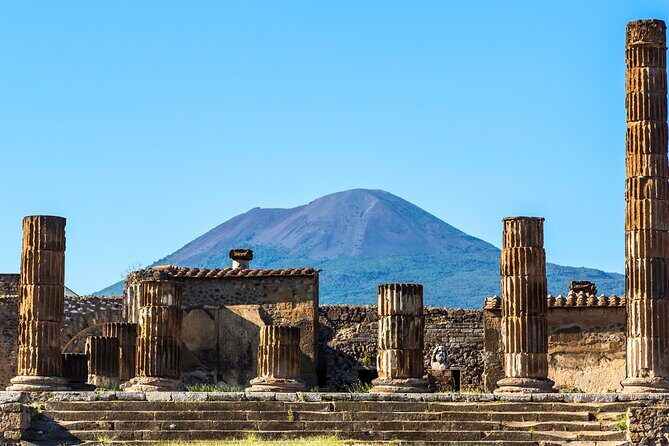
This tour is designed as a “you’ll get it fast” route. You’ll hit major landmarks that structure life in Pompeii: temple worship, civic space in the Forum, food and shopping areas, public baths, a diner-style spot, and a peek into elite homes plus performance space.
The pacing is short stops—each one is about 10 minutes—which keeps energy up and helps you cover more ground. The goal isn’t to linger in one spot until you forget the rest. The goal is to walk away with a coherent understanding.
Also note: some houses listed on this route may be subject to seasonal openings and closings, so what you see can vary a bit depending on the calendar.
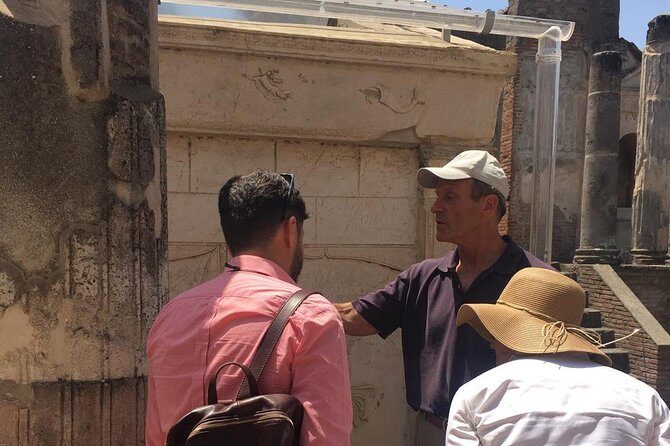
If you want more than sightseeing, you’ll get it here. Good guides use the brief stops to explain what you’d otherwise miss: how the layout guided daily movement, what people likely did in each space, and how archaeologists reconstruct activity from remains.
Temple to Forum: Pompeii’s public center in plain language
Your route starts near Porta Marina Superiore, the western entrance to the city. Porta Marina gets its name from the road leading out toward the sea, so even the meeting area ties back to how Pompeii connected to the outside world.
Then you move into worship and civic life:
Other small-group tours we've reviewed in Pompeii




Tempio di Venere (Temple of Venus)
This temple is dedicated to Venus, the patron goddess of Pompeii. Even if you don’t study Roman religion, you can feel the point of the stop: Pompeii wasn’t just homes and markets. It was a community with shared religious identity, anchored by visible public architecture.
Basilica
In the Forum, the Basilica was one of the most lavish structures. It served practical needs: business management and administration of justice. This is a great example of why having a guide matters. It’s easy to look at a big stone building and think it was only decorative. Here, the guide reframes it as a working civic machine.
Sanctuary of Apollo
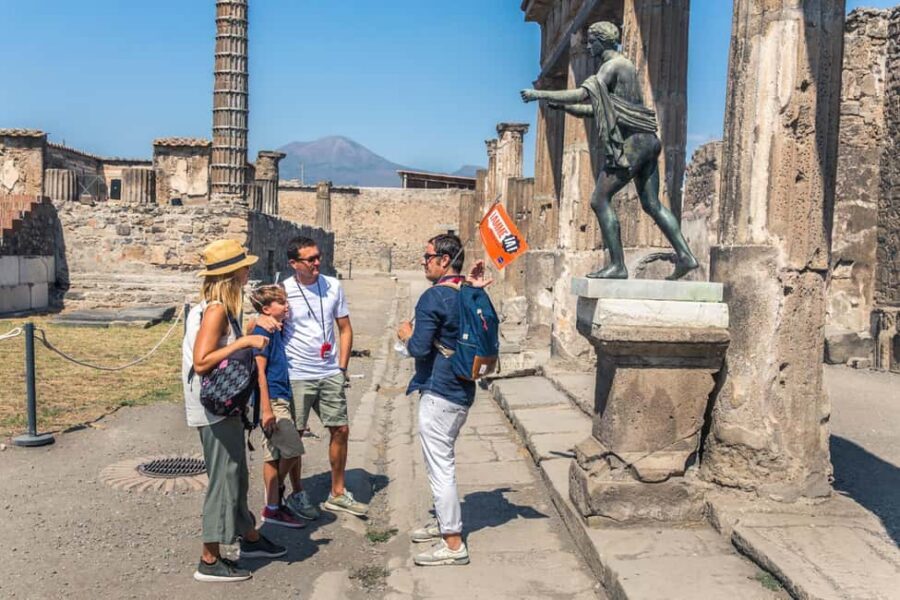
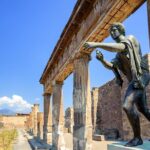
The Sanctuary of Apollo sits along a key approach route up from Porta Marina. The guide’s job is to help you connect spatial clues—why this location makes sense and how worship fit into the flow of movement toward the public heart.
Forum and Temple of Jupiter
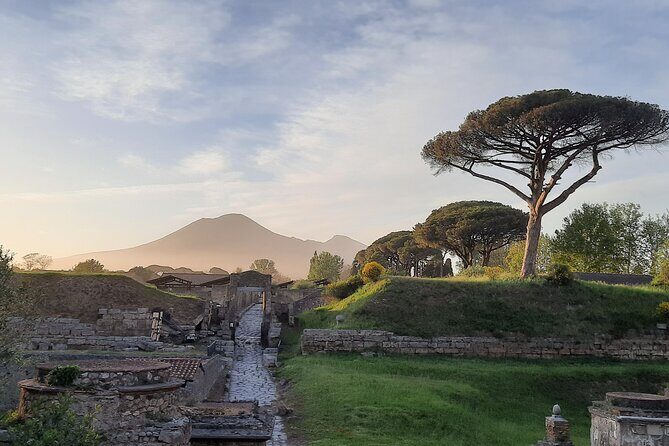
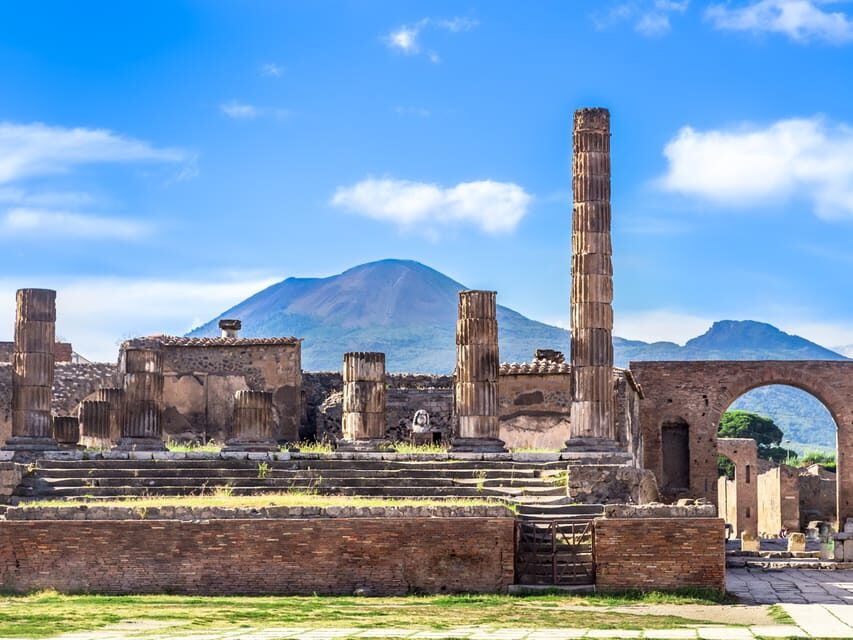
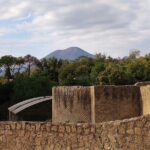
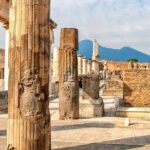
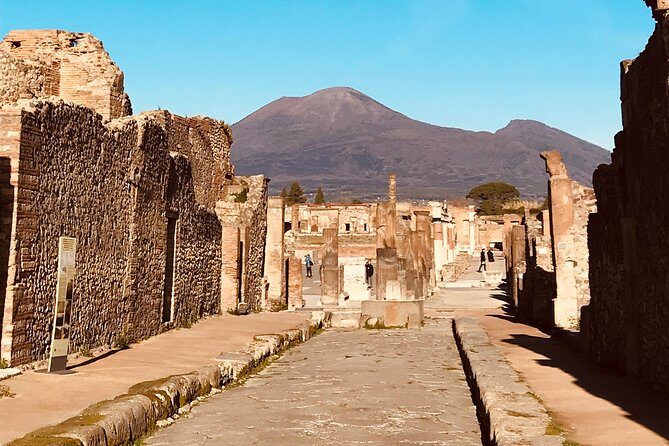
The Forum (Main Square) is the center of daily life. You also see the Temple of Jupiter, positioned on the northern side of the Forum. There’s even a dramatic backdrop relationship with Vesuvius rising behind it. This kind of placement is exactly what archaeologists think about: buildings weren’t random; they shaped how people gathered and what they saw.
From Macellum to bathhouses: how Pompeii fed itself and cleaned up
After the big civic and religious anchors, your route shifts to everyday life, which is where Pompeii really starts to feel human.
Macellum (market building)
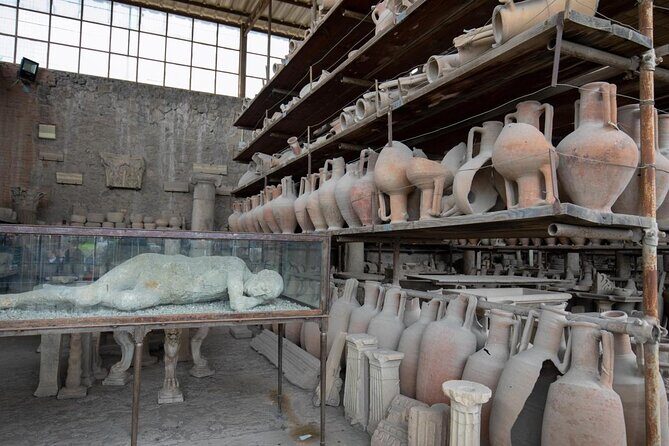
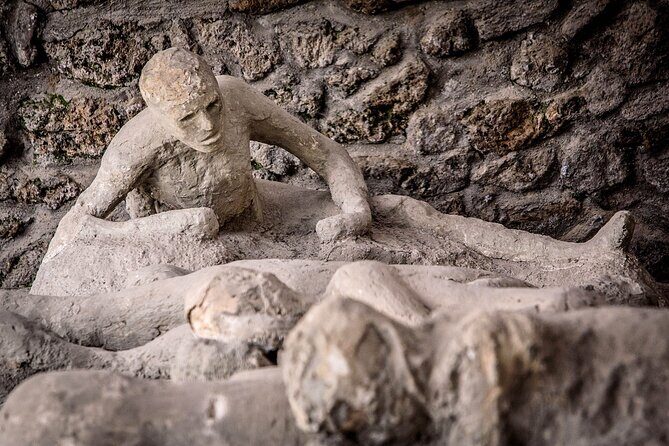
The Macellum was a monumental market for food and daily consumer products. It’s also where you may encounter plaster casts connected to the archaeology of the famous bodies from the eruption. The tour describes the BODIES method as an archaeological way to understand the bodies as they were at the moment of the eruption. Even if you’ve seen photos online, it hits harder in person because you see the market context around it.
Terme del Foro (Forum Baths)
The Forum Baths are one of the best-preserved elements of the city. A standout detail for understanding Roman routine: the male and female areas had separate entrances. So this isn’t just about bathing. It’s about social organization built into public infrastructure.
Thermopolium of Vetuzio Placido (old diner)
Next comes a refreshment stop: a thermopolium, basically an ancient diner for quick meals. These were everyday places, not ceremonial ones. If you like thinking about what normal people did on ordinary days, this is a strong stop.
This set of locations works well because it answers a hidden question for many first-timers: what were people doing hour to hour? The tour gives you a chain—from food to bathing to grabbing something to eat—so you can picture daily rhythm.
Street power and Roman neighborhoods: Via dell’Abbondanza
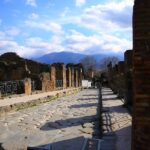
You’ll walk along Via dell’Abbondanza, the ancient main street (a decumanus maximus). This stop is brief, but it’s important because it ties the city together.
When you move from Forum buildings to street-level spaces, your brain starts building the map. The guide helps you interpret the street as a route with purpose: where people traveled, how businesses likely lined the way, and how the city’s layout encouraged movement between public areas.
If you want to take photos, do it here with intent. Instead of shooting random columns, aim for the street perspective that shows how you were just walking through the city center.
Houses and theater: what the wealthy lived in and how Romans performed
The tour includes a look at high-status domestic spaces and the performance culture of the city.
Casa del Fauno and the Houses of Vettii
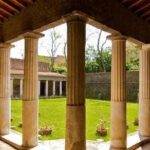
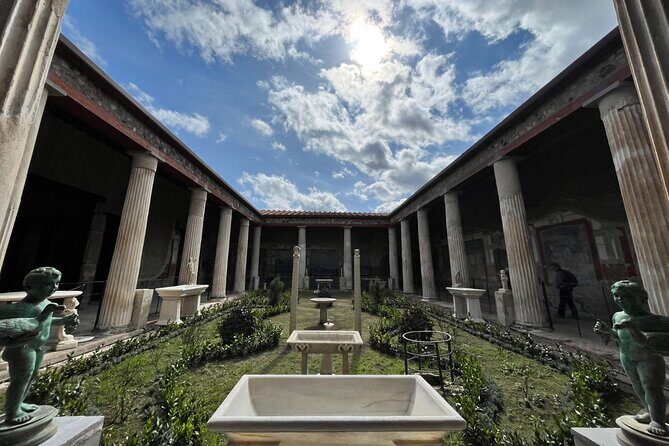
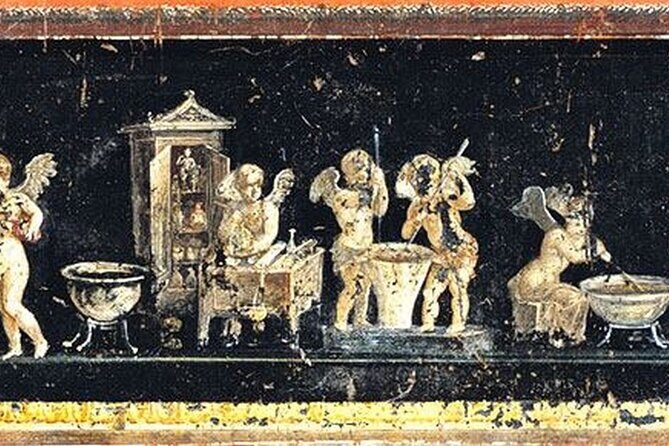
You’ll see the House of the Faun, one of the larger houses in Pompeii. The sidewalk includes a Latin welcome inscription using the word HAVE. You may also visit the House of the Vettii, described as one of the richest and most famous homes in Pompeii, connected with Priapus as a god of prosperity.
One realistic note: these stops can be affected by seasonal openings and closings, so don’t panic if your exact inside look differs slightly from what you were expecting.
Theater (Teatro Grande)
You end with Teatro Grande, where comedies and tragedies in the Greco-Roman tradition were performed. This is a smart final stop because it gives you cultural context. Pompeii wasn’t only commerce and administration; it had shared public entertainment too.
If you’re tired by this point, that’s normal. But the theater works as a payoff stop because it helps you imagine crowds gathering and sound carrying through a purpose-built space.
Price and value: $30.25 is only half the story
The tour price is listed as $30.25 per person for about two hours, offered in English. That gets you the expert archaeologist guide and the small-group format, plus the benefit of entering through a separate priority line.
But the big budget item is the site ticket. You still need €19 per adult for Pompeii park admission (free for under 18). So think of your likely total as roughly:
- $30.25 tour price
- plus €19 site admission
Is it worth it? For many people, yes—because the tour saves time and prevents you from guessing. Pompeii is packed with details that look similar at a distance: temples, civic buildings, rooms, streets. With a guide explaining how archaeologists interpret remains, you spend your limited time seeing more meaning per step.
Also, the small-group cap (maximum 15 travelers) helps. You get a rhythm where questions don’t feel like a contest for attention.
Potential drawbacks to consider before you book
First, two hours is short. You’ll cover key areas, but you won’t see every major attraction in Pompeii. In particular, some common big-ticket sights may not be part of this route, so if you have a must-see list, you may still want time before or after the tour to roam.
Second, the tour depends on good weather. If conditions are poor, the plan can be changed or canceled with a different date or a full refund offered.
Finally, you’ll want to bring solid walking shoes. Pompeii involves uneven ground and lots of steps. The tour moves quickly, and short stops are still time standing and looking.
Who this tour suits best (and who might want a different plan)
This tour fits best if you want a structured introduction. If you love history but don’t want to study beforehand, the route gives you a map and the guide provides context on what you’re seeing.
It also works well for families with older kids and teens who are okay walking and listening for about two hours. The guided format is a good way to keep younger attention focused on what matters instead of letting them drift into smartphone mode for whole sections.
If you’re the type who wants total freedom—slow pacing, long stays in one house, or deep focus on one specific attraction—you may prefer a longer guided experience or a self-guided day with a different kind of support. This one is tight and efficient.
Should you book this Pompeii archaeologist tour?
I’d book it if you want Pompeii to make sense quickly and you prefer a guide who talks like an archaeologist, not like a script reader. The priority entry setup, the small-group size, and the focus on the Forum, daily-life buildings, and major public spaces give you strong value for a half-day slot.
I’d think twice if you already planned a very specific set of stops and you need every major attraction on your shortlist. This is built to cover the essentials, not to hit every single famous site.
If you’re visiting Pompeii for the first time and you want your time to count, this is a solid choice. You’ll leave with names, context, and a city layout you can actually remember.
FAQ
Is the Pompeii archaeological park entry ticket included?
No. The price you pay for the tour does not include admission to the Pompeii archaeological park. The admission fee is listed as €19 per adult, with free entry under 18. You can buy the site ticket online using a link sent the afternoon before, or you can buy it on the spot with the help of the team.
What does the Viator ticket cover?
Your Viator booking is described as a ticket to join the guided tour. It is not the official entry ticket for the Pompeii archaeological site.
How long is the tour?
The tour duration is about 2 hours.
Where do we meet, and where does the tour end?
You meet at Via Villa dei Misteri, 1, 80045 Pompei NA, Italy. The tour ends back at the same meeting point.
What group size should I expect?
This tour has a maximum of 15 travelers.
Is the tour offered in English?
Yes, it is offered in English.
What happens if weather is poor?
The tour requires good weather. If it is canceled due to poor weather, you’ll be offered a different date or a full refund.