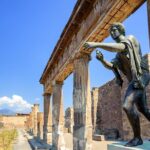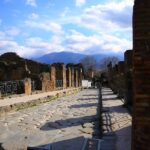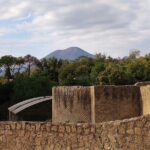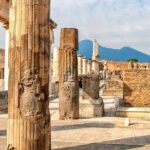
Golden hour changes how Pompeii feels. This private Pompeii sunset guided tour is built for people who want to beat the worst heat and still see the big names: Forum life, baths, theaters, and standout house mosaics. I especially like the official guide format and the way the storytelling turns stone streets into daily routines you can picture.
I also like that the route is timed to keep things moving without the all-day slog, which matters in Pompeii. One thing to watch: the Pompeii entrance ticket isn’t included (even though many specific stops note admission included), so you’ll want to confirm what you personally still need to purchase before you go.
In This Review
- Key things to know before you book
- Why Pompeii at sunset feels smarter than midday
- Private group setup and what you should expect
- Price and value: what $95.31 includes (and what to double-check)
- Getting there: Porta Marina meeting point and easy start
- The 2-to-3-hour route through Pompeii’s top sights
- Stop 1: Pompeii Archaeological Park (about 2 hours)
- Stop 2: Temple of Apollo (about 10 minutes)
- Stop 3: Foro de Pompeya / main square (about 20 minutes)
- Stop 4: Granai del Foro (about 15 minutes)
- Stop 5: Terme del Foro (about 20 minutes)
- Stop 6: Via dell’Abbondanza (about 20 minutes)
- Stop 7: Teatro Grande (about 20 minutes)
- Stop 8: Lupanar (about 20 minutes)
- Stop 9: Casa del Poeta Tragico (about 10 minutes)
- Stop 10: Casa del Cinghiale (about 10 minutes)
- Stop 11: Tempio di Venere (about 5 minutes)
- Stop 12: Tempio di Giove Capitolino (about 5 minutes)
- The guide quality is the real upgrade
- Timing and comfort tips for a smooth sunset visit
- Who this private Pompeii sunset tour is best for
- Should you book this Pompeii sunset private tour?
- FAQ
- How long is the Pompeii sunset private guided tour?
- Is the entrance ticket to Pompeii included?
- What language is the tour offered in?
- Is this tour private?
- Where do we meet for the tour?
- Can I cancel and get a full refund?
Key things to know before you book
- Sunset timing helps you avoid peak heat and crowd pressure while the site is still open for exploring.
- Skip the line plus an official guide means less dead time and faster access to major areas.
- A tight, guided route covers civic spaces (Forum), leisure spots (baths and theaters), and home interiors with mosaics.
- Ticket coverage is mixed: the main Pompeii excavation entry isn’t listed as included, while several stops are marked as having admission included.
- English-language guiding is offered, and the experience is designed for people who want clear explanations.
- Your group stays private, so you’re not squeezed into a larger crowd.
Why Pompeii at sunset feels smarter than midday
Pompeii is famous, but it can also be exhausting. In warm months, the combination of open-air walking, stone underfoot, and dense crowds can drain your energy fast. A sunset plan is a practical fix. You get cooler air and softer light, which makes the ruins easier to read. You also tend to spend more of your time looking at details instead of shielding yourself from sun and stress.
And light really does help. Temple fronts, forum spaces, and house facades all look different when the sun is lower. You’ll often notice shapes, alignments, and the layout of spaces more clearly than you would under harsh midday glare. It’s not just for photos, either. When you can see the space, you understand it.
Other sunset and evening tours of Pompeii
Private group setup and what you should expect
This is a private tour/activity, which means only your group participates. That matters because Pompeii rewards questions. If you want clarification on how the Forum functioned, how entertainment worked in the city, or why certain buildings matter, you can ask without waiting for a larger group to get their turn.
The tour runs about 2 to 3 hours, guided in English. The pacing is tour-style, not wandering-style. So you’ll cover a lot, but you won’t have the freedom to stop for long breaks in every single corner. If you like a plan and clear direction, you’ll enjoy this. If you’d rather drift and read every wall at your own speed, you might feel the schedule is a bit tight.
Skip-the-line access is included, which can be the difference between starting your visit relaxed versus losing your momentum right at the start.
Price and value: what $95.31 includes (and what to double-check)
At $95.31 per person, you’re paying for three big things: an official tourist guide, skip-the-line entry, and a focused route that hits major points rather than letting you guess your way through.
The most important value question isn’t the guide—it’s the ticket situation. The tour indicates that the entrance ticket to the Pompeii excavations is not included, yet it also lists “admission ticket included” for multiple stops. That usually means part of your entry cost may still fall to you, depending on how the venue handles access for each site segment.
So my practical advice is simple: before you arrive, confirm exactly what you still need to buy for entry to the archaeological park itself. This avoids the common travel frustration of thinking you’re covered when you’re not.
Also note that tips aren’t included. If you’re happy with the guide (and you probably will be), budget for a tip.
Getting there: Porta Marina meeting point and easy start
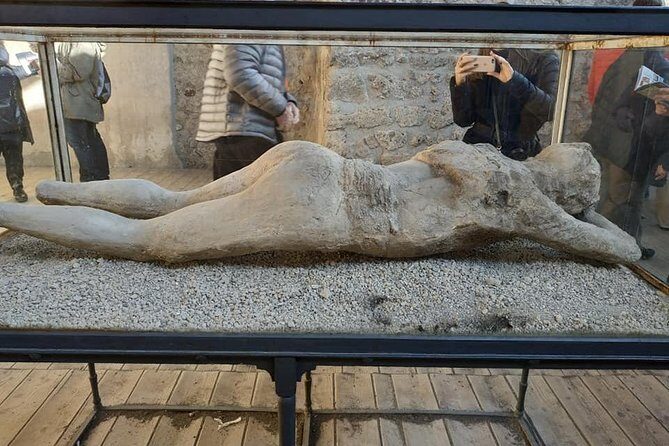
You meet at Pompei-porta Marina (scavi80045 Pompei) and the tour ends back at the same meeting point. That round-trip setup is convenient. You don’t have to worry about finding your way out or coordinating a second meeting spot.
Because this is near public transportation, you have flexibility if you’re arriving by train or bus and don’t want to rely on taxi time. Still, arrive early enough to get oriented—Pompeii ruins can feel like a maze until you see the main entrances and walking routes clearly.
The 2-to-3-hour route through Pompeii’s top sights
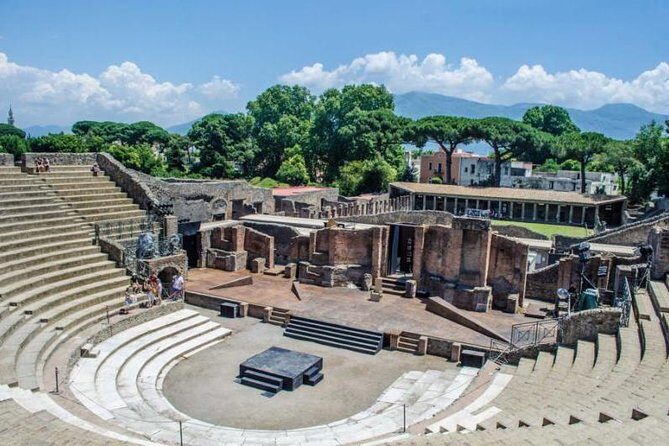
Here’s what you’ll experience as the guide leads you from broad public spaces into more specific highlights. Expect a steady flow: short stops, then a longer “main grounds” segment where the city’s most recognizable areas come together.
Other guided tours in Pompeii



Stop 1: Pompeii Archaeological Park (about 2 hours)
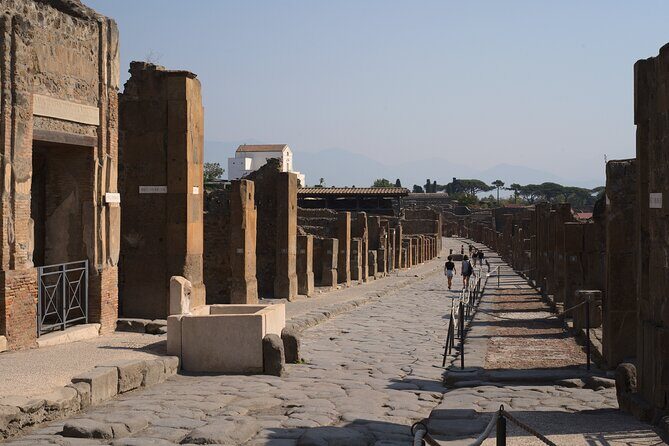
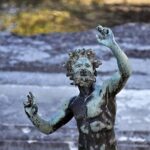
This is the core of the tour. You’ll spend around 2 hours in the Pompeii Archaeological Park, covering a set of must-sees such as the Forum, Baths, Roman Villas, the Lupanare, the Theaters, and the commercial street life like ancient shops and bakeries. The tour also points out mosaics and frescoes.
Why it’s special: the park segment gives you the bigger picture first. The Forum and civic areas explain how people lived, argued, shopped, and socialized. Baths and villas show what leisure and home life looked like. Then theaters and the Lupanar add the entertainment side of Pompeii—so it stops feeling like a museum and starts feeling like a city.
Possible drawback: because it’s the biggest chunk of time, it’s also the most walking. Wear comfortable shoes, and don’t treat it like a quick “hit list.” If you want to understand the layout, go slowly with the guide’s rhythm.
Ticket note: admission ticket for the Pompeii excavations is not listed as included for this park entry, even though many later stops list admission included.
Stop 2: Temple of Apollo (about 10 minutes)
One of Pompeii’s preserved temples, the Temple of Apollo is a quick but meaningful moment. In a short time, you’ll get a sense of sacred space—how temples anchored the city’s religious life and how important certain sites were.
It’s also a good pause point. After a heavy park segment, a focused stop like this lets you reset and refocus on architecture and purpose.
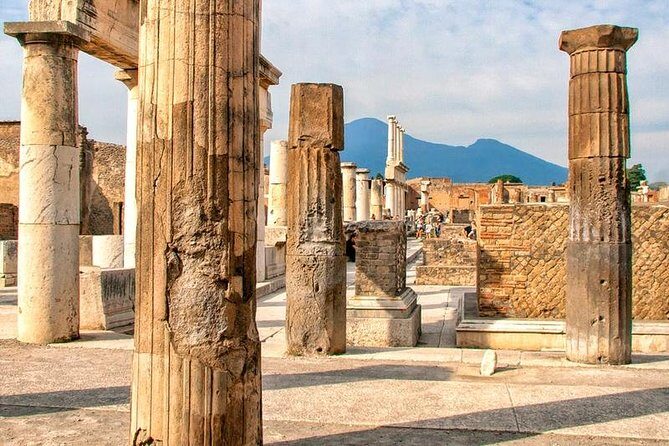
Stop 3: Foro de Pompeya / main square (about 20 minutes)
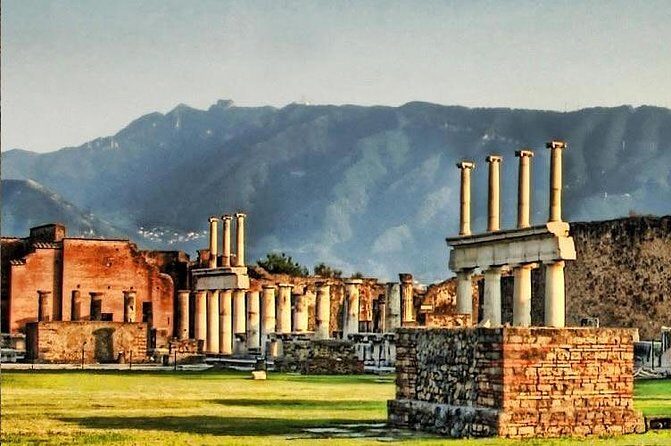
This is the city’s main square. Expect the guide to frame the Forum as the social and civic heart—where public life happens, not just where monuments sit.
Why I like it for sunset tours: the Forum spaces tend to feel more “human” when the light softens. You can picture how people would move through the square, pause, and talk, instead of just seeing it as ruins on a map.
Stop 4: Granai del Foro (about 15 minutes)
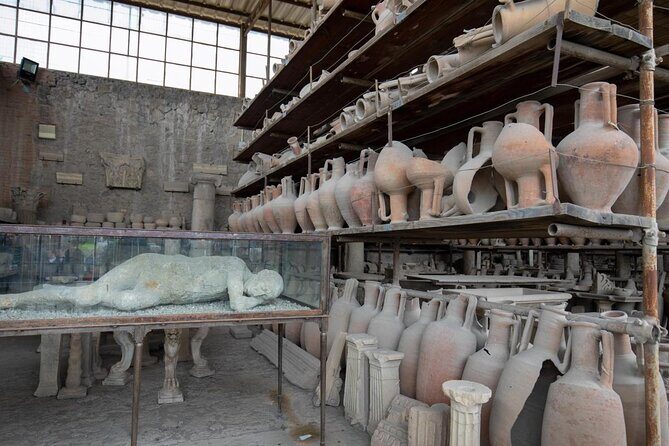
The Granai del Foro is a museum stop. Granaries connect directly to real daily life: food supply, storage, and the practical side of running a city.
This is one of those stops that turns the big names of Pompeii into something more grounded. Instead of only focusing on entertainment and temples, you also see how the city worked.
Stop 5: Terme del Foro (about 20 minutes)
These are the Terme del Foro, described as the most beautiful spas of Pompeii. Even without going super deep into technical details, baths reveal a lot about social culture. They were places for relaxation and meeting, not just hygiene.
If you’re the type who enjoys architecture, this stop can be a highlight. You’ll likely appreciate how the spaces were designed for flow and comfort, especially with the evening light.
Stop 6: Via dell’Abbondanza (about 20 minutes)
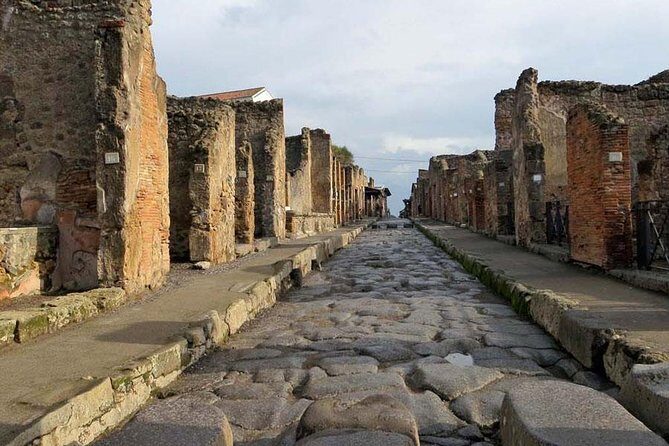
Via dell’Abbondanza is the main road. This is where Pompeii starts to feel like a place you could walk through day to day.
Street-level touring is where you can mentally “switch gears” from grand structures to everyday life: movement, entrances, and the idea that commerce sat next to public spaces.
Stop 7: Teatro Grande (about 20 minutes)
The Teatro Grande is tied to performances—comedy and tragedy. It’s an easy-to-understand stop because it matches how humans still think about performance today: an audience, a stage, and a mood set by the building itself.
If you like culture that’s more than architecture, this stop helps connect Pompeii to actual human entertainment.
Stop 8: Lupanar (about 20 minutes)
The Lupanar is the ancient house of entertainment. It’s one of the places where Pompeii doesn’t sugarcoat the past. You’ll likely leave with a sharper sense of what people expected from city life, including what kinds of venues existed and how they were part of the street world.
Consideration: if you prefer tours that keep things very polished and vague, this stop may feel too direct. If you want Pompeii as it was—including the messy parts—you’ll probably appreciate it more.
Stop 9: Casa del Poeta Tragico (about 10 minutes)
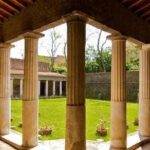
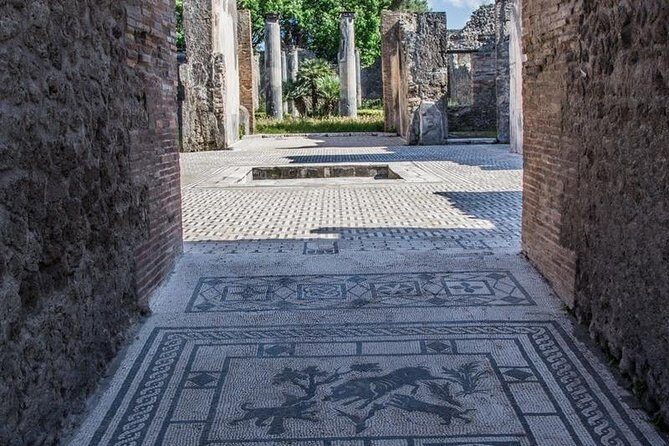
Casa del Poeta Tragico is a house stop known for mosaics. This is a short time window, but houses tend to pack the strongest “how did people live here?” answers.
Mosaics don’t just decorate. They signal taste, storytelling, and how much care went into the look of a home interior.
Stop 10: Casa del Cinghiale (about 10 minutes)
Casa del Cinghiale is another house stop, also tied to mosaics and architecture. If you’re comparing house features, you’ll start to see how different spaces were used and how layouts shaped daily movement.
These short house stops are excellent for people who want a mix of interiors without spending hours navigating a huge building maze.
Stop 11: Tempio di Venere (about 5 minutes)
The Tempio di Venere is listed as one of the first temples of Pompeii. At only about 5 minutes, it’s a quick architectural and historical touchpoint rather than a long explanation stop.
It works well near the end of the route because it reinforces themes: religion, civic identity, and how temples punctuated the city.
Stop 12: Tempio di Giove Capitolino (about 5 minutes)
The Tempio di Giove Capitolino is the Temple of the Forum area. Another quick stop, designed to wrap up the route with a high-visibility, anchor point temple.
This final segment makes sense: you finish by tying public space back to sacred space.
The guide quality is the real upgrade
What makes Pompeii really click is not the ruins alone—it’s how they’re explained. Two names came up in glowing terms: Romolo and Paolo.
Romolo is praised for clear, prompt communication and for calling or contacting guests with helpful information before you even arrive. Once you’re there, the key is his passion for Pompeii and the excavations, including a family connection that spans generations. That kind of commitment changes the tour tone. You don’t just get facts—you get why those facts matter.
Paolo is also described as excellent and detailed, with a love for Pompeii that shows in the pacing and explanation style. If you’ve ever had a tour where you feel rushed through important spots, this kind of guide approach can be a breath of fresh air.
In practical terms: you’ll get better context at each stop, which makes the stones feel less random and more like a working city. And since the tour is guided in English, you’ll want a guide who keeps explanations clear and easy to follow.
Timing and comfort tips for a smooth sunset visit
A sunset tour isn’t automatically easy. Pompeii is still outdoors and still made of steps, uneven ground, and long stretches between highlights. Here’s how to stay comfortable:
- Wear comfortable shoes you trust on uneven stone.
- Bring water and plan for a slower pace during the busiest segments.
- If you’re visiting in shoulder seasons or later in the day, consider a light layer for evening air.
- If you’re sensitive to heat, treat the first main park segment as your priority for early energy.
Also, expect that the tour duration is approximate. Sunset timing can shift slightly by season, and your guide may adjust pacing to keep you moving without cutting explanations.
Who this private Pompeii sunset tour is best for
This is a strong fit if you:
- Want a guided path through Pompeii’s key sites without dealing with the largest crowds.
- Prefer a structured plan but still want thoughtful explanations.
- Love mosaics, houses, and the contrast between public squares and everyday life.
- Care about language clarity and smooth communication from a guide.
It’s less ideal if you:
- Want to spend extra time lingering in a single house or reading every wall text at length.
- Prefer a DIY approach with hours of free wandering and no scheduled stops.
Should you book this Pompeii sunset private tour?
If you like Pompeii at a human pace, this is a smart booking. The mix of Forum civic life, baths, theater entertainment, the Lupanar, and house mosaics gives you a well-rounded view in just a few hours. The private setup helps you keep control of your questions, and the standout guide experience—whether you end up with a passionate guide like Romolo or a detail-focused guide like Paolo—can turn a checklist into real understanding.
Just do one homework step: confirm what you still need to buy for entry to the Pompeii archaeological grounds, since the tour notes mixed ticket coverage. If that’s handled, you’ll be set up for one of the most enjoyable ways to see Pompeii—when it’s not at full intensity of the day.
FAQ
How long is the Pompeii sunset private guided tour?
It runs about 2 to 3 hours (approx.).
Is the entrance ticket to Pompeii included?
No. The entrance ticket to the Pompeii excavations is not included. Some listed stops show admission included, but the main park entry is specifically noted as not included.
What language is the tour offered in?
The tour is offered in English.
Is this tour private?
Yes. It’s private, so only your group will participate.
Where do we meet for the tour?
The meeting point is Pompei-porta Marina (scavi80045 Pompei).
Can I cancel and get a full refund?
Yes. You can cancel for a full refund up to 24 hours in advance of the experience start time.