REVIEW · POMPEII
Pompeii: walking tour with 3D glasses and with entrance ticket
Book on Viator →Operated by AR Tour · Bookable on Viator
3D glasses turn Pompeii into a timeline. In this two-hour walk, AR reconstructions layer the past over the ruins, and the entrance ticket is built into your experience. One caution: the tour leans on the tech and set stop narration, so if you expect a stop-by-stop, lecture-style history marathon, you may want to manage expectations.
You meet at Coffee Shop Vittoria, Via Mare, in Pompeii at 10:30 am, and you’ll walk the main route with a small group (up to 15). The good news is you can keep exploring after the tour ends once the glasses are returned, and the visit runs in most weather, so plan for heat and wear comfortable shoes.
In This Review
- Key things to know before you go
- Pompeii in 3D: what the AR glasses really change
- Meeting at Coffee Shop Vittoria: keeping logistics simple
- The 2-hour walking flow inside the archaeological park
- What you get at the AR stops (and why timing matters)
- Guide style: how to get more than the tech
- Pompeii’s highlights you’ll get—and the parts to plan separately
- Comfort and practical tips for a 10:30 am walk
- Price and value: is $62.75 a good deal?
- After the tour: what to do with your extra time
- Should you book this Pompeii 3D AR walking tour?
- FAQ
- Is the entrance ticket included?
- How long is the Pompeii walking tour with 3D glasses?
- What language is the tour offered in?
- Where do I meet the tour?
- Does this tour run in bad weather?
- Can children use the 3D technology?
Key things to know before you go
- AR moments are scheduled: you don’t wear the glasses for every second of the walk, but for specific pre-planned stops across the main route.
- Entrance is included: you’re not doing the ticket math on arrival, and you’ll leave with a mobile ticket experience.
- Small group size (max 15): easier to stay together on a site where it’s easy to wander off.
- You can extend your visit: after the tour, the park is yours to roam at your own pace.
- No suburban villas stop: the tour does not include Villa dei Misteri.
- Kids under 8 miss the 3D tech: they can enter with a standard ticket, but won’t use the AR.
Pompeii in 3D: what the AR glasses really change
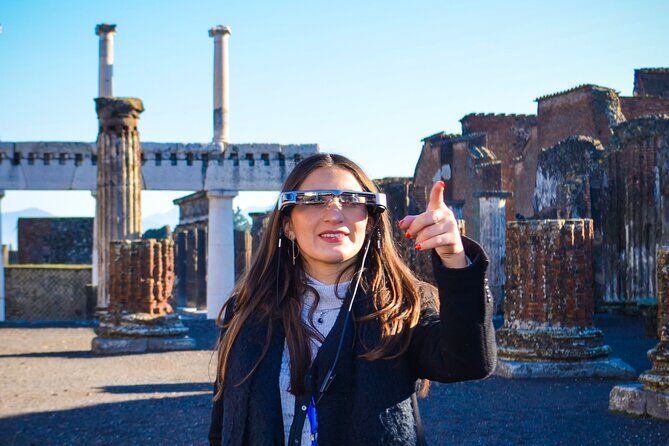
Pompeii already hits hard as-is. The streets are tight, the buildings are close, and your brain keeps trying to guess what’s missing. What the AR glasses do is give your eyes permission to play “today vs. then” without you needing to constantly picture it in your head.
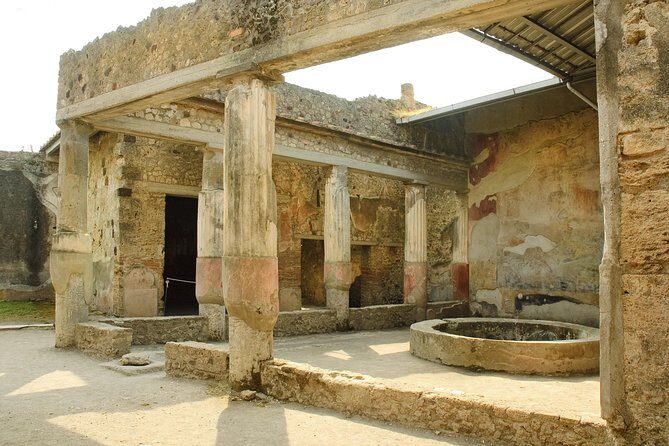
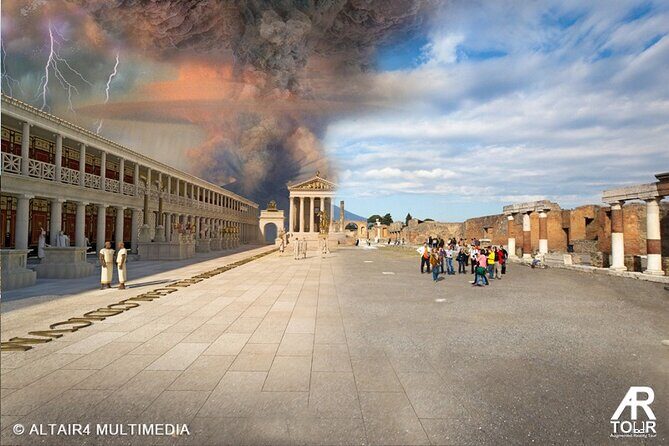
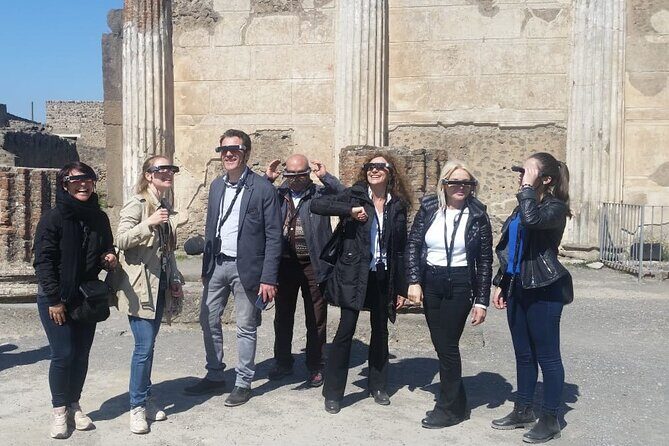
The way it works in practice: you follow the route with an assistant, and at certain spots you stop, put on the AR glasses, and see reconstructions layered over the ruins. This helps you understand scale fast. A doorway stops being just a doorway, for example, and becomes part of a functioning street life—shops, walls, facades, and how the spaces connect.
I also like that the tour is designed around interpretation, not just a route checklist. Even when you’re moving, the AR snapshots keep steering your attention to things you might otherwise skip.
Potential drawback: the experience is not framed as a full, continuous guided commentary for every single landmark. If you love long explanations at each stop, you might feel the content is more “activate the glasses here” than “talk at length while you stand.” The tech helps, but you still get more from it when you pay attention and ask questions when the guide opens the door.
Other walking tours of the Pompeii ruins



Meeting at Coffee Shop Vittoria: keeping logistics simple
The meeting point is Coffee Shop Vittoria, Via Mare, 80045 Pompei NA, Italy, and the start time is 10:30 am. That’s helpful because Pompeii can be a maze, and having a real, named place beats vague “near the entrance” directions.
Plan to arrive about 15 minutes early. The tour starts on time out of respect for the group, and if you’re late they’ll wait for a maximum of 5 minutes. If you’re coming by train or bus, give yourself buffer time so you’re not stressed before you even get to the first AR stop.
Also note: you’re meeting near public transportation, so it’s generally doable without a car. The tour ends back at the same meeting point, which is a nice way to avoid the classic “now what?” scramble after a timed visit.
The 2-hour walking flow inside the archaeological park

This is a walking tour through the Archaeological Park of Pompeii, aimed at the main route. Your assistant leads you along that spine so you’re not making the whole navigation effort alone.
The big idea is that the reconstructions are tied to specific points. That means you’ll spend portions of the 2 hours walking between stops without glasses, and other portions pausing to get the AR effect. Because of that, the flow feels a bit like chapters: move, stop, see, move again.
What I’d expect you to notice while walking:
- You start to recognize streets and building footprints more clearly once you’ve seen how the facades might have looked.
- You get better at spotting what matters for everyday life—thresholds, wall placements, and how people would have moved through the city.
- The AR helps you stop treating Pompeii like a museum and start treating it like a lived-in place that went quiet.
One more important limitation: this tour does not include suburban villas, including Villa dei Misteri. If you were hoping for that outlying villa vibe, you’ll need a separate add-on or a different tour.
What you get at the AR stops (and why timing matters)
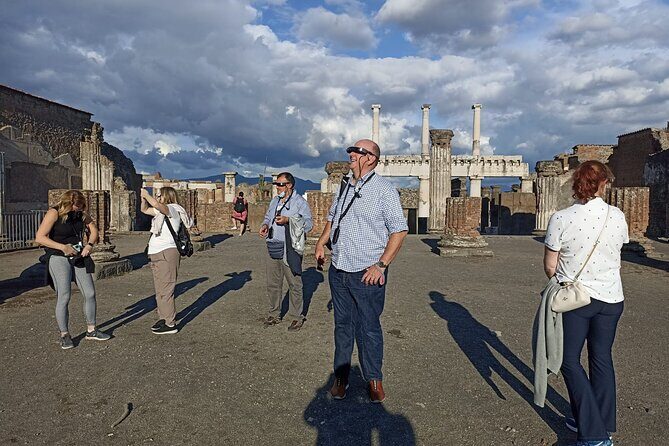
At each set stop, you’ll view reconstructions using the 3D AR glasses with augmented reality. The descriptions aren’t just visual candy. The goal is to help you line up ruins with what used to be there so you can interpret the space you’re standing in.
From the tour experience patterns, two things tend to shape your enjoyment:
- How often the glasses are used on your particular day (the AR is concentrated at set locations, not constant).
- Whether you get enough context at each stop to connect the reconstruction to the real structure.
Some people love the visuals because they’re quick and clear. Others come away disappointed when they feel the AR clips are brief and the guide spends more time operating than explaining. The most reliable way to get value is to be present at every stop and speak up when something doesn’t make sense.
If you wear eyeglasses: good news—the AR glasses can be worn by participants who already use glasses. The system is built for that, so you shouldn’t need special arrangements.
And yes, there’s a practical physical side: the glasses kit can feel tiring around your neck over time. If you’re sensitive to gear fatigue, consider planning water breaks and keep your pace steady.
Guide style: how to get more than the tech
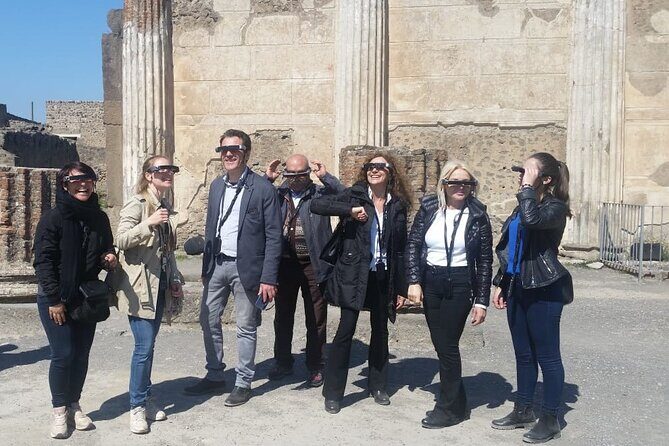
This tour includes an assistant who leads the walk and runs the AR glasses. A key point: the assistant is there to support the group and operate the glasses, not to be a full-time, textbook-style guide for every second.
That doesn’t mean you get no human help. Many experiences report friendly, responsive hosts. Names that show up in real-world praise include Roberta, Sara, and Daniela, and people specifically mention guides who answered questions and helped them spot things they’d otherwise miss.
Still, you should go into this expecting a hybrid format:
- The AR provides the main storytelling moments.
- The guide provides the direction, added explanations when you ask, and keeping the group together.
If your goal is maximum interpretation, come prepared with questions. A simple prompt like How did this space function in daily life? can change the whole tone of the stop, because the guide can steer the AR view toward what you care about.
Also, keep close to the group. One frustration that pops up is when people drift off and can’t locate the next stop or miss parts of the experience. Pompeii moves fast once you’re walking, and it’s easy to lose the thread.
Other Pompeii entry tickets and audio guide options




Pompeii’s highlights you’ll get—and the parts to plan separately

Because the tour focuses on the main route, you’ll cover a solid slice of Pompeii’s core ruins, with AR reconstructions designed to help you make sense of what you see.
Some experiences include flexibility for specific interests. For example, one guide was reported as accommodating a request to see the House of the Vettii when time and route allowed. That’s a good sign if you have one “must see” spot beyond the main flow.
Where you should be careful: major themes may not be covered the way you expect. One common request is to see the eruption itself. In this Pompeii AR concept, the augmented scenes tend to center on buildings and city life, not Vesuvius drama. If seeing the eruption is important to you, plan a separate trip or a different tour focused on Mt. Vesuvius.
And remember the suburban villa gap. Villa dei Misteri is explicitly not part of this itinerary.
Comfort and practical tips for a 10:30 am walk
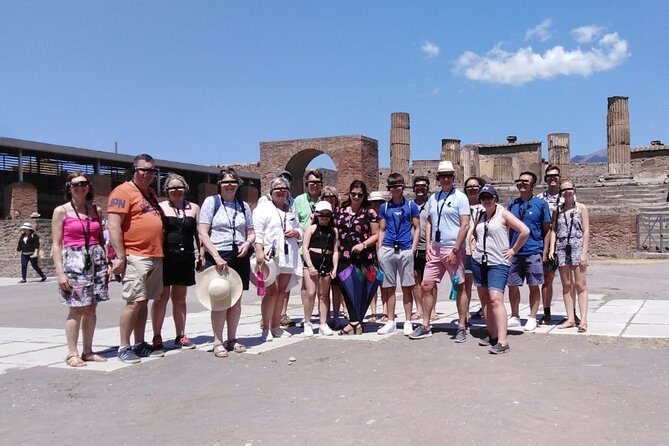
You’re outdoors in an archaeological park, walking, pausing, and then repeating. That means your comfort choices matter more than usual.
Here’s what I’d do to make the experience smoother:
- Wear comfortable shoes. Pompeii is uneven and you’ll walk enough that blister prevention is smart.
- Dress for heat even if the tour runs in weather. You can’t control conditions, but you can control clothing layers.
- Plan a steady pace. The glasses stop-and-go format is easier when you don’t sprint between points.
- If you wear eyeglasses, bring what you normally use. The AR glasses can accommodate them, but you still want your vision comfortable.
Also, children under 8 can enter with a standard ticket but cannot use the 3D tech. If you’re traveling with kids, plan for them to enjoy the ruins without AR, and keep an eye on group pacing so no one gets left behind.
Price and value: is $62.75 a good deal?
At $62.75 per person for about 2 hours, the value comes from two big things bundled together: an entrance ticket and the AR glasses experience. You’re not paying separately for admission and then separately for a device tour.
So when does this price feel fair?
- If you want Pompeii interpretation that’s visual and immediate, AR is a strong match.
- If you’re traveling with a group that likes a bit of structure but also wants time to wander after, this format works.
- If you don’t want to spend arrival time figuring out ticket entry and logistics, the included ticket helps.
When might it feel pricey?
- If you need a fully narrated, very detailed guide explanation at every stop.
- If you’re expecting constant AR use throughout the walk, because the AR is triggered at set points rather than continuously.
- If you’re the kind of visitor who hates wearing any gear. Even when it’s easy to use, the kit can be tiring.
Given the tour averages a 4.5 rating across 61 ratings, it’s clearly resonating with enough people to be worth considering. The best way to avoid disappointment is to align your expectations: think AR-assisted walking, not a long-form lecture.
After the tour: what to do with your extra time
One of the underrated perks: once the tour ends and the AR glasses are returned, you can stay in the archaeological park and explore on your own. That’s a big deal because Pompeii rewards lingering. If you’re curious, you can backtrack to areas you found most interesting during the AR stops.
A smart strategy is to use the tour as a map of what to notice later. Afterward, look for the structural clues the AR made obvious: doorways that suggest foot traffic, wall layouts that hint at room divisions, and street angles that help you understand how the city looked as you walked through it.
Should you book this Pompeii 3D AR walking tour?
Book it if you want Pompeii to feel like a living town again. This is especially good for first-timers who struggle to visualize reconstructions on their own. The combination of AR glasses plus entry included is the core value, and the small group size helps you keep your bearings.
Skip or supplement it if you need deep, continuous explanations for every landmark, or if the eruption imagery is a top priority. Also, if you’re very gear-sensitive, consider that the glasses kit can get tiring during a walking tour.
My practical take: if you’re open to a hybrid format—some walking, some AR stops, and a guide who supports and answers when you ask—you’ll likely enjoy it. If you want a classic, talk-every-step guided tour with no tech dependence, you might prefer a different Pompeii experience and treat AR as a bonus.
FAQ
Is the entrance ticket included?
Yes. Your admission ticket is included as part of the experience.
How long is the Pompeii walking tour with 3D glasses?
It runs for about 2 hours (approx.).
What language is the tour offered in?
The tour is offered in English.
Where do I meet the tour?
You meet at Coffee Shop Vittoria, Via Mare, 80045 Pompei NA, Italy. The tour starts at 10:30 am and ends back at the meeting point.
Does this tour run in bad weather?
Yes. The tour takes place regardless of weather conditions, so dress appropriately.
Can children use the 3D technology?
Children under 8 can enter the park with a standard ticket, but they cannot use the 3D technology.