REVIEW · POMPEII
Pompeii: Tour with Archaeologist Guide & Skip-the-Line Entry
Book on Viator →Operated by Travelcampania · Bookable on Viator
Pompeii in just two hours? It works. This archaeologist-guided walk lets you hit the big Roman sights while the story stays tight on the last day of the city after the 79 AD eruption. You’ll also get skip-the-line entry, which matters because Pompeii’s lines can eat your time.
I especially like the way the route gives you a fast mental map: Teatro Grande, the amphitheater area, the Domus with frescoes, and the Via dell’Abbondanza all show up early enough for you to understand what you’re looking at. The second win is the attention to everyday details—frescoes, preserved objects, and the casts—so the tragedy isn’t just dates and ruins.
One thing to consider: this is a 2-hour tour, so it’s more “see the major highlights with context” than “linger for an hour in one plaza.” If you want deep, slow looking, you may feel slightly rushed.
In This Review
- Key highlights you’ll feel right away
- Where the tour starts (and how you avoid the time sink)
- Teatro Grande: the orientation stop that makes everything click
- Amphitheater and the “street-level” Roman view
- Domus with frescoes: the art you see at eye level
- Stabian baths: where relaxation becomes a snapshot of routine
- The lupanare: frank details in a controlled, guided setting
- Forum, Basilica, and the civic heart of the city
- The casts and the 1863 work by Arch. Giuseppe Fiorelli
- Price and value for a focused 2-hour visit
- Group size, pace, and the kind of person this suits best
- Should you book this Pompeii tour?
- FAQ
- How long is the Pompeii tour?
- Is skip-the-line entry included?
- What’s included in the ticket price?
- Where do we meet for the tour?
- Where does the tour end?
- How big are the groups?
- What kind of physical fitness is needed?
- Are service animals allowed?
- What is the cancellation window?
Key highlights you’ll feel right away
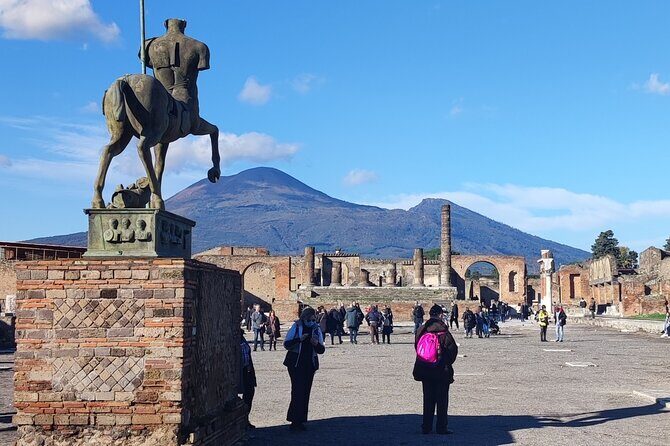
- Skip-the-line entry arranged for you so you start sightseeing fast
- Teatro Grande opening orientation plus key sights in a smart order
- Domus frescoes and recognizable streets like Via dell’Abbondanza
- Stabian baths and the lupanare for a fuller picture of daily life
- Forum, Basilica, and the first casts (1863) by Arch. Giuseppe Fiorelli
Where the tour starts (and how you avoid the time sink)
Your Pompeii tour begins in a very practical spot: you meet near Coffee Shop Vittoria bar at Piazza Esedra. The local provider is Travelcampania, and the listed start point is Travelcampania, Via Plinio 107, 80045 Pompei (NA), Italy. If you prefer to find the meeting place quickly, aim for Piazza Esedra first, then look for the tour meeting area around the café.
Why this matters: Pompeii is big, and confusion wastes energy. Getting aligned at Piazza Esedra helps you walk into the site with a plan instead of drifting around at your own pace.
Also, ticket handling is built into the flow. With the skip-the-line service, the guide purchases the entrance tickets so you’re not stuck managing that chore before you even start looking at the ruins.
You’ll finish at Foro di Pompei, near Via Villa dei Misteri 2. That’s a good ending point if you want to continue on your own while you still have the tour’s map in your head.
Other skip-the-line Pompeii tours in Pompeii

Teatro Grande: the orientation stop that makes everything click
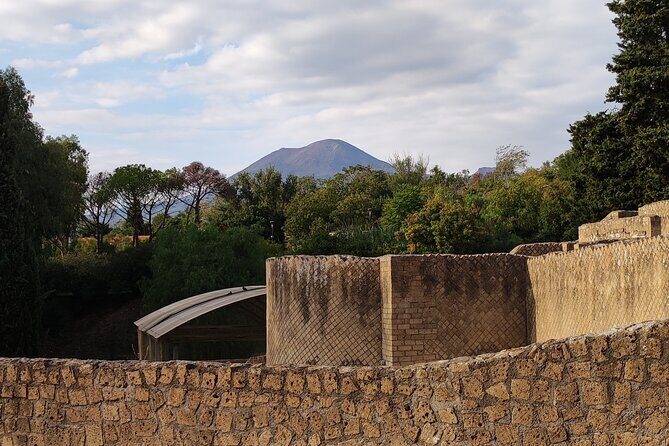
The first sight on your walk is Teatro Grande. Even if you’ve seen photos of Pompeii before, the biggest hurdle for many people is simple: ruins can look like random blocks unless someone gives you wayfinding.
That’s what you’re paying for here. You’re not just being shown what’s famous—you’re getting the basic notions that help you connect structures to how people lived. From there, the guide points out the major stops you’ll cover: the amphitheater, frescoed houses, the well-known street Via dell’Abbondanza, Stabian baths, the lupanare, and then the heart of civic life in the forum area.
If you like a tour that gives you quick context, this beginning works. In two hours, you need “first principles,” not just photo spots.
Amphitheater and the “street-level” Roman view

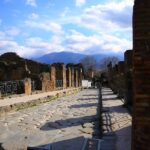
After the Teatro Grande start, you’ll move through some of Pompeii’s most recognizable public spaces and thoroughfares. The highlights include the amphitheater and the street Via dell’Abbondanza, a key route that helps you understand how movement through the city worked.
The amphitheater is one of those places where the scale can surprise you. Even without getting too technical, it’s the kind of stop where you can feel how public entertainment was built for crowds. The guide’s job is to make that “wow” stick by tying it to what you can still see now.
Then there’s Via dell’Abbondanza. Streets are underrated in tours. Here’s why it’s valuable: once you’re oriented along a main route, you can spot what kind of buildings are lining the way and understand how neighborhoods functioned. It’s not just walking—it’s learning to read the city.
Domus with frescoes: the art you see at eye level
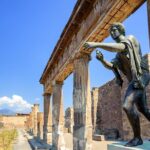
Next up is the ancient Roman Domus with frescoes. This is where Pompeii tends to get personal, because frescoes and room details show you how people actually decorated spaces they used every day.
I like fresco stops because they don’t require you to imagine everything from scratch. You can point your attention at color, layout, and the presence of everyday settings. With this kind of tour, you’re not left guessing whether what you see is important—you’re given context while you’re looking at it.
A quick reality check: this remains a highlight tour. You’ll see the Domus with frescoes as a major stop, but you won’t have hours to wander room by room. If you’re the type who wants to sit and study wall paint, you might want to plan a self-guided visit later.
Stabian baths: where relaxation becomes a snapshot of routine
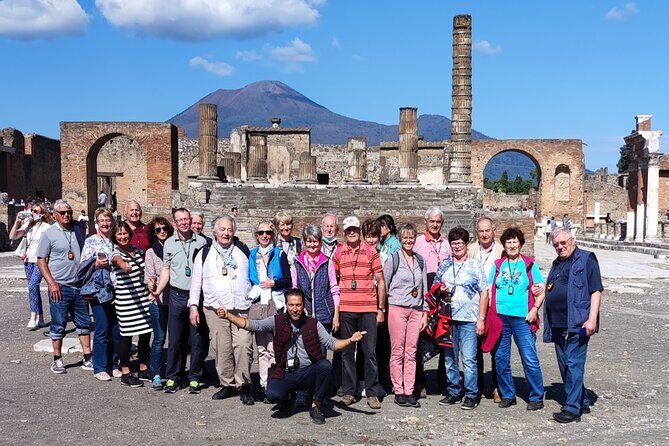
You’ll also visit the Stabian baths. Baths are useful on tours because they’re both practical and revealing. They show how routine, cleanliness, and social time could be built into architecture.
The advantage of including baths is balance. Pompeii isn’t only big civic monuments. When you see the baths within a two-hour route, you get a more rounded impression of daily life rather than just politics and spectacle.
Look for how rooms connect and how the space is organized. Even in a short visit, you’ll come away with a clearer sense of what a “day in Pompeii” could look like.
Other archaeologist-led tours in Pompeii





The lupanare: frank details in a controlled, guided setting
One of the most talked-about stops here is the lupanare, the ancient brothel. This is not a random “shock stop.” It’s included because it adds a real-world edge to the city’s social picture.
A guided visit helps because the lupanare can feel like a headline until someone frames it within the city’s layout and the way people moved through the area. You’ll get context from the guide while you’re still oriented from earlier stops.
If you prefer tours that keep things strictly family-friendly and fully neutral, this is the one section that may not match your style. But if you’re aiming for the fuller picture of Pompeii—what it was like, not just what it looked like—this stop does real work.
Forum, Basilica, and the civic heart of the city
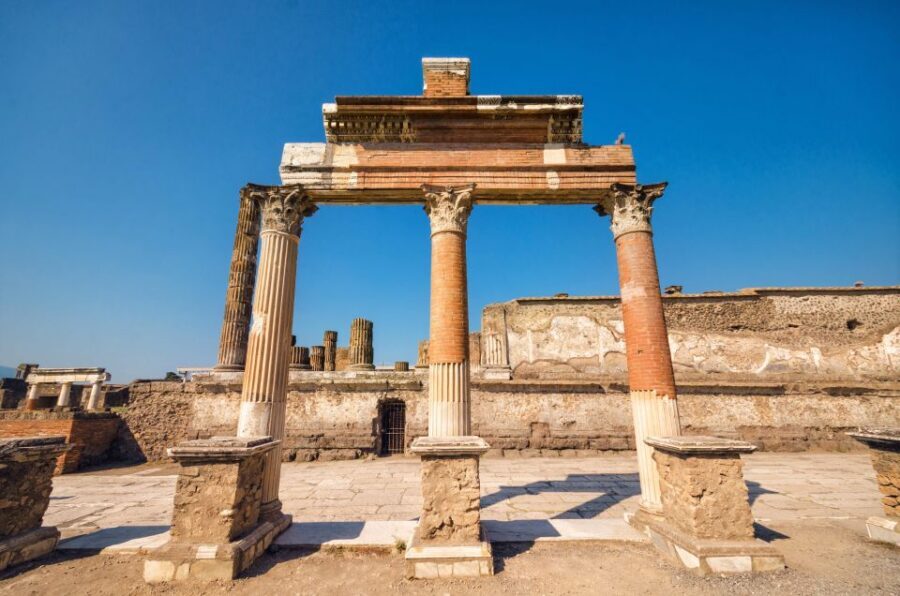
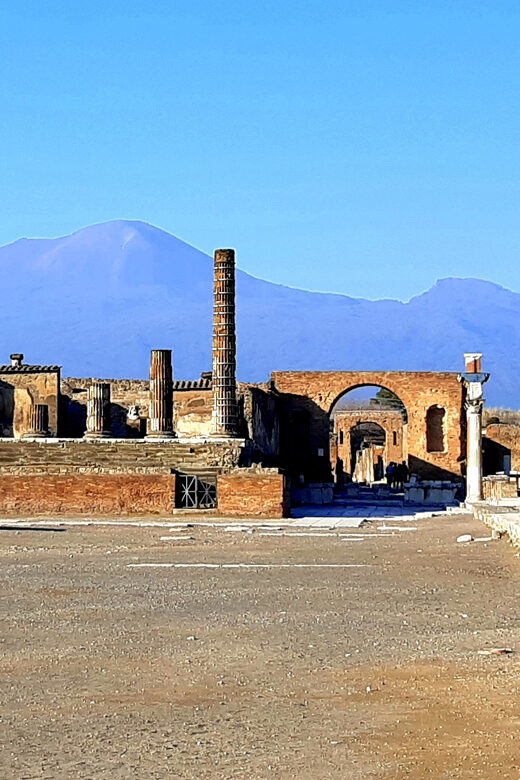
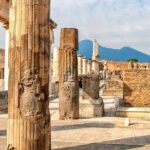
Then you reach the forum and Basilica. This is where Pompeii feels like a functioning city rather than a museum of isolated sights.
Civic spaces are valuable on short tours because they naturally connect lots of different activities. Even when you only see parts of the layout, the forum helps you understand why people gathered—socially, economically, and politically.
For many visitors, this is the point where the tour’s story starts to feel coherent. The guide’s job is to connect what you saw earlier—street, houses, baths, and side-economy spaces—back to where public life happened. If you want Pompeii to make sense fast, this is the section that usually delivers.
The casts and the 1863 work by Arch. Giuseppe Fiorelli

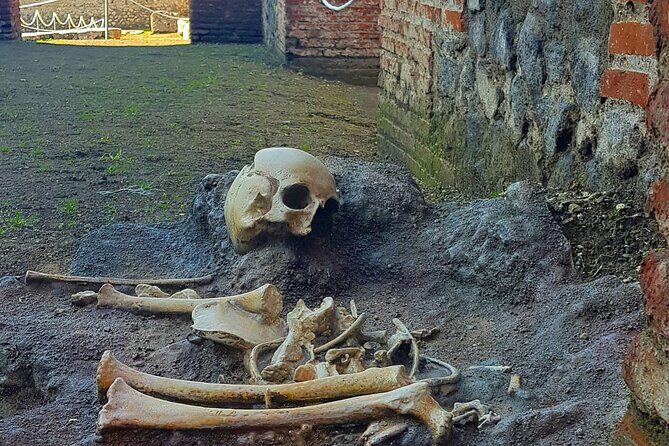
The tour also includes the casts and specifically references the first casts made in 1863 by Arch. Giuseppe Fiorelli. This is one of the most powerful parts of Pompeii because it turns the tragedy into something tangible and immediate.
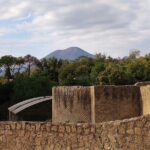
You’ll be guided through the casts in a way that supports the main narrative of the city’s last moments under the eruption of Vesuvius in 79 AD. The tour description emphasizes how you’ll see perfectly preserved everyday objects and frescoes. That matters, because it shifts Pompeii from a distant disaster to a human-scale event—people living, working, and decorating, with ordinary items surviving in the strangest way.
Important note for expectations: you’re seeing these moments through a guided highlight route. You won’t get a museum-like, slow, silent experience here. But in exchange, you get the story stitched together so you’re not just looking at artifacts without a thread.
Price and value for a focused 2-hour visit
At $57.84 per person for a tour that runs about 2 hours, the value depends on how you like to travel.
Here’s what you’re really buying:
- Skip-the-line entry handled by the guide
- An archaeologist guide approach that keeps your questions answered as you walk
- A structured route through major Pompeii landmarks—amphitheater, domus frescoes, Via dell’Abbondanza, baths, lupanare, forum, basilica, and casts
If you’re staying in the area and want a quick, high-impact introduction, this pricing can feel fair. You’re not paying for an ultra-long day, and the tour isn’t trying to do everything. It’s doing the key parts in a tight timeline, and that’s exactly what many people need at Pompeii.
If, however, you tend to prefer independent exploration—slow pacing, long photo stops, and spending extra time in one room—this may feel like a preview. In that case, you might still book it, but plan your own add-on afterward.
Group size, pace, and the kind of person this suits best
The group size is capped at 25 travelers, which is a sweet spot for Pompeii. It’s small enough that the guide can keep control and answer questions, but large enough that the tour still moves at a steady walking pace.
The tour also asks for moderate physical fitness. That’s a polite way of saying you should be comfortable walking through an archaeological park and keeping up on uneven ground.
This experience fits best if you:
- Want a structured introduction to Pompeii’s main sights
- Like hearing context while you look, not after you’ve already moved on
- Are short on time and still want an archaeologist-style explanation
It may be less satisfying if you need lots of time to linger at each stop or if you prefer quieter, self-led wandering.
Should you book this Pompeii tour?
I’d book it if you want a fast, well-directed Pompeii visit where the guide ties together the big spaces, the everyday details, and the 79 AD story in about two hours. The skip-the-line handling and the route that covers amphitheater, frescoed domus, baths, lupanare, forum/basilica, and Fiorelli-era casts make it a strong first pass.
I wouldn’t treat it as your only Pompeii plan if you want to go slow. Think of this as your orientation plus emotional anchor. Then, if you still have energy, you can choose a few favorites and spend more time around them after the tour ends near Foro di Pompei.
FAQ
How long is the Pompeii tour?
The tour runs for about 2 hours.
Is skip-the-line entry included?
Yes. The tour offers skip-the-line service, and the guide purchases the entrance tickets.
What’s included in the ticket price?
Admission is included, and the tour is listed as having an admission ticket included.
Where do we meet for the tour?
You meet near Coffee Shop Vittoria bar at Piazza Esedra. The listed start point is Travelcampania, Via Plinio 107, 80045 Pompei NA, Italy.
Where does the tour end?
The tour ends at Foro di Pompei, Via Villa dei Misteri 2, 80045 Pompei NA, Italy.
How big are the groups?
The group has a maximum of 25 travelers.
What kind of physical fitness is needed?
Moderate physical fitness is recommended.
Are service animals allowed?
Yes, service animals are allowed.
What is the cancellation window?
You can cancel for a full refund if you cancel at least 24 hours before the experience start time.