REVIEW · POMPEII
Skip-the-Line Half-Day Private Tour Ancient Pompeii Highlights with Native Guide
Book on Viator →Operated by Tours of Pompeii with Lello & Co. · Bookable on Viator
Pompeii is big, and crowds can make it feel like a chore. This skip-the-line private highlights tour gets you moving fast with an art historian guide who keeps the story clear as you walk the site. You’ll cover the big-name stops without the usual wandering-and-waiting that drains your energy.
What I really like is the time-saving mix: you get admission handled for key moments, then pack in high-impact places like the Forum and the Stabian Baths. Another plus is the “no getting lost” approach, so you can focus on the details instead of map math. The one catch: it’s only about 2 hours, so if you want a slow, deep, do-every-street-corner kind of visit, this format may feel tight.
In This Review
- Key things to know before you go
- Skip-the-line Pompeii, but done like a smart friend plan
- Where you meet (and what that means for your timing)
- Entering Pompeii fast: the real value of the half-day plan
- Stop 1: Pompeii highlights with Lello & Co., from amphitheaters to daily life
- Teatro Grande and Teatro Piccolo: sound as a clue to design
- Main streets to the Forum: the city’s social engine
- Thermal baths, domus, gym, mills, and the Lupanar
- Via dell’Abbondanza: the Roman street you’ll never want to skip
- Stabian Baths (Terme Stabiane): where Pompeii shows everyday routine
- What to expect in the baths area
- Forum de Pompeya: the city center where everything converges
- The excavations matter
- Lupanar: controversial, specific, and unforgettable
- Pompeii Archaeological Park time: how the guide stitches the puzzle
- Price check: is $83.48 worth it for private Pompeii time?
- Who this private highlights tour suits best
- Practical tips: how to enjoy Pompeii in 2 hours without suffering
- Should you book this Pompeii highlights tour?
Key things to know before you go
- Skip-the-line entry helps you start exploring sooner and not burn your morning in queues
- Private pacing means you can ask questions and move at a comfortable speed
- Art historian storytelling ties ruins to everyday Roman life, not just dates and names
- Iconic Pompeii stops are grouped efficiently, including the Forum and the Lupanar
- Stabian Baths are a strong highlight because they show daily routines, not only monuments
- Summer tip: bring water, since Pompeii can feel hot fast when you’re walking
Skip-the-line Pompeii, but done like a smart friend plan
Pompeii can be one of those places where you think you’ll “figure it out,” then two hours later you’re still stuck near the ticket line or trying to match street names to guidebook photos. This tour is built to prevent that. The headline benefit is guaranteed skip-the long lines, which is exactly what you want when your time window is short and the sun can be unforgiving.
Because it’s private, you’re not trapped in a rigid group pace. Your guide can steer you toward what interests you most while keeping the route tight. Think of it as the difference between walking into a museum and being handed a plan that makes the building make sense within hours.
Other private Pompeii tours we've reviewed in Pompeii


Where you meet (and what that means for your timing)
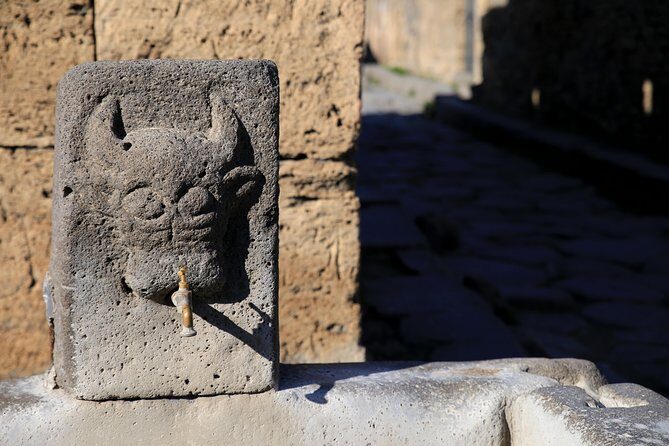
You meet at Hotel Vittoria, Piazza Esedra, 80045 Pompei NA. The tour ends back at the same meeting point, so you don’t have to worry about figuring out the last leg after a long day of walking. The tour runs about 2 hours (approx.), and it’s offered in English.
There’s also a mobile ticket included, which is usually a win in Italy when you want to keep your day simple. Add the fact that it’s near public transportation, and you have flexibility if you’re not starting from a hotel pickup (hotel pickup and drop-off aren’t included).
One more timing note: this is often booked well ahead (on average, about 87 days). If you want a specific day and time window, plan early rather than hoping.
Entering Pompeii fast: the real value of the half-day plan
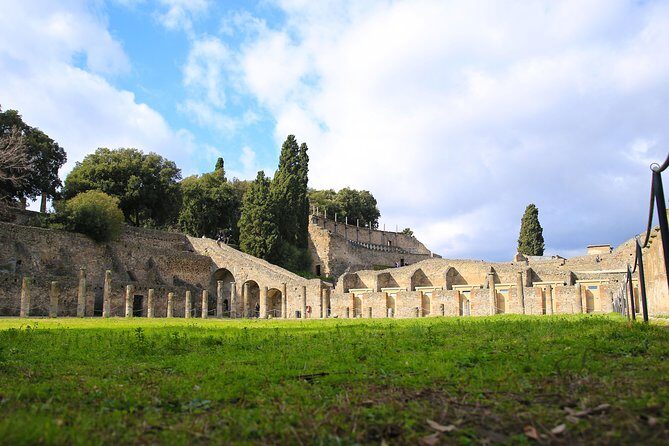
The price is $83.48 per person for a tour that’s explicitly designed for efficiency. In other words, you’re paying for three things that matter in Pompeii: time, guidance, and reduced friction.
In a half-day format, skipping the lines isn’t a small perk. It’s the difference between seeing highlights with energy and seeing highlights while checking your watch. And since admission tickets are included for the key parts of the route, you avoid a messy “you pay here, you pay there” experience.
So, what should you expect from this “fast entry” advantage? You’ll be able to get into the site and start connecting stories to places right away, rather than waiting and losing momentum. That matters because Pompeii rewards attention: details are easy to miss if you’re tired or rushed.
Stop 1: Pompeii highlights with Lello & Co., from amphitheaters to daily life
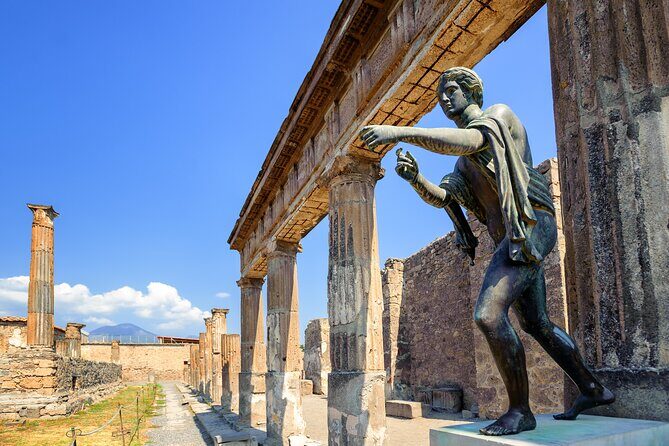
Stop 1 is where the tour starts doing its real job: turning ruins into a lived-in city. Your guide brings strong remains to life with anecdotes, secrets, and stories and takes you through several of Pompeii’s most recognizable areas.
Teatro Grande and Teatro Piccolo: sound as a clue to design
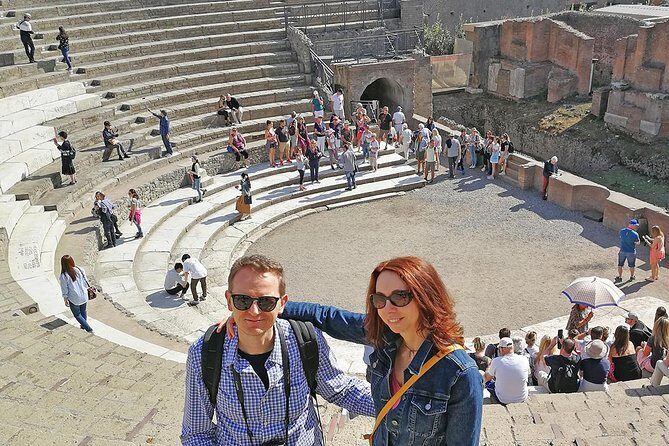
One of the most memorable elements here is the focus on the amphitheater experience. You’ll go toward Teatro Grande and also hear about the acoustic perfection connected to Teatro Piccolo. Even if you can’t reproduce every note of Roman acoustics, you’ll come away with the idea that these spaces weren’t random entertainment boxes. They were engineered so performances landed in the right places.
Other skip-the-line Pompeii tours in Pompeii



Main streets to the Forum: the city’s social engine
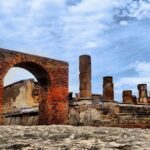
From there, you’ll walk through Pompeii’s main streets with the sense of moving through Roman daily life. The walk is supposed to end at the Forum, where you’ll see the heart of public activity—markets and the main square, in the way ancient Romans knew it.
This is a strong move for a short tour because it compresses geography and culture into one arc: entertainment and architecture first, then civic life.
Thermal baths, domus, gym, mills, and the Lupanar
Stop 1 also layers in several major categories of life in Pompeii:
- Thermal baths
- Domus (house life)
- Gladiators’ gym
- Mills
- Lupanar, known for its erotic frescoes
If you’ve read about Pompeii but feel like you only know the “wow” parts, this sequencing helps you understand the city as a full ecosystem—work, worship, leisure, and home life all in one place.
Potential drawback to keep in mind: because this is a highlights-focused route, you won’t get deep, room-by-room archaeology at every stop. It’s built to help you see the big ideas fast.
Via dell’Abbondanza: the Roman street you’ll never want to skip
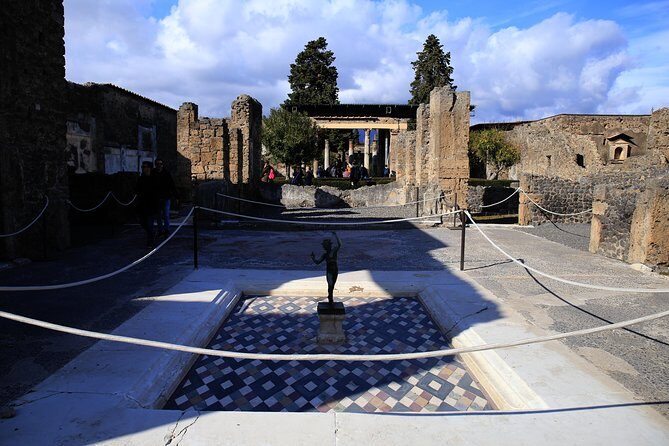
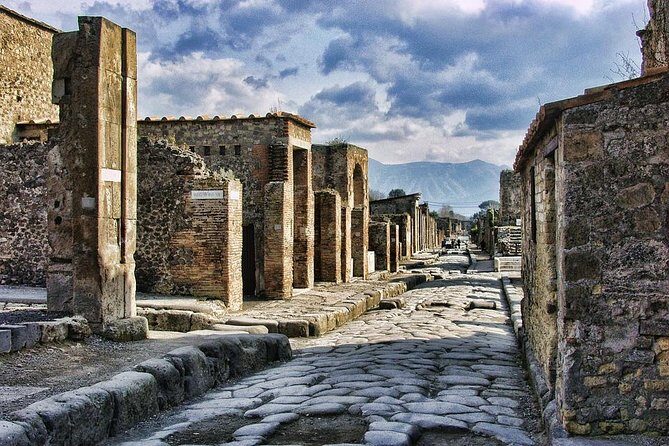
Stop 2 is Via dell’Abbondanza, and it’s one of those walks that makes Pompeii feel less like ruins and more like streets. The point here isn’t just the street itself—it’s the habit of moving through the city the way residents did.
This stop is short, around 20 minutes, but it works because it sits between heavier anchor sites. After the amphitheater and civic center context, a main street gives you the in-between rhythm—shopfronts in concept, daily movement, and the feeling of a city that never quite stopped.
Stabian Baths (Terme Stabiane): where Pompeii shows everyday routine
Stop 3 is Stabian Baths (Terme Stabiane), and this is exactly the kind of place that makes a short tour worth it. You’re not just looking at stone. You’re learning how Romans handled daily hygiene, relaxation, and social time.
Even in brief time, baths can be more explanatory than temples or big monuments because they show systems—how spaces connect, how people moved, and what life looked like for ordinary visitors.
What to expect in the baths area
The tour frames this stop as a look at Roman life, and it includes time for you to visit the thermal baths. If you’re traveling in summer, don’t underestimate the physical part: the baths are interesting, but you’re still walking Pompeii’s uneven surfaces in heat. Bring water and plan for breaks.
Forum de Pompeya: the city center where everything converges
Stop 4 takes you to Foro de Pompeya, where you’ll see the Forum. This is a must-stop in any Pompeii visit because it’s where the city’s public identity shows up—markets, gatherings, civic activity.
In a half-day tour, the Forum works as a kind of “final proof.” Your guide has already taught you the flow of daily life (entertainment, home, work). Now you see where public life happened.
The excavations matter
One detail that stands out from guide-style storytelling is the emphasis on what’s excavated and visible. You’ll be shown how the Forum functioned, and you’ll likely spend time noticing layouts and spaces that hint at what people did there. If you enjoy spatial thinking—how a square shaped behavior—this stop will land well.
Lupanar: controversial, specific, and unforgettable
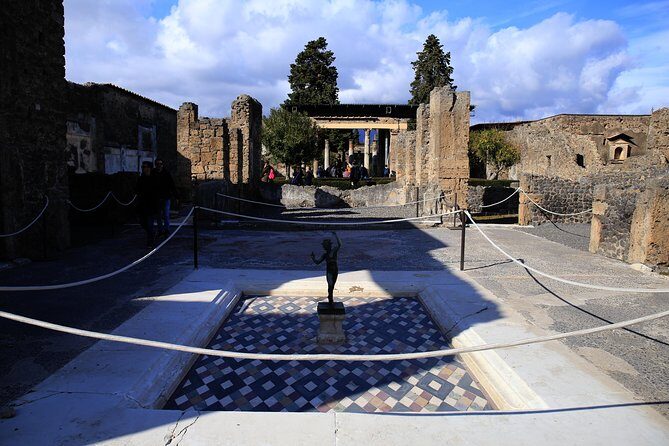
Stop 5 is the Lupanar, famous for erotic frescoes. This is one of those Pompeii stops that people either rush through or spend time on with a guide’s context. Here, you’re getting time to actually see it and understand why it’s part of Pompeii’s story.
Because Pompeii is a site of human life, not a sanitized postcard, the Lupanar’s presence reminds you that Romans had entertainment, business, and vice alongside religion and politics. A good guide keeps it informative rather than just shocking, and the goal is understanding the role of such places in the city.
If you’d rather keep the mood lighter, you might not love this stop. But if you want Pompeii as it was—messy, real, and human—this is part of the package.
Pompeii Archaeological Park time: how the guide stitches the puzzle
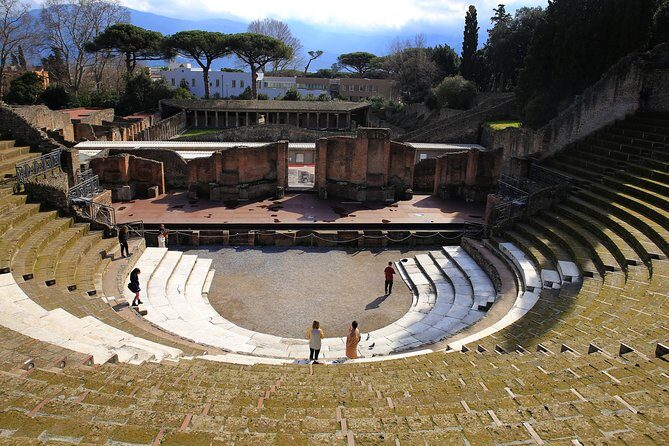
Stop 6 is Pompeii Archaeological Park, where you spend about 2 hours with a private top-rated guide (the tour format overall is about 2 hours, so this time is part of the same experience length). This is where the guide pulls it together so the ruins don’t feel like disconnected highlights.
In the route framing, you’ll cover major categories like:
- streets and public spaces
- domus and everyday living
- bath life
- the gym world
- the mill/work system ideas
- entertainment spaces like the amphitheaters
A bonus point that can make the experience extra memorable is the mention of an underground area in some routes. If your itinerary includes underground sections, you’ll get a different perspective on the site’s scale and layout. Even if you don’t go underground, the way your guide explains what you’re looking at can make the visible parts feel deeper.
Price check: is $83.48 worth it for private Pompeii time?
Let’s talk value without pretending this is cheap. At $83.48 per person for about 2 hours, you’re paying for:
- skip-the-line entry
- a private experience (only your group participates)
- multiple stops tied to admission time included for the key parts
- an art historian-style guide whose job is to translate ruins into human life
If you’re comparing to an all-day group tour, this might feel steep—until you remember you’re not paying for hours of transit or standing around. For many people, the best value in Pompeii is not seeing everything. It’s seeing the right things with a clear narrative while your energy is still high.
This is also one of those tours where the guide can make or break the experience. The strongest praise points in this style of tour are about engaging storytelling, staying on time, and keeping the pacing smooth. Names that come up in past experiences include Lello (often described as funny and very engaging), Italo (high-energy and fun while staying factual), Fabio (professor-like in a friendly way), and Rosanna (great at handling crowds and keeping kids engaged).
You may or may not get the exact same guide, but the overall approach matters: quick access, good navigation, and explanations you can actually use.
Who this private highlights tour suits best
This one fits best if you:
- want to avoid the chaos and want guaranteed to skip the long lines
- prefer a private setting where you can move at a comfortable pace
- like context more than just photos—Roman life, not just brick walls
- have limited time on your Naples/Pompeii day and want the biggest impact per hour
It also helps if you’re traveling with mixed ages. The tour format is geared to keep things understandable, and guides in this style have been praised for engaging different ages, including teenagers.
If you’re a hardcore Pompeii scholar who wants to track every debate about interpretation, you might feel this is too short. This is a highlights tour, not an all-day excavation marathon.
Practical tips: how to enjoy Pompeii in 2 hours without suffering
Pompeii’s terrain can be uneven, and the tour notes a moderate physical fitness level. That usually means you should be comfortable with walking on worn ground, climbing small steps, and standing for short stretches as the guide explains the next stop.
Also, plan for weather. The experience requires good weather. If weather is poor, you’ll be offered a different date or a full refund, so keep your plans flexible if possible.
And yes, bring water—especially in summer. One practical note from past experiences: don’t show up dry. Even if you’re only walking a short time, the heat adds up fast.
Should you book this Pompeii highlights tour?
Book it if you want the most sense you can get from a short visit: skip-the-line access, a private guide, and a route that hits major anchors like the Forum, Stabian Baths, and the Lupanar without dragging. This is a good choice when your goal is to walk away with a coherent picture of Roman life, not just a pile of ruins.
Don’t book it if you’re hoping for a slow, exhaustive tour with lots of downtime. Pompeii takes time, and 2 hours will always feel like “highlights only.” In that case, you’d be better off with a longer private itinerary.
If you want a smart, efficient Pompeii visit with a guide who can make the stones feel human, this one is a strong match.