REVIEW · POMPEII
Ancient Pompeii Private Tour: Skip the Line & Kid-Friendly Option
Book on Viator →Operated by Leisure Italy · Bookable on Viator
Pompeii hits hard, even before you start walking. This private tour uses skip-the-line entry and a real guide to help you read the ruins fast, from the Forum to the baths and the victim casts.
I especially like that the guide can shape the route to your group, so you’re not stuck in a one-size script. I also like the family option with games, clues, and a Pompeii4kids kit that turns the site into something kids can actually follow. The main watch-out: Pompeii is a big, sun-heavy walk, and one group note flagged that pacing can feel rushed if you need extra time.
In This Review
- Key things that make this Pompeii tour worth your time
- Pompeii in a tight window: how a private tour changes the whole day
- Skip-the-line tickets: saving time where it actually counts
- The tour route: what you’ll see and what it means
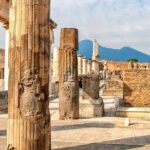
- Forum and big public buildings: Pompeii’s decision-making center
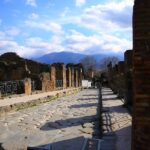
- Via dell’Abbondanza: the street where daily life becomes real
- Terme del Foro: walking through a Roman bathing routine
- Casa dei Vettii: luxury, restored after decades of work
- Theater and the city’s rhythm: entertainment carved into lava
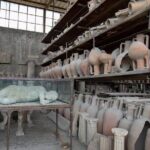
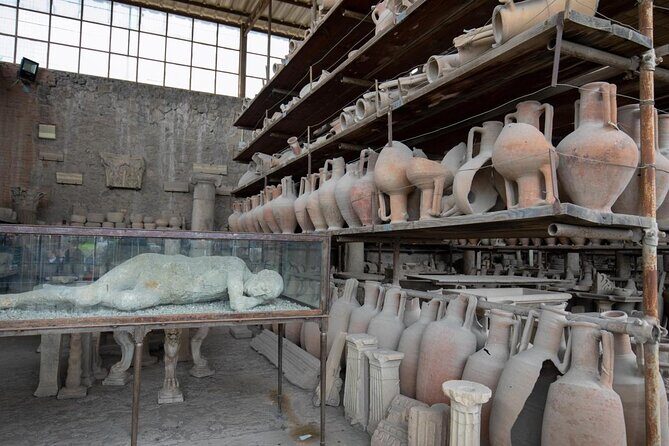
- Antiquarium and the casts: when the tragedy becomes personal
- Thermal baths and even the brothel detail: Pompeii’s human edges
- Pompeii for kids: how the Pompeii4kids kit actually helps
- Price and value: why $165.05 can make sense here
- Who this Pompeii tour fits best
- Should you book this Pompeii private tour?
- FAQ
- Where is the meeting point for this tour?
- How long is the private Pompeii tour?
- Is this tour private or shared with strangers?
- What language is the guide?
- What ages are the kids activities designed for?
- Are admission fees included?
- Do you get hotel pickup or drop-off?
- What do I need to bring for children traveling?
- Can I cancel for a full refund?
Key things that make this Pompeii tour worth your time
- Skip-the-line entry mindset: you lose less time at ticket bottlenecks and more time seeing ruins that are easy to miss without help
- Private guide flexibility: you can ask for what you care about, and the pace can adjust to your group
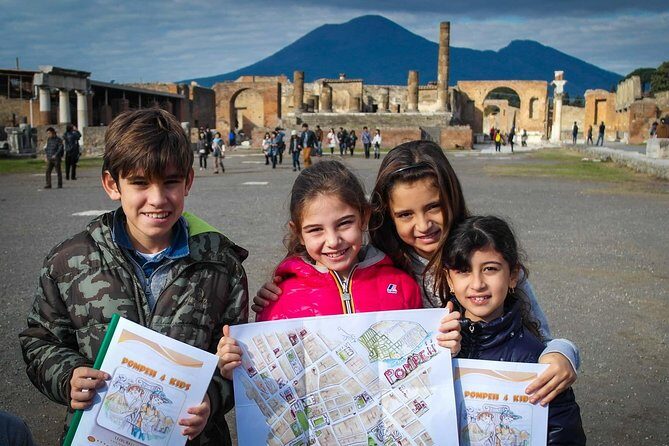
- Kid-ready Pompeii4kids kit: maps, stickers, activities, and puzzles make the site feel like a game trail
- Forum-to-street flow: you connect politics, religion, daily shopping streets, and home life in one logical walk
- Victim casts visit: the Antiquarium stop brings the tragedy into sharper focus in a modern setting
- Stops built for photo clarity: from mosaics and wall paint to columned temples, you get anchor points for good shots
Pompeii in a tight window: how a private tour changes the whole day
Pompeii is huge, and going in without a plan feels like wandering. What I like about this experience is the structure: you’re guided through the most memorable parts of the site in about 2 hours, which is realistic for a first visit and for families.
Because it’s private, your guide can slow down for questions or speed up if your group is ready. That matters in Pompeii, where the ruins are scattered and the details are small—faces in mosaics, tile patterns, or the way streets were built for water runoff. A good guide helps you see those things instead of just walking past them.
The trade-off is simple: you still have to do a walking tour, and Pompeii can be hot and uneven. One review called out pacing as an issue for people with mobility needs, so if anyone in your group walks slowly, say so early and ask for a more relaxed rhythm.
Other private Pompeii tours we've reviewed in Pompeii

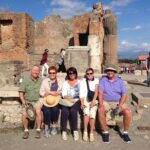
Skip-the-line tickets: saving time where it actually counts
This is sold with skip-the-line style benefits, and the setup is clearly built around getting you through fast at the archaeological park. The exact day-of ticket handling can vary—admission is listed as included, but there’s also a note that guides can use a fast-track line to buy quickly on the spot—so I recommend you confirm what’s covered in your booking.
Either way, the value is the same: Pompeii’s lines can be the difference between a good visit and a frustrating one. When you start seeing places sooner, you also avoid the mid-day crush that can make even the best spots feel chaotic.
You’ll meet at Via Villa dei Misteri, 2, 80045 Pompei (NA), Italy, and the tour ends back at the same meeting point. That loop is helpful because you don’t need to figure out how to get from one area of Pompeii to another after your guide finishes.
The tour route: what you’ll see and what it means
This experience is built like a story. You start in the Archaeological Park of Pompeii and then move through the civic center, the city street life, major buildings, and finally the museum stop with the plaster casts.
Even if you think you know Pompeii—eruption, plaster bodies, old Roman street life—this kind of flow helps you connect the dots. It turns separate ruins into one living city that shut down in an instant around AD 79, when Vesuvius erupted and froze Pompeii under ash and molten material.
Below is what to expect from the main parts of the walk, and where each stop shines.
Forum and big public buildings: Pompeii’s decision-making center
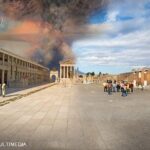
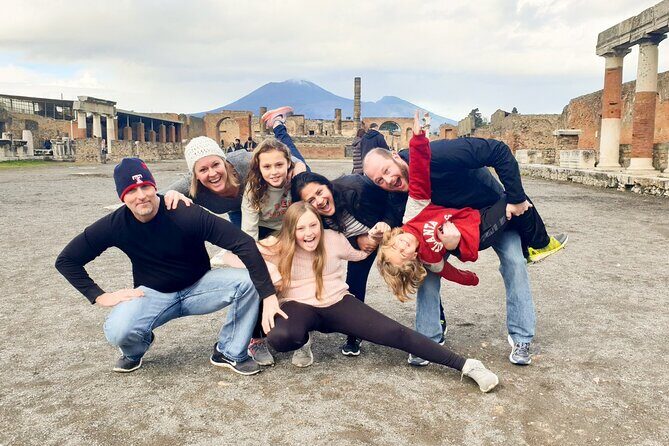
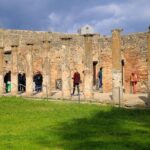
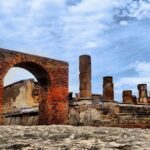
You’ll spend real time in the Forum, the city’s political, religious, and commercial heart. It’s described as a large rectangular plaza with measures you can keep in mind (about 157 by 38 meters), and it matters because the Forum layout shows how Pompeii ran: people gathered here, decisions were made here, and the public faced the symbols of power.
From there, the walk connects to major Roman civic architecture. You’ll see structures like the Temple of Apollo, known for a mix of Greek and Italic design elements and a columned portico (bronze replicas you can still spot today, while original bronzes are in Naples). You’ll also pass by the Basilica, one of the oldest big examples of its kind, dated to the 2nd century BC.
Why this is useful: these stops aren’t just impressive stone. They teach you how Romans organized everyday life around religion, law, and commerce. Once you understand that, the rest of Pompeii reads more clearly.
Via dell’Abbondanza: the street where daily life becomes real
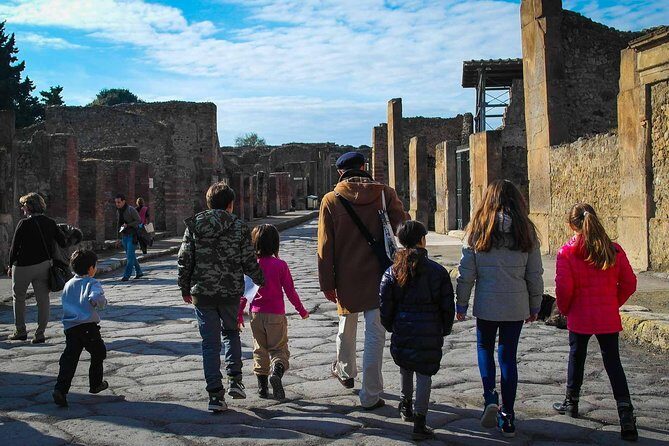
Next comes Via dell’Abbondanza, Pompeii’s long and important commercial street. It runs between major points in the city and gives you one of the best “street-level” views of Roman daily life in one direction.
If you like details, this is where your guide can point out practical clues: shops, street structure, and how a Roman city handled water and sewage. The experience description includes the idea of basalt-laden streets and stepping stones across messier areas—small things that make the city feel lived-in instead of museum-like.
This part also tends to be where families get excited, because you can see the city as a place people actually walked through each day, not just an ancient background.
Other skip-the-line Pompeii tours in Pompeii



Terme del Foro: walking through a Roman bathing routine
The Forum Baths (Terme del Foro) are one of the best “how did they live?” stops. They’re described as a remarkably well-preserved bath complex, built around 80 BC, and they were still operating when Pompeii was buried.
You can expect a guided pass through the original bathing sequence:
- Apodyterium (changing area)
- Frigidarium (cold bath)
- Tepidarium (warm room)
- Calidarium (hot room)
What I like here is that it’s not only spectacle. It’s a built system—rooms matched to temperature and routine. Even if you don’t care about ancient plumbing, you’ll leave with a clearer sense of Roman leisure and public life.
Casa dei Vettii: luxury, restored after decades of work
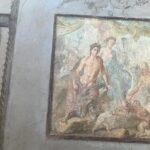
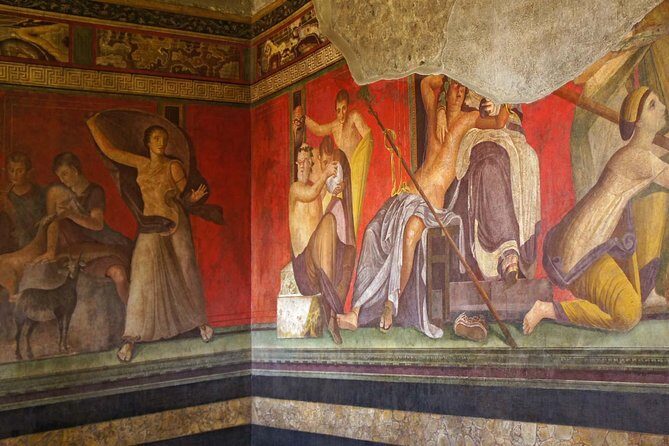
One highlight is Casa dei Vettii, often described as the most dramatic, well-preserved residence on the site, sometimes compared to Pompeii’s Sistine Chapel. The tour description notes it reopened after a meticulous restoration process, which is exactly why it’s worth including.
The story angle is strong. This home belonged to two freedmen (former slaves) who became wealthy wine merchants. Their wealth shows in the design and the way the house is meant to display status.
Why it helps your visit: Pompeii isn’t only “public ruins.” This stop gives you the private side—people using architecture and art to advertise their position. If you’re traveling with teens, this is the kind of stop that turns history into social reality.
Theater and the city’s rhythm: entertainment carved into lava
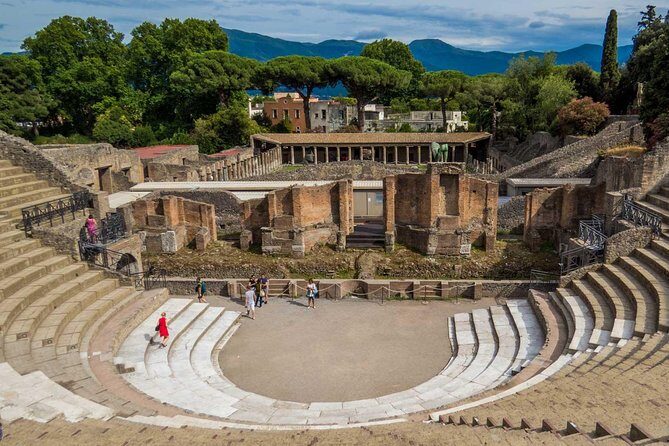
You’ll also see the Teatro Grande, a masonry theater built in the 2nd century BC, carved into a lava hillside. The design reflects the transition from Greek to Roman architecture, which is a neat historical lesson you can spot just by comparing the overall style and how the space is shaped.
Even without seeing a performance, the theater helps you understand how Romans spent time. It’s not separate from the rest of Pompeii; it’s part of the same city rhythm—politics in the Forum, commerce on the streets, and culture in public venues.
Antiquarium and the casts: when the tragedy becomes personal
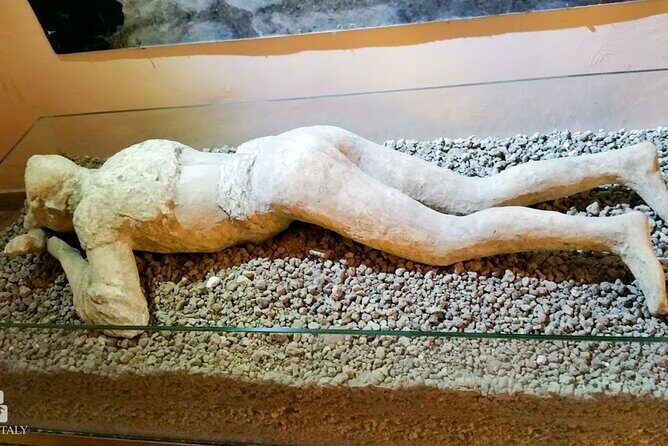
The last major educational stop is the Antiquarium di Pompei, where fragile, precious finds are shown in a modern climate-controlled setting.
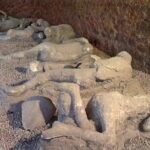
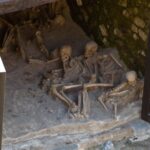
This stop includes the famous casts of victims, including children preserved in their final moments. Some casts remain in situ in the ruins, but here you’ll see them presented in a way that’s easier to understand and safer to view closely.
This is the emotional center of the whole day. It’s also where your guide’s tone matters. A good guide doesn’t just recite facts; they connect what you’ve learned about the city to what the eruption did to real people inside it.
If you’re traveling with younger kids, this is something to think about in advance. The family option adds games and clues, but the victim casts are still heavy subject matter.
Thermal baths and even the brothel detail: Pompeii’s human edges
The experience overview also points to Roman-era stops like thermal baths and even an old brothel. Those are not random “shock” choices. They’re included because they show the full range of what a city offered—leisure, status, and complicated social habits.
This matters for adults because Pompeii otherwise turns into a simplified schoolbook story. It matters for families because it gives kids context for what life was like, beyond temples and kings.
You won’t just get stone and soot. You’ll get the sense that Pompeii was a busy place—politically, socially, and emotionally—until it wasn’t.
Pompeii for kids: how the Pompeii4kids kit actually helps
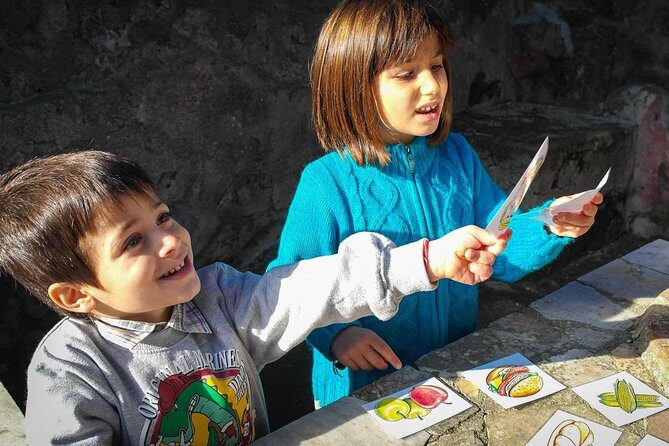
If you choose the family tour, the description calls out an ages range of about 6 to 11, with a kid-focused map, stickers, activities, and a specially trained guide.
The key benefit is attention span management. Kids do better when they have tasks. Instead of a guide talking at them, the kit structure turns exploration into clues and games—things like matching characters and placing stickers as you move through buildings.
I also like that the route can be tailored to youngsters. That sounds obvious, but in practice it means the guide chooses an order that makes sense for how kids process space: start with big anchors, then hit the most understandable features, and keep moving before boredom sets in.
One practical thought: the walking is still real. If your group includes very young kids, plan for breaks, water, and shade. Pompeii can be unforgiving.
Price and value: why $165.05 can make sense here
At $165.05 per person for about 2 hours, this isn’t a budget deal. But it can be good value when you look at what’s included and what you avoid.
You’re paying for:
- A private, Blue Badge guide (so your time is not split across strangers)
- Skip-the-line style entry so your day starts faster
- Admission handling (listed as included, with fast-track help noted)
- A focused route through the “must-know” parts of Pompeii, plus the emotional stop at the Antiquarium
For a couple, it can be a smart purchase because Pompeii is so easy to misunderstand. A guide turns random stops into a coherent narrative you’ll remember.
For families, it can be worth it even more. Kids usually struggle with long self-guided museum time. A kid-oriented map, stickers, and games give them a reason to pay attention while you still get a real tour.
The only time I’d hesitate: if you’re comfortable navigating Pompeii on your own and you have someone in your group who enjoys that style of wandering. If you want structure, this format tends to deliver.
Who this Pompeii tour fits best
This experience is a strong fit for:
- Families with kids, especially with the Pompeii4kids option
- First-time Pompeii visitors who want the highlights without getting lost
- Travelers who want a guide to answer questions and adjust pacing
- People who want both the public monuments and the human story from the casts
It may be less ideal if:
- Your group needs very slow, heavily paced walking due to mobility limits (you’ll want to flag this)
- You want a long, unstructured visit where you can linger for hours in one place
Should you book this Pompeii private tour?
If you’re aiming for a first, well-organized Pompeii day, I think this is a solid choice. The private format and skip-the-line concept tackle the two big pain points: wasted time and confusion in a giant site. Add the family version, and you get a smart way to keep kids engaged without turning the tour into a half-lesson.
Before you book, do three quick things:
- Pick your priorities (Forum, baths, houses, or the casts) and tell your guide when you meet
- Wear good walking shoes and plan water, especially in summer
- If mobility is an issue, ask for a slower pace up front so everyone stays comfortable
FAQ
Where is the meeting point for this tour?
You’ll meet at Via Villa dei Misteri, 2, 80045 Pompei (NA), Italy. The tour also ends back at that same meeting point.
How long is the private Pompeii tour?
The duration is listed as about 2 hours.
Is this tour private or shared with strangers?
This is a private tour/activity, meaning only your group participates.
What language is the guide?
The tour is offered in English.
What ages are the kids activities designed for?
The family option is recommended for children 6 to 11 years old, with a kids map, stickers, activities, and a kid-focused route. The tour description also notes guides tailor the route for youngsters.
Are admission fees included?
Admission fees are listed as included, but there’s also a note that admission fees may not be included while guides can use a fast-track line to buy tickets quickly on the spot. I’d confirm what’s included at booking so there are no surprises.
Do you get hotel pickup or drop-off?
No. Pick-up and drop-off are not included.
What do I need to bring for children traveling?
A current valid passport is required on the day of travel for children under 18.
Can I cancel for a full refund?
Yes. You can cancel up to 24 hours in advance for a full refund. If you cancel less than 24 hours before the experience starts, the amount paid is not refunded.