REVIEW · POMPEII
Pompeii Small Group Guided Tour with Skip-the-line Admission
Book on Viator →Operated by Pompeiify · Bookable on Viator
Two hours, and Pompeii already feels like a city. This Pompeii small-group tour is built for first-time visitors who want skip-the-line admission and a tight route through the most important sights, without getting lost in the ruins’ sheer size.
I love how the walk mixes big public spaces with real street-level details, so you see theatres, temples, thermal baths, and the everyday food-and-commerce spots like the thermopolia and pistrinum. I also like that the group stays small (up to 15) and the guide helps you find the stories behind the places, including the famous residences and the Forum area.
One thing to watch: shared tours can have a minimum number of travelers, and one guest reported being offered a switch to a private option with an extra $60 when their group didn’t fill. Also, double-check what’s included in your specific booking so you don’t get surprised by any add-on costs.
In This Review
- Key points at a glance
- Skip-the-line and small-group basics for Pompeii in 2 hours
- Pompeii Archaeological Park highlights: theatres, temples, and thermal baths
- Roman street life on Via dell’Abbondanza and the Forum
- Pompeii residences: Menander, Faun, Vettii, Caecilius Iucundus, and more
- The red-light district wall paintings: what you should actually look for
- Remembering the victims: how the tour handles the hardest images
- Price and value: does $82.91 make sense for Pompeii?
- Who should book this Pompeii small-group guided tour
- The guide factor: what makes the experience work in practice
- Should you book this Pompeii tour?
- FAQ
- How long is the Pompeii small group guided tour with skip-the-line admission?
- Is skip-the-line admission included?
- What language is the tour offered in?
- How large is the group?
- Where does the tour take place?
- Is confirmation provided after booking?
- Are service animals allowed?
- Can I get a refund if I cancel?
- What if the minimum number of travelers isn’t met?
Key points at a glance
- Small group size (max 15): easier questions, quicker navigation, and less crowd pressure than big buses
- Skip-the-line admission: you spend more time walking the ruins and less time waiting
- Roman daily life focus: thermopolia and pistrinum bring Pompeii beyond famous houses
- Signature sights in a short time: major buildings, Via dell’Abbondanza, the Forum, and the red-light district wall art
- Human side of the eruption: the tour highlights the victims shown as petrified bodies
Skip-the-line and small-group basics for Pompeii in 2 hours
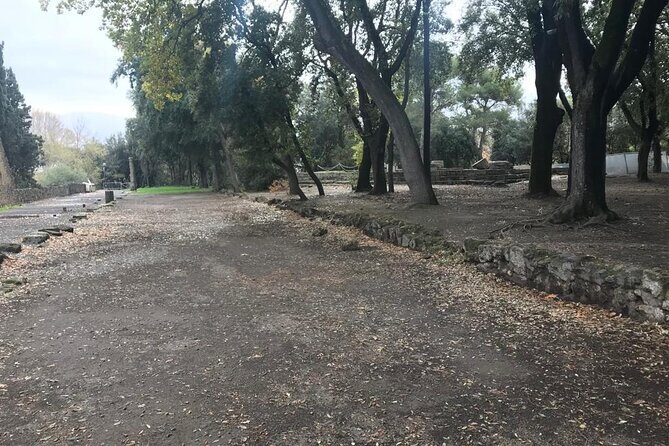
Pompeii is one of those places where time matters. The park is huge, the walking adds up, and if you show up planning to freestyle, you can end up rushing past the very parts you most wanted to see.
This tour’s setup targets that problem. You get skip-the-line admission, plus a guide-led route that fits into about two hours. That duration is short enough that you’ll still feel energized at the end, but long enough to cover more than the usual highlights that people cram in.
You’ll also get a mobile ticket, and the tour is offered in English. The small group limit (up to 15) is a big deal here. In Pompeii, being in a crowd can mean constant stop-and-go, and stop-and-go is the enemy of understanding what you’re looking at. A smaller group makes it easier to follow the guide’s route and listen while you’re moving.
One more practical note: the meeting area is near public transportation. That matters because Pompeii isn’t a “park and forget it” kind of destination. If you’re using trains or buses, being close to transit helps you stay flexible.
Other skip-the-line Pompeii tours in Pompeii


Pompeii Archaeological Park highlights: theatres, temples, and thermal baths
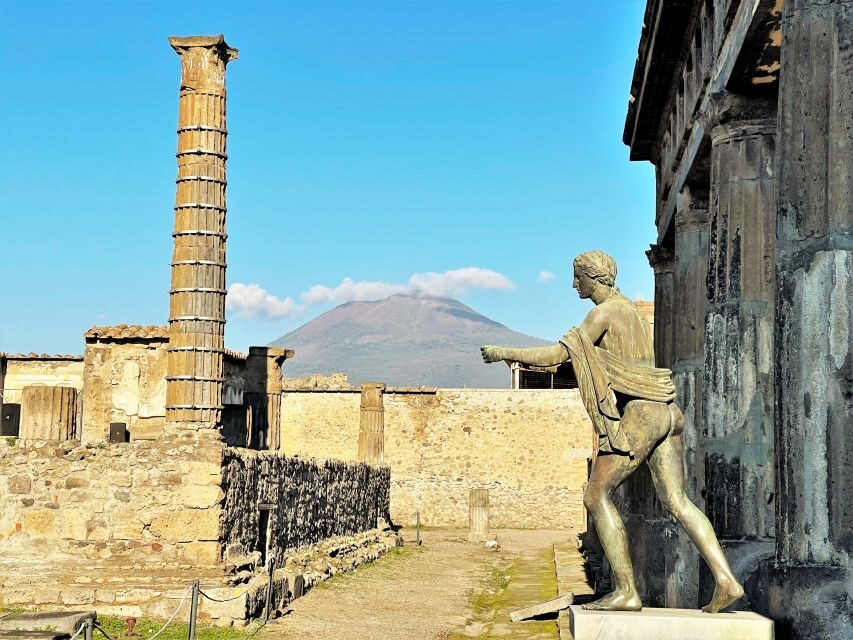
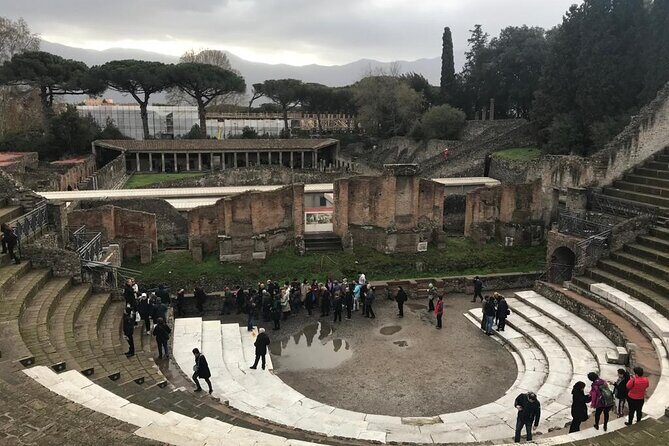
The tour is centered on the Pompeii Archaeological Park, with a strong focus on the most important public buildings. This is where guided interpretation really pays off. Pompeii isn’t just “old buildings.” It’s a functioning town layout, and public spaces tell you how people gathered, performed, relaxed, and did business.
Expect to see major civic spaces such as theatres and temples. The guide’s job here is to point out the purpose behind the stone: where crowds would have gathered, what kind of events went on, and how religion and public life shaped daily routines.
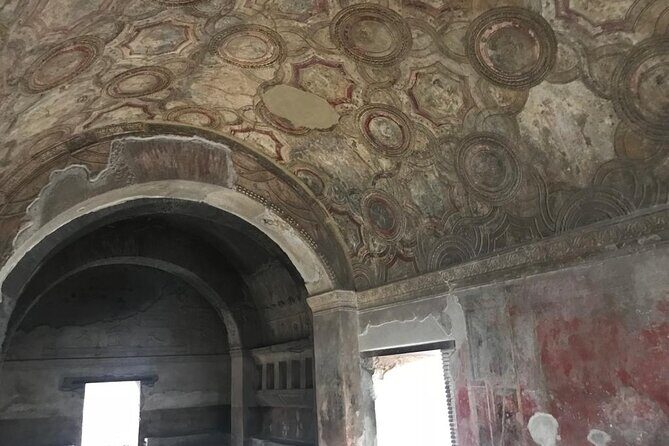
Then come the thermal baths. Even if you’ve never toured a Roman bath before, you’ll likely understand the logic quickly once someone shows how the spaces worked together. Roman bathing was social and practical at the same time. In a short tour window, this is one of the best categories of sights to include because it helps you imagine what a full day in Pompeii felt like.
A smart thing about this route is the mix. You’re not stuck staring at one building type for the whole walk. The tour keeps jumping between kinds of spaces: performance, worship, public relaxation. That variety helps your brain build connections between what you see and what you think life was like.
Roman street life on Via dell’Abbondanza and the Forum
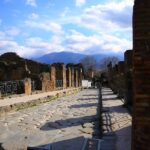
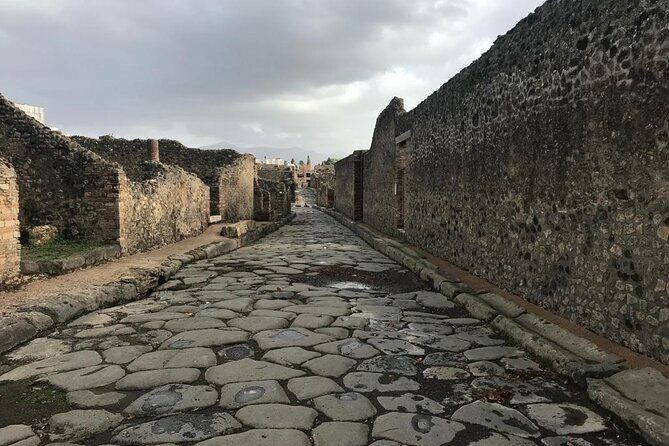
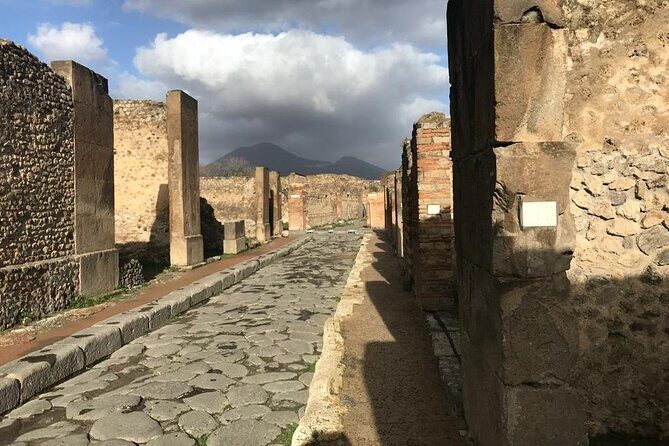
Next, you’ll shift to the street fabric of Pompeii. The tour specifically walks down Via dell’Abbondanza, the town’s main street. This part matters because ruins can feel like isolated monuments until you follow a path people likely walked every day.
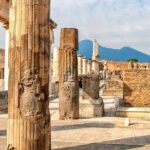
Along this main corridor, the guide pulls you toward the Forum, the heart of civic life. The Forum area is where you start seeing Pompeii as a town that ran on routines: meetings, decisions, movement, and public activity. Even in ruins form, it’s easier to grasp the rhythm when you’re led through it instead of wandering randomly.
Here’s where I think the tour earns its value for first-timers. It doesn’t treat Pompeii like a museum hallway. It gives you a walkable “town plan” feeling. You come away more oriented.
And then the tour brings in something most people skip: the food and shop culture. You’ll hear about traditional Roman places such as the thermopolia (an ancestor of fast food) and the pistrinum (the Roman equivalent of a bakery). These details make Pompeii feel less like a set of famous houses and more like a place where ordinary people ate, bought, and traded.
If you like history that connects to everyday habits, this is a highlight. It’s also a great segment for photos because the street and public areas naturally give context, not just texture.
Pompeii residences: Menander, Faun, Vettii, Caecilius Iucundus, and more
Pompeii’s residential section is where most visitors get excited, and this tour leans into that. You’ll visit fantastic homes with names that are recognized far beyond Pompeii itself, including the House of Menander, the House of the Faun, House of the Vettii, House of Caecilius Iucundus, and other well-known residences.
Why these houses matter in a guided format: a lot of visitors see walls and floor patterns and think, neat, then move on. A good guide ties visual cues to social status and daily life. In a short tour, that interpretation is what turns “pretty rooms” into real understanding.
Also, looking at houses in a focused sequence helps you notice what changes from home to home—how space is organized and how wealth shows up in architecture and decoration. You get the feeling of Pompeii’s class differences without needing to read a novel.
One practical drawback to keep in mind: a two-hour tour can’t fully explore each home the way a slower, longer visit might. You’ll get meaningful stops, but you’ll still be left wanting more. That’s not a flaw so much as math. Pompeii is too big for “everything in one go.”
The red-light district wall paintings: what you should actually look for
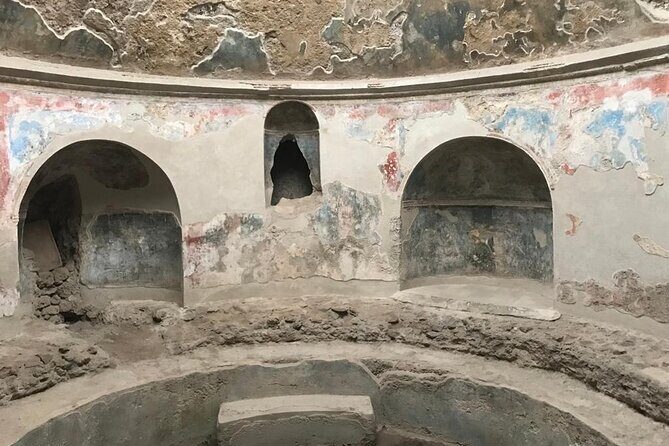
The tour includes a visit to the famous area often described as the red-light district, with an emphasis on its suggestive wall paintings. This is one of those parts where Pompeii’s reputation is real. The art is explicit in theme, and it’s also very human.
If you’re worried about awkwardness, here’s the practical approach: go in expecting symbolism and social commentary, not just shock value. A guide’s role is especially helpful here because the paintings are easier to understand when someone places them in context, rather than treating them like random graffiti.
Photo fans should prepare for something: these details can be visually interesting but also easy to over-shoot. If you find yourself photographing everything, pause and pick a couple of spots to study. In Pompeii, the value is in noticing patterns: repeated motifs, layout placement, and how the art connects to the space around it.
This segment is also a good “brain reset” after the heavier story of public spaces and houses. It’s one more window into how people expressed themselves and how street life worked.
Other small-group tours we've reviewed in Pompeii




Remembering the victims: how the tour handles the hardest images
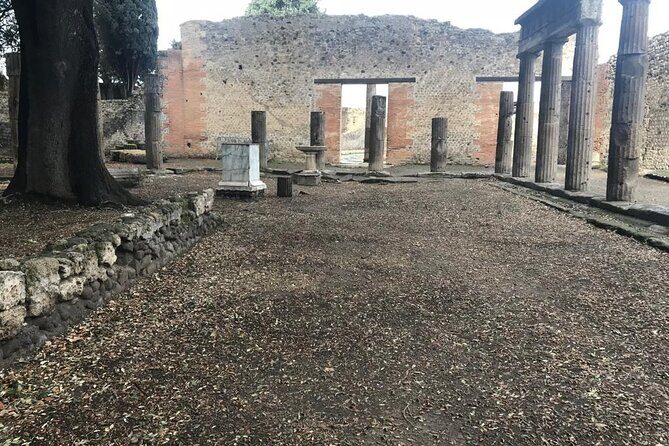
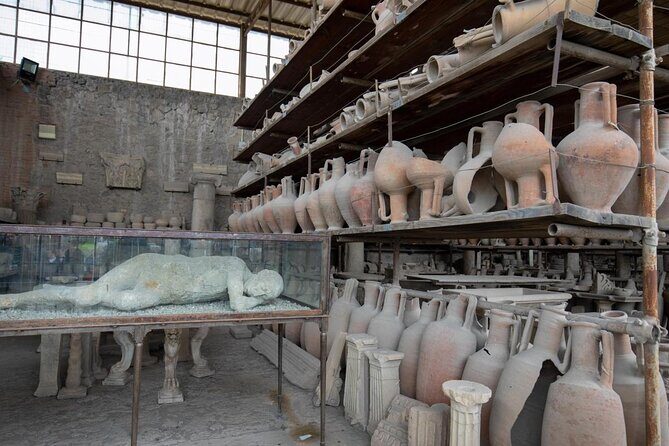
Pompeii can’t stay light for long. The eruption is part of every serious visit, and this tour puts special focus on the victims—appearing as petrified bodies.
I appreciate this approach for two reasons. First, it prevents the experience from turning into pure sightseeing. Pompeii is not just stone. Second, it reminds you that these were real people with real routines, not background characters in a travel photo.
In a short tour format, the challenge is timing. If you hit the victim segment too early, it can weigh down the rest of the walk. If you hit it too late, the guide might not get enough time for the emotional context to land. The best guided tours find a balance, and this one makes sure the story is clearly addressed rather than brushed past.
If you’re visiting with kids or anyone sensitive to graphic imagery, this is the part to mentally flag ahead of time so you’re not caught off guard.
Price and value: does $82.91 make sense for Pompeii?
At $82.91 per person for about two hours, you’re paying for more than entry. You’re paying for (1) skip-the-line access, (2) a guide who keeps you moving along a curated path, and (3) interpretation that helps you understand what you’re seeing in a short timeframe.
The value logic is simple: Pompeii punishes aimless wandering. If you arrive without a plan, you can spend more time deciding where to go than actually learning what to look at. This tour reduces that decision fatigue by taking you through a set route that hits the major categories: public buildings, main street, Forum, houses, and the victim focus.
Also, the tour includes an admission ticket based on the tour description you’re given. That’s important because Pompeii entry can be one of those costs that gets added later in some experiences. In this case, the intent is that entry is part of what you pay.
But here’s the honest caution from real-world reports: in one case, a guest described confusion around whether entry tickets were included and mentioned an extra $60 cost to switch to a private tour after their shared group didn’t fill. That doesn’t automatically mean this happens to everyone, but it is a good reminder to verify your specific booking details before you show up.
My advice for value: treat the listed price as a starting point, then confirm in your confirmation message what’s included. If admission is truly included and your tour is operating with the minimum group filled, you should feel you’re paying for time saved and clarity gained.
Who should book this Pompeii small-group guided tour
This is a strong match if you are:
- In Pompeii for a limited time and want a structured route
- Visiting your first time and want orientation plus standout sights
- Prefer a group that stays under 15 so questions are practical
- Interested in daily Roman life details, not just famous names
- Comfortable with a guide-led walk that moves at a reasonable pace
It may be less ideal if you:
- Want to linger for long stretches in each house or public building
- Need a fully self-paced experience without any forced timeline
- Are extremely sensitive to the eruption victim imagery (the tour includes it)
Language-wise, it’s English, so it’s best for visitors who want explanations and context rather than a silent stroll.
The guide factor: what makes the experience work in practice
The guide is the whole engine for this kind of tour. The route hits many famous places, but the difference between a forgettable walk and a memorable one is how the guide explains what you’re looking at.
One guide name that popped up is Roberta, praised for making history interesting and for helping participants avoid crowds while showing favorite spots. Even if your guide isn’t Roberta, that kind of skill set is what you should look for: clear explanations, smart timing, and the ability to guide you through Pompeii without turning it into a slow bottleneck.
If you want the best experience, arrive ready to move. Take breaks only when the guide signals one. Pompeii rewards focus: when you’re guided, you’ll understand what each space is for and how it fits into the larger city picture.
Should you book this Pompeii tour?
Book it if you want a high-impact Pompeii visit in about two hours, with skip-the-line admission and a route that covers both the big-name houses and the everyday life details like the thermopolia and pistrinum. The small-group size is a real quality boost, and the fact that the tour specifically includes the victim focus gives the visit weight.
Consider a different option if you need a super slow pace, want to spend lots of time inside every residence, or you’d rather control every minute yourself. And do yourself a favor: confirm what your booking includes so you don’t get stuck in the kind of payment confusion one guest described.
If you’re planning a first Pompeii stop, this tour hits the sweet spot: efficient, structured, and built around understanding what you’re seeing, not just collecting photos.
FAQ
How long is the Pompeii small group guided tour with skip-the-line admission?
It runs for about 2 hours.
Is skip-the-line admission included?
Yes. An admission ticket is included, and you receive a mobile ticket.
What language is the tour offered in?
The tour is offered in English.
How large is the group?
The experience has a maximum of 15 travelers.
Where does the tour take place?
The tour visits the Pompeii Archaeological Park in Pompeii, Italy.
Is confirmation provided after booking?
Yes. Confirmation is received at the time of booking.
Are service animals allowed?
Yes, service animals are allowed.
Can I get a refund if I cancel?
Yes. You can cancel for a full refund if you cancel at least 24 hours in advance.
What if the minimum number of travelers isn’t met?
If the tour is canceled because the minimum isn’t met, you’ll be offered a different date/experience or a full refund.