REVIEW · NAPLES
Pompeii ruins and the city of Naples with private transportation
Book on Viator →Operated by Askos Tours · Bookable on Viator
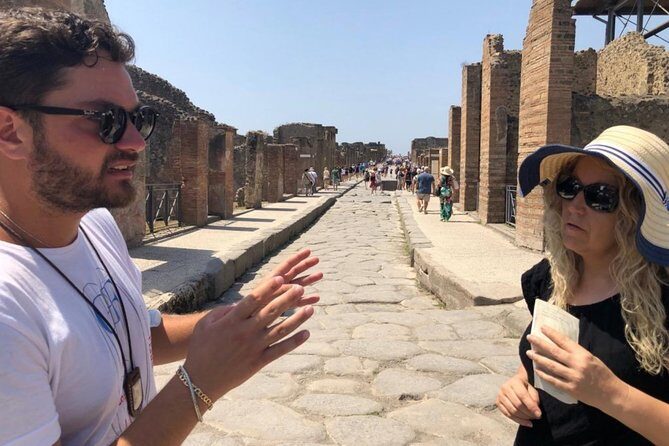
Pompeii is easier when someone else handles the details. This full-day private trip pairs skip-the-line Pompeii entry with door-to-door transport, plus a guide who helps you connect ruins to real people. If you’re lucky enough to be paired with Julia, an archaeologist who’s worked at Pompeii and led tours for years, the site can feel oddly personal fast.
You’ll also get a smart Naples follow-up after Pompeii—old churches, the tight lanes of Spaccanapoli, and big-name stops like Santa Chiara, the Duomo, and the Sansevero Chapel Museum. The main thing to plan for is effort: Pompeii involves real walking, and Naples adds more on foot, so comfortable shoes matter.
In This Review
- Key things to know before you go
- Door-to-door Naples logistics (and why it matters)
- Skip-the-line Pompeii: arriving through Porta Marina
- Pompeii stops that actually teach the city
- Basilica: the portico where business happened
- Granai del Foro: marble tables, fountain baths, and casts
- Foro de Pompeya: the ancient main square
- Main street walk: how neighborhoods connect
- Stabian Baths: the oldest thermal complex
- Lupanar: Pompeii’s famous brothel
- Casa del Fauno: a big, impressive home
- Casa del Menandro: wealth in architecture and decoration
- Teatro Piccolo and Teatro Grande: entertainment, Roman style
- Naples after Pompeii: panoramic views and historic-center walking
- Piazza del Gesù Nuovo: Baroque drama in stone
- Complesso Monumentale di Santa Chiara: Gothic tone in a Baroque city
- Spaccanapoli: the city’s straight line through the old center
- Duomo di Napoli: French Gothic and San Gennaro’s legacy
- San Lorenzo Maggiore: a complex church stop
- Museo Cappella Sansevero: the Veiled Christ
- Timing, pace, and what to bring
- Price and value: what you’re really paying for
- Who this tour is best for
- Should you book it?
- FAQ
- Pickup details and meeting point
- Is this tour private?
- How long does the tour last
- What language is the guide
- Is Pompeii admission included
- Is lunch included
- Will I wait in long lines at Pompeii
- How is transportation handled
- Do I need to bring anything
- What is the cancellation policy
Key things to know before you go
- Skip-the-line entry at Pompeii helps you start seeing instead of waiting.
- Private transportation by modern minivan makes timing smoother from port, hotel, or other Campania addresses.
- English guidance for the full day keeps the ruins and churches from becoming a blur of stone.
- A guide with Pompeii field experience (Julia is the standout example) can turn details into context.
- Naples panoramic views plus historic center stops after Pompeii make this more than a day-trip loop.
- Pompeii admission fees are included, but lunch is not—plan to cover your own meal.
Door-to-door Naples logistics (and why it matters)
This is built for one goal: to reduce friction. Your driver meets you with a sign holding your name, and you can be picked up from your hotel, another accommodation, or any port in Campania. That’s a big deal in Naples, where getting from cruise terminals or scattered hotels to the right meeting spot can eat up time.
You travel by modern minivan with a driver, and you have a professional guide for the whole experience. For many people, that’s the difference between a “see the highlights” day and a day that actually makes sense—because someone is guiding the order, pacing, and explanations.
Duration is about 7 hours. That’s long enough to see a lot, but it’s also short enough that you’ll feel the day’s tempo. If you’re the type who likes to linger in one place, you might want to set expectations now: there are many stops, so the guide will keep moving at a steady pace.
If you're still narrowing it down, here are other tours in Naples we've reviewed.
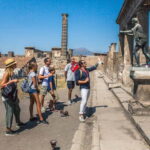
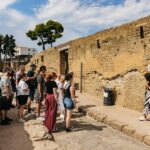
Skip-the-line Pompeii: arriving through Porta Marina
Pompeii’s best lesson is practical: you’ll see more when you don’t lose time to lines. This tour includes Pompeii admission as part of the price, and it’s designed to avoid the long wait that can stall your day.
You enter from the main entrance called Porta Marina, then you’re guided into the park area. Expect to spend about an hour at the site overall, with the rest of the time used for a structured walk through key neighborhoods and buildings.
Pompeii is spread out, and even “short” stops can involve moving between areas. Going in with a plan helps. You’re not just wandering for hours; you’re building a mental map of the city: where people lived, where they worked, how they relaxed, and where daily life happened.
Pompeii stops that actually teach the city
Think of Pompeii as a whole town frozen mid-motion. The best tours help you recognize patterns—what was important, what was public, and what was private. Here are the Pompeii highlights you’ll hit, in a sequence that makes the city feel like a place instead of a museum.
Basilica: the portico where business happened
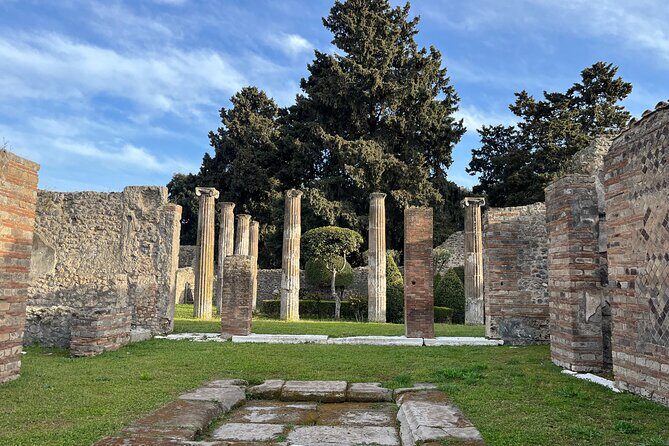
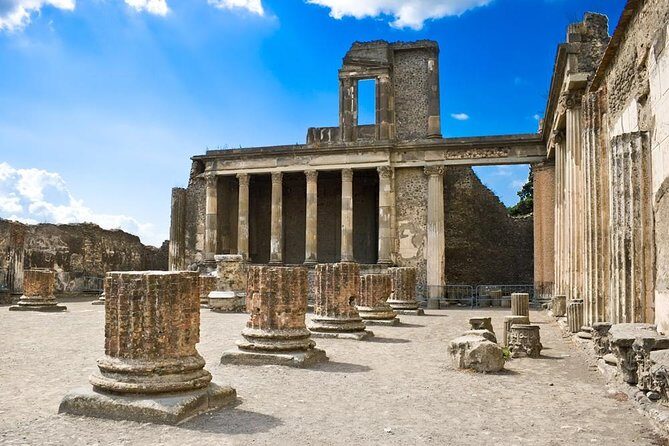
You start with the Basilica, described as an open portico. That matters because it wasn’t a church-as-we-know-it first. It functioned as shelter for merchants and other activities—so you’re looking at a civic space tied to commerce and daily traffic.
Even a brief stop here is worth it because it changes how you read later buildings. When you know the Basilica was a working hub, the forums and squares start to feel like community centers, not just empty plazas.
Granai del Foro: marble tables, fountain baths, and casts
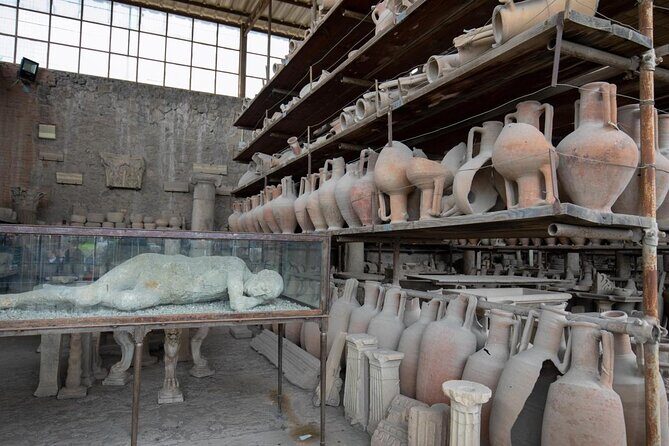
Next up is the Granai del Foro. You’ll see marble tables and baths for fountains that once adorned entrances of houses. The display elements—plus casts of eruption victims, including a dog and a tree—give the site a human edge.
This is one of those stops that can hit emotionally even if you’re not the sentimental type. The key is that it’s not random shock. It’s a reminder that Pompeii’s destruction was sudden, and the city’s “everyday” spaces became evidence of a real moment in time.



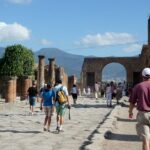


Foro de Pompeya: the ancient main square
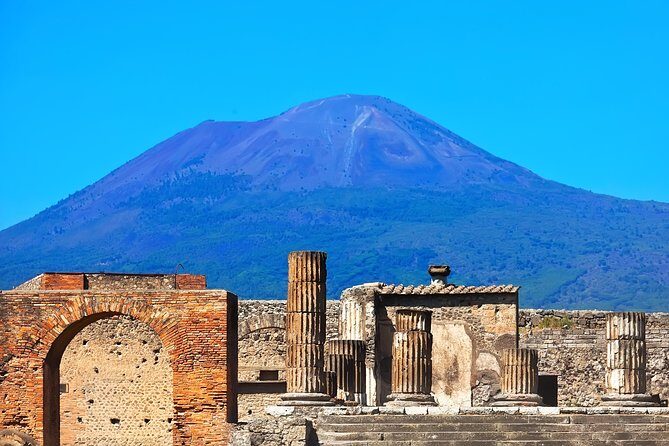
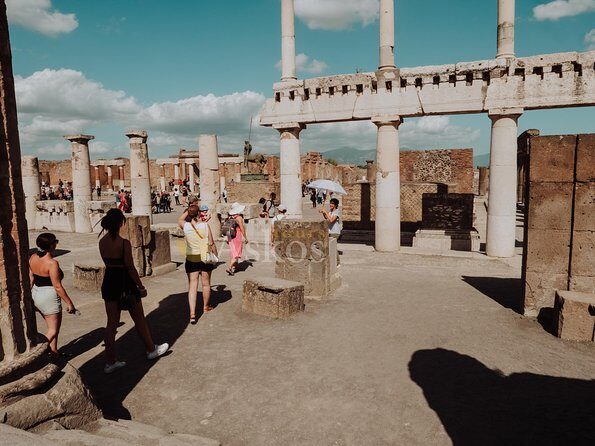
The main square—the Foro—was where people gathered and civic life happened. In a short visit, you’re basically getting orientation: this is the beating center, the place where the city’s energy would have concentrated.
Use this stop to take a few slow seconds. The more you look at the layout, the easier it is to understand later structures like theaters and residential streets.
Main street walk: how neighborhoods connect
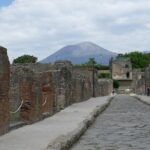
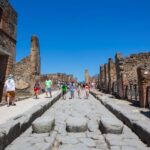
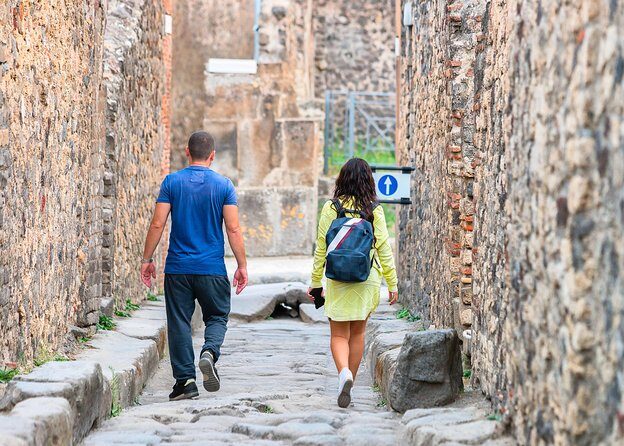
Then you walk through the main street of Pompeii. That brief stretch matters because it connects the big sites you’ve seen so far. It helps you understand circulation: how people would have moved between public spaces and local areas.
If you enjoy getting your bearings, this is the part where the tour earns its keep. You’re not just seeing icons—you’re tracing routes.
Stabian Baths: the oldest thermal complex
The Stabian Baths (Terme Stabiane) cover a vast area, and they’re described as the oldest thermal complex in the city. Baths weren’t only for hygiene; they were social space and routine.
When you’re there, try to imagine the rhythm: people arriving, changing areas, conversations, and the day’s heat and noise. It’s a strong counterpoint to theaters and forums because it shows how much of Roman life ran through public leisure.
Lupanar: Pompeii’s famous brothel
The Lupanar is one of the most famous brothels in Pompeii. It’s a real historical site, so the tour handles it with factual framing rather than sensational vibes.
You’ll want to treat this stop like a window into social structures. It shows that Pompeii had a full range of services and that daily life included places we don’t usually find in “pretty postcards.”
Casa del Fauno: a big, impressive home
Casa del Fauno is one of Pompeii’s largest and most impressive private residences. In plain terms, this is where you get a sense of wealth and scale—what a well-off household could afford in space, decoration, and prominence.
Even with a short visit, it’s a reminder that Pompeii wasn’t just public squares and entertainment venues. It was a city of families, caretakers, and economic rank.
Casa del Menandro: wealth in architecture and decoration
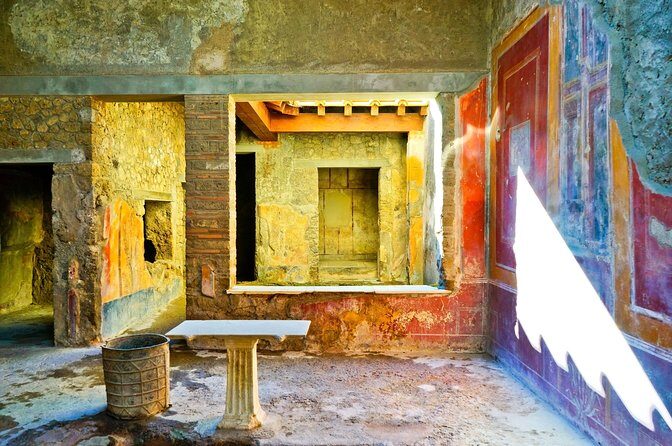
Casa del Menandro is even more focused on richness: architecture, decoration, and contents. It’s described as one of the richest and most magnificent houses in Pompeii.
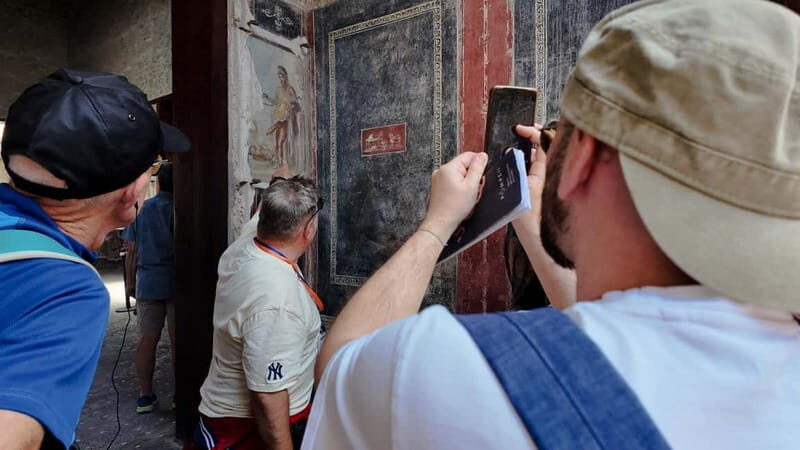
This stop is where the tour can feel like a visual reading lesson. The house design helps you understand how comfort and status showed up in layout, surfaces, and daily spaces.
Teatro Piccolo and Teatro Grande: entertainment, Roman style
You’ll also look at the so-called Teatro Piccolo, then visit the Teatro Grande. The Teatro Grande is described as the most important theater in Pompeii.
Theaters in Roman culture weren’t quiet. They were public events with strong social pull. If you can, pause long enough to look at how the space funnels attention—because once you do, the building’s purpose clicks.
Naples after Pompeii: panoramic views and historic-center walking
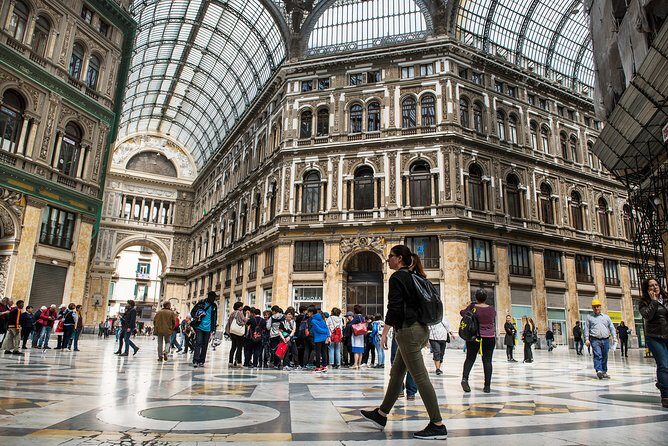
After Pompeii, you transfer back to Naples for a panoramic tour of the monumental quarter and the seaside. This part helps you reset after archaeological density. You’ll get a feel for how the modern city sits in relation to the water and the surrounding neighborhoods.
Then comes the historic center on foot, with a lunch stop in a traditional pizzeria in the historic center. Lunch itself is not listed as included, so bring some cash or a card budget for your meal.
From there, the stops become more about style and atmosphere. You’ll see how Naples mixes layers: Gothic structure, Baroque decoration, and older religious sites that continue to function today.
Piazza del Gesù Nuovo: Baroque drama in stone
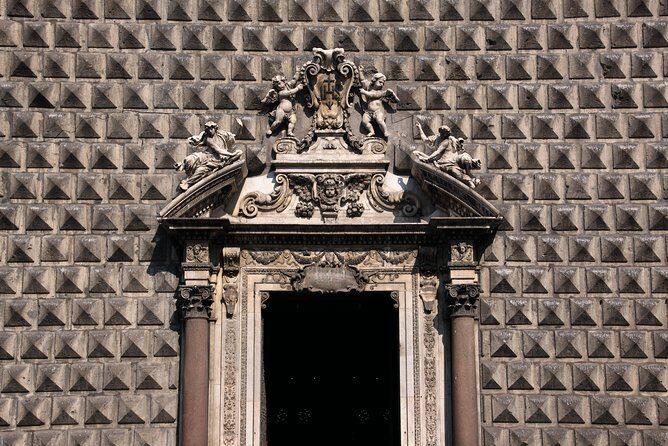
At Piazza del Gesù Nuovo, you’ll see the church of Gesu’ Nuovo, highlighted for its Baroque façade and distinctive details. The façade uses diamond-shaped ashlars, and the interiors are described as marble-rich.
This is a good stop for visual people. Spend a little time on the outside first, then let the interior finish the story. It’s the kind of architecture that rewards looking up.
Complesso Monumentale di Santa Chiara: Gothic tone in a Baroque city
Santa Chiara is set in a walled, citadel-like complex and is described as a rare example of Naples’ austere Gothic history. That makes it a relief from the ornate Baroque vibe you’ll see elsewhere.
If you’re tired from Pompeii walking, this church complex can feel like a breath of calmer air. The contrast is part of the value.
Spaccanapoli: the city’s straight line through the old center
Spaccanapoli is the straight and narrow main street that traverses the historic center—“Naples splitter,” as the name goes. You’re essentially traveling a long axis of old Naples on foot.
This is where Naples starts to feel lived-in again. You’ll catch glimpses of storefront life, church facades, and the rhythm of people moving through tight spaces.
Duomo di Napoli: French Gothic and San Gennaro’s legacy
The Duomo di Napoli is a 14th-century French Gothic church built by the Angevins and it’s the seat of Naples’ archdiocese. You’ll also get the crypt and the Chapel of San Gennaro, tied to the Festival of San Gennaro and the blood liquefaction ceremony that happens three times a year.
Even if you’re not attending a festival, this stop gives you cultural context. This is Naples as it functions today: tradition with ongoing meaning.
San Lorenzo Maggiore: a complex church stop
Basilica di San Lorenzo Maggiore is near via San Gregorio Armeno, and it’s described as one of the most fascinating churches in Naples with complex history. The tour doesn’t ask you to memorize dates; it’s about noticing how layered the site feels.
If you like churches that aren’t all about one single style, this is the kind of stop you’ll enjoy.
Museo Cappella Sansevero: the Veiled Christ
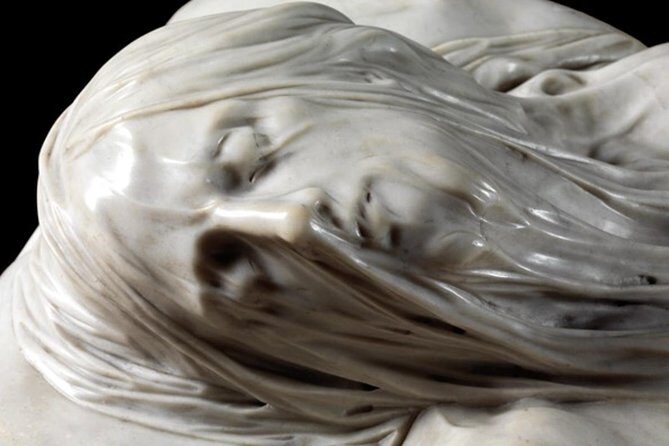
The Sansevero Chapel Museum is highlighted as a jewel of world artistic heritage. Among its masterpieces, you’ll find the famous Veiled Christ.
If you’re a first-timer in Naples, this is a strong “yes, that’s why people come” final stop. It also helps balance the day: Pompeii shows destruction; the Veiled Christ shows artistry, craft, and careful display.
Timing, pace, and what to bring
This is a full-day schedule, not a slow scenic stroll. You’ll move from Pompeii’s archaeological zones into Naples’ historic center, with short visits at each key point.
For comfort, wear shoes that can handle uneven ground and lots of walking. The tour also suggests, especially in summer, bringing a hat, sunscreen, and a bottle of water. That’s not a casual tip in Naples. It can be the difference between enjoying the streets and feeling miserable halfway through.
Physical fitness should be moderate. If you’re managing mobility limitations, you’ll want to think carefully about the amount of walking and the terrain in Pompeii and the older Naples streets.
Price and value: what you’re really paying for
At $605.07 per person, this isn’t a budget day. The value comes from what’s included and the fact that it’s private: modern minivan transport, a driver, professional guidance throughout, Pompeii admission fees, and the taxes/fuel/parking costs.
The biggest trade-off is lunch. Lunch is not included, so plan your meal budget. Also, you’re paying for time saved: skip-the-line admission at Pompeii and a structured route through the most important stops.
If you’re traveling as a pair or small group, private transportation often makes sense because it replaces multiple tickets, unpredictable transit, and the risk of losing time. If you’re solo, it can still be worth it if you want expert guidance and a calm schedule rather than managing logistics.
Who this tour is best for
You’ll likely love this if:
- You want Pompeii plus Naples in one day without stress.
- You prefer a guide to explain details as you walk.
- You’re okay with a schedule that’s packed but organized.
You might reconsider if you:
- Want long, slow museum-style wandering with frequent breaks.
- Have very limited mobility and need minimal walking.
- Expect lunch to be included in the price.
Should you book it?
Yes, if your priority is a smooth, guided day that links Pompeii’s key sites with Naples’ historic center. The big strengths are the private transport, Pompeii entry that aims to reduce line time, and a guide with real Pompeii experience—Julia is a perfect example of the kind of guidance that can make ruins feel alive.
If you’re the type who hates rushing, treat this as a “structured hits” tour, not a slow hangout. Still, the mix of Pompeii landmarks and major Naples churches is a solid way to see a lot while staying grounded in context.
FAQ
Pickup details and meeting point
The driver meets you holding a sign with your name on it. You can be picked up from your hotel, your accommodation, or any port in Campania.
Is this tour private?
Yes. It’s a private tour/activity, so only your group participates.
How long does the tour last
The duration is approximately 7 hours.
What language is the guide
Guidance is offered in English.
Is Pompeii admission included
Yes. Pompeii admission fees are included in the tour.
Is lunch included
No. Lunch is not included.
Will I wait in long lines at Pompeii
The tour is designed to help you avoid waiting in long lines with skip-the-line admission to Pompeii.
How is transportation handled
You travel by modern minivan with a driver, plus guidance from a professional guide for the full duration.
Do I need to bring anything
The tour recommends comfortable shoes, and in summer bring a hat, sunscreen, and a bottle of water.
What is the cancellation policy
Free cancellation is available up to 24 hours in advance for a full refund. If you cancel less than 24 hours before the start time, the amount paid is not refunded.