REVIEW · POMPEII
Pompeii and Mount Vesuvius Small Group Tour
Book on Viator →Operated by Askos Tours · Bookable on Viator
Pompeii makes more sense with a guide. This small-group outing pairs archaeologist-led Pompeii time with a guided hike up Vesuvius for big views over the Bay of Naples. I love how the ruins are explained like a living city, and how the volcano portion is guided at a steady pace with plenty of encouragement. The main catch is the physical side: the crater area involves steps and a steep uphill stretch, so bring proper shoes and don’t underestimate the climb.
You’ll spend about 8 hours total, moving between sites with minivan transport and a licensed Vesuvius hiking guide. The group size is capped at 14, but it is still a full day, and food and drinks are on you.
In This Review
- Key highlights worth centering your day on
- Why this Pompeii and Vesuvius combo is a smart use of your time
- Meeting in Pompeii: where the day starts and why it matters
- Pompeii orientation: from main entrance to square-and-street understanding
- The Forum’s working details: granaries, water features, and victim casts
- Pompeii homes that show status: House of Menander and House of the Faun
- Baths and everyday entertainment: Stabian Baths and Teatro Grande
- The Lupanar stop: a frank look at a famous brothel
- Mount Vesuvius climb: what you’re signing up for on the crater trail
- Weather can change the plan: Herculaneum as the backup payoff
- How the minibus and pacing keep you from burning out
- Lunch and downtime: the part you need to plan yourself
- Price and value: what $119.77 buys you, and what you should budget
- Who should book this tour, and who should skip it
- Should you book the Pompeii and Mount Vesuvius Small Group Tour?
- FAQ
- What is the duration of the Pompeii and Mount Vesuvius small group tour?
- What’s included in the ticket price?
- Is food and drinks included?
- What happens if Mount Vesuvius is not accessible due to weather or force majeure?
- How hard is the Vesuvius walk?
- Are children allowed on this tour?
Key highlights worth centering your day on
- Archaeologist interpretation at Pompeii: you get the why behind the streets, homes, baths, and public spaces
- Vesuvius crater trail with a hiking guide: a real support system on the climb, not just a drop-off
- Two Pompeii chunks: time early for orientation, then more time later after the volcano visit
- Worth-it views when weather behaves: Bay of Naples, Capri and Ischia are the payoff from the rim
- Weather plan built in: if Vesuvius isn’t accessible due to force majeure, you switch to Herculaneum
Why this Pompeii and Vesuvius combo is a smart use of your time
If you only have a day (or you’re trying to protect your energy), this is the efficient way to do it. Pompeii alone can swallow a half-day fast. Add Vesuvius, and you’d normally need two days—or a lot of extra planning. This tour bundles both, so your day has a clear storyline: the city that was buried, then the volcano that did the burying.
The value is not just the checklist of sites. It’s the sequencing. You get guided context at Pompeii first, then you hike up to the crater with that context in your head. The ruins stop being random stone piles and start reading like evidence. That’s the kind of trip that feels shorter than it really is.
Other small-group tours we've reviewed in Pompeii

Meeting in Pompeii: where the day starts and why it matters
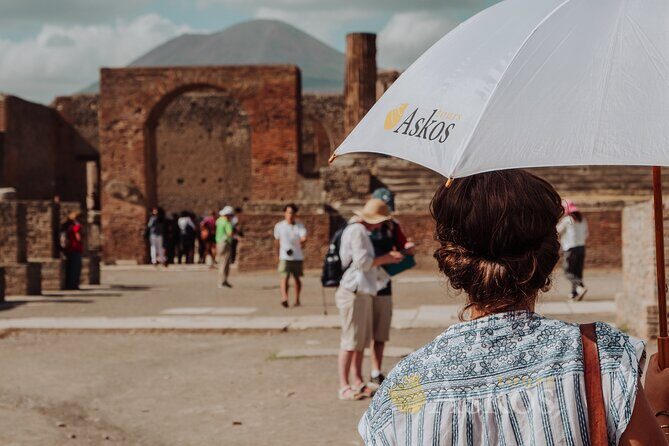
You meet at Via Villa dei Misteri, 2, in Pompeii (the meeting point is straightforward and local). After that, you’re in the right hands for the first big chunk inside the Archaeological Park.
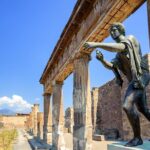
From there, your Pompeii guide leads you from Porta Marina Superiore, which is a good anchor point. It reduces the usual first-hour confusion of where to go and what to prioritize. With Pompeii, that matters more than you’d think: the site is huge, and without a plan you can end up seeing the wrong things for your one-day schedule.
Pompeii orientation: from main entrance to square-and-street understanding
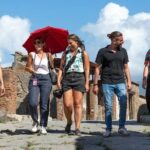
The first guided segment is about 2 hours with an archaeologist. This is the part that changes your visit from sightseeing into understanding.
You’ll hit Pompeii’s main public areas and the connective tissue of the city:
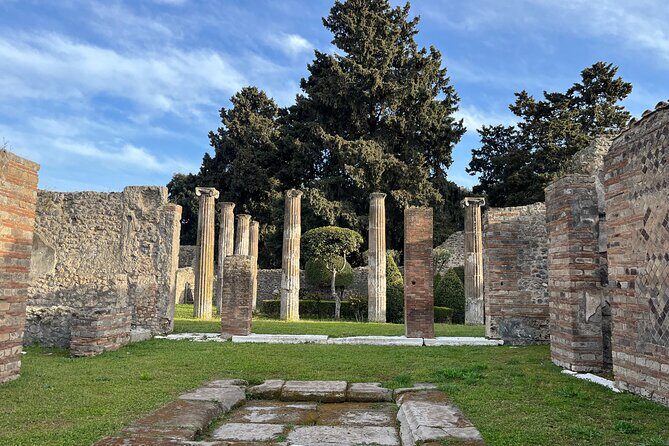
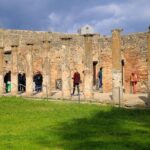
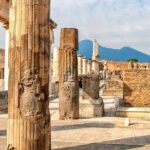
- You see the ancient main square (the Forum area), which is the social and political heart.
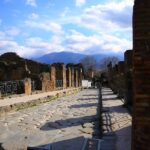
- You get a walk through the main street, so you can visualize how people moved through civic life.
- You stop at key structures that help you build mental maps: where commerce happened, where residents bathed, where elite homes displayed status, and where everyday routines played out.
The practical upside? You’ll recognize patterns later when you go back for more time inside the park. Instead of chasing cool-looking corners, you can pick where you want to linger based on what you now understand.
The Forum’s working details: granaries, water features, and victim casts
Some Pompeii tours rush the architecture and skim the human story. This one gives you both, with short, targeted stops that keep momentum.
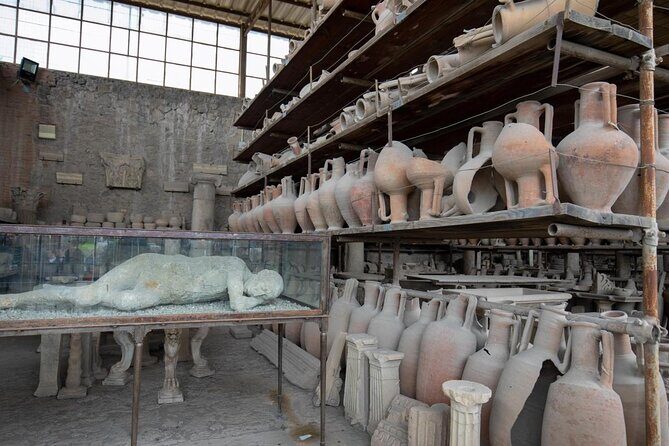
One highlight in the Forum zone is the granaries area, where you can see marble tables and baths for fountains at house entrances. These details help you connect public infrastructure with daily living. You also get casts connected to the eruption—examples include victims and even animals and a tree cast. That sounds heavy, but it’s exactly what makes Pompeii feel real: you’re not just looking at buildings; you’re witnessing consequences.
A quick note for your expectations: these stops are not long. You’re getting the essentials and the interpretation that makes the next stops meaningful.
Pompeii homes that show status: House of Menander and House of the Faun
Pompeii’s private residences are often where visitors either get lost or get wowed. Here, the tour aims for the wow-with-clarity approach.
You’ll visit the House of Menander, described as one of the richest homes in Pompeii, known for architecture, decoration, and what was found inside. The point of this stop is not just luxury. It’s perspective. This is how wealth expressed itself in painted walls, layout choices, and collected artifacts.
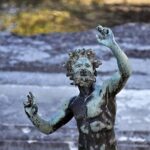
Then you’ll move to the House of the Faun, one of the largest and most impressive private residences. Again, the guide’s job is to translate the visual details into what they meant for daily life—how a household functioned and what residents valued.
If you love archaeology, the best part of these stops is how quickly the guide can connect art, objects, and building design to real people.
Other Mount Vesuvius tours in Pompeii


Baths and everyday entertainment: Stabian Baths and Teatro Grande
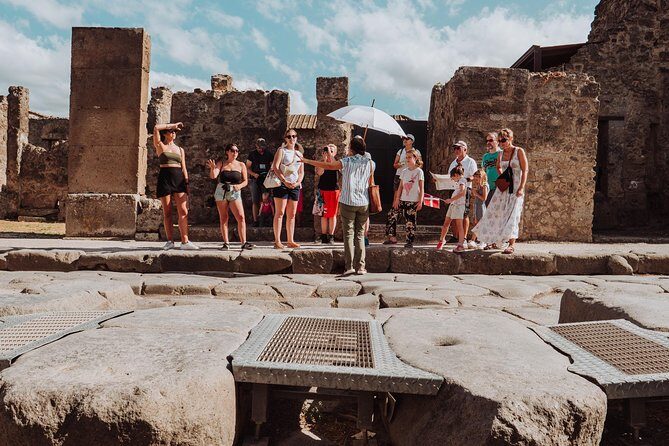
Pompeii wasn’t only temples and big speeches. It was also routine life.
The Stabian Baths (Terme Stabiane) occupy a vast area and represent the oldest thermal complex in the city. Baths in a Roman city were social hubs: news, conversation, and physical upkeep all bundled into one routine. Seeing the size and layout helps you understand why bathing mattered so much.
The day also includes a look at Pompeii’s entertainment venues, including Teatro Piccolo and the bigger Teatro Grande. The Teatro Grande stop is brief, but it’s a helpful marker. You can place culture in your mental map of the city—where people gathered, what they watched, and how that fit into civic life.
The Lupanar stop: a frank look at a famous brothel
The Lupanar is often the most talked-about site in Pompeii, and the fact that it’s included here is a good thing. A guided visit turns it from shock-factor into context. You’ll see it as part of the city’s ecosystem of commerce and public morality.
This stop tends to run on the shorter side, but it still helps you understand Pompeii as a complete society, not a museum of tragedies.
Mount Vesuvius climb: what you’re signing up for on the crater trail
Now for the cardio.
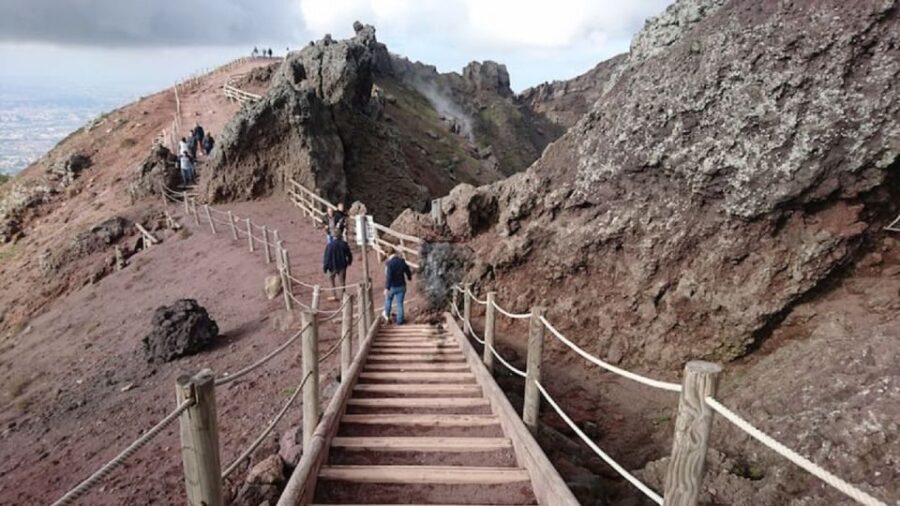
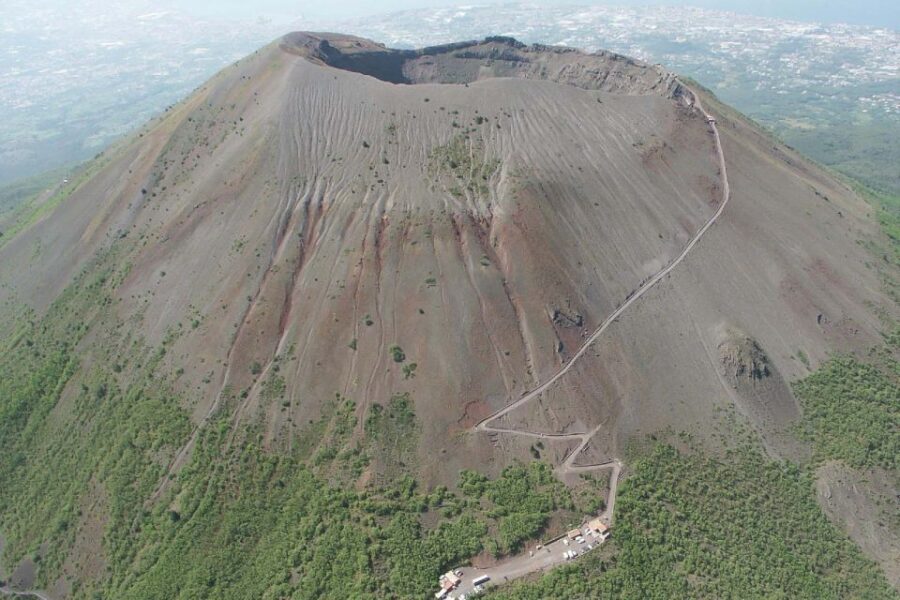
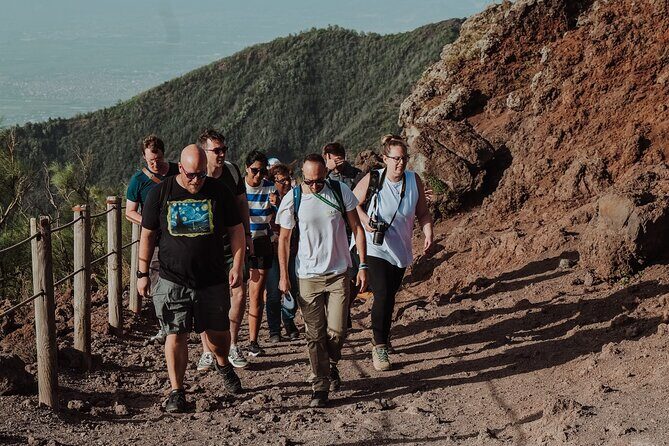
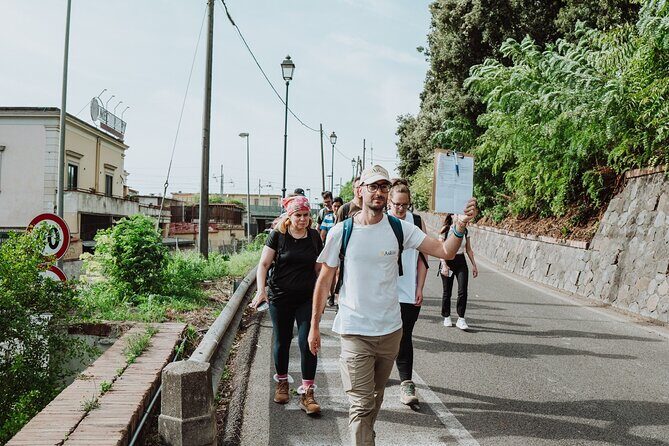
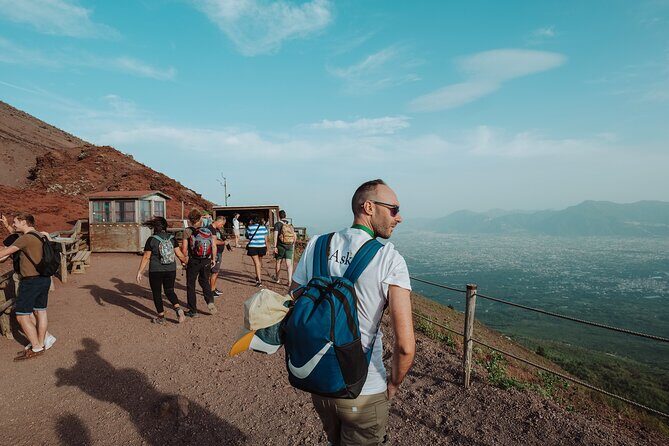
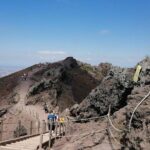
At Vesuvius, you transfer up and then hike toward the crater area. The tour guidance is built around the reality that the walk is not flat. The first stretch includes steps for about the first 30 minutes to reach the crater area. After that, there’s a very steep uphill walk for the last 500 meters.
That means your shoes matter. The tour notes that closed-in shoes are essential, and several experiences in this style of tour emphasize the traction issue—loose sand can be slippery, and weather can change fast. If you’re thinking sandals, don’t.
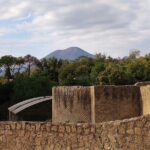
What about views? When visibility is good, you’re rewarded with a wide panorama: the Bay of Naples, Capri and Ischia, and the Sorrento coast edge. Even when clouds and fog roll in, the crater rim experience can still be fascinating—some guides also point out small details like smoke or steam. Don’t count on perfect skies, but do count on an unforgettable top-of-volcano moment.
Weather can change the plan: Herculaneum as the backup payoff
Volcano weather is unpredictable. This tour is designed to handle that in a reasonable way.
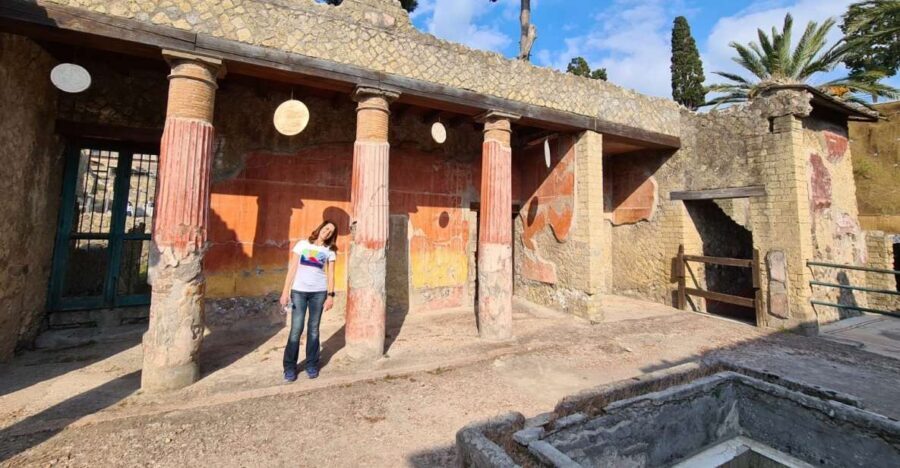
If Vesuvius isn’t accessible due to force majeure, you’ll visit Herculaneum instead. In practice, that means if fog, rain, or closures make the crater trail a no-go, the day isn’t wasted. You still get volcanic-region context and another important site from the same eruption story.
This matters for decision-making: if your dream is crater photos, bring flexibility. If your dream is understanding the eruption’s impact on people, the backup plan still lands.
How the minibus and pacing keep you from burning out
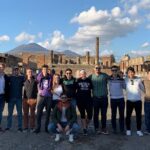
The transport is by modern minibus (up to 14 people). That keeps the group feeling small and helps on logistics—especially because the day is split across two major sites.
The pacing is where the tour earns trust. The Vesuvius hike portion is led by a hiking guide licensed for the task, and guides tend to adjust pace based on the group’s fitness. One of the most common strengths from this style of tour is that the hike doesn’t feel like a race. It feels like progress, with breaks when you need them.
Still, this is not a leisurely day. It’s a tight schedule with lots of short stops. If you want to linger for 45 minutes at every mural, this tour might feel like you’re constantly moving.
Lunch and downtime: the part you need to plan yourself
Food and drinks are not included. You’ll need to budget time and money for lunch.
The good news is that there’s usually a chance to grab something simple and keep moving. If you like structure, consider packing snacks before you start. If you want a full meal, you’ll need to accept that your schedule could be tight, especially if weather changes on Vesuvius.
Also think about layers. At the crater rim, it can be windy. A light jacket can make the difference between enjoying the views and feeling chilled.
Price and value: what $119.77 buys you, and what you should budget
The tour price is listed at $119.77 per person for a day around 8 hours. Included elements that add real value:
- 2 hours of archaeologist guidance at Pompeii
- Mount Vesuvius admission (the Vesuvius entry ticket is also listed as €11)
- Pompeii ticket type listed as Pompei Express
- Modern minibus transportation
- A licensed hiking guide for Vesuvius
What costs extra:
- Food and drinks
- Anything you choose to buy inside the parks (souvenirs, snacks, and so on)
So is it good value? For one-day Pompeii + Vesuvius, yes—especially because you’re paying for interpretation and for a guided climb. If you’d otherwise go DIY, you’d spend time figuring out routes, where to stand for crater access, and how to connect the eruption story to what you see in Pompeii.
Who should book this tour, and who should skip it
This fits best if you:
- Want a guided, structured Pompeii visit instead of wandering
- Are comfortable with a steep, uphill hike segment on Vesuvius
- Prefer a small-group day over large bus tours
- Value seeing the eruption story from both sides: buried city, then volcano cause
It may not fit if you:
- Have mobility or walking limitations. The tour is not recommended for mobility/walking issues or impairments.
- Need a totally low-effort day. This includes steps and steep climbs.
- Are booking with kids under 6, since children under 6 aren’t allowed.
If you’re on the fence about difficulty, use this rule: treat Vesuvius as the workout. If you can handle uphill steps and a steep finish, you’ll likely enjoy the day.
Should you book the Pompeii and Mount Vesuvius Small Group Tour?
If you’re planning a short stay and you want Pompeii plus Vesuvius in one go, I’d book this. The real win is the guide support on both sides: archaeology that makes the ruins readable, plus hiking guidance that makes the climb manageable.
Just go in with the right mindset. This is a long day with weather-dependent visibility at the crater. Wear shoes with grip, bring a light layer, and plan for lunch on your own. If you do that, you’ll get a day that feels bigger than its hours—and you’ll come away understanding what you’re seeing, not just checking boxes.
FAQ
What is the duration of the Pompeii and Mount Vesuvius small group tour?
It runs for about 8 hours (approx.).
What’s included in the ticket price?
You get 2 hours of archaeologist guidance at Pompeii (small group), the Pompeii and Mount Vesuvius admission fees listed for the tour, transportation by modern minibus, and a licensed hiking guide for Mount Vesuvius.
Is food and drinks included?
No. Food and drinks are not included.
What happens if Mount Vesuvius is not accessible due to weather or force majeure?
If Vesuvius cannot be accessed due to force majeure, the tour includes a visit to Herculaneum instead of Vesuvius.
How hard is the Vesuvius walk?
You should have moderate physical fitness. The first 30 minutes to reach the crater area includes steps, and the last 500 meters is a very steep uphill walk. Closed-in shoes are essential.
Are children allowed on this tour?
Children under 6 years old are not allowed.