REVIEW · POMPEII
Stories of Pompeii: Small Group tour with archeology expert guide
Book on Viator →Operated by TUI Musement · Bookable on Viator
Pompeii feels personal when explained well. This small-group tour takes you through the buried town with an archaeology-minded local guide, focusing on the places that make the Roman world click. You’re not just walking stones. You’re learning how people actually lived in a city frozen in time.
What I like most is the way the guide turns each stop into a story you can follow. You also get entrance included, so you’re not juggling add-ons while you’re trying to see everything. (And if the group is larger than 6, you’ll use a headset, which makes the whole experience easier.)
One thing to consider: this is about 2 hours, and it does not include a guided visit of Villa dei Misteri. If you’re hoping for a longer, deeper museum-style day, you might want a different option.
In This Review
- Key things to know before you go
- Why Pompeii looks different with an expert guide
- Piazza Esedra start: what to do with timing and your shoes
- The 2-hour route: how you’ll cover Pompeii without feeling rushed
- Theatre, brothel, and public life: what these stops teach you
- Spas, amphitheatre, and everyday food: the city beyond monuments
- Why the headset and small group size matter in real life
- Guides you’ll want: Maria Novella and Pippo in the mix
- Price and value: is $54.44 worth it?
- What’s not included (and how that affects your expectations)
- Who this Pompeii tour fits best
- Should you book Stories of Pompeii?
- FAQ
- How long is the Pompeii small-group tour?
- Is the Pompeii entrance ticket included?
- What language is the tour offered in?
- Do you get a headset during the tour?
- Where does the tour start and end?
- Can I bring a large backpack or bag inside the site?
- Is cancellation free, and how late can I cancel?
Key things to know before you go
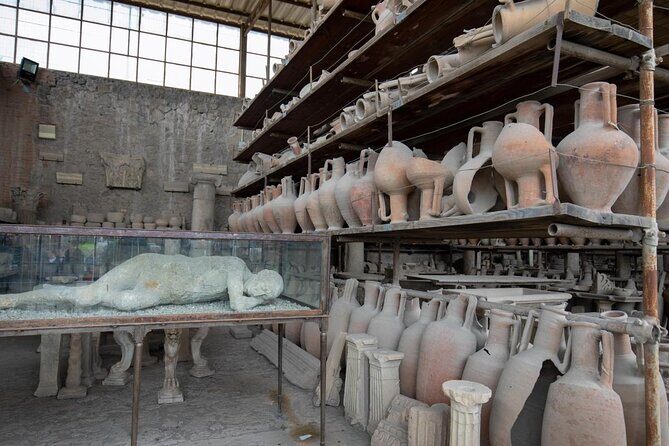
- Small group, max 16: enough attention without the tour turning into a parade.
- Entrance fee included: you’re paying for the experience, not just the gate.
- Headsets when needed: clearer audio when you’re walking in a bigger group.
- You’ll hit the major stop points like theatre, brothel, spas, amphitheatre, and a thermopolium.
- Luggage limits: large bags and backpacks stay outside the site in a cloakroom.
Why Pompeii looks different with an expert guide
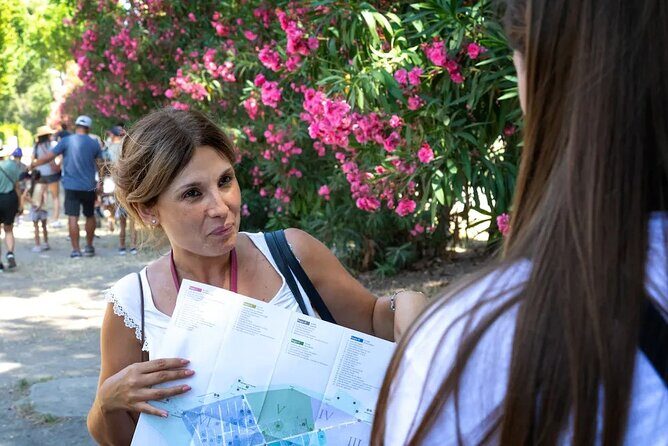
Pompeii is famous, but it can still feel confusing if you arrive cold. The buildings are there, the streets are there, yet your brain needs help connecting them—home to workshop, street life to public life, and daily routines to the big Roman systems.
That’s where a guide with archaeological focus matters. The best Pompeii guides help you read the city like a map: where people gathered, where they shopped and ate, and how entertainment and commerce were woven into everyday life. In this tour, you’re guided through multiple famous sectors rather than spending all your time staring at one wall.
Other archaeologist-led tours in Pompeii


Piazza Esedra start: what to do with timing and your shoes

The tour starts at Piazza Esedra and ends inside the Pompeii archaeological area. Practically, that means you’ll want to plan for getting there early enough to avoid stress before you even begin.
A good strategy is simple: arrive at least 15 minutes early, because late arrivals aren’t guaranteed to be accommodated. Pompeii can be warm, and the ruins involve walking—so bring comfortable shoes and a bottle of water, especially on hot days.
And yes, there are rules about bags. You can’t bring large bags and backpacks into the site, but you can leave them at the entrance at a free cloakroom and pick them up afterward. That keeps the walk smoother for everyone.
The 2-hour route: how you’ll cover Pompeii without feeling rushed
This tour is built around a focused 2-hour visit. That’s a sweet spot for many people because Pompeii is huge, and the more time you spend inside, the easier it is to lose your sense of direction. With only two hours, you’re more likely to remember key areas rather than just collect random photos.
You’ll enter the Archaeological Park of Pompeii with an expert local guide. From there, the route is designed to show the most recognized public-and-private-life sites—places that explain Roman culture quickly. The guide keeps your attention moving from structure to structure, with context that helps you understand what you’re seeing.
A small-group setup also changes the experience. It’s easier to hear questions and answers, and the guide can manage pace better than a big crowd. This matters at Pompeii, where you’re often stopping, looking up, and then moving on through narrow spaces.
Theatre, brothel, and public life: what these stops teach you
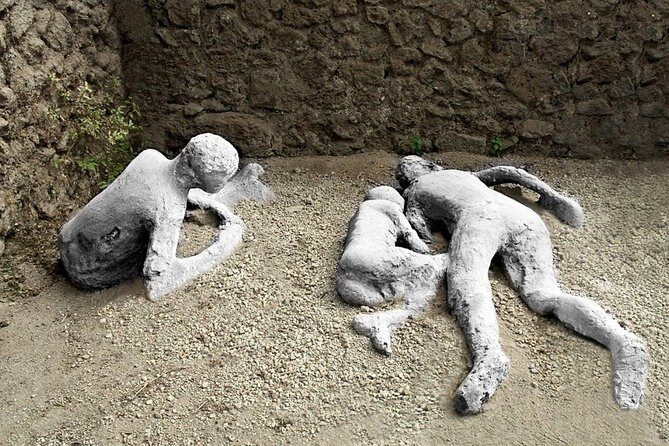
The tour highlights several major areas that help you understand how Romans used public entertainment and social life.
Theatre
Pompeii’s theatre isn’t just a pretty ruin. It shows how entertainment was part of civic identity—where people gathered, how performances fit into the city rhythm, and what public architecture signals about social priorities. Standing inside the space, you can start to picture sound traveling and crowds shifting, even if you only have a short time.
Brothel
It’s an unusual stop, but it’s one of the most revealing for understanding daily life and social norms in antiquity. A good guide uses it to connect architecture and imagery to real human behavior—how people talked about sex, money, and status. If you’re sensitive to explicit themes, you should be mentally prepared, but the explanation is typically about history and context, not shock value.
A point worth noting: this tour is short, so you won’t linger for long. That can be good, because it keeps the tour moving toward other key areas without making one topic crowd out the rest.
Spas, amphitheatre, and everyday food: the city beyond monuments
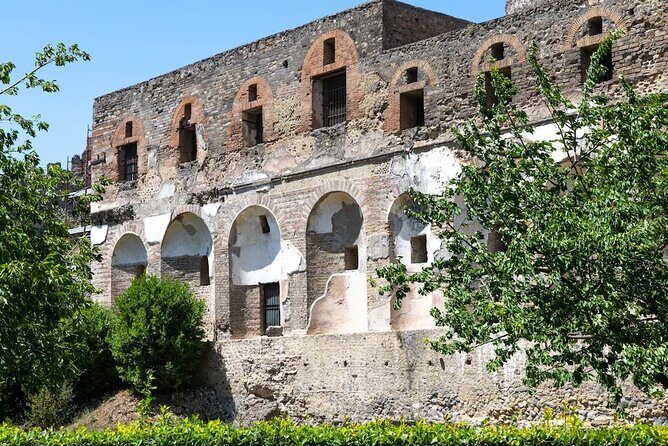
Pompeii isn’t only temples and grand buildings. This tour also targets places that show routine life.
Spas (bathing areas)
Roman bathing wasn’t just hygiene. It was social time, local culture, and a public practice with set spaces and routines. In a guided setting, spas make more sense fast: you can see how rooms and circulation likely worked, and how people used bathing as a kind of public meeting ground.
Amphitheatre
An amphitheatre gives you a direct view of Roman mass entertainment. It’s a place where politics, spectacle, and social structure overlap. With a guide, you’ll get the context that turns seating, corridors, and the overall shape into something more meaningful than a scale model.
Thermopolium
This is one of those Pompeii stops that makes ancient life feel real. A thermopolium was a place you could eat and drink—more like a fast, local stop than a formal dining hall. When the guide connects it to street life and daily needs, you start to see the city as a place with regular hunger and regular habits, not only big events.
The best value of hitting multiple categories like this is that you leave with a more complete mental picture. You’re not just seeing famous ruins; you’re seeing the social machine that made Pompeii function.
Other small-group tours we've reviewed in Pompeii





Why the headset and small group size matter in real life

The tour is capped at 16 travelers, and that affects everything from audio to pacing. If your group is bigger than 6, you get headsets, which can be a big help when the surroundings get noisy or the route requires you to keep walking.
In Pompeii, it’s easy to miss half the explanation because you’re moving, looking, and repositioning to get a better view. Clear audio keeps the guide’s storytelling intact, and it helps you stay oriented instead of drifting into silent picture-taking.
Also, the “small group” format makes it easier to ask quick questions. Even if the group doesn’t stop long, the guide can adapt and keep your understanding on track.
Guides you’ll want: Maria Novella and Pippo in the mix
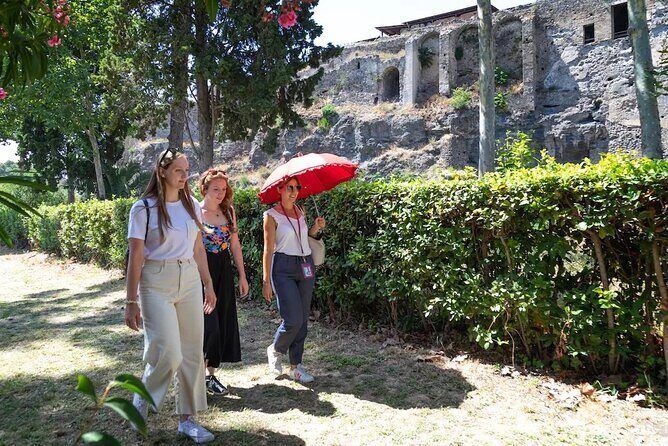
There’s a strong theme in the feedback: the guides who are especially praised tend to be friendly, story-focused, and clear in how they connect ruins to real life.
Maria Novella is highlighted for bringing Pompeii to life through storytelling, with explanations that help you understand what you’re seeing without getting lost in names and dates. Pippo is also praised for being prepared and able to deliver lots of information in a way that feels natural while you walk.
I can’t predict which guide you’ll get on your date, but the overall guide approach matters here: when the explanations are strong, Pompeii stops feeling like a list of monuments and starts feeling like a place.
Price and value: is $54.44 worth it?
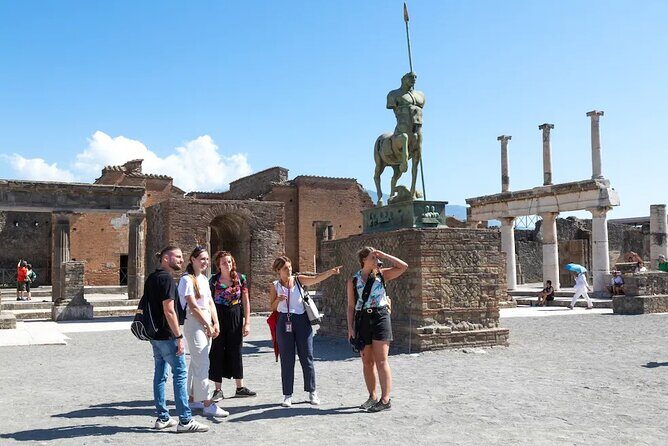
At $54.44 per person, the price looks reasonable for Pompeii, especially because entrance fees are included. You’re paying for a 2-hour guided visit, not just a ticket that lets you wander on your own.
The value really comes from two things:
- You get an expert guide to connect what you see to how people lived and used each space.
- You skip some friction by having the entrance included, which saves time and mental energy.
If you’re the type who enjoys self-guided reading but doesn’t want to spend hours orienting yourself, this tour is a smart middle ground. Two hours is also a practical choice if you want Pompeii without turning it into a full-day commitment.
What’s not included (and how that affects your expectations)
This tour includes guided highlights across Pompeii’s major sites, but it does not include a guided visit of Villa dei Misteri. If you’re specifically aiming for that villa, you’ll need another plan for it.
Also, no food or drinks are included. Since the tour is short, that often isn’t a big deal, but you still should have a water bottle. Pompeii can be tiring, and dehydration ruins ruins.
Who this Pompeii tour fits best
This is a great match if you want:
- A short, structured Pompeii visit with context.
- A small-group experience where you can still hear what’s going on.
- A tour that covers major themes—public entertainment, social spaces, daily food stops—without turning into a museum marathon.
You might want to consider a different format if you need long time in each area, or if your top priority is a detailed visit to Villa dei Misteri.
And if you’re traveling with mobility limits, the tour says most travelers can participate, but Pompeii involves walking and uneven ancient surfaces—so shoes and pacing will matter.
Should you book Stories of Pompeii?
Book it if you want Pompeii to make sense quickly and you like the idea of learning while walking. The combination of small group size, an archaeology-minded local guide, and entrance included is exactly what turns a famous site into a meaningful experience.
Skip it or add a separate plan if you’re hoping for a longer visit or you specifically want a guided stop at Villa dei Misteri. In that case, two hours might feel like a quick taste rather than a full meal.
FAQ
How long is the Pompeii small-group tour?
It’s approximately 2 hours.
Is the Pompeii entrance ticket included?
Yes. Entrance fees are included.
What language is the tour offered in?
The tour is offered in English.
Do you get a headset during the tour?
You’ll get headsets for groups of more than 6 people.
Where does the tour start and end?
It starts at Piazza Esedra, 80045 Pompei NA, Italy and ends at the Archaeological Park of Pompeii.
Can I bring a large backpack or bag inside the site?
No. You can’t bring large bags and backpacks inside. You can leave them at the entrance in a free cloakroom service and retrieve them at the end.
Is cancellation free, and how late can I cancel?
Yes, there is free cancellation. You must cancel at least 24 hours before the experience start time for a full refund.
If you want, tell me your travel month and whether you prefer morning or afternoon, and I’ll suggest the smartest way to schedule Pompeii for heat and crowds.