REVIEW · SORRENTO
Private Pompeii Tour with Archaeologist & Winery on Mt Vesuvius
Book on Viator →Operated by Fabrizio Belleni - Leisure Italy Private Guide · Bookable on Viator
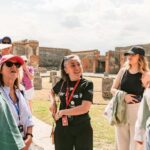
Pompeii feels personal on a private day. I like the way archaeologist Fabrizio Belleni tunes the visit to your pace and interests, then walks you through the Forum area highlights with real context for daily Roman life.
Two other things I’d call out right away: the skip-the-line Pompeii Express admission setup and the smooth Mercedes van transfers that take the stress out of getting there. The one thing to factor before you book is cost creep: Pompeii entry is included, but the winery lunch and wine tasting are paid separately on-site.
If you want the full day payoff, the winery stop is a great closer. You’ll head to the organic Cantina del Vesuvio (Russo Family since 1930) for a 3-course meal paired with five wines, with views over the Bay of Naples and the volcano’s crater, but you should know the tour does not reach the top of Mount Vesuvius.
In This Review
- Key things you should know before you go
- Private Pompeii with Fabrizio Belleni: the whole day runs smoother
- What you’ll get at the start
- Skip-the-line entry and Mercedes pickup: logistics that actually help
- A quick “watch for this” note
- Pompeii on a Forum loop: each stop has a job
- Porta Marina: Pompeii’s dramatic sea gate
- Basilica Pompeiana: where business and law happened
- Temple of Apollo: Greek-Italic roots and a Vesuvius view
- The Forum of Pompeii: the city’s center of gravity
- Macellum: Pompeii’s covered food market
- Forum Baths: Roman engineering meets real social life
- House of the Faun: elite power, private scale
- Casa dei Vettii: the Fourth Style fresco “Sistine Chapel”
- Insula dei Casti Amanti: archaeology you can see happening
- Teatro Grande: Roman entertainment and social hierarchy
- Antiquarium di Pompei: the artifacts that make the ruins make sense
- Mount Vesuvius winery lunch: views, pairing, and one clear limitation
- What the winery visit includes
- The menu you’ll likely taste
- Cost reality check (so you aren’t surprised)
- One limitation worth knowing
- Timing, pacing, and value: does it add up for your day?
- Who this fits best
- Should you book Private Pompeii with a winery on Vesuvius?
- FAQ
- What’s included in the Pompeii part of the tour?
- How long is the tour?
- Is pickup offered, and where does it run from?
- Is the winery lunch included in the price?
- Does the tour reach the top of Mount Vesuvius?
- What kind of physical fitness do I need?
Key things you should know before you go
- Fabrizio customizes the Pompeii route based on your pace and what you care about
- Skip-the-line Pompeii Express admission is included, so you’re not stuck buying tickets
- Forum-focused highlights mean you spend time on the places most people miss when they rush
- A/C Mercedes transfers remove logistics headaches from Naples and Sorrento
- Winery lunch pairing comes with five local wines, but it’s an extra on-site payment
- No summit access: you get views of Vesuvius, not the top
Private Pompeii with Fabrizio Belleni: the whole day runs smoother
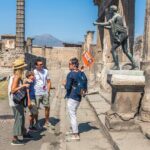
This is a true private experience, meaning your group sets the rhythm. The big win here is that Fabrizio plans the walking tour around your will and physical attitude, with a Forum-centered route designed to hit the essentials without turning Pompeii into a sprint.
That matters because Pompeii is huge. The ancient city covered about 150 acres and once held roughly 18,000 residents. A private guide keeps you oriented fast and helps you see the connections: why the Forum sat at the center, how public buildings shaped daily business and politics, and how spaces like bathhouses and theatres fit into social life.
And you’ll feel the difference in the details. In past days with Fabrizio, people highlighted how he answers questions well and keeps the pace comfortable, even if you need to slow down. If you have mobility limits or just don’t want to rush, I’d treat that as part of your planning message.
If you're still narrowing it down, here are other tours in Sorrento we've reviewed.


What you’ll get at the start
You’re walking with an official guide (private walking tour) and using included admission access. You’ll also have private pickup and drop-off, so you’re not trying to match buses or taxis while you’re tired.
Skip-the-line entry and Mercedes pickup: logistics that actually help
The tour is priced at $434.46 per person and typically runs 4 to 7 hours (approx.). That range is usually driven by how much time you take in Pompeii, plus the winery meal timing.
Here’s what you’re paying for, in practical terms:
- Transport by A/C Mercedes minivan with pickup and drop-off
- Private Pompeii walking tour with an archaeologist
- Pompeii Express skip-the-line tickets (mobile ticket is offered)
- A reserved winery experience (you pay lunch/wines on the spot)
In other words, this isn’t just a guide. It’s a packaged solution to the two biggest annoyances on a Pompeii day: ticket lines and transit wrangling.
A quick “watch for this” note
You should still prepare for walking. You’ll be moving around open-air ruins, and the tour notes a moderate physical fitness level. If that’s you, plan water, comfortable shoes, and a slower pace request early.
Pompeii on a Forum loop: each stop has a job
The itinerary is designed like a guided circuit. You start at Pompeii’s sea-facing entrance, work your way through the Forum’s political and commercial core, then branch into major public spaces and standout elite homes. You’ll also pause for a quick museum stop so the ruins connect with the artifacts in context.
Below is what each site is doing for your understanding, and what to keep an eye on as you go.
Porta Marina: Pompeii’s dramatic sea gate
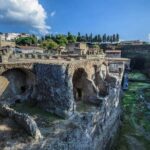
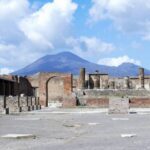
You’ll step through Piazza Porta Marina, Pompeii’s major access point toward the sea. The gate is a dual-arched design built for both pedestrian traffic and carts, and it’s integrated into the defensive wall system (Cinta Muraria). That visual clue helps you grasp something important: Pompeii wasn’t just charming streets and villas—it had serious fortifications and controlled movement.
Tip for your first minutes: look at how the incline funnels visitors from the entrance toward the administrative and religious heart. Pompeii’s layout makes you “flow” in the right direction—if you notice the pattern.
Basilica Pompeiana: where business and law happened
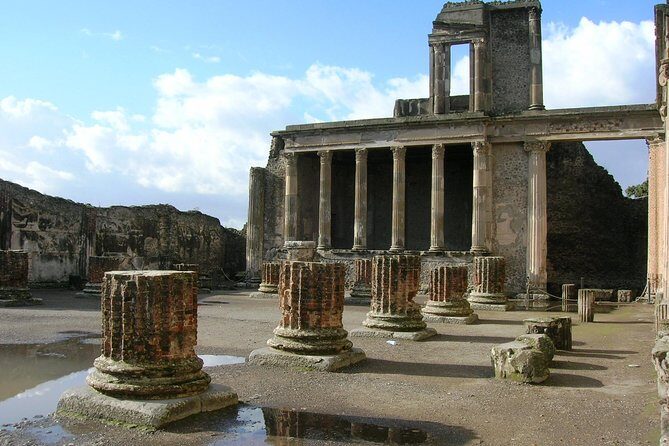
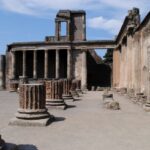
Next is the Basilica Pompeiana, one of Pompeii’s most important civic structures. This massive, three-aisled building dates back to the 2nd century BC and was used for secular activities: court cases and major commerce.
What’s worth your attention:
- The long central nave you can walk along
- The bases of brick columns that once rose high
- The raised tribunal platform where magistrates presided
Even if you aren’t a legal-history fan, the Basilica explains why Romans loved these central hubs. It wasn’t only for speeches—it was where the city functioned.
Temple of Apollo: Greek-Italic roots and a Vesuvius view
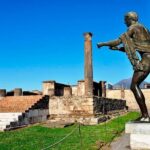
The Temple of Apollo anchors the west side of the Forum and is one of the oldest sacred sites in Pompeii, with origins dating back to the 6th century BC. You’ll see the portico of 48 columns and the elevated podium where the cella once stood.
The wow factor here is twofold:
- The architectural mix of Greek and Italic styles
- The iconic view toward Mount Vesuvius
Also note the mention of Apollo and Diana bronze statues held as replicas in Naples. Even if you’re just seeing the site today, a guide can help you understand what you’re looking at and why it mattered.
The Forum of Pompeii: the city’s center of gravity
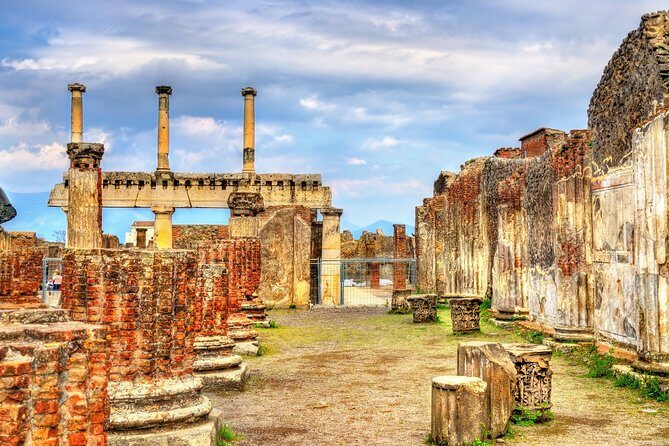
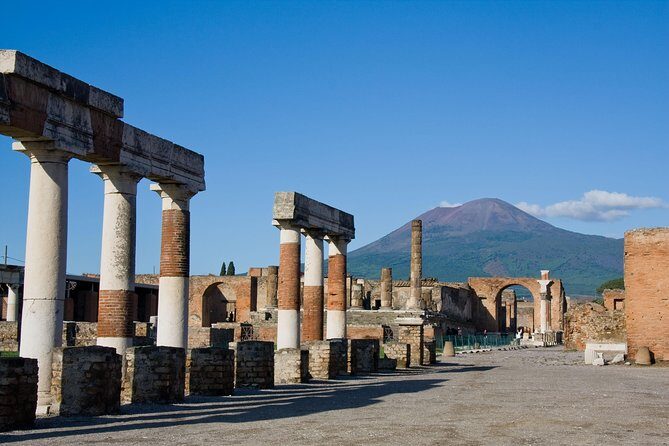
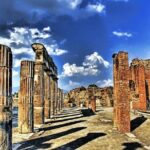
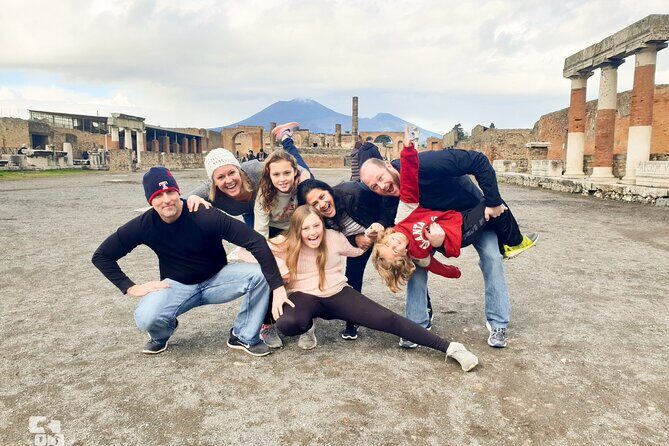
This is the heart of the tour: the Forum of Pompeii, a vast car-free plaza paved in travertine. In daily Roman life, it was political, commercial, and religious in one space—markets, legal proceedings, and ceremonies all shared the same address.
Why it’s so valuable on a private tour: your guide can show you the relationships between buildings rather than treating each one as a photo stop.
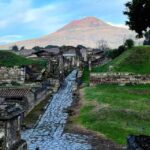
If you want the best experience here, slow down for a few minutes and orient yourself visually. Look for where the Basilica and other key buildings sit around the plaza and how Mount Vesuvius frames the northern background.
Macellum: Pompeii’s covered food market
At the Macellum, you’ll get a window into what most people did every day: buying and selling food. This covered market sat in the northeast corner of the Forum and featured a courtyard with a central circular pavilion area (tholos).
What makes this stop stick with you:
- The market setting it recreates in your mind
- The evidence from drainage systems related to seafood cleaning and sale
- The surrounding shops (tabernae) for fruits, vegetables, and meats
The shrine dedicated to the imperial family also shows how commerce and state religion were connected. That’s a big theme in Pompeii that many self-guided visits miss.
Forum Baths: Roman engineering meets real social life
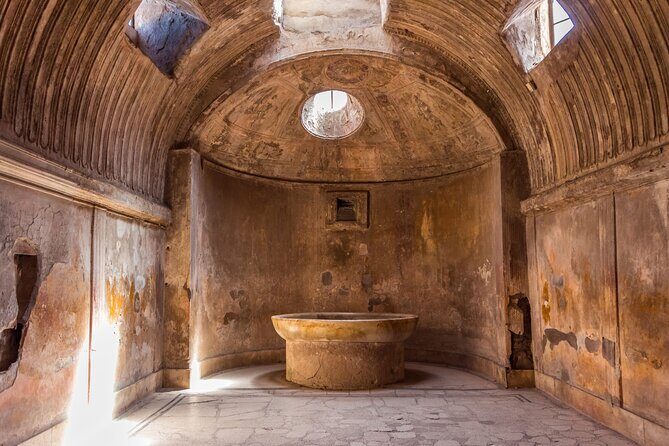
Then you’ll step into the Forum Baths (Terme del Foro). This is especially meaningful because it’s the only bath complex still fully operational during the 79 AD eruption. That gives the site a rare “you’re seeing a living system” feeling.
You’ll move through the sequence:
- Apodyterium (changing room)
- Frigidarium (cold bath)
- Tepidarium (warm room)
- Calidarium (hot room)
If you like how things worked, this stop rewards you. You can point out stucco reliefs, the original bronze heating element, and the hypocaust-style hot-air system. Even the reopening of women’s areas after restoration (with frescoes) helps show how baths weren’t only about hygiene—they were part of social mixing and daily routine.
House of the Faun: elite power, private scale
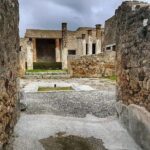
The House of the Faun (Casa del Fauno) shows what wealth looked like inside Pompeii. It’s one of the largest residences in the city and spans an entire insula (city block). Expect peristyle gardens and atriums, plus standout art that helps define the property.
Two iconic elements you’ll hear about:
- The Dancing Faun statue (with originals moved to Naples)
- The Alexander Mosaic (also with originals primarily displayed in Naples)
Even when you’re seeing replicas, the scale still lands. This isn’t a “rich person bedroom tour.” It’s a clear lesson in how elite Romans organized space for display, leisure, and status.
Casa dei Vettii: the Fourth Style fresco “Sistine Chapel”
If you like art that feels personal and vivid, don’t rush Casa dei Vettii. This home is famous for recently reopened rooms after a long restoration, and it’s often described as a standout for its vivid Fourth Style frescoes.
Key things you’ll encounter:
- The entry painting of Priapus, tied to prosperity
- The Room of the Cupids with miniature trade scenes
- A peristyle garden replanted according to ancient patterns, with fountain statuary
This stop is for people who want Pompeii to be more than ruins and tragedy. You’ll see how people decorated their everyday spaces with ambition and myth.
Insula dei Casti Amanti: archaeology you can see happening
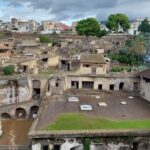
Next is Insula dei Casti Amanti, also known as the Block of the Chaste Lovers. This area has residential homes and a bakery, and it reopened in 2024 with an elevated walkway system. That’s a big deal if you’ve ever wished Pompeii told you how discovery works—not just what was found.
You’ll be looking both at buildings and active excavation below. The “from above” view helps you understand how archaeologists treat the site as layered evidence, not a single frozen moment.
Teatro Grande: Roman entertainment and social hierarchy
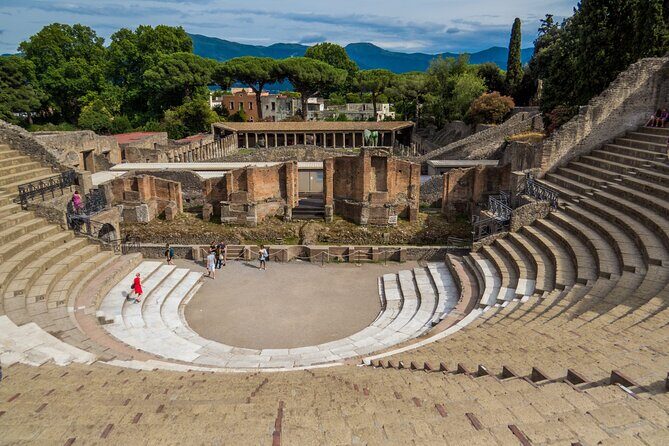
At Teatro Grande, you’ll see how Romans spent evenings and handled public life at scale. This horseshoe-shaped theatre carved into a hillside could seat around 5,000 people, with tiered seating that reflected social hierarchy.
Here’s what to listen for (literally, if you’re curious): the theatre’s acoustics are famous enough that you can test it by speaking from the center of the orchestra area.
Also, note how Mount Vesuvius frames the venue in the background. It’s one of those Pompeii views that feels like the city was built for performance—literally and visually.
Antiquarium di Pompei: the artifacts that make the ruins make sense
Last in the Pompeii portion is the Antiquarium di Pompei at Porta Marina. This climate-controlled museum is built for fragile objects, so it’s a smart pairing with the outdoor ruins.
What you’ll likely see emphasized:
- A storyline starting with Pompeii’s Samnite roots and leading to 79 AD
- Highlights like the Moregine silver treasure and amulet hoards
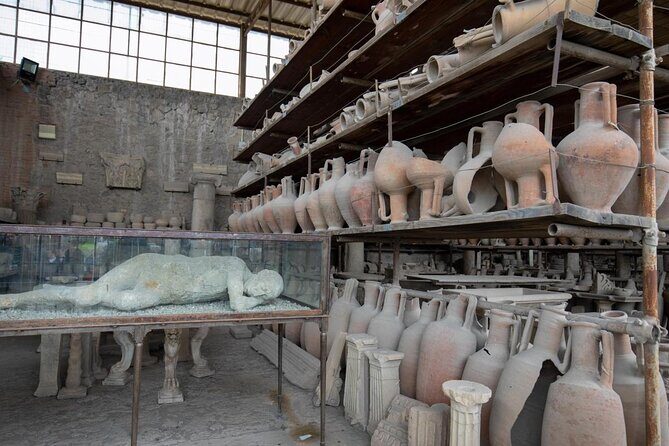
- World-famous plaster casts, including victims and the Dog of Pompeii
If you want to understand the tragedy on a human level without turning it into a morbid blur, this museum helps you hold the meaning of what you just walked through.
Mount Vesuvius winery lunch: views, pairing, and one clear limitation
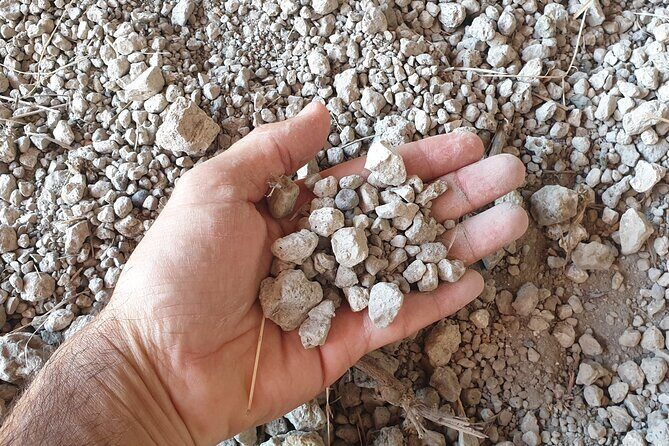
After Pompeii, you head to Cantina del Vesuvio within Mount Vesuvius National Park. This is where the day changes pace: from walking streets to sitting down with food and local wines.
What the winery visit includes
You get:
- A guided 15-minute stroll through vineyards
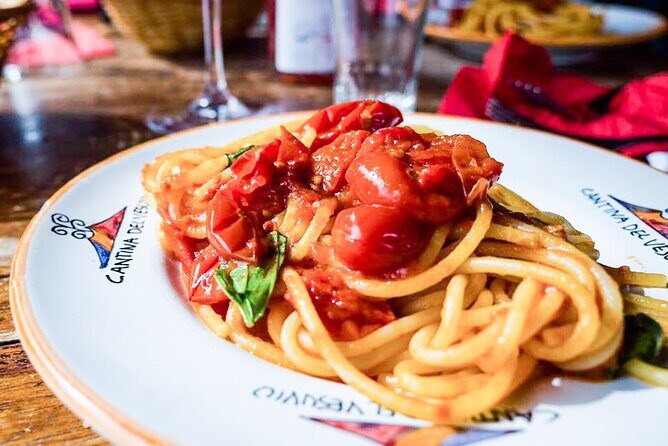
- A set menu lunch paired with five local wines
- Time to enjoy views over the Bay of Naples and the volcano crater area
The winery is listed as organic, and the family-run operation is credited to the Russo family since 1930. You’ll also hear about the famous Lacryma Christi wines, and the experience includes learning about how they’re made and why they’re special.
The menu you’ll likely taste
The sample plan is straightforward and very Neapolitan:
- Starter: ricotta, bruschetta with cherry tomatoes, provolone, salame, capocollo
- Main: spaghetti with vesuvian cherry tomatoes (and meatballs)
- Dessert: pastiera (vegetarian/GF options available)
This part is also practical: the lunch is built as a package, not a “choose your own adventure” restaurant decision day.
Cost reality check (so you aren’t surprised)
The winery lunch experience is not included in the $434.46 tour price. You pay on-site by card or cash, and the cost is stated as:
- €55 for classic tasting
- €65 for superior wine experience
So think of the total as Pompeii + guide + transfers, plus a winery meal you opt into at a set rate.
One limitation worth knowing
The tour does not reach the top of Mt. Vesuvius. You’ll still get crater views from the winery area, but you should not expect summit access or a crater hike as part of this package.
Timing, pacing, and value: does it add up for your day?
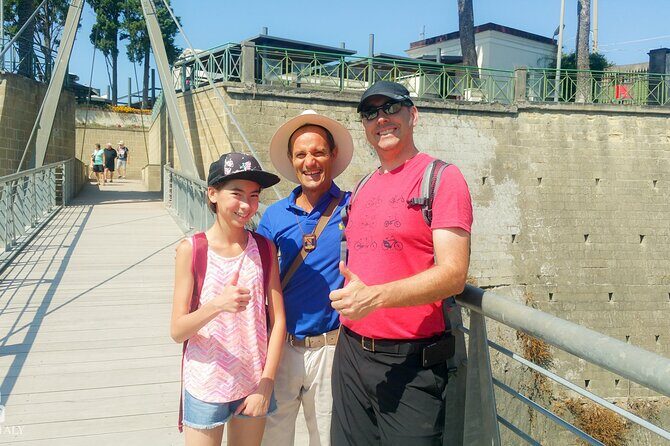
Most people think “private tour” means just fewer people. Here, it also means better flow. The Pompeii portion is built around the Forum highlights, with additional stops that expand into markets, bath culture, elite houses, theatre, and an artifact museum.
That structure helps you avoid the common mistake: seeing lots of ruins but learning very little. With a guide, each stop is tied to how Pompeians lived—courts, commerce, entertainment, bathing, and home life.
The other value piece is the ease of the full itinerary:
- Pickup and drop-off take pressure off your schedule
- Skip-the-line entry reduces waiting time
- The winery is reserved and timed as the natural wind-down
As for duration, plan for the full block. If you arrive ready to walk, you’ll feel like you got your money’s worth. If you arrive tired or rushed, private pacing can save the day—just be clear about your comfort level.
Who this fits best
This suits you if:
- You want a private archaeologist-led Pompeii visit
- You like structure but still want flexibility
- You want a Neapolitan-style wine-and-lunch ending, not a random restaurant stop
- You’re traveling from Sorrento or Naples and want car logistics solved
It may be less ideal if:
- You hate paying add-ons once you arrive (the winery meal is on-site)
- You specifically want a Vesuvius summit visit (this one doesn’t go to the top)
Should you book Private Pompeii with a winery on Vesuvius?
I’d book it if your ideal Pompeii day includes three ingredients: a guide who can tailor your pace, skip-the-line convenience, and a sit-down ending with local wines. The route makes sense for most first-timers because it targets the Forum and connects public buildings to real daily life.
If you’re budget-tight, do the math early. Pompeii isn’t the expensive part here—your biggest extra decision is the winery lunch tasting level (€55 classic or €65 superior). Once you accept that, the rest feels efficient: Mercedes transfers, Pompeii Express entry, and a guide-led walk with major stops like the Basilica, Apollo Temple, Macellum, Forum Baths, and standout houses such as Casa dei Vettii.
If your heart says crater summit hike, look elsewhere. If your heart says Pompeii with context plus Vesuvius-area views and a proper lunch, this is a strong match.
FAQ
What’s included in the Pompeii part of the tour?
Pompeii admission is included using Pompeii Express skip-the-line tickets, along with a private walking tour with an official guide. The itinerary includes multiple named Pompeii stops and an Antiquarium di Pompei visit.
How long is the tour?
The tour runs about 4 to 7 hours (approx.), with Pompeii as the main walking portion and an additional winery visit and lunch time afterward.
Is pickup offered, and where does it run from?
Pickup is offered. You can arrange pickup and drop-off, and transport is by A/C Mercedes minivan. The tour notes it supports transfers from Naples and Sorrento.
Is the winery lunch included in the price?
No. The winery experience (visit, lunch, and wine tasting) is reserved for you, but you pay on the spot at the winery. Classic tasting is listed at €55 per person, and superior wine experience is €65.
Does the tour reach the top of Mount Vesuvius?
No. The tour includes views of the volcano area, but it does not reach the top of Mount Vesuvius.
What kind of physical fitness do I need?
The tour is listed for travelers with moderate physical fitness. You’ll be walking through Pompeii’s ruins, so comfortable shoes and a realistic pace matter.