REVIEW · POMPEII
Pompeii from Afternoon to Sunset
Book on Viator →Operated by Enjoy Pompeii · Bookable on Viator
Pompeii is best when the day is fading. This small-group tour times your walk for the late-afternoon light, with commentary as you move through the Forum area, thermal baths, and theaters. I like that you get skip-the-line admission and a guided route, so you spend more time looking and less time stuck at the entrance.
Two hours can go fast in Pompeii, though. If you’re hoping for a full museum day or a guaranteed real sunset glow, plan for the site’s hours to call the shots, since the park can close before the sky does. Still, the pacing and the group size (max 10) help you see a lot without feeling herded.
In This Review
- Key Points at a Glance
- Why Pompeii at Golden Hour Works So Well
- Meeting at Ristorante Bar Sgambati: How the Tour Gets You Moving
- Skip-the-Line Admission and a Max-10 Group (Why It Feels Less Stressful)
- Pompeii Highlights on Foot: Basilica, Forum, Baths, Theaters, and More
- Thermal Baths and Theaters: Seeing Daily Life, Not Just Big Ruins
- The Guide Factor: Names You Might Get, and What You Should Expect
- Sunset Light and Staying Until Closing: Your Best Final Stretch
- What It Really Costs (and Why $65.31 Can Be Worth It)
- Practical Tips That Make the Tour Feel Easier
- Who This Tour Suits Best (and Who Might Want to Plan Differently)
- Should You Book Pompeii From Afternoon to Sunset?
- FAQ
- How long is Pompeii from afternoon to sunset?
- What’s the price per person?
- Is the tour in English?
- Is skip-the-line admission included?
- What group size should I expect?
- Where do we meet and where does the tour end?
- Can I stay in Pompeii after the guided portion ends?
- Is transportation to Pompeii included?
- What’s the weather requirement?
- Is free cancellation available?
- Are tickets mobile?
Key Points at a Glance
- Afternoon-to-sunset timing for softer light and thinner crowds
- Skip-the-line Pompeii entry using a mobile ticket
- Small group (up to 10) for easier listening and asking questions
- Main Pompeii highlights covered on foot, including Forum, Basilica, baths, and theaters
- You can stay inside until closing, so the last stretch is yours
Why Pompeii at Golden Hour Works So Well
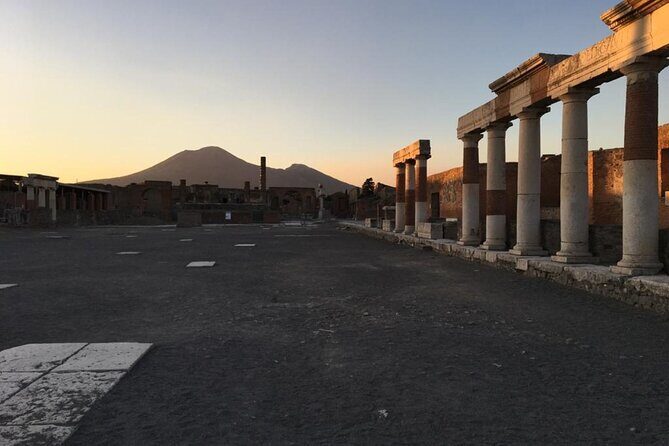
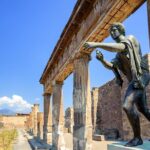
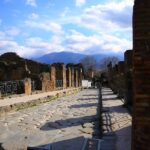
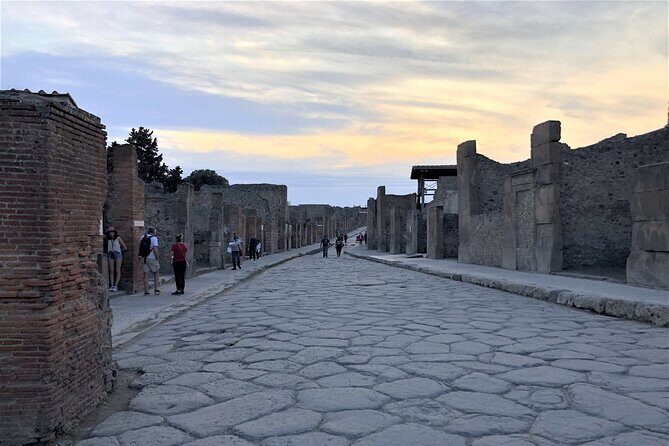
Late afternoon in Pompeii hits different. The stones warm up, shadows stretch across walls and arches, and details pop that can look flat in harsh midday sun. It’s also a smart strategy for human traffic: Pompeii draws plenty of day-trippers, but this tour’s timing generally means you’ll walk through less congestion.
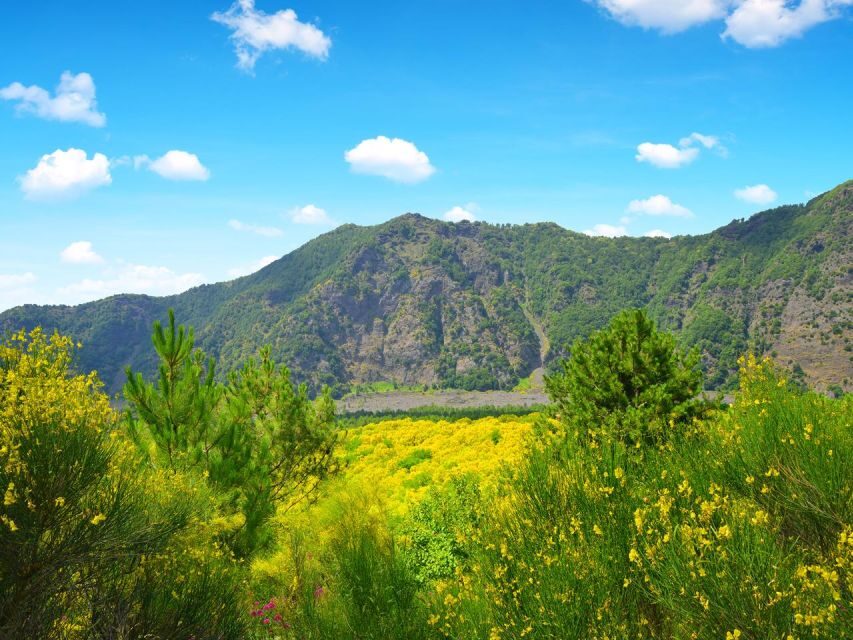
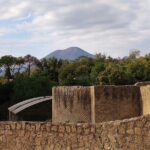
And Pompeii isn’t just ruins that sit there. It’s a whole Roman city footprint, preserved under volcanic ash after the eruption of Vesuvius in AD 79. The guided portion helps you connect what you’re seeing—streets, public buildings, houses—to how people lived before that catastrophic day.
I especially like that this isn’t framed as a quick hit-and-run. You start in the afternoon, then keep going toward closing time. That means you’re not forced to leave right when your brain finally catches up to what you’re seeing.
Other sunset and evening tours of Pompeii
Meeting at Ristorante Bar Sgambati: How the Tour Gets You Moving
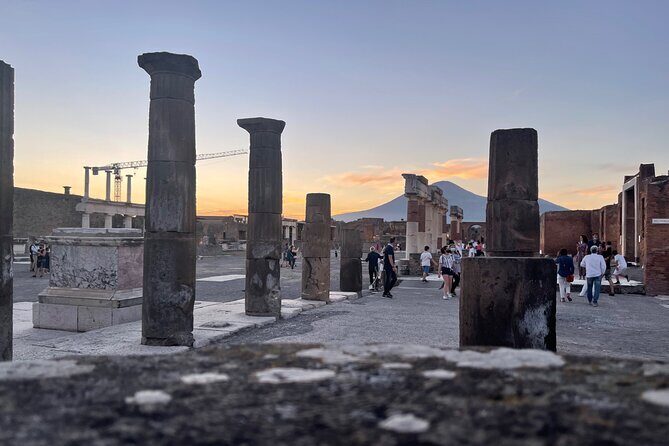
The tour begins at Ristorante Bar Sgambati, Via Villa dei Misteri 1, Pompei. It ends at the Forum of Pompeii, Via Villa dei Misteri 2, and you can remain inside the archaeological site until closing time.
This matters more than it sounds. Starting at a clear spot makes your morning-less-late planning feel easier, especially if you’re bouncing in from Naples or another nearby base. The meeting point is also described as being near public transportation, which is a big deal in this area where parking can be a headache.
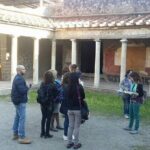
Once the group gathers, you’ll walk. This isn’t a sit-and-watch tour. You’ll be moving through the ruins, with stops where the guide turns the buildings into a story. If you like learning while you wander, this format fits well.
Skip-the-Line Admission and a Max-10 Group (Why It Feels Less Stressful)
For Pompeii, time is everything. Lines at entrances can eat up the best hours of the day. This tour includes skip-the-line entry and a mobile ticket, so you get past the worst of the turnstile chaos faster.
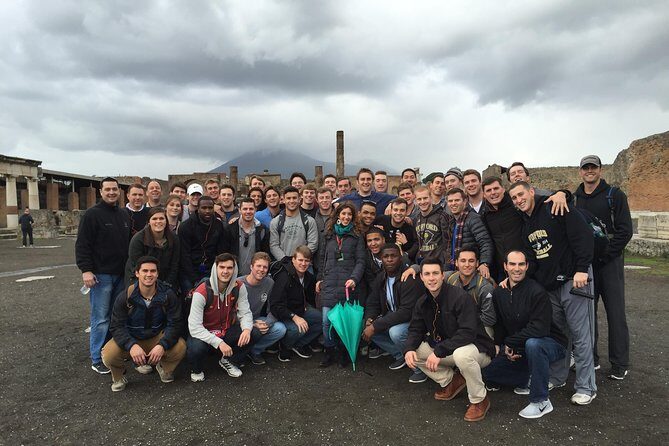
Then you add the human part: the group is limited to 10 travelers. In real terms, that usually means you can hear your guide without craning your neck. It also helps you keep your place on the walk, instead of losing the group every time you stop to look at a doorway or fresco fragment.
You’ll also feel the benefit of a guided route. Pompeii covers a big area, and it’s easy to bounce around randomly. A guide gives you an order that makes sense—public spaces first, then the buildings that show everyday life.
Pompeii Highlights on Foot: Basilica, Forum, Baths, Theaters, and More
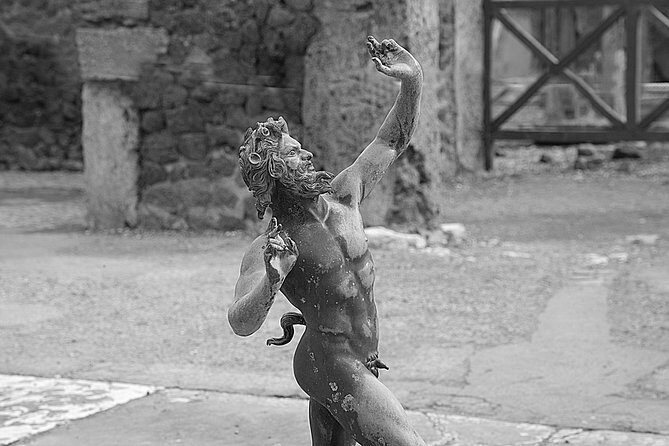
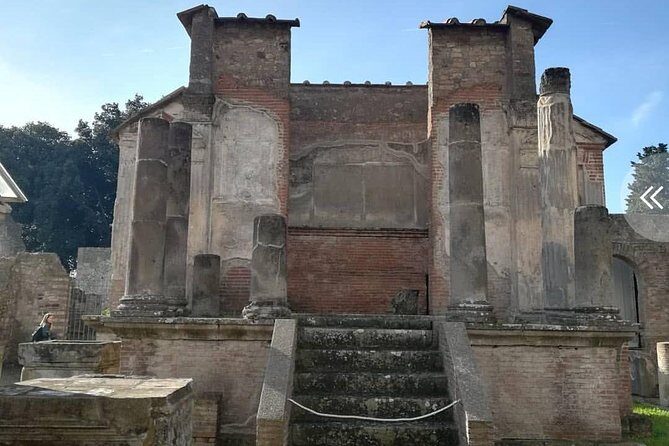
Your guided walk covers major sights that help explain the city’s layout and daily routines. You’ll move through and learn about important buildings and structures, including:
- the Basilica
- the Forum
- the thermal baths
- the Theaters
- a bakery
- and residential houses
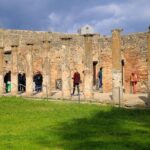
Here’s the practical payoff: when you stand in front of these places with a story attached, Pompeii stops feeling like scattered architecture. The Basilica and Forum help you picture public life—where business, politics, and community activities happened. The baths show how “going to wash” could also be a social scene. The theaters help you understand entertainment and civic culture, not just buildings made of stone.
The bakery adds something people often miss on their own: food systems and routine. And the homes and residential areas give you a clue about how ordinary people moved through their spaces—what “home” looked like, and how private life sat alongside public life.
A bunch of the best moments come from small things your guide helps you notice: how rooms connect, where people likely gathered, and what features suggest a building’s purpose. Even better, guides on this tour often keep the pace steady and help you avoid the most crowded pockets when possible.
Thermal Baths and Theaters: Seeing Daily Life, Not Just Big Ruins
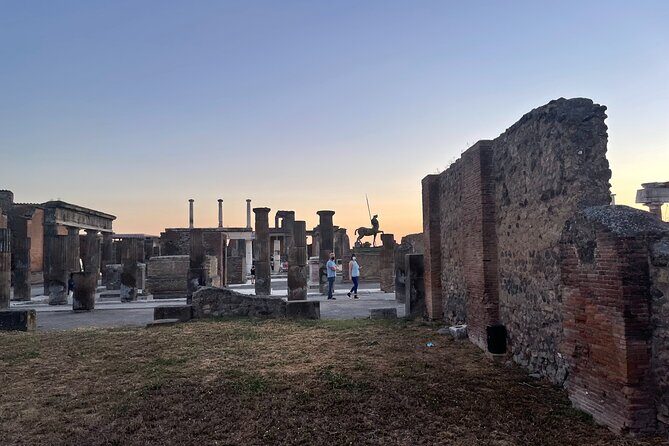
Pompeii’s thermal baths and theaters are standout stops for a reason. They’re not just dramatic structures. They show what Romans did with their time.
In the baths, you get a sense of routine and status. Even when you’re not counting details, you can usually tell the difference between spaces meant for warmth, social interaction, and movement. This is where the city feels like it had a pulse.
The theaters land the story in culture. You’re seeing a place built for gathering, performance, and public events. When the late-afternoon light hits, the theater area can feel almost staged—like the city is pausing between scenes.
If you’re the type who likes your history with real-world context, you’ll likely appreciate these stops most. They make Pompeii feel like a city, not a museum of dead streets.
Other evening experiences in Pompeii
The Guide Factor: Names You Might Get, and What You Should Expect
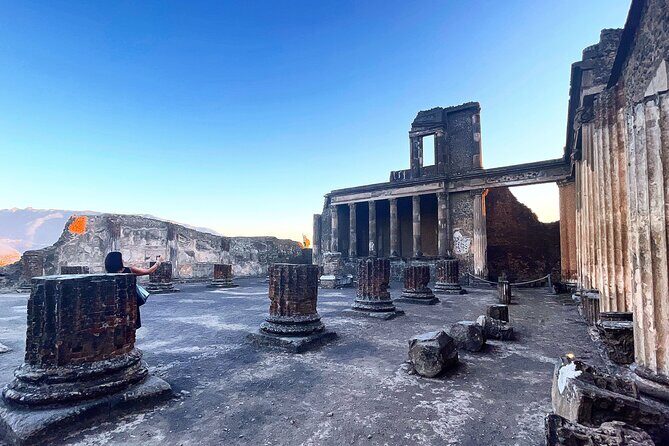
The quality of this tour often comes down to the guide, and the names mentioned in customer feedback are all over the map: Frankie, Angelo, Francesco, Franky, Sasa, Melania, Ornella, and Franco/Francesco variants show up often.
What you can take from that without needing to guess which guide you’ll get:
- You should expect story-led explanations that connect buildings to daily life.
- You should expect humor and a lively tone that makes the place feel less academic.
- You may also get smart crowd-avoidance moves and routing help.
Some guides in the feedback are praised for finding shade when possible, which matters in Pompeii. Others are praised for pacing—long enough to understand, short enough to keep you moving.
If you want to get the most out of the route, don’t wait for the end. Ask questions early. This kind of city rewards curiosity, because there’s always a new detail to tie back to how people lived.
Sunset Light and Staying Until Closing: Your Best Final Stretch
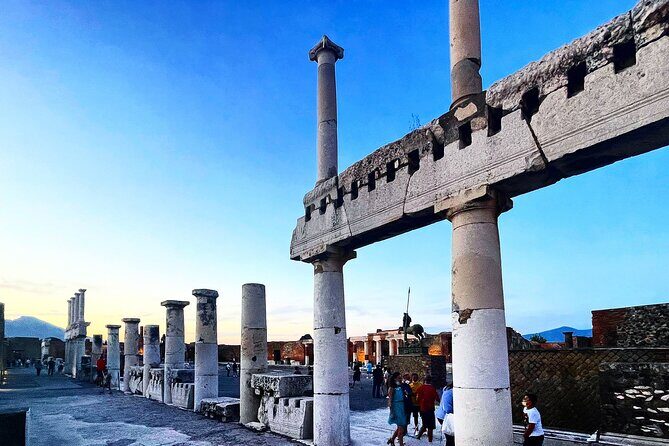
The tour runs in the afternoon and heads toward sunset, and the big plus is that you can stay inside the archaeological site until closing time. That means you’re not boxed into the last-minute sprint. You can circle back to something your guide pointed out, or spend a bit longer where the light is doing something special.
This is also when Pompeii can feel strangely spacious. Late in the day, crowds thin out and the ruins start looking more like scenes than like photo backdrops. It’s the time for wandering with a purpose: find a spot, compare it to what you learned, and look for the human scale in doorways, steps, and room shapes.
One caution from the provided details: the park may close before actual sunset during parts of the year. So if sunset is your main goal for photos, don’t assume the sky will cooperate. The tour timing is designed for late-day experience, but the site rules control your final minutes.
What It Really Costs (and Why $65.31 Can Be Worth It)
The price is $65.31 per person for an experience that includes:
- a guided small-group tour
- an entry ticket to the Pompeii site
- and skip-the-line admission
- in English
At first glance, it’s not “cheap.” But you’re paying for three things that are hard to do well on your own: guided context, time savings at the entrance, and a route that covers major highlights without you spending your whole day re-deciding where to go.
Also, Pompeii timing matters. If you lose an hour to entry lines or confusion over where to start, your afternoon window collapses fast. Skip-the-line is the kind of value-add that feels obvious once you’re standing there watching people wait.
What’s not included is transportation and parking. So you’ll need to handle getting to Pompeii on your own. That’s normal here, just keep it in your planning math.
Practical Tips That Make the Tour Feel Easier
A great tour can still be physically demanding. Pompeii is uneven and outdoors for long stretches, so go in ready.
Here are the best “you’ll thank yourself later” moves, based on what’s emphasized in the tour info and feedback:
- Wear shoes you trust on stone and uneven ground. You’ll walk more than you think.
- Plan for heat or sudden cool-down. Evening light can be lovely, but it doesn’t make the terrain easier.
- Keep an eye on shade. Some guides help you find it, but you’re still exposed.
- Bring small snacks if you want them. One piece of practical advice in the feedback is that nearby restaurants can close when the site closes, so don’t assume you’ll have an easy late meal right next door.
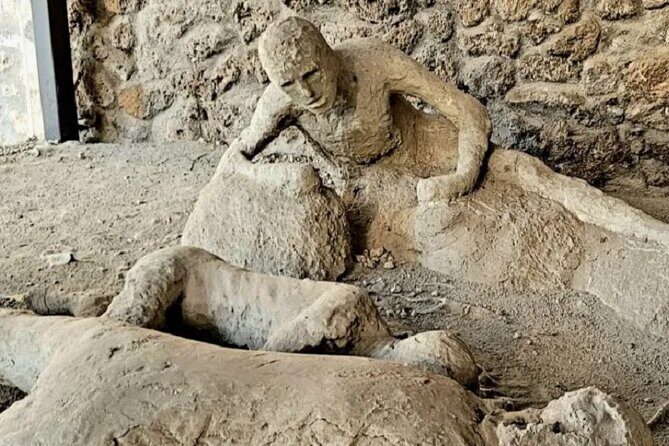
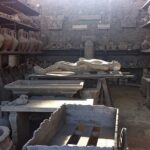
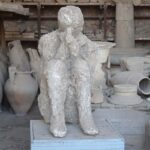
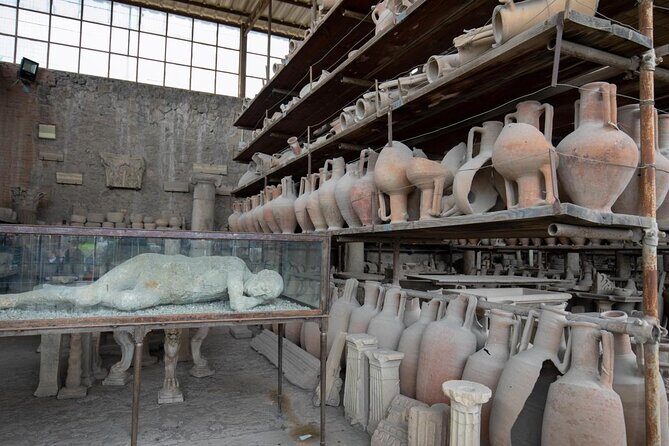
- If you’re focused on specific displays like casts, know this: some plaster-cast examples may not be on the main ruins route at the time you visit. If that’s important to you, ask your guide what you’ll see in the ruins area versus other parts of the broader Pompeii experience.
Who This Tour Suits Best (and Who Might Want to Plan Differently)
This tour is a strong match if:
- you want a quieter late-day Pompeii experience with fewer crowds
- you like a guided route that hits the big highlights without wasting time
- you enjoy history explained in plain language while walking, not after the fact
- you appreciate small groups and steadier pacing
It may not be the best fit if:
- you want to spend most of your time inside a museum setting rather than the ruins themselves
- you’re hoping for a strict, guaranteed sunset moment no matter what closing hours do
- you dislike walking and prefer a slower, more stop-start sightseeing style
Also, this is a two-and-a-half-hour experience in the real world. Even with a guide, you won’t cover everything. You’ll see major buildings and key streets, but Pompeii’s scale is bigger than any tour.
Should You Book Pompeii From Afternoon to Sunset?
Yes—if you want your day to feel efficient and your photos to benefit from late light. This tour’s core value is the combination of skip-the-line entry, English guidance, and small-group pacing, all timed for a calmer Pompeii experience.
If you’re someone who loves being able to ask questions on the spot, you’re likely to enjoy it. And if you’re flexible about the exact timing of sunset and instead care about walking the ruins with a story, this is a very practical way to do Pompeii in one go.
If you’re ultra-focused on museum displays or you’re traveling at a time of year when closure comes early, build in that possibility. But even with that caution, the afternoon-to-close structure gives you a lot of freedom once you’ve learned the city’s layout.
FAQ
How long is Pompeii from afternoon to sunset?
It’s about 2 hours 30 minutes (approx.), with the guided tour portion listed at 2 hours.
What’s the price per person?
The price is $65.31 per person.
Is the tour in English?
Yes, it’s offered in English.
Is skip-the-line admission included?
Yes. The experience includes skip the line admission and a ticket to the Pompeii site.
What group size should I expect?
It has a maximum of 10 travelers.
Where do we meet and where does the tour end?
You start at Ristorante Bar Sgambati, Via Villa dei Misteri 1, Pompei. The tour ends at the Forum of Pompeii, Via Villa dei Misteri 2.
Can I stay in Pompeii after the guided portion ends?
Yes. At the end of the guided tour, you can stay inside the archaeological site until closing time.
Is transportation to Pompeii included?
No. Transportation and parking are not included.
What’s the weather requirement?
The experience requires good weather. If it’s canceled due to poor weather, you’ll be offered a different date or a full refund.
Is free cancellation available?
Yes. You can cancel up to 24 hours in advance for a full refund.
Are tickets mobile?
Yes. The tour uses a mobile ticket.