REVIEW · POMPEII
Late Afternoon Best time to visit Pompei on a private tour
Book on Viator →Operated by Alex Tour · Bookable on Viator
Sunset makes Pompeii feel like a living place. This late-afternoon private tour is built for fewer crowds and more usable walking time, with Alex Tour’s licensed guide leading you through the Forum, baths, theatres, major houses, and the plaster casts tied to the AD 79 eruption. The big draw is pace you can actually handle—fast enough to see the essentials, slow enough to stop and ask questions.
I especially like the route’s mix of public life and everyday details: a forum for politics and worship, Roman bath stops, and even places you can picture people eating in the streets. You’ll also get the visual payoff of Pompeii in golden light—plus the chance to cool off compared with midday. One consideration: entrance tickets are not included (Euro 18 for adults), so you’ll budget for those in addition to the tour price, and the experience needs good enough weather.
In This Review
- Key things that make this late-afternoon Pompeii tour work
- Late-Afternoon Pompeii: what the light change really does for you
- Your private guide experience (Alex Tour) and what $249 buys you
- Start point and pacing: Via Villa dei Misteri to Porta Marina
- The route: Forum life, baths, theatres, and the city’s real textures
- Porta Marina intro: AD 79 in plain language
- The Forum and the core of public life
- Body casts and the human scale of the eruption
- Public baths and water systems: daily life you can picture
- Theatres: Greek roots in a Roman city
- Elite homes and what they reveal about status
- Temple of Apollo: gods as public identity
- Shops and workshops, plus the street-food reality check
- Final stop: Orto dei Fuggiaschi and the casts again
- Tickets, cost, and timing: what to budget and how to plan
- Who this tour is best for (and who should choose differently)
- Should you book this late-afternoon private Pompeii tour?
- FAQ
- How long is the late-afternoon private Pompeii tour?
- Where does the tour start and end?
- Is the entrance ticket to Pompeii included in the price?
- What does the $249 price include?
- Do I get a mobile ticket?
- Can the guide help with skip-the-line tickets?
- Is the tour private?
- What about weather? Does the tour run in poor conditions?
- Is there a cancellation deadline for a full refund?
- Is the guide service animal friendly?
Key things that make this late-afternoon Pompeii tour work
- Private guide, not a lecture: you get answers on the spot and a pace that can flex for your group
- Golden-hour storytelling: you see major sites under softer light than the heat-of-the-day rush
- AD 79 explained clearly: the eruption context gives you a framework for what you’re looking at
- A mix of sights that covers a real city: Forum, baths, theatres, elite homes, and street-level food
- Plaster casts get personal: you’ll stop at the preserved bodies to make the tragedy legible
Late-Afternoon Pompeii: what the light change really does for you
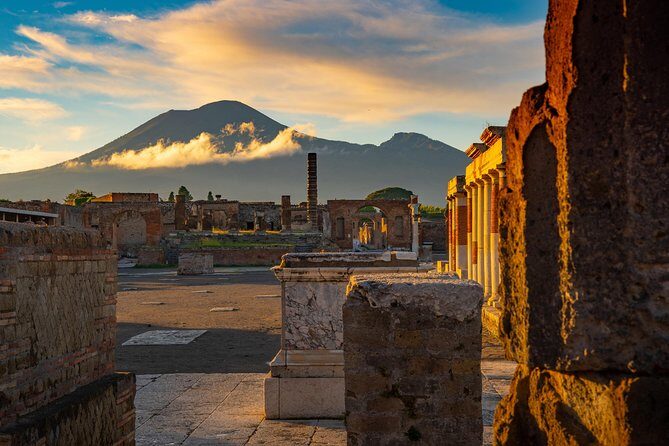
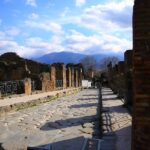
Pompeii is famous for being big, and that can turn your visit into a checklist. The late-afternoon timing helps in a practical way: the site is more comfortable to walk, and the crowds tend to thin compared with peak hours. That matters because Pompeii rewards looking, not rushing. When the light starts to shift, even stone walls and doorways look less like ruins and more like places where people once lived their daily routines.
This tour also avoids the early-start trap. You can plan your day around it—sleep in, do lunch, then head out when the air is kinder. If you’re sensitive to heat, that single scheduling choice can make the difference between enjoying the city and just surviving it.
Now, the trade-off is that late-day weather can be unpredictable. The experience runs with a weather requirement, so if conditions aren’t right you could be offered a different date or a full refund. In other words: plan for a backup day in your head.
Other private Pompeii tours we've reviewed in Pompeii

Your private guide experience (Alex Tour) and what $249 buys you
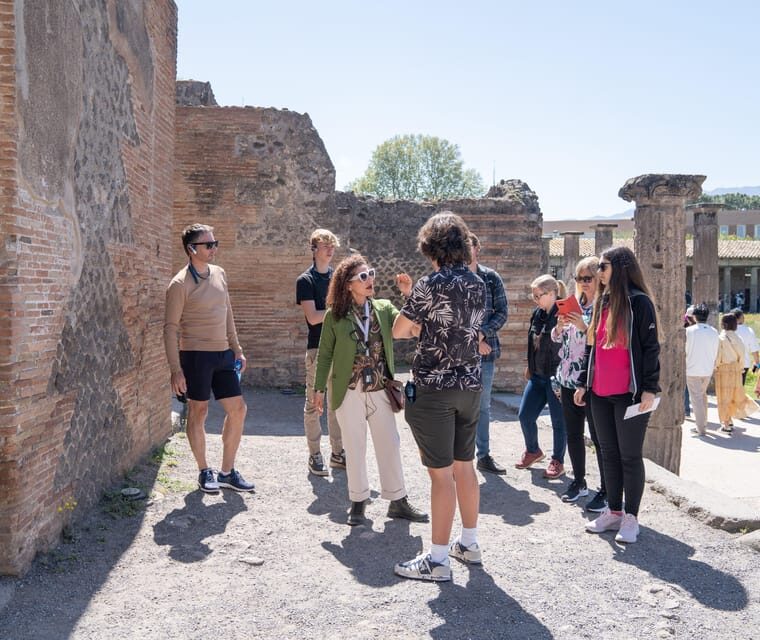
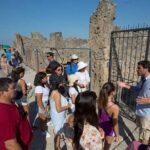
At $249 for about 2 hours, you’re paying for control. You’re not stuck in a big-group shuffle where you crane your neck over other people’s photos. A private, licensed guide means the route is guided by your attention and questions, not only by the clock.
The name that keeps coming up here is Alex. The vibe is energetic and story-driven. You’re not just shown what’s carved in stone—you get help turning ruins into context: how the city functioned, what the spaces were for, and what the eruption changed forever. If your group includes teens, kids, or just someone who hates “museum voice,” this approach matters. A good guide doesn’t just recite facts; they make Pompeii feel understandable.
One more value point: the tour is designed to keep momentum. You’ll cover multiple areas in a short time window, but you still get room to pause when something grabs you—or when you realize you missed the one detail that would’ve made a whole scene click.
Start point and pacing: Via Villa dei Misteri to Porta Marina
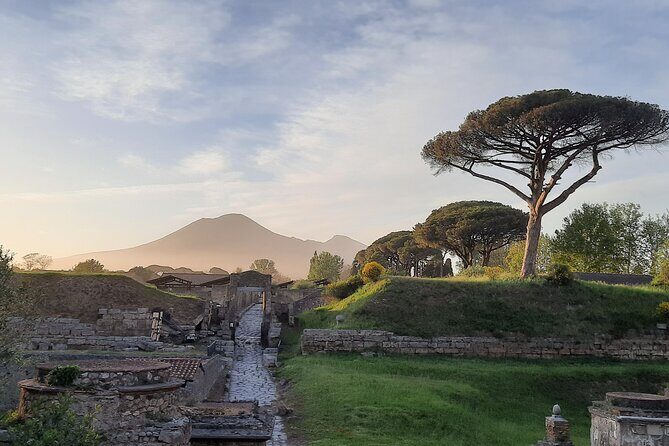
The meeting point is Via Villa dei Misteri, 2, 80045 Pompei (NA), Italy, and the tour ends back there. The start at the archaeological park is at Porta Marina, the sea gate, which is a smart way to frame the day. Even if you never think about Pompeii’s geography, starting near the sea-side gateway helps your brain connect to the idea of a city with movement and trade.
Expect near public transportation access to the meeting area, which is helpful if you’re not renting a car. And since this is a private group, the walking flow stays yours—no joining a mixed crowd at each stop.
Duration is about 2 hours, so you should think of it as a focused route through key zones. If you’re the type who wants to wander freely for hours, you might feel slightly time-pressed. If you want a smart orientation plus the must-sees, this length is a good fit.
The route: Forum life, baths, theatres, and the city’s real textures
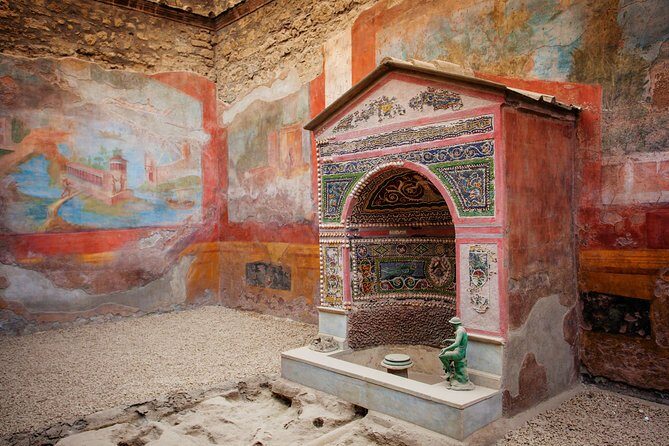
Below is the heart of what you’ll see, in the order the tour concept builds it. The stops are chosen to show you Pompeii as more than tragic rubble.
Porta Marina intro: AD 79 in plain language
Your walk begins at Porta Marina with an introduction to the eruption and the historical background of the ancient city. This matters because Pompeii is visual—but without context, it can look like random buildings and empty streets.
A strong guide sets the stage fast, so when you see walls, doorways, and public spaces, you know what you’re looking at: civic life, religious life, and private routines. Once that mental framework is in place, every next stop lands harder.
Other sunset and evening tours of Pompeii
The Forum and the core of public life
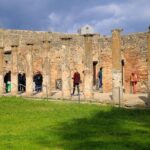
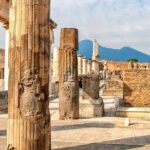
One of the first major areas is the Forum, Pompeii’s main square—political, economic, religious, and social. This is where a Roman city displayed its authority and its daily rhythm. As you stand in the layout, you start to imagine processions, conversations, negotiations, and public announcements.
Then you’ll revisit the Forum area again later in the route as you connect the flow of spaces. That repeat isn’t wasted time. It helps you build orientation: you remember landmarks and begin to understand how people moved through the city.
Body casts and the human scale of the eruption
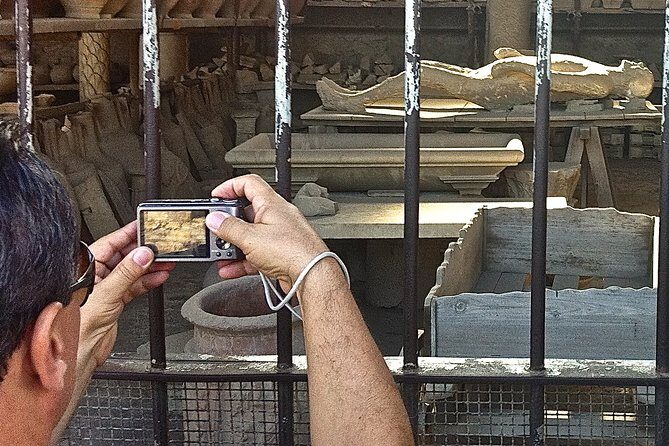
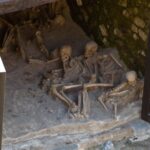
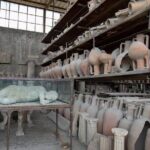
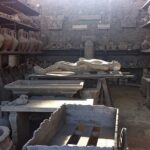
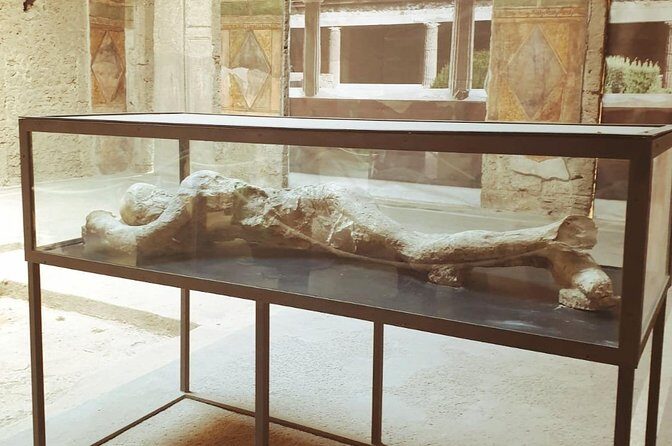
You’ll see plaster casts of victims, preserved in their last seconds of life. This is the emotional center of many Pompeii visits, and it hits differently when you’re not surrounded by a swarm.
A private guide can pace this moment. You’ll have time to take it in and ask questions without the pressure of a group behind you. It’s heavy, but it’s also clarifying: the tragedy stops being an abstract chapter in a textbook and becomes a scene you can emotionally read.
Public baths and water systems: daily life you can picture
Next up are bath experiences and practical infrastructure—ancient plumbing and the social rituals of bathing. You’ll visit an ancient public baths stop and also the Stabian Baths (Terme Stabiane), one of the Roman bath house areas. Roman baths weren’t just about cleanliness. They were about conversation, routine, and community.
You’ll also get attention paid to the water system, which helps you see Pompeii as a functioning city, not only a preserved artifact. Once you understand how water flowed, you start noticing design choices that are easy to miss on a quick visit.
Theatres: Greek roots in a Roman city
Roman Pompeii had theatres, and you’ll see both the Greek-style Teatro Grande and theatre-related areas during the walk. A theatre stop does two things for you:
- It explains social life beyond the streets and squares
- It gives you a sense of how the city entertained people in large groups
This isn’t just about architecture. It’s about how public spaces shaped identity—especially for communities that gathered for performances and civic events.
Elite homes and what they reveal about status
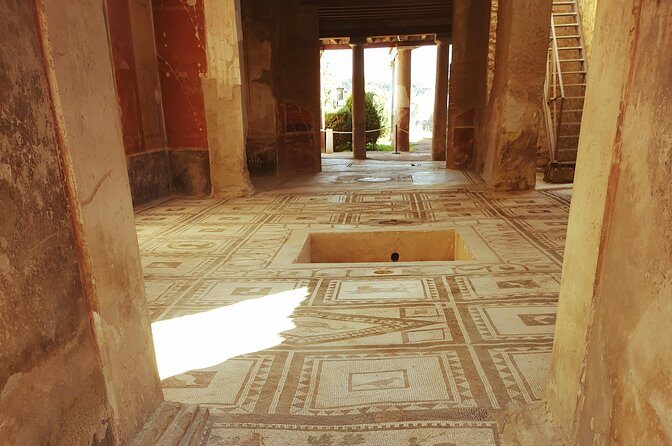
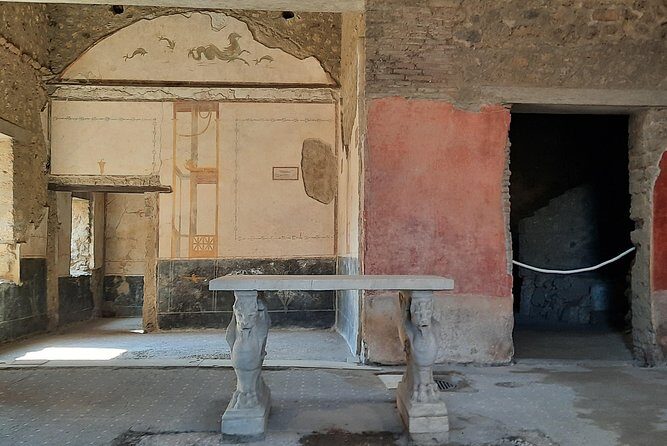
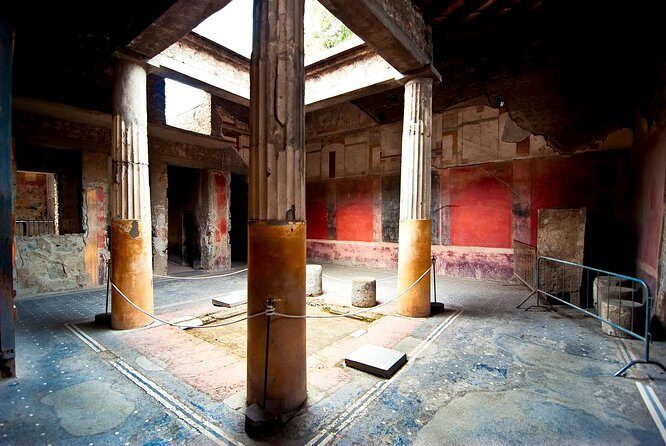
You’ll step into elite domestic life at stops like Casa del Menandro, a rich Roman domus with fresco paintings and mosaics. These homes weren’t just bigger. They signaled status, taste, and connections.
One additional house stop is handled with a practical twist: a rich house is chosen based on crowds, opening rotation, or your specific request. That means the tour is trying to balance access with your ability to see without constant bottlenecks.
And here’s why that matters: Pompeii has moments when you can feel stuck—tight lanes, queue pressure, and crowded viewing points. A route that adjusts helps you keep momentum and see more of what you came for.
Temple of Apollo: gods as public identity
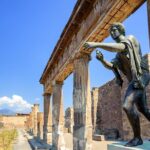
You’ll visit the Temple of Apollo, which connects Pompeii to gods and mythology. In a Roman setting, temples weren’t only for belief. They were part of public identity—places tied to civic pride and communal values.
If you like learning how religion shows up in space and daily movement, this stop is a good one. Without a guide, temples can feel like one more stone rectangle. With context, you start seeing how belief shaped the city.
Shops and workshops, plus the street-food reality check
Pompeii is also about commerce and eating. Your route includes shops and workshops, which help you see the city as a working place with craft, trade, and constant motion.
Then you get two food-focused stops that help you picture meals in a very tangible way:
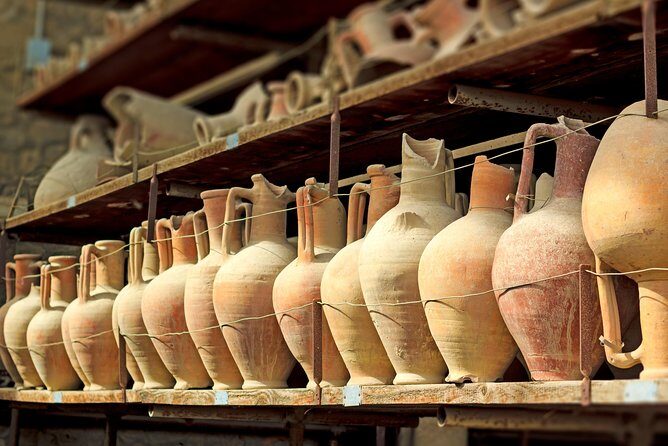
- Panificio di Popidio Prisco: a very old bakery with oven and mills
- Termopolio di Vetuzio Placido: an ancient street food spot
These are the stops that make Pompeii feel modern. You can almost hear the chatter and picture someone grabbing food between errands.
Final stop: Orto dei Fuggiaschi and the casts again
You’ll finish at Orto dei Fuggiaschi, where plaster casts of the victims are displayed. The emotional weight is real here, so your guide’s pacing matters. When you’ve already learned the AD 79 story and seen earlier casts, this stop becomes less like repetition and more like reinforcement—each set of preserved figures helps you understand the scale and the suddenness of what happened.
Tickets, cost, and timing: what to budget and how to plan
The tour price is $249 and includes a private licensed guide plus a mobile ticket for the tour itself. Pompeii entrance tickets are not included. Entrance is Euro 18 for adults and free under 18.
On request, the guide can buy skip-the-line tickets. That’s useful if you want to keep your walking time from getting eaten by queues. Still, even with that help, Pompeii is an archaeological site with its own rhythm. Your best strategy is to plan to start ready to walk and take in details without expecting a slow meander.
Timing-wise, late afternoon is the sweet spot for balancing comfort and atmosphere. You’ll also get the best chance at soft light for photos and for actually seeing textures, like mosaic patterns and fresco colors, before dusk.
Who this tour is best for (and who should choose differently)
This private late-afternoon route is ideal if you:
- Want to avoid crowds and heat without sacrificing the key sights
- Like a guide who tells a story and answers questions
- Prefer a focused visit over a full-day marathon
It may feel too short if you want to linger in galleries or if your group needs long breaks at every stop. Also, if your travel style is mostly self-guided wandering, you might choose an audio guide instead. But if you want your time to turn into a clear understanding of Pompeii, this setup is built for that.
Should you book this late-afternoon private Pompeii tour?
Yes—if your goal is a high-impact Pompeii visit without the worst of midday heat and with a guide who makes the city make sense. The combination of a 2-hour private route, an AD 79 introduction, and a focus on major spaces (Forum, baths, theatres, elite homes, street food, and plaster casts) is strong value for the money.
I’d book it especially if you care about:
- seeing the emotional pieces (plaster casts) with room to absorb them
- getting practical context so you’re not guessing what each building did
- having a guide who can keep your group moving while still answering questions
FAQ
How long is the late-afternoon private Pompeii tour?
The tour lasts about 2 hours.
Where does the tour start and end?
You meet at Via Villa dei Misteri, 2, 80045 Pompei NA, Italy, and the activity ends back at the meeting point.
Is the entrance ticket to Pompeii included in the price?
No. Entrance tickets are not included. Adults pay Euro 18, and under 18 is free.
What does the $249 price include?
It includes a private licensed guide and the tour experience. Pompeii entrance is separate.
Do I get a mobile ticket?
Yes. The tour includes a mobile ticket.
Can the guide help with skip-the-line tickets?
On request, the guide can buy skip-the-line tickets for you.
Is the tour private?
Yes. It’s a private tour/activity, with only your group participating.
What about weather? Does the tour run in poor conditions?
The experience requires good weather. If it’s canceled due to poor weather, you’ll be offered a different date or a full refund.
Is there a cancellation deadline for a full refund?
You can cancel up to 24 hours in advance of the experience for a full refund.
Is the guide service animal friendly?
Service animals are allowed.