REVIEW · SORRENTO
From Naples: Pompeii Skip-the-Line Guided Tour
Book on GetYourGuide →Operated by IAMME IA! - Gray Line Amalfi Coast · Bookable on GetYourGuide
Pompeii is better before the crush. This tour starts early from Naples and uses priority access so you waste less time in lines and more time seeing the city. The early departure also makes the walking feel more manageable.
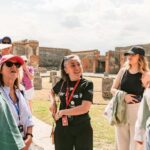
I especially like the licensed, local guide approach. You get a real story of daily life, not just a list of ruins. I also like that for groups of 8+ you get audio headsets, which helps when it’s noisy and the crowd surges.
One thing to keep in mind: it’s still a lot of walking on uneven ground, and the route is a smart highlight circuit, not a see-every-street kind of visit. If you dislike heat or have mobility limits, you’ll want to plan carefully.
In This Review
- Key things I’d pay attention to
- Starting early in Naples: less waiting, more Pompeii
- Getting to the site: where the bus picks you up
- Priority access: what the skip-the-line really means
- Porta Marina and the Civil Forum: understanding the city’s center
- Via dell’Abbondanza and the Theater District: daily life meets public culture
- Terme Stabiane baths: the Roman routine you can still feel
- Lupanare and the street-food stops: the rough edges of daily Pompeii
- House of the Faun and the Alexander Mosaic: art as status
- Macellum and the plaster casts: ending with the human story
- Group logistics, headsets, and how to hear your guide
- Price and value: is $71 a fair deal?
- What to bring: small gear that saves the day
- Who this Pompeii tour is best for
- Should you book this Pompeii skip-the-line tour?
- FAQ
- How long is the tour, and how much time do you spend inside Pompeii?
- Where do I meet the guide in Naples?
- Does the tour really skip the line at Pompeii?
- Are audio headsets provided?
- What languages are available?
- Is food included in the price?
- What should I bring for the day?
- Is this tour suitable for everyone?
Key things I’d pay attention to
- Priority access via a separate entrance means less queue time
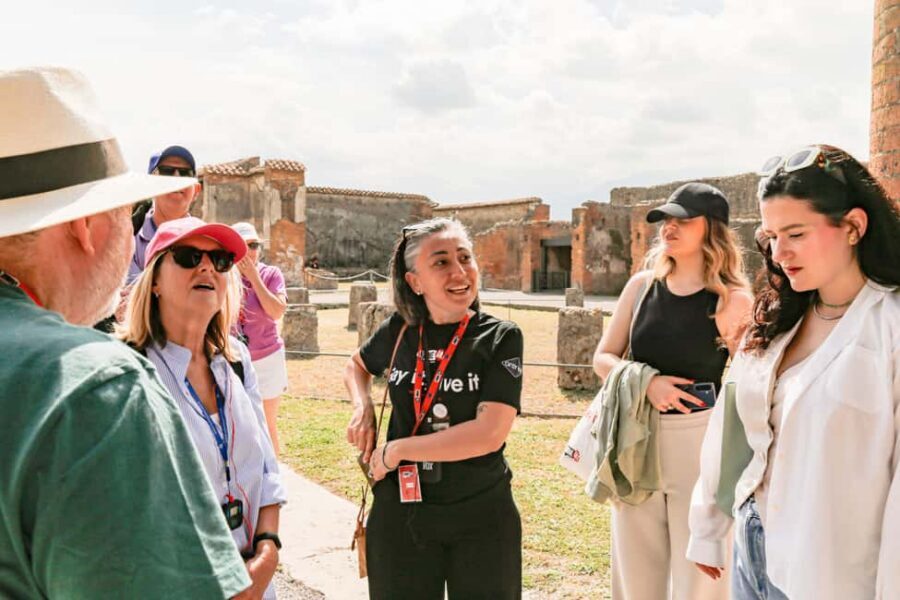
- A focused 2½-hour guided walk through the most important areas
- Porta Marina to the Macellum gives you a good city flow
- Headsets for larger groups help you hear the guide over crowds
- Sun and uneven paths make comfy shoes non-negotiable
- Plaster casts deliver a heavy emotional punch, fast
Starting early in Naples: less waiting, more Pompeii
Pompeii is the kind of place where timing changes everything. The tour’s early Naples departure helps you arrive before the biggest wave of day-trippers. That matters because Pompeii isn’t just “big”—it’s packed with people and narrow sightlines. If you come later, you end up looking at ruins through the backs of other visitors.
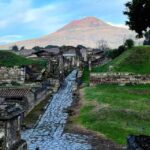
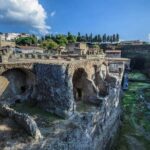
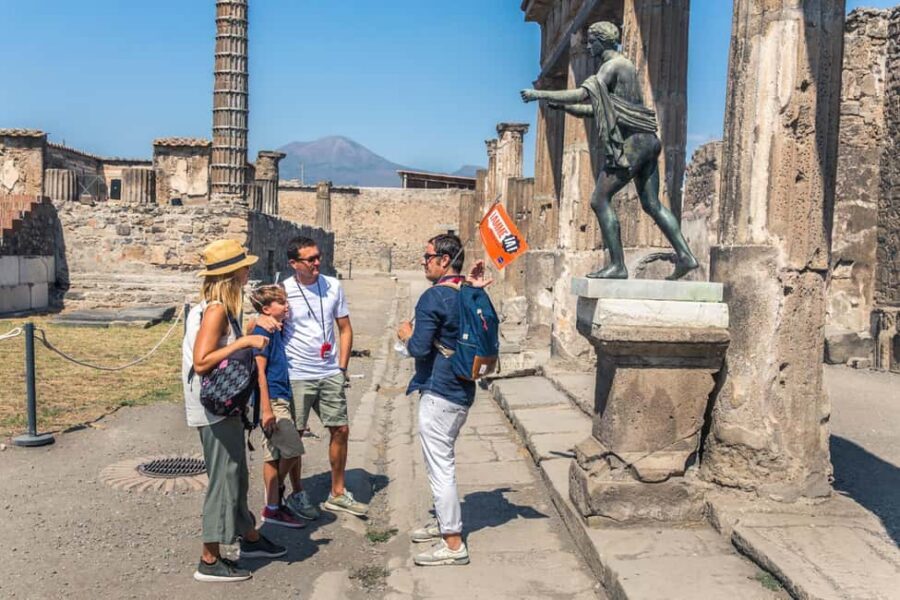
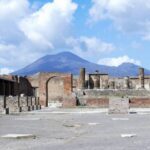
The route is designed to give you momentum right away. You head straight for the main gate area and start with the feel of the city, including the dramatic backdrop of Mount Vesuvius hovering over the ruins. Even if you’ve seen photos before, it lands differently in person when you’re walking the streets.
If you're still narrowing it down, here are other tours in Sorrento we've reviewed.


Getting to the site: where the bus picks you up
The meeting point is outside the main entrance of Starhotel Terminus, at Piazza Giuseppe Garibaldi nr. 91 in Naples. From there, you ride in an air-conditioned bus for about 30 minutes to Pompeii, which is a nice buffer if you’re arriving on trains or just don’t want to fight public transport.
One practical note: this is not a door-to-door hotel pickup style tour. The official meet point is set, and some people find a short walk to the meeting plaza easier to deal with than relying on a personalized pickup.
When the day’s done, you’ll return to Naples with drop-off at Piazza Giuseppe Garibaldi, 91. It’s a convenient hub if you’re heading toward a train or back into town for dinner.
Priority access: what the skip-the-line really means
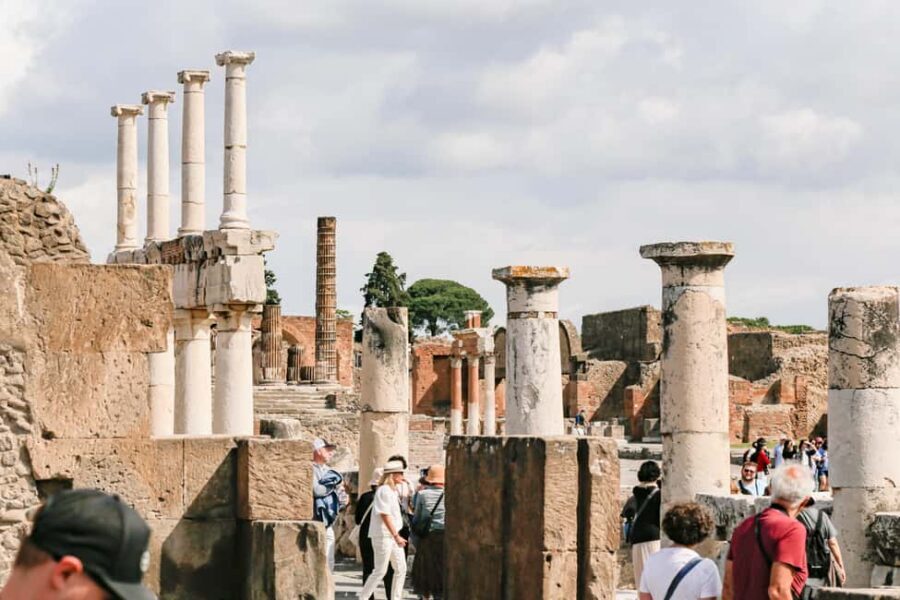
Yes, you skip the standard entrance lines with priority access and a separate entrance. In a place like Pompeii, that time saved isn’t minor. It’s time you can spend learning, looking closely, and getting your bearings.
One more practical payoff: priority entry helps your guide keep the schedule smoother. That’s important because you’re on a tight timeline—4 hours total—with a guided Pompeii walk that’s roughly 2½ hours.
At the same time, Pompeii can still be crowded once you’re inside. The “skip-the-line” part reduces the worst bottleneck, but you still move through popular areas where crowds gather.
Porta Marina and the Civil Forum: understanding the city’s center
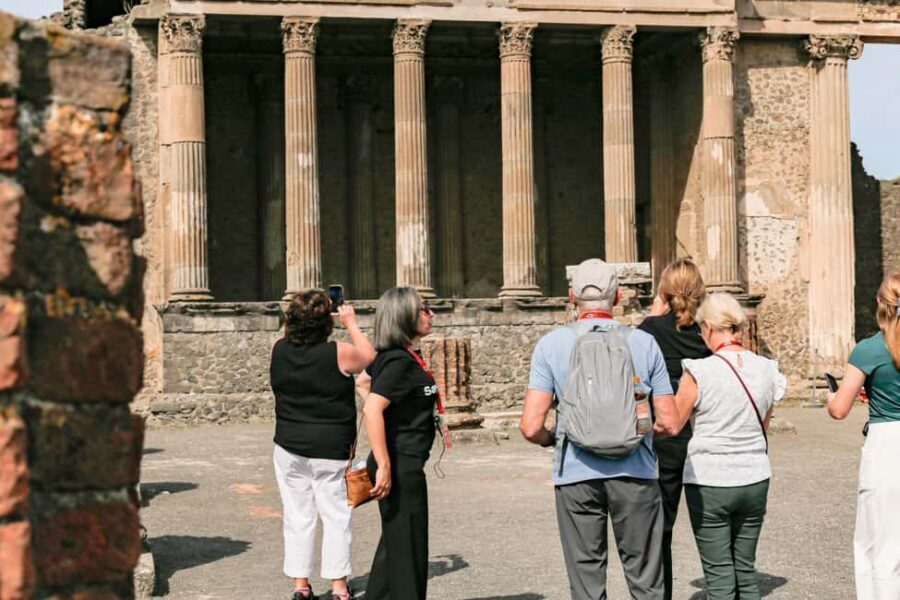
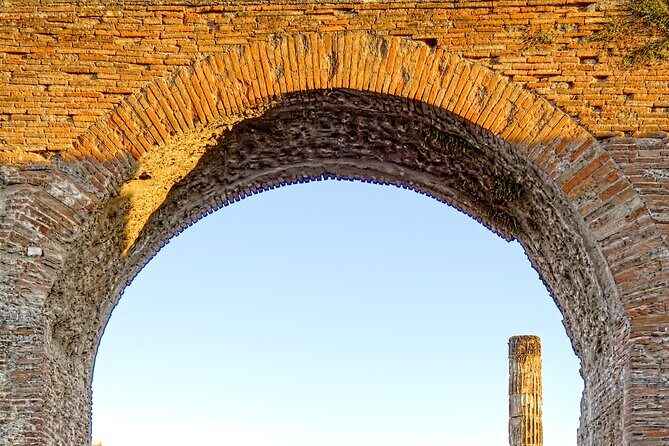
Your walking tour starts at Porta Marina, one of the city’s original gates. This is a great first stop because it gives you a sense of how people moved in and out. You’re not staring at random buildings—you’re entering the city the way a visitor might have, long ago.
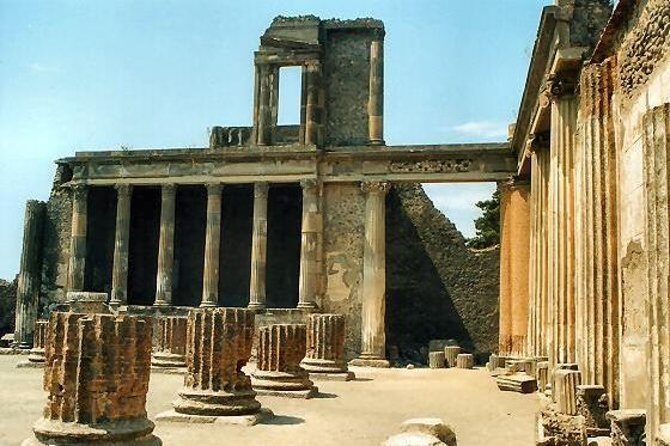
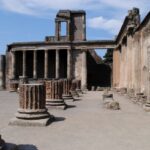
Next comes the Civil Forum, described here as the city’s political, religious, and commercial core. You’ll see the Basilica area too, which once handled legal affairs and business dealings. This is where Pompeii stops being “ruins” and starts behaving like a functioning city: decisions, worship, contracts, and markets all in one zone.
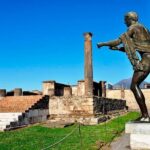
Mount Vesuvius is more than scenery. It’s the reason the city survives as intact as it does. Standing near the Forum areas with Vesuvius looming behind, you get a stronger sense of how suddenly life ended here.
If you like context, this is the section that pays off most. It’s also one of the best places for photos, though expect people clustering quickly.
Via dell’Abbondanza and the Theater District: daily life meets public culture
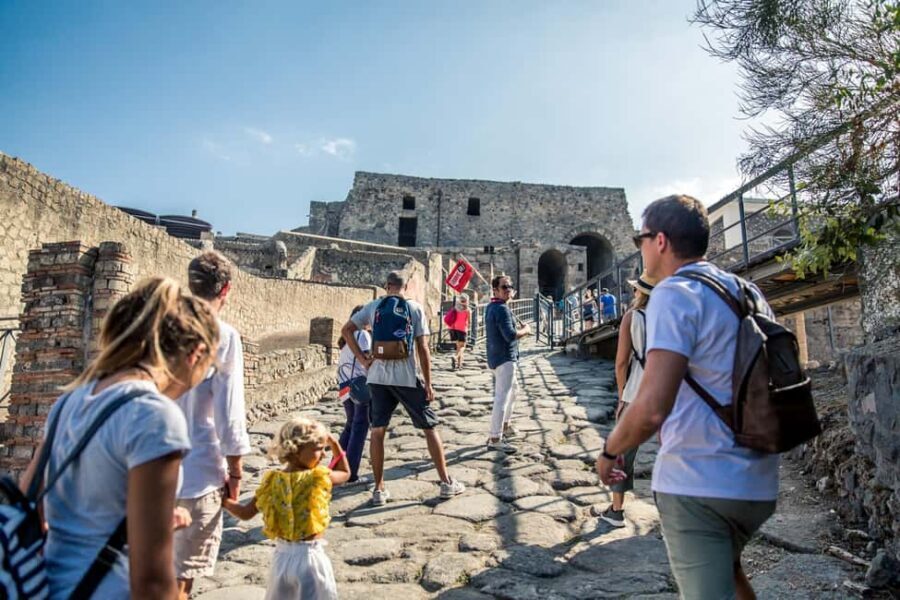
From the Forum, you move toward Via dell’Abbondanza, Pompeii’s main street. Here you get that unmistakable street texture—shops and homes along the way—and the famous stone grooves from chariot wheels. Those grooves are a small detail, but they make the street feel used, not staged.
Then you reach the Theater District. This area shows how Pompeii entertained people. You’ll visit the Large Theater, an open-air venue where crowds gathered for comedies, dramas, and musical performances. In a place built for noise and movement, standing there with the open sky above it helps you visualize why public gatherings mattered so much.
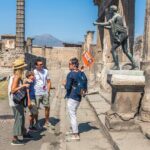
The guide’s job here is crucial. Without a narrator, the theater can feel like just another big stone structure. With the right explanations, you start noticing where people stood, how performances would have worked, and how sound would carry across the space.
Terme Stabiane baths: the Roman routine you can still feel
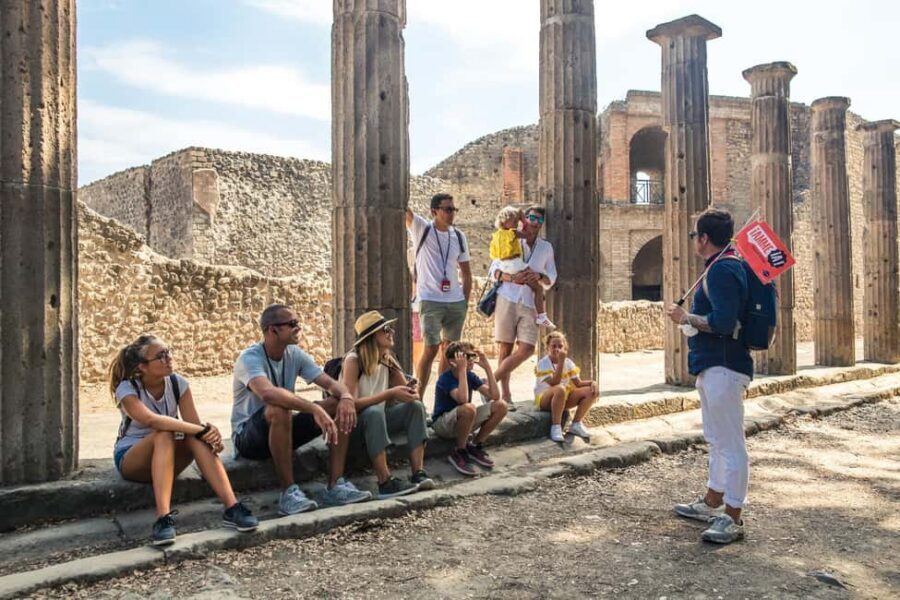
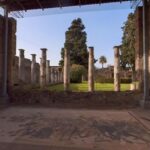
A standout stop is the Terme Stabiane, Pompeii’s bath complex. Baths were social life as much as hygiene, and the preservation here makes it easier to grasp the routine—rooms, layouts, and the “how would people use this?” factor.
This stop also helps you break up the emotional weight of the Forum and the dramatic aftermath later on. The baths are a reminder that Romans planned comfort and routine into daily living. It’s practical, and it’s human.
One drawback: baths are often open to the sun, depending on where you move within the complex. So keep an eye on shade opportunities and take small breaks when you can.
Lupanare and the street-food stops: the rough edges of daily Pompeii
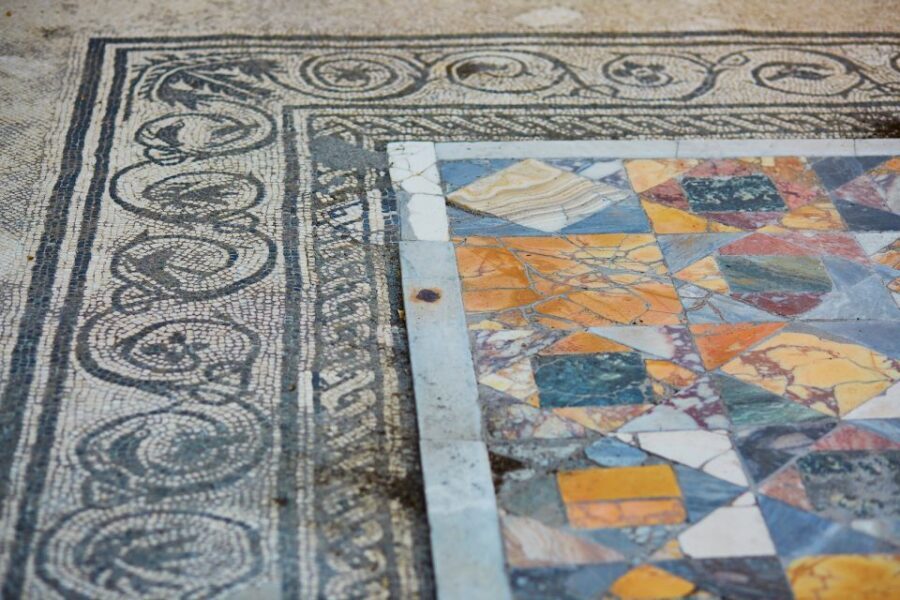
Now you hit some of the most talked-about—and most vivid—locations. First is the Lupanare, an ancient brothel. The rooms are compact, and the frescoes give you immediate visual impact. Even if you’d rather keep the tone light, this stop is historically important because it shows the city’s informal economy and everyday realities, not just its official buildings.
After that, you’ll be guided through a Thermopolium (ancient street food shop) and a Pistrinum (bakery). If you like food history, this is where the tour gets quietly great. You can see millstones, ovens, and counters—evidence of how hot meals were served quickly to people on the go.
The pistrinum and thermopolium stops also help you understand the city as an operating system. Where did food come from? How was it delivered? What did daily life feel like for people who didn’t live in grand villas?
House of the Faun and the Alexander Mosaic: art as status
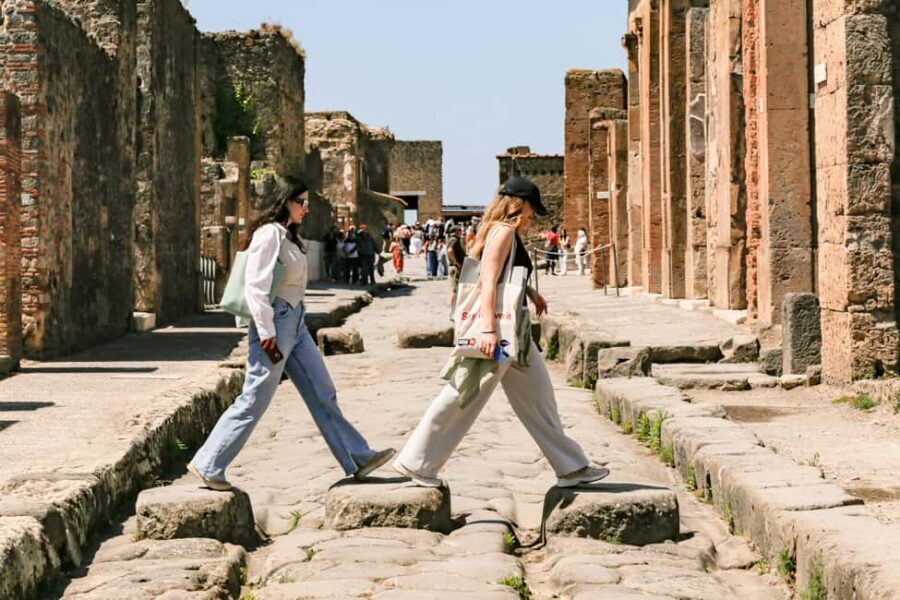
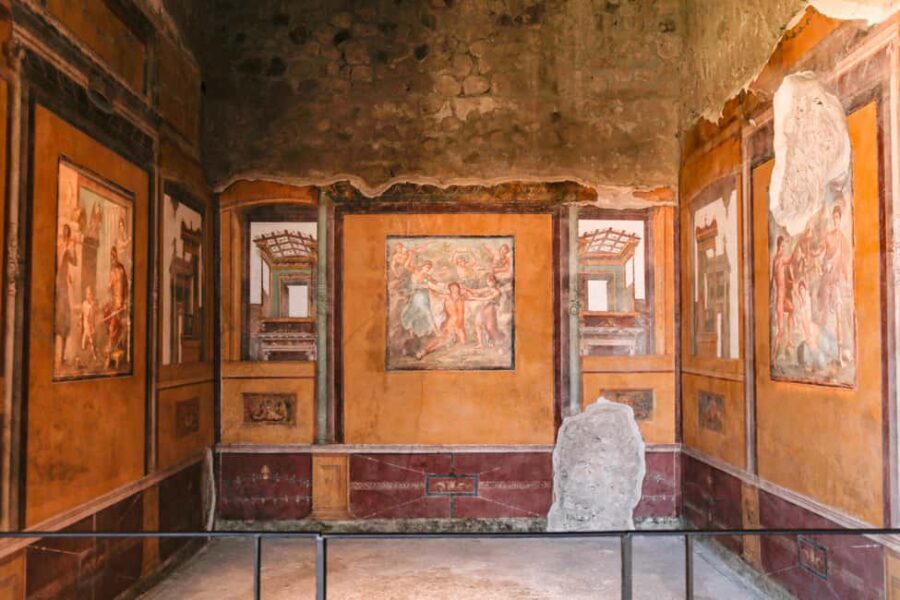
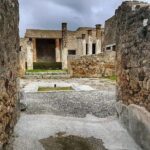
The highlight for many people is the House of the Faun, a wealthy Roman villa known for its mosaics—especially the Alexander Mosaic. This is one of those moments where Pompeii feels like a museum, but only because it was preserved so well.
What to look for: not just the mosaic itself, but what it implies about ownership. A mosaic like this wasn’t casual décor. It was a statement of education, taste, and power. The guide’s narration usually helps you connect the imagery to the wider Roman world and what such artwork signaled.
This stop is also a good checkpoint for your attention span. After churches, courts, theaters, baths, and street life, you get a shift into elite domestic space. It’s a change of pace that actually helps you remember the day.
Macellum and the plaster casts: ending with the human story
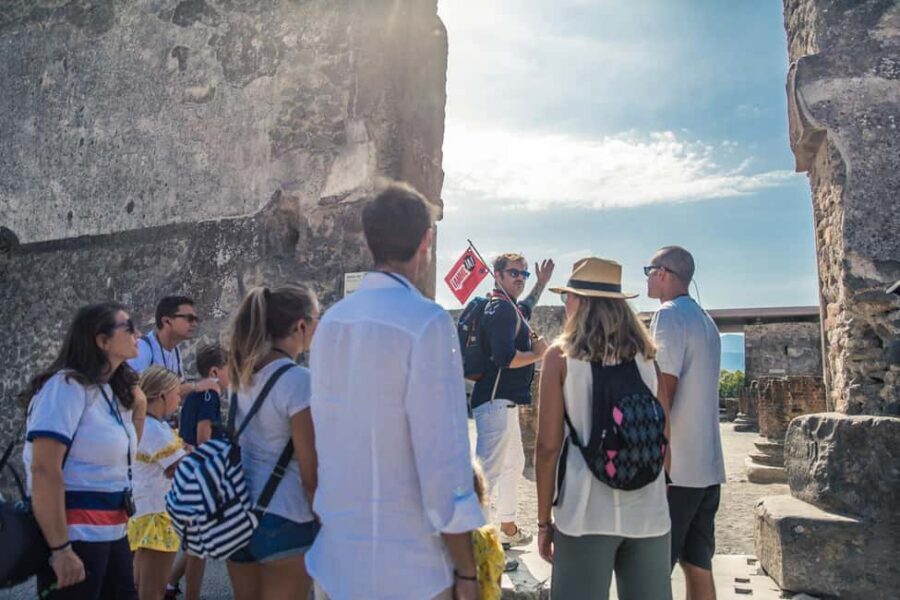
Your tour wraps with the Macellum, Pompeii’s food market. It’s lively even as ruins—because markets always were. This stop ties your day together: politics and culture earlier, then daily movement and trade, and finally that emotional aftermath.
Then comes the hardest moment: the plaster casts of Pompeii’s victims. Seeing men, women, and children frozen in their final moments is powerful. It’s not just an exhibit; it’s a reminder that history involves real bodies and real families, not just stones and dates.
This final section changes the tone of the whole tour. Plan to absorb it rather than rush for photos. If you take that one minute to steady yourself, the rest of your day in Naples will feel calmer—and more meaningful.
Group logistics, headsets, and how to hear your guide
For groups of 8+, you get audio headsets. That’s a big deal in Pompeii, where crowds can drown out a voice and you don’t always walk shoulder-to-shoulder.
One real-world tip: if the audio cuts out, it often comes down to distance and crowd positioning. So stay close when you can, and don’t fall behind trying to read everything at once.
Also note that site rules may split your group into smaller parties with different licensed guides. That’s normal, but it can affect pacing and how consistently you follow one narrative. If that happens, treat it as a normal part of the day—not a problem.
Price and value: is $71 a fair deal?
At about $71 per person for a 4-hour tour with round-trip transportation, a licensed guide, and priority entrance, this is one of those prices that can feel “reasonable” or “steep” depending on your plan.
Here’s how it usually pencils out in your favor:
- You’re paying for a guide to connect locations into one story. Pompeii is too big to self-navigate well if you want meaning, not just sightseeing.
- Priority access saves time you’d otherwise spend in queues.
- The bus saves hassle getting from Naples to the site and back, especially if you’re not traveling with a car.
Food isn’t included. The official listing says no food and beverages, and some tours include an optional lunch stop where you can buy something on the way. One person noted a set-menu restaurant stop (including a mention of Suisse and about €14), while another mentioned lunch timings and cost as part of the day. The big takeaway for you: don’t assume lunch is free or included in the ticket price. If you’re picky about food, bring your own water and a simple snack plan.
If you also plan to add Mount Vesuvius later, remember it’s a separate commitment. In at least one account, the guide helped add it on the day, and the climb was described as demanding. If Vesuvius is on your wish list, build in extra energy and time so you don’t feel rushed.
What to bring: small gear that saves the day
For a tour like this, the essentials are simple:
- Comfortable shoes (Pompeii floors aren’t always friendly)
- Sunglasses
- Sun hat
I’d also bring a water bottle. One review specifically suggested refilling it using fountains inside Pompeii. And it’s smart to keep a little cash for public restrooms; one account mentioned having about €0.50 available just in case.
If you’re sensitive to heat, plan your breaks. The schedule is efficient, but you can still slow down for 30 seconds, drink water, and keep your energy for the next stop.
Who this Pompeii tour is best for
This is a strong choice if you:
- want Pompeii organized into a clear route with city-flow context
- like live explanations more than wandering alone with a map
- are short on time and still want the key sights
- appreciate priority access to reduce stressful waiting
It’s not the best fit if you:
- have mobility impairments (the tour notes it’s not suitable)
- have heart problems (also noted as not suitable)
- need a totally flexible, no-schedule experience
If you’re traveling with kids or older relatives, the big question is endurance. This is doable for many people, but it’s not a slow stroll with lots of sit-down time.
Should you book this Pompeii skip-the-line tour?
If you’re coming from Naples and want a smart, guided Pompeii morning with priority access, I’d book it. The guide-driven format helps you understand what you’re seeing—Forum to theater, food life to elite villas—and the plaster casts land with full force at the end.
I’d only skip it if you strongly prefer self-paced exploration, want to spend far longer inside Pompeii than a 2½-hour guided route allows, or you know walking for a few hours in the sun is going to be a problem for you.
FAQ
How long is the tour, and how much time do you spend inside Pompeii?
The total tour time is about 4 hours, with a guided visit at the Pompeii Archaeological Site lasting around 2½ hours.
Where do I meet the guide in Naples?
Meet your guide outside the main entrance of Starhotel Terminus at Piazza Giuseppe Garibaldi nr. 91.
Does the tour really skip the line at Pompeii?
Yes. The tour includes priority access and entry through a separate entrance.
Are audio headsets provided?
Audio headsets are provided for groups of 8+.
What languages are available?
The live guide is available in English, French, Spanish, and German. If the minimum number of French or Spanish speakers isn’t met, the tour will run in English, with French or Spanish commentary provided only during the guided visit of the Pompeii archaeological site.
Is food included in the price?
No. Food and beverages are not included.
What should I bring for the day?
Bring comfortable shoes, sunglasses, and a sun hat.
Is this tour suitable for everyone?
It’s not suitable for people with mobility impairments or people with heart problems.