REVIEW · POMPEII
Pompeii and Herculaneum small group tour – skip the line
Book on Viator →Operated by PompeiIn · Bookable on Viator
Two UNESCO cities, one day of Roman reality. Pompeii and Herculaneum are both UNESCO sites, and this tour strings them together with skip-the-line tickets and an expert-led walk. You’ll cover major squares, grand homes, baths, theaters, and even the famously uncomfortable corners of Roman city life.
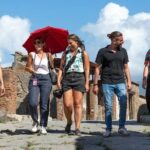
I really like the small group size (max 20). It keeps the energy manageable and helps your guide answer questions as you move, not after you’ve already left the room. Guides like Amadeau, Vince, Sergio, Paulo, Vincenzo, Diego, Michele, and Alfredo are repeatedly described as organized, funny when it fits, and serious about the details that make the stones feel human.
The main drawback is simple: it’s a lot of walking on uneven ground, and the pace is tight because there are many stops. One review sums it up well—this is not stroller friendly, and you’ll want to plan for carry time or choose a simpler setup for kids and mobility limits.
In This Review
- Key highlights to look for
- Starting at Porta Marina Superiore: how the Pompeii kickoff works
- Pompeii in the walking order: Basilica, Forum, and the big houses
- Granaries, oldest thermal complex, and brothel lane realities
- Teatro Piccolo and Teatro Grande: entertainment with real scale
- One-way train to Herculaneum: timing, meet point, and station details
- Herculaneum houses and baths: what looks different from Pompeii
- Guides and small-group pacing: what makes the difference
- Walking reality check: uneven ruins, water, and toilets
- Price and value: is $119.85 worth it?
- Should you book this Pompeii and Herculaneum small-group tour?
- FAQ
- How long is the Pompeii and Herculaneum small group tour?
- How large is the group?
- What language is the tour offered in?
- Where do I meet for the Pompeii part of the tour?
- Where does the tour end in Herculaneum?
- Are skip-the-line tickets included?
- How do you get from Pompeii to Herculaneum?
- Is there time for lunch?
- Is the tour stroller-friendly or easy on mobility?
- Can I cancel for a full refund?
Key highlights to look for
- Skip-the-line access in Pompeii to cut down waiting time at entry
- UNESCO Pompeii + UNESCO Herculaneum in one guided day
- One-way train to Herculaneum (Circumvesuviana) plus a short walk to the ruins
- A small group (up to 20) so questions don’t get lost
- Homes, baths, and theaters that explain how Romans lived, worked, and relaxed
- Lots of short stops (about 10 minutes each) for broad coverage
Starting at Porta Marina Superiore: how the Pompeii kickoff works
The tour begins at Piazza Esedra, 4, 80045 Pompei, where you’ll meet your guide. In Pompeii, you’ll be ushered in to the archaeological park at the main entrance called Porta Marina Superiore.
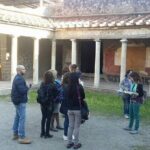
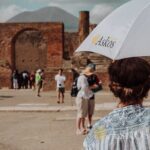
Your guide carries a sign for Askos Tours, which makes it easier to find the group quickly. From the start, the structure is designed to keep you moving—about 10 minutes at many stops—so you get a true cross-section of the city instead of just one neighborhood.
Other skip-the-line Pompeii tours in Pompeii

Pompeii in the walking order: Basilica, Forum, and the big houses
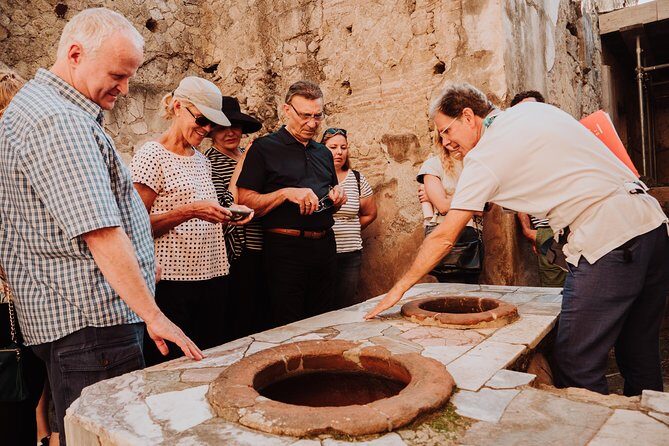
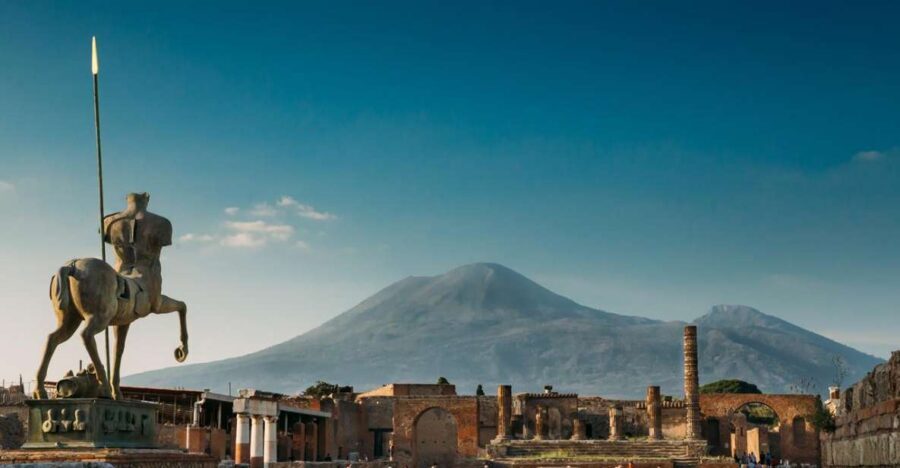
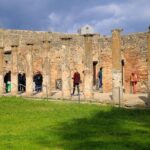
Pompeii is the headline for a reason. It’s a city made of public space and private rooms, and this tour builds that contrast block by block. Expect frescoes, mosaics, and architectural details in houses that are named for standout features and still look astonishingly preserved.
Basilica (portico shelter)
You start with the Basilica, described as an open portico that sheltered merchants and other activities. This is a smart first stop because it frames Pompeii as a working city, not a museum pile.
Foro de Pompeya (main square)
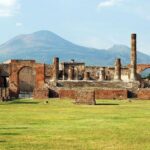
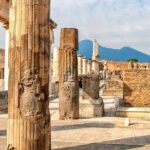
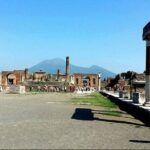
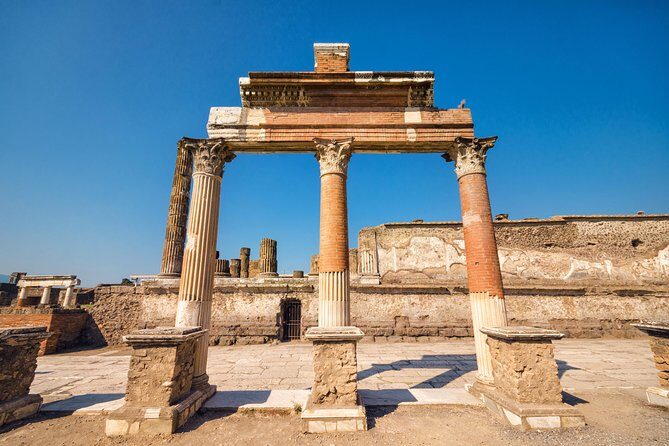
Next is the Forum (Foro de Pompeya), the core public square. Even with a short visit, you get a feel for how Romans organized daily life around civic space—meetings, business, and foot traffic.
Main street walk
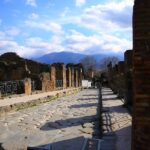
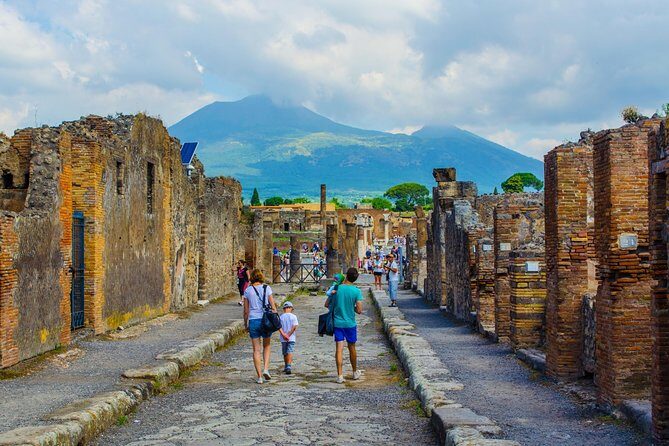
After the square stops, there’s time to walk through Pompeii’s main street. It’s not a “scroll past the highlights” moment. It helps you get your bearings, because Pompeii’s streets can feel maze-like once you’re inside.
Casa del Menandro (rich home with strong decoration)
Then you’ll step into the Casa del Menandro, one of Pompeii’s richer homes for architecture, decoration, and the contents preserved there. This is where the story turns from crowds and commerce to personal taste—Roman wealth expressed through walls, floors, and layout.
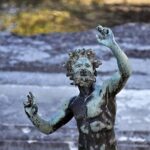
Casa del Fauno (one of Pompeii’s largest residences)
Later comes Casa del Fauno, another major private residence. You can think of this stop as the “scale check” after you’ve seen the Forum and smaller structures—Pompeii’s domestic world could be grand.
If you’re the type who likes context, you’ll appreciate that the stops aren’t random. They move from public function to domestic life so you start seeing patterns: where people gathered, where they negotiated, and where they lived.
Granaries, oldest thermal complex, and brothel lane realities
Pompeii doesn’t only show pretty rooms. It shows systems—and sometimes it shows choices people didn’t make for comfort.
Granai del Foro (granary with water features and casts)
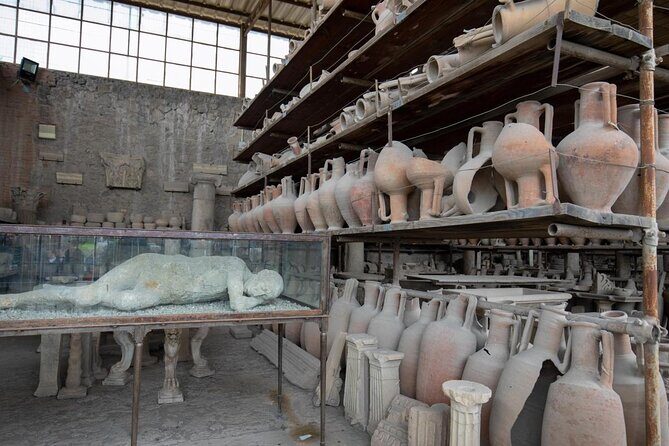
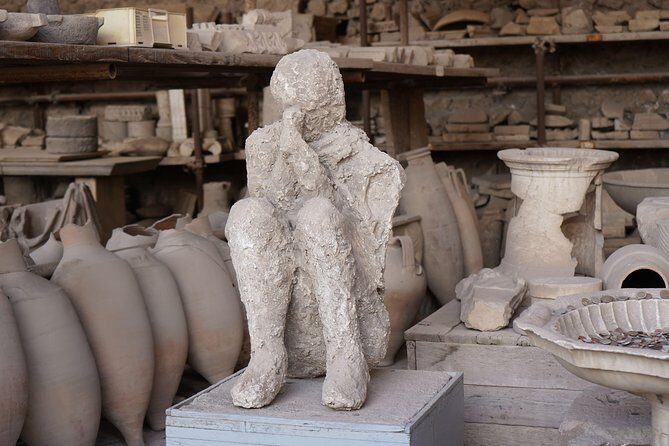
At the Granary del Foro, you’ll see marble tables and baths for fountains that once adorned the entrances of houses. You’ll also encounter casts of eruption victims, plus references to a dog and a tree. It’s heavy subject matter, but it also explains why Pompeii education is different: it’s not just archaeology; it’s human consequence.
Terme del Foro (oldest thermal complex in the city)
Next is the Terme del Foro, identified as the city’s oldest thermal complex. Baths in Pompeii weren’t just hygiene. They were social rhythm—people gathered, talked, and cooled down in shared spaces.
The most famous brothel
The tour also includes time at the most famous brothel in Pompeii. If you’re curious about Roman social life (and not afraid of awkward topics), this stop is often a turning point. It’s short, but it forces you to confront how normal commerce and sexuality were integrated into everyday city planning.
This section can feel like whiplash if you’re expecting only “pretty ruins.” But that’s exactly why it’s valuable: you leave with a more complete picture of Roman life as it actually functioned.
Teatro Piccolo and Teatro Grande: entertainment with real scale
Then you move into the theater zone, where Pompeii turns loud and communal.
Teatro Piccolo (small theater)
There’s a stop for Teatro Piccolo, the smaller theater. It helps you compare “entertainment at different sizes,” so when you reach the main theater, you notice what changes.
Teatro Grande (most important theater)
Finally, you visit Teatro Grande, the most important theater in Pompeii, with about 15 minutes allotted. This extra time matters because theaters reward attention. Even in a short visit, you can start imagining a crowd moving through entrances, finding seats, and reacting to performances.
If you’re hoping for a lot of time to sit and soak it in, Pompeii’s theater stop won’t feel like that. You’ll get the big picture instead—which, for a 5.5-hour day, is probably the right trade.
One-way train to Herculaneum: timing, meet point, and station details
After Pompeii, you take a one-way train to Herculaneum. The train ride is listed as about 30 minutes, then it’s about 10 minutes walking to the ruins.
Your end point in Herculaneum is the ruins’ Ticket Office area. That’s important because it tells you how to orient yourself: you’re not dropped randomly across the site.
One practical note from real-world timing: the Circumvesuviana station is about a 10-minute walk from the ruins, and a review specifically warned that the station area was under renovation in September 2025. If you see signs and temporary routes, follow them. Also, one reviewer mentioned a strike causing return hassles—so give yourself a little slack if your travel dates line up with local disruptions.
There’s also time for a quick lunch break if required. Meals are not included, but the schedule gives you a chance to grab something before you re-enter the second UNESCO site.
Other small-group tours we've reviewed in Pompeii


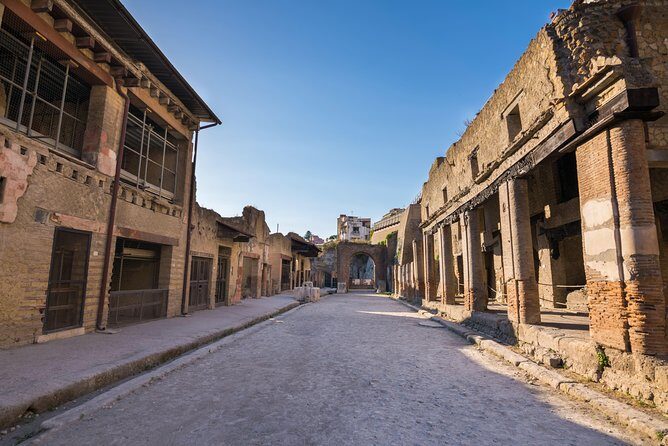
Herculaneum houses and baths: what looks different from Pompeii
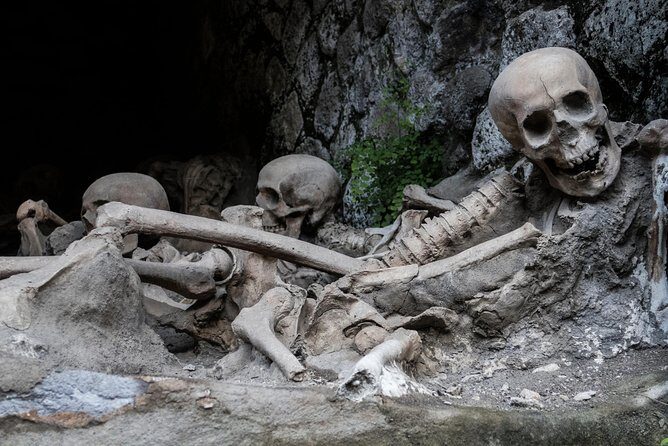
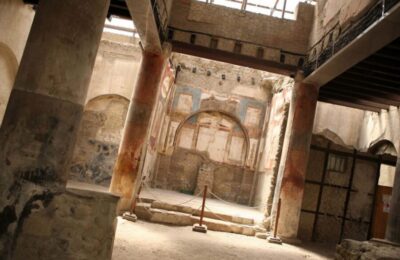
Herculaneum has a different vibe because it’s preserved differently. Here, you’ll bounce through a set of named houses and thermal spaces, each with a clue about how people lived.
Casa dei Cervi (deer statues)
You’ll start with Casa dei Cervi, named for marble stag/deer statues found in the peristyle.
La Terrazza di M. Nonio Balbo
Next is La Terrazza di M. Nonio Balbo—the description points to the same kind of standout statuary used for naming across these stops.
College of the Augustales
Then comes the College of the Augustales. In the tour description, it’s also tied to preserved marble statues mentioned in the stop details, so you’ll be looking for what makes this building distinct among the residential mix.
Casa del Rilievo di Telefo (private access to nearby baths)
You’ll visit Casa del Rilievo di Telefo, described as unusual because it has its own private access to the adjoining Suburban Thermae. Even in a short stop, that’s the kind of fact that makes the layout click—this place wasn’t isolated from the city’s bathing culture.
Partem Domus lignea (wooden partition remains)
One of the more distinctive stops is Partem Domus lignea – Casa del Tramezzo di Legno, focused on an important wooden partition that remained. This is the sort of detail that helps you understand how archaeologists read these sites: materials survive in ways you wouldn’t expect, and those survivals change what you can learn.
House of the Skeleton (1831 discovery name)
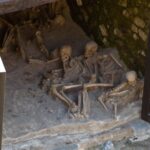
Then you’ll see the House of the Skeleton, named for human remains found in 1831. The tour’s short framing still gives you a narrative hook: why archaeologists and explorers gave these places their names.
Central Thermae (men and women separate entrances)
Next up is Central Thermae, built around the beginning of the 1st century AD. The stop notes separate entrances for men and women, which is a key detail for how you interpret daily routine at Herculaneum.
Casa del Salone Nero (carbonized door remains)
At Casa del Salone Nero, the description highlights a monumental entrance with carbonised remains of doorposts and lintel. It’s eerie, but it’s also one of those moments where the preservation tells you a lot about the last instant.
Casa Sannitica, Casa del Bel Cortile, and the Grand Portal
Later stops include Casa Sannitica (Samnite-style arrangement, atrium with a gallery of Ionic columns, frescoes), Casa del Bel Cortile (courtyard with stairway and a stone balcony instead of an atrium), and House of the Grand Portal (center of the area with various environments, frescos, and charred remains of wooden parts).
Herculaneum gives you a “home by home” view. Pompeii gives you the “street by street” feel. Together, you start to see that both cities had similar Roman building blocks—but they preserved those blocks differently.
Guides and small-group pacing: what makes the difference
This is the part that drives the ratings. A small group tour works only if the guide can handle logistics and still explain meaning.
The best feedback in the reviews focuses on organization and pacing. Guides described as especially good at time management include Vince, Vincenzo, Diego, Michele, and Alfredo. One review praised Sergio as an archaeologist who works on the site, and that kind of background tends to show when someone points out why a detail matters—not just what it is.
A few other practical guide traits come up:
- Guides making you laugh while you learn (Vince is singled out for humor)
- Guides staying thoughtful when weather turns (one review calls out a rainy day and how no one was rushed)
- Guides keeping the flow right for questions in the moment (group size helped here)
The group limit matters because Pompeii and Herculaneum are not forgiving if you lose people. With up to 20, your guide can keep the pace human and still stop when someone has a real question.
Walking reality check: uneven ruins, water, and toilets
Even if you’re fit, plan for rough surfaces. Reviews specifically mention uneven walking inside the ruins. That’s not a “tour problem.” It’s just the nature of these sites.
If you’re traveling with kids, take the stroller warning seriously. One review says this is not stroller friendly, and you may end up carrying the baby anyway. If you’re mobility-limited, you’ll want to ask yourself if you can handle lots of short transitions without rests.
What to do that’s actually helpful:
- Bring water. One review says to drink it all up, and another suggests you can fill a water bottle at an ancient Roman water spring.
- Use the toilet before you start. That same review recommends this, which tells me restroom availability during the day may not line up with your expectations.
Also, plan your footwear like you’re going to walk on old stone for hours. Sneakers beat fancy sandals here.
Price and value: is $119.85 worth it?
At $119.85 per person, you’re paying for three things: guidance, time savings from skip-the-line entry in Pompeii and Herculaneum, and a one-way train ticket from Pompeii to Herculaneum.
The day is structured for efficiency. Pompeii alone has many quick stops—often around 10 minutes each—so you get breadth, not a slow museum experience. Then Herculaneum adds another set of houses and baths, again with short visits. If you like “see a lot with context,” the format is strong.
One item to double-check at checkout: the itinerary notes that Pompeii admission is included at stops, but it also says the Herculaneum admission ticket is not included at Stop 9. The included list says skip-the-line tickets in both places, so something about “skip-the-line” vs “admission ticket” may be handled differently. Before you pay, confirm exactly what you’ll need to pay on the spot for entry in Herculaneum, if anything.
Meals aren’t included, and transportation back to your accommodation isn’t included either. So budget for food and your onward plans after the tour ends in Herculaneum.
Should you book this Pompeii and Herculaneum small-group tour?
Book it if you want two UNESCO sites in one guided run, and you like learning as you walk. This is a good fit for history lovers who also want practical pacing: skip long lines, get orientation, and leave with names and reasons—not just photos.
Skip it (or consider a different format) if you need lots of resting time, mobility-friendly surfaces, or you’re counting on stroller access. The ruins involve uneven ground and many stops, and the tour is designed to cover a lot, not to linger.
If you’re deciding, here’s the simple test: do you enjoy short, guided visits across major sites, with a guide who can explain why each stop matters? If yes, this is the kind of day you’ll feel for a long time after you’re back off the stones.
FAQ
How long is the Pompeii and Herculaneum small group tour?
It runs for about 5 hours 30 minutes (approx.).
How large is the group?
The tour has a maximum group size of 20 travelers.
What language is the tour offered in?
The tour is offered in English.
Where do I meet for the Pompeii part of the tour?
The start point is Piazza Esedra, 4, 80045 Pompei NA, Italy.
Where does the tour end in Herculaneum?
It ends at the Archaeological Park of Herculaneum, Corso Resina, 187, 80056 Ercolano NA, Italy, near the ruins’ Ticket Office area.
Are skip-the-line tickets included?
Skip-the-line tickets are listed as included for both Pompeii and Herculaneum. However, one itinerary detail notes that the admission ticket is not included for the Herculaneum entry step, so it’s smart to confirm the exact entry/ticket inclusions at checkout.
How do you get from Pompeii to Herculaneum?
You’ll take a one-way train (Circumvesuviana) from Pompeii to Herculaneum. The schedule lists about 30 minutes of train time plus about 10 minutes walking.
Is there time for lunch?
There is a quick lunch break if required. Meals are not included, so you’ll want to bring or buy your own food.
Is the tour stroller-friendly or easy on mobility?
The tour involves lots of walking and uneven ground. One review specifically says it is not stroller friendly, and another notes it could be a problem for someone who is mobility impaired.
Can I cancel for a full refund?
Yes. You can cancel up to 24 hours in advance for a full refund. Free cancellation requires canceling at least 24 hours before the experience’s start time.