REVIEW · POMPEII
Guided Tours of Pompeii Excavations Historical and Cultural Itineraries
Book on Viator →Operated by Bruno Pisano · Bookable on Viator
Pompeii makes history feel close. This guided walk is built around meaning, from mystery cults to everyday Hellenistic life, led by Bruno Pisano for a small-group pace.
You’ll get plenty of time at each highlight—like the Villa dei Misteri—without feeling rushed through marble and dust.
I especially liked how the tour doesn’t treat Pompeii as just a postcard. You’ll see the “Most Living Among the Dead Cities” idea come alive through art, architecture, and worship spaces, and the guide ties it to the broader Mediterranean world.
One key consideration: the price doesn’t include the entrance ticket to the Pompeii Ruins, and snacks aren’t provided, so plan for that extra budget and bring water.
In This Review
- Key points worth knowing
- Pompeii, explained like a living city, not a museum label
- Start at Porta Marina, then follow the logic of the city
- Stop-by-stop: what you’ll see and what to watch for
- Pompeii Archaeological Park: baths, beauty, and daily routines
- Tempio di Venere: sailors, imperial ideas, and modern bronze sculpture
- Basilica / Tribunal: a grand public building with lasting influence
- Temple of Apollo: Greek-style worship, with bronze power
- Foro di Pompeya (Forum): business, administration, religion
- Terme del Foro: wellness and the art of thermal design
- Casa del Fauno: a major Hellenistic house with a famous battle mosaic
- Casa dei Vettii: fourth Pompeian style and the world of myths and desire
- Casa degli Amorini Dorati: obsidian mirrors, Isis, and household worship
- Villa dei Misteri: the Dionysian fresco that people talk about
- The bigger story you’ll leave with
- Price and value: what $57.62 buys you (and what it doesn’t)
- Pace, comfort, and what to bring
- Who should book this Pompeii tour?
- Should you book?
- FAQ
- FAQ
- Is the entrance ticket to the Pompeii ruins included?
- How long is the Pompeii guided tour?
- What time does the tour start?
- Where does the tour meet and end?
- How large is the group?
- Is there a mobile ticket?
- How soon will I get confirmation after booking?
- Are snacks included?
- Are service animals allowed?
- Can I cancel for a full refund?
Key points worth knowing
- Small group cap (max 15) keeps the pace human, even on a busy site
- Bruno Pisano brings history with clear interpretation, plus connections to everyday life
- Villa dei Misteri is a major stop, with a Dionysian fresco noted for exceptional preservation
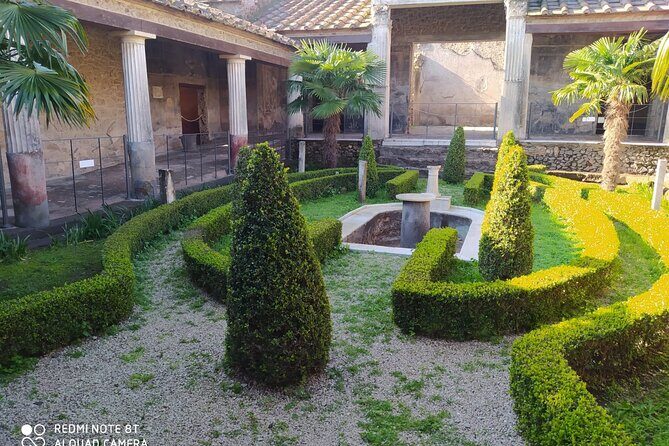
- You’ll move through baths, temples, forums, and domus so you get the whole city, not just one lane
- The focus is historiographical and cultural interpretation, including mystery cults and daily Hellenistic life
- Mobile ticket means less hassle day-of, as long as your phone battery survives Pompeii
Pompeii, explained like a living city, not a museum label
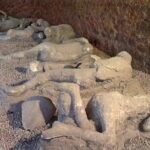
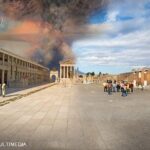
Pompeii is famous for being frozen in time. But that fact can also trap you in “things that happened here” mode. This tour tries to do the opposite: it helps you understand how people lived, worshiped, and gathered—before the eruption ended it all.
What makes it click is the framing. You’ll hear Pompeii described as Hellenistic first, not simply “Greek” or “Roman.” That matters because it explains the mix of influences you see in art and architecture. And it sets up the theme of cults and belief, especially the mystery traditions tied to Dionysus and Isis.
Also, you’ll feel the guide’s specialty in history and philosophy. The result is less name-dropping and more sense-making. In the best moments, you’re not just looking at stones—you’re building a mental map of how the city functioned.
Other walking tours of the Pompeii ruins

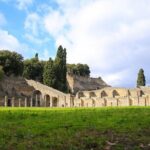

Start at Porta Marina, then follow the logic of the city

The tour meets at Porta Marina audioguide official, at Via Villa dei Misteri, 2, 80045 Pompei. The start time is 9:30 am, and the tour ends at the same address on Via Villa dei Misteri, 2.
Why that start matters: Pompeii gets crowded, and the best way to enjoy it is to keep your energy for the parts you’ll remember. This experience lasts about 4 hours 10 minutes, with a set rhythm at each stop (roughly 25 minutes). That structure helps you absorb each area instead of sprinting for the next one.
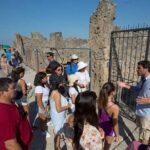
You’ll also appreciate the group size cap: up to 15 travelers per guide. It’s still a guided walk in a large archaeological park, but the smaller number makes it easier to hear explanations and ask quick questions when something doesn’t make sense.
Stop-by-stop: what you’ll see and what to watch for
Below is the route you’ll follow, with the practical “why it matters” at each stop. Think of it as a guided way to read Pompeii’s urban story.
Pompeii Archaeological Park: baths, beauty, and daily routines
You begin at Pompeii Archaeological Park, and the first emphasis is on the suburban spas. The frigidarium is the kind of place that reminds you baths weren’t only about hygiene. It was design, comfort, and status—complete with a frigid pool and decorative detail.
Two standout points to keep an eye on:
- The nymphaeum with glass-paste effects and glazed, polychrome tiles
- The swimming pool fresco with Nilotic subjects
Even if art isn’t your main interest, this stop helps you understand Pompeii as a real neighborhood city. People hung out, relaxed, and socialized in spaces like this long before the eruption made them silent.
Tempio di Venere: sailors, imperial ideas, and modern bronze sculpture
Next is Tempio di Venere, a spot tied to the imperial cult and Venus as goddess of sailors. The temple sits on a terrace that dominates the surrounding landscape, so you get a useful “big picture” view before moving back into the dense blocks of the city.
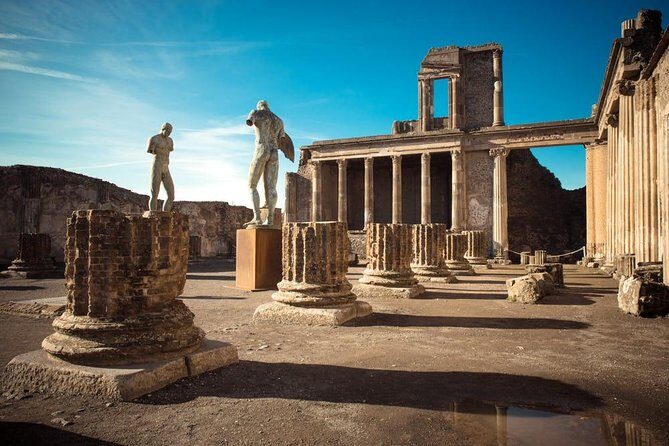
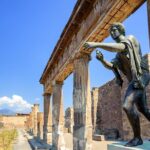
A detail you’ll want to notice is the impressive bronze statue depicting Daedalus by Igor Mitoraj. Even though it’s a later artistic presence, it frames the area in a way that helps you connect myth, power, and cultural storytelling—exactly the kinds of themes the tour keeps returning to.
Other guided tours in Pompeii



Basilica / Tribunal: a grand public building with lasting influence
Then you head to the Basilica of Pompeii, often described as the largest public building in the city. It’s a three-nave structure, and it’s notable for anticipating the architectural typology of the later Christian basilica.
Here’s what I’d watch for on the ground:
- The scale and rhythm of the interior space
- How public buildings acted like civic engines—where judgment, administration, and gatherings happened
If you’ve ever wondered why “government” buildings matter in history, Pompeii answers it quickly. These spaces were built to project order.
Temple of Apollo: Greek-style worship, with bronze power
The Temple of Apollo brings you into ethical and prophetic worship. The building is described as Greek in design, and the architectural and plastic configuration is meant to impress.
Two bronze statues dominate this stop: representations of Apollo and Diana. In a city defined by the beauty of houses and street life, temples like this show the other side—belief expressed through monumental art and carefully designed space.
If you like understanding how people connected religion to public life, this is one of the clearer “message spaces” on the route.
Foro di Pompeya (Forum): business, administration, religion
Now you step into the Forum of Pompeii—the city’s commercial, administrative, and religious center. This is where you get the sense of a working civic heart. The forum is dominated by the grand Temple of Jupiter, Juno, and Minerva.
Even if you don’t catch every architectural term, you can still read the logic:
- Commerce and governance are mixed together
- Religion isn’t separate from daily power
This stop is a reminder that Pompeii wasn’t a “theme park city.” It was a place where business moved, decisions were made, and community identity formed.
Terme del Foro: wellness and the art of thermal design
Next is Terme del Foro, a thermal complex you can think of as the ancient community SPA. The preservation here is part of the charm. You’ll move through the spaces like you’re walking through a well-maintained set—tepidarium and calidarium areas are highlighted.
Two details to look for:
- The tepidarium with stuccoes from the Neronian school
- The grand alabaster labrum in the calidarium, of Egyptian origin
That last detail is a quick reality check: Pompeii’s world was not closed. Materials and influences traveled, and the city’s connections were broader than local life alone.
Casa del Fauno: a major Hellenistic house with a famous battle mosaic
Then the tour shifts into domestic Pompeii—power and taste behind walls. Casa del Fauno is described as the largest house in all of Pompeii and a palace house from the Hellenistic era.
The star here is a mosaic: an excellent copy of the Battle of Issus (333 BC), depicting Alexander the Great against Darius III of Persia. Even if you don’t know the story, the point is clear. This is a home displaying big political memory through art.
This stop is one of the easiest to connect to your own brain. It feels like walking through an ancient statement piece: wealth, identity, and cultural alignment expressed through imagery.
Casa dei Vettii: fourth Pompeian style and the world of myths and desire
At Casa dei Vettii, you’ll focus on splendid frescoes of the fourth Pompeian style. This is where Pompeii’s decorative intensity becomes hard to ignore.
You’ll see highlights such as:
- Priapus, linked to the Neronian school
- A grand hall with Cupids engaged in activities
- Mythological paintings, including Daedalus and the Minotaur
This is also a good stop for families and teens because you get recognizable stories. The art isn’t just decoration—it’s a language of myth that visitors understood.
Casa degli Amorini Dorati: obsidian mirrors, Isis, and household worship
Next is Casa degli Amorini Dorati, a perfectly preserved domus with a Rhodian peristyle. Here’s what makes it special: it mixes showy visuals with spiritual space.
Key things to notice:
- Obsidian mirrors
- A shrine dedicated to the cult of Isis
- The Lararium, connected to protector gods of the house
- Frescoes tied to the Trojan War
This is one of the best stops for getting the “Pompeii was religious at every scale” feeling. Big temples are one layer. Household cult spaces are another. And the home reveals how belief sat next to daily life.
Villa dei Misteri: the Dionysian fresco that people talk about
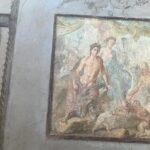
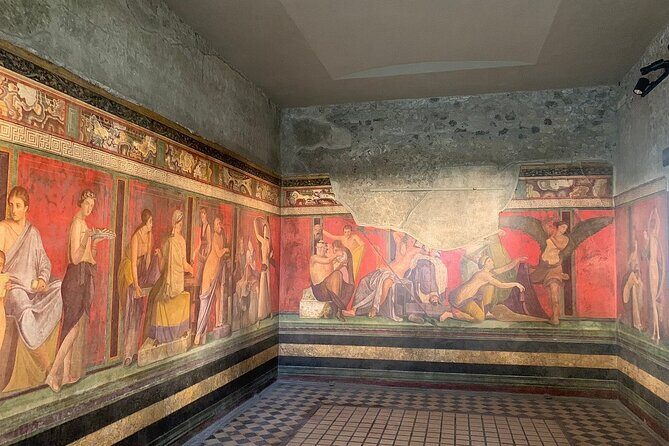
Finally, you reach Villa dei Misteri, famous for the Dionysian fresco from the first century BC. The information tied to this stop emphasizes its uniqueness and exceptional conservation, which is why it earns its reputation.
This isn’t just a pretty wall. It’s a peek into a mystery tradition, with images that would have made sense to insiders in that world. Even if you can’t interpret every figure on the spot, the guide’s cultural framing helps you see the fresco as part of a bigger spiritual system rather than random decoration.
If you’re making choices about what to prioritize in Pompeii, this is one you’d rather see on a guided visit than alone, because the explanation turns the scene from static to meaningful.
The bigger story you’ll leave with
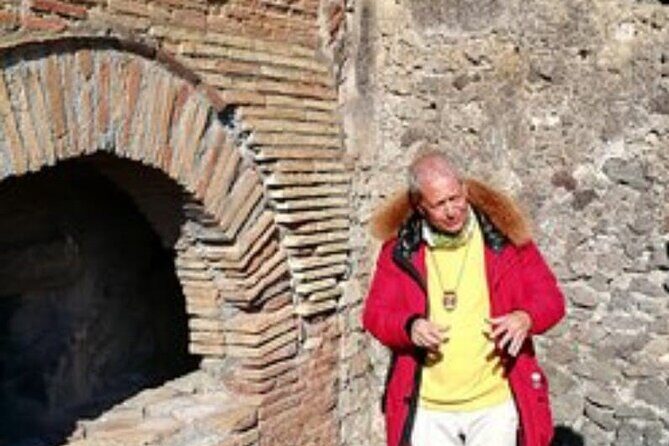
By the time you finish, Pompeii doesn’t feel like a single tragic moment. It feels like a whole city—organized, social, religious, and interconnected.
The tour’s approach also nudges you to think differently about why Pompeii survived as a cultural reference point. The framing you’ll hear treats the eruption as something connected to divine punishment—linked in the telling to the story of Sodom and Gomorrah. Even if you don’t treat that as literal theology, it shows how people made sense of catastrophe and moral meaning.
And the Hellenistic angle stays with you. Pompeii gets described as a major commercial and industrial center with relations reaching Asia Minor, India, and Persia. In other words, it wasn’t just a coastal Roman backwater. It was part of a connected Mediterranean world, long before that connection later turned into something more divided.
Price and value: what $57.62 buys you (and what it doesn’t)
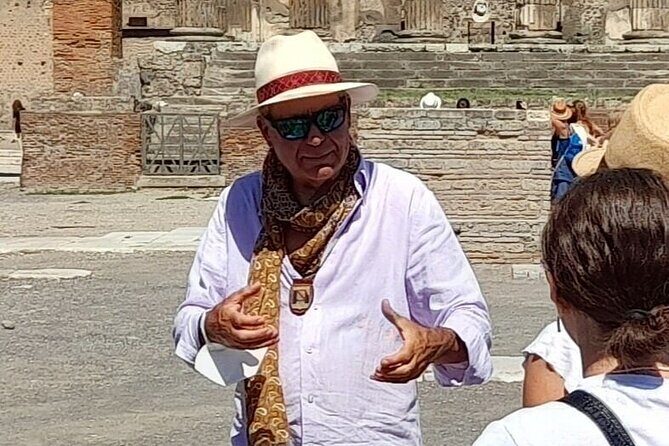
At $57.62 per person for about 4 hours 10 minutes, this is priced as an interpretation-focused guided experience. The value isn’t only the route. It’s the combination of a specialized guide and a small group size (max 15), plus real time at major sites instead of quick snapshots.
What you need to budget separately:
- Entrance ticket to the Pompeii Ruins is not included
- Snacks aren’t included
So your true cost is the tour price plus the site entry. Still, many people find that paying for the guide makes the visit easier to follow, especially when the emphasis is on culture, rituals, and how the city worked.
One practical note from real-world experience: it’s worth checking whether you’re paying any added middleman fees when you book. If a reseller adds a big surcharge, that can turn a fair price into a “why did I do that” moment.
Pace, comfort, and what to bring
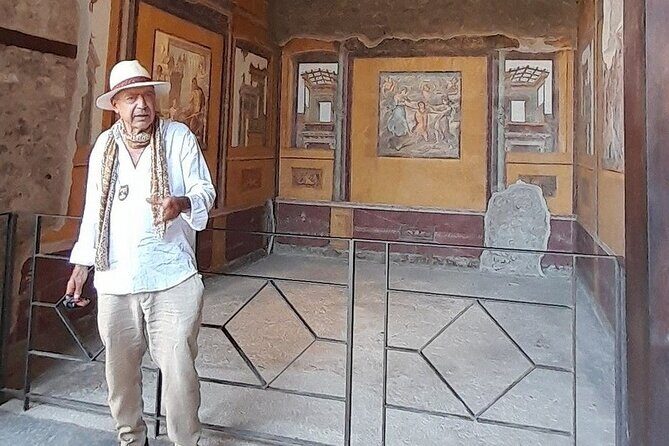
This is a walking tour through uneven, outdoor spaces. Plan for footwear that won’t hate you by the second hour. The schedule gives about 25 minutes per stop, which means you’ll move steadily and still have time for questions and photos.
Bring:
- Water (since snacks aren’t included)
- A light layer (morning sun can be sharp, even when you’re not expecting it)
- Your Ruins entrance ticket, since it’s not included
You’ll get a mobile ticket, which is great—if your phone doesn’t die. Pompeii power planning is real.
Good to know for your day: the tour allows service animals, and it’s listed as suitable for most travelers. It’s also near public transportation, which helps if you’re coordinating with other stops around Naples and the area.
Who should book this Pompeii tour?
This works best if you want Pompeii explained clearly, not just seen. You’ll probably enjoy it most if you:
- Like guided interpretation and want help connecting buildings, art, and belief
- Appreciate smaller groups (max 15)
- Want a tour that includes both temples and homes, including Villa dei Misteri
It’s also a decent pick for families and teens if you want the guide to make the city feel understandable. The style you’ll get is described as engaging, with a way of mixing ancient context and modern thinking.
If you prefer a totally self-guided visit with zero structure, you might feel constrained by the set stops and timing. But if you’re worried about missing meaning, this format is exactly the antidote.
Should you book?
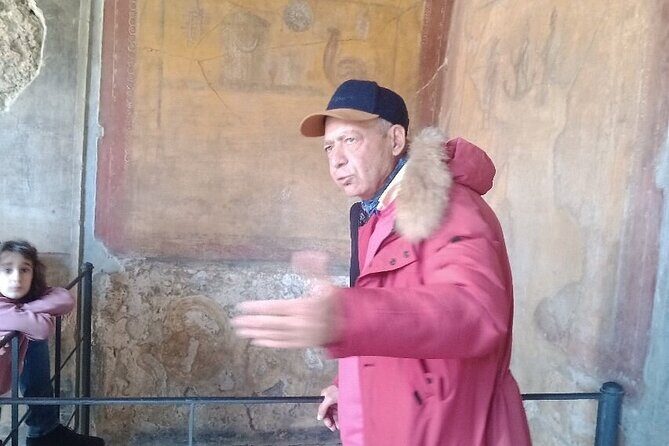
Yes, I’d book it if you’re prioritizing understanding Pompeii, not just checking boxes. The combination of Bruno Pisano, a small group, and the mix of spas, temples, forum spaces, and elite homes makes the city feel connected.
Book with one prep step: secure the Pompeii Ruins entrance ticket separately and come ready with water. Do that, and you’ll spend your time looking at what matters—while someone else does the heavy lifting of making sense of it all.
FAQ
FAQ
Is the entrance ticket to the Pompeii ruins included?
No. The tour price includes the guide and assistance, but the Pompeii Ruins entrance ticket is not included.
How long is the Pompeii guided tour?
It lasts about 4 hours and 10 minutes.
What time does the tour start?
The start time is 9:30 am.
Where does the tour meet and end?
Both the meeting point and the end point are at Porta Marina audioguide official, Via Villa dei Misteri, 2, 80045 Pompei NA, Italy.
How large is the group?
It’s a small group with a maximum of 15 travelers per guide.
Is there a mobile ticket?
Yes, the tour includes a mobile ticket.
How soon will I get confirmation after booking?
Confirmation is received within 48 hours of booking, subject to availability.
Are snacks included?
No, snacks are not included.
Are service animals allowed?
Yes, service animals are allowed.
Can I cancel for a full refund?
You can cancel up to 24 hours in advance for a full refund. If you cancel less than 24 hours before the start time, the amount paid is not refunded.