REVIEW · POMPEII
Exclusive Pompeii with Wine and Lunch on Vesuvius-Skip-the-line
Book on Viator →Operated by Leisure Italy · Bookable on Viator
Pompeii without the stress? Pompeii feels easier with the right plan. This tour pairs skip-the-line entry with a private guide, so you spend your energy looking closely instead of waiting in lines. I especially liked how the guide organizes the site so it makes sense fast, and how the day stays smooth thanks to round-trip pickup and stress-free logistics.
At $575.35 per person, this is a splurge. The price only starts feeling truly fair once you factor in private guiding, admissions, transportation, and the wine-and-lunch stop on Vesuvius slopes.
In This Review
- Key highlights
- Skip-the-line Pompeii plus Vesuvius views
- Pickup and timing: the part you usually regret doing yourself
- Stop 1: Archaeological Park highlights that actually teach you how Pompeii lived
- Porta Marina: the city’s “front door” and its defensive mindset
- Forum and early religious sites: where civic life and worship met
- Macellum and bath-house rooms: food supply and daily social life
- Casa dei Vettii and Insula dei Casti Amanti: art, status, and neighborhood life
- Teatro Grande and Antiquarium: entertainment and the emotional context
- Premium Plus: add Villa dei Misteri for extra Pompeii time
- Wine and lunch on Vesuvius slopes at Cantina del Vesuvio
- How to pace yourself for 5–7 hours of ruins and wine
- Price and value: what you’re really paying for
- Should you book Exclusive Pompeii with Wine and Lunch on Vesuvius?
- FAQ
- FAQ
- How long does the Pompeii with wine and lunch tour take?
- Is pickup from hotels and ports included?
- Does this tour include skip-the-line tickets for Pompeii?
- Is admission to Pompeii included?
- How long do you spend with the private guide inside Pompeii?
- Does the tour include a climb to Mount Vesuvius?
- What’s included at the winery?
- Are dietary restrictions handled for lunch?
- Is the Villa of the Mysteries included on every option?
- Is the tour private?
Key highlights
- Skip-the-line access so you get into Pompeii faster
- Private certified guide to connect ruins to daily Roman life
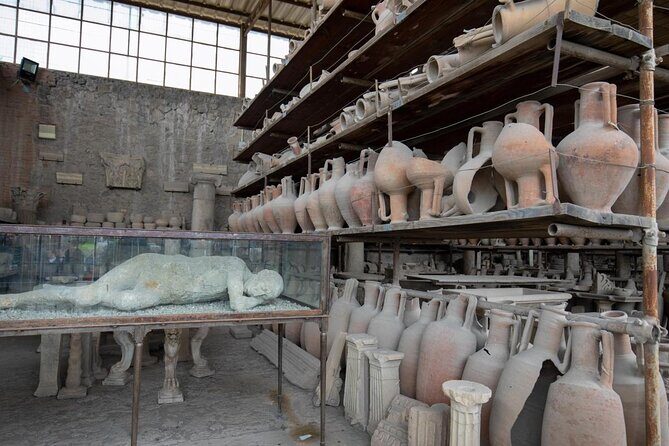
- Forum, villas, baths, theater, and the victims’ casts in one structured route
- Short stop at Porta Marina for a clear sense of how the city controlled entry
- Cantina del Vesuvio wine tasting plus a full 3-course lunch
- Optional Premium Plus with extra time and the Villa of the Mysteries
Skip-the-line Pompeii plus Vesuvius views
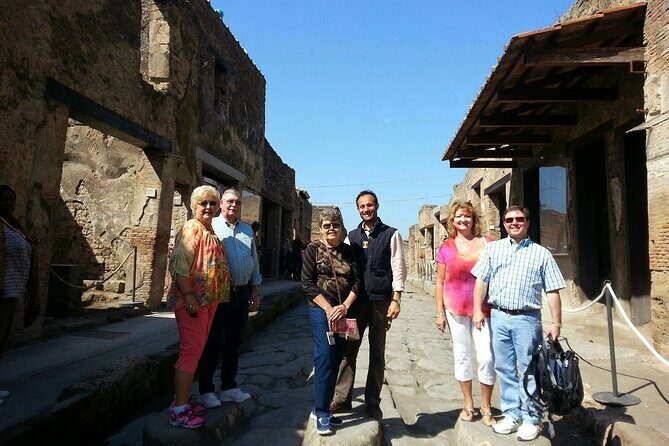
Pompeii is big. Even when you’re excited, the scale can make you feel like you’re sprinting from one postcard to the next. What I like here is the built-in order: you arrive, you’re guided, and you hit the places that help you understand how the city worked. Then, instead of ending the day with just tired legs, you finish with wine tasting and lunch on Vesuvius slopes, with those unmistakable volcano views over the Bay of Naples.
This isn’t the kind of tour that throws you loose in a maze. You’re given a route with stops that cover civic buildings, religious spaces, neighborhoods, and elite homes. That matters because Pompeii rewards pattern-spotting. When you see the Forum after Porta Marina, or the theater after the daily-life details, the whole city clicks into place.
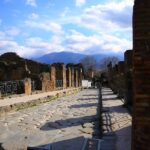
And yes, there’s no mistaking where you are: even without a Vesuvius climb, the volcano sits there all day like a dark punctuation mark.
Other skip-the-line Pompeii tours in Pompeii


Pickup and timing: the part you usually regret doing yourself
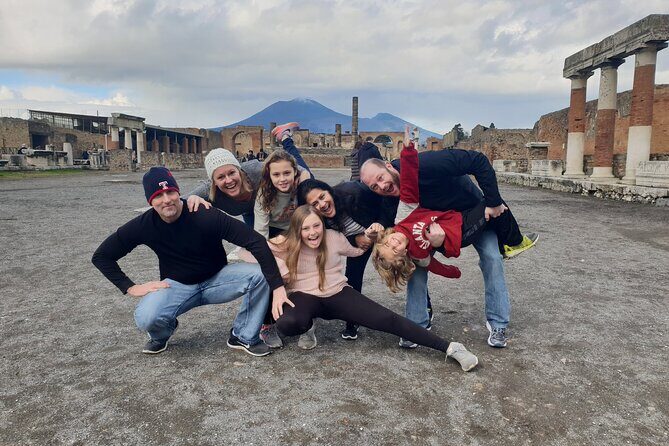
The main practical win is round-trip transportation. You can be picked up from Naples, Sorrento, Pompeii, and more (including train stations, airports, and cruise ports). That means no rental car math, no parking stress, and no guessing how long the trip will take on a busy day.
On top of that, you get mobile tickets and skip-the-line access. Those two things sound small, but at Pompeii they add up to real time. Instead of burning your morning at ticket gates, you’re inside with a guide who can start building context immediately.
One small tip: where you’ll board and drop off can affect your day length. If you’re coming from farther out (like some parts of the Naples area), you’ll want to assume a fuller travel window, not just the time “in Pompeii.”
Stop 1: Archaeological Park highlights that actually teach you how Pompeii lived
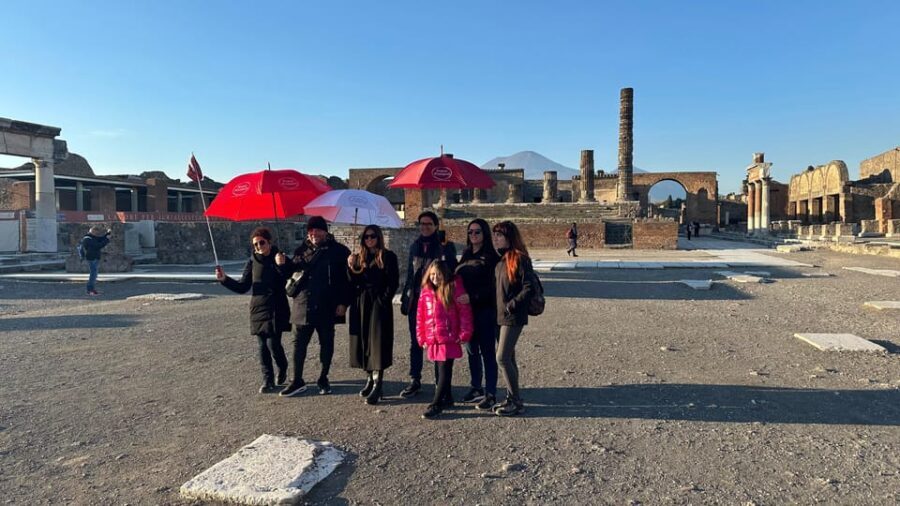
Your guided time begins at the Archaeological Park of Pompeii with a private, certified guide. The tour-style is important: you’ll get a guided walk through major highlights at a pace that’s meant to be manageable, with the chance to move at your own speed. There’s also room to request special needs or interests.
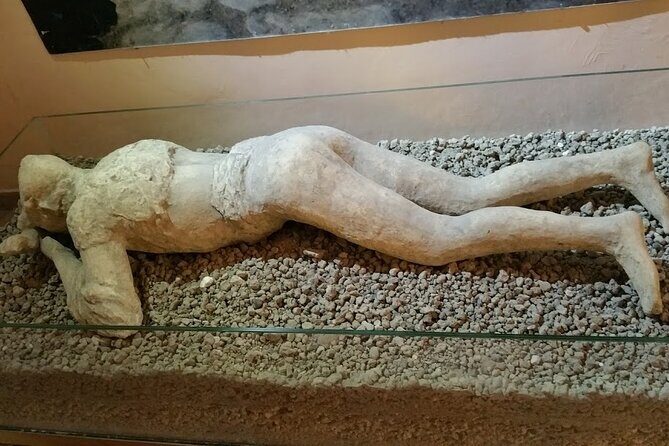
You’ll spend about 2 hours here and see big-name anchors like the Forum, plaster casts of victims, private homes, shops, Bath-House areas, and the theater zone. You also get to look at floor mosaics and wall paintings—those details are where Pompeii stops being just ruins and starts feeling like lived-in space. The guide connects the dots to Roman daily life and explains what the eruption of Mount Vesuvius did to the city, with ash and pumice rock that buried Pompeii.
Why this stop works: Pompeii is “readable” only when someone gives you a guide to what you’re seeing. Without that, it can feel like a long series of rooms and arches. With guidance, you understand why the Forum is where politics and commerce meet, why baths mattered socially, and why home decoration wasn’t just decoration.
Possible drawback at this stage: it’s a lot of ground. Wear shoes you trust.
Porta Marina: the city’s “front door” and its defensive mindset
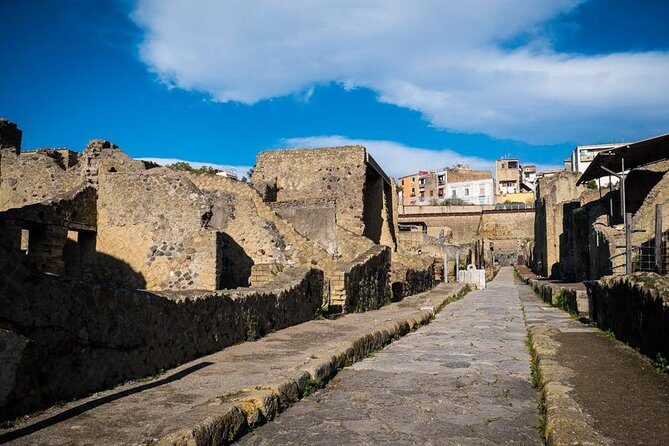
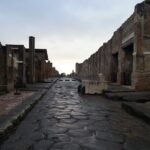
Then you continue with a quick but meaningful stop at Porta Marina e cinta muraria. Porta Marina was one of Pompeii’s key gates, near the port area. You’ll understand how visitors and merchants entered, and you’ll see how it connects to the defensive walls.
This is short—about 5 minutes—but it sets the tone. Pompeii isn’t only about tragedy and art. It was also a working city with controlled access. The chance to walk along an original stone ramp and see fortifications helps you picture how people actually moved through the city and where they would have arrived by sea.
If you like urban design or how cities functioned, this is the kind of stop that gives you “aha” context fast.
Forum and early religious sites: where civic life and worship met
From there, you shift into the core civic zone with several iconic buildings in a tight loop.
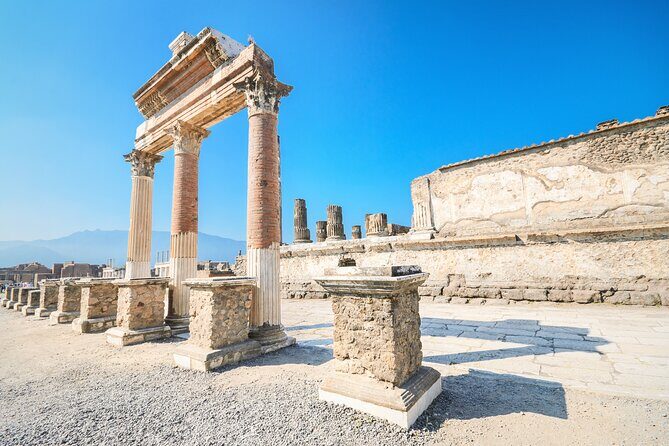
You’ll pass the Basilica, the imposing public building in the Forum’s southwestern corner, dating to the 2nd century BC. It’s one of the oldest examples of its kind in the Roman world, so even a quick look tells you Pompeii had serious institutional power.
Next is the Temple of Apollo. It’s tied to Apollo as god of sun, music, and prophecy, with offerings and guidance at the heart of its spiritual role. You’ll also see how the temple sits in a courtyard-like setting near the Forum area, where religion and public life were close neighbors.
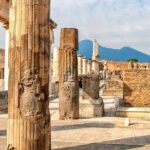
Then you reach the Forum of Pompeii itself. Here you get a higher-perspective understanding through modern walkways and terraces surrounding the square. You’ll see the spatial arrangement of temples, administrative buildings, and market structures—plus how the ruins of the Capitolium, Basilica, and Macellum fit together as one civic stage.
What you should watch for: look for lines of sight. The Forum is easier to understand when you can see how the buildings frame space.
Other Mount Vesuvius tours in Pompeii




Macellum and bath-house rooms: food supply and daily social life
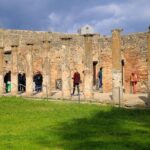
After the Forum focus, the tour turns practical in the best way. You’ll visit the Macellum, Pompeii’s main food market: a covered complex where vendors sold fish, meat, fruit, and imported goods. Even at a quick stop, the layout tells a story. There are stalls, storerooms, and a central shrine that show how Roman commerce was organized around both trade and ritual.
Then you’ll move to Terme del Foro, the Forum Baths. Pompeian baths weren’t only about hygiene. They were social spaces—warm and hot bathing halls, cold plunge options, and an advanced hypocaust heating system. You’ll also get to look at preserved stucco reliefs and vaulted ceilings, which helps you understand the refined atmosphere of daily bathing.
A friendly reality check: bath areas are easier to enjoy when you’re not rushing. If heat is a factor, take a minute in the shade when you can and use the guide to point out what’s most worth your time.
Casa dei Vettii and Insula dei Casti Amanti: art, status, and neighborhood life
Now the tour shifts from public spaces to private ones.
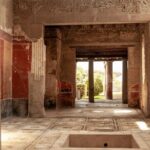
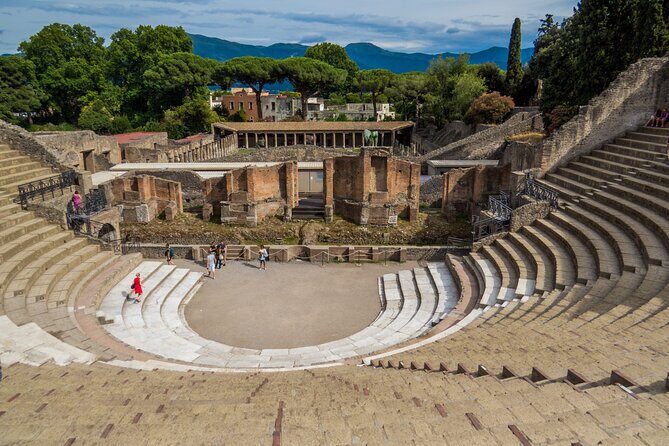
The Casa dei Vettii is a highlight for good reason. It’s an aristocratic residence known for richly decorated frescoes and a layout built around atria and peristyle gardens. You’ll see mythological paintings and refined domestic spaces that reflect the lifestyle and aspirations of wealthy merchant owners in the 1st century AD. This is where Pompeii’s art turns from background detail into personal expression.
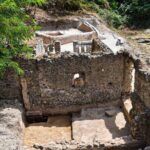
Next is the Insula dei Casti Amanti, a block named after a lovers’ fresco. This one is especially useful because it’s an example of how Pompeii mixed residential and workshop life. Visitors access the area via elevated ramps that give you a panoramic view into workshops and rooms below, letting you picture craftsmen at work without disturbing fragile surfaces. It’s a snapshot of a city caught mid-routine when AD 79 changed everything.
If you’re trying to imagine daily life, these two stops do the heavy lifting: one shows wealth and taste, the other shows ordinary people moving between work and home.
Teatro Grande and Antiquarium: entertainment and the emotional context
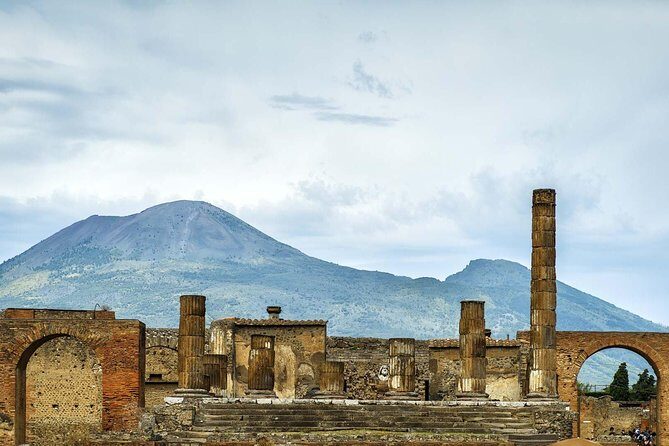
You’ll also visit the Teatro Grande, Pompeii’s big theater venue. Standing or viewing from the upper terraces, you can see the semicircular seating tiers, the stage area, and the orchestra space. The theater’s acoustics and its views toward the city and Mount Vesuvius are key to why performances drew crowds. It’s one of those places where you can almost reconstruct the energy of an evening out—minus the noise, of course.
Then there’s the Antiquarium di Pompei, which functions like a powerful preface and a strong emotional ending. It’s organized galleries with statues, household objects, inscriptions, jewelry, and other excavation finds you couldn’t see in the open air. The final rooms bring you plaster casts of victims and dramatic eruption material—so when you step back outside, Pompeii’s ruins feel less abstract.
If you want to understand both beauty and tragedy in the same day, this pairing is extremely effective.
Premium Plus: add Villa dei Misteri for extra Pompeii time
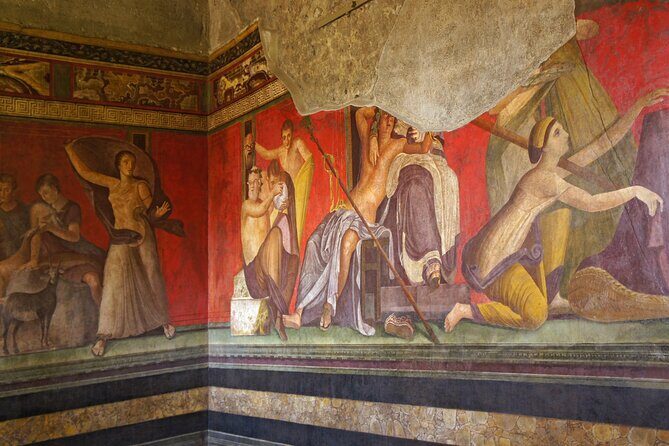
If you choose the Premium Plus option, you get access to the Villa of the Mysteries (Villa dei Misteri). This is outside the ancient city walls and is famous for remarkably well-preserved frescoes depicting a mysterious Dionysian ritual.
Premium Plus also includes an extended 3-hour private guided tour of Pompeii, which is the real reason to consider the upgrade. You’ll have more room to slow down, ask questions, and revisit details without the pressure of a tight schedule.
If you’re the type who could spend an extra hour staring at frescoes and floor mosaics, Premium Plus will feel less like an upgrade and more like the version you wish you booked.
Wine and lunch on Vesuvius slopes at Cantina del Vesuvio
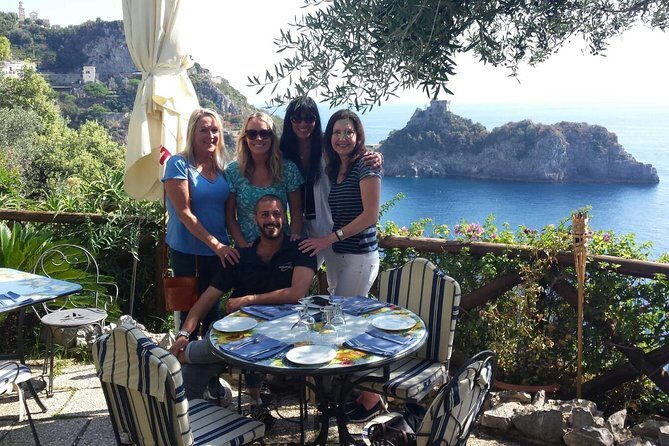
The day closes with a totally different vibe: Cantina del Vesuvio, a family-run winery on the slopes of Mount Vesuvius (Russo Family since 1930). The tour includes vineyard and cellar guidance, plus tasting 5 wines (classic or superior options).
And then you eat. You’ll enjoy a 3-course lunch with traditional local ingredients. The menu includes:
- Appetizer: salami, cheeses (provolone and ricotta), casatiello, roasted eggplant, and bruschetta with Piennolo tomatoes
- Pasta: Piennolo cherry tomatoes and basil
- Dessert: Neapolitan Pastiera with ricotta, cooked wheat, and candied fruit
Vegetarian, vegan, and gluten-free options are available, so you’re not stuck with a sad compromise plate.
Important: this part includes stunning views of Vesuvius, but it does not involve a climb. You still get that “this volcano matters” perspective, just without turning the day into a hiking mission.
This stop is great value because it’s not a quick pour-and-go. It’s a proper guided winery experience plus a real meal.
How to pace yourself for 5–7 hours of ruins and wine
The overall tour time is about 5 to 7 hours, depending on pickup location and how long you spend at each stop. The pace is designed to be manageable, but Pompeii is still Pompeii: there’s walking, uneven surfaces, and lots of stopping.
A few practical notes:
- You should have moderate physical fitness.
- Wear appropriate shoes. Bring something sturdy and grippy.
- From May to September, plan for sun exposure and bring sun gear.
- Use your private guide to adjust when needed. The tour is private, so you’re not trapped in a one-size-fits-all rhythm.
If you have mobility needs, I’ve seen this handled thoughtfully with guides who actively work around what’s possible for you—so it’s worth mentioning your situation when booking.
Price and value: what you’re really paying for
At $575.35 per person, you’re paying for more than entry tickets.
Here’s what’s included that changes the math:
- Skip-the-line tickets and admissions covered
- A private certified guide with a structured route through Pompeii’s key areas
- Round-trip transportation from multiple start points (hotels, stations, and cruise terminals)
- A full winery program: vineyard/cellar tour, 5-wine tasting, and a 3-course lunch with local dishes
That combination is why this can feel like value, even though it’s not budget travel. You’re buying back time (skip the line), buying clarity (private guide), and buying a satisfying ending (wine + lunch with views).
If you’re someone who hates waiting and gets overwhelmed by big sites, this will feel worth it fast. If you’re purely price-driven and don’t care about guidance, you could do Pompeii independently—but you’ll likely lose the smoothness that makes this day work.
Should you book Exclusive Pompeii with Wine and Lunch on Vesuvius?
Book it if you want a day that feels organized: skip the worst delays, walk with a guide who helps you connect buildings to real Roman life, and end with a winery lunch that actually uses the region’s flavors.
I’d also choose this tour if you’re the kind of person who enjoys specific stops—Forum, baths, villas, theater—because the route is built to give you a full picture rather than scattered highlights.
Skip it (or consider a simpler option) if you’re looking for the cheapest way to see Pompeii, or if you’d rather spend your time completely unstructured with a map and no guiding.
FAQ
FAQ
How long does the Pompeii with wine and lunch tour take?
The tour runs about 5 to 7 hours.
Is pickup from hotels and ports included?
Pickup is offered from hotels and other locations, including Naples, Sorrento, Pompeii, train stations, airports, and cruise terminals/ports.
Does this tour include skip-the-line tickets for Pompeii?
Yes. It includes skip-the-line access.
Is admission to Pompeii included?
Yes. Admission tickets are included for the Pompeii stops and the Antiquarium.
How long do you spend with the private guide inside Pompeii?
The first guided visit in Pompeii is about 2 hours, with additional short guided stops for specific sites.
Does the tour include a climb to Mount Vesuvius?
No. The experience includes views of Vesuvius, but it does not include a climb.
What’s included at the winery?
You get a guided tour of the vineyard and cellar, a tasting of 5 wines, and a 3-course lunch.
Are dietary restrictions handled for lunch?
Yes. Vegetarian, vegan, and gluten-free options are available.
Is the Villa of the Mysteries included on every option?
No. It’s available only with the Premium Plus option.
Is the tour private?
Yes. It’s a private activity, and only your group participates.