
REVIEW · POMPEII
Pompeii: Skip the line ticket (art) + audioguide + map
Book on Viator →Operated by Pompei Tour Organizer_Tempio Travel · Bookable on Viator
Pompeii gets real fast. This package combines pre-booked admission with an audioguide device (plus a map), so you can move at your own speed through houses, temples, theatres, and streets. The big win is that the guidance is set up to be followed on-site, including explanations you reach by using numbers on the device.
My favorite part is the flexibility: you can linger where you care and skip what you don’t. I also like that the access is tied to a specific entrance, Porta Marina Inferiore, which can help you avoid the most chaotic entry crush. The main drawback to plan around is that the “skip the line” experience can still involve paperwork or walking if you end up at the wrong pick-up point or entrance.
In This Review
- Key things to know before you go
- Pompeii in 2 to 4 hours: what self-paced audio really buys you
- Price and ticket value: where $44.31 makes sense (and when it doesn’t)
- Entering Pompeii the right way: Porta Marina Inferiore and the “skip” reality
- The audioguide device: numbered stops, ID deposit, and headphone strategy
- Your Pompeii walkthrough: houses, temples, theatres, and ash that preserved everything
- Time savers that actually help: arrival buffers, weather, and transport choices
- Who should book this audio + ticket package
- Should you book this tour? My practical take
- FAQ
- How long does the Pompeii skip-the-line ticket plus audioguide take?
- What language is the audioguide available in?
- What’s included in the ticket package?
- Are headphones included?
- Do I need to bring an ID?
- Which entrance should I use?
- Is food or hotel pickup included?
- Is there free cancellation?
Key things to know before you go
- Dedicated entrance at Porta Marina Inferiore (Piazza Esedra): follow this or you may lose time.
- Audioguide via numbered prompts: you don’t need an internet connection, but the device can feel a bit tricky at first.
- ID deposit for the device: bring a valid ID because they hold it as a deposit and return it when you’re done.
- Headphones not included: the phone-style device can be used hands-free or with standard jack headphones (bring your own).
- Limited shade: plan for sun and bring water, especially in hot months.
Pompeii in 2 to 4 hours: what self-paced audio really buys you
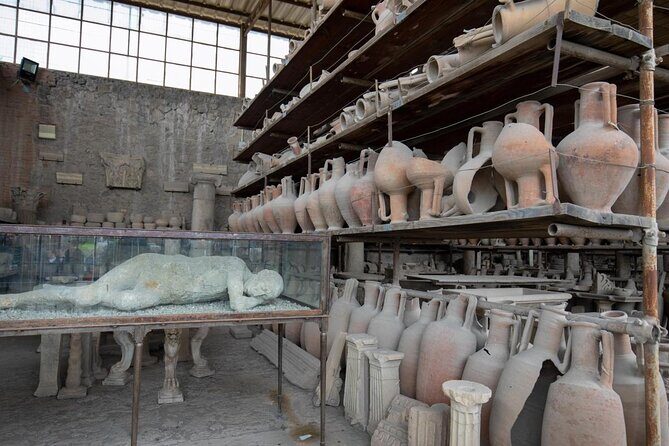
This experience is built for a practical reality: Pompeii is big, uneven, and easy to wander through without direction. Instead of joining a fixed group tour, you get an audioguide and map and you set your own rhythm. That matters because a site like Pompeii rewards “stop-and-stare” curiosity. The volcanic ash that covered the city is what preserved it for centuries, and the best moments often happen when you slow down long enough to notice doorways, floor patterns, and the layout of daily life.
In about 2 to 4 hours, you can cover enough highlights to understand the city without needing to rush. On a self-guided format, I think that sweet spot is: move quickly between areas, then slow down once you’re in the zone you’re most curious about (for many people, that’s the streets and home areas).
One thing to keep in mind: with audio tours, your enjoyment depends on how quickly you get comfortable using the device. Some people find the interface a little confusing until they figure out the number-to-location flow. If you’re the type who likes to “get started and figure it out as you go,” you’ll likely be fine. If you prefer everything to feel effortless from minute one, plan a few extra moments at the beginning to get your audio running.
Other skip-the-line Pompeii tours in Pompeii



Price and ticket value: where $44.31 makes sense (and when it doesn’t)
At $44.31 per person, you’re paying for a bundled package: express entry using an artecard, plus the audioguide device and a map. For Pompeii, that bundle can be good value because the audioguide isn’t free, and the priority access is supposed to reduce stress at the gate.
That said, Pompeii is one of those places where pricing can feel weird depending on timing:
- If you show up when lines are light, you might pay less buying audio and entry on the spot.
- If you arrive during peak hours, when you’re tired from travel and sun, paying more can be worth it just to reduce uncertainty and time spent standing around.
The reviews around value show a pattern: the people who felt disappointed were often the ones who spent time dealing with vouchers, exchanges, or lining up anyway. The people who felt it was worth it usually did two things right: they arrived with enough buffer time and they followed the instructions for the correct entrance path.
So here’s my practical way to judge the price before you book: if you’re visiting in high season, you have limited hours, or you strongly want audio guidance rather than winging it, this bundled price can feel fair. If you’re going in a quieter period and you’re flexible, you might compare it to same-day entry and audio and decide based on your tolerance for queues.
Entering Pompeii the right way: Porta Marina Inferiore and the “skip” reality

The package includes dedicated access from Porta Marina Inferiore in Piazza Esedra. That detail is not small. It’s the difference between a smoother entry and a long detour.
Here’s what I’d tell you to do:
- When you arrive, orient yourself first around Piazza Esedra and the Porta Marina Inferiore entrance.
- Don’t assume any barcode or voucher alone will get you through the general gate setup.
- Build in extra time for the first 30–60 minutes, because even when the goal is skip-the-line, you may still need to exchange a voucher or be directed to the correct pickup/entry points.
A recurring theme in feedback is that some people end up at the right station office area for pickup, then still have to walk down to a separate entrance, and then still deal with lines—just not always the same line they expected. In other words, “skip the line” can be more like “skip the worst chaos” rather than “walk past everyone instantly.”
Also watch for confusing signage or unclear directions. A lot of the frustration comes from not knowing where the dedicated queue starts, or from being told to go to an office area near the station first. If you’re visiting with limited time (cruise schedules, tight transport plans, or a strict pickup window), this is where you need the most patience and buffer.
The audioguide device: numbered stops, ID deposit, and headphone strategy
This is an audioguide-first experience. You get a device plus a map, and the audio explanations are designed to be accessed by using numbers on the device. That’s helpful because it connects what you hear to what you’re looking at—so you’re not stuck guessing which stop you’re at.
A few practical realities:
- Headphones are not included. The device can be used hands-free or with standard jack headphones, so if you prefer privacy (or if you’re traveling with kids), bring your own headphones.
- You’ll need an ID deposit. They require a valid ID to hold as a deposit and return it when you give the device back. I’d treat this like a must-do: bring the document you brought to booking (or whatever your operator requests at pickup) so you don’t get stuck.
- Language should be English, but double-check. The offering is listed as English, yet some visitors reported maps and guidance showing up in Italian. When you pick up your device, spend a minute checking that the content is set how you expect.
People also mention that the audio guide is phone-style and may require holding it near your ear unless you use headphones. If that would annoy you, plan for hands-free use or pack earbuds.
My best advice for making the audio feel easy:
- Start the device right away at the beginning, not after you’ve walked a few hundred meters.
- Use the number prompts instead of trying to guess locations by memory.
- If GPS/map elements are included on the device for navigation, use them mainly as orientation, not as your only way to follow the numbered audio track.
Your Pompeii walkthrough: houses, temples, theatres, and ash that preserved everything
Your main stop is the Archaeological Park of Pompeii. Even though this is a self-guided tour, the experience is structured around the highlights you’d want for a first pass: houses, temples, theatres, and streets.
What makes Pompeii special isn’t just that it exists. It’s how it exists. The volcanic ash preserved buildings and details for millennia, so you’re not looking at a pile of ruins. You’re walking through a city that still has clear street lines and recognizable spaces for public life and private life.
Here’s what that means for you as you walk:
- Houses help you picture daily life. You can often see how rooms were arranged and how spaces connected.
- Temples and public areas help you understand the city’s rhythms. Even without a guide in your ear, audio cues can point out what you’re actually looking at.
- Theatre spaces give you a sense of social energy. When you hear what these places were for, the geometry starts to make sense.
- Streets tie it all together. The audio often brings you back to the logic of movement: where people likely walked and gathered.
If you want one “strategy” for success, use your audioguide to keep your eyes busy. Pompeii can otherwise feel like a long list of walls and columns. With audio, you can focus on the stories and functions behind each area, and the site becomes easier to retain.
One more practical note: shade is limited. Wear a hat, bring water, and plan breaks. Even if it’s not summer hot, the walking surfaces can tire you, and audio encourages you to pause—so don’t try to speed-run it.
Other Pompeii entry tickets and audio guide options





Time savers that actually help: arrival buffers, weather, and transport choices
This tour works best when you respect timing. The experience averages about 2 to 4 hours, and you’ll likely spend some of that time getting oriented at the start. People who saved the most time typically arrived early rather than at the last second.
A few helpful timing and comfort tips:
- Arrive earlier than your entry time. Some visitors recommend getting there around 08:45 for a 09:30 entry when possible. Even if that exact time doesn’t match your ticket, the principle does: earlier often means fewer crowds and less heat.
- Bring water and a hat. There’s very little shade, and you’ll be standing still at points to listen.
- Rain isn’t a problem for the concept. One positive note is that rainy conditions still felt enjoyable because the audioguide structure helped people stay engaged and move at their own pace.
- Use public transportation if you’re staying nearby. The experience is described as near public transport, and the ticket pickup process is often centered around the station area.
If you’re driving, the package notes free parking may be available (not gated) from 01/04 at Osteria Nonna Cherubina, Via Andolfi 46, if available. That’s a nice bonus if you’re already set up for a car day.
Who should book this audio + ticket package
This is a strong fit if:
- You want self-paced visiting instead of a strict group schedule.
- You like learning in small chunks while you walk.
- You can handle some basic “meet up, pick up, follow entrance instructions” logistics without needing everything perfectly signposted.
- Your group prefers flexibility and not being stuck waiting for others.
It can also work well for families or mixed ages because you can slow down in spots. But if you’re traveling with very tight timelines, I’d be more cautious. The ticketing process can involve voucher exchanges and extra walking, and that eats time when you’re already stressed.
The experience is private in the sense that it’s only your group—not a big mixed crowd joining you midstream. That can make the start feel calmer, especially when you’re trying to get the device running and understand where your entrance line begins.
Should you book this tour? My practical take
If your top goal is a calmer Pompeii visit with audio guidance, this package is worth considering. The combination of pre-arranged entry with an audioguide device using numbered prompts is a good match for first-timers who want meaning without being locked into a guide’s speaking pace. And on the right day, the dedicated entrance approach can genuinely reduce the worst bottlenecks.
I’d only skip or rethink it if:
- You hate voucher/exchange steps and you want zero walking between pickup and gate.
- You have a hard deadline where losing even 30–60 minutes would ruin your day.
- You strongly prefer a live guide to handle confusion on the spot.
My “best-case scenario” advice: book it, but arrive early, follow the Porta Marina Inferiore instructions, and plan for a little setup time with the audioguide. Do that, and you’ll spend your limited hours in Pompeii seeing real details instead of hunting for the right entrance.
FAQ
How long does the Pompeii skip-the-line ticket plus audioguide take?
Plan on about 2 to 4 hours at Pompeii.
What language is the audioguide available in?
The experience is offered in English.
What’s included in the ticket package?
You get an Archaeological Park entry express ticket (artecard), dedicated access from Porta Marina Inferiore in Piazza Esedra, an audioguide device, an informative map, and multilingual assistance at the office. Free parking may be available from 01/04 at Osteria Nonna Cherubina, if available.
Are headphones included?
No. Headphones are not included. The device can be used hands-free or with standard jack headphones (not included).
Do I need to bring an ID?
Yes. A valid ID is required as a deposit and is returned when you hand the audioguide back.
Which entrance should I use?
Use the entrance at Porta Marina Inferiore in Piazza Esedra.
Is food or hotel pickup included?
No. Food and hotel pickup are not included.
Is there free cancellation?
Yes. You can cancel up to 24 hours in advance for a full refund.