REVIEW · POMPEII
Visit Pompeii with an expert professional guide (2/3 hours)
Book on Viator →Operated by AmalfiTourCampania · Bookable on Viator
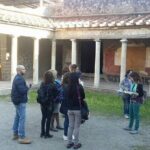
Pompeii gets real fast with a good guide. You’ll walk through streets, public buildings, and everyday places tied to the 79 A.D. eruption, with an expert professional leading the story and pointing out what to notice. The tour also throws in a quick taste and small-shop stop, so it feels less like a museum lecture and more like a day out in Campania.
I especially like the expert guide time—about 2.5 hours on the site—because it keeps the ruins from feeling like random piles of stone. I also like the skip-the-line help, which means you’re not stuck hunting for the right window while everyone else forms a line.
One possible drawback: the tour includes help with entry logistics, but the archaeological-site admission ticket is not included. If you’re the type who wants lots of free-roam wandering, or if you prefer a faster pace, you’ll want to plan for a structured route.
In This Review
- Key points at a glance
- Why a guided Pompeii day is worth it
- Meeting at Via Villa dei Misteri: a practical start
- Stop 1: Pompeii’s Forum and the eruption story in layers
- The Forum: where Roman life concentrates
- Baths, basilica, and everyday services
- Casts: moving from ruins to people
- Pacing and time control: how to avoid slow spots
- Skip-the-line support: what it means for your day
- Earphones if you’re in a larger group
- Stop 2: limoncello tasting and Pompeii crafts in 30 minutes
- Price check: what $106.65 per person buys you
- Who this Pompeii tour is best for (and who should skip it)
- A quick note on guides and communication
- Should you book this Pompeii guided experience?
- FAQ
- How long is the Pompeii guided tour?
- What is the price per person?
- Is the Pompeii admission ticket included?
- What does skip the line mean here?
- Are earphones provided, and are they required?
- Where does the tour start and end?
- What language is the tour offered in?
Key points at a glance
- 2.5 hours on Pompeii’s main areas with a guide who can adjust focus to your pace
- Skip-the-line support so you spend less time at ticket counters in busy periods
- Forum + public spaces like thermal baths, markets, and major public buildings
- CASTS and street-level details that make the eruption story easier to grasp
- About 30 minutes for limoncello tasting and Pompeii crafts like sandals and cameos
- Private group format (just your group) with English service
Why a guided Pompeii day is worth it
Pompeii is famous for a reason: it’s one of the rare places where you can walk through a real Roman town layout. But that same upside can become a downside if you show up with only a map. The ruins are big, the streets repeat, and it’s easy to miss what the city was doing day to day.
This kind of guided setup helps you connect the dots quickly. The tour isn’t trying to cover everything everywhere at once. Instead, it aims to give you the core of what makes Pompeii feel like a lived-in place: public life in the Forum, daily routines in neighborhood spaces, and the physical remains that tie back to the eruption in 79 A.D.
I also like that this tour is flexible. Your guide can organize the walk around what you want to see most given your time already set. That matters in Pompeii, where “two hours” can feel short the moment you realize how much there is to look at.
Other guided tours in Pompeii

Meeting at Via Villa dei Misteri: a practical start
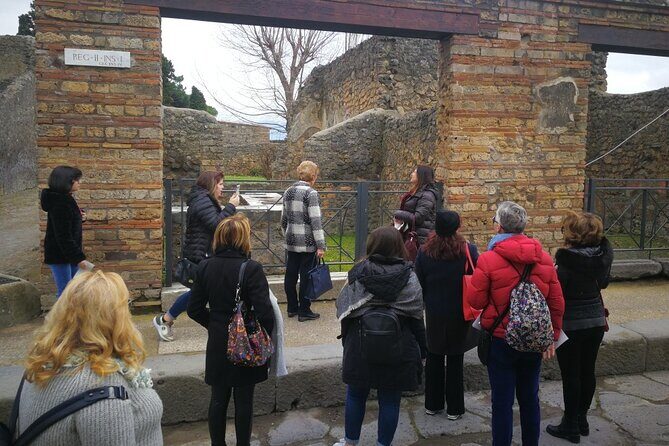
The tour meets at Via Villa dei Misteri, 80045 Pompei (NA), Italy, and ends back at the same meeting point. That round-trip structure is underrated. In Pompeii, you’ll spend enough energy navigating paths and crowds, so having a clear start and finish keeps the day from turning into a scavenger hunt.
The tour is designed for most travelers, but do keep the footwear in mind. Closed, comfortable shoes are a must because the ground can be uneven. Also, Pompeii involves lots of outdoor walking, so plan casual clothes that you can move in.
And since the tour runs in English, you’ll get the story without needing to play translation bingo.
Stop 1: Pompeii’s Forum and the eruption story in layers
The heart of the experience is about 2.5 hours at the Archaeological Park of Pompeii with your professional guide. This is where the tour earns its value.
Your route focuses on the parts of Pompeii that explain both public life and the eruption’s impact:
- The Forum (with public buildings and markets)
- A look at basilica spaces and other major public areas
- Public thermal baths
- Houses and characteristic shops, so you get more than just official buildings
- Pistrinum (a bread-making area)
- Termopolio (a Roman-style snack bar, where people would have grabbed food on the go)
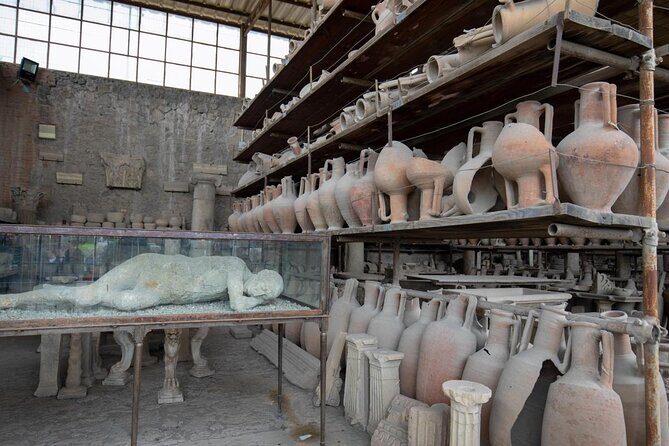
- Casts that help visualize what happened during the eruption
Here’s what I like about this approach: it gives you a storyline you can remember. The eruption isn’t just a headline. You start understanding the town’s rhythm—where people met, worked, ate, prayed, and relaxed—then you see how the tragedy froze those routines in place.
The Forum: where Roman life concentrates
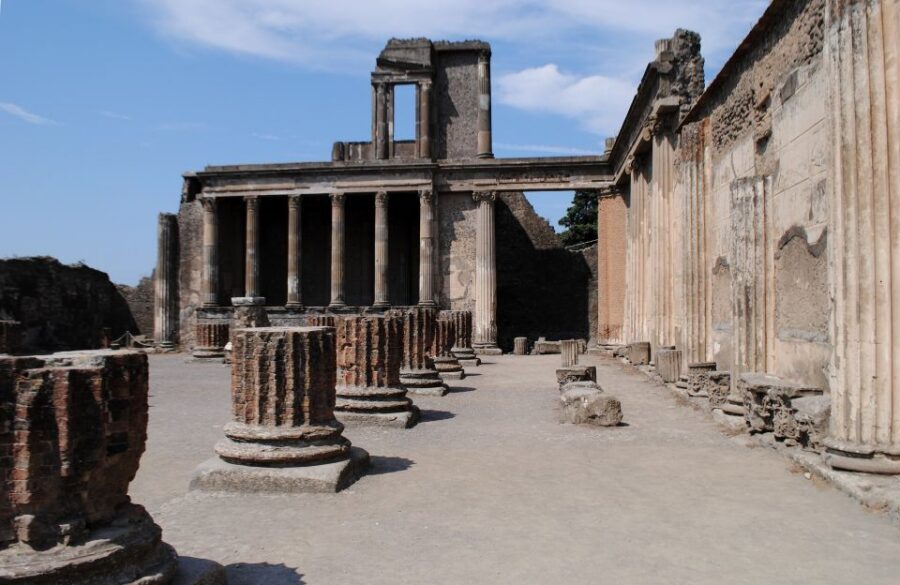
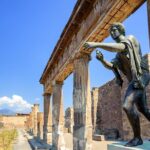
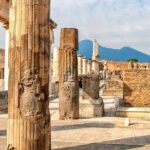
The Forum is the best place to get your bearings fast. It’s where public buildings and markets cluster, so it naturally shows you how city life functioned. Even if you only remember a few terms, you’ll remember the feeling: this is the center of community action, not a random ancient neighborhood.
Baths, basilica, and everyday services
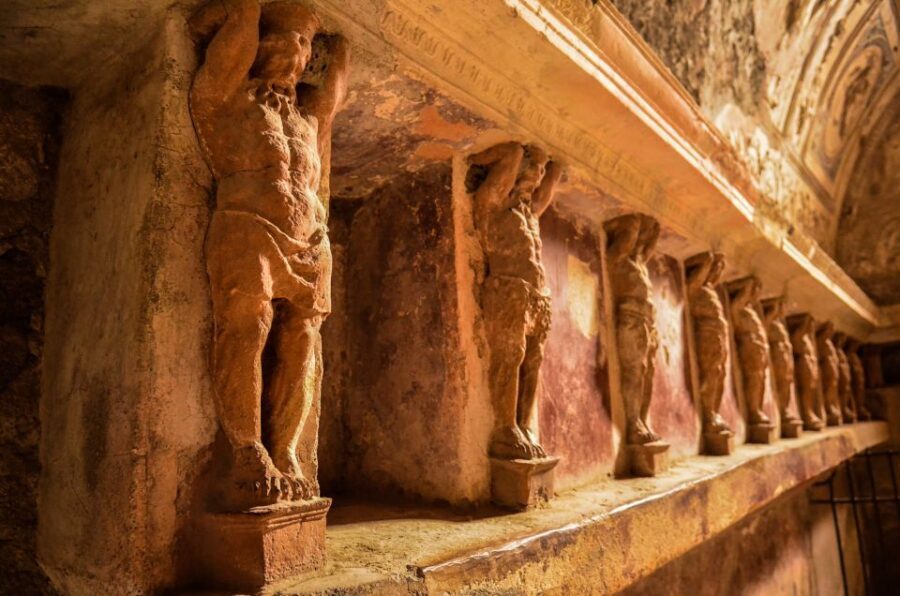
One of the smartest moves in this itinerary is including public thermal baths. Baths show Roman culture beyond politics and temples; they’re social and practical. The basilica and other public buildings add structure to what you’re seeing, so you can understand the town as a system.
Then you hit the more everyday side: the pistrinum and termopolio. Those two stops are small but powerful because they turn Pompeii from “big monuments” into “actual daily life.” You’ll walk past the spaces linked to food and quick meals and feel the town’s routines.
A few more Pompeii tours and day-trip experiences worth a look




Casts: moving from ruins to people
The tour includes time to see casts connected to the eruption. Casts can be emotional because they put human scale back into the scene. For many people, they’re the moment when Pompeii stops being an outdoor set and becomes a real event with real victims.
If you’re traveling with teens, this is also where you can steer attention. Ask your guide to point out the details that answer their real questions, like how people moved through the town and where they would have gone in a normal day.
Pacing and time control: how to avoid slow spots
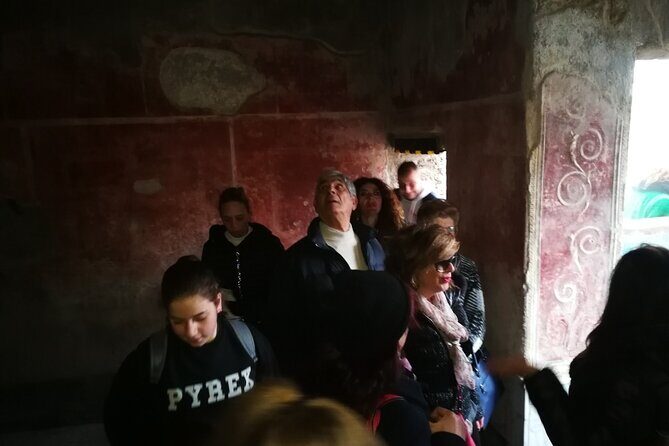
This is one of those tours where speed depends on the guide and your group’s energy. The format is designed to let your guide organize the excursion based on your needs and the time you have.
That said, Pompeii can be a trap for anyone who likes to read every single inscription. If you or your group prefers motion over long stops in one place, you should say so early. A simple instruction like what you want most—Forum, baths, houses, casts—helps the guide keep momentum and prevents you from spending too long in a single spot.
Also, remember this is a structured experience, not a free-for-all. You’ll get guided attention first, then later a short stop for tastes and crafts. If you want a lot of independent wandering time, you may want to plan extra time before or after the tour for your own loop.
Skip-the-line support: what it means for your day
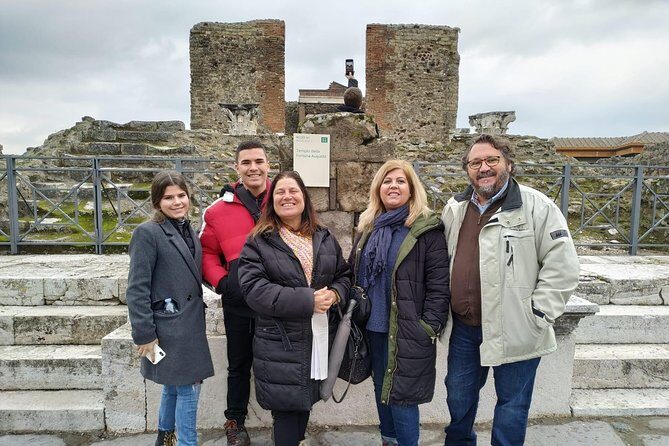
This tour includes skip-the-line assistance, but it’s important to understand what you’re actually getting.
The guide helps you avoid long waits at the ticket point by providing priority access to handle ticket-related steps. However, admission tickets for the archaeological site are not included. In other words, skip-the-line does not mean you walk in on a magic pre-paid ticket. It means you save time at the ticket counter by having the process handled more efficiently with the guide.
This matters most in high season or peak hours. If you’re visiting in a quieter period, the benefit may feel smaller because ticket lines might not be your biggest problem. Still, it can reduce stress because you’re less likely to arrive late, confused, or in the wrong queue.
Earphones if you’re in a larger group
If your group size is over 8 people, earphones are compulsory at about €3.99 per person per group. Even if you prefer not to use extra gear, it can improve clarity for the guide’s explanations, especially when you’re in louder areas or moving through crowded sections.
Stop 2: limoncello tasting and Pompeii crafts in 30 minutes

The last part is shorter, about 30 minutes. This is where the tour becomes a change of pace.
You’ll test limoncello and take a look at handcrafted Pompeian sandals plus items like corals and cameos. This isn’t meant to replace a shopping spree. It’s more like a quick taste of local craft culture so your Pompeii day feels connected to present-day Campania, not frozen in 79 A.D.
A smart way to use this stop is to treat it like a mini walk-through, not a shopping commitment. Check quality and details, then decide quickly if anything is worth taking home. Cameos and coral items can vary a lot in price and craftsmanship, so don’t let a short time window rush your judgment.
Price check: what $106.65 per person buys you
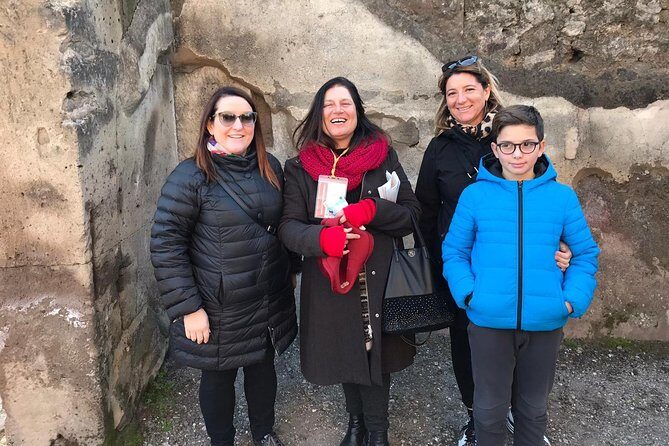
At $106.65 per person, the value depends on two things: what’s included and how much time you’re actually buying.
What you get included:
- Guide
- Skip-the-line support
- Private format (your group only)
- English service
- Mobile ticket is listed as part of the experience
What’s not included:
- Archaeological-site admission ticket
- Earphones (only if your group is over 8, at €3.99 per person per group)
- Tips
- The tour lists admission ticket not included for Stop 1
So you’re paying primarily for the guide’s time and the smoother entry handling. If you’ve got limited time in Pompeii—say you’re also doing other towns in the area—that guide time becomes a real convenience. It’s often more efficient than trying to plan a self-guided route across the Forum, baths, and everyday areas all on your own.
If you’re traveling with a group and can share a private guide, the per-person value can feel even better. If you’re going solo and you’re the kind of traveler who loves independent wandering, you might question whether the structured route is worth it versus buying just a ticket and mapping your own highlights.
Who this Pompeii tour is best for (and who should skip it)
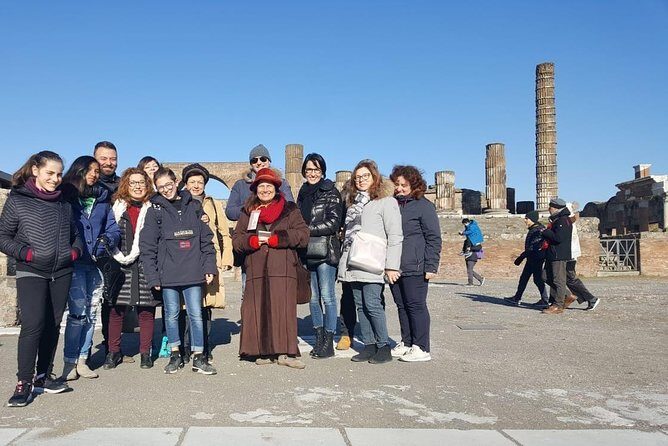
This tour fits best if you want:
- A guided structure that helps you understand what you’re looking at
- A focused visit of key zones: Forum, public baths, pistrinum, termopolio, plus casts
- Less time lost to logistics, thanks to skip-the-line help
- A family-friendly pace that still includes the biggest “wow” moments
- A short finish with local flavors and crafts—limoncello tasting and handmade items
You might want to choose another option if:
- You want maximum independence and plan to spend extra time soaking in Pompeii at your own rhythm
- You strongly prefer a fast pace with fewer stops and less narration
- You don’t want to manage ticket purchasing separately (since the admission ticket is not included)
A quick note on guides and communication
Pompeii guides can vary in style. One guide you might meet is Marinella, and her style is described as clearly explained and story-driven in at least one set of experiences. At the same time, accents and speaking pace can affect comprehension, especially if your group includes younger kids. If you’re concerned about understanding, use any provided audio support and don’t be shy about asking follow-up questions.
Should you book this Pompeii guided experience?
If your goal is to see the most important pieces of Pompeii without turning your day into a logistics problem, I’d lean toward booking. The 2.5-hour guided focus on the Forum and major public spaces gives you context that a ticket alone usually doesn’t. Add in the skip-the-line support and the short crafts and limoncello stop, and you have a day that feels complete.
Just go in with two expectations: the ticket itself is separate, and the day follows a guided rhythm. If those match how you like to travel, this is a solid way to experience Pompeii efficiently and with meaning.
FAQ
How long is the Pompeii guided tour?
The main Pompeii visit is about 2.5 hours, followed by an additional stop of about 30 minutes, for a total experience of roughly 3 hours.
What is the price per person?
The tour price is $106.65 per person.
Is the Pompeii admission ticket included?
No. The archaeological-site admission ticket cost is not included for entry.
What does skip the line mean here?
The guide provides skip-the-line help to avoid long waits at the ticket office by assisting with the process for purchasing tickets.
Are earphones provided, and are they required?
Earphones are compulsory if your group is over 8 people, at €3.99 per person per group. The tour notes this as an additional item.
Where does the tour start and end?
It starts at Via Villa dei Misteri, 80045 Pompei NA, Italy, and it ends back at the same meeting point.
What language is the tour offered in?
The tour is offered in English.