REVIEW · POMPEII
Pompeii 3h Private & Quality Tour with your Archaeologist
Book on Viator →Operated by Grand Tour Experience · Bookable on Viator
Pompeii hits different with a real expert. You get a private 3-hour walk in the company of an archaeologist guide, starting at the main entrance with a skip-the-line setup so you spend less time stuck and more time looking closely.
I especially like the way this tour is organized for maximum meaning, not just motion. You’ll move through key zones like the antiquarium, the Forum, the domus, and the Amphitheatre, and your guide can translate what you’re seeing into clear stories and specific details—like how a coin can affect the date of the eruption. I also like the human pace control: guides such as Francesco, Paolo, Patrizia, Riccardo, Raffaele, and Daniela have been praised for adjusting tempo for families and mixed ages, including slower-going grandparents.
One thing to consider: the admission ticket is not included (it’s €19 per person), so you’ll want to budget for that on top of the group tour price. And because Pompeii is huge, 3 hours means you’ll focus on the best-supported highlights rather than trying to see everything.
In This Review
- Key highlights to know before you book
- Why this Pompeii tour works fast (and still feels full)
- Porta Marina Superiore: starting with the right kind of momentum
- Antiquarium, Basilica, and the Forum: getting the city’s map in your head
- Greater Decumano and the Lupanare: seeing daily life beyond the postcard scenes
- Domus stops: Leda and the Swan, plus restoration stories
- Fugitives’ Garden: when the eruption story turns physical
- Great Gymnasium and the Amphitheatre: finishing with daily life and spectacle
- Cost and value: when $385.32 makes sense for a group
- Private pace, real answers, and guides who match the group
- What to plan for before you arrive
- Who should book this Pompeii archaeologist tour
- Should you book this Pompeii 3-hour private archaeologist tour?
- FAQ
- How long is the Pompeii 3-hour private & quality tour?
- Is the Pompeii admission ticket included in the price?
- Do you really skip the lines?
- Where do we meet for the tour?
- Is this tour private?
- How many people are in a group?
- What language is the tour offered in?
- Are service animals allowed?
- What is the cancellation policy?
Key highlights to know before you book
- Skip-the-line entry arranged in advance so you can start at Porta Marina Superiore with less waiting
- An expert archaeologist guide who can explain what artifacts and building features actually mean
- A tight 3-hour route covering Porta Marina, Forum, domus, the Fugitives’ Garden, and the Amphitheatre
- Domus highlights plus restoration stories, including the Domus of Leda and the Swan and work connected to the House of Golden Cupids
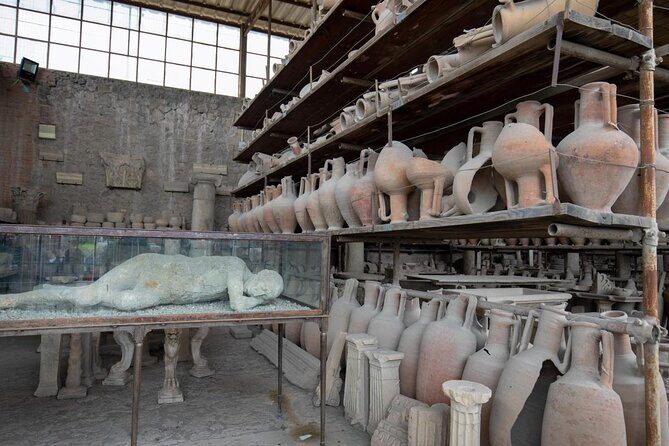
- The eruption made tangible via evidence like casts in the Fugitives’ Garden and charred items displayed at the Great Gymnasium
- Private group of up to 10 with a pace that can work for children and older visitors
Why this Pompeii tour works fast (and still feels full)
Pompeii is not one site—it’s a whole city, frozen in time. If you go alone, you can burn your day “wandering” and still leave feeling like you saw walls, arches, and more walls. This tour is built to avoid that trap.
In about 3 hours, you’ll cover the spine of the city and the places that best answer real questions: how people lived, how the city worked, and what the eruption left behind. The archaeologist angle matters here. It changes your experience from looking at ruins to understanding why certain rooms, streets, and objects matter.
And because it’s private, you’re not trapped in a herd mentality. If your group wants more time in the domus section or you’d rather hear a little more about what you’re standing next to, the guide can usually steer the route.
Other archaeologist-led tours in Pompeii


Porta Marina Superiore: starting with the right kind of momentum
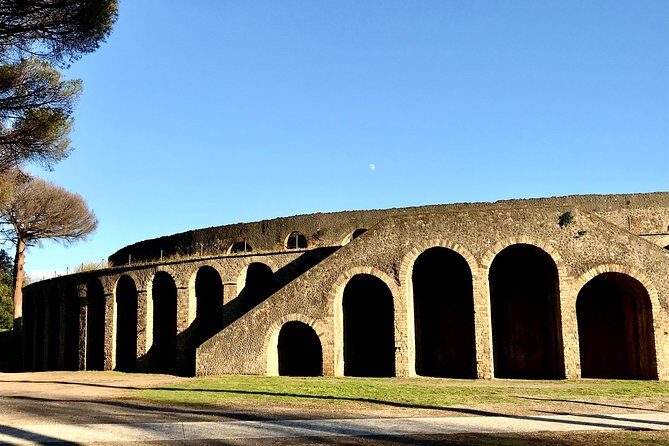
Your meeting point is at Scavi di Pompei – Biglietteria Porta Marina Superiore, Via Villa dei Misteri 2, 80045 Pompeii. The tour ends back at the same place, which is handy when you’re planning lunch afterward.
The big practical win is the skip-the-line setup. You’ll receive a web link before the tour to purchase a direct skip-the-line admission ticket. That matters because Pompeii can get slow at entry, and you don’t want to waste your guided time in a queue.
Also, your guided start from Porta Marina Superiore is a smart orientation move. Instead of entering and guessing where to go, you begin with context—how the site is structured and what you should pay attention to right away.
Antiquarium, Basilica, and the Forum: getting the city’s map in your head
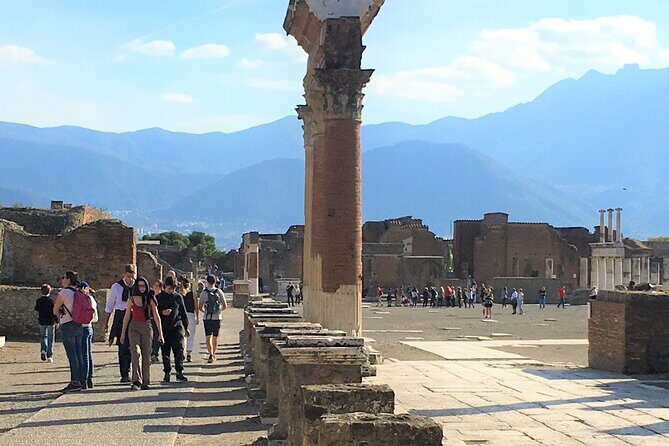
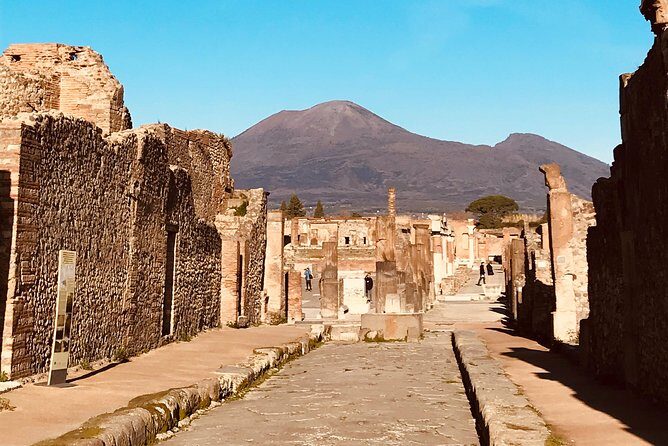
The route begins from Porta Marina Superiore, and the guide sets the scene with a view toward Vesuvius as you get your bearings. That small moment helps you understand why Pompeii is so tied to this one catastrophic day.
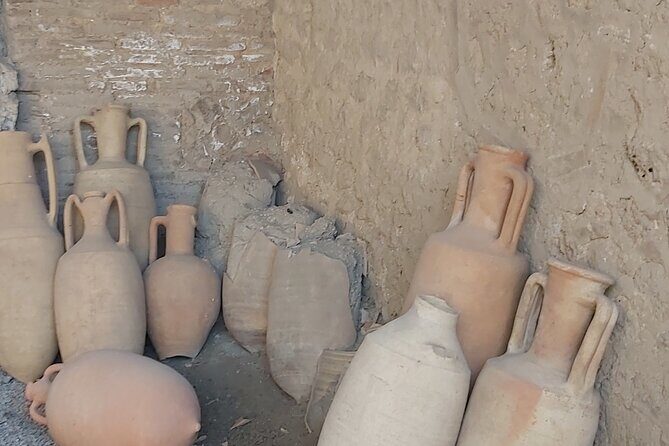
Next comes the antiquarium, where you’ll see objects from the latest excavations. Two details worth paying attention to: a coin that can modify the date of the eruption, and a heavy golden armcuff. When a guide connects artifacts like these to the broader timeline and daily life, the ruins stop feeling random.
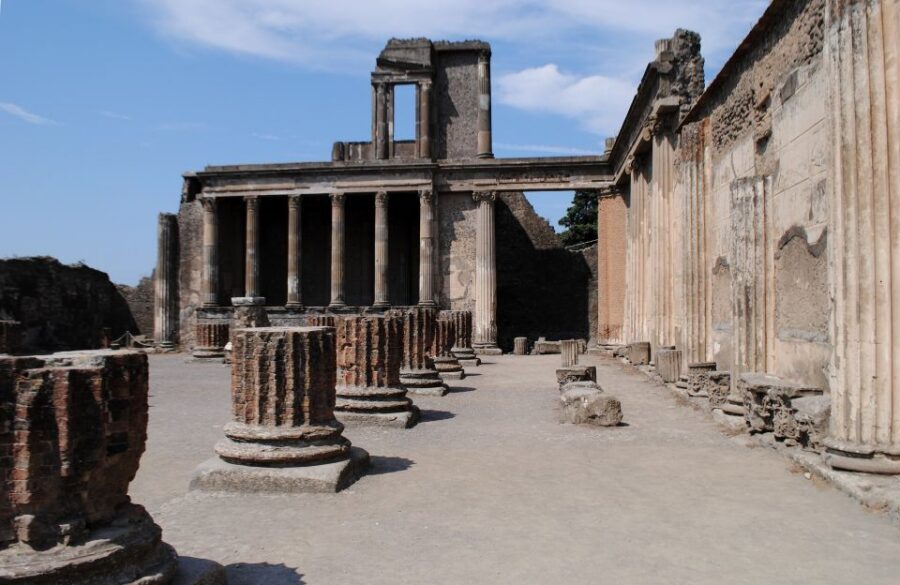
From there, you’ll move into the civic core. The stops include the Basilica, the Forum (with the market area), and the main temples. This is where your eyes learn “city logic.” Streets, squares, and major buildings start to make sense as a system, not just a collection of monuments.
A quick reality check: this portion is dense. If your group likes long questions, you may want to keep them coming early, before the tour flows into the domus.
Greater Decumano and the Lupanare: seeing daily life beyond the postcard scenes
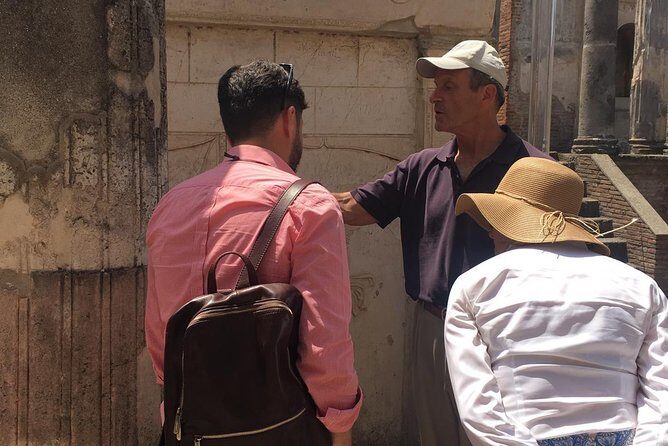
After the Forum zone, you’ll walk along the Greater Decumano, which is one of the main streets. One of the more interesting inclusions here is a close look at the thermal system, plus the Lupanare.
Why I like these stops: they get you out of the “only big buildings” mindset. Baths and civic streets show how people moved, worked, and used infrastructure. The Lupanare brings in a less-polished side of urban life, and with an archaeologist guide you’re less likely to turn it into sensational trivia and more likely to understand what’s there and why it’s preserved.
This is also a good stretch to let your guide point out what you should look for. On your own, it’s easy to miss the clues that a guide will naturally highlight—signs of function, use patterns, and how spaces relate to each other.
Domus stops: Leda and the Swan, plus restoration stories
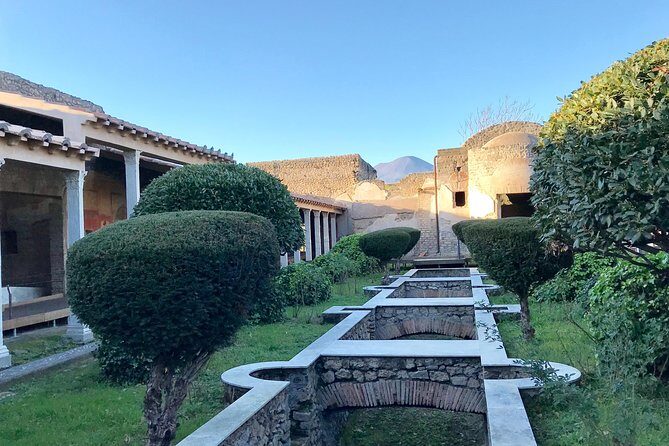
The best part of Pompeii for many people is the domus section, and this tour builds toward it. You’ll explore multiple houses, including some areas that have been recently opened, such as the Domus of Leda and the Swan.
Expect wall and room details that feel more vivid when someone explains what you’re seeing. In guide examples from past groups, people have specifically praised the way guides bring the Roman world to life through careful explanation—especially around painted spaces and the “three-dimensional” effect of wall art.
You’ll also hear about restoration work, including restorations connected to the House of Golden Cupids made by one of the guide’s teacher. That’s a surprisingly meaningful add-on. Restoration stories remind you these places aren’t just ancient objects; they’re long-running projects with decisions about conservation, interpretation, and what can be seen today.
A practical note: domus sections can be visually intense. If your group tends to tire quickly, tell your guide early. Private tours are easier to pace when the guide knows your limits.
Other private tours in Pompeii





Fugitives’ Garden: when the eruption story turns physical
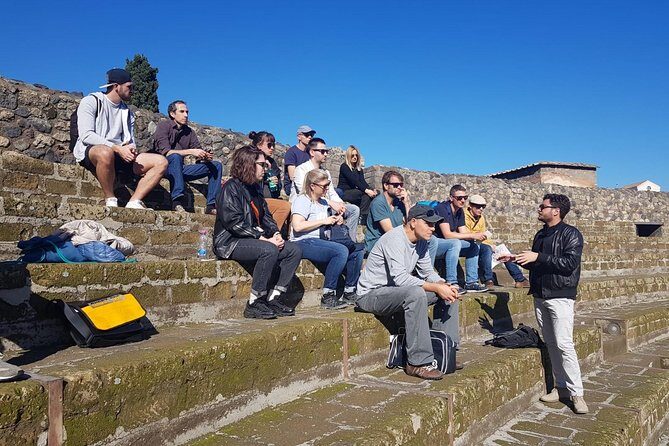
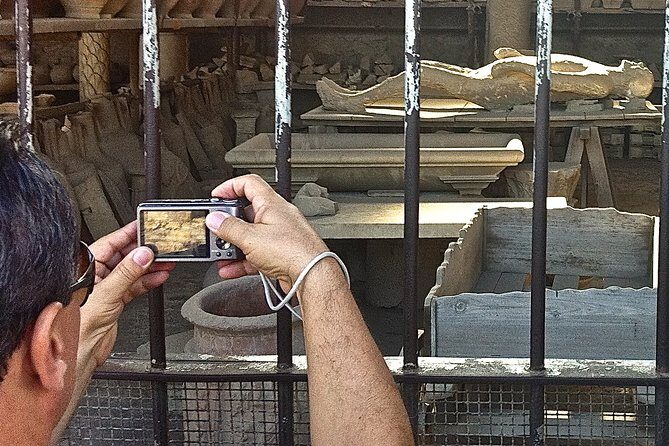
From the domus area, the tour continues along via dell’Abbondanza and reaches the Fugitives’ Garden. This is where people tried to escape during the eruption and died.
What makes this stop powerful is the method of evidence. You’ll see the moulds—and with an archaeologist guide, you’ll understand why these casts matter. They’re not just dramatic visuals. They’re the closest thing to a moment-by-moment snapshot of what happened in that final phase of the disaster.
If you like your history grounded—who, what, where, and what the evidence allows this stop delivers. And because you’re there with context from earlier stops, it lands harder.
Great Gymnasium and the Amphitheatre: finishing with daily life and spectacle
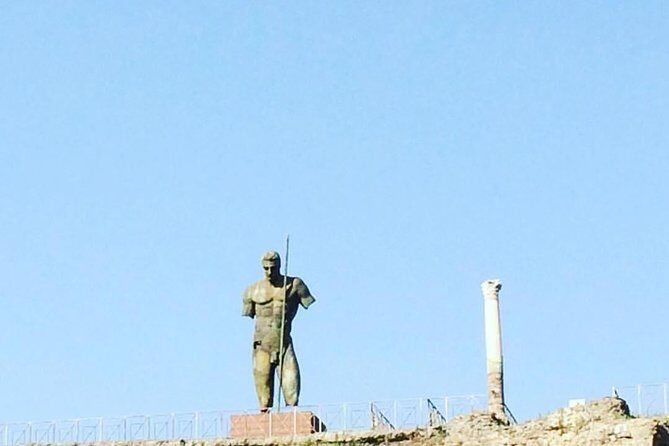
The tour ends with the Great Gymnasium followed by the Amphitheatre. The Gymnasium stop includes daily objects displayed on-site, even charred food, which is exactly the kind of detail that makes Pompeii feel less like an art museum and more like a real place with real routines.
Finally, you reach the Amphitheatre—the late-stage payoff. It’s the kind of location where your brain starts comparing what you’ve already learned about street life and household spaces with the larger public world.
The sequence matters. Ending with the Amphitheatre gives your experience a clean arc: private life inside domus, emergency in the Fugitives’ Garden, then public gathering and performance space.
Cost and value: when $385.32 makes sense for a group

The tour price is $385.32 per group for up to 10 people, and the admission ticket is €19 per person (not included). So your real total depends on how many people you’re splitting across.
Here’s the value math that matters: if you have a group close to 10, the guided portion can work out to a low per-person cost. If you’re a couple or a solo traveler, it’s more like paying for a premium “private guide” experience, plus the ticket.
What justifies the price beyond the private format is the combination of:
- Expert archaeologist guidance
- line-skipping entry setup
- a route that hits the most meaning-rich areas in a short time
Also, you avoid the common problem of spending an entire day in Pompeii without knowing what to look for next. You’re paying to convert ruins into understanding.
Private pace, real answers, and guides who match the group
This is one of those tours where the guide quality can make or break it. The strong signal here is that multiple guides have been praised for clarity, energy, and the ability to explain difficult topics in a way that fits the room.
I love that some guides have been specifically described as:
- giving engaging talks for both adults and children (including families with kids and a wide age range)
- managing time efficiently, so you don’t feel rushed
- adjusting pace for older visitors, including keeping it manageable for an 81-year-old mom
- answering questions in professional, understandable ways without making the tour feel rigid
- even taking great photos and selfies, which is handy if you want proof you were there (and not just views of stone)
This means you should come with a few kinds of questions ready. Ask things like what a certain space was used for, what an artifact’s material suggests, or what the restoration work changes about what we think we know.
And if you have must-see priorities, this format can be flexible. One guide example even included granting specific spot requests, which is rare on busy sites.
What to plan for before you arrive
This tour is offered in English and you’ll get confirmation at booking. Service animals are allowed, and the meeting point is near public transportation.
You’ll also want to plan for the fact that the admission ticket costs €19 per person, paid separately. The tour provides a link before your start time to buy a direct skip-the-line admission ticket, so don’t wait until you’re standing there to sort it out.
Finally, since the tour lasts about 3 hours, treat it like a focused guided experience. If you’re the type who needs long solo wandering time, plan extra time before or after on your own.
Who should book this Pompeii archaeologist tour
Book it if you want Pompeii to make sense quickly. It’s ideal for first-timers who don’t want to spend the day guessing, and for families who need structure but still want the tour to feel fun.
It’s also a great fit if you like the “why” behind details—coins, restorations, casts, everyday objects—rather than only big dramatic views. The archaeologist-led approach is what turns those details into a story you can actually remember.
Consider a different option if your dream Pompeii day is slow, wandering, and self-directed, with no fixed arc. This tour is designed to cover the most important highlights in a limited window.
Should you book this Pompeii 3-hour private archaeologist tour?
If you’re spending time in Pompeii only once, I think this is a strong booking. The skip-the-line setup, the expert archaeologist guidance, and the high-impact route from Porta Marina to the Amphitheatre make it easy to get real value from your hours.
I’d book it especially if:
- you’re traveling as a group (so the $385.32 cost spreads out)
- you care about context, not just photos
- you want your guide to answer questions and adjust pace for your group
If you’re going with just one or two people and you’re price-sensitive, you can still make it work, but compare it to a standard group tour and be honest about what you’re paying for: time saved, better interpretation, and the ability to personalize the experience.
FAQ
How long is the Pompeii 3-hour private & quality tour?
The tour is about 3 hours (approx.).
Is the Pompeii admission ticket included in the price?
No. The admission ticket is €19.00 per person and is not included.
Do you really skip the lines?
Yes. Before the tour, you’re provided a web link to purchase a direct skip-the-line admission ticket.
Where do we meet for the tour?
You meet at Scavi di Pompei – Biglietteria Porta Marina Superiore, Via Villa dei Misteri, 2, 80045 Pompei NA, Italy.
Is this tour private?
Yes. This is a private tour/activity, and only your group participates.
How many people are in a group?
The tour price is per group (up to 10).
What language is the tour offered in?
The experience is offered in English.
Are service animals allowed?
Yes. Service animals are allowed.
What is the cancellation policy?
Free cancellation is available up to 24 hours in advance for a full refund, based on local time. If you cancel less than 24 hours before, the amount paid is not refunded.