REVIEW · POMPEII
Pompei three hours with an expert guide
Book on Viator →Operated by Campaniaguide · Bookable on Viator
Pompeii clicks when someone explains it. This private 3-hour Pompeii tour pairs an expert guide with a smart, walkable highlights route through one of the world’s most studied UNESCO sites, right up to the moment the city was buried after Vesuvius. I like that the guide helps you read what you’re seeing in real time, with clear context for everyday life in ancient Rome, not just random stone facts.
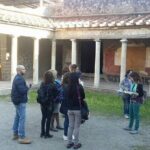
I also like the small-group feel. With a group size of up to 7, guides such as Giovanna or Vincenzo can adjust the pace and focus so you get the sights that match your group’s ages and interests. One possible drawback: the Pompeii entrance ticket isn’t included, and the tour depends on good weather, so plan for some outdoor walking.
In This Review
- Key things I’d bet on before booking
- Pompeii makes sense with a guide, not a map
- Where to meet at Piazza Esedra and start smart
- Street of Abundance: the “main road” that tells you how people lived
- The highlights you don’t want to miss: theaters, brothel, spas, and Thermopolis
- The amphitheater: where stories get big, fast
- Classic vs newer discoveries: why your guide’s route matters
- Price and value: what you’re really paying for
- Who this Pompeii tour fits best
- Practical tips so your 3 hours feel smooth
- Should you book this Pompeii 3-hour expert tour?
- FAQ
- Is the Pompeii entrance fee included in this tour?
- How long is the Pompeii tour?
- What’s the group size for this private tour?
- Where do we meet, and when does the tour start?
- What language is the tour offered in?
- What happens if weather is bad or plans change?
Key things I’d bet on before booking
- Expert-guided Pompeii interpretation: You’re not just looking; you’re understanding what buildings were for.
- Flexible route for your group: Your guide can tailor the walk to ages and interests rather than forcing a one-size plan.
- Big “must-sees” in a short window: Street of Abundance, theaters, brothel, spas/baths areas, Thermopolis, and the amphitheater.
- Small group, not a fast stampede: Built to avoid the tight, hurried pace of large tours.
- Classic plus recently discovered areas: The route includes both well-known sections and newer areas.
- Mobile ticket, English speaking guide: Easier check-in and a straightforward language match.
Pompeii makes sense with a guide, not a map
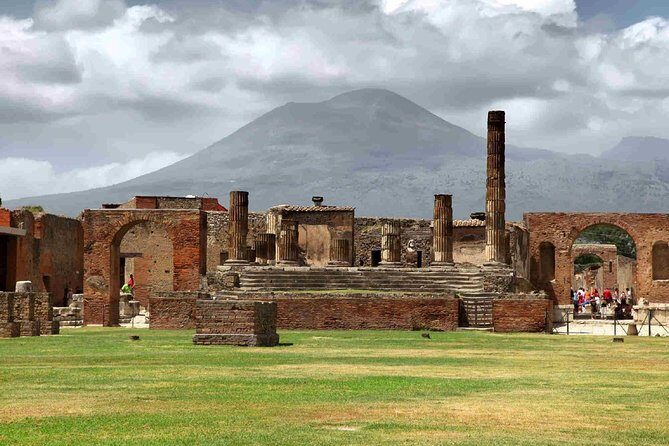
Pompeii is one of those places where you can wander for hours and still miss the point. The ruins are dramatic, sure, but the real payoff is understanding how daily life worked—where people ate, relaxed, traded news, worshipped, argued, and did business. This tour is designed for that. The guide’s job isn’t just to point out locations; it’s to help you connect the dots so the city feels like a lived-in place from the start.
You’ll cover the major highlights in about 3 hours, which is a sweet spot. Long tours can sprawl into too much walking with too little context. Too-short tours can leave you staring at big ruins without the story. Here, the timing is structured so you get the main highlights plus enough time to ask questions as you go.
And because it’s private (up to 7 people), you get a calmer rhythm. That matters in Pompeii. Crowds and timing can turn even a great trip into a blur. A guide who can steer you away from the crush and adjust to your pace is exactly what helps you enjoy the site instead of just surviving it.
Other guided tours in Pompeii

Where to meet at Piazza Esedra and start smart
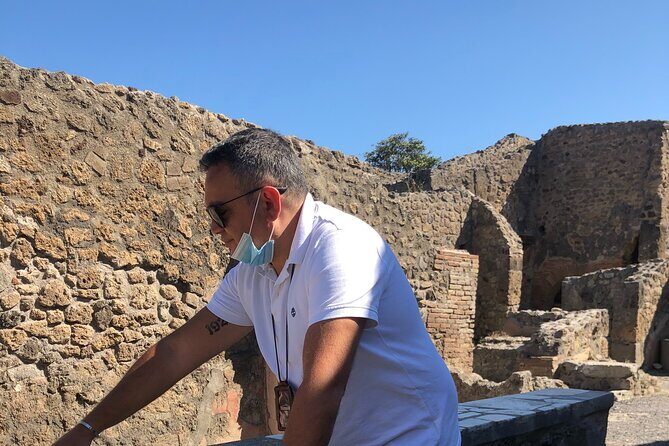
This tour starts at 9:30 am at Piazza Esedra, 80045 Pompei NA, Italy, and it ends back at the same meeting point. That back-to-start setup is practical. It keeps you from having to navigate to a second meeting location when you’re tired and your feet are already negotiating terms.
The meeting spot being near public transportation is also helpful. If you’re using trains or buses for your Pompeii day, you’ll likely find it easier than if you had to reach a far-off trailhead-style starting point.
What I’d do on day-of: arrive a few minutes early and take 2 minutes to check what kind of tour you’re on. This one is explicitly set up as a small-group private experience in English, with an emphasis on walking the key areas rather than doing a long museum-style stop-and-go.
Street of Abundance: the “main road” that tells you how people lived
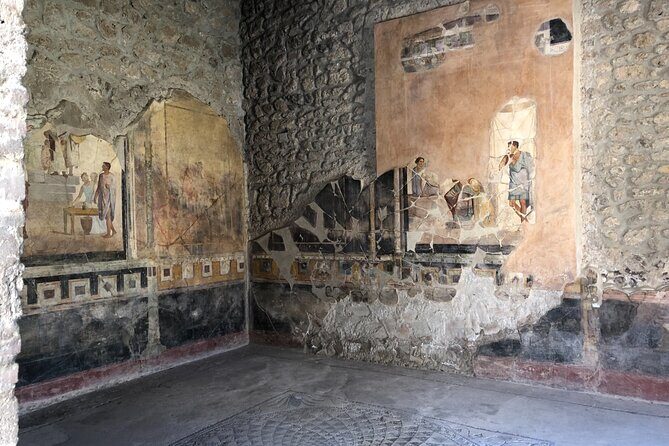
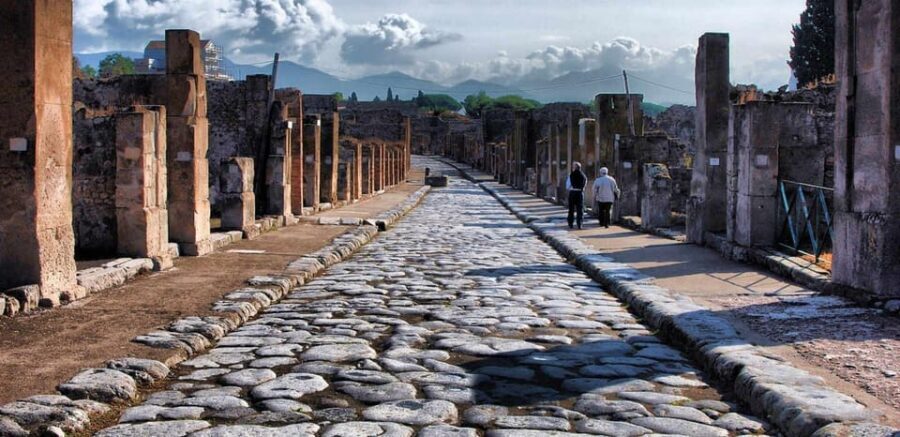
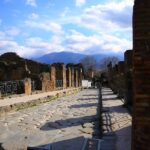
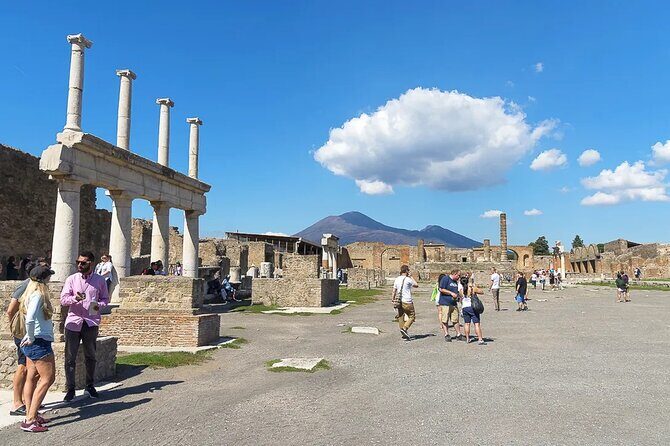
Once you’re in the archaeological park, the route flows along the so-called Street of Abundance, Pompeii’s main road. This is the kind of street where you learn faster than you’d expect, because it connects public life and daily commerce in a way that’s easy to picture.
Here’s why this section matters: when you know what the street represented and how people moved along it, the buildings stop feeling like random piles. They start reading like storefronts, homes, and civic spaces. The guide’s context helps you understand not just what’s left behind, but what kind of life that space was built for.
This is also where pace becomes a big deal. If you rush, you just look. If you slow down with the guide’s explanations, you begin to “see” the city—doorways, street layouts, and the way the built environment shaped routines.
The highlights you don’t want to miss: theaters, brothel, spas, and Thermopolis
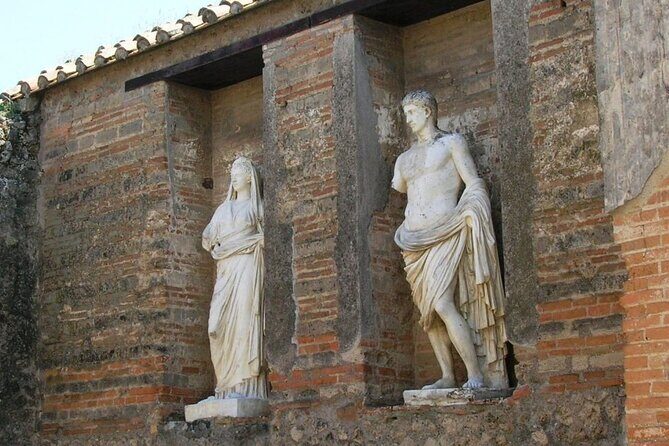
This tour packs in several of Pompeii’s headline stops, and it does it with interpretation so they don’t turn into a checklist.
You can expect stops that include:
- Two theaters
- A brothel
- Areas tied to spas/baths
- The famous Thermopolis (often a highlight for people who like food and street life)
Why this grouping works in a short tour: it covers entertainment, social life, and leisure. Pompeii isn’t only about elite villas and dramatic tragedy. It was also a place where people spent their evenings, relaxed in public spaces, and participated in the city’s routines.
Theaters: Even from the ruins, you can get a strong sense of how public entertainment shaped community life. The guide helps you make sense of what you’re looking at so the seating and structure feel meaningful, not just impressive.
Brothel: This is one of those sites that can feel uncomfortable if you go in cold. With an expert guide explaining context, you’re more likely to understand what’s there and why it’s significant in the story of Pompeii’s society.
Spas and baths: Pompeii is full of bath culture, and the guide helps you connect the physical spaces to how people likely used them. This is a great section for anyone who wants to understand why daily life included so many communal routines.
Thermopolis: This is one of the most fascinating “everyday” stops because it points to how people fueled up and ate. If food history is your thing, you’ll probably enjoy this part more than you expect.
One practical consideration: since Pompeii is outdoors and walking-focused, you’ll want comfortable shoes and a water plan. Three hours can feel like longer on uneven ground.
The amphitheater: where stories get big, fast
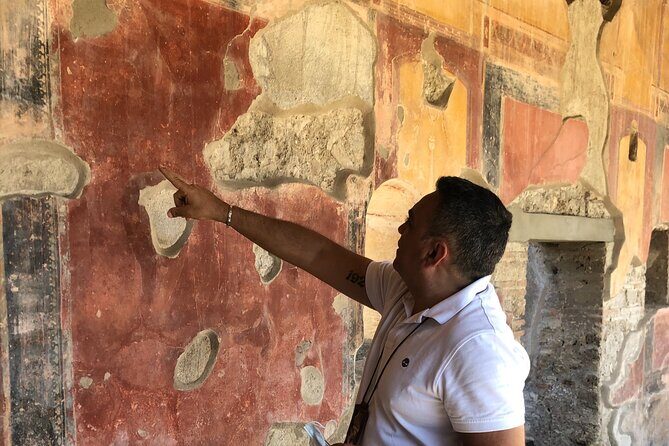
No matter what your personal interests are, you’ll likely feel the amphitheater in your bones. The tour includes a massive amphitheater, large enough to hold up to 20,000 people. That scale is hard to grasp until you stand in the right place and can visualize crowds.
This is also where having the guide matters most. Pompeii’s ruins are impressive, but they can feel confusing because everything is partially collapsed or missing. An expert guide helps you understand the purpose of the space and what events it hosted, so it becomes more than a pretty photo stop.
There’s another reason the amphitheater is a great tour “capstone.” If your energy is running out, you still end with a high-impact moment that makes the walking worth it. It’s the kind of sight that makes Pompeii feel like an actual city, not a ruin field.
A few more Pompeii tours and day-trip experiences worth a look


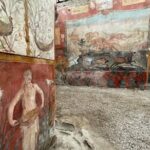

Classic vs newer discoveries: why your guide’s route matters
Pompeii isn’t just one fixed, completed story. There are areas that have long been famous, and there are also recently discovered parts that add layers to what we know. This tour specifically mentions visiting between the classic areas and more newly uncovered sections.
For you, that means you’re more likely to get a richer understanding of what archaeologists have learned—and you’re less likely to repeat the same handful of picture-perfect spots that show up in every standard group route.
It also helps you avoid the feeling of being stuck in a rigid path. This is a private tour, so your guide can shift the route based on your group’s interests and ages, rather than forcing everyone through the same order.
If you care about archaeology and new research, the newer areas will likely be the part that sticks with you most. If you just want the big landmarks, your guide can keep you on track with the main sights without bogging you down.
Price and value: what you’re really paying for
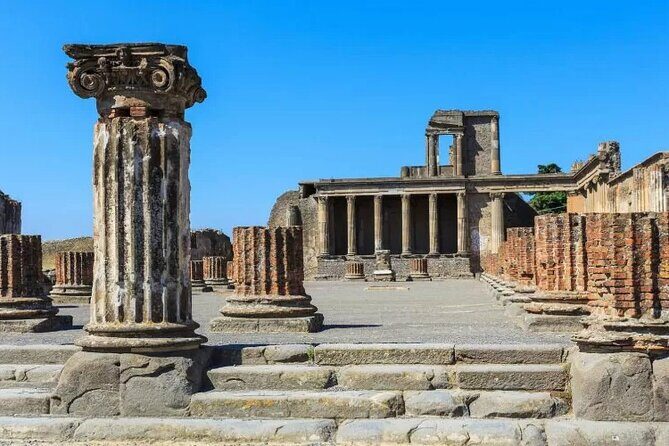
The price is $416.34 per group (up to 7) for about 3 hours, and the Pompeii entrance fee isn’t included.
At first glance, that may sound pricey if you’re thinking per person. But the math changes if you’re splitting the group cost. More importantly, what you’re paying for is not just access—it’s time saved, context delivered, and a route built around understanding rather than speed.
Here’s the value angle I’d use:
- If you arrive at Pompeii with just a guidebook, you’ll spend a lot of time trying to figure out what matters. That’s lost time.
- Pompeii rewards comprehension. An expert guide helps you interpret the sweeping, complex ruins so you can actually “read” the city.
- Private, small-group pacing means you’re less likely to get rushed through the highlights.
If you’re traveling solo, a private tour like this can still be worth it if you strongly prefer calm pacing and you want an expert to answer your questions on the spot. If you’re on a tight budget and don’t mind a more crowded experience, you might compare alternatives. But if you want Pompeii to make sense quickly, this one leans hard into that goal.
Who this Pompeii tour fits best
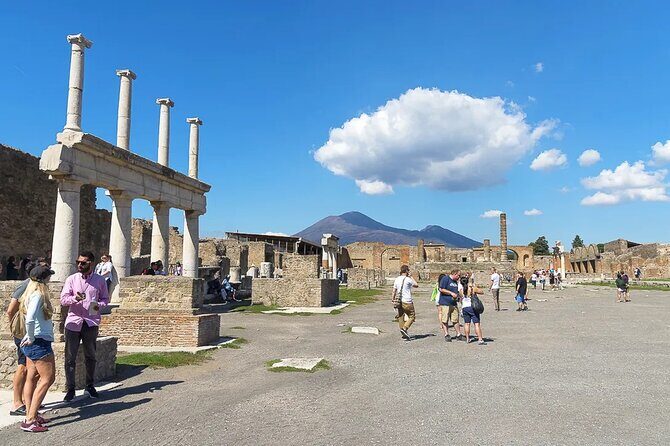
This is a smart fit if:
- You want a high-impact visit without a full-day grind.
- Your group includes different ages, because the guide can adjust time and walking pace.
- You care about the meaning behind the sights—street life, theaters, baths/spas, and the amphitheater—rather than only looking at ruins.
- You prefer a small group and want flexibility instead of a fixed rush schedule.
It’s also a good choice if you’re the type who likes asking questions mid-walk. The tour format supports that. One review specifically notes guides making accommodations for an 80-year-old and an 81-year-old, which is a reassuring clue that the tour can be adjusted for slower movement when needed.
Practical tips so your 3 hours feel smooth
Here are the simple things that make a short Pompeii tour actually enjoyable:
- Wear shoes with grip. Pompeii ground can be uneven. You’ll move more than you expect.
- Bring water. The tour is outdoors, and you’ll be walking through multiple zones.
- Have a short list of what you care about. If your group is into theaters and public life, say so early. If you’re more into everyday spaces, ask about the Thermopolis and baths/spas areas.
- Expect a lot of meaning per stop. This tour is built around interpretation, not just locations.
- Plan your entry separately for the ticket. Since the admission fee isn’t included, budget for it so there are no surprises at the gate.
If weather turns iffy, the tour requires good conditions. That’s normal for Pompeii outdoor walking, and it’s worth building in flexibility to your day.
Should you book this Pompeii 3-hour expert tour?
I’d recommend booking if you want Pompeii to feel understandable fast, with a guide who can explain what you’re seeing and keep your group moving at a pace you control. The standout value is the mix of key sights (street, theaters, brothel, spas/baths, Thermopolis, and amphitheater) plus the promise of a flexible route that avoids the usual large-group sprint.
I’d think twice if you’re trying to stretch your budget because the entrance fee is separate and you’re paying for private guiding. Also, if your schedule is ultra-tight and you can’t shift for weather, keep in mind the tour depends on good conditions.
Bottom line: for most people who want a smart, focused Pompeii visit without the headache of planning every stop, this private 3-hour option is a solid buy.
FAQ
Is the Pompeii entrance fee included in this tour?
No. The tour includes the guide service, but Pompeii entrance tickets are not included.
How long is the Pompeii tour?
The tour lasts about 3 hours.
What’s the group size for this private tour?
It’s a private tour/activity with only your group participating, up to 7 people.
Where do we meet, and when does the tour start?
You meet at Piazza Esedra, 80045 Pompei NA, Italy, and the start time is 9:30 am. The tour ends back at the meeting point.
What language is the tour offered in?
The tour is offered in English.
What happens if weather is bad or plans change?
The experience requires good weather. If it’s canceled due to poor weather, you’ll be offered a different date or a full refund. There’s also free cancellation up to 24 hours in advance for a full refund.