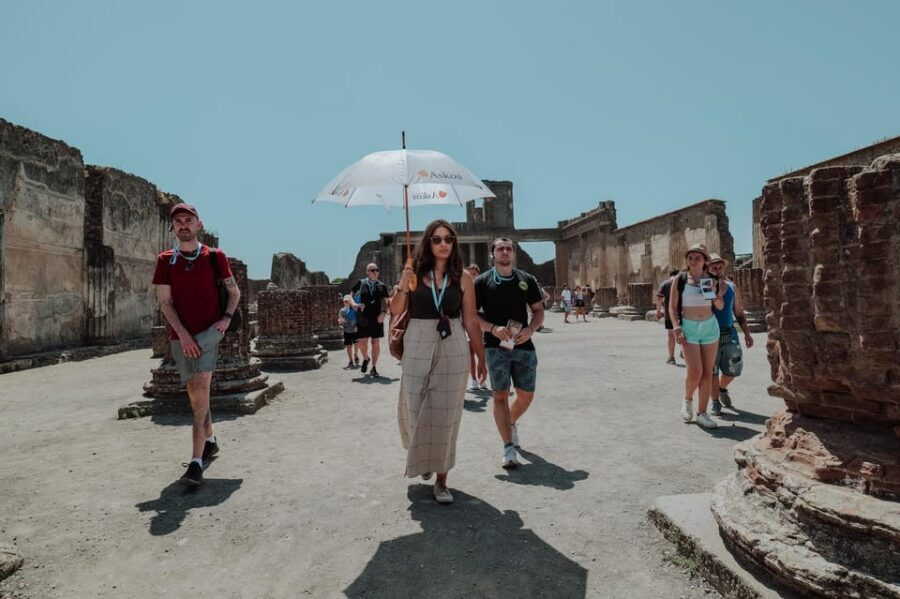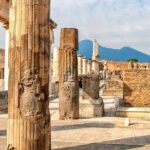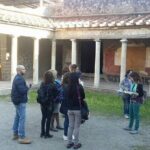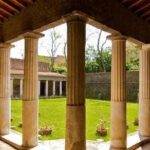
Pompeii hits you fast, even on a short visit. I love the private guide approach, especially with Viktoria’s energy and her knack for getting you to picture daily Roman life. I also love how this route strings together the biggest hits you’d otherwise miss, from the Forum to the Roman baths. One possible drawback: 2 hours is not enough to cover the entire site, so you’ll want to be ready for a curated highlights tour rather than a full-site marathon.
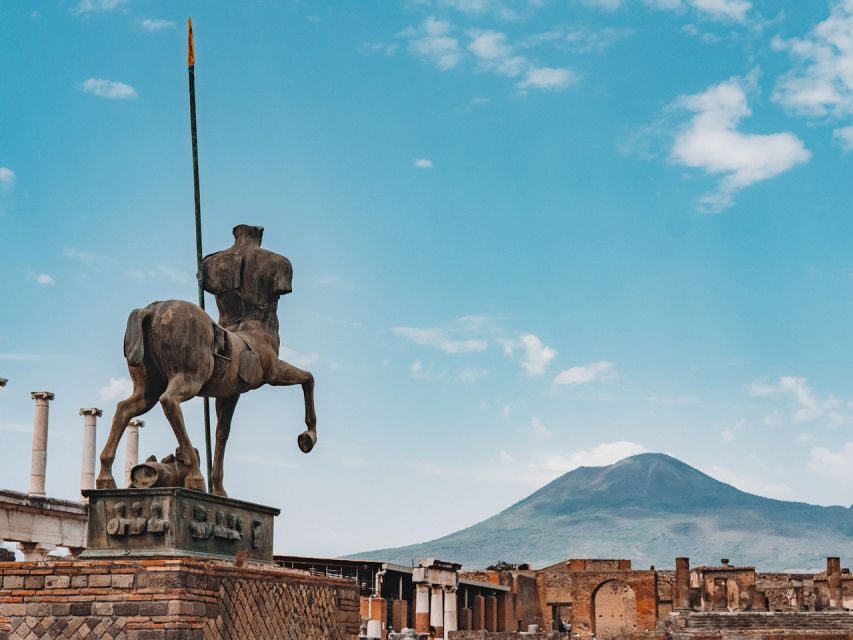
You’ll meet at Piazza Esedra and spend your time inside the Archaeological Park of Pompeii, a UNESCO World Heritage Site destroyed by Vesuvius in 79 AD. Expect a focused stroll through ancient streets, theatres, gladiator barracks, houses, and even the areas tied to food, shops, temples, basilicas, and the main square. It’s offered in English, and the tour uses a mobile ticket so you’re not hunting for paper at the last second.
In This Review
- Key Pompeii Moments You’ll Actually Remember
- Two Hours in Pompeii: What This Tour Prioritizes
- Start at Piazza Esedra and Enter the Archaeological Park
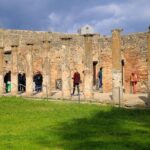
- Ancient Streets, Theatres, and Gladiator Barracks
- Houses, Shops, and Roman Eating Spots
- Roman Baths and Villas: Comfort and Status, Not Just Ruins
- Temple of Apollo, Temples, and Sacred Space
- Forum and Basilica: Where Power and Daily Business Met
- Mobile Ticket, Private Format, and Pace Control
- Price and Value: When $240.28 Makes Sense
- What’s Not Included (and What You Should Double-Check)
- Is This Pompeii Tour Right for You?
- Should You Book This Private Skip-The-Line Pompeii Tour?
- FAQ
- How long is the Private Skip The Line Archeo Tour Of Pompeii?
- What is the price and group size for this Pompeii private tour?
- Is the tour offered in English?
- Where do we meet for the Pompeii tour?
- What places in Pompeii will we see during the tour?
- Do you provide a mobile ticket?
- Are entrance fees included?
- Can I cancel for a full refund?
Key Pompeii Moments You’ll Actually Remember
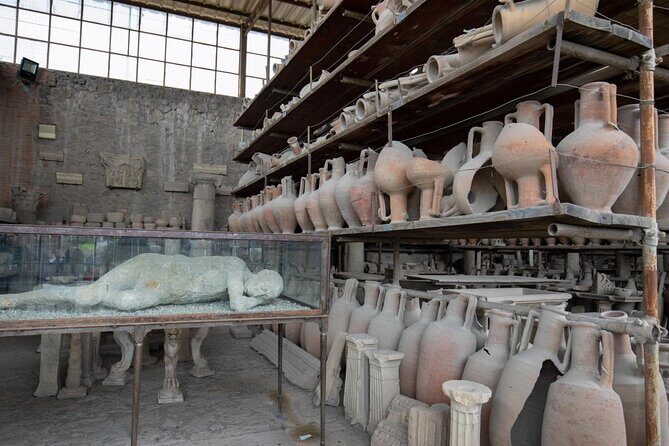
- Private guidance, not a crowd shuffle: you can ask questions and set the pace.
- Viktoria’s “stay engaged” style: she asks questions, keeps people thinking, and uses humor to make the ruins feel less like stone.
- A concentrated route through daily life: streets, theatres, baths, villas, and the Forum in one smooth sequence.
- Temple and civic-center highlights: you’ll connect religious places like the Temple of Apollo with the city’s power center.
- A true walkthrough, not just photos: you’ll look for details that are easy to miss on your own.
Two Hours in Pompeii: What This Tour Prioritizes
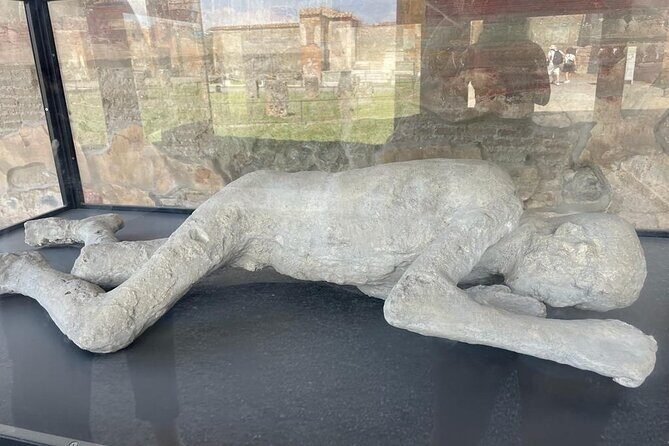
This is a 2-hour Pompeii private tour, built for people who want the best parts without losing half a day to decision-making. Pompeii is enormous, and self-guided visits can turn into a lot of wandering with no clear “why does this matter?” moments. Here, the value is in having someone steer you toward the spots that explain how the city worked.
You’ll see the ancient streets and major public buildings, but the tour also targets everyday stuff. Think theatres and gladiator-related areas, plus houses, and the kinds of places where Romans ate and shopped. That mix matters because it helps you stop treating Pompeii like a list of ruins and start treating it like a city.
Other skip-the-line Pompeii tours in Pompeii


Start at Piazza Esedra and Enter the Archaeological Park
Your tour starts back at Piazza Esedra (80045 Pompei NA). From there, you’re working inside the Archaeological Park of Pompeii, and the activity ends back at the meeting point, so you’re not left figuring out your next move.
This matters more than it sounds. In Pompeii, getting from “I’m here” to “I know what to look at” can take time. A private setup means you’re not stuck waiting for a bus, then piecing together a route, then reading signs when you’re already tired.
Also note the practical bits: this is offered in English, and it’s described as near public transportation. Service animals are allowed, and most people can participate.
Ancient Streets, Theatres, and Gladiator Barracks
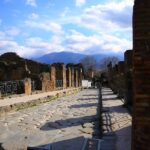
Early in the walk, you’ll move through the kind of areas that make Pompeii feel real instead of distant. The ancient streets are the framework. Once you’re standing in the same grid-like layout ancient people used, you get why the city’s layout affected where people lived, walked, shopped, and gathered.
Then come the entertainment and spectacle sites: theatres and gladiator-related areas (often grouped in your mind as part of the show-and-status system). Even if you’ve read about Roman games, standing in the right context changes things. You start noticing how architecture supports crowds, movement, and public life.
I like that the tour doesn’t treat these as “cool ruins.” It treats them like places where people went to feel something. And if your guide is Viktoria, you get an extra layer: she keeps asking questions and nudging you to imagine how it felt to be there, not just what’s written on a sign.
Houses, Shops, and Roman Eating Spots
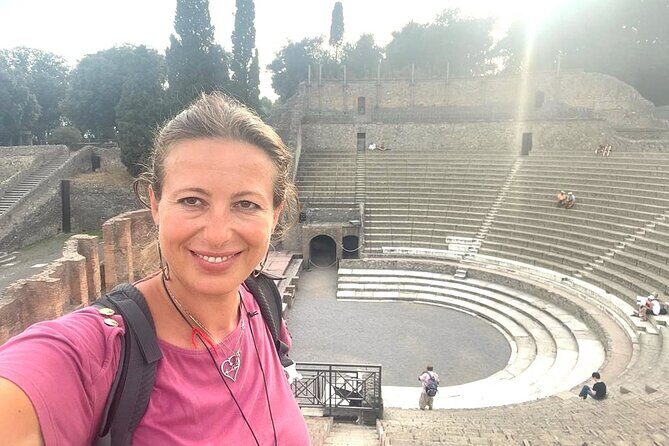
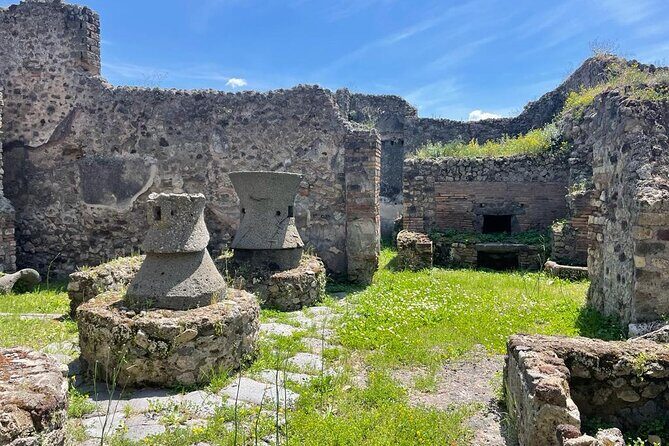
Next, the tour leans toward domestic and commercial life. You’ll visit houses and areas connected with ancient restaurants and shops. This is the part that helps you connect Pompeii to human habits, like how people spent money, ate, and interacted.
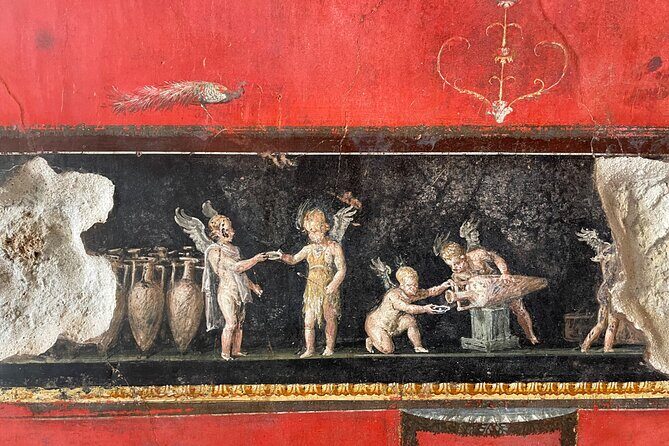
It’s also where you’ll benefit most from a private guide. In a big open-air site, it’s easy to miss the small clues that explain how spaces were used. The guide is there to point out details that are hard to notice when you’re scanning for the next headline photo.
There’s a balance here: it’s not just “look at that building.” It’s also “this building tells you something about the people who lived nearby.” That’s exactly the kind of framing that makes a short visit feel longer.
Roman Baths and Villas: Comfort and Status, Not Just Ruins
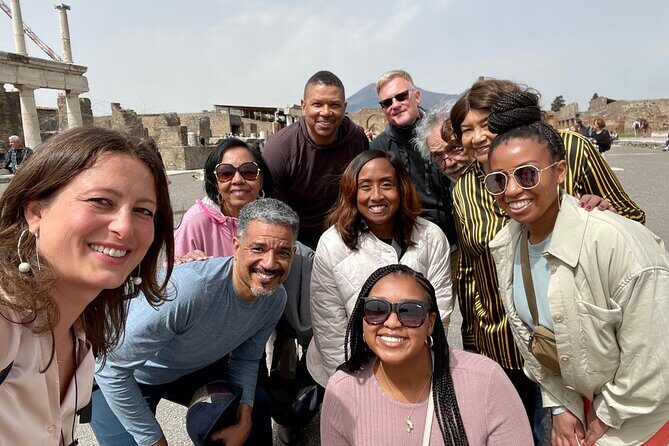
One of the strongest highlight areas is the Roman baths and the villa-type residences. Baths in Pompeii aren’t only about hygiene. They’re also about routine, social time, and the comfort level of a city that had money to build impressive public amenities.
Villas add another angle. They help you see the difference between public life and private living, and they show how Romans structured space based on status and lifestyle. When you pair baths and villas in one guided route, you start to understand Pompeii as layered: public spaces where society met, and residential areas where daily life played out.
In the feedback you can really sense why this lands. The guide doesn’t rush through these stops like a checklist. She checks the pace and content so you’re not staring at walls wondering what you’re supposed to think.
Other archaeologist-led tours in Pompeii





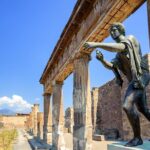
Temple of Apollo, Temples, and Sacred Space
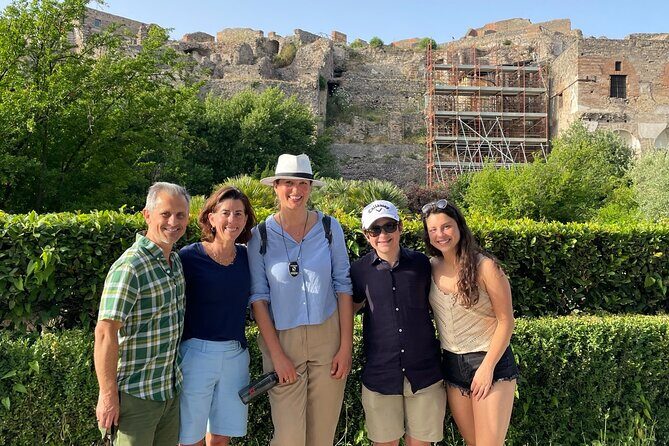
Pompeii’s religious sites are a must if you want the city to make sense. Your route includes temples, including the Temple of Apollo. This is where the guide’s explanations do the most work, because sacred sites can look similar at first glance.
What I like about including these in a short private tour is that religion wasn’t a separate hobby in Roman life. It was tied into civic identity and the rhythm of public events. When you hear what you’re looking at, the stones stop feeling random.
A private guide helps here because you can ask quick questions without slowing down anyone else. And if your guide has Viktoria’s humor and energy, the learning doesn’t feel like homework.
Forum and Basilica: Where Power and Daily Business Met
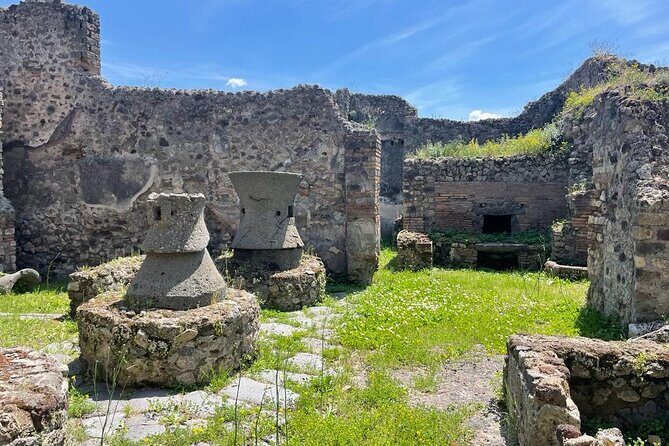
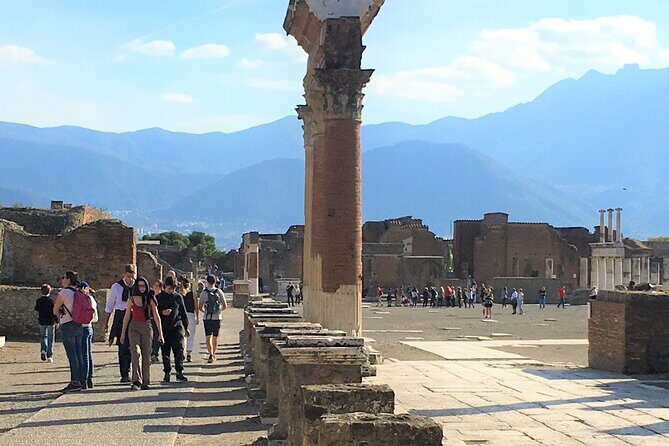
You’ll also cover the city’s main civic spaces, including the Forum and the Basilica. This is one of the best “big picture” sections of the tour because it’s where you connect everything you’ve already seen: entertainment, commerce, religion, and living arrangements all orbit around the city’s civic center.
The Forum is the main square concept, the place for public movement and social gravity. The Basilica adds another layer: it’s tied to the institutional and legal side of city life. Together, they help you understand Pompeii as a functioning community, not a theme park of ruins.
In a short visit, this section is gold. It’s where you leave with a mental map. You walk away thinking, now I know what to look for next time, instead of only remembering what looked impressive.
Mobile Ticket, Private Format, and Pace Control
This tour includes a mobile ticket, and it’s a private experience with only your group. Up to 10 people can join, which is ideal if you’re traveling with family or friends and you want shared context.
Private also means you’re not stuck with the pacing of a standard group tour. The guide can slow down for questions, or speed up if your group has a strong interest in details. In particular, Viktoria’s approach is described as thoughtful about keeping the pace and content aligned with what the group wants, and she’s the kind of guide who asks questions that keep you mentally present.
That pacing detail sounds small, but it’s the difference between a “see a lot” tour and a “learn a lot” tour. You’ll get more out of the ruins if you’re not rushing past the points that matter.
Price and Value: When $240.28 Makes Sense
The price is $240.28 per group, up to 10 people, for about 2 hours. That’s not a budget deal if you’re a solo visitor. But if you’re splitting the cost among several people, it can become very reasonable for a private guide at a UNESCO World Heritage Site.
Here’s the practical way to think about it: if you’re traveling as a group of 4 to 6, you’re paying far less per person than a one-on-one guide arrangement. If you’re just two people, it can still be fair if you really care about getting value from a short time window and avoiding the “where do we start?” problem.
Also, Pompeii is a place where time gets expensive fast. This tour is built to fit a tight schedule and still hit major categories: streets, entertainment, daily life spaces like restaurants and shops, baths, temples, and civic centers. That’s what you’re paying for: not just access, but guidance that turns scattered ruins into a coherent story.
One more thing: this tour is booked on average about 58 days in advance. That’s a hint to plan ahead if your dates are firm, since private slots are easier to fill when schedules get tight.
What’s Not Included (and What You Should Double-Check)
Private tours can trip people up when they assume everything is bundled. Here, private transportation is not included, and entrance fees are listed as not included.
There is also a line that says Admission Ticket Free, so the safest move is to check your confirmation details before you arrive. You want clarity on what you’re paying for on-site versus what’s covered by your booking.
The good news: the tour itself is only 2 hours. Even if you have to handle small extras, you’re not committing your whole day to a complicated logistics puzzle.
Is This Pompeii Tour Right for You?
This tour fits best if you want the biggest Pompeii highlights with an actual explanation behind them. If you like ruins but hate wandering without a plan, you’ll probably feel the benefit immediately. It also works well for groups who want to stay together and keep the conversation moving, rather than splitting up to read signs.
You might want a different option if you’re chasing a full-site checklist and you’re happy to manage route planning yourself for hours. Pompeii can tempt you into trying to see everything. This one is more about seeing the right things in a short time, and using the guide to connect them.
It’s also a good pick if you care about engagement. The guide style described here includes humor and frequent interaction, including questions that help you visualize daily life.
Should You Book This Private Skip-The-Line Pompeii Tour?
I’d book this tour if you want Pompeii to feel understandable quickly. The private format, English guide, and tight route through the streets, baths, villas, Temple of Apollo, and the Forum make the time feel efficient. And if you like guides who keep you thinking and not just watching, Viktoria’s described style is exactly that kind of energy.
Skip it only if you’re determined to cover the entire archaeological park in one day and you’re okay doing the planning and interpretation yourself. For most people, a guided highlight visit like this is the sweet spot between time, meaning, and value.
FAQ
How long is the Private Skip The Line Archeo Tour Of Pompeii?
It lasts about 2 hours.
What is the price and group size for this Pompeii private tour?
The price is $240.28 per group, and the group size can be up to 10 people.
Is the tour offered in English?
Yes, the tour is offered in English.
Where do we meet for the Pompeii tour?
You meet at Piazza Esedra, 80045 Pompei NA, Italy.
What places in Pompeii will we see during the tour?
You’ll see major sights such as the ancient streets, theatres, gladiator barracks, houses, ancient restaurants and shops, Roman baths, temples, the Basilica, and the main square (Forum). The highlights also mention the baths, villas, and the Temple of Apollo.
Do you provide a mobile ticket?
Yes, the tour includes a mobile ticket.
Are entrance fees included?
Entrance fees are listed as not included, but the tour information also shows Admission Ticket Free. Check your booking confirmation so you know exactly what you need to pay for.
Can I cancel for a full refund?
Yes. You can cancel up to 24 hours in advance for a full refund. If you cancel less than 24 hours before the start time, the amount paid is not refunded.