REVIEW · POMPEII
Pompeii with an archaeologist, small group!!!
Book on Viator →Operated by Naplesprit · Bookable on Viator
Pompeii hits different when you have a real expert. This small-group visit (max 12) takes you through key corners of Pompeii with an archaeologist in English, in about two hours. The timing matters too: it’s designed for the afternoon so you miss some of the worst heat and the biggest crush, and you still get that magic light near the end of the day.
I especially like how the tour stays focused on daily life, not just famous ruins. You’ll move through the city as it was—think typical houses and their decorations, everyday shops, thermal baths, and the theater—so the site feels like a functioning Roman city rather than a pile of stones.
The second thing I like is the human touch: guides like Luca bring real competence and friendly energy, which makes the explanations easier to follow. One thing to consider is that this experience depends on good weather, and the tour window is only around two hours, so it’s best for getting smart highlights rather than seeing every single square meter.
In This Review
- Key highlights to know before you go
- Pompeii in 2 hours: what you’ll actually cover
- A quick reality check
- Meeting point at Ristorante Suisse: start fast, stay focused
- Why an archaeologist changes the ruins for you
- What the archaeologist will do for your eyes
- Houses and shops: seeing private life and street-level routine
- What to pay attention to (so your photos make sense)
- Thermal baths and the theater: the public side of Roman life
- The value of mixing “types of places”
- Lupanary and moving moulds: the parts people remember
- A realistic expectation
- Timing strategy: fewer crowds, less heat, better photos
- Price and value: what you pay for in this Pompeii Express setup
- Who this Pompeii small-group archaeologist tour is best for
- Should you book it?
- FAQ
- How long is the Pompeii tour?
- What group size is it?
- Is the tour offered in English?
- Is the entrance ticket included?
- Where do we meet for the tour?
- Is lunch included?
- What happens if the weather is poor?
- What is the cancellation policy?
Key highlights to know before you go
- Max 12 people for questions that actually get answered
- Archaeologist-led storytelling that helps you read what you’re seeing
- Afternoon scheduling to reduce heat and crowd pressure, with nicer end-of-day light
- Daily-life stops: houses, shops, thermal baths, theater, and more
- Pompeii Express entrance ticket included with a mobile ticket
- Meeting point is straightforward at Ristorante Suisse near Piazza Esedra
Pompeii in 2 hours: what you’ll actually cover
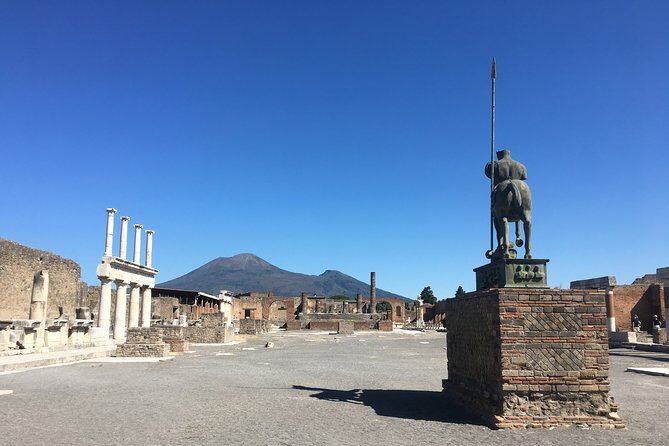
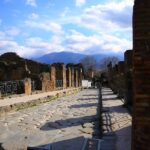
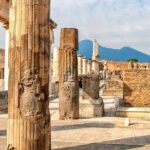
Pompeii was a Roman city spread across about 66 hectares, and it was buried after the eruption of Mount Vesuvius in 79 AD. That scale is part of why people love Pompeii: it’s a rare snapshot of everyday Roman life frozen in time. With a visit like this, your goal is not to check off everything—your goal is to understand what you’re looking at and why it mattered.
In roughly two hours, you’ll focus on the most important and famous buildings and spaces. The tour is built around the idea that you should walk away knowing how Romans lived, not just what Romans built. That means you’ll see spots tied to private life (a typical house with its decorations), public routine (thermal baths), community culture (the theater), and even places that reveal less-polished parts of city life, like the lupanary.
Other archaeologist-led tours in Pompeii


A quick reality check
If you’re the type who wants to wander at your own pace for hours, this might feel short. But if you want smart pacing with a guide steering you toward the best pieces—and you’d like the day to stay comfortable—this format works well.
Meeting point at Ristorante Suisse: start fast, stay focused
You meet at Ristorante Suisse, Piazza Esedra, 10/13, 80045 Pompei NA, Italy. The tour ends back at the meeting point, which is handy if you’re planning lunch on your own afterward or arranging a return to Naples.
I like this kind of setup because you don’t waste time figuring out where to rendezvous once you’re already in Pompeii. It’s also listed as being near public transportation, which can help if your plan is to do Pompeii as a day trip.
One more practical note: you’ll have a mobile ticket, which is helpful when you’re trying to keep your phone available and your paper stuff minimal. With a guide lead-in, it usually keeps the morning-from-hell logistics calmer.
Why an archaeologist changes the ruins for you
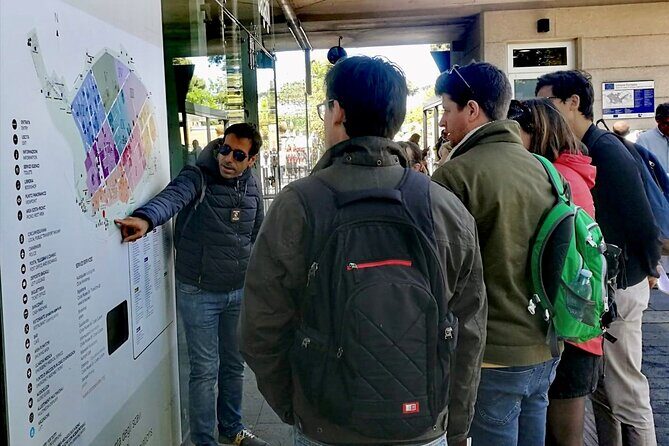
This isn’t just a sightseeing walk. The tour includes a tour with an archaeologist, and that difference matters in Pompeii. When you’re standing in front of a room, a stairwell, or a storefront, it’s easy to see shapes and colors. With expert help, you start seeing function—what people used a space for, how it fit into daily habits, and why certain details survived.
One of the strongest impressions from the guides is competence paired with approachability. Luca is specifically called out as both very competent and friendly, and that combo is exactly what you want when you’re walking through an archaeological site where nothing is labeled for casual guessing.
What the archaeologist will do for your eyes
The guide helps you connect things like:
- decoration and design to the idea of home life
- layout and entrances to how people moved through neighborhoods
- public vs private spaces, so Pompeii starts feeling like a real city
Even in two hours, that kind of interpretation turns photos into evidence. You’ll likely take pictures differently because you’ll know what you’re trying to capture.
Other small-group tours we've reviewed in Pompeii





Houses and shops: seeing private life and street-level routine
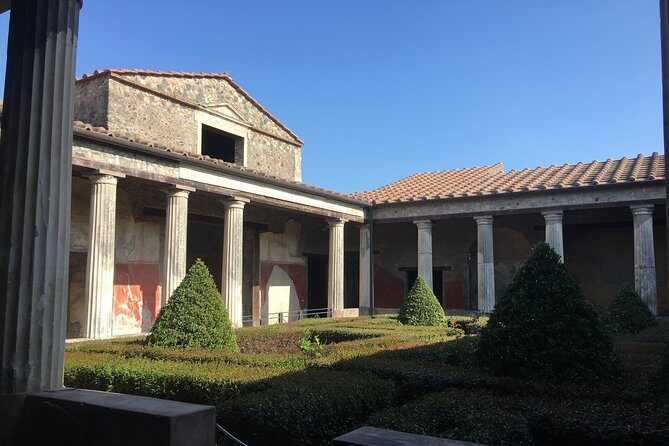
The tour doesn’t treat Pompeii like a museum hallway. It treats it like a city. That shows up fast in the stops connected to ordinary life.
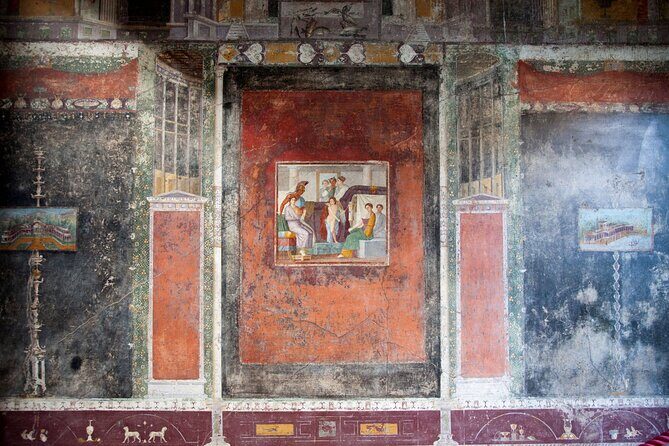
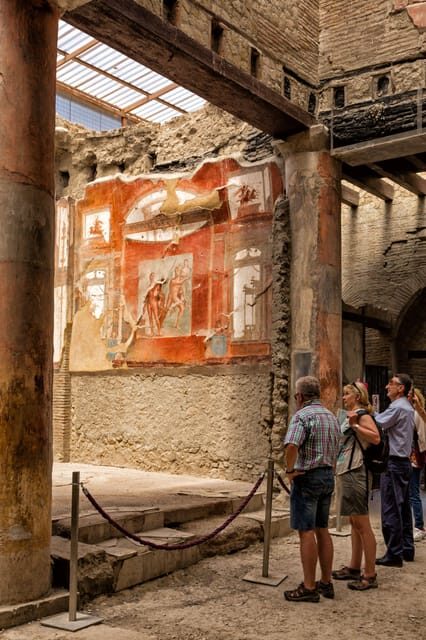
A typical house with its decorations gives you a window into how Romans wanted their homes to feel—how rooms were arranged and how decorative elements signaled status and taste. Instead of only seeing walls, you’ll start thinking about where someone might have sat, worked, or entertained.
Then come the shops, which are crucial because they show the city as an economic machine. You’ll be able to picture commerce, not just architecture. Shops also make Pompeii feel less distant; the idea of running errands and buying daily items suddenly feels familiar.
What to pay attention to (so your photos make sense)
When you’re photographing, aim to capture:
- transitions between rooms or areas
- any decorative details you notice in homes
- storefront-like spaces that help you “read” the street
The guide will help you connect those details to habits and routines, which is where the tour feels most worthwhile.
Thermal baths and the theater: the public side of Roman life
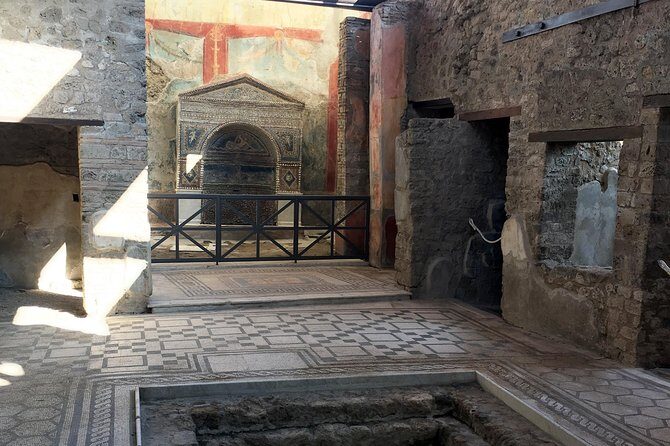
If Pompeii had a daily rhythm for the average person, it was partly shaped by public spaces. That’s why the thermal baths matter. Baths were about cleanliness, yes, but also social life and routine. Standing in the ruins of a bath complex, you get a clearer sense of how Romans structured time around gathering and movement.
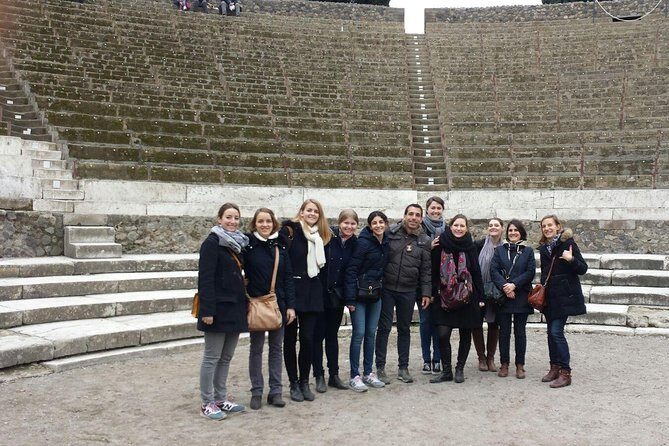
Then there’s the theater, which points to entertainment and community identity. Even when you’re looking at remnants instead of a fully restored building, the space tells you something: this wasn’t a private amusement. It was part of being part of the city.
The value of mixing “types of places”
I like that the tour doesn’t get stuck on one theme. A house is one kind of world. A shop is another. Baths and theater show the public sphere—how people met, passed time, and shared culture. You end up with a fuller picture of Pompeii’s social structure.
Lupanary and moving moulds: the parts people remember
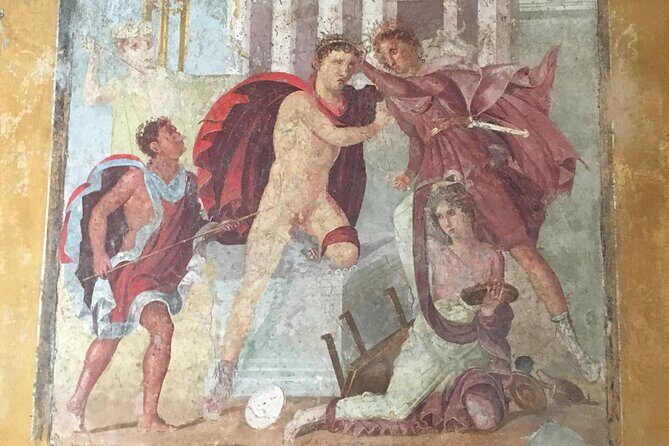
Two elements in the tour description are worth calling out because they change the tone.
The lupanary is included as one of the famous buildings connected to the everyday, practical realities of the city. It’s not presented as gossip; it’s presented as part of how Pompeii functioned. If you like human-scale history—how places served people’s needs, even imperfect ones—this stop will likely stick with you.
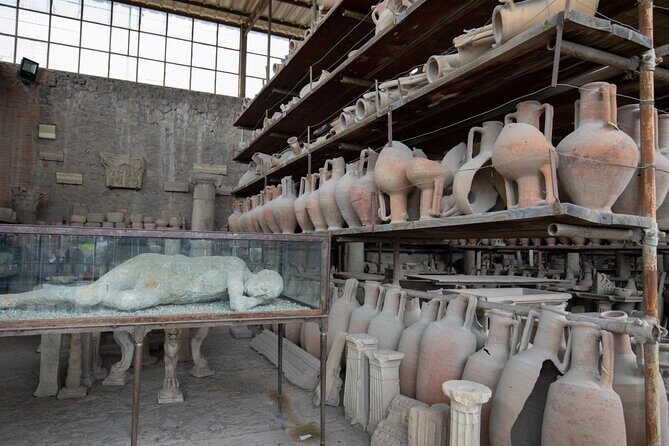
The tour also mentions moving moulds. The wording suggests you’ll encounter an explanation involving casts or molds, which can help you understand what certain spaces looked like and how they were used. If you’ve ever found that ruins feel frustratingly incomplete, this kind of interpretive element is exactly where a guide helps most.
A realistic expectation
These stops can be emotionally jarring for some people because Pompeii’s preserved details can feel too real. If you’re traveling with children, you may want to decide in advance how you want to handle age-appropriate content. The tour is recommended for families, but families vary a lot in what they’re comfortable discussing.
Timing strategy: fewer crowds, less heat, better photos
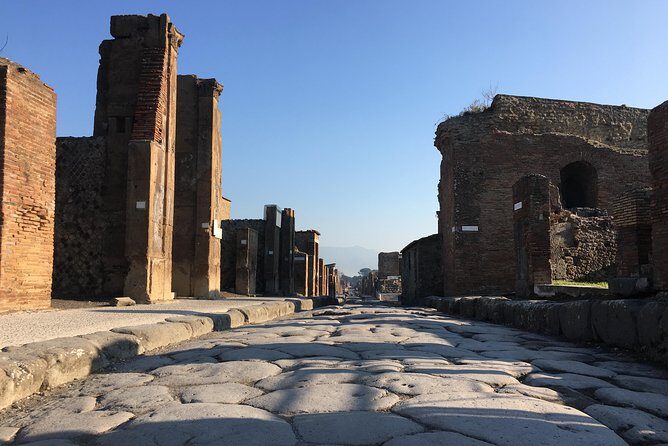
This tour is designed and calibrated for the afternoon to avoid the worst heat and crowd levels. That’s not a small detail—it changes the whole experience.
When you’re walking in Pompeii, comfort affects attention. If you’re overheating, you stop caring about explanations. With the planned timing, you’re more likely to listen, ask questions, and take the photos that actually help you remember what you learned.
Then there’s the end-of-day bonus: the description highlights the charm of the light at the end of the day, which can make ruins look more three-dimensional and less flat. If you’re a photography enthusiast, you’ll appreciate that you’re not trying to shoot in harsh midday sun.
Price and value: what you pay for in this Pompeii Express setup
At $66.09 per person, you’re paying for several things bundled together:
- a small group capped at 12
- a guided tour with an archaeologist
- a Pompeii Express entrance ticket
- a mobile ticket
The value here is mostly about time and interpretation. Pompeii is huge, and a self-guided visit can turn into a long line-and-search problem. With a guide, you’re less likely to spend your energy wandering toward the wrong areas or missing the explanations that turn ruins into stories.
Also, the group size is a real selling point. In a larger tour, it’s harder to get answers when something confuses you. In a group that small, it’s easier to keep momentum and keep questions in play.
Lunch isn’t included, so plan a post-tour meal or bring a simple plan for when you’re ready to eat. The tour timing in the afternoon can make that easier.
Who this Pompeii small-group archaeologist tour is best for
This experience is recommended for families, photography lovers, and archaeology fans. Based on the structure, I think it’s especially strong if you:
- want a guided highlight route rather than a wandering marathon
- care about understanding what you see
- appreciate smaller groups and a more conversational pace
- like the idea of late-day light for photos
It may be less ideal if you’re the type who needs hours of unstructured time to roam, or if you’re hoping to cover every single major site in Pompeii. This is built for “most important and famous buildings” plus daily-life context, in a tight window.
Should you book it?
If you want Pompeii without the stress of crowd navigation—and you want your photos and steps to come with real meaning—this is a smart booking. The combo of a small group, an archaeologist-led approach, and an Express ticket bundled into the cost makes the whole outing feel efficient.
I’d book it if your top priority is to leave with a clear picture of Roman daily life and not just random snapshots. I’d hesitate only if your schedule requires a no-weather-dependency plan or if you want a full-day, slow, no-guide stroll.
FAQ
How long is the Pompeii tour?
It lasts about 2 hours.
What group size is it?
It’s a small group with a maximum of 12 travelers.
Is the tour offered in English?
Yes. The tour is offered in English.
Is the entrance ticket included?
Yes. The Pompeii Express Entrance Ticket is included, and you receive a mobile ticket.
Where do we meet for the tour?
The meeting point is Ristorante Suisse, Piazza Esedra, 10/13, 80045 Pompei NA, Italy. The tour ends back at the meeting point.
Is lunch included?
No. Lunch is not included.
What happens if the weather is poor?
This experience requires good weather. If it’s canceled due to poor weather, you’ll be offered a different date or receive a full refund.
What is the cancellation policy?
You can cancel for a full refund up to 24 hours before the experience starts. If you cancel less than 24 hours before, the amount paid isn’t refunded.