REVIEW · ERCOLANO
Herculaneum Guided Walking Tour with Entry Ticket
Book on GetYourGuide →Operated by WORLDTOURS S.r.l. · Bookable on GetYourGuide
Ancient streets, minus the crowds. This guided Herculaneum walk is interesting because you’re touring one of the best-preserved Roman towns on a short, focused timeline, and you start quickly with skip-the-line tickets. I also like that it’s not just big ruins for photos; your guide connects details to everyday life in a way that makes the site feel human.
One thing to consider: language plans can shift. If there aren’t enough people in your chosen language, you might switch to audio, and that can change how lively the tour feels.
In This Review
- Key Things To Know Before You Go
- Why Herculaneum Feels Different Than Pompeii
- Getting There: Biglietteria Ercolano and the Worldtours Banner
- Skip-the-Line Tickets: What You Actually Gain
- Walking the Ancient Streets: Villas, Shops, and the Ash Story
- Thermal Baths and Public Spaces: Learning Roman Routines
- Frescoes and Wooden Remains: What to Look For
- Small-Group Walking: Pace, Breaks, and Wear-Your-Patience Comfort
- Languages and the Audio-Guide Option
- Price and Value: Is $41 Worth It?
- Who This Tour Fits Best (and Who Should Skip)
- Practical Packing List (Based on What Matters Here)
- Should You Book This Herculaneum Guided Walk?
- FAQ
- Where is the meeting point?
- How long does the tour last?
- Are skip-the-line tickets included?
- What languages are available?
- What should I bring?
- Is this tour suitable for wheelchair users or mobility impairments?
Key Things To Know Before You Go
- Meet at Biglietteria Ercolano (Herculaneum ticket office): The guide is there with a Worldtours banner.
- Skip-the-line entry included: You waste less time standing around and more time looking closely.
- A small-group experience: The tour is designed to stay manageable for walking.
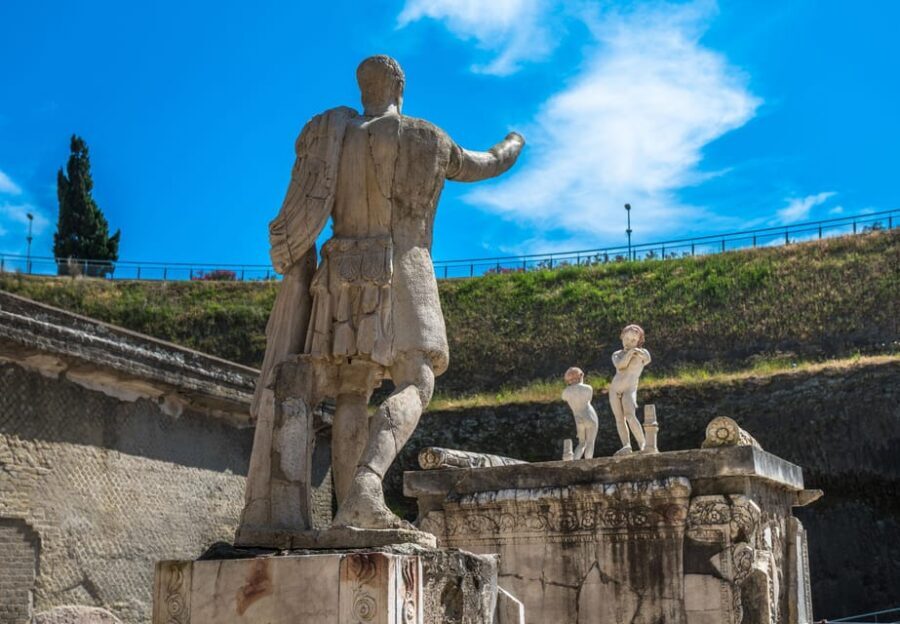
- Built around daily life: Villas, shops, streets, thermal baths, and public spaces are the focus.
- Weather runs all conditions: Wear comfortable shoes and plan for rain or sun.
- Language may turn into audio: If your language doesn’t meet the minimum, you’ll get audio instead of a live guide.
Why Herculaneum Feels Different Than Pompeii
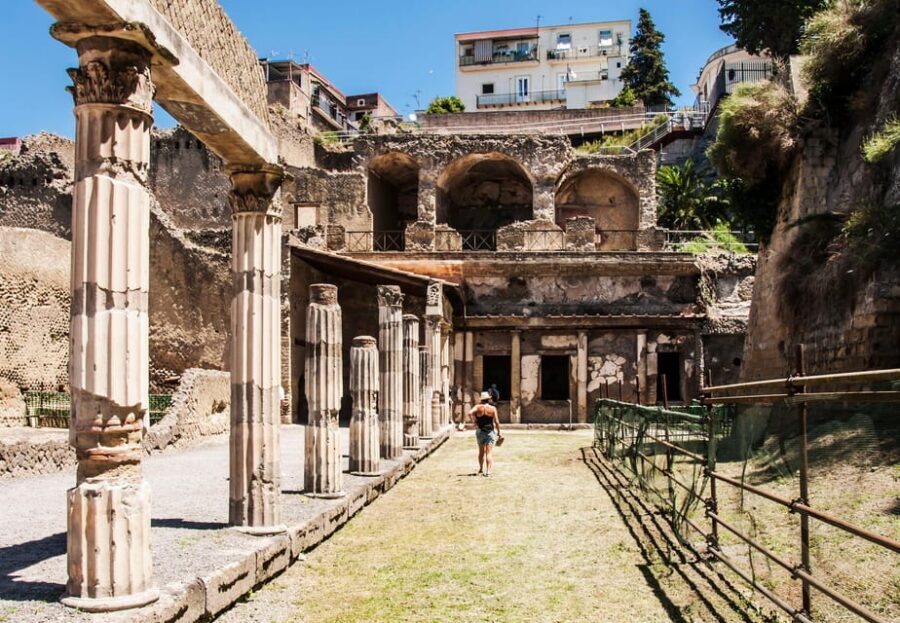
Herculaneum is smaller than Pompeii, but that’s part of the charm. Instead of feeling like a giant open-air museum, it comes across more like you’re walking through a neighborhood that happened to stop mid-day.
The big reason is preservation. The town was buried by volcanic material from Mount Vesuvius in 79 AD, and that covering helped protect structures and decoration. On this tour, you’ll get a guided way of seeing what survival looks like: wooden features, frescoes, and the layout of villas and everyday spaces rather than only stone walls.
If you like archaeology that explains how people actually lived, this is the kind of site that rewards slow looking—even though the tour itself stays brisk.
If you're still narrowing it down, here are other tours in Ercolano we've reviewed.



Getting There: Biglietteria Ercolano and the Worldtours Banner
You meet at the Herculaneum site ticket office, listed as Biglietteria Ercolano. This matters because it sets the tone: you’re not hunting for a bus or collecting people at multiple points. You show up, you find the guide holding a Worldtours banner, and you start.
The tour is also clearly built around being walkable on-site. Transportation pickup or drop-off isn’t included, so you’ll want to plan your own arrival timing to be at the ticket office on time.
Practical tip: wear shoes with grip. Herculaneum is made for walking, but you still want comfortable footing because the tour is outdoors and covers uneven ancient terrain.
Skip-the-Line Tickets: What You Actually Gain
Skip-the-line can sound like a marketing line, but here’s what it means in practice for a 2-hour experience. With a short tour, even a small delay can eat up your time inside the site.
Because the tickets are included, you begin the guided portion without the awkward pause of figuring out which line to use. That helps you keep momentum and get to the parts the guide focuses on.
There’s also a schedule-related wrinkle worth noting: admission is free on the first Sunday of each month (according to regional regulations). If your dates line up, you might compare options and decide whether you’d rather save the ticket cost and go independently. The guided format still has value for how quickly you learn to read the site.
Walking the Ancient Streets: Villas, Shops, and the Ash Story
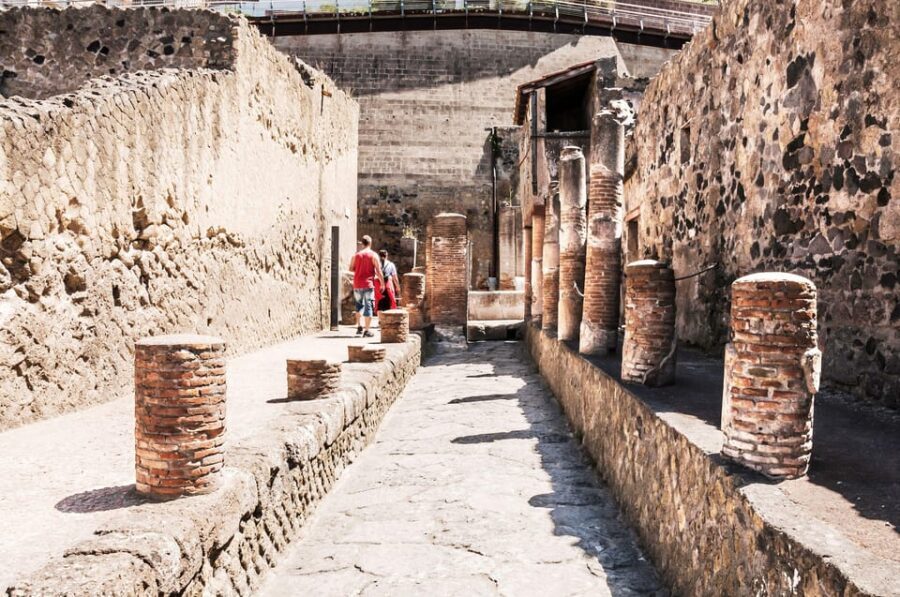
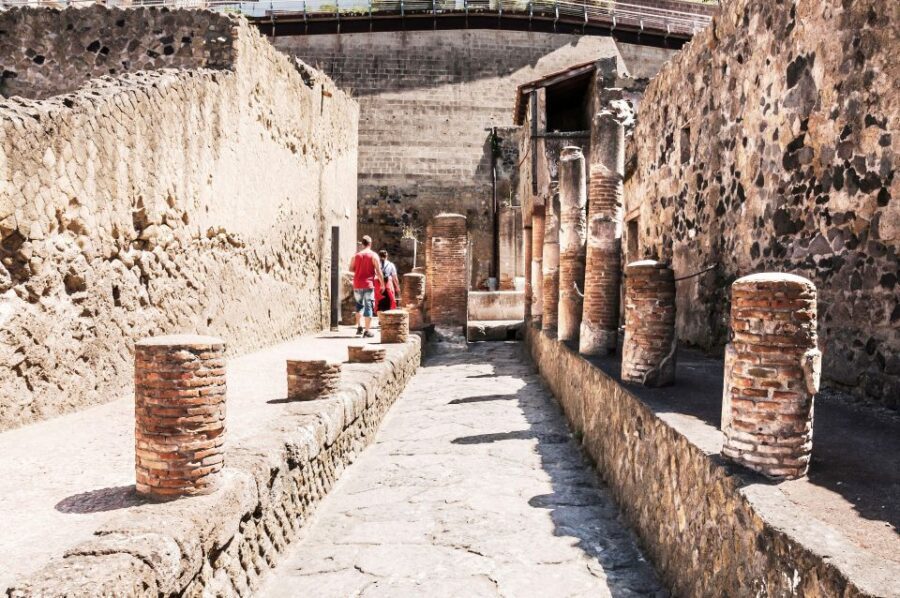
You’ll spend about 1.5 hours on the guided walk inside the archaeological site, and that time is the core of the experience. The tour route is built to make Herculaneum feel like a lived-in place—starting with streets and moving through the types of buildings that shaped daily routines.
Expect the guide to connect what you see to what’s special about Herculaneum’s survival. You’re not only looking at stone. You’re seeing evidence of buried domestic life: villas and more residential areas, plus spaces linked to commerce like shops.
Here’s the mental trick the guide can help you with: try to picture the town before the eruption rather than only after it. The eruption is the backdrop, but the real story is how people moved through streets and used homes and shared public areas.
If you’re the kind of person who loves museum labels, this tour helps you practice that skill in a real environment: the guide points out what to notice and why it matters.
Thermal Baths and Public Spaces: Learning Roman Routines
Herculaneum includes thermal baths and public spaces, and that’s a big deal for understanding Roman culture. It’s easy to focus only on elite villas, but baths and communal areas tell you how ordinary routines worked too.
On the walk, you’ll be guided through areas tied to social life. That can mean learning about how Romans used baths as more than hygiene—think conversation, relaxation, and a daily rhythm.
This kind of context is exactly where a guided format can beat self-guided wandering. You might still enjoy the site alone, but with a guide, you’re less likely to miss the bigger pattern: the town was designed for living, not just displaying art.


Frescoes and Wooden Remains: What to Look For
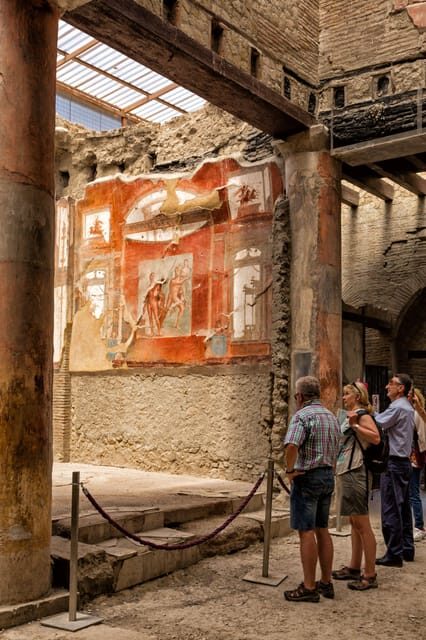
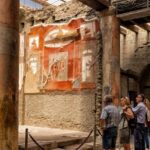
One of the most moving parts of Herculaneum is how much survived. Volcanic burial preserved aspects that don’t usually survive for centuries—particularly decorative elements like frescoes and organic materials like wooden structures.
Even without getting too technical, you can learn what to notice:
- Look for wall decoration and color remnants where available.
- Pay attention to the way rooms and spaces connect, since layout is part of the story.
- Watch for evidence of how areas were used rather than only how they looked.
The guide’s job is to translate those observations into meaning. If you get a strong guide, you’ll leave with better instincts for reading the site quickly: you’ll know what’s important and what’s just background.
Small-Group Walking: Pace, Breaks, and Wear-Your-Patience Comfort
This is a small-group tour, and that generally helps keep the experience focused. You’re not being rushed by a huge crowd, and the guide can manage the flow of people across the site.
That said, the pacing can vary. A short tour can still include brief stops, and sometimes the end time can run slightly earlier or later depending on the group and conditions. If you have tight connections after the tour, don’t book a right-after commitment with zero buffer.
Also, keep in mind that the tour runs in all weather conditions. Plan for comfort first: layers you can adjust, a rain layer if needed, and a water plan. You want energy for looking closely, not for battling sweat or cold.
Languages and the Audio-Guide Option
The tour is offered in English, Italian, and Spanish. The key detail is how the live guiding works.
If the tour has at least 6 participants in the same language, you’ll get a professional guide for that language. If not, each participant will receive an audio guide instead. The tour may also be bilingual.
For you, the decision point is simple:
- If live guiding is a must, choose a time and language where you expect enough people.
- If you’re comfortable with audio, you can pick based more on timing than language.
Either way, bring patience. Audio can still help you learn, but it changes the feel—less real-time back-and-forth and fewer moments where the guide adjusts explanations to the group.
Price and Value: Is $41 Worth It?
At about $41 per person for a 2-hour experience, the value comes from what’s bundled, not just the number on the screen.
You’re paying for:
- A licensed expert guide
- Guided time inside the archaeological site
- Skip-the-line entry tickets
That matters because Herculaneum is easy to under-experience if you go in unstructured mode. With a guide, you get a framework for seeing what to look at, and you get a narrative that turns scattered ruins into a coherent town.
Is it always the cheapest choice? No. If you’re the independent type and plan to read every sign, you might do fine on your own. But with limited time and a short visit window, paying for guidance can be the difference between a quick photo stop and a real understanding of what you’re walking through.
One more value angle: if it’s your first Sunday of the month, site admission can be free. In that scenario, the guide and skip-the-line still add convenience and structure, but it’s worth thinking about whether you want to buy the guided experience for learning versus saving the ticket cost.
Who This Tour Fits Best (and Who Should Skip)
This guided walk is ideal if you care about history and culture and want an organized way to see Herculaneum’s highlights in a limited time.
It’s especially good for you if:
- You like walking tours with a clear story.
- You want help spotting what makes Herculaneum so unusually preserved.
- You prefer fewer logistics and a direct start at the site.
It may not fit if you:
- Have mobility impairments or use a wheelchair. The tour is not suitable for these needs.
- Need to bring a stroller, pets, or large luggage. Those aren’t allowed.
And if you’re traveling with kids, note that unaccompanied minors aren’t allowed. You’ll want an accompanying adult for the experience to work.
Practical Packing List (Based on What Matters Here)
Plan for comfort and quick document access. Bring:
- Passport or ID card
- Comfortable shoes
- Camera
- Comfortable clothes
Then dress for weather. Since it runs in all conditions, you’ll enjoy the tour more if you can stay comfortable through shade, sun, wind, or rain.
Should You Book This Herculaneum Guided Walk?
Book it if you want the short-format payoff: skip-the-line entry, a guided walk that helps you read the town, and an expert who can connect preservation to real daily life. At around $41 for a 2-hour outing, it’s a practical choice when you want learning without spending your whole day trapped in logistics.
Consider skipping or choosing another approach if:
- You need live guidance in a specific language and you’re worried the group might not meet the minimum. The audio-guide option can change the experience.
- You’re counting every minute and hate any chance of timing variance.
- You have mobility needs that make outdoor walking difficult. This tour isn’t suitable for wheelchair users.
If you’re flexible, the tour’s structure is a strong match for seeing Herculaneum the right way: with context, with direction, and with enough time to look beyond the obvious stones.
FAQ
Where is the meeting point?
Meet the guide at the Ticket office of the Herculaneum site (Biglietteria Ercolano). The guide will have a Worldtours banner.
How long does the tour last?
The experience is listed as 2 hours total, with 1.5 hours of guided time inside the archaeological site.
Are skip-the-line tickets included?
Yes. Skip-the-line entrance tickets are included as part of the tour.
What languages are available?
The tour is available in English, Italian, and Spanish. It may be bilingual, and if there are not at least 6 participants in the same language, you’ll receive an audio guide.
What should I bring?
Bring your passport or ID card, comfortable shoes, a camera, and comfortable clothes.
Is this tour suitable for wheelchair users or mobility impairments?
No. The tour is not suitable for people with mobility impairments or wheelchair users.