REVIEW · NAPLES
Pompeii: Skip-the-Line Entry Ticket with Audio Guide or Tour
Book on GetYourGuide →Operated by Vox City International · Bookable on GetYourGuide
Pompeii feels close-up, even at a sprint. This skip-the-line entry ticket gets you into UNESCO Pompeii quickly, then lets you roam using an audio guide and digital map at your own pace. You’ll be walking streets preserved by volcanic ash, with Mount Vesuvius looming in the background.
Two things I really like: you get straight-in access that saves time before you even start exploring, and the audio guide is designed to start when you’re at the right spot (when it behaves). You also get optional live context with an art historian if you choose the guided slot.
One caution: the experience relies on your smartphone and downloaded audio, and the app’s auto-play and GPS can be a bit hit-or-miss for some visitors. If your phone battery is low or your signal is weak, you’ll want to plan ahead.
In This Review
- Key things to know before you go
- Skip-the-line entry at Piazza Esedra: why this matters in Pompeii
- What you actually get inside: the 2-hour plan built for highlights
- The kind of Pompeii stops you’ll be looking for
- Audio guide and digital map: how to get value (and avoid frustration)
- Do this before you arrive
- Plan for a “manual backup” mindset
- Optional art historian tour: when paying for a guide is worth it
- The Pompeii walk itself: what to look for, and what to skip on purpose
- Forum to Vesuvius: start with the big picture
- Temples of Venus, Apollo, and Jupiter: religion as city design
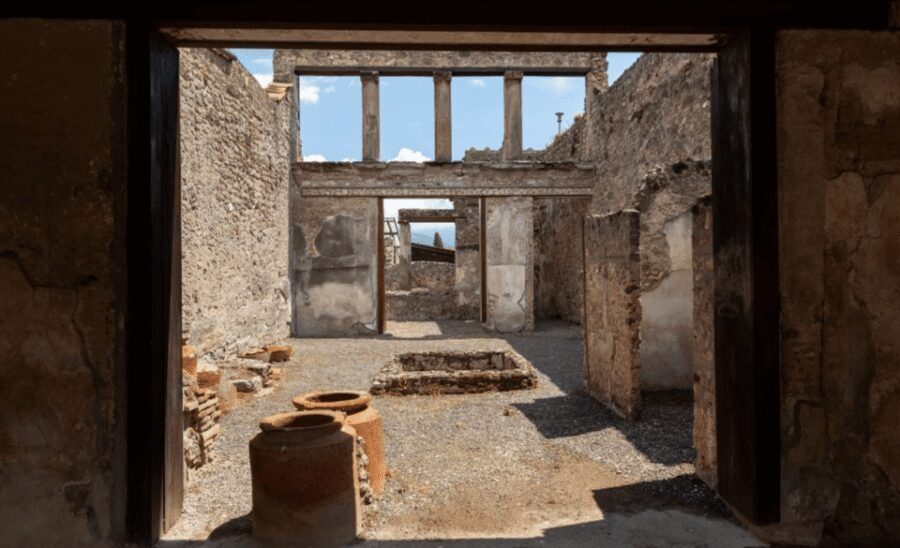
- Houses and courtyards: look for the small stuff
- The House inscriptions and the wine jars: Pompeii’s street humor
- Baths mosaics: where art meets everyday life
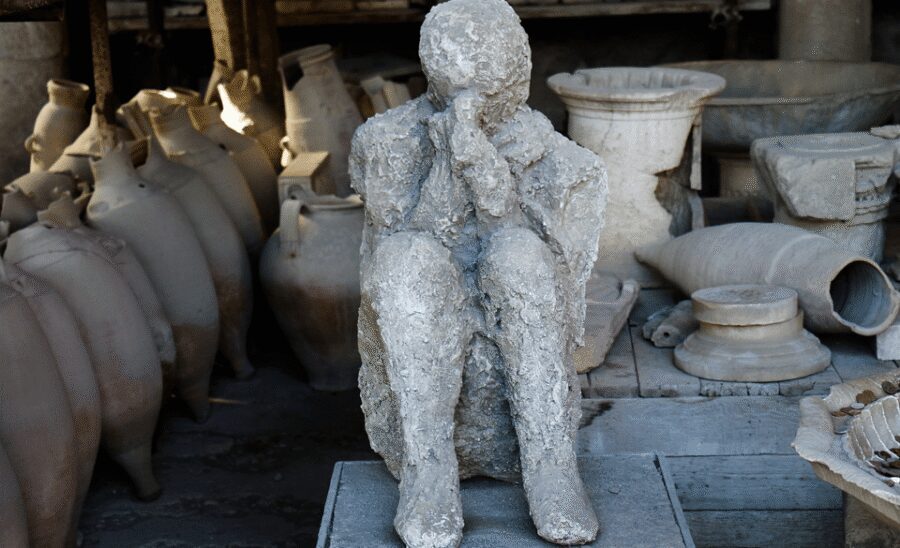
- The casts: don’t skip this, but go gently
- Timing, crowds, and weather: manage the real-world variables
- Practical logistics you should not ignore
- Bring what the audio needs
- Know what’s included and what’s not
- How you move through the site
- Is it good value at about $37 per person?
- Should you book this Pompeii skip-the-line ticket?
- FAQ
- Where do I pick up my tickets for this Pompeii entry?
- How long is the Pompeii visit with this ticket?
- Do I need headphones for the audio guide?
- What device do I need for the audio guide?
- Is the audio guide automatically triggered?
- What languages are available for the guided tour?
- What languages are available for the audio guide?
- Does this ticket include access to the suburban villas?
- How much time should I plan to spend in Pompeii?
- Is free cancellation available?
Key things to know before you go
- Fast-track entry at Piazza Esedra: pick up at Vox City in front of Hotel Vittoria, then get moving quickly.
- Audio guide with digital map: you can go building to building instead of following a rigid route.
- Big sights in a short window: most people can hit major highlights in about 2 hours, then keep going if you have energy.
- Classic Roman stops: forum views, temples of Venus/Apollo/Jupiter, the House of the Faun, theaters, baths, and aqueduct remnants.
- Suburban villas are not included: you’ll have to choose other tickets if Villa of the Mysteries or similar is on your must-see list.
Skip-the-line entry at Piazza Esedra: why this matters in Pompeii
Pompeii is famous for being breathtaking and also for being crowded. The main value of this ticket is simple: you avoid the long ticket queue so you can spend your time walking through the ruins instead of waiting at the gate.
You start at Piazza Esedra, at the Vox City info point in front of Hotel Vittoria. Your voucher gets exchanged there for the official entry ticket. If you add a guided option, your guide meets you at that same Vox City point, and the tour departs at the booked time—so arriving about 5 minutes early helps you avoid the rush.
For planning, remember the timing reality: Pompeii is huge. Even if your slot is 2 hours, the site is often visited for 2–4 hours (and it’s easy to lose time—both from wonder and from trying to see “just one more” courtyard or mosaic). This makes the fast entry especially useful: you’re not rescuing your day from delays.
If you're still narrowing it down, here are other tours in Naples we've reviewed.



What you actually get inside: the 2-hour plan built for highlights

Your ticket is built around a 2-hour visit window, with the option to add a guided tour (English, Spanish, or Italian). In that time, you can cover a lot of the classic Pompeii experience: the forum area with its dramatic Vesuvius backdrop, major temples, public buildings, and several famous houses and neighborhoods.
The ruins cover roughly 44–50 hectares, depending on how the area is described. That’s why this ticket works best as a “choose-your-own route” strategy rather than a “see everything” promise. You’re getting a guided feel (through optional live context and the audio guide), but you still steer your route based on what grabs you.
If you do it right, you’ll feel the emotional punch of Pompeii: the ordinary daily-life details—markets, homes, baths—survived by catastrophe in 79 C.E. The ash that buried the city also preserved the layout, so you’re walking through space that feels surprisingly legible.
The kind of Pompeii stops you’ll be looking for
Even without a live guide, the audio route nudges you toward the places most visitors end up chasing anyway. Expect to see and hear context for things like:
- Homes and courtyards, including the House of the Faun
- Temples dedicated to Venus, Apollo, and Jupiter
- The Forum area, plus the big open sightlines toward Mount Vesuvius
- The grand theater
- Market areas that once buzzed with daily trade
- Public baths and their mosaics
- Aqueducts and fountains, which make Pompeii feel less like “ruins” and more like a working city
- Plaster casts of victims, which are heavy—but important—because they translate disaster into human scale
Audio guide and digital map: how to get value (and avoid frustration)

The audio guide is one of the main reasons this ticket feels practical. It’s multilingual (English, French, Spanish, German, Italian for the commentary), and you also get a digital map designed for navigation.
Here’s what matters for you: this is not a speaker-on-the-ground tour where someone always tells you what’s next. It’s a self-guided experience with an audio layer. Some people love that freedom. Others get annoyed if the phone doesn’t cooperate—especially if autoplay or location detection isn’t working smoothly.
Do this before you arrive
You’ll need to scan the QR code on your voucher to download the audio guide before you go in. Bringing a charged smartphone matters because Pompeii is a long walk, and battery anxiety is real once you’re moving.
Also bring headphones. The audio guide is on your device, not provided as a physical headset from the operator.






Plan for a “manual backup” mindset
Based on real-world feedback, the app experience can vary. Some visitors report that the audio starts automatically when they reach a point of interest; others say autoplay didn’t kick in, GPS location was inconsistent, or the app was confusing to navigate. So I’d treat the audio as helpful guidance, not as a guaranteed magic trick.
Your best move: have a simple fallback plan. If autoplay is missing, you’ll likely need to tap through the audio points yourself, using the map. And if your phone battery runs low, you’ll lose both navigation and narration at the same time—so carry a charging solution if you have one.
Optional art historian tour: when paying for a guide is worth it
If you choose the guided option, a professional art historian adds the kind of context that makes Pompeii click faster. The guided tours run in English, Spanish, or Italian, and they depart at your booked slot.
This is the part I’d strongly consider if:
- You want a tighter route in a limited time window
- You prefer someone to point out what matters without you reading every sign
- You’re the kind of person who likes to understand why a building looks the way it does, not just what it used to be
Live guides also help with crowd flow. Pompeii can feel like you’re constantly dodging foot traffic, and having someone lead you past waiting clusters can cut down stress. Some guides are also praised for staying warm and funny while covering serious content—useful because Pompeii is both fascinating and intense.
If you skip the live tour, you’re still set up well for self-exploration. The key difference is whether you want interpretation from a person (guided option) or interpretation you assemble yourself from the audio (audio-only).
The Pompeii walk itself: what to look for, and what to skip on purpose
This ticket is designed to help you hit the essentials, but you still need to choose how you’ll prioritize. My advice: pick a “core loop” of must-sees, then allow a little drift time for mosaics, inscriptions, or photo stops.
Forum to Vesuvius: start with the big picture
If you head toward the Forum, you’ll get the iconic Pompeii feel quickly—open space, urban layout, and Mount Vesuvius acting like a backdrop that makes the whole story feel real. In a place like Pompeii, the skyline view helps you remember you’re not looking at a museum diorama. You’re looking at a city that ended in a single event.
Temples of Venus, Apollo, and Jupiter: religion as city design
The temples aren’t just pretty stone. They show you how Roman daily life mixed civic space with worship. The fact that you’ll pass by multiple major temple sites as part of this route is a good reminder that Pompeii wasn’t empty when it was buried. People lived there with schedules, rituals, and social expectations.
Houses and courtyards: look for the small stuff
The House of the Faun is a name you’ll hear repeatedly, and it’s worth aiming for because famous houses help you understand how status and daily routines worked in Roman cities.
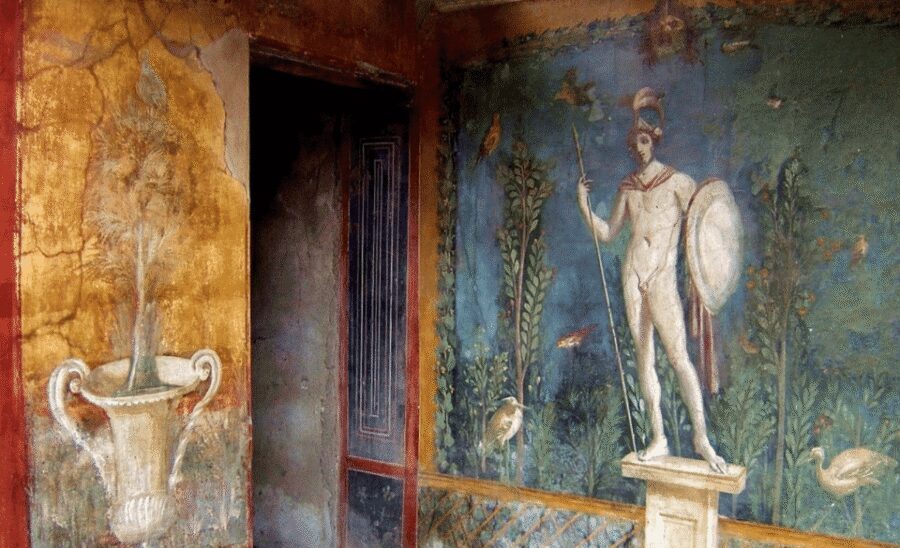
If you like human details, don’t rush past smaller features. In Pompeii, the “small” details are often the most memorable—like the way everyday life shows up in objects, wall art, and signage-like graffiti.
The House inscriptions and the wine jars: Pompeii’s street humor
One of the most fun Pompeii details highlighted in this experience is the way residents talked back to fate through text and labeling. You’ll encounter items such as inscriptions in Sirico’s house that read Salve lucru (welcome, profit), plus wine jars labeled Vesuvinum—a witty nod linking the volcano to wine.
This is why I like Pompeii with an audio guide: you’re not just walking past an object. You’re getting told what it likely meant in context.
Baths mosaics: where art meets everyday life
Public baths are a great stop if you want to feel what leisure and social life were like. The mosaics in the baths stand out because they show craftsmanship, taste, and public identity. It also gives your feet a helpful change of pace: you’re not only climbing or weaving through open courtyards.
The casts: don’t skip this, but go gently
The plaster casts of victims are difficult to face, but they’re also part of what makes Pompeii more than “ancient buildings.” If you’re feeling overwhelmed, slow down. Let the scene sink in. This is one of those stops where rushing can make you miss the point.
Timing, crowds, and weather: manage the real-world variables
Even with a 2-hour target, the physical reality of Pompeii is that you’re on uneven surfaces, moving between areas, and reading what you can as you go. Add sun, rain, or strong wind and your pace changes fast.
Some people report visiting on a sunny winter day when Pompeii felt quieter. Others mention heavy rain cutting their visit short after 2 hours. So I’d plan like this:
- If weather looks iffy, you’ll likely want to prioritize your core sights first
- If it’s clear and you feel good, you can keep exploring after your guided portion ends, because it’s common to stay longer if you’re not exhausted
Also, be ready for the fact that “2 hours” is a helpful starting point, not a finish line. It’s better to aim for meaningful coverage than to chase every labeled spot.
Practical logistics you should not ignore
A few details here can make or break your experience.
Bring what the audio needs
- Headphones
- Charged smartphone
- Time to download the audio guide via the QR code before entry
Know what’s included and what’s not
This ticket does not include access to the suburban villas—specifically Villa of the Mysteries, Villa of Diomedes, and Villa Regina. If one of those is your must-see, you’ll need a different ticket plan.
How you move through the site
You’re responsible for your walking route. That’s part of the charm, but it’s also why the digital map and location-based audio are useful. If you rely on the app, treat the phone like an essential tool, not a bonus.
Is it good value at about $37 per person?
At around $37 per person, the value isn’t just the ticket price. It’s what you’re buying: time saved at entry plus an audio guide and digital map so you can navigate through a massive UNESCO site without feeling lost.
If you’re tight on time, skip-the-line access helps protect your schedule. If you have more flexibility, you can pair this ticket with other stops around Naples later and still keep Pompeii as your anchor highlight.
The optional guided tour is where you might decide to spend a bit more for comfort and context. If you love interpretation and you want someone to point out what matters, the live art historian component can be money well spent.
If you’re comfortable using your phone and you’d rather roam freely, the audio-only setup can feel like the best of both worlds: structure when you want it, freedom when you don’t.
Should you book this Pompeii skip-the-line ticket?
Book it if you want quick entry, an easy-to-follow self-guided experience, and audio support that helps you recognize what you’re looking at. It’s also a strong fit if you’re traveling as a pair or small group and you don’t want the hassle of managing a rigid tour pace.
Consider a different option if:
- You know your phone battery usually dies early
- Your internet connection is unreliable (since downloading the audio beforehand is key)
- You strongly prefer a full, in-person tour for every major stop
If you do book, go in with a simple plan: pick your top sights, download the audio guide ahead of time, and let the rest become “bonus finds.” Pompeii rewards that mindset.
FAQ
Where do I pick up my tickets for this Pompeii entry?
You exchange your voucher at the Vox City info point in Piazza Esedra, in front of the Hotel Vittoria.
How long is the Pompeii visit with this ticket?
The duration is listed as 2 hours, with starting times based on availability.
Do I need headphones for the audio guide?
Yes. Headphones are listed as something to bring, since the audio guide is on your phone.
What device do I need for the audio guide?
You’ll need a charged smartphone, because you download and use the audio guide on it. The voucher’s QR code is used to download the guide.
Is the audio guide automatically triggered?
The experience includes an audio guide, but some visitors report issues with autoplay or navigation behavior. Plan to use the map and controls on your device if autoplay doesn’t work for you.
What languages are available for the guided tour?
Guided tours are available in English, Spanish, or Italian.
What languages are available for the audio guide?
The audio commentary is available in English, French, Spanish, German, and Italian.
Does this ticket include access to the suburban villas?
No. It does not include access to the suburban villas (Villa of the Mysteries, Villa of Diomedes, Villa Regina).
How much time should I plan to spend in Pompeii?
Pompeii is open daily, and visitors typically spend 2–4 hours inside.
Is free cancellation available?
Yes. Free cancellation is available up to 24 hours in advance for a full refund.