REVIEW · POMPEII
Pompeii Archaeological Area Entrance Ticket
Book on Viator →Operated by Weekend in Italy · Bookable on Viator
Pompeii can swallow a few hours fast. This self-guided entrance ticket is one of the simplest ways to experience Roman Pompeii on your own schedule, with guaranteed skip-the-line access and the chance to hit major stops like the Forum, Theatre, and Lupanare. I like that you’re not stuck on a rigid script, and I like that you can grab a recommended route map once you’re inside. The main drawback is that it’s still a busy site with a huge amount of walking, and some people run into ticket-voucher mix-ups right at arrival.
If you keep your expectations realistic, this works really well. The standard visit time is listed as 2 to 3 hours, but Pompeii covers 66 hectares (163 acres), so you may want longer—especially if you actually read inscriptions, compare buildings, and stop for photos. You choose a time slot, walk in at your pace, and your experience ends when you exit the archaeological area.
Key Pompeii Ticket Highlights
- Timed entry options let you pick a time window rather than waiting for the first opening scramble.
- Guaranteed skip long lines, so you can focus on ruins instead of queues.
- On-site route map for recommended paths through the city.
- Major sights are reachable in sections: Porta Marina, Piazza Esedra, and Piazza Anfiteatro.
- Don’t miss the Lupanare: the two-story brothel with erotic frescoes still on the walls.
In This Review
- Pompeii Entrance Ticket: What You Get for Your $54.44
- Timed Entry, Voucher Snags, and How to Avoid a Lost Hour
- Porta Marina: City Walls, a Temple, and Where Rome Did Business
- Piazza Esedra: Baths, Markets, and Houses You Can Read Like Stories
- Piazza Anfiteatro to the Theaters: Amphitheater Energy Without the Crowd Chaos
- Lupanare: The Brothel Stop With Erotic Frescoes Still on the Walls
- Practical Rules That Matter on a Fragile Site
- How Long Should You Actually Plan: 2–3 Hours vs Real Pompeii Time
- Who This Ticket Fits Best (And Who Might Want Something Else)
- Should You Book This Pompeii Entrance Ticket?
- FAQ
- How long is the Pompeii visit with this ticket?
- What is included in the ticket price?
- Is this a guided tour?
- Can I choose an entrance time?
- Do I get a map?
- Where can I enter if I have limited mobility?
- Can I use the voucher to access the museum?
- Are photos and videos allowed?
Pompeii Entrance Ticket: What You Get for Your $54.44
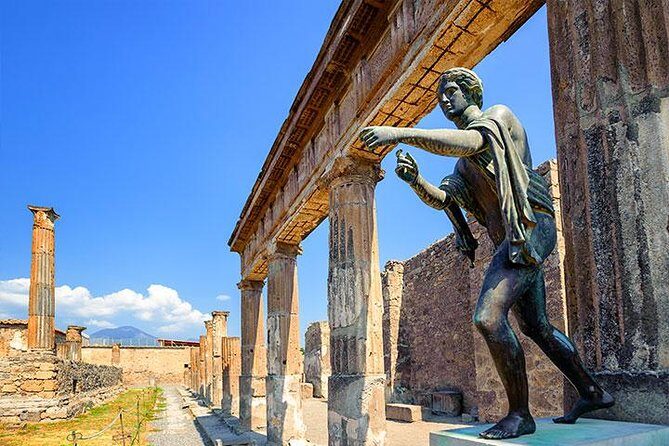
This isn’t a guided tour. It’s an archaeological park entrance ticket for Pompeii, designed for independent exploration.
For the price ($54.44 per person), the value comes from two things:
- You’re paying for access plus time savings. The listing promises guaranteed skip-the-line entry.
- You’re buying flexibility. You can spend more time where you care most (temples, houses, theaters, market streets) and skip what doesn’t grab you.
Duration is listed as about 2 to 3 hours, and that’s a reasonable target if you treat Pompeii like a greatest-hits visit. But the site is enormous, and the most meaningful part is often the slow part—standing in a forum, looking down a street, or lingering in a house section to understand what you’re seeing.
You’ll also finish when you exit the park, so think of this as a focused visit window rather than an all-day pass built into the experience.
Timed Entry, Voucher Snags, and How to Avoid a Lost Hour
You book your preferred entrance time, then on the day you make your own way to the archaeological site. Your pre-booked ticket is meant to let you bypass long ticket lines.
Two practical notes that matter:
- Show the pre-booked ticket at entry to go straight into the park.
- There can be real-world friction if your ticket is hard to display or doesn’t scan as expected.
Some visitors have reported problems like:
- A voucher not being immediately accessible in their app at the gate.
- Directions and signage that can send you to the wrong entrance area first.
- A kiosk that doesn’t recognize the voucher, forcing you to get redirected.
So here’s the move: give yourself a buffer. Don’t show up right at the end of your slot with zero slack. If you’re traveling during peak season or arriving by rental car, build in extra time for getting to the correct entrance.
Opening hours are listed from 9:00 AM to 1:00 PM during the seasonal window shown (10/27/2025–01/26/2027). That means you’ll want to pick a time early enough that you still have daylight for walking, especially in warmer months.
Other walking tours of the Pompeii ruins


Porta Marina: City Walls, a Temple, and Where Rome Did Business
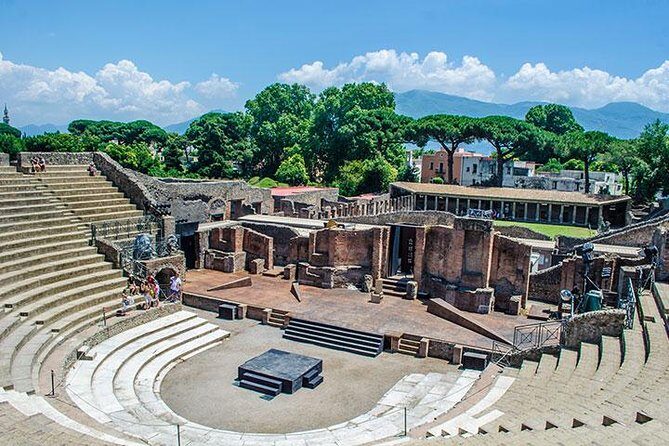
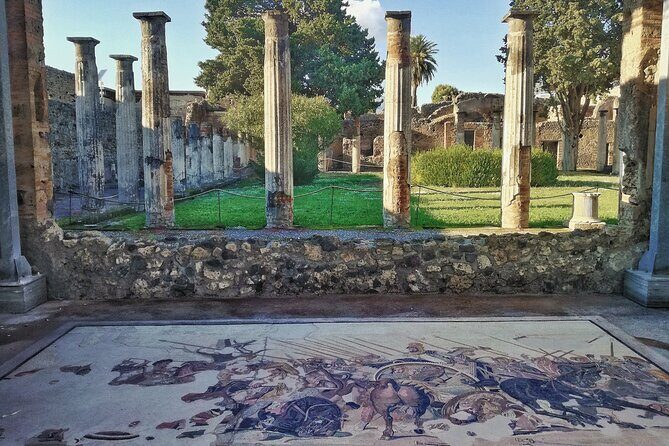
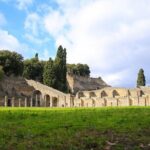
Most people start at Porta Marina, and it’s a smart place to begin because it sets the tone: Pompeii feels like a living city that stopped mid-step.
From this area, you can expect to see:
- Porta Marina and the walls: a strong sense of arrival and defense.
- Temple of Apollo: one of the better-known religious anchors in the city.
- The Basilica: a key civic structure tied to public life and administration.
- Public Administration Buildings and the Building of Eumachia: places that help you understand how people organized power and work.
What I like about this section is that it doesn’t feel like random ruins dropped onto the ground. It reads like a city map you can walk.
Practical caution: the site is fragile. You’re asked not to stop on the edges of excavations and not to climb on walls. You’ll also be walking on uneven stone paths, so flat-soled shoes are recommended.
Piazza Esedra: Baths, Markets, and Houses You Can Read Like Stories
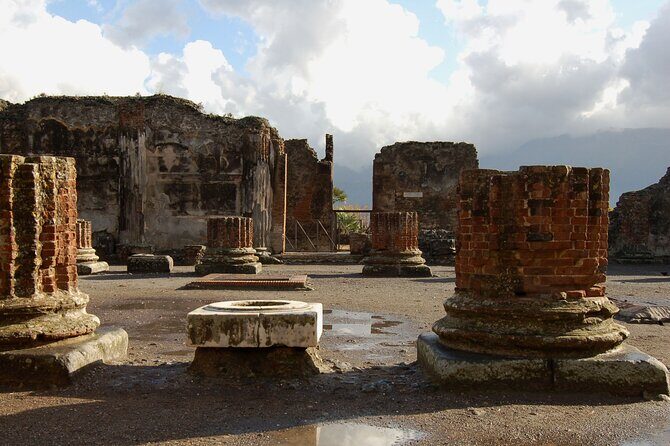
Once you’re near Piazza Esedra, the ruins start acting like a time capsule of daily life—work, food, shopping, and home.
This stretch includes:
- Forum Baths: a reminder that public bathing wasn’t just hygiene; it was social.
- Temple of Fortuna Augusta: a religious site that also signals political culture.
- House of Pansa and House of the Tragic Poet: domestic spaces where you can notice how wealth and family life were arranged.
- Thermopolium: essentially a hot food spot—Pompeii had street-level food culture.
- House of the Faun and House of Cecilio Giocondo: bigger homes that help you see the range of Roman domestic life.
- House of Citharist: another example of how homes displayed identity.
- Fullonica Stephanus: a cloth-laundry/workshop setting that connects you to labor and local industry.
A key reason this section works so well for self-guided visitors: you can bounce between “how they lived” and “how they worked.” If you like to understand the day-to-day, this is where Pompeii stops being a postcard and starts making sense.
Time strategy here: if you only have 2–3 hours total, pick the stops that match your interest (baths and food places if you like routines; houses if you like art and household design; workshops if you like commerce). Trying to hit everything at once can turn into fast walking and missed details.
Piazza Anfiteatro to the Theaters: Amphitheater Energy Without the Crowd Chaos
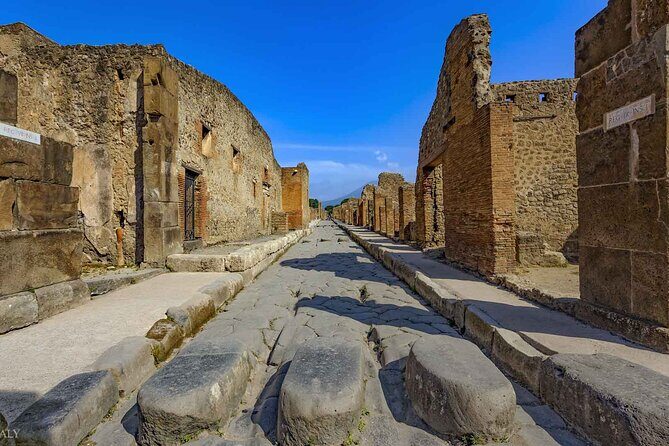
The Piazza Anfiteatro area is a big shift in mood. Here, Pompeii feels more public and theatrical—perfect if you want the “big set pieces.”
You can move through:
- Necropolis of Porta Nocera, plus Porta Nocera and the walls: you get a sense of who belonged inside the city versus outside.
- Garden of the Fugitives: a powerful stop that connects the landscape to what happened in 79 AD.
- House of the Garden of Hercules, House of Octavius Quartio, and House of Venus in the shell: more domestic spaces, including that distinctive “shell” detail tied to Venus.
- Amphitheater: one of the headline sights.
- Fullonica Stephanus (also listed again in this zone)
- Small Theater (Odeion) and Great Theater: you can compare performance spaces and scale.
- Temple of Isis, Triangular Forum, and the Doric Temple: more religious and civic fabric woven together.
There’s also a helpful mobility note in the experience info: people with limited mobility are advised to enter from Piazza Anfiteatro and to limit the visit to the surroundings of the Amphitheater. That’s a smart, realistic way to keep the outing enjoyable rather than exhausting.
Lupanare: The Brothel Stop With Erotic Frescoes Still on the Walls

If your interest in Pompeii includes art, sex, and the blunt honesty of Roman life, you’ll want the Lupanare.
This two-story building is known as Pompeii’s brothel, and the listing specifically calls out that the walls still carry erotic frescoes. It’s not the kind of stop you breeze past if you’re trying to understand how people used public and private space.
One reason this works on a self-guided ticket: you decide how long to stay. Some people want a quick look. Others read the room, notice how the building is laid out, and spend time on the artwork and symbolism.
Other Pompeii entry tickets and audio guide options


Practical Rules That Matter on a Fragile Site
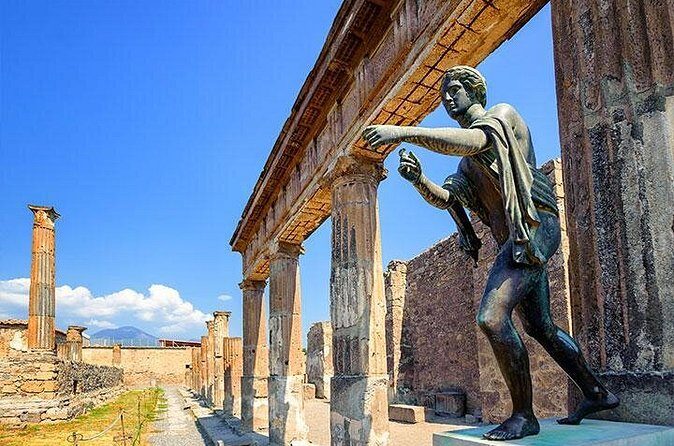
Pompeii is UNESCO-listed and “frozen” by the ash from Mt. Vesuvius in 79 AD. That tragedy is why the site feels so complete—and also why you have to treat it carefully.
The experience rules include:
- Walk with care and don’t stop on the edges of excavations.
- Do not climb on the walls.
- Be respectful: no shouting, no writing on walls, and use waste containers.
- Photography and filming are authorized for private use.
- For tripods, flash, artificial light, or any commercial use, you’re told to contact the Office of the Superintendent.
- Leave bags, backpacks, umbrellas, and other bulky items at the wardrobe.
- Do not smoke.
There’s also a note about stray dogs outside the defenses of the excavations. Stay away from them and stay alert.
For shoes, the info recommends flat soles. That’s not just comfort advice; it’s safety. Pompeii has uneven surfaces, and you’ll be standing still to look at details where slips are more likely.
How Long Should You Actually Plan: 2–3 Hours vs Real Pompeii Time

The ticket is labeled 2 to 3 hours (approx.), and that can be enough if you’re strategic.
Here’s a useful way to decide:
- If you want the biggest names—Forum area, Theatre, Lupanare—then 2–3 hours can work, but you’ll move with purpose.
- If you want to actually soak in the layout (temples, shops, baths, multiple houses), plan closer to a half-day that can stretch. One visitor described spending almost 5 hours at the ruins.
A good self-guided plan is to commit to one main zone plus one supporting zone. For example:
- Porta Marina + one stop around Piazza Esedra, or
- Piazza Esedra + the theaters in Piazza Anfiteatro.
That keeps Pompeii from turning into a sprint.
Also, remember: it’s an outdoor site. Heat is real, and one review flat-out called out how heat shaped the experience. Build in breaks when you need them and pace your day.
Who This Ticket Fits Best (And Who Might Want Something Else)

This entrance ticket is best for you if:
- You want freedom. No guide pacing, no “one-sight-per-minute” schedule.
- You like the idea of choosing your own priorities: civic sites, temples, houses, theaters, or the more unusual stops.
- You can handle self-navigation. The route map inside helps, but you’ll still be making decisions.
It may be less ideal if:
- You want a lot of interpretation from a live guide. This ticket is explicitly not a guided tour.
- You’re worried about third-party voucher redemption. Some people have had trouble scanning or finding their tickets on arrival, which cost them time.
If you do want a guide, you may decide to compare options once you’re there, since some visitors felt that guided options were available on-site and could be cheaper than booking in advance. I’d just make sure you’re factoring in time, because adding a guide to an already-physical, time-sensitive visit can change your route.
Should You Book This Pompeii Entrance Ticket?
Yes, you should book if you’re comfortable exploring on your own and you want timed, skip-the-line entry to one of Italy’s most important archaeological parks.
Book with confidence if:
- You’re planning a morning or early slot within the listed hours.
- You’re ready to walk a lot and treat Pompeii like a city, not a museum.
- You can keep your ticket info easily accessible on your phone or document.
Skip or rethink if:
- You’re likely to arrive unprepared with ticket access.
- You need a fully guided narrative to enjoy ruins.
- You only have a tiny window and can’t afford delays caused by voucher scanning or redirection.
If you choose this ticket, do it with a simple plan: pick two zones, aim for your must-see highlights (Forum/Theatre/Lupanare), and give yourself enough time to actually look. Pompeii rewards patience. And when you find a street corner or a doorway detail that surprises you, you’ll be glad you weren’t trapped in someone else’s schedule.
FAQ
How long is the Pompeii visit with this ticket?
The experience is listed as about 2 to 3 hours.
What is included in the ticket price?
You get an entrance ticket to the Pompeii archaeological area, with guaranteed skip long lines.
Is this a guided tour?
No. This is independent entry. You explore the ruins at your own pace.
Can I choose an entrance time?
Yes. There are multiple entrance times throughout the day, and you book your preferred time.
Do I get a map?
A complimentary map is available inside the gate with recommended routes.
Where can I enter if I have limited mobility?
The info recommends entering from Piazza Anfiteatro and limiting your visit to the surroundings of the Amphitheater.
Can I use the voucher to access the museum?
No. The instructions say not to use this voucher to gain access to the museum.
Are photos and videos allowed?
Photography and filming are authorized for private use only. For tripods, flash, artificial light, or commercial uses, you need to contact the Office of the Superintendent.