REVIEW · POMPEI CAMPANIA
Pompeii: Skip-the-Line Ticket with Audio Guide and Map
Book on GetYourGuide →Operated by VISITING CAMPANIA S.R.L. · Bookable on GetYourGuide
Pompeii is huge, and it can feel chaotic fast. This skip-the-line setup lets you explore at your own pace, with an audio guide and an updated map so you can find the good stuff without getting turned around.
I especially like two things: the audio guide is easy to use, and it helps when you’re standing in front of sites that don’t explain themselves.
One consideration: Pompeii involves a lot of walking, and the site isn’t suitable for people with mobility impairments. Also, even with the skip-the-line advantage, you might still wait briefly depending on your ticket type.
In This Review
- Key things to know before you go
- Pompeii’s Scale: Why This Ticket Format Works
- Entering Pompeii Without the Usual Time Sink
- Audio Guide and Updated Map: The Real Value
- Your Self-Guided Route: What You’ll See on Your Own
- Frescoed Domus (Residential Houses)
- Spas and Temples: Public Life in Stone
- Shops and the Thermopolium (Food for the Fast-Paced Crowd)
- Theaters and Brothels: Entertainment and Adult Life
- Casts of the Victims of the Eruption
- A Roman Amphitheater (Well-Preserved)
- Timing Your Visit: Beat the Heat and the Crowds
- Price and Value: What $44 Gets You
- What to Bring (and What Gets You Stuck)
- Languages and Support: Easy for Mixed Groups
- Who This Works Best For (and Who Should Look Elsewhere)
- Should You Book This Pompeii Skip-the-Line Audio Ticket?
- FAQ
- What’s included with the Pompeii skip-the-line ticket?
- How long is the visit?
- What languages are available for the audio guide?
- Are there options for a host or greeter?
- Does it really skip the line?
- What should I bring?
- Is luggage allowed?
- Is the experience suitable for people with mobility impairments?
- Can I cancel or change plans?
Key things to know before you go
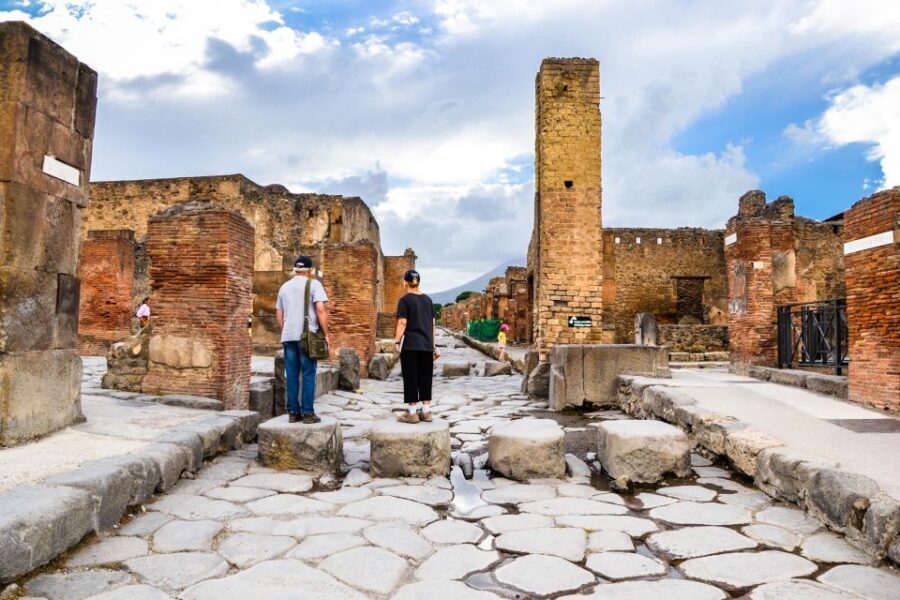
- Skip-the-line entry saves time so you can spend your energy on the ruins.
- Audio guide + updated map help you keep your bearings through a 66-hectare site.
- Self-paced touring fits people who want a morning sprint or a slow afternoon wander.
- Plan for heat: comfortable shoes, water, and sun protection matter.
- Know the limits: no luggage or large bags, and mobility limitations apply.
Pompeii’s Scale: Why This Ticket Format Works
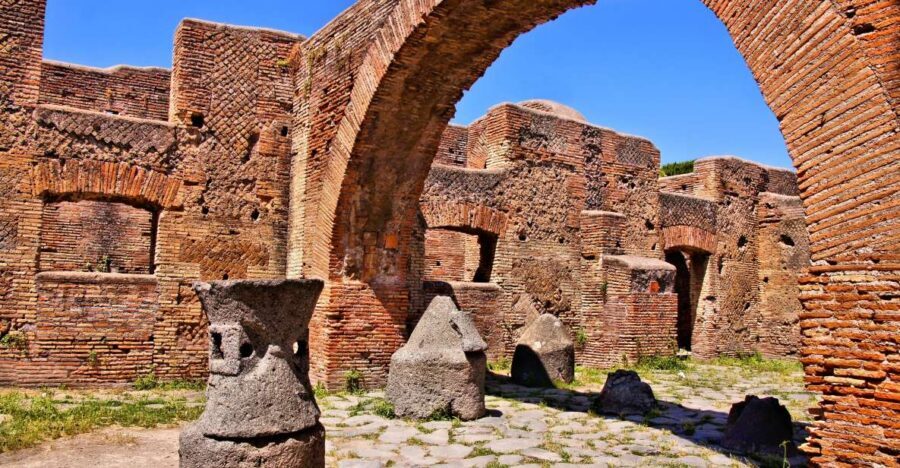
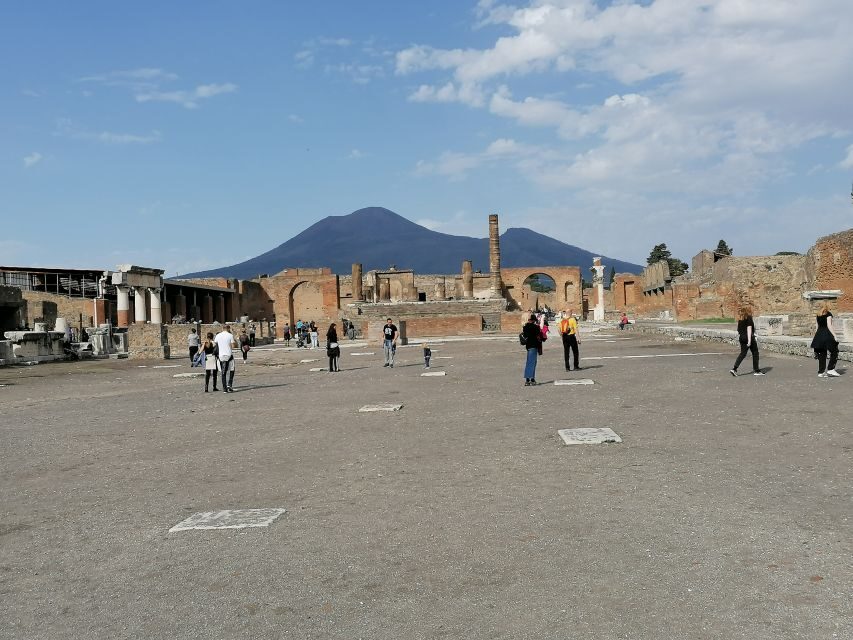
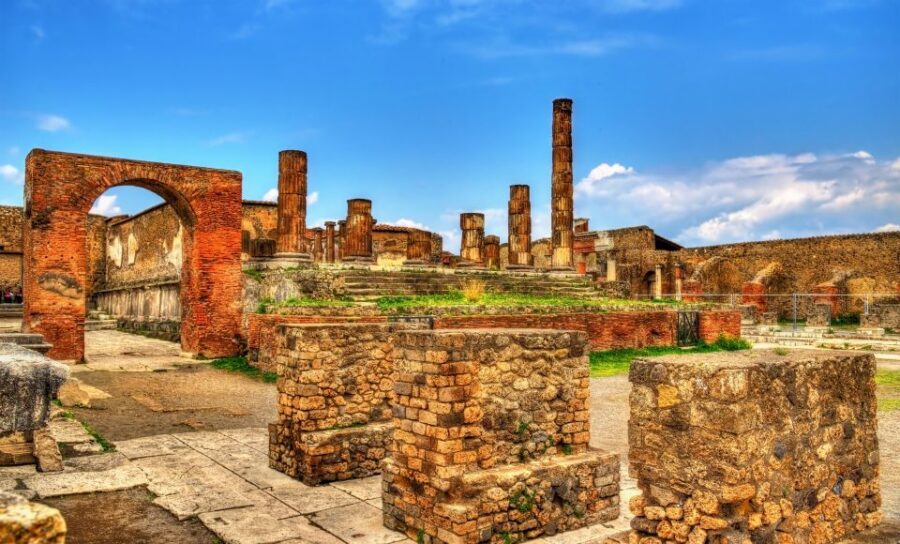
Pompeii isn’t a quick “see it and move on” stop. It covers about 66 hectares, and it draws roughly 3 million visitors each year. That’s a lot of feet on a lot of streets.
This is exactly why a skip-the-line ticket plus an audio guide makes sense. When you arrive, you don’t want to burn your first hour stuck in paperwork or lines. You want to get inside, start moving, and use your brainpower on what you’re actually seeing.
And since you’re going at your own pace, you’re not stuck waiting for a group to pass a doorway, a viewpoint, or a mosaic. You can linger where you care most—especially in places like frescoed houses (domus) or theaters—then cut out time where you’re less interested.
If you're still narrowing it down, here are other tours in Pompei Campania we've reviewed.



Entering Pompeii Without the Usual Time Sink

The “skip-the-line” part is straightforward: you get entrance with less waiting. That matters because Pompeii can be busiest during peak hours, and the longer you wait at the gate, the less daylight you have for your route.
One practical note from real-world experience: even with the skip-the-line benefit, you may still encounter a short queue at certain moments, like when tickets need additional handling (for example, child tickets). The good news is that the time savings usually still help you start your visit on your terms.
If you’re aiming for a calmer experience, your best move is to arrive ready to walk immediately after entry. Don’t wait around in the entrance area too long. The site spreads out fast once you’re inside.
Audio Guide and Updated Map: The Real Value
An audio guide sounds nice. It only becomes useful when it helps you make sense of what you’re looking at.
Here, the audio guide is available in multiple languages, including English, Spanish, French, Italian, German, Hebrew, Russian, Chinese, and Portuguese. That language flexibility is handy if you’re traveling with someone who prefers a specific tongue.
What you get is more than narration. The key is the combination of audio guide + updated map, which helps you:
- Find key areas without guesswork
- Stick to a route when the layout feels overwhelming
- Avoid spending your time reading tiny signs from far away
Also, Pompeii is full of details that are easy to miss if you rush. A good audio guide gives you context right when you’re standing in front of something—like how spaces were used in daily Roman life.
One caution to keep expectations realistic: the audio guide and map may not line up perfectly for every single item on the map. If you’re a detail hunter, plan to treat the map as your navigation tool and the audio guide as your explanation tool.
Your Self-Guided Route: What You’ll See on Your Own
This experience is designed for independent wandering through Pompeii’s major archaeological highlights. You don’t need to memorize a script. You just follow your map, press play on the audio guide, and choose your path.
Here are the kinds of places you can expect to encounter, and what makes each one worth your time:
Frescoed Domus (Residential Houses)
Pompeii’s frescoed houses (domus) are where you feel the human scale of the tragedy. You’re not looking at a “ruin pile.” You’re looking at homes with rooms shaped for specific routines.
Look for wall art and spatial layout. The audio guide can help you connect the dots between what you see and how people lived.
Why I like this stop: it rewards slow walking. If you rush, you miss the storytelling in the artwork and room layout.





Spas and Temples: Public Life in Stone
Spas and temples show the social rhythm of Roman culture: public activity, ritual spaces, and daily routines.
If you want a quick mental framework for Pompeii, these areas are a good place to start building one. You’ll begin noticing patterns—how people moved, gathered, and used different kinds of spaces.
Shops and the Thermopolium (Food for the Fast-Paced Crowd)
You’ll also come across shops and the thermopolium, which functioned like a coffee-fast food spot of the time. Even without modern signage, the idea is clear: this is commerce plus quick meals, not a slow sit-down culture.
This is a fun area to visit if you like everyday-life archaeology. You get the sense of routine crowds, not just grand architecture.
Theaters and Brothels: Entertainment and Adult Life
Pompeii includes theaters and brothels. These can be emotionally heavy if you dwell on what happened to people—but they’re also part of the full picture of daily Roman life.
Try not to over-romanticize it. Instead, use the audio guide to keep it factual and grounded.
Practical tip: if you’re visiting with teens or you’re sensitive to certain topics, decide in advance how you want to handle these stops. The site includes them, so it’s smart to be prepared.
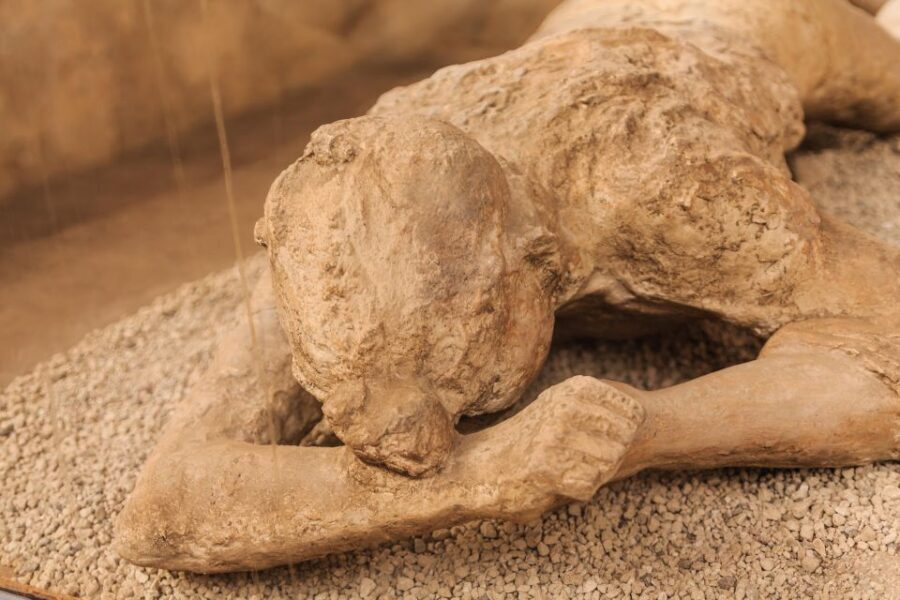
Casts of the Victims of the Eruption
The casts are one of the most direct reminders that this wasn’t ancient history from far away. It’s tied to real bodies, real moments, real loss.
These stops can feel intense. Give yourself a moment to absorb it, then move on. Don’t force the pacing. Your mind needs a beat to process what you’re seeing.
A Roman Amphitheater (Well-Preserved)
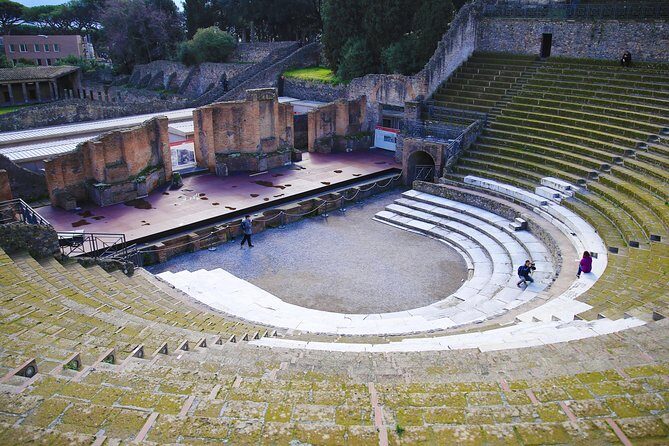
Pompeii also has one of the best-preserved Roman amphitheaters. This is where you get to see the shape of spectacle—seating, circulation, and the setting where crowds would gather.
If you like visualizing how people watched events, this is a strong payoff area.
Timing Your Visit: Beat the Heat and the Crowds
You’re planning for a full day in a large site. That means you need a plan that’s flexible, not rigid.
Even though you can do Pompeii your way, a simple timing approach helps:
- Start earlier so you get cooler temperatures and easier navigation.
- Aim to cover the most emotionally and visually important stops first.
- Leave a chunk of time to wander without a target. Pompeii rewards curiosity.
One real-world tip from an independent approach: someone built their own route from 10:00 to 17:00 and found it productive. That’s a good reminder that you don’t need to follow a strict itinerary to have a meaningful visit. You just need to keep moving and let the audio guide steer you.
Pompeii can feel warm and sun-heavy, so don’t treat it like a winter museum. Bring what the site asks for—comfortable shoes, water, sunscreen, and a hat—and you’ll enjoy the day more.
Price and Value: What $44 Gets You
At $44 per person, you’re paying for three things: Pompeii entrance, an audio guide, and an updated map. That bundle is the real value.
Here’s how I think about it:
- If you were to buy entry and then rely only on unclear signage, you’d likely spend more time figuring things out than actually learning.
- If you were to do a guided tour, you’d usually pay more and trade flexibility for group pacing.
- With this format, you keep independence while still getting explanations that you can hear right where you need them.
So, the question isn’t only whether $44 is a deal. It’s whether you want independence. If you enjoy choosing your stops, moving at your speed, and learning through an audio guide, this price feels reasonable.
If you prefer a structured walk-through where every detail is narrated by a person, you may value a live guide more than the self-guided setup.
What to Bring (and What Gets You Stuck)

Pompeii’s rules are simple, and following them keeps your day smoother:
- Bring comfortable shoes
- Bring a hat
- Bring sunscreen
- Bring water
Also, plan around what you can’t bring. Luggage or large bags aren’t allowed, so keep your kit small. A daypack is much more workable than anything bulky.
And because the site involves lots of walking, be honest with your own stamina. Even if you’re comfortable on uneven stone, the total distance is still significant.
Languages and Support: Easy for Mixed Groups
If you’re traveling with friends or family, language can be the difference between a good day and a frustrating one.
The audio guide includes English, Spanish, French, Italian, German, Hebrew, Russian, Chinese, and Portuguese, so mixed groups can often stick together while still hearing their preferred language.
There’s also a host or greeter available in English, Spanish, French, and Italian, which can help when you arrive and want a quick answer about where to go next.
If you like to plan carefully, having multiple language options also reduces the need to hunt for someone who speaks your preferred language on-site.
Who This Works Best For (and Who Should Look Elsewhere)

This ticket fits best if you:
- Want self-guided exploration instead of matching a group schedule
- Like learning through context you can access on demand
- Prefer using an audio guide rather than listening to a live narration all day
- Want the flexibility to linger in domus, move through public spaces like spas/temples, and still see major highlights like the amphitheater and victim casts
It’s not suitable for people with mobility impairments, since Pompeii involves significant walking and uneven surfaces.
If you’re traveling with kids, it can still work well, but double-check your expectations about queues and ticket handling if your group includes child tickets.
Should You Book This Pompeii Skip-the-Line Audio Ticket?
Yes, I think you should book this if you want independence with real support. The skip-the-line entry reduces wasted time, and the audio guide + updated map keep the experience from turning into a wandering scavenger hunt.
Skip it only if you strongly prefer a fully structured guided tour with a live guide doing all the interpretation, or if mobility is a concern. Otherwise, this is a practical way to see Pompeii’s major sights at the pace that suits you.
FAQ
What’s included with the Pompeii skip-the-line ticket?
You get Pompeii entrance, an audio guide, and an updated map.
How long is the visit?
This activity is valid for 1 day.
What languages are available for the audio guide?
The audio guide is available in English, Chinese, French, Italian, German, Hebrew, Russian, Spanish, and Portuguese.
Are there options for a host or greeter?
Yes. A host or greeter is available in English, Spanish, French, and Italian.
Does it really skip the line?
It includes a skip-the-line ticket, which is meant to reduce waiting when entering Pompeii. In some cases, you might still face brief waiting for specific ticket handling.
What should I bring?
Bring comfortable shoes, a hat, sunscreen, and water.
Is luggage allowed?
No. Luggage or large bags are not allowed.
Is the experience suitable for people with mobility impairments?
No, it’s not suitable for people with mobility impairments.
Can I cancel or change plans?
Free cancellation is available up to 24 hours in advance for a full refund. You can also reserve now and pay later.