REVIEW · POMPEII ARCHAEOLOGICAL SITE
Pompeii: Skip-the-Line Tour for Kids and Families
Book on GetYourGuide →Operated by Kids Raphael Tours And Events · Bookable on GetYourGuide
Pompeii feels huge until a kid-friendly guide takes over. This skip-the-line Pompeii family tour gives you the best-preserved highlights in about two hours, with interactive games that turn Roman daily life into something kids can talk about later. I like the way the guide builds stories around places kids can picture fast, like the theater steps, fountains, and restaurant doorways. One drawback: it’s a lot of walking on uneven ground, so if your child needs lots of mobility support, you’ll want to plan carefully.
The best part is the tone. This isn’t a lecture. It’s more like history turned into a challenge—quick facts, mini games, and hands-on moments that keep attention from drifting.
In This Review
- Key points before you go
- Why Pompeii lands better on a kids-focused tour
- Skip-the-line reserved entrance: saving your best family energy
- The 2-hour walking route: from theater steps to restaurant thresholds
- Start by moving into the story
- Up the steps of the ancient theater
- Fountains and the “wait, that’s real?” moment
- Crossing the thresholds of early restaurants
- Homes, thermal baths, and temples
- More than ruins: how the tour makes Roman daily life make sense
- 1) Everyday habits, not just big events
- 2) Pompeii as a functioning town
- 3) Intact details that feel like time travel
- Interactive learning that keeps attention from slipping
- Guide impact: the names you might hear on the day
- What to bring and what to know for a smoother Pompeii walk
- Bring
- Don’t bring
- Plan for the ground and movement
- First Sunday of the month note
- Price and value: when this family tour is worth it
- Where this tour fits best (and where it may not)
- Should you book this Pompeii kids and families tour?
- FAQ
- How long is the Pompeii skip-the-line tour for kids and families?
- Does this tour help you avoid the main lines at the Pompeii site?
- What languages are the guides?
- Is this tour suitable for wheelchair users or people with mobility impairments?
- What should we bring for kids?
- Is Pompeii free on the first Sunday of the month?
Key points before you go
- Skip-the-line reserved entrance so you spend energy exploring, not waiting.
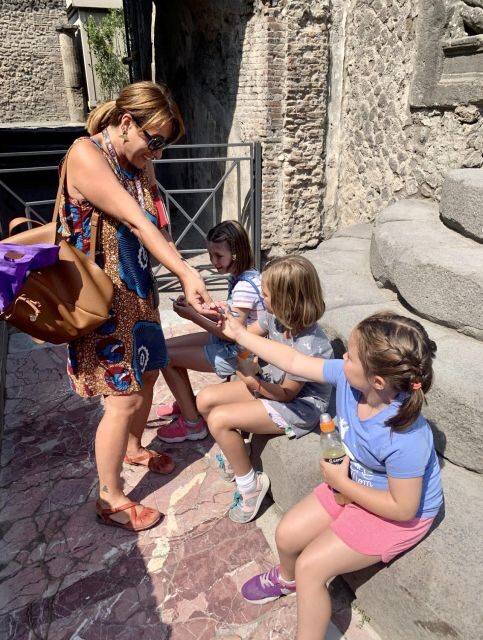
- Kid-centered storytelling that makes Pompeii feel like a real place, not a textbook.
- Interactive tools such as iPad games, trivia, and pop-up-style learning.
- Classic “you are here” sights: theater steps, original fountains, and early restaurant thresholds.
- A smart 2-hour route focused on the best-preserved town areas for families.
- Small group vibe that helps the guide adjust to each child’s questions and pace.
Why Pompeii lands better on a kids-focused tour
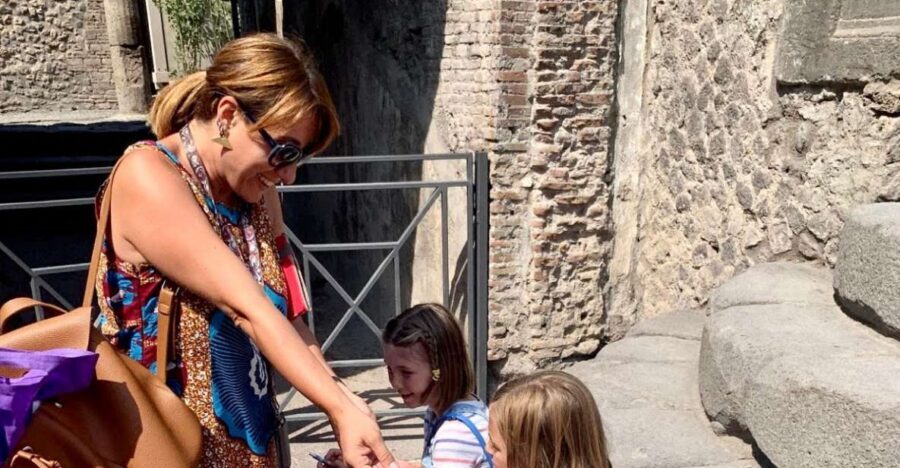
Pompeii is one of those places adults can wax poetic about for hours. Kids usually can’t. They need something immediate: a puzzle, a role, a moment where they can point and say, I get it.
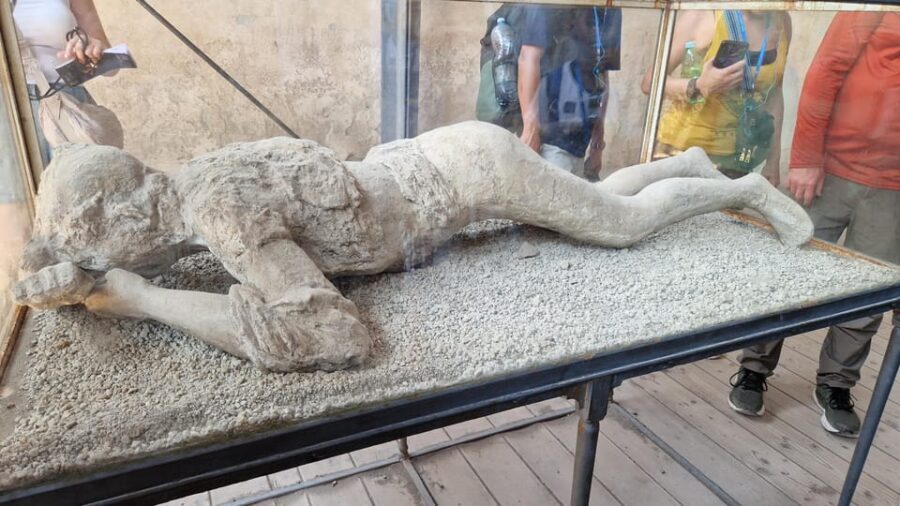
That’s where this tour style shines. The guide uses short stories tied to what you’re standing in front of—so your child isn’t memorizing names. They’re understanding how people lived. You’ll cover Pompeii’s daily rhythms (food, public spaces, baths, and homes) while also tying it to the big event: the eruption of Mount Vesuvius in 79 AD that buried the thriving town under ash and lava.
And yes, it includes the stuff that makes Pompeii meaningful even for adults: how the ruins were excavated in the 18th century, and why the site became a UNESCO World Heritage Site. The difference is that you get that context without the “sit still and listen” vibe.
If you're still narrowing it down, here are other tours in Pompeii Archaeological Site we've reviewed.
Skip-the-line reserved entrance: saving your best family energy
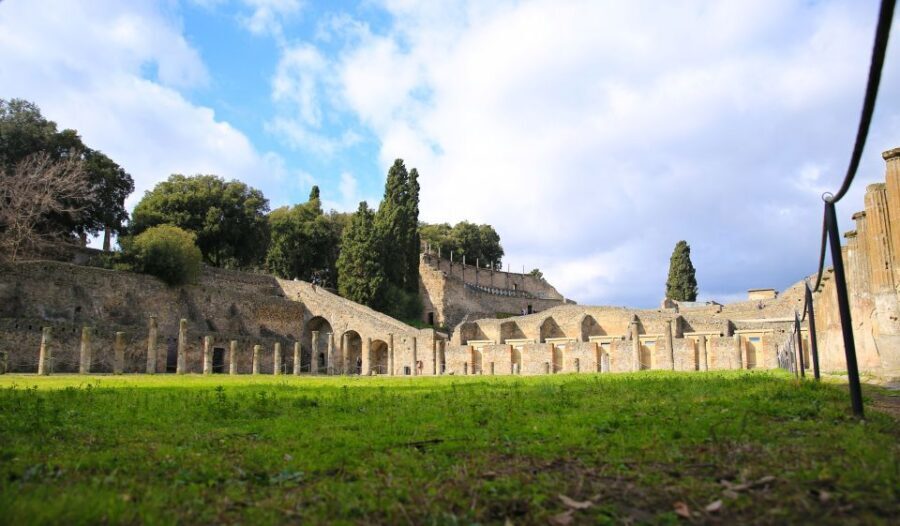
Pompeii’s main archaeological entrance can be crowded. With a family, crowds don’t just add time—they drain patience.
This tour uses reserved entrance tickets and a separate entrance path, which means you’re more likely to reach the good stuff sooner. That matters because your total time on site is only about two hours. With a tight window, every minute counts.
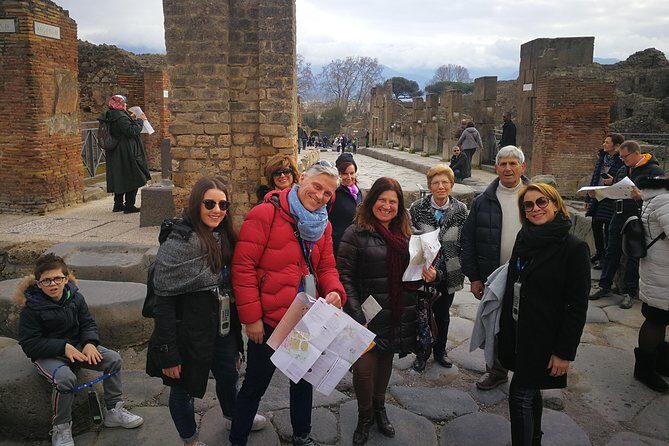
You’ll also appreciate the small-group setup. Even when the site is busy, a smaller group helps the guide move you efficiently and keep kids from getting spaced out. One practical tip: wear comfortable shoes with grip. The ground is uneven, and kids will bounce more than you think.
The 2-hour walking route: from theater steps to restaurant thresholds
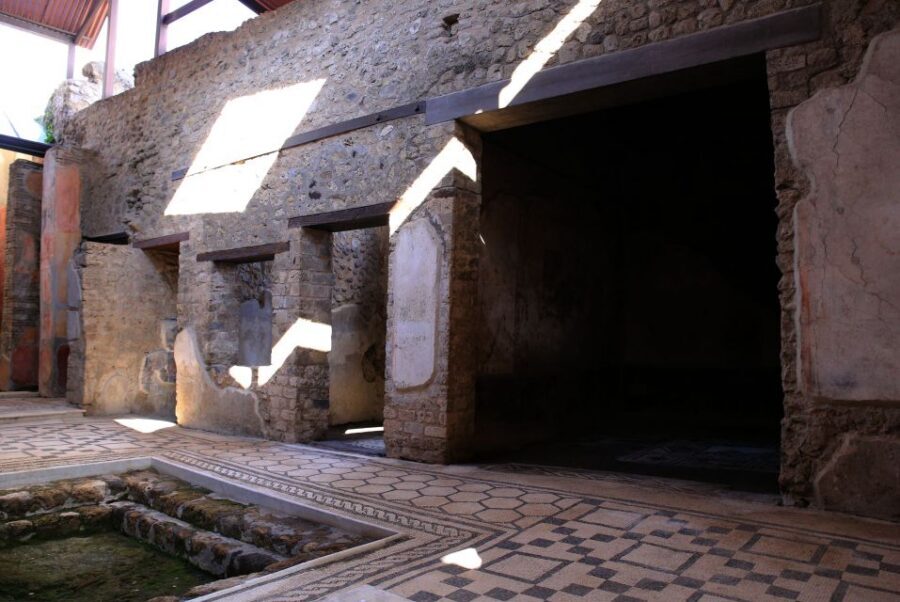
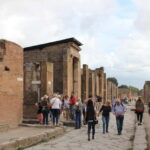
Even though you’re only on site for about two hours, the tour covers the kinds of stops that make Pompeii click.
Here’s how the experience feels as you move through the town:
Start by moving into the story
You meet at a starting location that can be Hotel Vittoria or the Coffee Shop Vittoria, and your meeting point may vary depending on what you booked. Expect an easy handoff to your English-speaking guide (also available in Italian), then an organized route right into the site.
Up the steps of the ancient theater
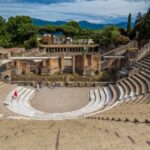
One of the early big-moment stops is the ancient theater area. The guide brings it to life by helping kids connect space to function—where people gathered, how events worked, and why that public space mattered in everyday life.

Fountains and the “wait, that’s real?” moment
Next comes the kind of detail kids love: original fountains. The tour includes a “drink from original fountains” experience, which is exactly the sort of sensory memory that helps kids retain what they’re seeing. It’s hard for a child to forget a place where water was part of daily routines.
Crossing the thresholds of early restaurants
Then you’ll move through doorways and transitions—crossing thresholds of early restaurants. This is a clever way to teach without sounding like school. Your child isn’t just viewing stones; they’re walking through the idea of entering, ordering, eating, and leaving.
Homes, thermal baths, and temples
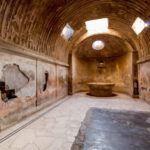
After the public-life highlights, the guide steers you toward the best-preserved areas that show how people lived more privately and socially: homes, thermal baths, and temples. The goal is a balanced “day in Pompeii” snapshot rather than an overwhelming list.
More than ruins: how the tour makes Roman daily life make sense
Pompeii can feel like a puzzle box. The buildings are broken, the roofs are gone, and details can be hard to picture.
This tour helps you assemble the picture quickly. The guide uses interactive visual learning tools—including pop-up-style learning, iPad games, and trivia—to explain what you’re looking at and what it used to be like.
That matters most in three areas:
1) Everyday habits, not just big events
You’ll hear how Vesuvius erupted in 79 AD and how the disaster buried the town. But you’ll also spend enough time on normal life that the tragedy has weight. Kids learn what was lost because you showed the routine first.
2) Pompeii as a functioning town
You’ll see how an advanced Roman community worked: spaces for gathering, bathing, worship, and eating. One of the guide’s superpowers (based on what families consistently describe) is making these functions feel logical and human. That keeps the tour from becoming a list of facts.
3) Intact details that feel like time travel
The tour highlights preserved examples of art and architecture. That’s important: kids often tune out when they can’t see what makes a place special. Intact details give their brain something to latch onto fast.
Practical bonus: if your child gets interested, this tour gives you real examples you can use later at home or in school—something that sticks beyond the ticket date.
Interactive learning that keeps attention from slipping
If you’ve traveled with kids before, you know the truth: attention is fragile, especially in heat.
This tour is designed to prevent boredom by turning learning into a game. You might encounter pop-up books, iPad games, and trivia that targets the exact parts of Pompeii likely to spark curiosity. The guide also plays with pacing—one family noted a guide asking if their boys wanted a rest, and the kids said no.
And the engagement isn’t only for older kids. Families have described tours that worked well for everything from school-age kids to toddlers. If your child is the type who asks questions nonstop, you’ll get room for that. One guide style that keeps coming up is patience with kids who are talkative, shy at first, or have special attention needs.
Guide impact: the names you might hear on the day
You won’t control who your guide is, but you can understand the range of guide styles you might experience.
From the information provided, guides such as Lello, Rafaela, Clelia, Vittoria, Florenza, Roberta, Paula, and Mima are mentioned as standout leaders for families—often because they:
- keep kids engaged with friendly competition and playful explanations
- answer questions patiently
- use visual tools like iPad illustrations to show how buildings looked before the disaster
- adapt pacing to the group, including the heat and a child’s energy level
Even if your guide isn’t one of those names, the consistent theme is clear: the best outcome happens when the guide actively manages kid attention instead of just delivering a script.
What to bring and what to know for a smoother Pompeii walk
This part can make or break your family day.
Bring
- Comfortable shoes (Pompeii isn’t smooth pavement)
- A sun hat (you’ll be outdoors a lot)
- Passport or ID card for children so child pricing can be applied (kids under 18 must be accompanied by an adult)
Don’t bring
- Luggage or large bags (not allowed)
Plan for the ground and movement
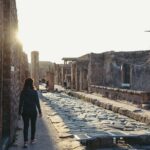
The tour is not suitable for wheelchair users or people with mobility impairments. Also, if you bring a stroller, know that it may not be ideal on uneven surfaces. One family noted it wasn’t the best setup, even though the guide was patient.
First Sunday of the month note
Entrance is free on the first Sunday of each month, but tickets can’t be reserved ahead of time, so entry isn’t guaranteed. If you’re traveling then, this tour’s reserved approach becomes extra valuable.
Price and value: when this family tour is worth it
No price is listed here, but you should think about value in three specific ways:
1) Time saved from lines
Two hours passes quickly in the sun. A reserved entrance reduces dead time.
2) A guide who works for kids, not against them
A standard adult-style tour often fails at Pompeii with children because it assumes kids can sit through long explanations. Here, the format uses games, quick storytelling, and interaction to keep kids moving forward.
3) A “whole Pompeii day” understanding in a short window
You’re not trying to see the entire site. You’re getting the best-preserved, most teachable stops plus the Vesuvius context. For families, that’s usually the win: understanding without burnout.
If you’re on a tight schedule, this tour can feel like money spent on sanity.
Where this tour fits best (and where it may not)
This is a strong fit if:
- you’re visiting Pompeii with kids who need activity and variation
- you want an easy way to learn Roman daily life without turning it into a lecture
- you want the highlights in roughly two hours
- your child loves questions, games, or “story time” that includes visuals and trivia
It’s less ideal if:
- someone in your group needs wheelchair access or significant mobility support (the tour isn’t suitable)
- you want a slow, self-paced explore with long stops for photographs (this is guided and time-focused)
Should you book this Pompeii kids and families tour?
I’d book it if you want Pompeii to work for your family, not just for your itinerary. This is the kind of tour that helps kids remember what they saw and helps adults avoid the feeling of being stuck in a slow classroom.
Skip it if your group needs high accessibility support, or if you’re comfortable doing Pompeii on your own without a kid-focused guide. Otherwise, this is one of the most practical ways to turn a famous site into a meaningful family experience in just two hours.
FAQ
How long is the Pompeii skip-the-line tour for kids and families?
The tour duration is about 2 hours.
Does this tour help you avoid the main lines at the Pompeii site?
Yes. It includes reserved entrance tickets and a separate entrance to skip the long lines.
What languages are the guides?
The tour is guided in English, and Italian is also available.
Is this tour suitable for wheelchair users or people with mobility impairments?
No. It is not suitable for wheelchair users or people with mobility impairments.
What should we bring for kids?
Bring comfortable shoes and a sun hat. Children should also have a passport or ID card so they can receive child prices.
Is Pompeii free on the first Sunday of the month?
Yes, entrance is free on the first Sunday of each month. But because tickets can’t be reserved ahead of time, entry is not guaranteed.