REVIEW · POMPEII ARCHAEOLOGICAL SITE
Pompeii 2-Hour Private Tour
Book on GetYourGuide →Operated by Italy Roots Travel · Bookable on GetYourGuide
Pompeii lands fast, and it stays with you. This 2-hour private tour is built for real understanding, not just wandering—meeting at the Pompei Villa dei Misteri train station and stepping straight into the site with a licensed guide. I especially like that you get a name-sign meet-up (Stefano or Antonietta-style professionalism), plus entry tickets handled, so you don’t burn your time in queues.
What I like most is the focus on the big-picture places that made daily life work: the Forum and major civic-religious stops, explained in plain language. I also love the stop-and-look approach in the rich houses, where you see how status, work, and comfort actually played out on the ground. One drawback: with only two hours, you’ll want to move with purpose and accept that not every room can be taken in deeply.
The route is short on time but long on clarity—so it’s ideal if you want Pompeii’s meaning quickly and then roam on your own afterward.
In This Review
- Key things that make this Pompeii tour worth your time
- Meeting at Via Villa dei Misteri: start smart, not stressed
- The 2-hour plan: how the guided walk fits Pompeii’s layout
- Forum and the Temple of Jupiter: Pompeii’s “how the city worked” route
- Roman daily life you can actually picture (slaves to wealthy families)
- Rich houses and what wealth really looks like on the ground
- Shops and streets: the small details that make the city feel alive
- The plaster casts: the hardest stop, and why it matters
- Staying ahead of crowds without feeling rushed
- Language support and guide adaptability (English, Italian, Spanish)
- What to bring (and what not to bring) to protect your day
- Price and value: is $181.26 per person a smart move?
- Who this tour suits best (and who should choose differently)
- My call: should you book this Pompeii 2-hour private tour?
- FAQ
- Where does the tour start?
- How long is the Pompeii tour?
- Does this tour include entry tickets?
- Is the tour private?
- What languages are available?
- What should I bring?
- Are bags or luggage allowed inside Pompeii?
Key things that make this Pompeii tour worth your time
- Forum + Temple of Jupiter focus: you get the city’s power center, not random corners.
- Daily life context: slaves, ordinary people, and very rich families living close together, explained in human terms.
- Richer-house interiors: you’ll see what “wealth” looked like in real rooms and everyday spaces.
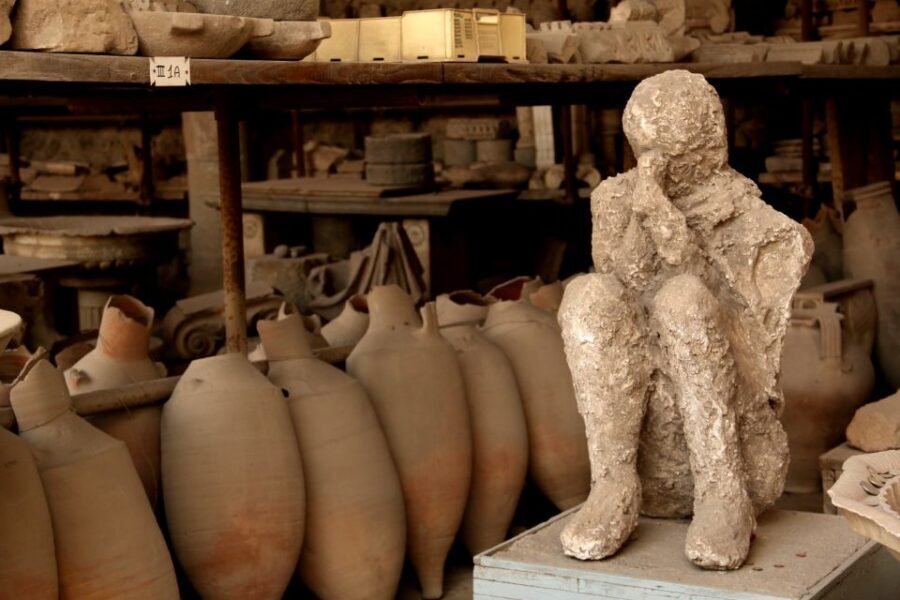
- Plaster casts of victims: a difficult part of Pompeii, handled with historical framing and respect.
- Skip-the-line entry: you spend your limited time inside the ruins, not outside them.
- Private pacing: questions are easy, and your guide can tailor the walk to your group.
Meeting at Via Villa dei Misteri: start smart, not stressed
The tour starts at the Pompei Villa dei Misteri train station area, right on Via Villa dei Misteri (the meeting point is listed as Via Villa dei Misteri, 1 and the starting address is Via Villa dei Misteri, 2). Plan to arrive 10 minutes early. Your guide will be holding a sign with your name, so you’re not left playing Pompeii “Where’s Waldo?” at the busiest time.
This start matters. Pompeii can eat time with slow entry lines and confusion about routes. Here, you’re set up to get your bearings fast and begin walking while the day is still fresh.
You’ll be walking at a real archaeological site pace. That means comfortable shoes are not optional. Bring a hat and water too—sun exposure is part of the deal at open-air ruins.
If you're still narrowing it down, here are other tours in Pompeii Archaeological Site we've reviewed.
The 2-hour plan: how the guided walk fits Pompeii’s layout
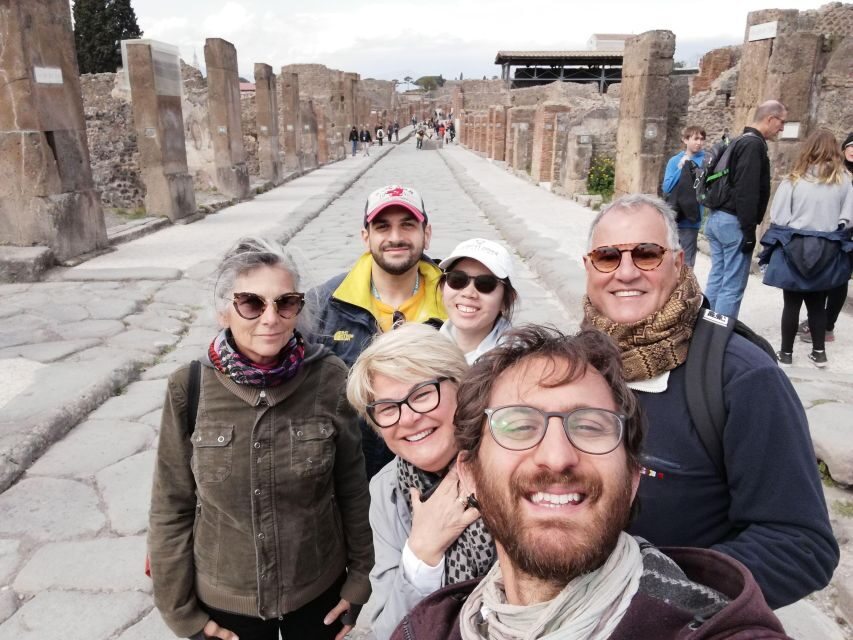
The heart of the experience is a guided walk through the Pompeii Archaeological Site for about two hours. The itinerary is designed like a “greatest hits” map, but with a guide who can explain what you’re actually looking at—shops, streets, homes, and the civic spaces that shaped Roman routines.
Two hours won’t cover everything. That’s okay. In a place this large, the best value often comes from getting oriented first: where to look, what to notice, and why certain buildings mattered.
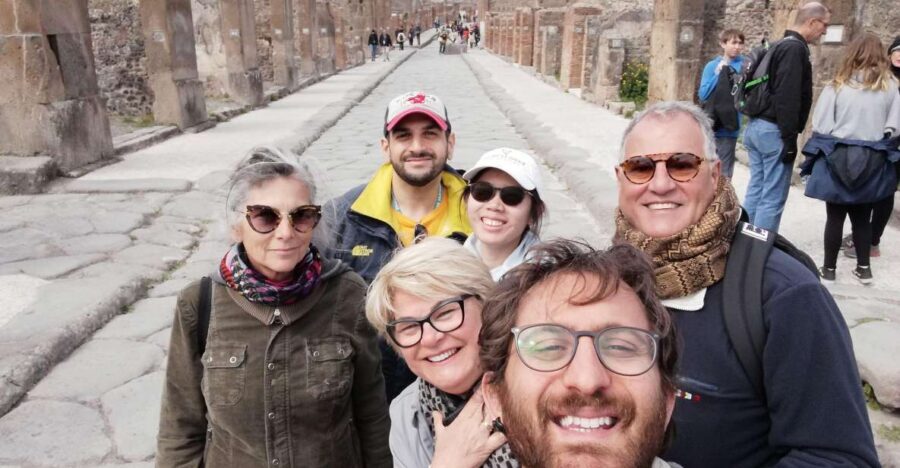
A private guide also helps with pacing. You can ask questions, stop for photos, and adjust the focus slightly depending on what interests your group—especially if you’re visiting with kids or you want to manage content (for example, Pompeii includes areas some people prefer to keep at arm’s length).
Forum and the Temple of Jupiter: Pompeii’s “how the city worked” route
If you want Pompeii to make sense quickly, the Forum is the place to start thinking like an ancient Roman. It wasn’t just impressive architecture. It was the social and political engine of the city—where public life happened, where ceremonies and civic decisions unfolded, and where religion and government overlapped in daily routines.
On this tour, the goal is to walk you through the main civic structure so you’re not left staring at ruins and guessing. You’ll also see iconic religious-political stops such as the Temple of Jupiter, which anchors the idea that Pompeii was both a community and a system.
Here’s why this portion is high value: the Forum gives you vocabulary. Once you understand what kind of building you’re looking at—public authority, worship, public gatherings—you start reading the rest of the site more clearly. Instead of “cool walls,” you get “what these walls were for.”
Roman daily life you can actually picture (slaves to wealthy families)
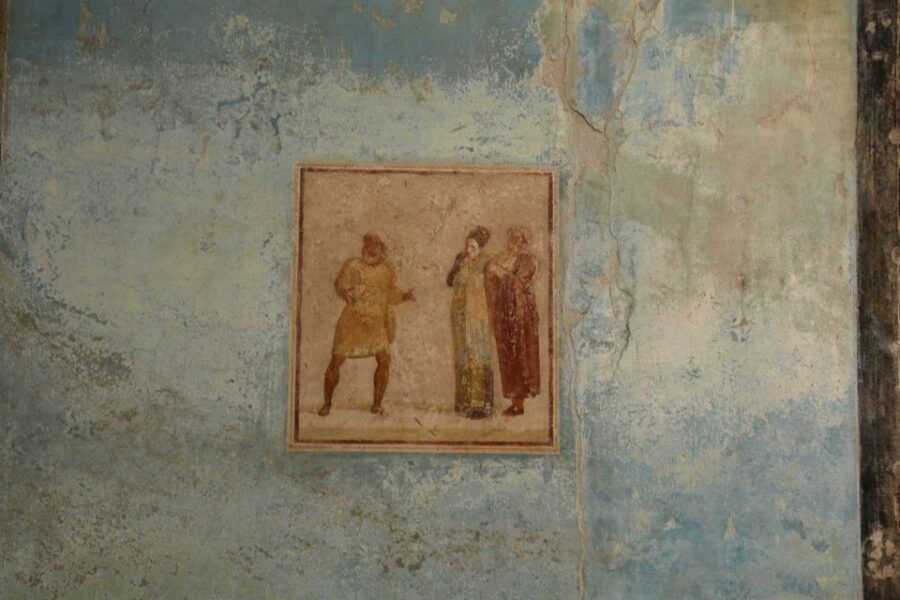
Pompeii’s magic is also its honesty. You don’t just see monuments; you see ordinary life fossilized in stone and ash. A big part of what makes this private tour work is the way it connects the ruins to daily routines—who lived where, how jobs and households functioned, and how social classes sat close together.
This tour is set up to show that Pompeii wasn’t neatly divided into “rich district over here, poor district over there.” You can learn how slaves, ordinary people, and very rich families coexisted in the same city environment—sometimes with sharp differences inside a few nearby streets.
That “close together” theme changes how you walk. You start spotting the practical details that hint at work and status: what kinds of spaces appear in homes, what streets likely carried daily foot traffic, and how the city’s layout supported constant movement.
Rich houses and what wealth really looks like on the ground
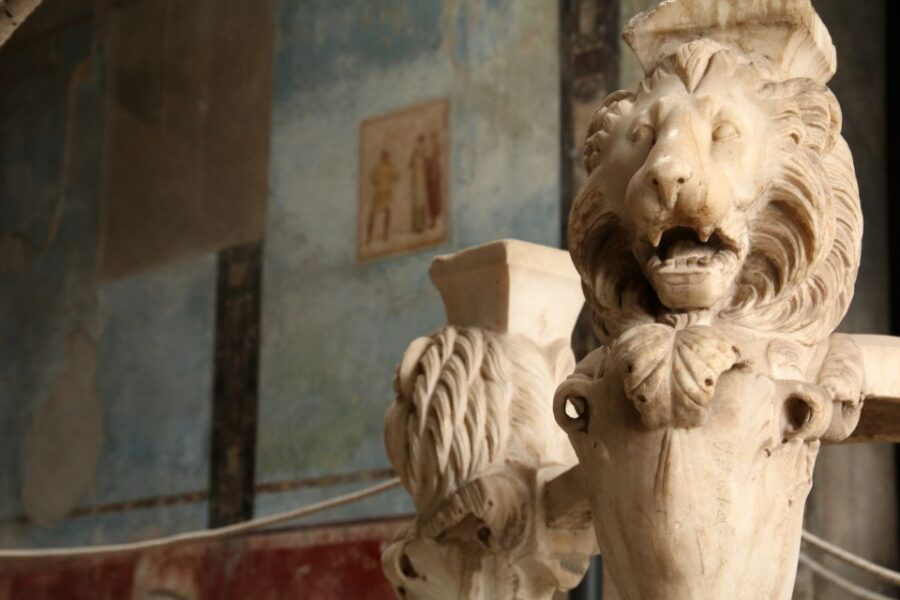
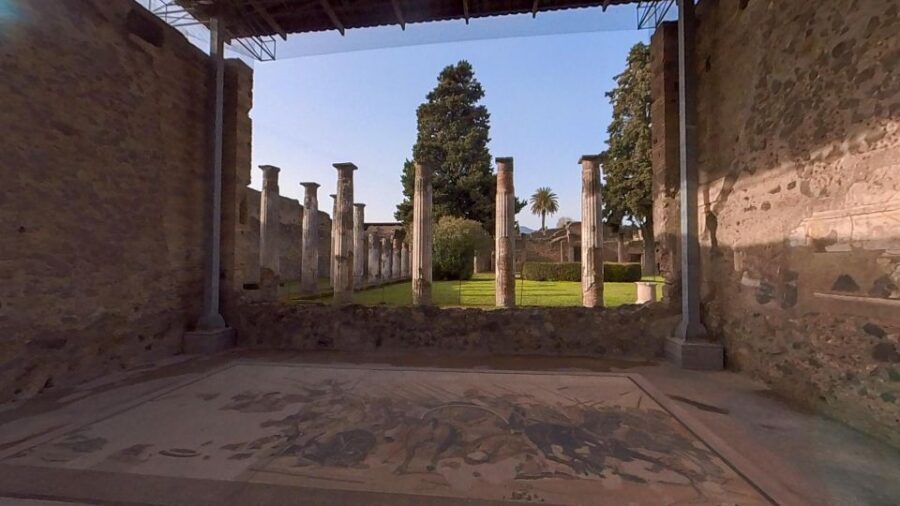
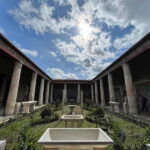
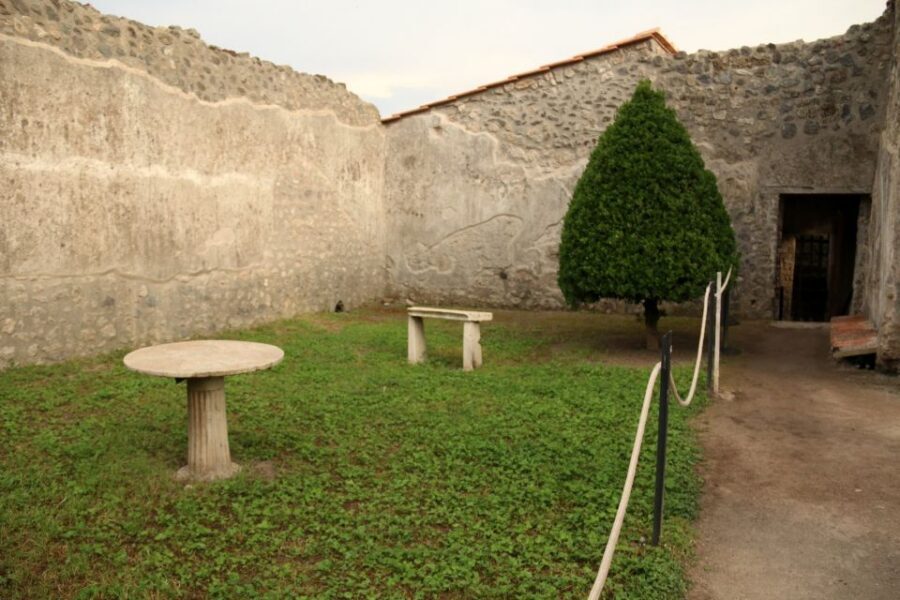
One highlight is visiting some of the richest houses in Pompeii. “Rich” here doesn’t mean Hollywood glamour. It usually means layout, rooms, decoration choices, and the way space was organized for comfort and display.
Your guide’s job is to translate those features into clear meaning. You’re not just getting told that something is “important.” You’re learning what the building elements did in real life—how rooms were used, how decoration connected to identity, and how the physical home reflected social position.
There’s also an art-and-tech angle. Pompeii is famous for visible frescoes and painted surfaces, and the interpretation helps you see why certain artistic choices mattered.
Because this tour is only two hours, you’ll likely see fewer homes than a longer private plan. But you’ll see the ones that give you the best snapshot of how Pompeii worked across classes.

Shops and streets: the small details that make the city feel alive
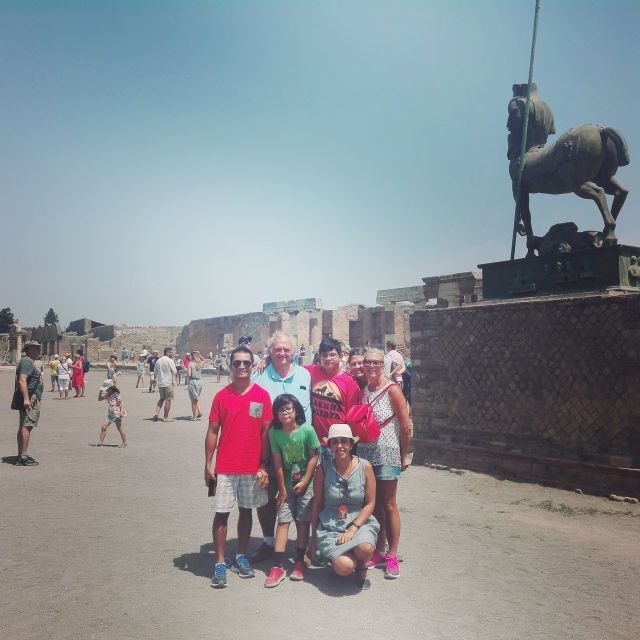
Pompeii ruins can turn into a blur if you only glance at buildings. This tour pushes you to look at the “in-between” stuff: shops, streets, and the layout that supported daily commerce.
That’s where you start to understand movement. Which streets likely carried market traffic? Where would people pause? How did shopfront spaces connect to the street rhythm? These are the kinds of questions a good guide turns into quick answers, so you can keep walking with purpose.
And there are “hidden treasures” in the sense that not every tour spends time orienting you to what you can recognize quickly. With a tailored route, you’re more likely to notice meaningful clusters instead of bouncing from one photo spot to the next.
The plaster casts: the hardest stop, and why it matters
Yes, you’ll see the bodies of people frozen in time—through plaster casts made from victims buried under volcanic ash. It’s heavy material. But on a well-run tour, it’s handled with context and care, not shock value.
The value of including this stop on a two-hour tour is that it prevents Pompeii from becoming only scenery. The eruption in 79 AD is not abstract after this. You feel what “destroyed in a moment” actually means, and you understand why the site is studied and visited worldwide.
If you’re sensitive about this topic, you can take it at your pace. A private guide setting also gives you room to ask questions and manage emotional reactions without feeling rushed by a large crowd.
Staying ahead of crowds without feeling rushed
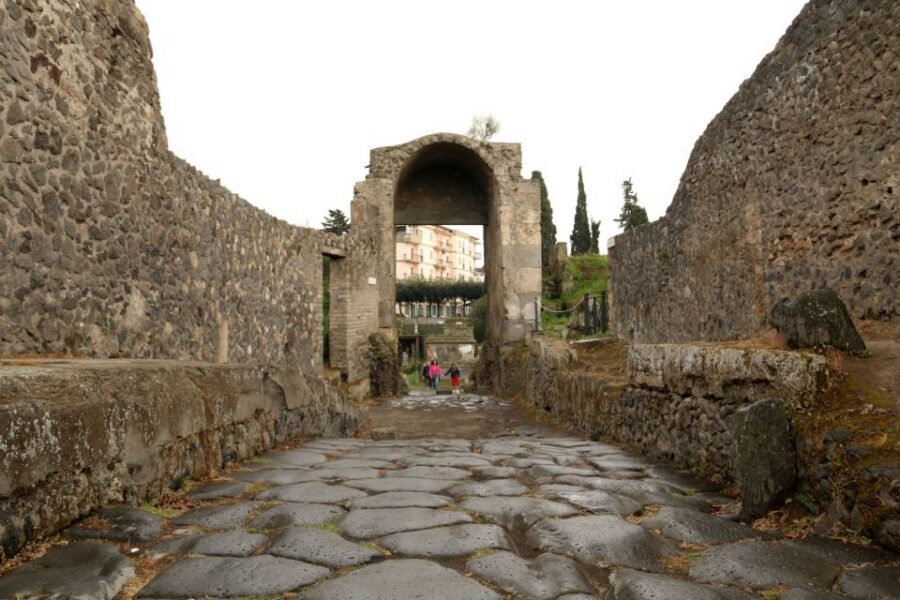
Pompeii can get crowded, especially near the major highlights. This tour is designed with a timing-and-route mindset. The entry tickets include skip-the-ticket-line access, which helps a lot when you only have a short window.
Then comes the practical part: you’re not trying to win an all-day scavenger hunt across the site. You’re learning the key stops and then getting practical recommendations for what to do next on your own.
That’s what makes a two-hour private tour so effective for first-time visitors: it reduces wasted time and gives you a strong starting map.
Language support and guide adaptability (English, Italian, Spanish)
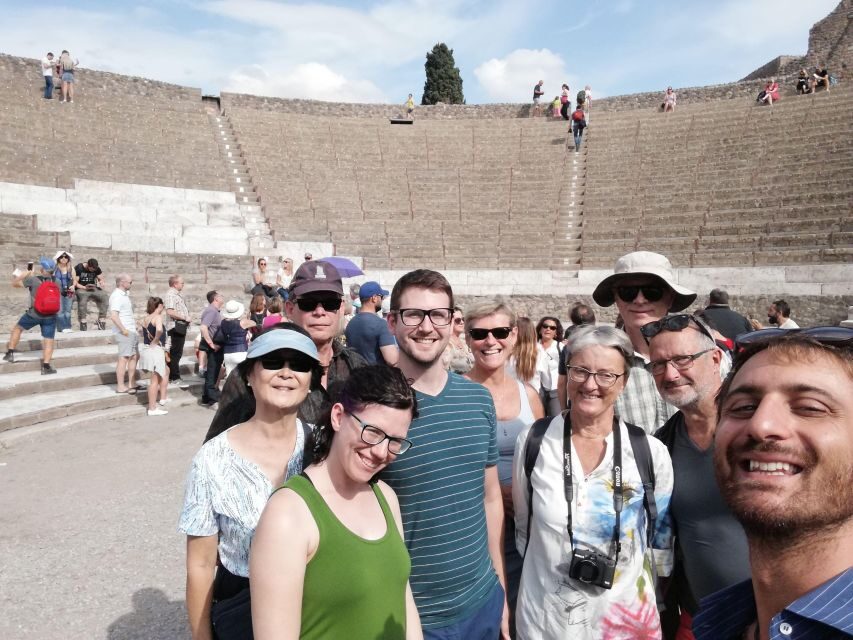
Your tour comes with a licensed guide who speaks English (and you can also find guides offering Italian or Spanish). The multilingual aspect matters because Pompeii is full of small details. If you can follow every explanation, you’ll walk away with more than a photo album.
The private format also makes it easier to adjust the level of detail. One family-focused advantage: when kids are in the group, the guide can keep explanations readable and interactive instead of turning it into a lecture you can’t hear over the group.
And if there are topics you prefer to avoid—Pompeii includes areas some people want to handle delicately—ask. The best tours will respond by adjusting how much context they provide.
What to bring (and what not to bring) to protect your day
This is one of those tours where packing choices affect comfort more than you think.
Bring:
- Passport or ID card (the tour notes that bringing ID for those under 18 helps them get free admittance to the excavations)
- Comfortable shoes
- Hat and sunscreen
- Water (the guidance is to have a bottle each person)
- Umbrella (for sun or weather)
Not allowed:
- Luggage or large bags (anything exceeding 30x30x15cm)
- The good news: you can use free cloakrooms at access points to store personal belongings.
This matters because Pompeii security and site rules can slow you down if you show up with oversized bags. Pack light and you’ll keep the tour experience smooth.
Price and value: is $181.26 per person a smart move?
The price is listed as $181.26 per person for a 2-hour private tour, with entry tickets included and a licensed guide in English (plus Italian and Spanish availability). For Pompeii, that’s not “budget,” but it is reasonable if your goal is time-efficient learning and a calmer experience.
Here’s how to think about value:
- You’re paying to avoid guesswork. Two hours passes fast in Pompeii. A guide turns ruins into meaning.
- You’re paying for skip-the-line entry and a planned route through major stops like the Forum and Temple of Jupiter.
- You’re paying for private pacing, where questions don’t get lost and the guide can tailor focus.
If you’re traveling with multiple people and the tour cost is still per-person (as listed), the math can change quickly. But if you want Pompeii to feel coherent rather than chaotic, a private guided format is often the best use of a limited time window.
Who this tour suits best (and who should choose differently)
This Pompeii tour fits you best if:
- You’re visiting Pompeii for the first time and want a solid orientation in two hours
- You care about understanding Roman daily life, not only seeing famous structures
- You prefer asking questions and moving at a pace that works for your group
- You want a guide-led route that emphasizes high-impact highlights like the Forum and the richer houses
You might want a longer or different approach if:
- You’re the type who needs 30 minutes per room and wants to read everything slowly
- You dislike walking in open-air conditions for an extended period
- You have mobility concerns. The info includes a contradiction: it lists wheelchair accessible, yet also says not suitable for wheelchair users and people with mobility impairments. I’d treat this as a “confirm before you book” situation.
My call: should you book this Pompeii 2-hour private tour?
Book it if you want Pompeii to click quickly. The combination of skip-the-line entry, Forum + Temple of Jupiter emphasis, rich-house visits, and the human weight of the plaster casts is a strong mix for a short visit. The private setup also makes it easier to get answers and keep the experience grounded in how people actually lived.
Skip it (or upgrade to a longer plan) if you know you’ll want to wander widely on your own with lots of solo time. Pompeii is too big to fully “see it all” in two hours, and this tour is built to prioritize understanding over exhaustive exploration.
If you’re deciding today, I’d focus on one question: do you want Pompeii to feel like a story you understand, or like a maze you photograph? This tour is built for the first one.
FAQ
Where does the tour start?
You meet in front of the Pompei Villa dei Misteri train station area on Via Villa dei Misteri (the starting address is listed as Via Villa dei Misteri, 2). The guide will hold a sign with your name. The meeting point is also listed as Via Villa dei Misteri, 1, 80045 Pompeii.
How long is the Pompeii tour?
The guided portion is about 2 hours, including the walk through the archaeological site.
Does this tour include entry tickets?
Yes. Entry tickets are included, along with a licensed English-speaking guide.
Is the tour private?
Yes. It’s listed as a private group tour.
What languages are available?
The live tour guide is available in English, Italian, and Spanish.
What should I bring?
Bring a passport or ID card, comfortable shoes, a hat, sunscreen, and water. An umbrella is also suggested.
Are bags or luggage allowed inside Pompeii?
Luggage or large bags aren’t allowed, including items larger than 30x30x15cm. Free cloakrooms are available at access points, so you can store personal belongings there.