REVIEW · POMPEII ARCHAEOLOGICAL SITE
Pompeii: Skip-the-Line Tickets and Tour with Archaeologist
See Prices & Book →Operated by Raphael Tours & Events
Skip the queue, step into AD 79. This Pompeii experience pairs skip-the-line entry with an archaeologist-led walk through the UNESCO ruins, so you spend less time stuck and more time seeing the city that froze in ash. I also love the storytelling style: your guide makes daily life feel physical, not just memorized from a textbook.
Two things I really liked: first, walking on the original volcanic stone pavement, which helps you understand how streets were meant to be walked. Second, the tour targets the big “people places” like the Forum and market areas, then explains what those spaces meant in Greek-Roman city life.
The main drawback is time. With a 2-hour limit, you cannot see Pompeii at a full “everything you can spot” pace, so plan to do some self-exploring afterward if you want more depth. Also note the basics: no strollers, no large bags, and no umbrellas.
In This Review
- Key highlights at a glance
- Skip-the-Line Pompeii Entry That Actually Saves Time
- Meeting at Coffee Shop Vittoria Near Porta Marina Inferiore
- What You’ll See: Streets, Homes, and the Texture of Daily Life
- Forum and Market: Where Politics Meets the Sidewalk
- Homes, Food, and Public Training: The Pompeii Stops That Feel Alive
- How Archaeologist Commentary Changes What You Notice
- Pace, Headsets, and Comfort Tips for a Smooth Visit
- Price and Value: Is $105 a Fair Deal?
- Who This Tour Is Best For (and Who Should Consider DIY)
- Should You Book This Pompeii Skip-the-Line Archaeologist Tour?
- FAQ
- How long is the Pompeii skip-the-line archaeologist tour?
- Where do I meet the guide?
- Is admission to the Pompeii site included?
- Does the tour include skip-the-line entry?
- What language is the live guide?
- What should I bring for the tour?
- Are strollers or luggage allowed?
- Are umbrellas allowed?
- Is the tour pickup from hotels included?
- Can I cancel, and how late can I cancel?
Key highlights at a glance
- Skip-the-line access through a separate entrance to start faster
- Archaeologist commentary focused on daily routine, not just monuments
- Walk on original stone roads within the preserved ruins
- Everyday Roman spaces like bakeries, homes, and public areas
- Small group feel with time for questions and photos
Skip-the-Line Pompeii Entry That Actually Saves Time
Pompeii is famous for one reason: it’s huge, and it’s popular. Even when you arrive with good intentions, the queue can eat up the best part of your day. This tour’s skip-the-line approach is built for people who want their Pompeii moment without losing half their visit to crowd control.
You also gain something that a ticket alone can’t provide: the guide’s interpretation. As you move through the streets and buildings, your archaeologist explains what you’re seeing and why it matters. That means you’re not just looking at walls—you’re learning how the city functioned.
Another plus: the tour is designed around a tight schedule. In just 2 hours, you cover the sections that connect well to daily life, so the visit feels focused instead of scattered. You’ll likely come away with a clearer mental map of where you want to spend extra time later.
If you're still narrowing it down, here are other tours in Pompeii Archaeological Site we've reviewed.

Meeting at Coffee Shop Vittoria Near Porta Marina Inferiore
The meet-up point is simple and practical: the guide waits at Coffee Shop Vittoria, near the Porta Marina Inferiore entrance. If you’re using public transport or walking into the archaeological area, this is a helpful anchor point.
Once you meet, the group heads toward the ruins together and starts with the kind of orientation that keeps Pompeii from feeling like random stone. The tour description emphasizes bypassing long lines and then getting straight into the city, walking on preserved paths.
One logistics detail that matters: the tour is English. If you want a guide who can explain Roman daily life in a way you can follow easily, this is an advantage. Based on the experience reports tied to this tour, the format also tends to use headsets, which helps you stay comfortable while hearing the guide clearly.
What You’ll See: Streets, Homes, and the Texture of Daily Life
Pompeii hits hardest when you picture ordinary routines—walking, eating, bathing, working out, going to the market. That’s what this tour is set up to do. You move through the streets and ruins as your guide steps you back about 2000 years into the world that existed before the eruption.
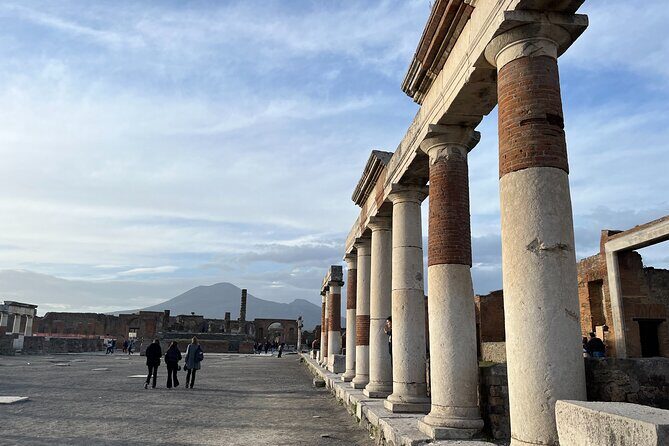
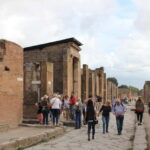
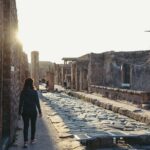
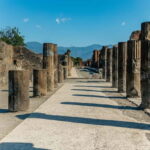
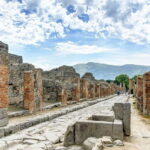
You’ll spend time walking the remaining streets and standing where people once stepped on the original volcanic stone pavement. That might sound like a small detail, but it changes your relationship with the site. Instead of seeing only archaeology behind barriers, you’re placed in a real urban environment.
The tour is also built around everyday Roman “sets” of life, including spaces that help you understand gender roles, social habits, and household activity. For example, you may hear vivid scenario-style explanations such as gladiators training in a gymnasium, women reclining in a triclinium during a feast, and ovens where bread is rising. Even if those are reconstructed scenes, they’re useful because they tie the architecture to lived behavior.
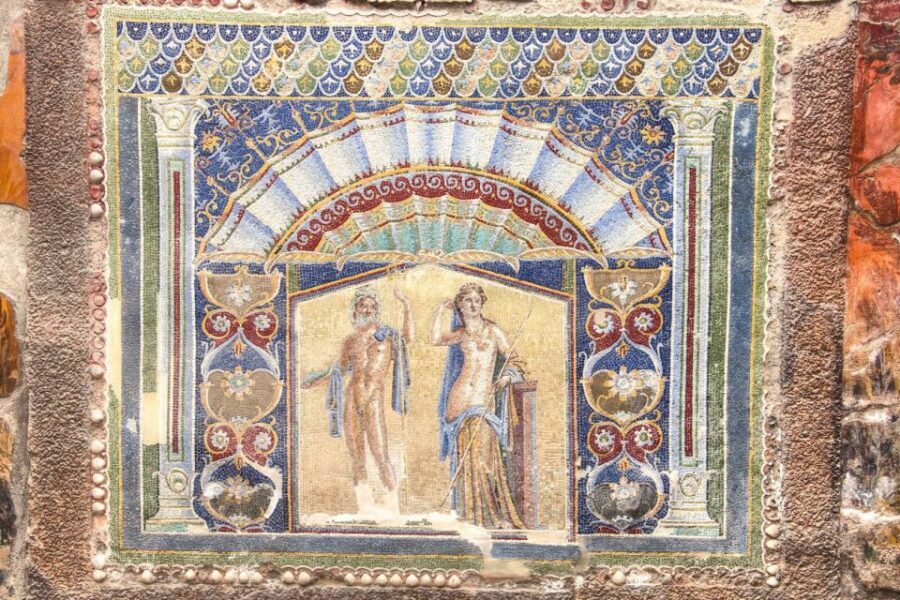
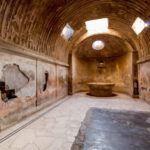
In several experiences linked to this tour, the route also covered things like villas, bathhouses, and food-related areas such as bakeries. That combination matters because Pompeii isn’t just public politics and temples—it’s also daily comfort and daily cravings.
Forum and Market: Where Politics Meets the Sidewalk
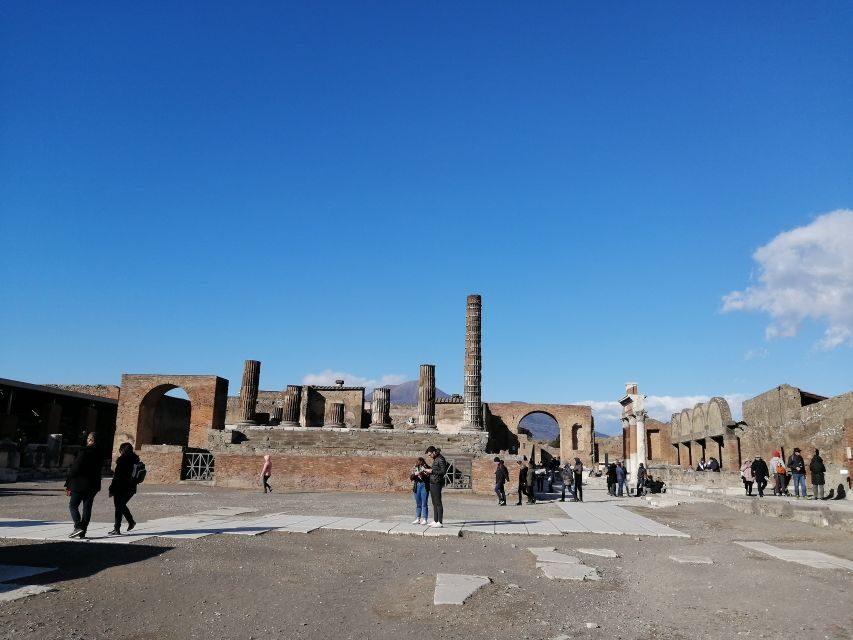
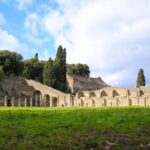
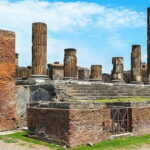
The Forum and market zones are where Pompeii stops being a museum and starts being a city. On this tour, you’ll be guided to areas where people walked, gathered, and interacted with power. The tour description highlights the market and then the Forum, including the idea of people gathering around politicians.
This is one of the smartest reasons to book a guided experience. The Forum can look like a cluster of ruins until someone explains how civic life worked there—where conversations happened, where movement flowed, and how public spaces supported social status.
If you like history that feels human—rather than just dates and inscriptions—this section is likely your favorite. The guide’s job is to turn layout into meaning: what the buildings allowed, who used them, and how everyday citizens moved through civic life.
You’ll also get a sense of how the city’s Greek-Roman culture shaped daily routines. That context helps you interpret smaller details too, like how the street system connects public spaces and neighborhoods.
Homes, Food, and Public Training: The Pompeii Stops That Feel Alive
Pompeii’s homes and household spaces are the reason many people fall in love with the site. This tour leans into that angle, so you’re not stuck only in the “big hits.” You’ll move through ruins associated with residential life and everyday needs.
Food is one of the most effective entry points for understanding the city. The tour description specifically mentions ovens and the smell of fresh bread rising—an imaginative detail, yes, but also a reminder that daily survival depended on work that happened repeatedly.
You may also get guided interpretation of spaces linked to leisure and training. The gymnasium example is useful because it ties the concept of the gladiator myth back to actual routines: training, discipline, and the social role of entertainment in Roman life.
Then there’s the triclinium idea—women reclining on marble for feasts. Even if you’ve seen tricliniums before, hearing how daily habits connected to those rooms makes them feel less like architecture and more like lifestyle.
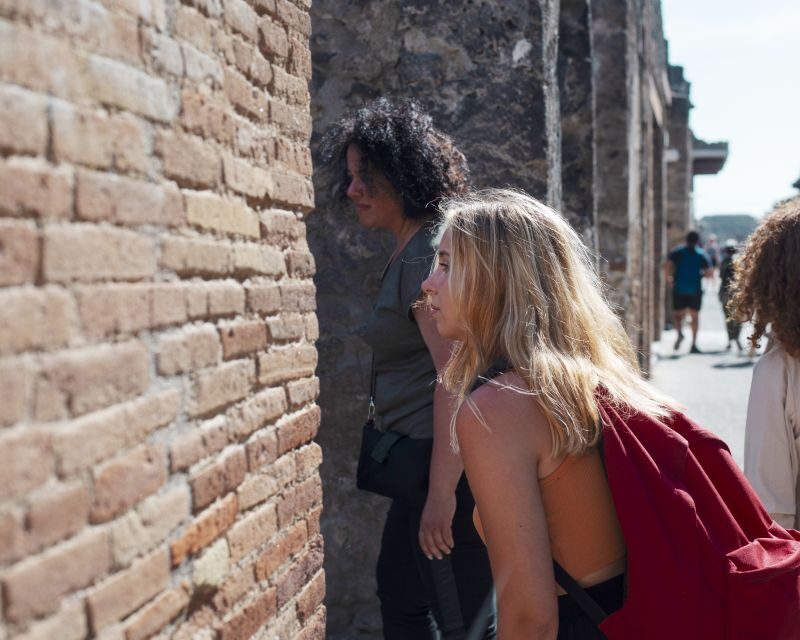
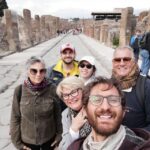
One more note from the tour experiences you provided: the pacing tends to leave room for questions and photos. That matters here, because residential areas often require a second look to understand what you’re seeing.


How Archaeologist Commentary Changes What You Notice
A guide with archaeological training doesn’t just tell you what happened. They help you read the site in a better order.
Instead of a list of facts, you get explanations that help you interpret details you’d miss on your own. For example, multiple experiences associated with this tour highlight that the guide explained how excavating and preserving Pompeii is difficult and expensive. That’s a useful reminder: what you see is not the entire past—it’s what has been uncovered and protected.
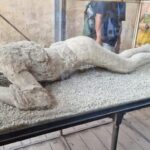
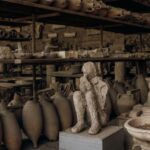
There’s also a noticeable emphasis in the guide style on respectful storytelling. One experience specifically mentions a moment of reverence while discussing a slave girl. I’d treat that as a sign that this tour is thoughtful about what it shows and how it frames human lives.
The humor and energy matter too. Several guide names are mentioned in experiences tied to this tour, including Lallo, Lello, Italo, Leonardo, Anna, Maria, and Raffaele. When guides use that mix of humor and accuracy, you’ll likely find the tour doesn’t feel like school.
And there’s a practical payoff: the tour can make self-exploring after the guided portion easier. If you later walk the site on your own, you’re more likely to recognize what each area functioned as, not just that it looks old.
Pace, Headsets, and Comfort Tips for a Smooth Visit
With Pompeii, comfort is half the experience. This is a walking tour, and the ground can be uneven even when it’s preserved. Comfortable shoes are a must, and plan on steady movement.
The tour guidance also calls out the weather realities: bring a sun hat and sunscreen. Even in shoulder seasons, Pompeii sun can add up fast when you’re exposed between ruin walls.
You’ll also want to travel light. Items not allowed include baby strollers, luggage or large bags, and umbrellas. That’s not just a rule—it’s practical. Pompeii walkways and ticket checks get slow when people are maneuvering bulky items.
If you’re traveling with kids, it helps that the tour’s tone is described as engaging for families, including teenagers. One reason: the guide style is interactive, with an energy that keeps attention. Still, you should expect a real walk, not a “sit and look” tour.
Finally, keep your documents ready. The tour notes that you should provide all names exactly as shown on IDs for each person, including children. It’s a small admin detail that prevents day-of headaches.
Price and Value: Is $105 a Fair Deal?
At $105 per person for a 2-hour tour, you’re paying for three things: a guided archaeologist experience, the admission ticket, and the time-saver of skip-the-line entry.
If you DIY Pompeii, you can certainly enter and explore. But DIY tends to turn into a sightseeing sprint unless you already know where to focus and what to look for. This tour is more structured, which matters when you have limited time.
The value calculation is simple: if you want to understand daily Roman life—markets, homes, training spaces, civic gathering points—this guide time can pay off quickly. The skip-the-line portion also matters because Pompeii’s schedule is unforgiving. Saving time early can mean seeing more before you’re tired.
Where the pricing doesn’t fully “win” is if you’re the type who wants a long, unstructured Pompeii day with hours to linger. In that case, you might prefer tickets plus a self-guided plan. But for most visitors who want meaning fast, the package is hard to beat.
Who This Tour Is Best For (and Who Should Consider DIY)
This Pompeii tour is a great fit if you want:
- A small-group format with room to ask questions
- Roman daily life explained in a way that connects rooms and streets to behavior
- A shorter, focused visit you can build on afterward with extra time on your own
It’s especially appealing if you’re visiting Pompeii for the first time and don’t want to spend your energy figuring out what matters. The guided approach helps you interpret what you’re seeing so you don’t leave with only photos.
If you already know Pompeii well and have a very personal route, you may find the 2-hour coverage feels tight. Also, if you need wheelchair access or stroller travel, you’ll want to look closely at the rules here since baby strollers are not allowed.
Should You Book This Pompeii Skip-the-Line Archaeologist Tour?
I’d book it if your top goal is understanding Pompeii without wasting daylight in lines. The archaeologist-led approach is the real engine here, especially when you care about daily life, public spaces, and how the site fits together as a city.
You should think twice if you’re planning a super slow, long day and want to linger in every area. The 2-hour window is great for a strong overview, but Pompeii is too vast to cover everything.
If you do book, go in with the mindset of “I want context.” Then use the tour to set your direction for the rest of the site. It’s one of the best ways to leave Pompeii feeling like you actually understood the people inside the stone.
FAQ
How long is the Pompeii skip-the-line archaeologist tour?
The tour lasts 2 hours.
Where do I meet the guide?
Meet at Coffee Shop Vittoria, close to the Porta Marina Inferiore entrance.
Is admission to the Pompeii site included?
Yes. Admission tickets are included in the tour price.
Does the tour include skip-the-line entry?
Yes. Skip the line through a separate entrance.
What language is the live guide?
The live guide offers the tour in English.
What should I bring for the tour?
Bring comfortable shoes, a sun hat, and sunscreen. Children should also bring a passport or ID card.
Are strollers or luggage allowed?
No. Baby strollers and luggage or large bags are not allowed.
Are umbrellas allowed?
No, umbrellas are not allowed.
Is the tour pickup from hotels included?
Hotel pickup and drop-off are not included.
Can I cancel, and how late can I cancel?
You can cancel up to 24 hours in advance for a full refund.