REVIEW · POMPEII ARCHAEOLOGICAL SITE
Pompeii: Skip-the-Line Guided Tour with Expert Archaeologist
Book on GetYourGuide →Operated by Walks of Italy · Bookable on GetYourGuide
Pompeii gets much easier with a pro leading the way. This skip-the-line guided visit turns a huge, confusing site into a clear story, with an archaeologist explaining what you’re seeing. Two things I’d pick right away are the reserved entry that saves time and the way the guide connects streets, buildings, and objects to daily Roman life. The big catch: it’s a real walking tour in heat, and it’s not set up for wheelchair users or guests who can’t move at a moderate pace.
If you’re worried about hearing every detail in a busy place, you’ll appreciate the headset system when needed. Small groups also make a difference; you can ask questions without playing “guess the next stop” behind everyone else.
You’ll meet at the entrance area near Via Villa dei Misteri, then walk through Pompeii’s most compelling corners—temples, shops, baths, villas—plus emotional moments like the plaster casts. The tour runs about 2–3 hours (with an Express option closer to 2), so you can still enjoy time to wander on your own afterward.
In This Review
- Key Things To Know Before You Go
- Skip-the-Line Pompeii: Why This Guided Format Feels Right
- Meeting at Via Villa dei Misteri: Finding Your Green-Sign Guide
- Your Pompeii Walking Route: From Forum Energy to Street-Level Life
- The Forum and civic heart
- Temples: not just pretty stone
- Shops, Baths, Villas, and Everyday Things You’d Miss
- Baths and villas: social life in stone
- Shops and street commerce
- The Roman bakery and food still almost intact
- The Most Emotional Parts: Plaster Casts and the Human Cost
- New Discoveries and Ongoing Excavation: Pompeii as a Work in Progress
- The Brothel Stop and City-Wall Views: What Else Makes It Feel Complete
- Family-Friendly, but Know the Limits
- Price and Value: Is $70 Worth It?
- Guide Quality: The Names You Might Hear (and Why It Matters)
- Practical Tips for a Hot, Stone-Filled Day
- Should You Book This Pompeii Skip-the-Line Archaeologist Tour?
- FAQ
- How long is the Pompeii guided tour?
- Where do we meet the guide?
- What’s included in the price?
- Do I need to bring anything?
- Is this tour suitable for wheelchair users or mobility impairments?
- Is free cancellation available?
Key Things To Know Before You Go
- Skip-the-line, pre-reserved entry: you don’t spend your vacation waiting outside.
- Archaeologist-led storytelling: you’ll learn what buildings meant and how people actually lived.
- More of Pompeii than most routes: especially with the longer option that follows a broader selection of areas.
- Ongoing excavations matter here: you’ll see how Pompeii is still being uncovered and preserved today.
- Headsets help you keep up: fewer “crowd around the guide” moments.
- Weather and walking pace are real factors: plan for sun, stone, and a moderate walking tempo.
Skip-the-Line Pompeii: Why This Guided Format Feels Right

Pompeii is one of those places where the scale hits you fast. It’s not just “ruins,” it’s a whole city laid out in stone and ash, and trying to self-tour it can turn into a lot of staring at walls and wondering what you’re missing.
This tour earns its keep by solving two problems at once. First, the pre-reserved skip-the-line tickets save the most precious resource you have in Italy—time. Second, the guide is not just reciting facts. The tour is designed to make the city readable: what a forum meant, why baths were social hubs, how shops fit into street life, and what the eruption changed in a matter of hours.
You also get a strong “living archaeology” angle. About one-third of Pompeii still remains uncovered, and preservation work is ongoing. That means the tour isn’t treated like a frozen museum script. Your route can adapt based on what’s newly visible or newly emphasized in that moment, which is a big deal when a site is being actively studied and cared for.
If you're still narrowing it down, here are other tours in Pompeii Archaeological Site we've reviewed.

Meeting at Via Villa dei Misteri: Finding Your Green-Sign Guide
You’ll start at Via Villa dei Misteri, 1, and the tour meets at the entrance gate area across from the Hortus Pompei restaurant. Arrive about 15 minutes early. Your guide should be holding a green walks sign, which is the easiest way to spot the group.
This is worth taking seriously. Pompeii’s entrance zone can be chaotic, and one late person can ripple the whole group’s flow. I like this tour’s setup because it keeps the day moving quickly once you’re in.
Your Pompeii Walking Route: From Forum Energy to Street-Level Life

The full experience runs roughly 3 hours. There’s also an Express option of about 2 hours, which follows a tighter curated path focused on the Forum, temples, and shops. If you want the most context and more variety, go longer. If you’re short on time and mainly want the big hits, the Express route is a practical trade.
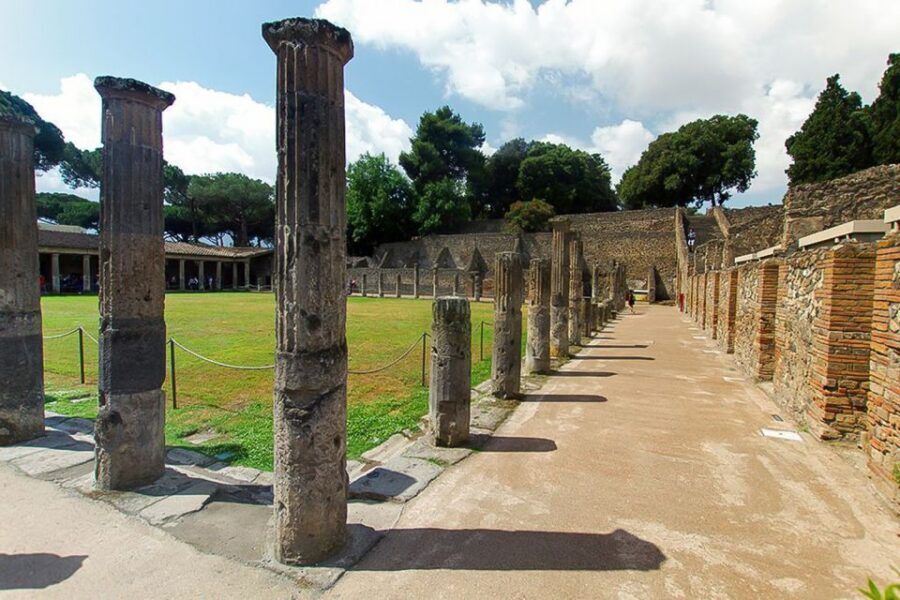
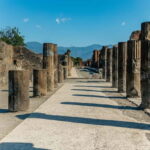
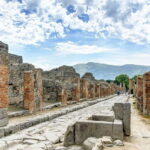
Either way, the walking is the point. The tour takes you through the best-preserved streets of the Roman Empire, where you can actually picture how people moved—down narrow roads, past doorways, through passageways, and into everyday spaces like bakeries and shops.
The Forum and civic heart
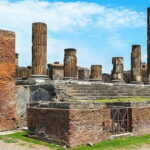
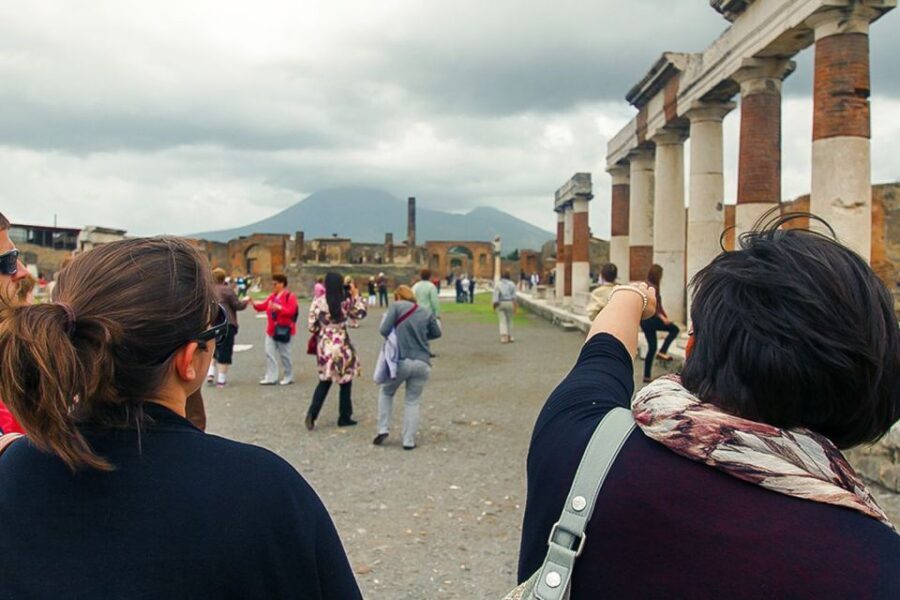
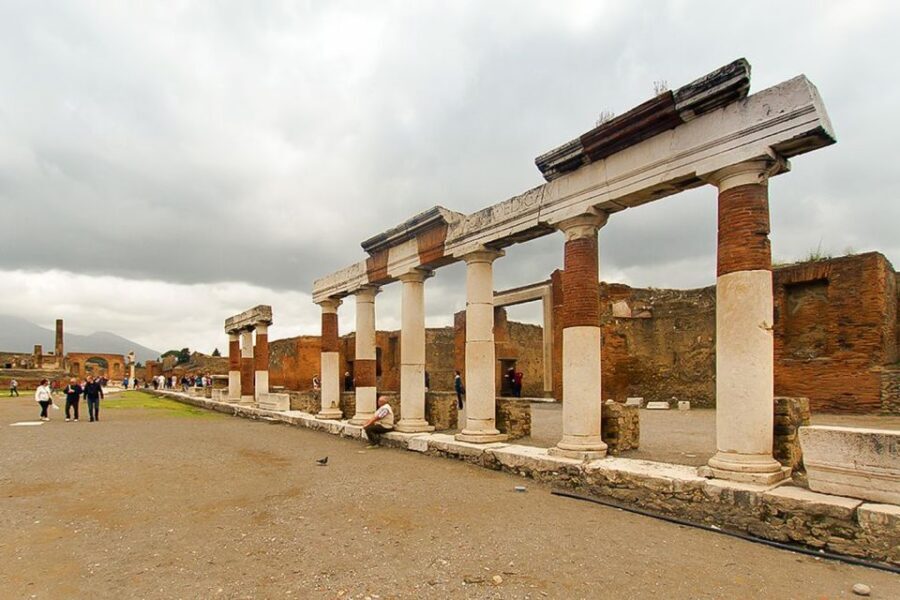
You’ll see the Roman Forum on the longer route, and it’s also part of the Express option. This is where Pompeii stops feeling like “ruins” and starts feeling like a city that ran on meetings, markets, and public identity.
Even if you’ve heard the word forum before, the difference here is that the guide ties it to real daily rhythms—what you’d do there, who you might see, and how civic space shaped social life. That’s where a trained archaeologist guide adds the biggest value, because the story connects the dots faster than reading alone.
Temples: not just pretty stone
You’ll also visit major sacred spaces, including the Temple of Apollo. Temples can look similar to the untrained eye—columns, steps, open areas—so the guide’s job is to explain why this spot mattered and how religious life was woven into public identity.
If you like explanations that make you look at details differently, this stop tends to land well. It’s the kind of place where you begin noticing small clues that say a lot about usage and meaning.


Shops, Baths, Villas, and Everyday Things You’d Miss
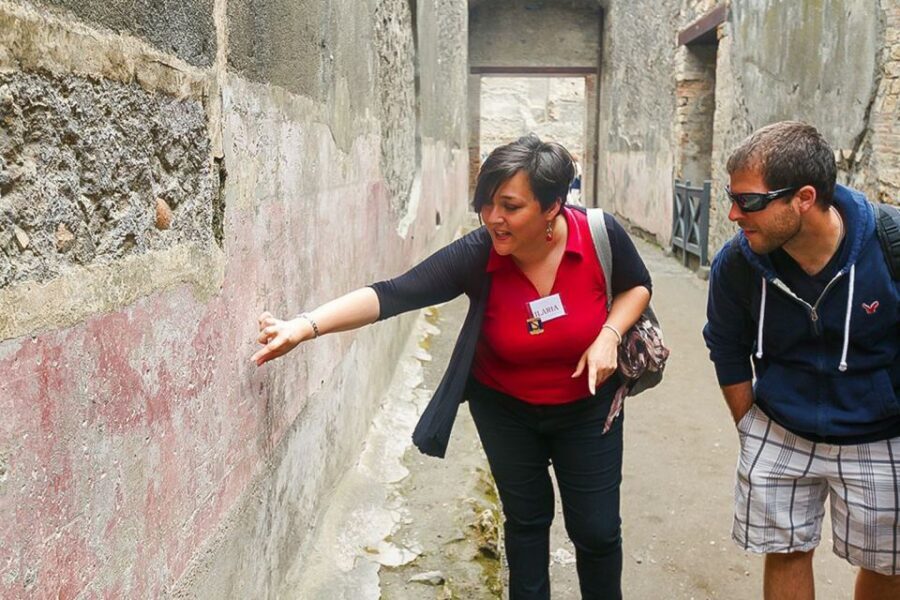
One reason Pompeii feels so powerful is that you’re not only seeing monuments. You’re seeing daily infrastructure—food, commerce, leisure, and homes.
Baths and villas: social life in stone
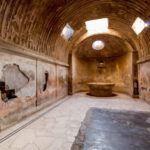
The tour includes stops tied to baths, villas, and shops. Baths weren’t just about cleanliness; they were social. When you understand that, the layout starts to make sense. You can almost imagine the conversations happening where people once gathered.
Villas and houses do something similar. The guide helps you see what “private” meant in a city built for crowds and public spectacle. You’re not just looking at rooms—you’re learning how space worked for different kinds of residents.
Shops and street commerce
As you stroll past shop remains, you’ll hear stories about ordinary life in Pompeii nearly 2,000 years ago. The payoff is that shops become a social system, not just a storefront skeleton.
This is also where the guide’s pacing matters. If you’re rushing, you miss tiny clues. If you’re listening, you start noticing why a location was chosen, what a building suggests about trade, and how people used these spaces day after day.
The Roman bakery and food still almost intact
One highlight mentioned in the tour description is a Roman bakery where the food is still almost intact. Seeing something preserved that closely changes the emotional temperature of the day. It’s no longer abstract. It’s connected to something you can almost smell—grain, bread, heat—just by understanding what that place was for.
If you like “how did they eat?” details, this is the stop that makes Pompeii feel human fast.
The Most Emotional Parts: Plaster Casts and the Human Cost
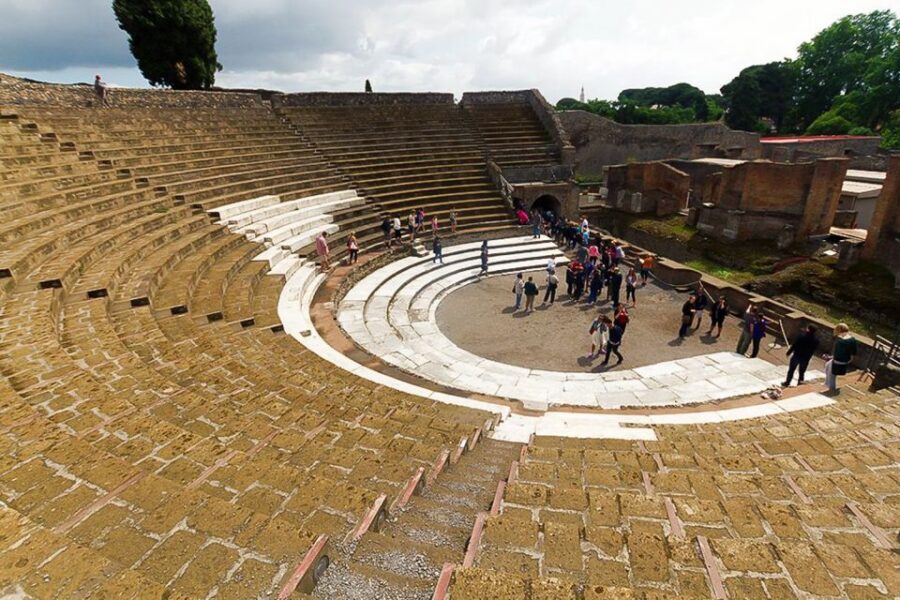
Pompeii isn’t only a history lesson. It’s tragedy visible in stone.
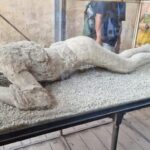
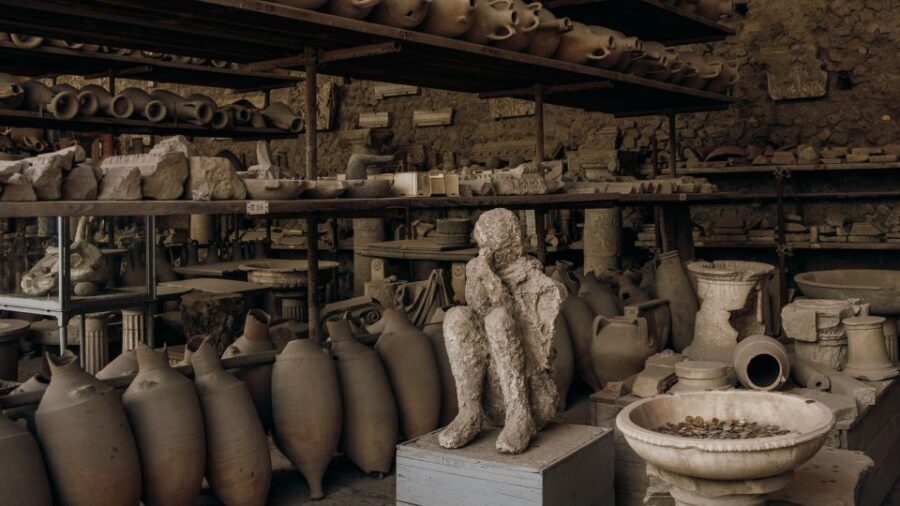
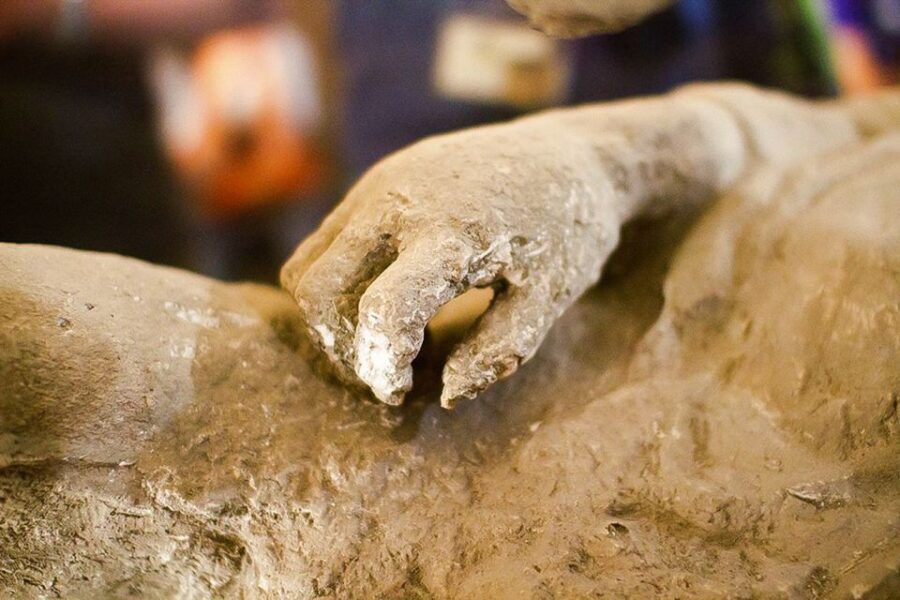
The tour takes you to plaster casts of people caught in the eruption at the moment of their death. This is the part that tends to stop conversations and make everyone walk a little slower.
It’s also why I think an archaeologist-led narrative matters. The guide doesn’t just point; they explain what you’re seeing and why those casts are important evidence. You’ll understand the layers: the chaos of 79 AD, the aftermath, and why preservation methods keep these stories from disappearing.
New Discoveries and Ongoing Excavation: Pompeii as a Work in Progress
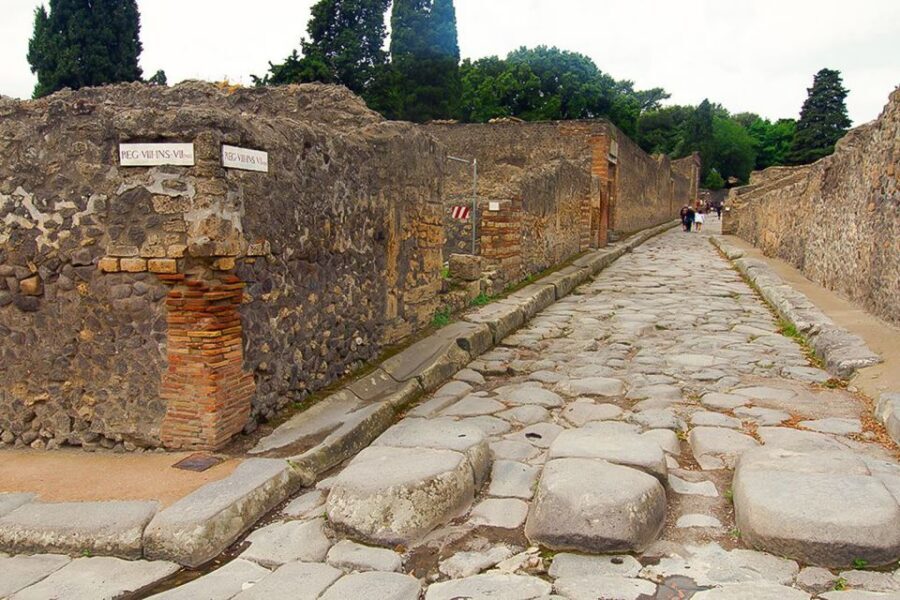
A big part of the value here is that this isn’t treated like a one-time sightseeing checklist. Pompeii is still being dug up and studied, and you’ll learn how excavation and preservation continue today.
The tour description specifically notes that the itinerary can adapt to recent discoveries, keeping the experience dynamic. In practical terms, this means you’re not always receiving the exact same sequence of stops every day. Your guide’s job is to keep you oriented so the surprises don’t feel random.
You may also encounter areas connected to ongoing digs and new visibility in certain sections, which gives Pompeii a sense of current research rather than a closed chapter.
The Brothel Stop and City-Wall Views: What Else Makes It Feel Complete
Depending on what’s appropriate for your group, the tour includes a stop at one of the old brothels. It’s handled as a normal historical visit—part of understanding everyday life in Pompeii rather than a shock gimmick. If your group prefers to skip that kind of content, this is the kind of tour that may be able to adjust, since it’s described as dependent on group suitability.
You’ll also walk along the old city walls for panoramic views of Naples. This is a smart break in the storyline. After heavy ruins and heavy emotions, you get a wide view that reminds you that modern Naples sits right next to the buried city. It helps your brain stitch past and present together.
Family-Friendly, but Know the Limits
There’s a clear pattern in the guide experience: people mention how the tour stays engaging even for children when the guide answers questions and keeps stories moving. Guides have been described as energetic and funny—helpful when Pompeii’s heat and scale can make anyone grumpy.
That said, this is still a walking tour. It’s not described as stroller-friendly, and it’s not suitable for guests with mobility impairments, wheelchairs, or baby strollers. If your group includes anyone who needs frequent seating or assistance, you should consider another format or be ready to plan your day differently.
Price and Value: Is $70 Worth It?
At $70 per person for a roughly 2–3 hour archaeologist-led walk, the price isn’t the bargain-hunter pick. But it does line up with real value if you care about getting Pompeii right.
Here’s what you’re buying:
- Reserved skip-the-line tickets, which protects your time.
- An official Pompeii tour guide plus a trained archaeologist, meaning you’re not just hearing where things are—you’re hearing why they matter.
- Headsets when needed, so you can keep moving without losing audio.
- A route designed to cover more of Pompeii than many short sightseeing walks, especially with the longer option.
In a place where Pompeii is huge and easy to misread, an expert guide can prevent the “we saw a lot, but we didn’t understand much” problem. If you’re the kind of person who wants to walk away able to explain what a forum is, what baths did socially, and why the casts are so significant, this price starts to feel fair.
Guide Quality: The Names You Might Hear (and Why It Matters)
Guides vary by date, but the thread is consistent: archaeologist-level interpretation and clear English.
You might be led by guides such as Iliana, Enzo, Anna, Brunella, Ilaria, Sonya, or Paulo—all mentioned as delivering strong narration and a real passion for Pompeii. What stands out in the guide descriptions you provided is the combination of clarity and engagement: guides who don’t rush, who keep groups listening with headset support, and who answer questions instead of moving on.
That’s not just “nice.” On a site this big, it’s the difference between collecting snapshots and actually learning how Pompeii functioned.
Practical Tips for a Hot, Stone-Filled Day
Even the best tour can’t fix the basics of Pompeii: it’s sun, stone, and walking.
I strongly recommend:
- Bring a water bottle and plan to drink often.
- Wear closed-toe shoes (you’ll feel safer on uneven ground).
- Consider a UV umbrella for sun protection; the heat can be intense.
- Use a hat and sunscreen. Pompeii has limited shade compared to what you might expect.
Also, arrive on time. The tour starts at the entrance gate meeting area with that green sign, and starting late can push the group through key areas without enough attention.
Should You Book This Pompeii Skip-the-Line Archaeologist Tour?
Book it if you want the most payoff per hour. This tour is built for people who want more than photos: you want meaning, context, and an organized route through a massive site.
I’d especially recommend it if:
- you only have a half-day or a short window in the Pompeii area,
- you want ongoing excavation explained in plain language,
- you prefer small-group pacing and using headsets instead of crowding a guide.
Skip or reconsider if:
- your group has mobility constraints, wheelchair needs, or stroller needs (this one isn’t set up for that),
- you hate structured walking and would rather wander freely with no scheduled narrative.
If your goal is to understand Pompeii as a working city that got buried—and still being uncovered—this is a smart, high-value way to do it.
FAQ
How long is the Pompeii guided tour?
The standard guided tour is about 3 hours, and there’s also a Pompeii Express option that’s about 2 hours. Total time can vary within the 2–3 hour range.
Where do we meet the guide?
You meet at the entrance gate for the Pompeii Archaeological Park, across from the Hortus Pompei restaurant. The meeting address is Via Villa dei Misteri, 1, and the guide holds a green walks sign.
What’s included in the price?
Included are Pompeii pre-reserved skip-the-line tickets, an official Pompeii tour guide, and headsets when needed.
Do I need to bring anything?
Bring a passport or ID card and wear comfortable shoes. The tour also notes that children need passport or ID.
Is this tour suitable for wheelchair users or mobility impairments?
No. It’s not suitable for guests with mobility impairments, wheelchair users, or strollers.
Is free cancellation available?
Yes. You can cancel up to 24 hours in advance for a full refund. The activity also offers reserve now & pay later.