REVIEW · POMPEII ARCHAEOLOGICAL SITE
Pompeii 3-Hour Walking Tour
Book on GetYourGuide →Operated by Askos Tours · Bookable on GetYourGuide
Pompeii hits hard, even on foot. This private guided walk focuses on the parts that make the city feel real: gates, civic squares, homes, theaters, and the spots where Roman daily life was loud, messy, and very human. You’ll learn how Vesuvius buried Pompeii in 79 A.D., then how the site was rediscovered and pieced back together in the 18th century.
I love two things right away. First, you get expert interpretation from an archaeologist guide—one of the guides you may meet is Vincenzo—so the ruins aren’t just pretty walls. Second, the route is packed with “wow” stops: the Forum, Thermal Baths, and the old brothel (Lupanar), plus the plaster casts of people and animals at the moment of death.
The main consideration is time. Three hours is great, but Pompeii is huge—so you’ll want to be okay with walking quickly between highlights instead of lingering forever in one single spot.
In This Review
- Key highlights you should care about
- How this 3-hour Pompeii tour really works
- Starting points: Via Villa dei Misteri vs. where you meet in practice
- The first gate moments: Porta Marina and the Marina Gate vibe
- Villa of the Mysteries: paintings and a story you can actually follow
- Temples and sacred corners: Apollo, Jupiter, and Venus
- The heart of the city: Forum spaces, Basilica, and the civic rhythm
- Houses that show everyday life: Menander, Faun, Vettii, and Tragic Poet
- The brothel stop: Lupanar and what it teaches
- Baths, commerce, and street life: Sarno Baths, Termopolium, and bakery stops
- The theaters: Large Theatre, Odeion, and the Amphitheater
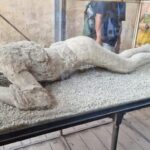
- The plaster casts: where the story becomes physical
- Why UNESCO wording matters (and how the tour helps you feel it)
- Price and value: $508.15 for a private group up to 1
- What to bring, what to avoid, and small rules that matter
- Who this tour fits best
- Should you book this private Pompeii 3-hour walking tour?
- FAQ
- How long is the Pompeii 3-hour walking tour?
- What’s included in the price?
- Are tickets included, and is there a way to avoid the ticket line?
- Where do I meet the guide?
- Which stops are part of the tour?
- What languages are available for the live guide?
- Is it wheelchair accessible?
- What should I bring, and what’s not allowed?
- Does the tour run in bad weather?
Key highlights you should care about
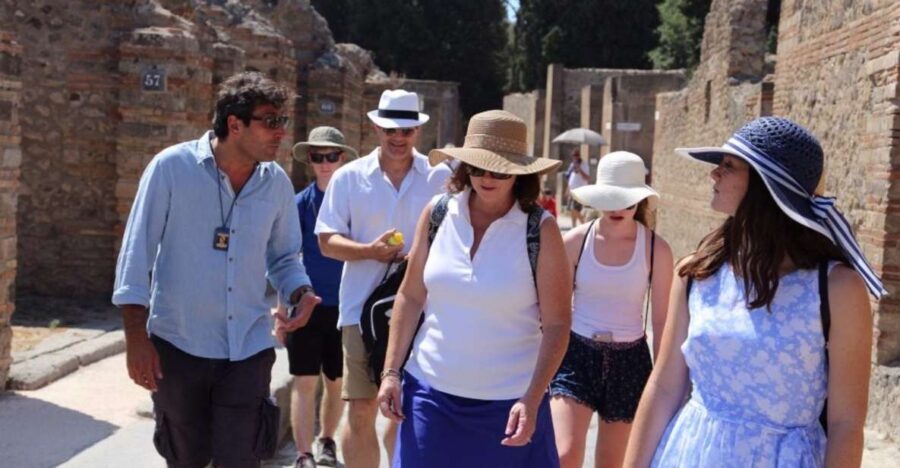
- Private, archaeologist-guided pacing that turns ruins into a story you can follow
- Forum + civic buildings like the Basilica and Temple areas, where Roman public life played out
- Lupanar brothel visit to understand daily contrasts, not just big monuments
- Plaster casts of death (humans and animals) that make the 79 A.D. eruption feel immediate
- Big-screen anchors like the Large Theatre and Amphitheater, built for crowds and spectacle
- Villa of the Mysteries and home interiors, showing private life alongside public life
How this 3-hour Pompeii tour really works
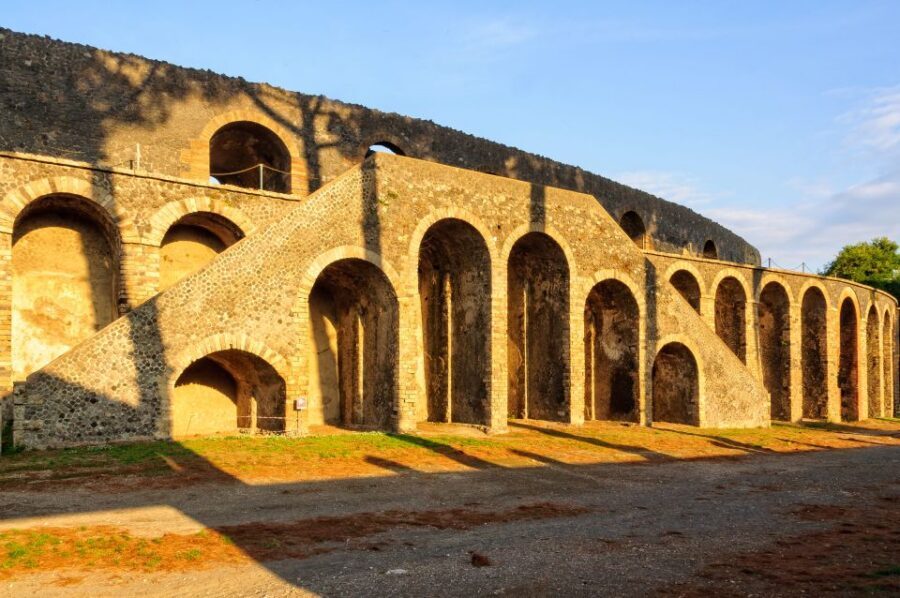
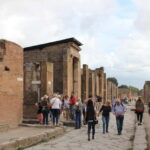
You’re looking at a high-density Pompeii experience. The tour is designed as a focused walk through recognizable anchors: main gates, civic spaces, baths, theaters, houses, and the Lupanar. That matters because Pompeii can feel overwhelming on your own. Here, you get a clear route and a guide to explain what you’re seeing as you see it.
Because it’s private, the guide can keep the flow at a speed that works for your group. The tour is also listed as wheelchair accessible, which is a big plus for a site that often gets trickier with uneven ground and crowds.
A practical note: you’re skipping the ticket line. That saves real time at the entrance, especially if you’re arriving during busier hours. Also, it runs in any weather, so bring a small rain layer and plan for wet stone underfoot if it rains.
If you're still narrowing it down, here are other tours in Pompeii Archaeological Site we've reviewed.
Starting points: Via Villa dei Misteri vs. where you meet in practice
Your tour starts at one of two meeting points on Via Villa dei Misteri: 2 or 3. From there, you’ll head to the Pompeii Archaeological Site and begin the guided portion.
This matters because Pompeii days can go sideways if your meeting spot is unclear. I’d check the exact option you booked right before you go so you don’t waste energy wandering around. Also, remember you’re asked to bring a passport or ID card.
The first gate moments: Porta Marina and the Marina Gate vibe
The tour moves you toward the entrance zones that help you “get bearings fast.” One of the early stops is Porta Marina, which is more than a photo spot. It sets the tone: Pompeii wasn’t a museum piece—it was a city with movement, noise, and constant arrivals and departures.
You’ll also see the Marina Gate referenced as part of the highlights route. That’s useful because gates connect the city to its surroundings and trade paths. When a guide ties the gate to how people entered daily life, the whole ruin complex starts clicking together.
If you’ve ever tried walking Pompeii without a plan, you know how quickly everything becomes “interesting, but where is the center?” Early gate stops help fix that.
Villa of the Mysteries: paintings and a story you can actually follow
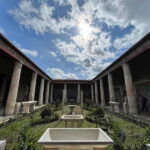
Then comes one of Pompeii’s best-known residential stops: the Villa of the Mysteries. Villas in Pompeii aren’t just big houses. They’re statements—about wealth, culture, and private belief systems.
What makes this stop strong on a guided tour is interpretation. A good guide will help you connect the villa to the broader picture of Roman life at that moment in time. Even if you’ve seen photos before, being there with commentary makes the space feel purposeful rather than decorative.
This is also a good moment to slow down mentally. The walk has momentum, but the villa helps you shift from civic life into what was happening behind doors.
Temples and sacred corners: Apollo, Jupiter, and Venus
You’ll visit Temple of Apollo, and you’ll also encounter temple highlights like Temple of Jupiter and Temple of Venus as the route unfolds. Temples give you a different kind of evidence: not just architecture, but what mattered to people—ritual, identity, and the public nature of belief.
Here’s why this is valuable: Pompeii wasn’t only about day-to-day survival. It was also about religion as a social system. A guide helps translate temple spaces into how Romans organized meaning in daily routines.
If you’re the kind of traveler who likes to understand why a city was built the way it was—not only what happened there—this temple sequence will feel like the “logic layer” of Pompeii.

The heart of the city: Forum spaces, Basilica, and the civic rhythm
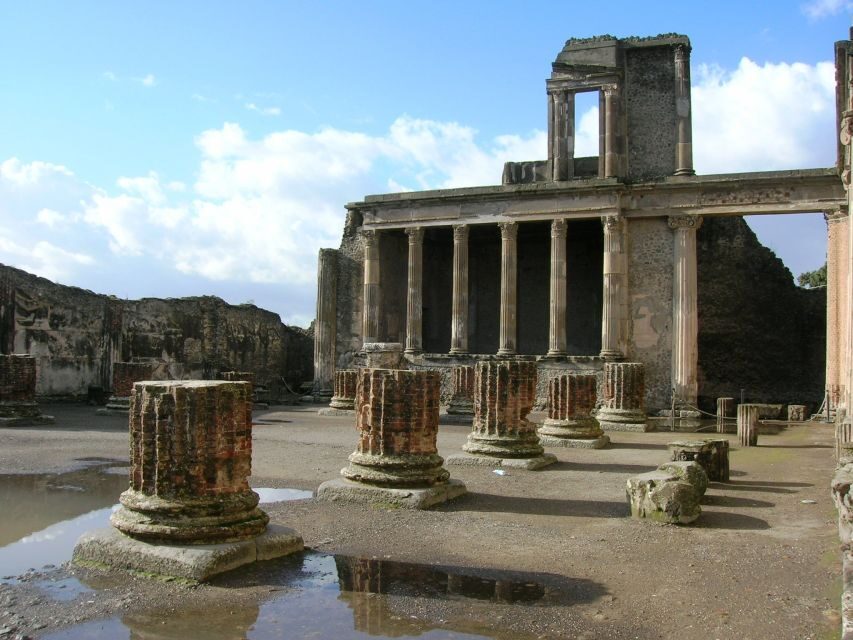
This is where the tour earns its keep. You’ll cover the Foro Civile di Pompei (civic forum area) and the Basilica, the kind of building where law, business, and public gatherings happened. When you stand in these spaces, you start to realize why the Forum was the city’s stage.
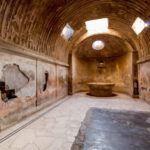
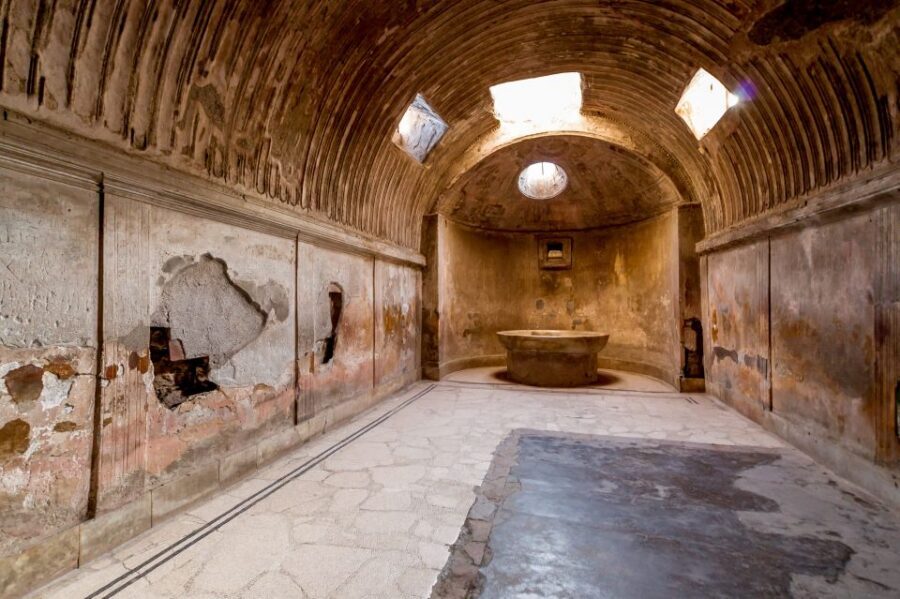
You’ll also see Forum-related stops like the Forum Baths, plus other civic highlights that may come up along the way, including parts described as the Triangolar Forum and Forum Baths. These aren’t filler stops. Baths were public spaces—places to talk, meet, relax, and handle the social side of everyday life.
The Basilica and Forum combo helps you answer two big questions:
- Where did Romans go to make decisions and conduct public business?
- Where did they go to spend time after?
That public-private contrast is one of the reasons Pompeii’s UNESCO value gets repeated so often: it offers a complete picture of society in a single frozen moment, not just isolated monuments.
Houses that show everyday life: Menander, Faun, Vettii, and Tragic Poet
From civic life, you’ll move into residential Pompeii with stops such as the House of Menander and the House of the Faun. The House of the Vettii and the House of Tragic Poet are also part of the highlights discussed for this route.
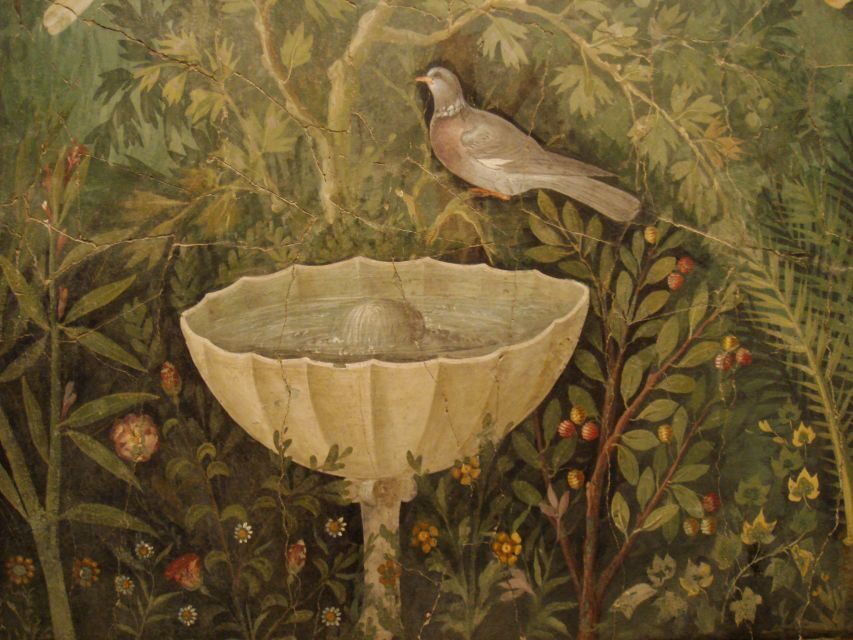
These houses matter because they show you what “home” meant to wealthy Romans—and how that wealth displayed itself in floors, walls, and layout. You’ll learn how the city’s destruction preserved structures and impressions that normally vanish when buildings are reused over centuries.
A guided house visit is also about scale and layout. Pompeii homes can look confusing at first—rooms inside rooms, thresholds, courtyards, corridors. A guide helps you read the plan so you’re not just staring at walls and trying to guess the function.
If you love architecture or domestic detail, you’ll feel your interest jump here. If you’re more into history-by-story, the homes still work because the guide links each space back to how people lived.
The brothel stop: Lupanar and what it teaches
Yes, you’ll visit the Lupanare, the old brothel. It can feel uncomfortable at first, but it’s also one of the most honest parts of Pompeii. Roman life included prostitution, and Pompeii recorded it in stone and space.
In a good private guided setup, the guide doesn’t just point at a building. You’ll get context about what the site shows and why it’s preserved. This makes the visit more about understanding society than about shock value.
I recommend treating this stop like a historical document: pay attention to details the guide points out and let the interpretation do the work. You’ll come away with a sharper view of Roman daily life, including the corners people rarely discuss in polite conversation.
Baths, commerce, and street life: Sarno Baths, Termopolium, and bakery stops
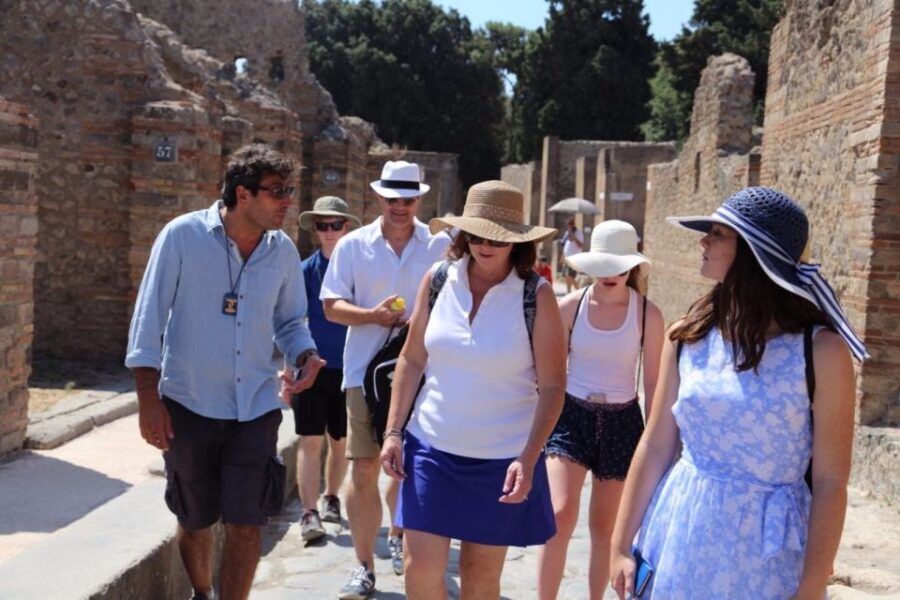
Your tour also includes highlights related to public recreation and everyday eating. You’ll see references to Sarno Baths and other thermal areas, plus spots described like a bakery and Termopolium Capuano (a Roman refreshment stop).
This is the practical side of Pompeii. Forums and temples explain the official world, but baths and food places explain how people spent time when they weren’t performing politics or religion.
Here’s the trick: when a guide ties a bath complex to social behavior, and a termopolium to quick meals and street commerce, it feels like a living city again. Without that guide layer, these places can turn into a checklist.
The theaters: Large Theatre, Odeion, and the Amphitheater
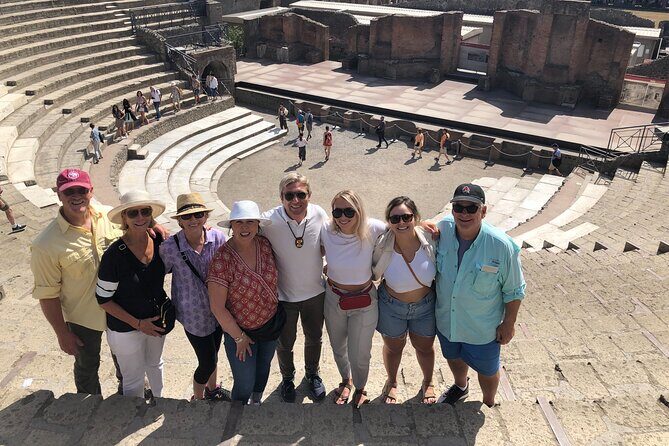
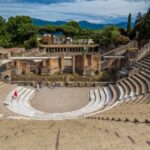
The tour takes in major entertainment venues, including the Large Theatre, the smaller Odeion (small theatre), and the Amphitheater of Pompeii. These stops are big crowd energy in stone form—spaces built for performance and spectacle.
On your own, theaters can feel repetitive: rows of seats, stage areas, architectural features. With guidance, the meaning sharpens. You’ll learn how public entertainment fit into Roman social life, and why Pompeii needed multiple venues for different scales and types of performances.
If you like how cities organized leisure, this is a strong section. It also helps pace your walk: after dense civic and residential areas, theaters offer a chance to look out across the space and get perspective on the city’s design.
The plaster casts: where the story becomes physical
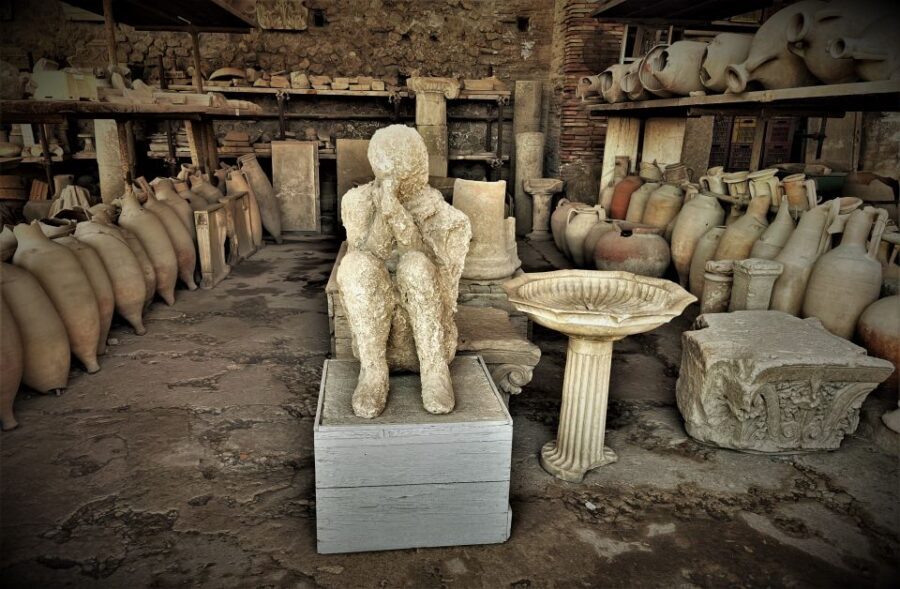
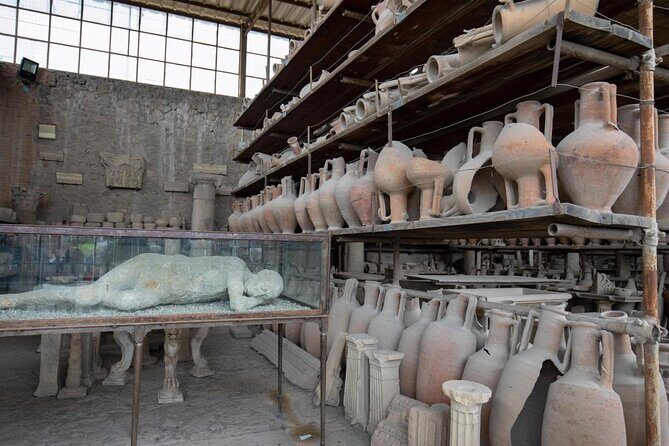
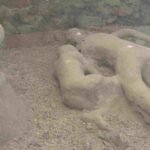
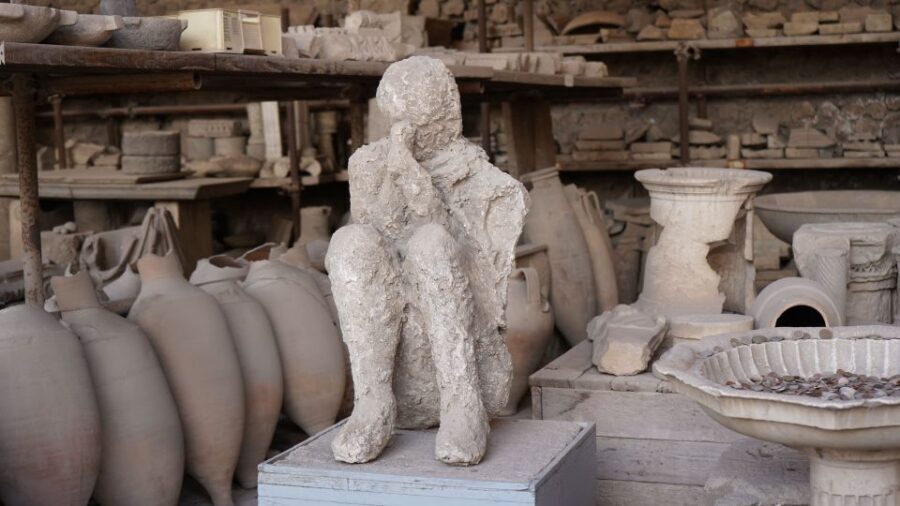
One of the most talked-about Pompeii elements in this kind of tour is the plaster casts of humans and animals. This is where the city’s tragedy stops being abstract.
The tour frames it as part of the broader story of how Pompeii was buried under molten ash and lava after Vesuvius erupted in 79 A.D., then rediscovered centuries later. The casts are a bridge between geology and people. It’s not a comforting stop, but it’s powerful—because you see the forms of what happened, not just the idea of it.
I find these casts work best when you go in mentally prepared: don’t rush past them. Let the guide explain what you’re seeing and why preservation happened the way it did.
Why UNESCO wording matters (and how the tour helps you feel it)
UNESCO lists Pompeii and Herculaneum for their complete and vivid picture of society and daily life at a specific moment in the past, without parallel. On this tour, you’ll feel what that sentence is pointing to.
You’re not just seeing one era of architecture. You’re bouncing between:
- public spaces (Forum, Basilica, temples)
- recreation and routine (baths, theaters, refreshment places)
- private life (villas and houses)
- social realities people hid and confronted (including the Lupanar)
- and the eruption’s physical imprint (plaster casts)
That combination is why Pompeii can feel like a snapshot rather than a pile of ruins.
Price and value: $508.15 for a private group up to 1
The price—$508.15 per group up to 1—may look steep if you’re comparing it to standard group tours. But think of what you’re paying for: private guidance, Pompeii admission fees included, and skip-the-ticket-line convenience, all in a tightly timed 3-hour format.
If you’re traveling solo, a private tour can still be worth it because you’re buying time clarity and interpretation. You won’t spend your limited hours wandering, and the guide’s archaeologist-style explanations help you get meaning from every stop you’d otherwise miss.
If you can split the cost with a partner, friend, or family member, the value gets even stronger. Pompeii is one of those places where a good guide turns “I saw it” into “I understood it.”
Also check starting times when you book. The tour length is fixed at three hours, so being on the right schedule can help you avoid the worst timing for heat, crowds, or rain.
What to bring, what to avoid, and small rules that matter
Pompeii is easier when you come prepared. Bring your passport or ID card.
The tour notes a few practical restrictions: no pets (assistance dogs allowed), no umbrellas, and no backpacks. If rain is in the forecast, bring a small rain layer or raincoat instead of an umbrella.
And keep footwear in mind. You’ll be walking through outdoor ruins in any weather, so wear shoes you trust on stone.
Who this tour fits best
This tour is a great match if you:
- want Pompeii structured around the biggest daily-life anchors (not random streets)
- prefer a private group and direct Q&A
- like the Roman mix of public spaces, homes, baths, and theaters
- care about interpretation from an archaeologist guide, not only facts on a sign
It’s also a good choice if you’re short on time but hate feeling lost in the middle of a huge site. Three hours is just long enough to leave with a coherent mental map.
Should you book this private Pompeii 3-hour walking tour?
I’d book it if you want Pompeii to feel like a story with a beginning, middle, and end. The strongest reason is the way the tour connects civic life, private life, entertainment, and the eruption’s lasting imprint into one walk. The plaster casts, the Forum/Basilica focus, and the brothel visit (with context) are the kind of “only-at-Pompeii” experiences that benefit a lot from expert interpretation.
Skip it only if you’re the type who needs slow, long wandering time or you plan to spend hours customizing your own route. Pompeii can absolutely reward that style too—but this tour is built for focused highlights and clear understanding in a short window.
If you’re aiming for value and meaning in three hours, this is a smart way to see Pompeii.
FAQ
How long is the Pompeii 3-hour walking tour?
The tour duration is 3 hours.
What’s included in the price?
The tour includes private guidance and Pompeii admission fees.
Are tickets included, and is there a way to avoid the ticket line?
You skip the ticket line, and Pompeii admission fees are included.
Where do I meet the guide?
You meet at one of two starting locations on Via Villa dei Misteri: 2 or 3. The exact meeting point can vary based on the option you book.
Which stops are part of the tour?
The tour includes stops such as the Pompeii Archaeological Site, Porta Marina, Villa of the Mysteries, Temple of Apollo, Foro Civile di Pompei, Basilica, House of Menander, Forum Baths, Lupanare, House of the Faun, Large Theatre, House of the Vettii, and the Amphitheater of Pompeii.
What languages are available for the live guide?
Live guides are available in Spanish, German, Russian, Chinese, English, Italian, Japanese, and Portuguese.
Is it wheelchair accessible?
Yes, the tour is listed as wheelchair accessible.
What should I bring, and what’s not allowed?
Bring a passport or ID card. Pets are not allowed (assistance dogs allowed), and umbrellas and backpacks are not allowed.
Does the tour run in bad weather?
The tour takes place in any weather condition, so it’s recommended to bring a small umbrella and/or a raincoat if it rains.