REVIEW · POMPEI CAMPANIA
Pompeii: Skip-the-Line Entry & Audioguide
Book on GetYourGuide →Operated by TOURISTATION · Bookable on GetYourGuide
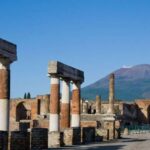
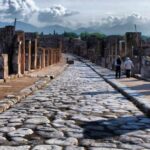
Pompeii is one of those places where time feels stuck. With skip-the-line entry and an included audioguide, you can start your walk fast and then explore the ruins at your own pace. You’ll move through a Roman city layout—forum first, then streets, homes, businesses, and big public spaces—while Mount Vesuvius stays in view.
I like two things most about this experience: getting in quickly and having an audioguide included. The speed matters because Pompeii is popular, and once you’re inside, the real payoff is taking your time and choosing what to linger on.
One thing to consider: the $53 price is mostly about convenience and the included audio, so it’s smart to double-check what’s truly covered for your specific voucher (some people have reported pricing confusion and extra charges for an audio device). Also, rules are strict about ID and bags, so plan to travel light.
In This Review
- Key highlights you’ll actually use
- Why Skip-the-Line Helps in Pompeii
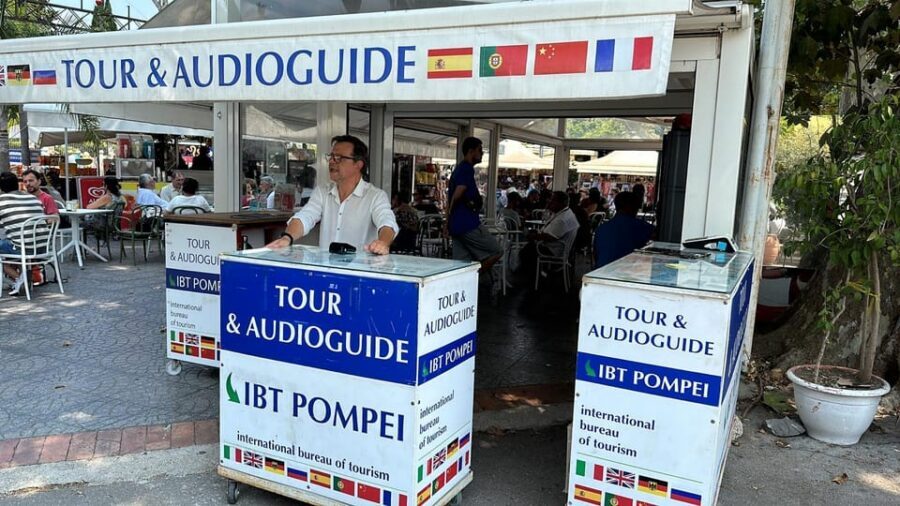
- Getting There: IBT Center/Touristation Next to Chalet Donna Lucia
- What’s Included: Skip Ticket, Audioguide, and a Paper Map
- Your Route in Plain English: Forum First, Then the City
- The Central Forum and Mount Vesuvius: Understanding the City Core
- Aqueduct and Fountains Remains: How Roman Daily Life Worked
- Public Baths and Businesses: Pompeii’s Social Engine
- Amphitheater and Dramatic Theater: Where the Crowd Energy Lives On
- Roman Homes and Fresco Remains: How to See Color in Broken Places
- Audioguide Reality: Multi-Language Access Plus One Possible Friction Point
- Price and Value: Is $53 a Smart Deal or Just Convenience Fees?
- Meeting Logistics That Can Go Smooth, or Feel Off
- Who This Pompeii Experience Is Best For
- Should You Book Pompeii Skip-the-Line Entry With Audioguide?
- FAQ
- How long is the Pompeii visit?
- What’s included in the skip-the-line Pompeii entry?
- Is Villa dei Misteri included?
- Where do I meet for this activity?
- What languages are available for the audioguide?
- Are pets allowed?
Key highlights you’ll actually use
- Skip-the-line entry so you can start seeing ruins sooner
- Audioguide in 8 languages plus a paper city map for orientation
- Forum views with Mount Vesuvius in the background, great for grasping the city center
- Real Roman everyday life across baths, fountains, aqueduct remains, homes, and businesses
- Big public venues like the amphitheater and dramatic theater for crowd-energy context
- Fresco remnants that make the houses and shops feel less like ruins and more like places
Why Skip-the-Line Helps in Pompeii
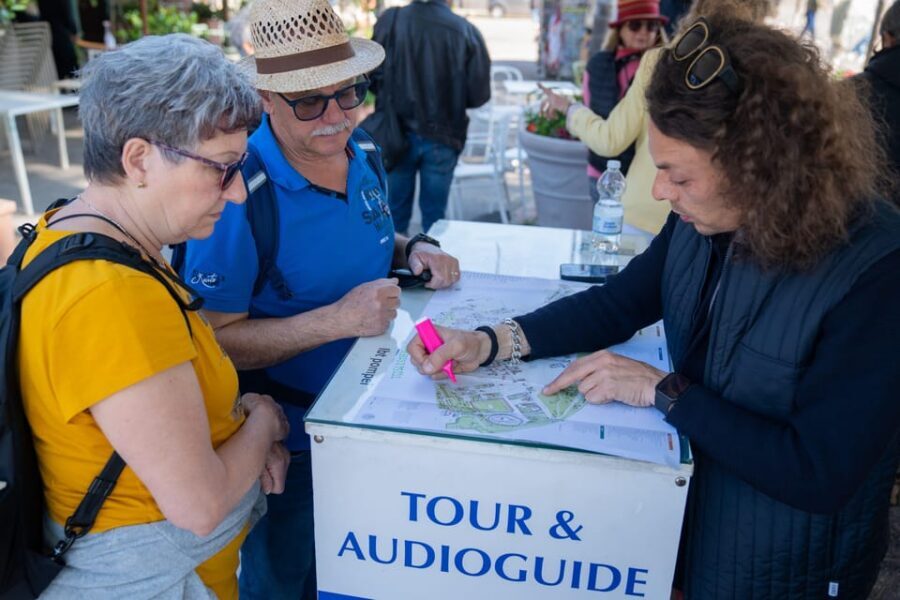
Pompeii isn’t laid out like a museum building where you can control crowds with one line at the door. It’s an outdoor archaeological park with multiple entry flows, and once you’re inside, the day belongs to your walking pace. That’s exactly where skip-the-line entry earns its keep: you spend less time waiting and more time learning the city with your feet.
In practice, this kind of ticket works best when you want flexibility. You can rush the must-sees if you’re short on time, or slow down when the Forum, fountains, or household remains grab your attention. And because the audioguide is included, you’re not forced into a rigid group schedule just to get context.
If you're still narrowing it down, here are other tours in Pompei Campania we've reviewed.



Getting There: IBT Center/Touristation Next to Chalet Donna Lucia
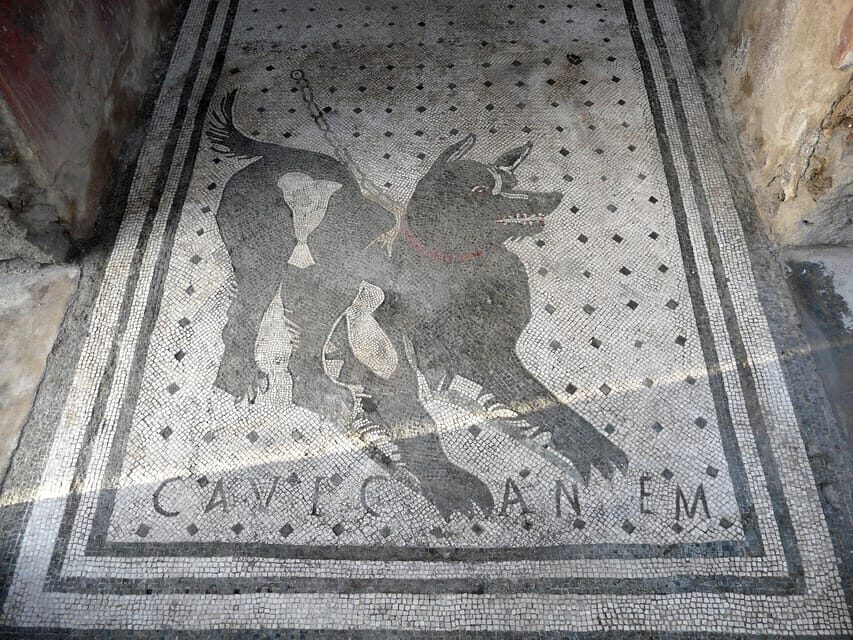
The meeting point is IBT Center/Touristation next to Chalet Donna Lucia. That detail matters because Pompeii day trips and coach tours often use multiple nearby pickup points in the same area. If you arrive late—or if the signage is unclear where you’re waiting—you’ll lose time right at the start.
You’ll also want to plan for the essentials before you go:
- Bring passport or an ID card. ID is required for all participants.
- Bring nothing bulky, since luggage or large bags aren’t allowed.
- No smoking, alcohol, or drugs inside the archaeological area.
What’s Included: Skip Ticket, Audioguide, and a Paper Map
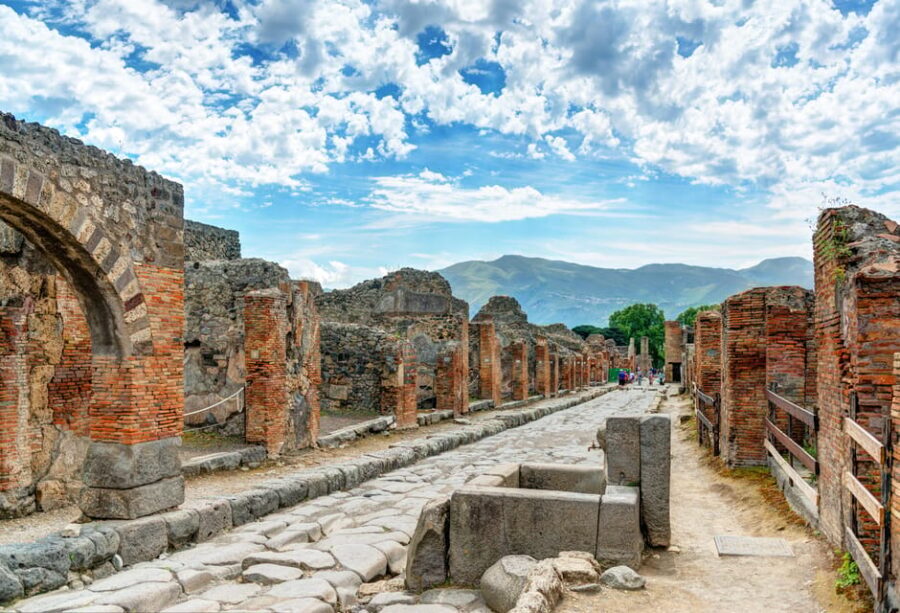
This experience includes:
- Skip-the-line entry to Pompeii Archaeological Park
- Audioguide (Italian, English, French, Spanish, German, Portuguese, Chinese, Japanese)
- Paper city map
There’s also an option for a guided tour, but you’ll want to confirm whether you’re choosing the audioguide-only experience or adding live guidance. If you are doing the self-paced version, the map becomes your best friend. Pompeii can feel like you’re walking through “connected” ruins—so having a paper plan helps you connect what you see with where you are.
One more practical note: Villa dei Misteri is not included. If that site is a “must” for you, you’ll need to plan it separately so it doesn’t end up feeling like a surprise letdown.
Your Route in Plain English: Forum First, Then the City
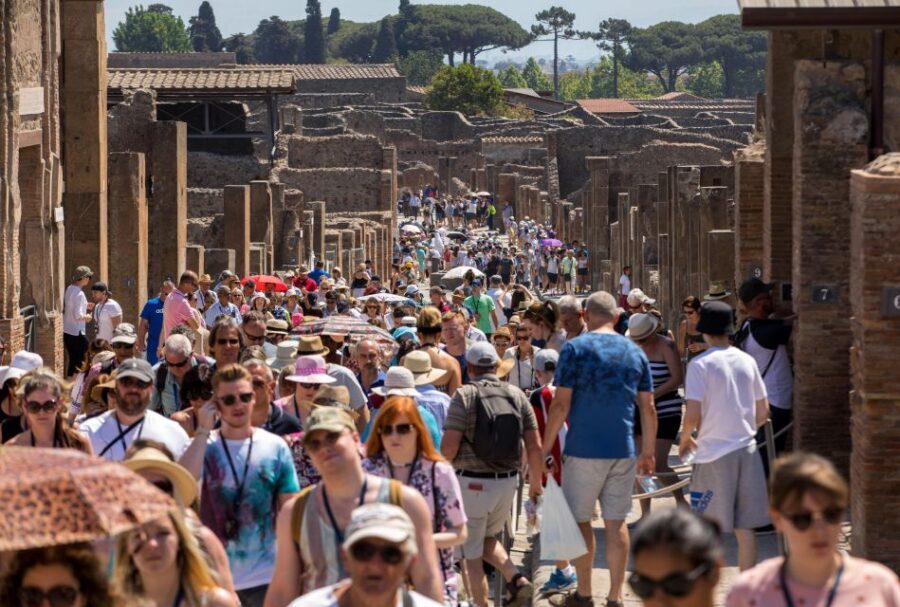
Your visit follows a classic Pompeii storyline: first the center, then daily life all around it. You start by walking around the central forum, then you move into the street network and key public areas, and finally you spend time on homes and businesses where color still shows through in fragments like frescoes.
Think of it like reading chapters of the city:
1) Start where people gathered and power was displayed
2) See how water and services worked
3) Walk past shops and homes to understand routine
4) Step into places built for entertainment and performance
Because it’s self-paced with an audioguide, you can spend longer where you care most—public buildings if you love Roman civic life, or private houses and storefronts if you’re more into daily details.
The Central Forum and Mount Vesuvius: Understanding the City Core
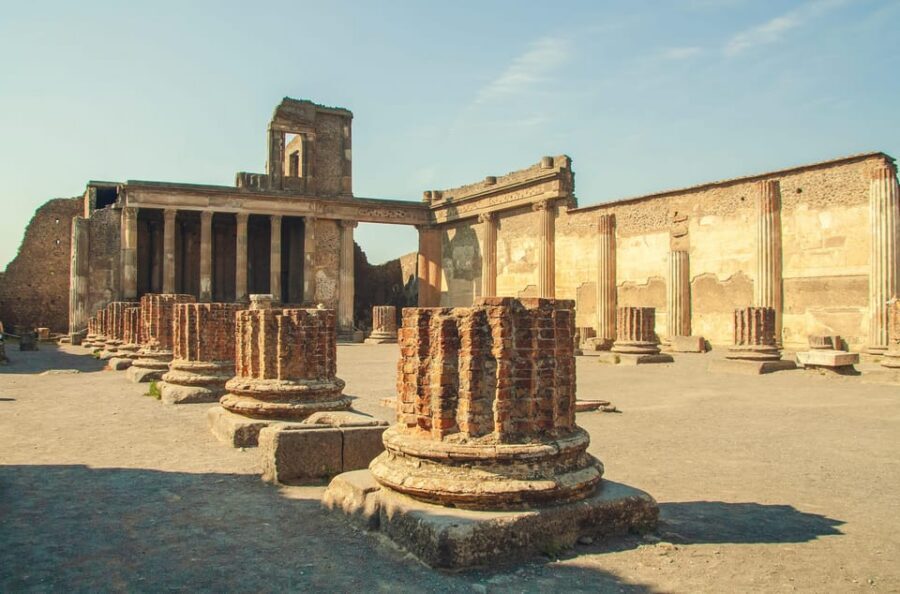
The forum is the best place to begin because it gives you the city’s “center of gravity.” As you walk around it, you’ll notice remnants of columns and doorways that still hint at how people moved, met, and conducted business.
Mount Vesuvius looming in the background is more than a pretty postcard view. It gives you scale and context. Pompeii’s destruction in 79 AD isn’t an abstract fact once you can visually connect the dramatic volcanic setting to the human structures in front of you. You start to see the city the way Romans likely did: organized, busy, and anchored to the landscape even if you didn’t know what was coming.
This is a great stop to use the audioguide actively. Pause for the audio points that explain what the forum represented, then look back at what’s physically left—because Pompeii’s “missing pieces” are often just as instructive as what remains.



Aqueduct and Fountains Remains: How Roman Daily Life Worked
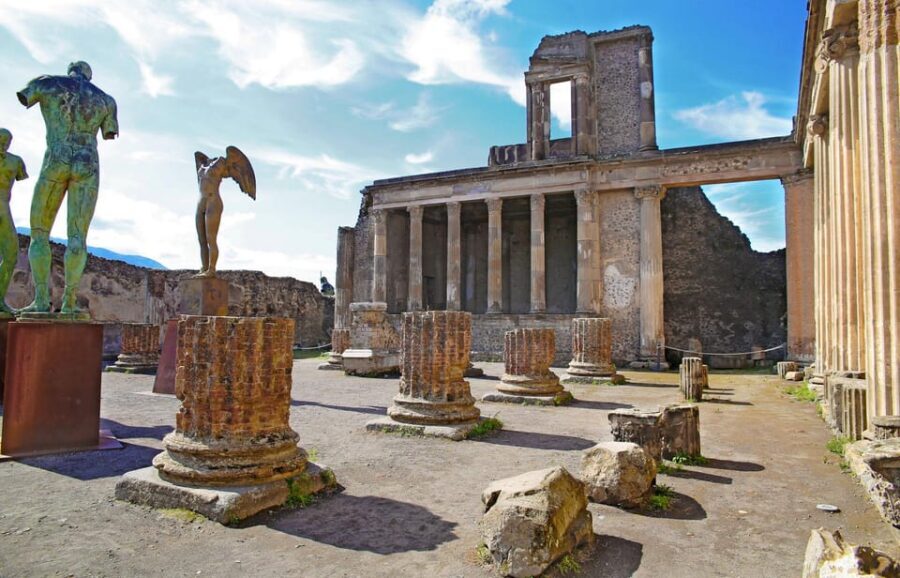
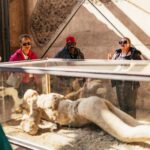
After the forum, you’ll wander through streets and key systems, including aqueduct and fountain remains. This is where Pompeii can surprise you if you only expect temples and theaters. Water infrastructure is part of everyday Roman life, and ruins of fountains and aqueducts help you understand how the city functioned day after day.
Here’s how I think about this section as you walk:
- Look at where water would have flowed.
- Notice how fountains connect to the idea of public life.
- Then shift your gaze to nearby buildings and imagine the street-level energy.
The audioguide helps you make those connections without turning the day into a classroom. And since the experience is self-paced, you can spend an extra few minutes on water features if that’s your thing, or move along quickly if you’re more focused on homes and fresco fragments.
Public Baths and Businesses: Pompeii’s Social Engine
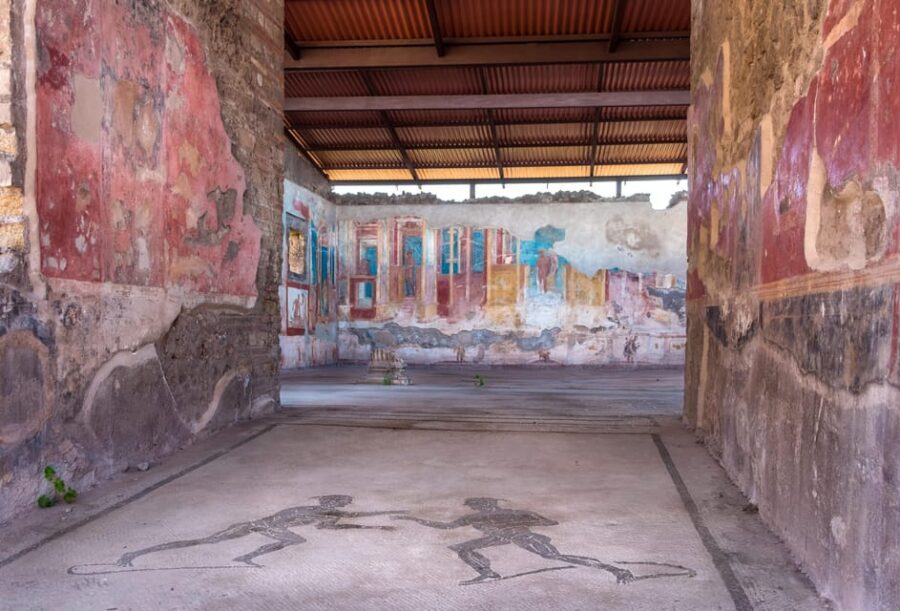
As you continue, you’ll see remains tied to civic and social life—public baths, plus businesses and statues. Baths in particular are a must, even if you’re not a “bathhouse nerd.” They show how Romans organized leisure, meeting, and routines in a shared setting.
Businesses and storefront spaces can feel surprisingly readable too. Even when much is gone, the layout can still suggest where people would have entered, displayed goods, and moved through the space. Pair that with the audioguide and the paper map, and the city starts to “click” as a living place rather than isolated monuments.
A big caution here is pace. Pompeii can tempt you to stop every ten steps. If you do that, you might run out of time at the places you care about most. I’d pick your priorities early: decide whether baths and businesses matter most to you, or whether you’ll spend your energy on homes and the entertainment venues.
Amphitheater and Dramatic Theater: Where the Crowd Energy Lives On
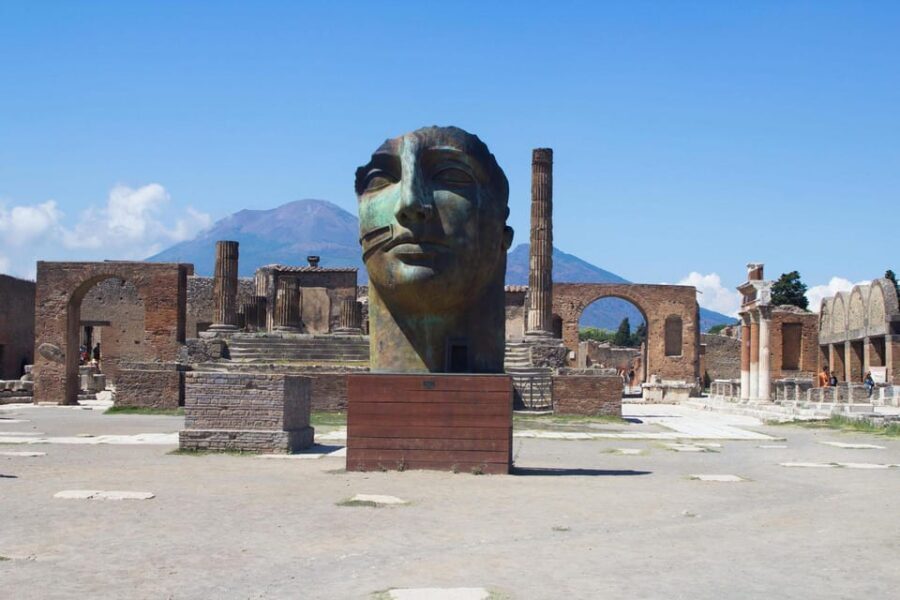
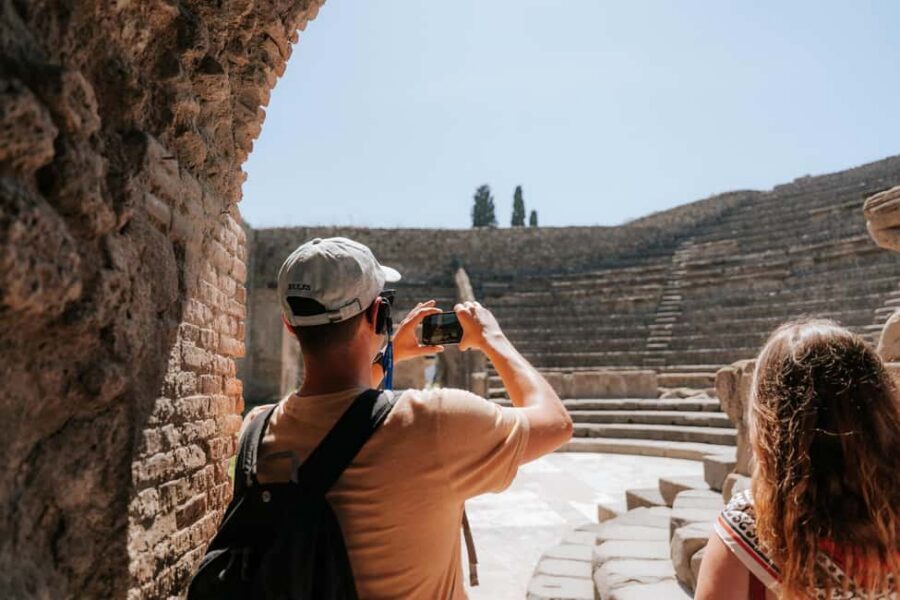
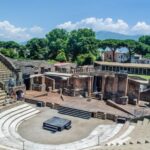
You’ll also visit the amphitheater and the dramatic theater. These spots are built for visibility and acoustics, and even with the ruins, you can still feel the intended drama: crowds gathering, performances happening, and people turning toward the stage or arena.
What’s valuable about including these stops is perspective. If you only focus on houses and fountains, Pompeii can start to feel like a set of everyday rooms and services. But public entertainment areas remind you the city had spectacle too, with Romans showing up for performance and social buzz.
Use the audioguide here to time-travel. The physical space plus audio context is what turns “stone steps” into a crowd scene.
Roman Homes and Fresco Remains: How to See Color in Broken Places
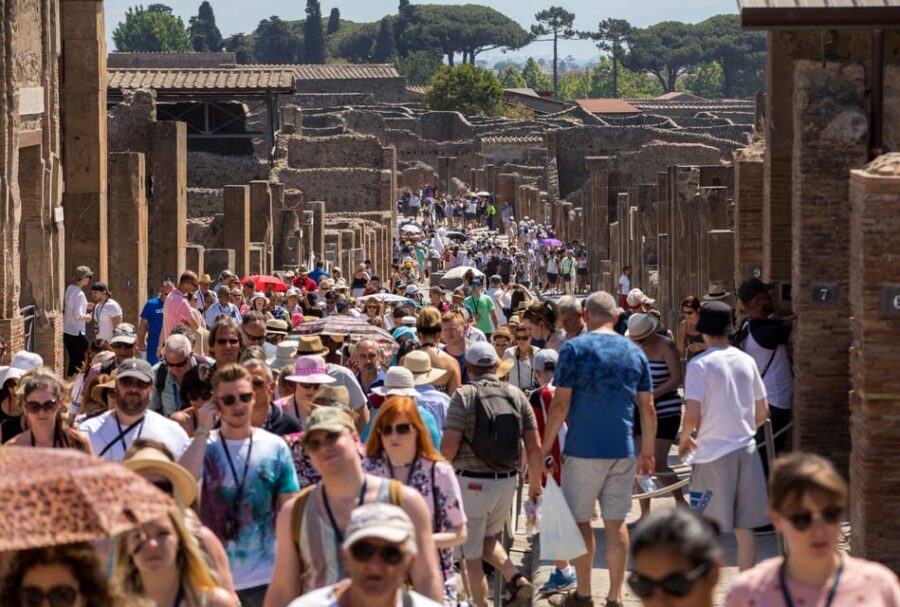
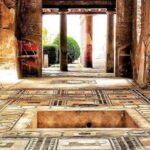
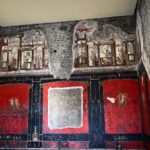
One of the most memorable parts of Pompeii for many people is the evidence of color—the remaining frescoes in houses and businesses. Even when frescoes survive only as fragments, they’re often enough to make you picture rooms that once felt bright and personal.
This is also where you’ll benefit from slowing down. Homes reward attention. Doorways, thresholds, and remaining wall edges help you imagine movement through private space: who lived here, how they arranged rooms, and how a household fit into the street.
If you’re deciding what kind of traveler you are—public spaces person or private life person—this section will confirm it fast. And because the audioguide is included, you can focus on what matters to you instead of getting lost in guesswork about what you’re looking at.
Audioguide Reality: Multi-Language Access Plus One Possible Friction Point
The audioguide is included and available in many languages (Italian, English, French, Spanish, German, Portuguese, Chinese, Japanese). That’s a big deal at Pompeii because the ruins are complex, and a well-timed explanation can turn confusion into understanding.
In English, the audio can be especially helpful for making sense of what you’re seeing as you move through the city center and residential areas. Even if you don’t use every feature, the ability to follow along in your language means you’re not relying on guesswork.
Here’s the practical caution: a small number of participants have reported situations where they felt the audio setup wasn’t fully clear—like uncertainty around whether an audiophone/device cost extra in their case. So before you arrive, I’d confirm in your booking details that the audioguide is included exactly as you expect (device vs. loaded audio) and that your ticket price matches what you’ll pay on arrival.
Price and Value: Is $53 a Smart Deal or Just Convenience Fees?
At $53 per person for skip-the-line entry plus an audioguide and map, the value is mostly about saving time and reducing friction. Pompeii can be busy, and waiting can eat up the hours you’d rather spend walking.
That said, there’s a real-world reason to stay alert: some people have compared what they paid to on-site pricing and felt the difference wasn’t huge after factoring in skip-the-line value. Also, one person felt an audio-device charge should have been included because their package description suggested audioguides were part of it.
So here’s the balanced take:
- If your priority is enter fast and start learning immediately, this price can feel fair.
- If you’re a flexible traveler who enjoys planning and is comfortable navigating lines yourself, you might decide to compare options on the day.
Either way, treat $53 as you would treat a seat in the front of a bus: you’re paying for fewer delays and less hassle.
Meeting Logistics That Can Go Smooth, or Feel Off
The process is described as smooth when it clicks, but there are a couple of recurring “watch-outs” you should take seriously.
First: the meeting point. If you show up unsure of where the group is standing, you’ll waste minutes right away. I’d aim to arrive with a buffer so you’re not scanning for “the right” door in a busy area.
Second: passport handling and deposits. One booking described having to hand over a passport for a deposit. I get the hesitation—especially when you’re already outdoors and thinking about control of your documents. If you’re nervous about deposit procedures, it’s worth asking what you’ll need to present and how your ID is handled before you hand it over.
Who This Pompeii Experience Is Best For
This is a strong fit if you want:
- Self-paced time inside Pompeii (you can slow down for the Forum, homes, and theaters)
- Language support through a multi-language audioguide
- A visit that hits the city’s big story points: forum, infrastructure, public life, and entertainment
You’ll also like it if you’re traveling with mixed interests—someone who wants aqueduct and baths can linger, while someone drawn to frescoes can focus on houses and shops—because the audioguide approach lets both happen without you constantly waiting for the next announcement.
Where it may not fit as well: if you’re extremely budget-focused and willing to handle entry logistics yourself, or if you strongly want Villa dei Misteri included in the same run. This one specifically doesn’t include that site.
Should You Book Pompeii Skip-the-Line Entry With Audioguide?
I’d book it if you value time and clarity. Skip-the-line entry plus a multi-language audioguide is the easiest way to get from ticket moment to “I’m inside Pompeii and I understand what I’m looking at.”
But I’d also do one smart check before committing: confirm your exact inclusions—especially anything related to the audioguide device—and verify that you’re not expecting Villa dei Misteri, since it isn’t part of this package.
If you’re the type who likes to plan lightly and walk straight into the ruins, this is a practical way to do it.
FAQ
How long is the Pompeii visit?
It’s listed as 2 hours to 1 day. You’ll need to check availability for the starting times.
What’s included in the skip-the-line Pompeii entry?
You get skip-the-line entry to Pompeii Archaeological Park, an audioguide, and a paper city map. A guided tour is included only if you select that option.
Is Villa dei Misteri included?
No. Entrance to Villa dei Misteri is not included.
Where do I meet for this activity?
Go to the IBT Center/Touristation next to Chalet Donna Lucia.
What languages are available for the audioguide?
The audioguide is available in Italian, English, French, Spanish, German, Portuguese, Chinese, and Japanese.
Are pets allowed?
Pets aren’t allowed. Small dogs are permitted inside the archaeological area, but they must be on a leash and carried when inside buildings.