REVIEW · POMPEII
Small-Group Tour in Pompeii with a Real Archeologist, ticket included
Book on Viator →Operated by Pompei Trip&Transfer · Bookable on Viator
Pompeii makes more sense with a real archaeologist. I really like the priority ticket feel and the way a guide keeps the story human, not just stone. I also love that many key rooms come with admission tickets, so you’re not stuck outside waiting for paperwork. One drawback to plan around: the whole visit is tight at about 2.5 hours, so you’ll see standouts rather than every street corner in Pompeii.
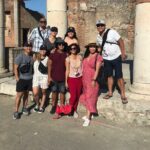
This tour runs as a max 15-person group with headsets, which is huge when you’re squeezing through ruins and still want to catch every detail. You’ll finish back at the meeting point, and because your park entry is part of the deal, you can keep exploring on your own after the guided portion.
In This Review
- Key highlights at a glance
- Entering Pompeii with priority access (and hearing every word)
- Price: what you’re really paying for at $66.23
- The 2.5-hour route: what you’ll see and what you’ll likely skip
- Casa del Poeta Tragico and the Cave Canem mosaic
- Casa dei Vettii: luxury, owners’ names, and painted life
- The Lupanar: sex work and daily commerce, up close
- Forum de Pompeya: power, rules, and the missing statues
- Suburban Baths: when travelers, not locals, mattered
- Casa del Fauno: the bronze faun in the impluvium
- Casa del Menandro: 2,000 square metres and silver tableware
- Archaeological Park highlights: arena scale and shade in summer
- Temple of Apollo: one cult before the eruption, then shifting worship
- Meeting point, group size, and practical tips that save your day
- The guide makes or breaks the experience
- Should you book this Pompeii small-group tour?
- FAQ
- How long is the Pompeii Small-Group Tour with a real archaeologist?
- What language is the tour offered in?
- What’s included in the price?
- Are admission tickets included for all stops?
- Is this tour a priority entry experience?
- How large is the group?
- Where do we meet, and where does the tour end?
- Is free cancellation available?
- Does the tour require good weather?
Key highlights at a glance
- Real archaeologist-led explanations that connect rooms, art, and daily life
- Priority ticket entrance for the Archaeological Park of Pompeii
- Admission tickets included for most major stops on the route
- Headsets so you can actually hear the guide while walking
- A focused route through elite houses, the forum, baths, and Apollo
Entering Pompeii with priority access (and hearing every word)
If you’ve ever tried to “wing it” at Pompeii, you already know the main problem: timing. Lines and bottlenecks can eat your energy fast, especially in peak season. This tour is built around the smooth entry idea, with priority ticket entrance for the Archaeological Park of Pompeii included.
The other practical win is the headset. Pompeii is loud in a weird way—footsteps, other tour groups, and wind—and ruins don’t exactly do a great job of carrying voices. With a headset, you can keep your eyes where they belong: on floors, frescoes, inscriptions, and the layout of each house.
Other archaeologist-led tours in Pompeii

Price: what you’re really paying for at $66.23
At $66.23 per person, this tour isn’t just “a guide walking you around.” You’re also getting priority park entry plus admission tickets for several specific stops. That matters because entry fees add up quickly when you’re trying to bounce between the big houses and special areas.
So the value here is the package approach: you’re paying for guided interpretation while the tour handles access. You still do some walking, you still bring water, and you don’t get private car service—but for an organized Pompeii visit, the ticket-and-guide combo is a solid deal.
The 2.5-hour route: what you’ll see and what you’ll likely skip
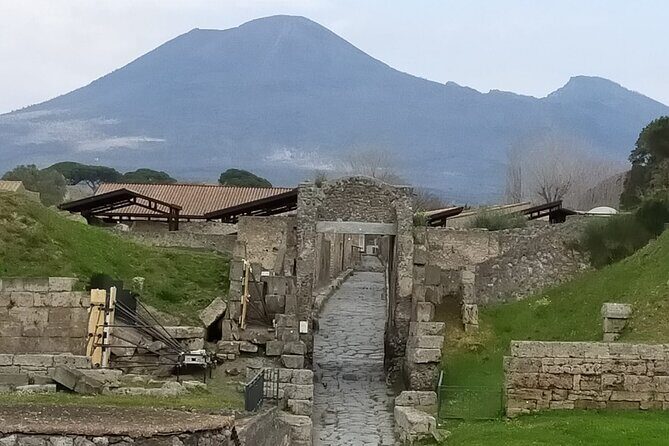
The guided portion clocks in at about 2 hours 30 minutes. That’s enough time to hit several “big rooms” and major public spaces—but not enough to exhaust Pompeii.
Here’s how the route feels in real life:
- You start in the imperial-era homes with famous mosaics and painted walls.
- You move into the forum and outside-the-walls baths.
- You round out with two of Pompeii’s best-known houses, plus the amphitheatre area and the Temple of Apollo.
If you want Pompeii-by-the-hour with zero gaps, this isn’t that. If you want a smart overview with an archaeologist who helps you see what matters, it fits well.
Casa del Poeta Tragico and the Cave Canem mosaic
The first stop is Casa del Poeta Tragico, an elegant imperial-age house where the star is the floor mosaic Cave Canem—the famous warning image of a dog at the entrance.
This is a great way to start because it trains your eyes immediately. You’re not just looking at “old stuff.” You’re seeing how people marked space: a house entry turns into a message, a boundary, and a little bit of theater. For a first-time visitor, it’s the kind of detail that makes the rest of Pompeii click.
Tip for you: slow down here. Mosaics are easy to rush, and that would be a shame on Stop 1, when your brain is fresh and ready to learn.
Casa dei Vettii: luxury, owners’ names, and painted life
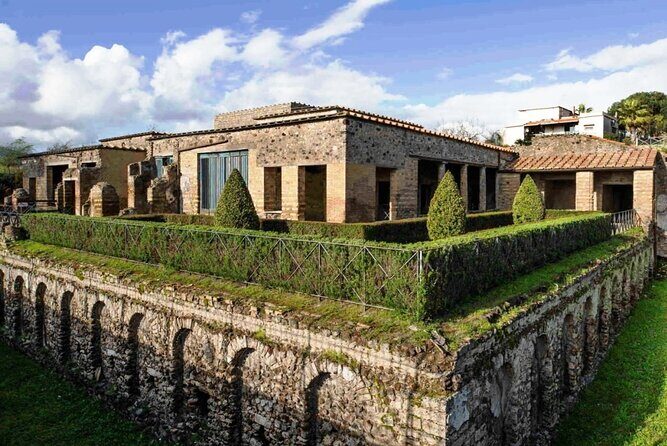
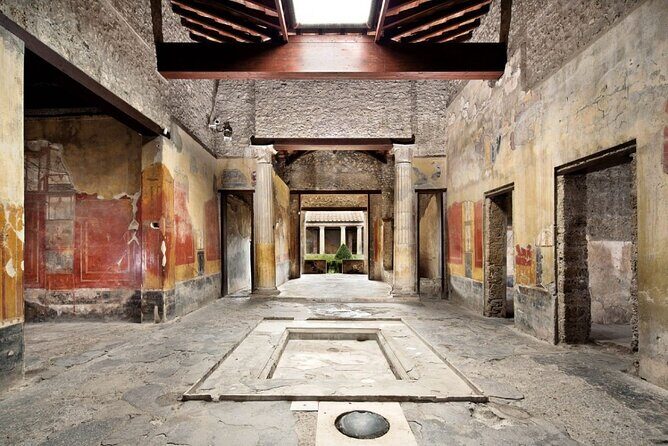
Next comes Casa dei Vettii in vicolo dei Vettii—one of Pompeii’s most luxurious houses, named for its owners Aulo Vettio Restituto and Aulo Vettio Conviva.
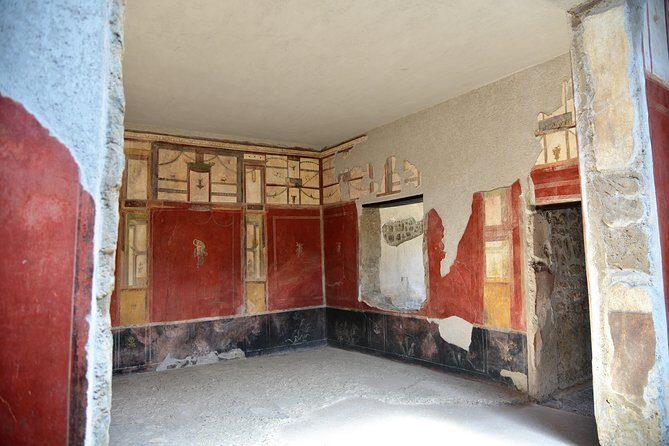
I like this stop because it’s a reminder that Pompeii wasn’t only grand monuments. It was also private life in very expensive form: rooms arranged for comfort, with decoration meant to show status. When you’re with an archaeologist guide, you get help reading these spaces as homes, not museum dioramas.
A small caution: houses like this can feel “tour busy” in certain moments. If you care about taking your time (and photos), wear your patience too.
Other small-group tours we've reviewed in Pompeii




The Lupanar: sex work and daily commerce, up close
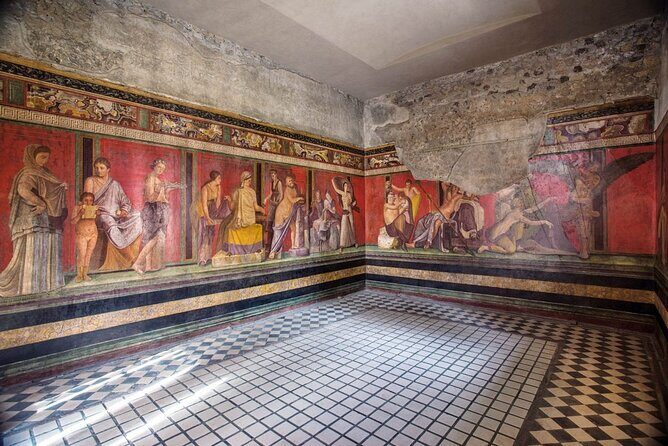
Then you visit the Lupanar, a two-storey building known for its brothels. The layout is simple and blunt: five rooms on the ground floor and five upstairs, with beds described as concrete, sometimes with a mattress or mat if you were lucky.
This stop can be uncomfortable for some people, and that’s normal. But it’s also exactly why it belongs on a Pompeii tour. It shows you the commercial side of a working city: people had jobs, customers, and a kind of street-level economy.
Try to keep your mindset practical. Don’t expect “modern storytelling.” Instead, look for the logic of the rooms and what that kind of design suggests about how the building operated.
Forum de Pompeya: power, rules, and the missing statues
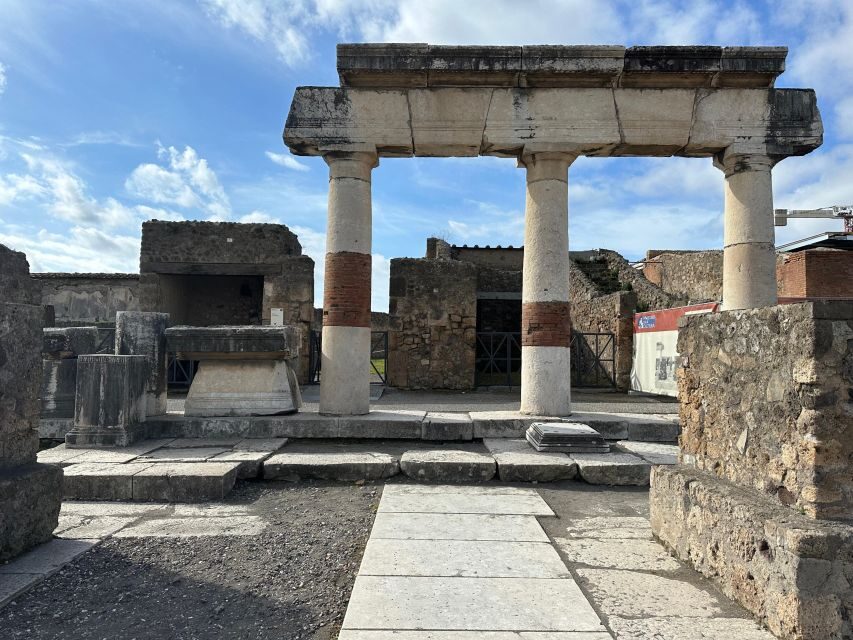
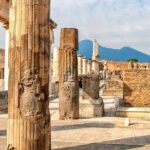
The tour moves to Foro de Pompeya, the forum reserved to pedestrians, with carts not allowed. You also get real scale: about 142 metres long and 38 metres wide.
What I like about this segment is the contrast. The forum today can feel bare—statues and ornate work are gone—but your guide explains what the space used to do. It was a core civic stage, with public buildings looking onto the area, designed for movement and attention.
There’s also a practical historical angle: after the eruption, the area was dug up, and materials like ornate flooring and marble were believed to have been reused elsewhere. That helps you understand why “missing” pieces aren’t random. They were taken.
Suburban Baths: when travelers, not locals, mattered
Next up is the Suburban Baths, located outside the city walls. The tour ties the baths to travel patterns, noting that nearby mooring rocks likely served boats—and that these baths were probably used by travelers more than everyday residents.
I like this stop because it widens the picture. You’re no longer only in elite homes or city centers. You’re seeing how Pompeii served people passing through, and how public bathing could be part of that journey.
If you want to make this stop land, look for the setting. Pompeii’s edges help you understand the city as a place on a route, not just a self-contained “ancient theme park.”
Casa del Fauno: the bronze faun in the impluvium
Then you hit Casa del Fauno, named after a bronze statue of a faun located in the impluvium. It’s also described as one of the most famous houses in Pompeii.
This is one of those stops where the name does the work for you. If you know the faun image, you instantly recognize the vibe. The house also gives you a sense of how elite wealth translated into objects: sculptures weren’t just decoration. They were statements.
Slow down in your head, even if your feet are moving fast. Pompeii’s best lessons often come from one or two key details, like this statue placement.
Casa del Menandro: 2,000 square metres and silver tableware
The route continues to Casa del Menandro, a prestigious house spanning about 2,000 square metres. It gets its name from an fresco featuring the poet Menandro.
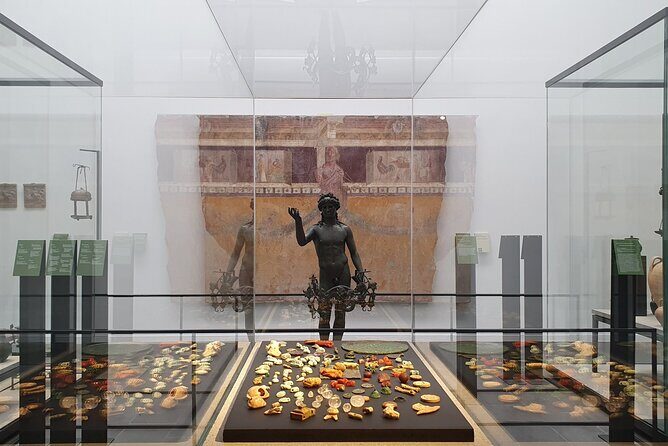
This is the “wow” house for many visitors because the guide can point out the kind of finds that show daily luxury. The house is noted for 118 objects in silver, described as tableware. You also see frescoes tied to the Trojan War, including the death of Laocoon, Cassandra, and Ulysses.
I love this kind of stop because it ties art to social life. You’re not looking at art in a vacuum—you’re seeing what people chose to surround themselves with at meals and in shared rooms.
Archaeological Park highlights: arena scale and shade in summer
The guided portion then enters the Archaeological Park of Pompeii area with priority entry included. Here you’ll learn about Roman games and fights, including an amphitheatre that could house up to 20,000 people across three levels.
One detail I really appreciate here is the mention of shade during hot summer months. The tour describes a type of dark linen covering that helped protect spectators. That’s a reminder that the Romans weren’t only building for spectacle. They were building for survival, too.
You’ll also hear about the gymnasium next to the arena, where youngsters would work out. So the area isn’t only about violence. It’s also about youth, training, and civic entertainment.
Note: the specific stop description for this park segment says an admission ticket is not included for that part. Your overall experience includes priority park entry, but if you care about any extra access inside specific zones, check what your tour ticket actually covers on the day.
Temple of Apollo: one cult before the eruption, then shifting worship
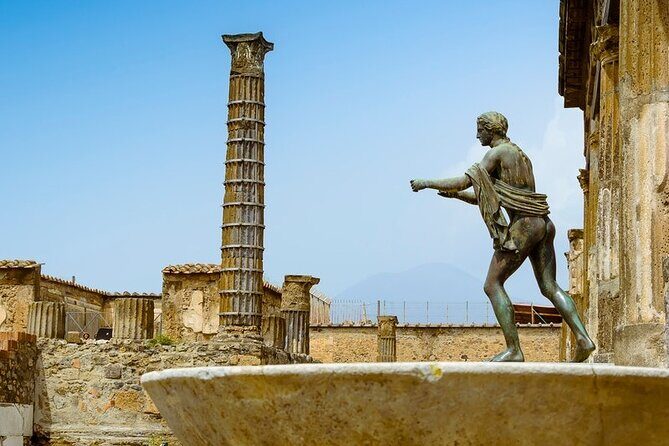
The tour finishes with the Temple of Apollo, tied to worship arriving before the eruption of 79 A.C. The tour also explains a religious shift: Apollo’s followers were reduced as Jupiter became the stronger God.
You’ll see references to a bronze statue of Apollo represented with his bow and arrow, plus a statue of the goddess Diana.
What I like about ending here is pacing. After houses and public life, you get a final frame: religion as a living system that changes over time. Pompeii wasn’t static. Beliefs shifted, and that’s part of what makes the site feel real rather than frozen.
Meeting point, group size, and practical tips that save your day
You meet at Hotel Vittoria, Piazza Esedra, 80045 Pompei NA, Italy. The tour ends back at the same meeting point, which is convenient if you’re planning dinner afterward.
Group size is up to 15 travelers, and service animals are allowed. The tour is offered in English and includes headsets, so you’re not stuck straining your voice or competing with other groups.
Two practical tips I’d treat as non-negotiable:
- Bring water. Pompeii can be hot, and the tour highlights hot-weather realities, both in the city experience and in how spectators were protected in the amphitheatre area.
- Wear real walking shoes. You’ll move across multiple parts of the site, and “comfortable for an hour” often becomes “why did I do this” by hour two.
The guide makes or breaks the experience
This kind of tour lives or dies by the person explaining it. The best part of this experience is the archaeologist-style storytelling: dating things you see, putting them into historical and cultural context, and sharing different ways people interpret what they find.
The tour has been led by guides such as Paulo and Teresa, and you may hear detailed, entertaining explanations that answer questions as you go. That interactive approach is what turns a list of stops into understanding.
It also helps when you run into the reality of crowds and wait times. Even with priority access, some spaces can be busy. If something takes a moment longer, the guide’s job is to adjust and keep you moving with purpose.
Should you book this Pompeii small-group tour?
I’d book it if you:
- want an efficient Pompeii overview in 2.5 hours
- care about learning how houses, public spaces, and everyday life fit together
- like the idea of priority entry plus multiple admission tickets
- prefer a small group (max 15) with headsets so you can actually hear your guide
I might skip it if you:
- want to spend an entire day wandering without structure
- expect to see every single major site in Pompeii in one go
- get easily frustrated by any variability in wait times at popular houses
If your goal is to understand Pompeii quickly and well, this tour is a strong choice. You’ll see major highlights—from mosaics and luxury homes to the forum, baths, amphitheatre area, and Apollo—and you’ll leave with a clearer sense of what you’re looking at.
FAQ
How long is the Pompeii Small-Group Tour with a real archaeologist?
It runs for about 2 hours 30 minutes.
What language is the tour offered in?
The tour is offered in English.
What’s included in the price?
Your experience includes the archaeologist guide service in your language, priority ticket entrance for the Archaeological Park of Pompeii, and headsets.
Are admission tickets included for all stops?
Admission tickets are included for most of the listed stops. One stop in the Archaeological Park area is marked as admission ticket not included, so you should check what’s covered for that specific section on the day.
Is this tour a priority entry experience?
Yes. Priority ticket entrance for the Archaeological Park of Pompeii is included.
How large is the group?
The tour has a maximum size of 15 travelers.
Where do we meet, and where does the tour end?
You start at Hotel Vittoria, Piazza Esedra, 80045 Pompei NA, Italy, and the tour ends back at the meeting point.
Is free cancellation available?
Yes. You can cancel for a full refund up to 24 hours before the experience starts.
Does the tour require good weather?
Yes. If it’s canceled due to poor weather, you’ll be offered a different date or a full refund.