REVIEW · POMPEI CAMPANIA
Pompeii: Small Group Guided Tour and Skip-the-Line Ticket
Book on GetYourGuide →Operated by Visit Rome · Bookable on GetYourGuide
Pompeii feels easier when you enter smart. This small-group tour (max 12) uses skip-the-line tickets so you can get into the archaeological area fast, then follow a guided walk through key streets and buildings. You’ll start at Porta Marina Inferiore and finish with a refreshment stop that helps in the heat.
What I really like is the way the tour is built for listening: you get an expert guide plus headsets, so you don’t miss the story while you move. The main thing to consider is that, while water and orange juice are listed as included, a few past participants reported it wasn’t always provided—so if that matters to you, plan to be flexible and bring your own small backup if possible.
In This Review
- Key highlights you’ll actually notice
- Where your Pompeii day starts (and why that matters)
- Skip-the-line tickets: what you gain in two hours
- The guided walk through Pompeii’s heart: forum to views
- Baths, temples, and the everyday city details
- The Lupanare stop: art, power, and uncomfortable honesty
- What makes it feel like a small group (not a stampede)
- Refreshment stop: water and orange juice in the heat
- Price and value: is $80.43 fair for Pompeii?
- What you should know before you go (so it stays smooth)
- Language options: choose what you’ll actually understand
- Who this Pompeii tour suits best
- Should you book this Pompeii small-group tour?
- FAQ
- How long is the Pompeii guided tour?
- Does the tour include skip-the-line entry?
- How big is the group?
- What’s included in the price besides the guide?
- Where do I meet the tour?
- Do I need to bring ID?
- What languages are offered for the live guide?
- Is the tour suitable for people with mobility impairments?
Key highlights you’ll actually notice
- Skip-the-line reserved entry into the Pompeii archaeological area to avoid waiting
- Semi-private max 12 group so questions and pacing feel human
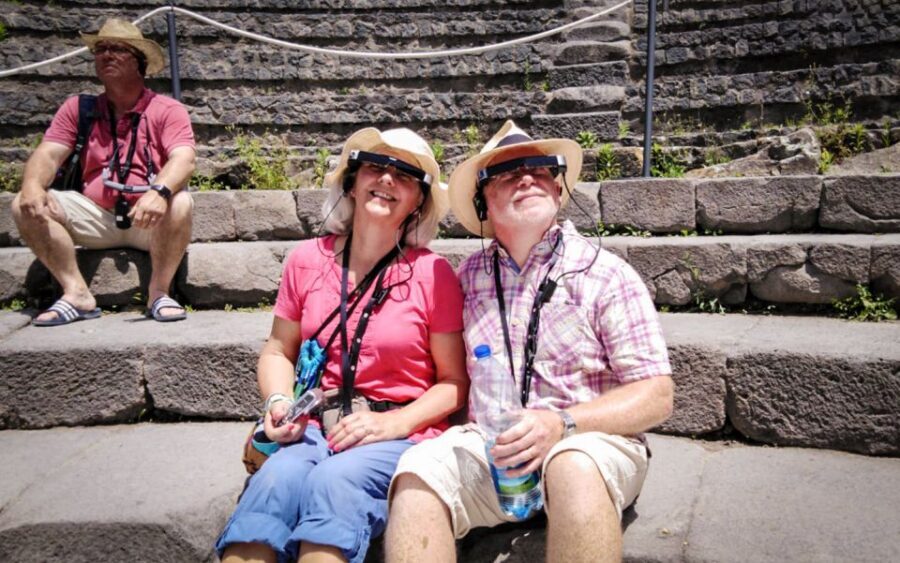
- Headsets to hear the guide clearly on busy streets and inside ruins
- Forum-focused route through Pompeii’s civic center, with Mount Vesuvius views
- Baths, temples, theater, and the Lupanare all in one guided loop
- Water plus orange juice at the end to cool down after the walking
Where your Pompeii day starts (and why that matters)
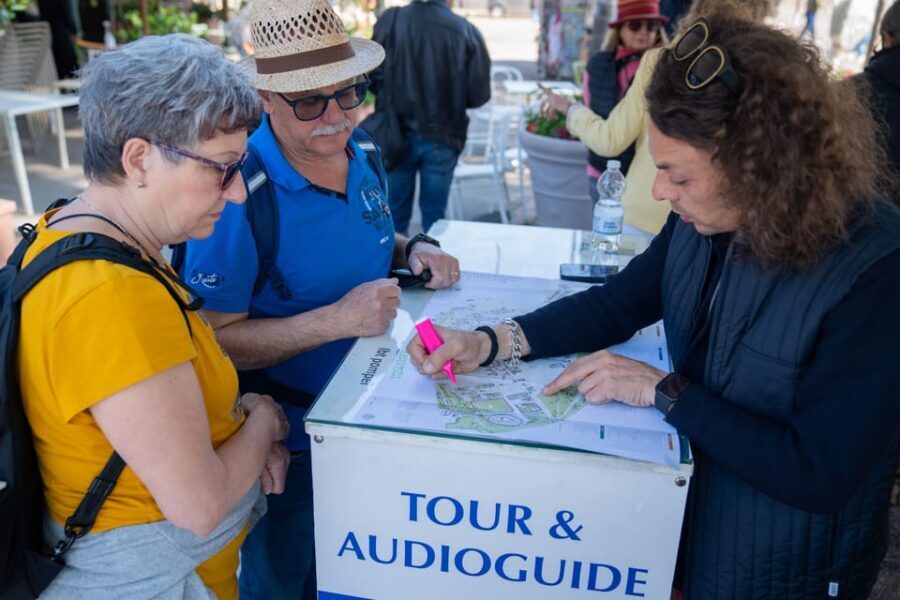
You meet at the Office IBT Center/Touristation next to Chalet Donna Lucia, and the meeting address is listed as Piazza Esedra, 11. This is one of those small details that pays off: if you’re clear on where you’re supposed to check in, you waste less time when you’re heading toward Pompeii’s entrance.
From there, the guide takes you into the archaeological area at Porta Marina Inferiore. That entry choice helps you avoid the feeling of wandering at the start. You get your bearings early, and your walking plan has a purpose instead of being “follow the crowd.”
Also, the tour setup is practical: at the meeting point you get assistance and Wi-Fi, and during the walk you wear headsets so you can keep your attention on what’s around you. On a site like Pompeii—full of stone, shadows, and distractions—that audio clarity makes a difference.
If you're still narrowing it down, here are other tours in Pompei Campania we've reviewed.



Skip-the-line tickets: what you gain in two hours
Pompeii can eat your time fast. Lines, confusion, and slow entry can turn a short visit into a stress test. This tour includes a reserved skip-the-line ticket to enter the excavations without waiting, which is exactly what you want when your total guided time is about two hours.
This doesn’t mean you’ll see absolutely everything. It means you’ll spend your limited time on the core areas the guide can explain well—streets, public buildings, and the visual clues left by volcanic ash. If you’re only in Pompeii for a half day, this “less waiting, more seeing” approach is usually the smarter value.
One more detail: Villa dei Misteri is not included. If you were hoping for that specific site, you’ll need separate plans after your tour ends.
The guided walk through Pompeii’s heart: forum to views
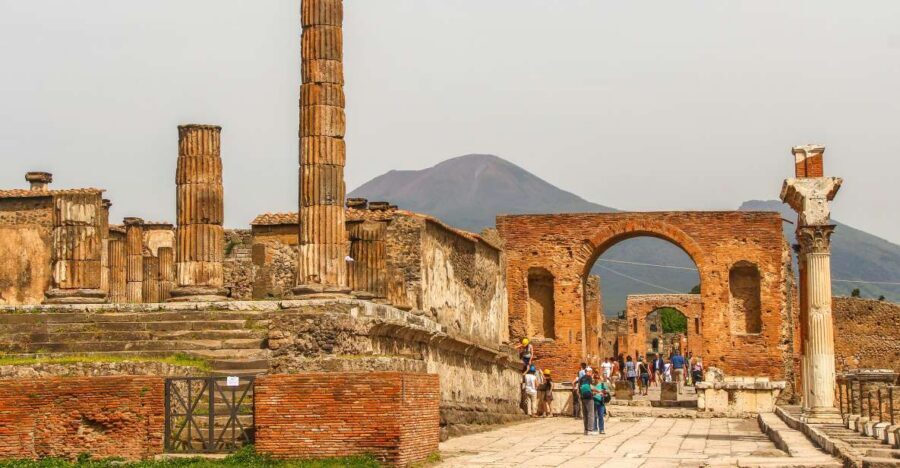
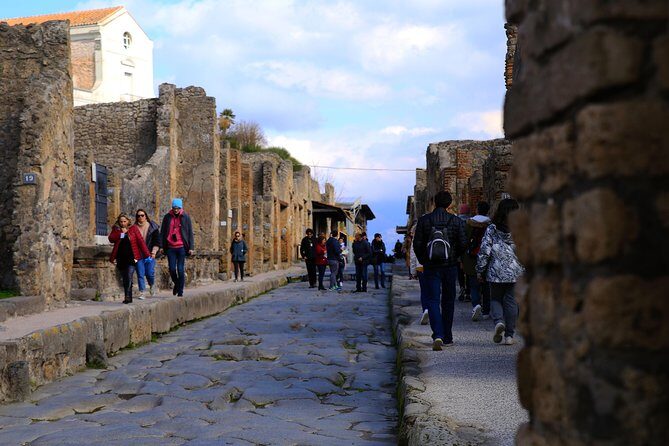
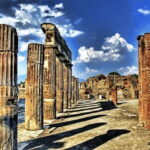
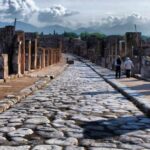
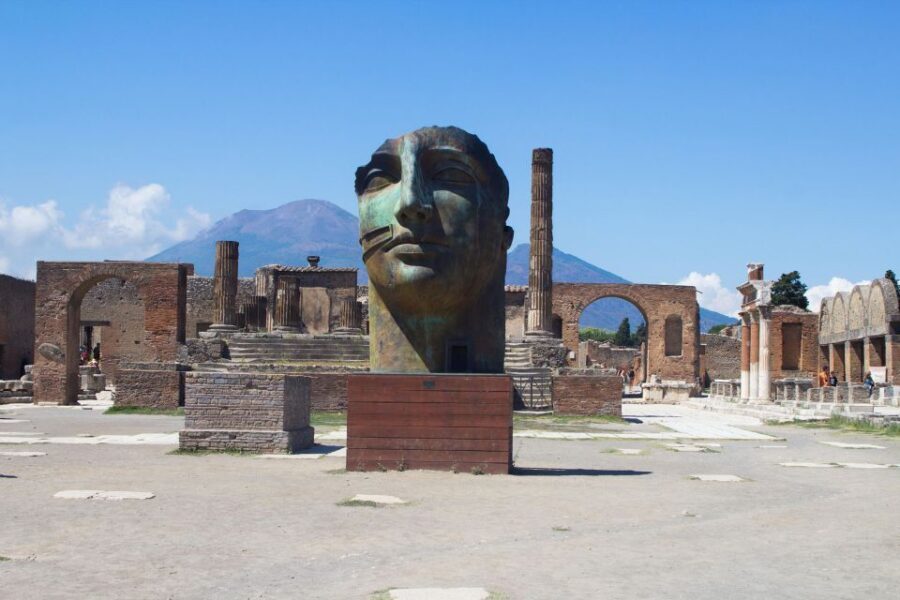
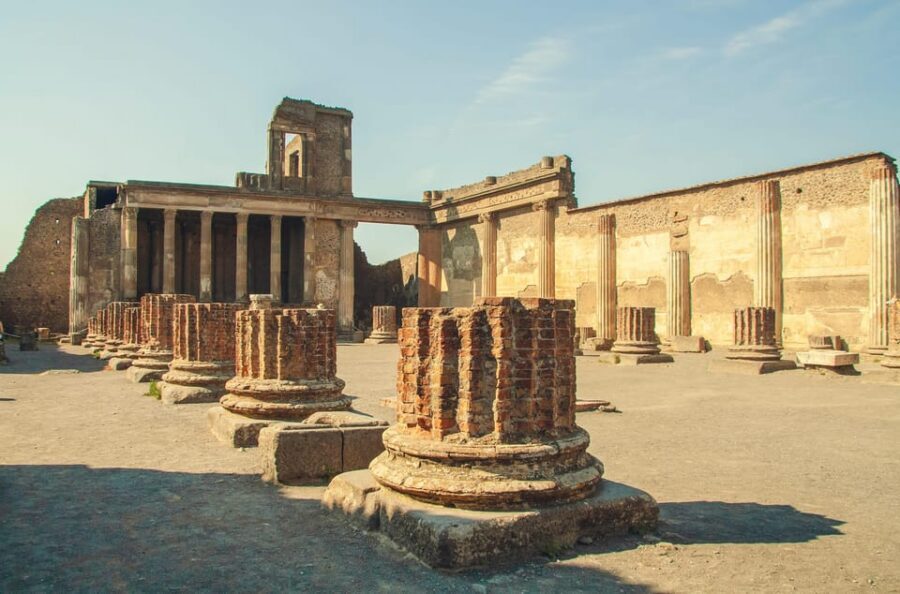
The backbone of the itinerary is a walk through Pompeii’s main streets and a focus on the forum, which served as the center of civic life. The forum area is where Pompeii starts to feel logical: you can connect streets, public spaces, and why people moved the way they did.
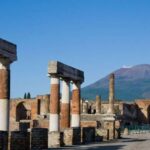
As you go, you’ll also get a classic Pompeii viewpoint of Mount Vesuvius overlooking the city. That view is more than postcard material. It helps you understand the geography—Pompeii isn’t just a town made of stones; it’s a place positioned under a volcano, and that perspective makes the preservation feel even more real.
On this kind of tour, I like that the guide isn’t just pointing at ruins. They’re tying what you see to how people lived and how the town functioned day to day. You’ll hear anecdotes and explanations about ancient inhabitants while you walk, which keeps the time from turning into a series of disconnected photos.
Baths, temples, and the everyday city details
Pompeii isn’t only about big monuments. The guided route includes key everyday and ceremonial spaces—things like baths and temples—so you see a fuller slice of life.
You’ll also come across places tied to food and daily routines, including a bakery. That’s a great stop because it shifts your brain from “how did it look?” to “how did it work?” The same goes for the layout of streets: Pompeii lets you picture movement through public and private spaces, not just stand still and look.
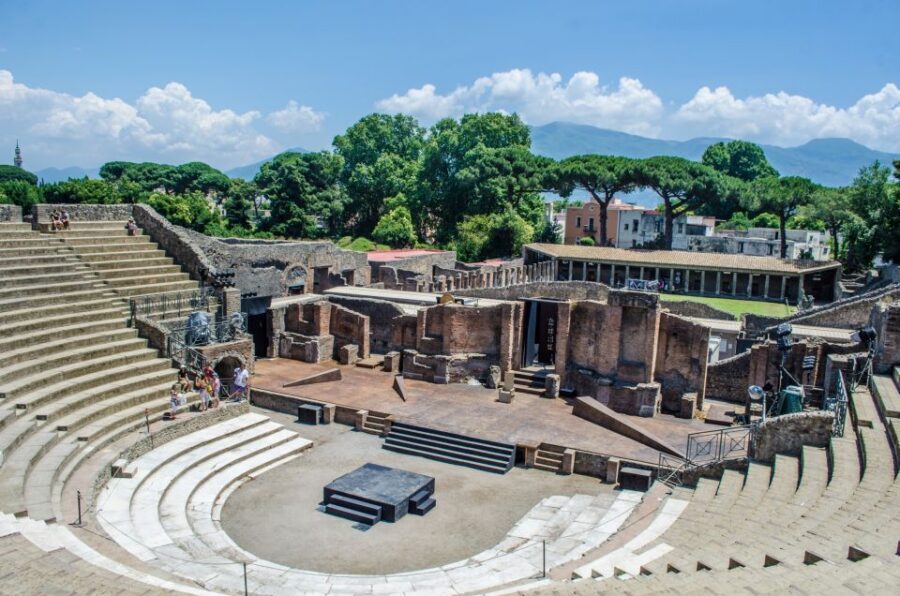
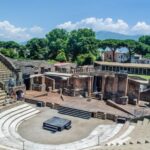
There are also several buildings that help break up the walk, including the great theater. A theater is useful for context because it shows how entertainment and community gathered in public. Even if you’re not a “theater person,” the guide’s explanations tend to turn it into something more tangible.
And since this is a small-group trip, you’re not stuck sprinting for the next landmark. You can slow down when a stop is more visual than verbal, especially when the guide is covering how certain rooms or facades were used.
The Lupanare stop: art, power, and uncomfortable honesty
One of the most specific inclusions is the Lupanare, a brothel. This stop is often where Pompeii becomes emotionally complicated, because Roman sexuality and commerce weren’t hidden the way many modern visitors expect.
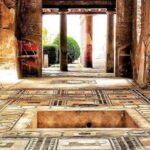
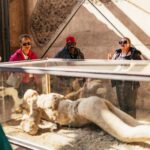
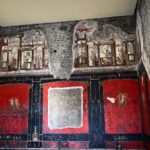
The tour also points you toward well-preserved visual evidence—mosaics and frescoes—throughout the city. Those artworks are where Pompeii’s volcanic preservation really lands. You’re not only seeing stone walls; you’re seeing painted and patterned surfaces that help you understand what people chose to display.
If you’re sensitive to adult themes, this is the moment to know what you’re walking into. The good news is that the tour is guided, so the guide’s explanations can keep the stop from feeling like a shock-and-awkward photo session. Instead, it becomes part of understanding daily life and the town’s social realities.



What makes it feel like a small group (not a stampede)
This is built as a semi-private experience with a maximum of 12 people. That group size is the sweet spot for Pompeii. Large crowds can flatten the experience: you lose the thread of the story and spend half your time dodging elbows. Here, the pacing is calmer, and you’re more likely to catch details while you’re listening.
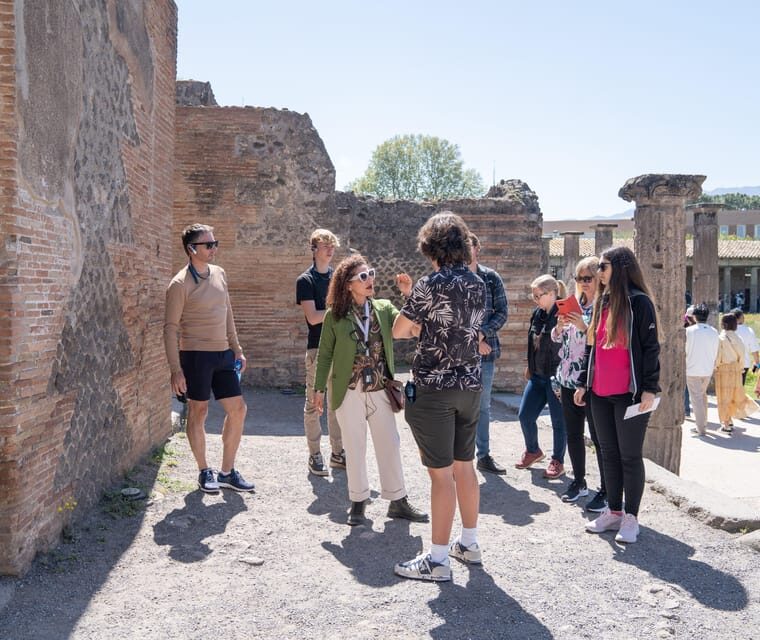
Headsets are a big part of that. With audio routed to your ears, you’re not constantly turning your head to locate the guide. That matters when you’re walking on uneven paths, pausing for photos, or trying to read painted surfaces from an awkward angle.
Your guide also covers the “why” behind what you see. You’ll hear anecdotes, plus explanations about how Pompeii’s streets and buildings were used. That’s where the guided format shines: the ruins stop being a highlight reel and start behaving like a place.
One small practical note from past participants: some people said the group was able to linger after the guided portion. That’s not something you should bank on as guaranteed, but it’s a good sign that the tour doesn’t necessarily yank you away the second the two hours are up.
Refreshment stop: water and orange juice in the heat
Pompeii walking can get intense, and this tour includes a small bottle of water and a glass of fresh orange juice. That kind of finish is smart for two reasons. First, it helps you recover quickly while you’re still in “walk mode.” Second, it gives you a clean endpoint so you can decide what to do next without feeling drained.
There’s one consideration: while these items are listed as included, a few people reported they didn’t get the water and orange juice as expected. If you rely on those exact inclusions, I’d plan a bit conservatively—bring a small backup snack or drink if it doesn’t add much weight for your day.
Also, you’ll likely want to take the orange juice as a “reset.” Then you can decide whether you want to explore on your own after the tour or keep your energy for the rest of your Italy itinerary.
Price and value: is $80.43 fair for Pompeii?
At $80.43 per person for about two hours, you’re paying for more than access. The value comes from the combination of reserved tickets, a guide-led route, headsets, and practical supplies for the heat.
Here’s how I’d think about it:
- Skip-the-line entry reduces wasted time. For many visitors, time saved is worth real money.
- Small group size means you get better attention and less stress moving between stops.
- Headsets protect your experience quality. If you can’t hear the story, you end up just taking pictures.
- Water and orange juice take the edge off the walk.
The only time I’d question the price is if you expected a self-guided, full-day crawl of every corner (because Villa dei Misteri isn’t included, and the tour is time-boxed). If you want a guided hit list of Pompeii’s most teachable stops, the price starts to make sense quickly.
What you should know before you go (so it stays smooth)
You’ll need a passport or ID card for all participants. That’s not a detail to ignore. Arrive with the right document, and you avoid last-minute hassle.
There are also rules about what you bring:
- Alcohol and drugs aren’t allowed.
- Glass objects aren’t allowed.
- Pets aren’t allowed, but small dogs are permitted inside the archaeological area if they’re kept on a leash and carried when inside buildings.
Comfort matters because this is a walking tour. It’s also not suitable for people with mobility impairments, so don’t assume you can “manage” with extra time—this one is marked as a no for mobility needs.
If you’re visiting in warmer months, treat it like a heat plan. Wear breathable shoes and light layers. Pompeii can look flat on a map, but walking surfaces and pauses add up.
Language options: choose what you’ll actually understand
The live guide is available in multiple languages: German, English, Italian, Spanish, French, Japanese, and Portuguese. That’s helpful if you’re traveling with others or if you want the explanations in your comfort language rather than forcing yourself through an unfamiliar one.
Since the tour includes headsets, language clarity matters even more. Make sure you select the language you want during booking so you’re not stuck listening to a guide you can’t follow comfortably.
Who this Pompeii tour suits best
This experience is a great match if:
- You want skip-the-line access and a guided plan you can trust in a short window.
- You prefer smaller groups and clearer instruction with headsets.
- You want the main “big idea” Pompeii stops: the forum, baths, temples, theater, and the Lupanare.
- You’re interested in preserved details like mosaics and frescoes, not just general sightseeing.
It may not fit if:
- You need mobility-friendly routing (it’s not suitable for people with mobility impairments).
- You’re hoping for a standalone, full-day independent visit. This is time-boxed and focused.
Should you book this Pompeii small-group tour?
Yes, I’d book it if you’re prioritizing time and guidance. The skip-the-line ticket plus headsets plus small group size add up to a calmer, more informative Pompeii visit than trying to improvise everything on your own.
I’d also consider booking with a bit of caution if the water/orange juice inclusion is a must-have for you, since a small number of past participants reported it wasn’t always received. If you can handle that possibility, you’re set up for a strong two-hour tour that moves you through Pompeii’s most story-rich stops without wasting your morning in lines.
FAQ
How long is the Pompeii guided tour?
The guided tour is about 2 hours.
Does the tour include skip-the-line entry?
Yes. Reserved tickets are included so you can enter the archaeological area without waiting.
How big is the group?
It’s a semi-private experience with a maximum of 12 people.
What’s included in the price besides the guide?
You get the skip-the-line entrance ticket, guided tour, semi-private group format, headsets, assistance and Wi-Fi at the meeting point, a small bottle of water, and a glass of orange juice.
Where do I meet the tour?
Meet at the Office IBT Center/Touristation next to Chalet Donna Lucia (Piazza Esedra, 11).
Do I need to bring ID?
Yes. Passport or ID card is required for all participants.
What languages are offered for the live guide?
The guide can operate in German, English, Italian, Spanish, French, Japanese, and Portuguese.
Is the tour suitable for people with mobility impairments?
No. The tour is not suitable for people with mobility impairments.