REVIEW · POMPEI CAMPANIA
Pompeii: Skip-the-Line Ticket and Guidebook with Itineraries
Book on GetYourGuide →Operated by Around Vesuvio · Bookable on GetYourGuide
Pompeii hits you fast, and hard. This experience mixes a skip-the-line ticket with a practical Pompeii guidebook so you can see the big ruins without getting stuck in info overload.
I especially like that you can set your own pace inside the archaeological park, then use the guidebook’s routes to stay on track. Another win is the range of stops it pushes you toward, from frescoed houses to the amphitheater and the casts of victims.
One drawback to consider: this is mainly a self-guided setup, not a classic in-person guided tour. If you want lots of human explanations on the spot, double-check that this format fits your style.
In This Review
- Key things to know before you go
- Pompeii at your pace: what this format really gives you
- Skip-the-line entry and the park hours that shape your day
- Meeting up in Pompeii: where you go first
- The guidebook with itineraries: how to choose 2, 4, or 6 hours
- Before you start walking: what to wear and carry
- What you’ll see: Pompeii’s core sights, explained in plain terms
- Frescoed houses: art that feels personal
- Baths and spas: where daily routines met social life
- Temples and religious spaces: architecture with rules
- Shops and street life: Pompeii as commerce
- Thermopolis: the coffee-and-fast-food equivalent
- Theaters and performance spaces: people gathered for stories
- Brothels: a reminder of daily commerce and moral complexity
- The Roman amphitheater: one of the best-preserved pieces
- Casts of the victims: the emotional center of the visit
- How long should you spend? (Spoiler: more than you think)
- Practical value: does $41 make sense for this kind of day?
- Who this is best for (and who should consider alternatives)
- Should you book it?
- FAQ
- What is included in this Pompeii experience?
- Is there a live guide during the visit?
- How long is the ticket valid?
- What time can I enter Pompeii?
- Where do I meet the staff?
- Which entrance should I use?
- What do I need to bring?
- What languages are the materials available in?
- Are food and drinks included?
- How do the itineraries work?
Key things to know before you go
- Skip-the-line entry helps you start seeing ruins sooner during the busy hours of the day.
- Three route options (2, 4, or 6 hours) make it easier to choose the right effort level.
- Updated map + guidebook help you find key sights without constantly scanning your phone.
- You focus on major Pompeii zones like the amphitheater, baths/spas, temples, shops, theaters, brothels, and the Thermopolis.
- Victim casts are a heavy, memorable part of the visit that deserves time, not a rush.
Pompeii at your pace: what this format really gives you
Pompeii can feel overwhelming in the best way. One minute you’re staring at stone walls, the next you’re picturing everyday life that vanished in a day. What makes this ticket-and-guidebook combo work is that it’s designed for motion: get in, get oriented, and then let the site guide your day (not the other way around).
The skip-the-line element matters because Pompeii is a peak-demand place. Even if you’re a confident traveler, you don’t want your trip defined by waiting. Then the guidebook turns that time advantage into actual sightseeing. You’re not just walking around trying to guess what you’re looking at.
Also, the guidebook approach is ideal if you don’t want to feel trapped in a group rhythm. You can linger where you get curious—like a wall painting or an architectural detail—and skip ahead when something doesn’t grab you. That self-control is the real value here.
The main thing to watch is expectations. The package centers on a guidebook and map, not a live narrator roaming the ruins with you. Some people prefer that freedom. Others end up wanting more real-time explanation. If you’re in the second camp, you may want a different kind of tour.
If you're still narrowing it down, here are other tours in Pompei Campania we've reviewed.



Skip-the-line entry and the park hours that shape your day
This experience gives you a skip-the-line ticket and lets you enter during 9AM to 5PM. That window is important for planning because Pompeii is large enough that your day can quietly shrink if you start late. If you want time for the amphitheater, the victim casts, and a handful of frescoed areas, aim to arrive early in the window and then commit to a route length that matches your pace.
You should also know that the ticket is tied to your reservation and a specific entry point: Piazza Anfiteatro. That’s the doorway you’ll want to use when you get to the archaeological park.
One more practical point: the experience is built around a voucher exchange at the staff info point. So you’ll want your ID documents ready and your confirmation details handy, since you’ll be showing the voucher to staff for access.
Meeting up in Pompeii: where you go first
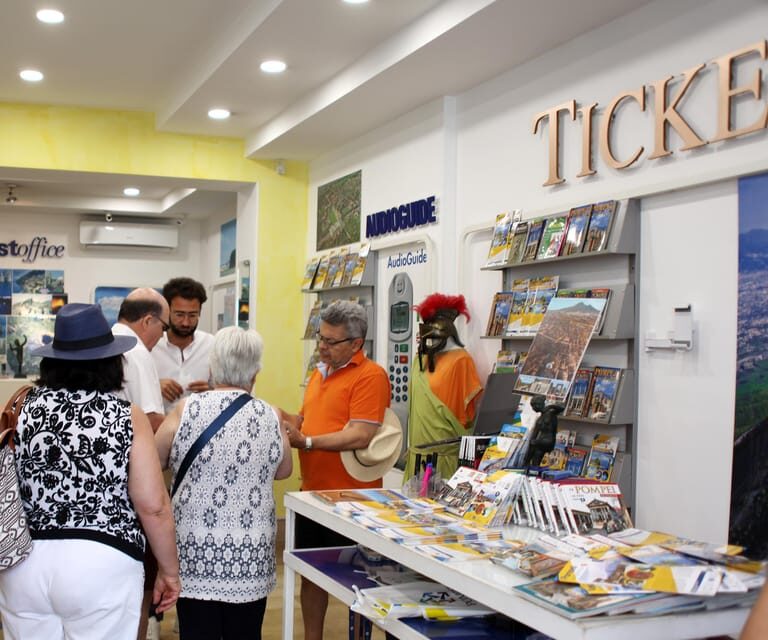
Meet the team outside their office (often with blue and yellow jackets). The key location once you arrive in Pompeii is the staff info point at Via Roma 123, Pompei.
From there, staff will help you connect your voucher to your reservation for the park entrance at Piazza Anfiteatro. In real life, this kind of step is what prevents the classic “we’re here, but we’re not quite in” frustration.
A useful tip based on how this tends to work: even with a skip-the-line setup, you may still need to exchange something for physical entry papers before you actually go through security and into the park. Plan your time with a bit of buffer, and keep all your confirmation details accessible so you don’t waste minutes hunting for them.
The guidebook with itineraries: how to choose 2, 4, or 6 hours
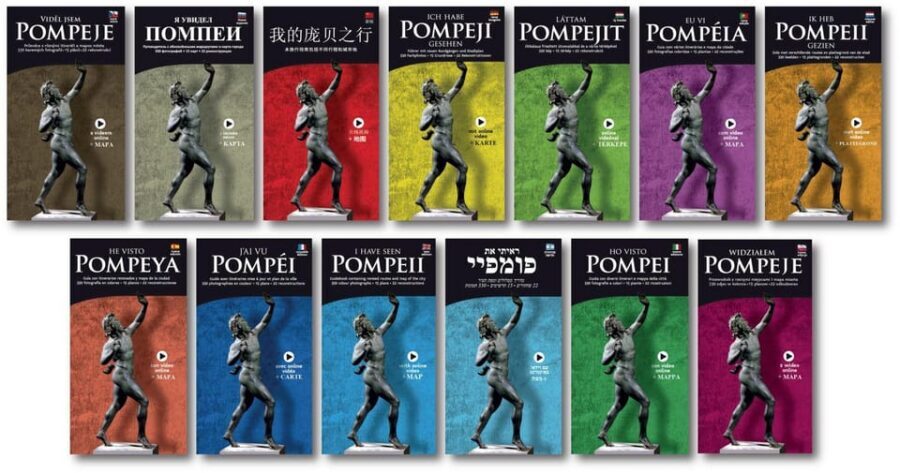
The guidebook is the backbone of the experience. It includes an updated map and offers itineraries of two, four, or six hours, so you can choose how much Pompeii you want to actively cover.
Here’s how to think about it:
- Two hours works if you’re short on time and want a focused highlights pass. You’ll likely spend more time moving between major sites and less time reading every detail.
- Four hours is the sweet spot for most people because it gives you breathing room while still feeling like you did Pompeii, not just wandered it.
- Six hours is for the slow-and-curious crowd who wants to stop often—especially around frescoed houses and the heavier memorial moments.
The guidebook isn’t just “here’s a list.” It’s set up to help you navigate the site and decide what’s worth your attention first. The updated map is especially valuable because Pompeii’s paths can be easy to misread if you’re relying only on your instincts.
One more practical note: the guidebook is available in multiple languages. The materials are described as translated into 13 languages, and the included guidebook is also listed as available in 12 languages. Either way, it’s meant to be accessible without needing you to hunt for an alternative guide onsite.
Before you start walking: what to wear and carry
Pompeii is a lot of stone under your feet. Wear comfortable shoes that can handle uneven ground and lots of walking. Comfortable clothing matters too, since you’ll be exposed for long stretches.
Bring your passport or ID card. You’ll be asked for it during voucher exchange, and it’s easy to lose time if you’re digging through bags at the last second.
Food and drinks aren’t included. That means you’ll want to plan your own snack strategy, especially if you choose the longer route. Even if you don’t eat inside the park, having a plan outside helps you avoid the “hangry sprint” problem.



What you’ll see: Pompeii’s core sights, explained in plain terms
This is Pompeii with all the recognizable power. You’re not just seeing ruins as rubble—you’re seeing systems of daily life frozen in place.
Here are the major categories of stops your guidebook steers you toward:
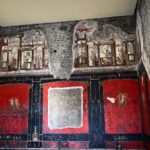
Frescoed houses: art that feels personal
Pompeii’s frescoes are what make the site feel human. Walking through these houses, you’re looking at decoration meant for real people—color, storytelling, and design that wasn’t meant to survive 2,000 years. You’ll also get the sense that “home” in Pompeii wasn’t just walls and rooms. It was a set of status signals and daily rhythms.
If you have only two hours, don’t skip this category. If you have four or more, slow down here. Frescoes can turn your visit from a checklist into a memory.
Baths and spas: where daily routines met social life
The spas and bath areas show Pompeii as a place of habits, not just tragedy. These spaces are a reminder that public life and personal cleanliness were part of how people lived together.
The most useful way to experience this section is to look for the layout and how movement would have worked. Even without technical knowledge, you can understand where people entered, where they might relax, and how the space shaped social behavior.
Temples and religious spaces: architecture with rules
Pompeii’s temples help you understand that religion wasn’t a separate category of life. It was embedded into the city’s physical structure.
When you look at religious spaces, focus on the entrances, the proportions, and how the setting organizes attention. That’s how you start seeing the city’s logic instead of only its remains.
Shops and street life: Pompeii as commerce
The shops and everyday urban setup are what turn the site from “cool ruins” into “I get how people lived.” You’re seeing places designed for selling, displaying, and passing time. Even if you don’t stop long at every commercial space, getting a few in your day creates context for everything else you see.
Thermopolis: the coffee-and-fast-food equivalent
The Thermopolis is one of the most fun concepts in Pompeii because it represents a real need: quick food and drink. It’s often described as the time period’s version of coffee-fast food. The point isn’t the modern comparison. It’s that you’re walking into a place where people came to grab something and keep moving—exactly how crowds still behave today.
If your day is short, this is worth hitting because it’s vivid and easy to picture.
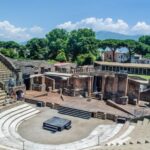
Theaters and performance spaces: people gathered for stories
Pompeii’s theaters remind you that entertainment was public and important. Looking at them helps you connect the architecture to what it was built to do: gather people and direct their attention.
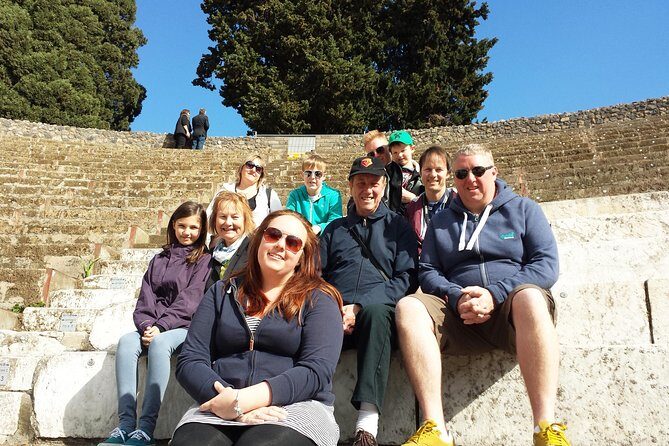
Theaters also pair well with the amphitheater later in your route, because you can compare how the city supported spectacle in different ways.
Brothels: a reminder of daily commerce and moral complexity
The brothels are not light material, but they’re part of the Pompeii puzzle. They show how businesses functioned and how sexuality and commerce overlapped in Roman society.
If you’re sensitive to this topic, you don’t have to linger. But don’t erase it from the story either. Your understanding of Pompeii will feel incomplete without seeing at least the idea of this part of the city’s economy.
The Roman amphitheater: one of the best-preserved pieces
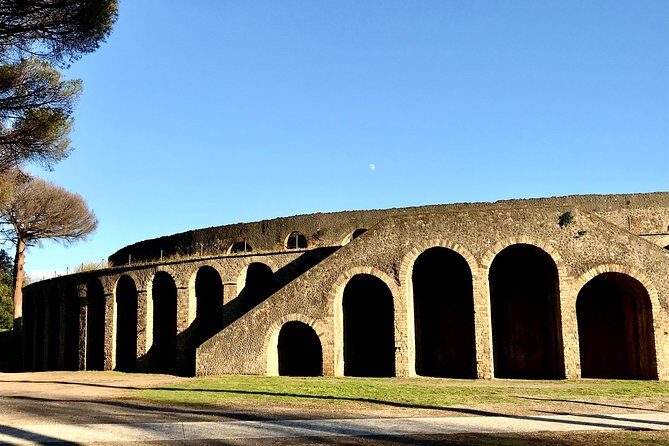
Pompeii includes an amphitheater, and it’s described as one of the best-preserved Roman amphitheaters. That’s a big deal. Because it’s still so readable as a functioning space, you can better imagine crowd movement and seating scale.
When you’re here, try looking at it as a “machine” for watching. Where do people enter? Where would they stand? How does the space shape sight lines? You’ll get more out of it than by just snapping a photo and moving on.
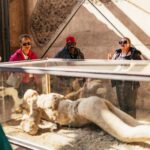
Casts of the victims: the emotional center of the visit
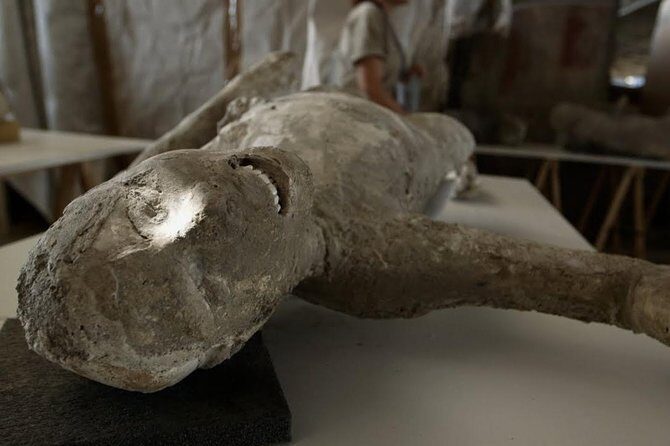
The casts of the victims of the eruption are the part most people remember long after they’ve forgotten a lot of street names. It’s sobering and it changes how you see everything else in the park.
Give this section time. Rushing through it can turn a meaningful moment into background noise. If you only have a two-hour route, try to plan it so you don’t arrive at the casts already tired and ready to bolt.
How long should you spend? (Spoiler: more than you think)
Most Pompeii problems come down to timing. People underestimate the size, then they try to “power through.” With this self-guided setup, you’ll actually make better decisions if you commit to a route length that matches your energy.
If you’re deciding between four and six hours, here’s a straightforward way to choose:
- Pick four hours if you want highlights plus time to read a bit and slow down at frescos and key monuments.
- Pick six hours if you want to absorb more neighborhood feeling and not feel rushed through the amphitheater and the heavy memorial sections.
If you’re going to do only two hours, focus on what you personally care about most: art, architecture, or the story of the eruption’s impact on real people.
Practical value: does $41 make sense for this kind of day?
At $41 per person for a 1-day Pompeii experience with a skip-the-line ticket plus a guidebook and map, the value depends on how you like to travel.
This package is a strong deal if:
- You want to maximize your time once inside the park.
- You prefer self-paced exploring with direction.
- You like the idea of a souvenir guidebook that you can keep after.
It may be less satisfying if:
- You expect a fully guided experience with lots of live explanation. The format here is built around the guidebook, and some people get disappointed when they want a human guide instead of a book-based approach.
Also, food isn’t included. So your real budget is the ticket plus whatever you spend to keep your day comfortable.
Still, for many visitors, the combination of skip-the-line access and structured routes is what keeps Pompeii from becoming a stressful scavenger hunt.
Who this is best for (and who should consider alternatives)
This works best for you if you:
- Like exploring at your own pace but still want a plan.
- Want Pompeii highlights like the amphitheater, frescoed areas, theaters, and the victim casts.
- Prefer not to book a large group schedule and then spend your best energy trying to follow.
It might not be the best match if you:
- Want constant storytelling from a live guide throughout the ruins.
- Need very explicit, on-site language signage for every turn. If you’re relying on directions, keep an eye out for language clarity and don’t assume English will be everywhere.
If you’re unsure, consider whether you’re the type who happily reads and uses a map. This experience rewards that style.
Should you book it?
Book this if you want a smart, flexible Pompeii day where you can choose a route length and focus on the sights that matter to you. The skip-the-line access plus the updated map and guidebook is a practical pairing for first-timers who don’t want to waste time figuring things out onsite.
Don’t book this if your dream Pompeii includes a live guide doing most of the talking. The guidebook format is the main feature, so make sure that matches your learning style. If you do want more real-time guidance, you’ll likely be happier with a different type of tour.
FAQ
What is included in this Pompeii experience?
You get a skip-the-line ticket to Pompeii, a guidebook with itineraries, and a Pompeii ruins map with three itinerary options.
Is there a live guide during the visit?
The materials you receive are a guidebook and map so you can explore independently. A live human guide isn’t listed as part of what’s included.
How long is the ticket valid?
The ticket is valid for one day.
What time can I enter Pompeii?
Entry is available from 9AM to 5PM.
Where do I meet the staff?
Meet the team outside their office. Staff are at the information point located at Via Roma 123, Pompei.
Which entrance should I use?
The reserved entrance for your visit is Piazza Anfiteatro.
What do I need to bring?
Bring your passport or ID card.
What languages are the materials available in?
The guidebook is available in multiple languages, and the activity information lists English, Italian, Spanish, and French.
Are food and drinks included?
No. Food and beverages are not included.
How do the itineraries work?
The guidebook provides different routes for two, four, or six hours so you can pick how much you want to cover.