REVIEW · POMPEI CAMPANIA
Pompeii: Small Group Tour with an Archaeologist
Book on GetYourGuide →Operated by Askos Tours · Bookable on GetYourGuide
Pompeii lands differently when an archaeologist guides you. I love the way this tour turns volcanic-catastrophe archaeology into a clear, walkable story of everyday Roman life. You start at Porta Marina Superiore, then the guide threads you through the Forum and major public buildings so you actually understand what you’re looking at. I also like the practical finish: once the guided portion ends, you get time to roam the archaeological site on your own.
One thing to consider: this is not a wheelchair-friendly option. Expect uneven ground, steps, and ramps, plus a bit of uphill strain in places, so it’s not a good match if mobility is limited.
In This Review
- Key highlights worth your attention
- Pompeii gets real fast with an archaeologist in front
- Skip the ticket line and walk in at Porta Marina Superiore
- Forum Civile di Pompei: the city’s meeting room, carved in stone
- Basilica, baths, temples, and theater: how Romans spent their time
- The houses and frescoes: where Pompeii stops being abstract
- Lupanar and the House of the Vettii: adult themes with a real purpose
- Villa of the Mysteries frescos: the big payoff of the 3-hour option
- After the guided walk: use your free time like a pro
- Headsets, group style, and what $40 really buys you
- Practical realities: what to bring and what to expect on your feet
- Who should book this Pompeii archaeologist tour
- Should you book? My take on the best choice
Key highlights worth your attention
- Archaeologist-led storytelling: you’re not just looking at stones, you’re learning how the city worked.
- Skip-the-line entry: less waiting, more ruins time.
- A focused “greatest hits” route: Forum, baths, temples, theater, and standout houses.
- Up-close preserved art: frescoes, mosaics, and plaster details you’ll miss without context.
- Two lengths, different payoffs: the 3-hour option adds the Villa of the Mysteries.
- End with smart next-step tips: the guide helps you plan what to see after the official walk.
Pompeii gets real fast with an archaeologist in front
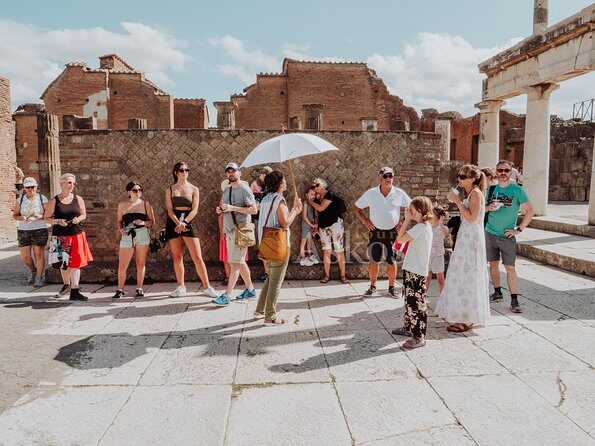
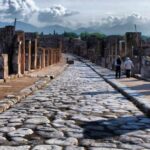
Pompeii is the kind of place where you could wander for hours and still feel like you’re looking at an expensive open-air museum. This tour fixes that. You’re with an archaeologist guide who explains what you’re seeing as you pass it, not in a vague lecture way. The whole setting matters: the city was preserved under volcanic ash from Mount Vesuvius’ eruption in 79 AD, and that accident of history is what lets you see streets, shops, and homes in a way most Roman sites can’t match.
The best part is how the guide keeps the city human. You’ll hear about what daily life looked like, how public spaces worked, and what small architectural clues can tell you about the people living there. I also like that the tour is built to be manageable. It’s long enough to hit the big sights, but short enough that you don’t feel like your legs have been through a gladiator school afterward.
As for guides: this tour’s reviews point to a mix of archaeologists and expert storytellers. Names that show up include Roxanne, Anna, Paulo, and Michele. The common thread is a style that’s organized, clear, and often funny enough to keep the group awake.
If you're still narrowing it down, here are other tours in Pompei Campania we've reviewed.



Skip the ticket line and walk in at Porta Marina Superiore
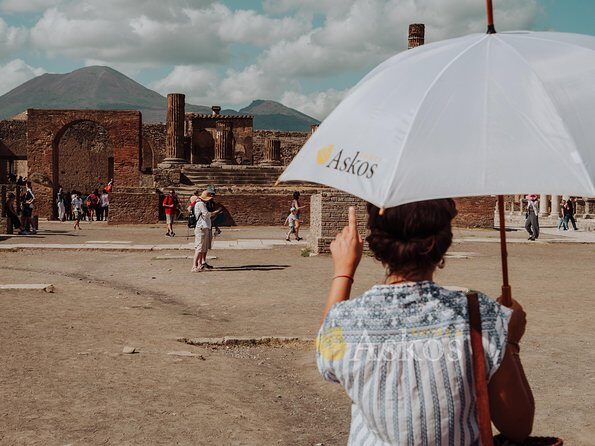
Most people arrive with a pile of questions: Where do I start? What’s important? What’s just… stuff? The tour begins with a clear answer. You enter Pompeii at Porta Marina Superiore, one of the city’s gates. That matters because gates weren’t just decorative. They were part of how the city controlled movement and funneled people into the street network.
You’ll then move along main streets and head toward the center of public life. If you’ve ever been overwhelmed in a big ruin complex, you’ll appreciate having a route already chosen for you. It keeps you from doing the classic tourist move: stopping randomly at whatever seems photogenic while skipping the places that explain everything else.
Tip I’d follow: pack light. Smoking is not allowed, and you can’t bring luggage or large bags, and mobility scooters aren’t permitted. There’s also a free cloakroom near the Porta Marina Superiore entrance (availability can vary), which is useful if you have a jacket or extra layers.
Forum Civile di Pompei: the city’s meeting room, carved in stone
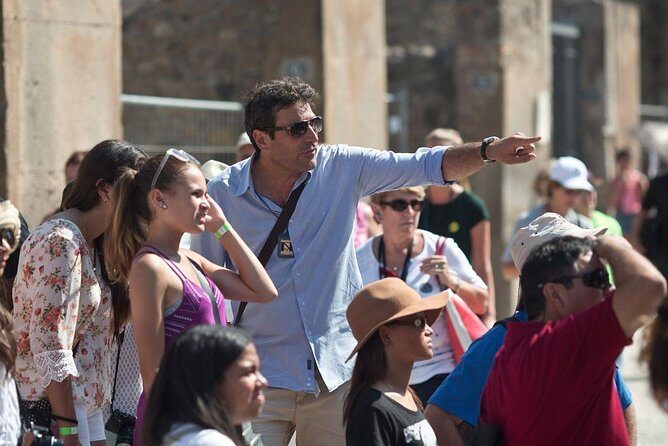
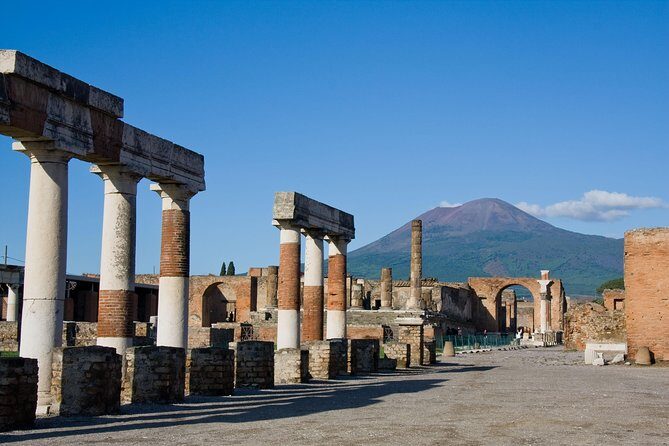
If you remember one area of Pompeii, make it the Forum and the surrounding civic core. This tour leads you through that “old heart of the city,” where Roman public life played out: law, commerce, religion, and politics all got their turn.
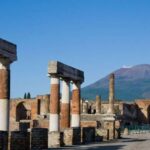
On the route, you’ll also see how the Forum sits with the bigger geography of the region. On clear days, you can look toward Mount Vesuvius from above the city. Even if you don’t know Roman geography, that viewpoint helps your brain snap the timeline into place: this was a living city in a volcanic neighborhood, not a separate “ancient theme park.”
The guide’s job here is to help you connect buildings to purpose. You’ll pass by key public structures and get explanations that make the ruins feel less random. One of the things I like most about guided Pompeii is the way the guide points out clues that you’d normally walk past—like how certain layouts signal whether a space was commercial or residential.
Basilica, baths, temples, and theater: how Romans spent their time
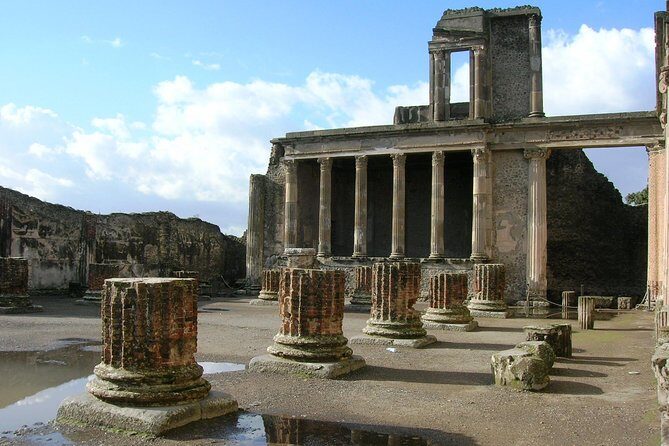
After the civic center, the tour keeps building your mental map. You’ll visit places tied to business, worship, and daily routines.
Here are the stops you should expect, and why each one matters:
- Basilica (the business and legal center): This is where Roman civic life got handled. Understanding it early helps you read other public buildings later.
- Thermal baths and Forum Baths: Baths weren’t only about hygiene. They were social hubs. When you see bathing spaces explained in context, you stop thinking of them as “cool ancient rooms” and start seeing them as a routine part of Roman life.
- Temples of Apollo and Jupiter: Religious spaces can be hard to interpret if you only see the outside. With the guide, you get context for what these sites represented.
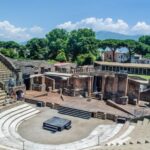
- Great Theatre / Large Theatre: The theater is where entertainment, status, and public culture intersect. Walking in and having it framed for you is a wow moment, especially if you’ve only ever thought of theaters as modern buildings.
Also, Pompeii isn’t just grand monuments. Your guide is expected to hit the smaller details too, because Pompeii’s preservation means you can spot textures, artworks, and layout cues that matter. A number of the tour guides highlighted in recent feedback—like Paulo and Alfredo/Paolo—are praised for passing along lots of small, concrete observations. That’s the style that makes the ruins feel newly legible.
Small drawback: with all these stops, your itinerary is packed enough that you won’t get long, meditative pauses at every wall. If you know you want slow museum pacing, consider planning to extend your visit after the tour.
The houses and frescoes: where Pompeii stops being abstract
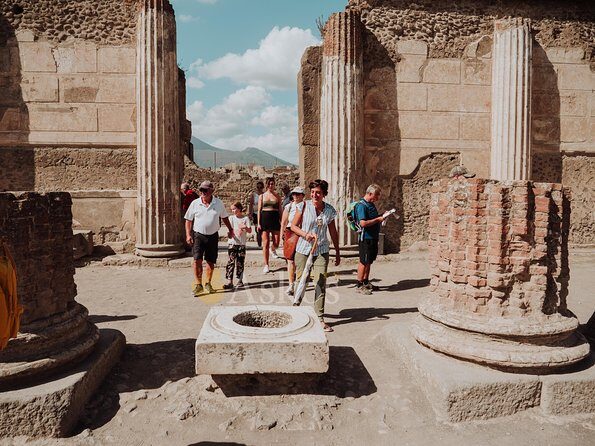
This tour doesn’t only stay in public spaces. It also brings you into parts of the site that show how wealthy Romans lived, how homes were decorated, and what kinds of artwork survived.
You may visit highlights such as:
- House of the Vettii
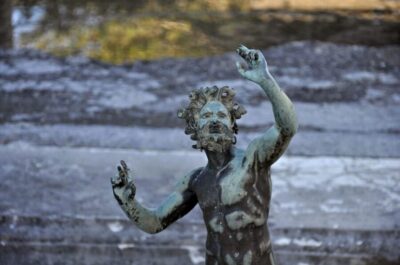
- House of the Faun
- House of Menander
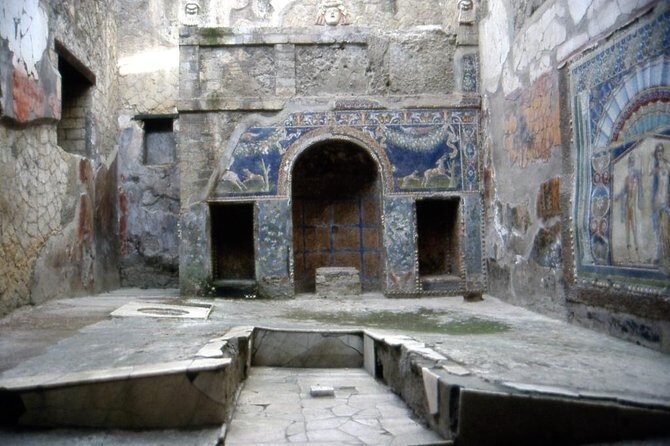
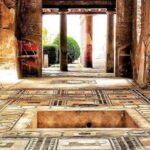
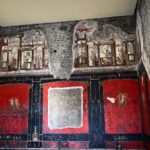
These stops are where Pompeii becomes visual. You’ll see preserved frescoes, artwork, and mosaics up close, and the guide helps you interpret what you’re looking at rather than letting you “guess and guess.” Frescoes in Pompeii aren’t just decoration. They communicate taste, status, and the household’s identity.
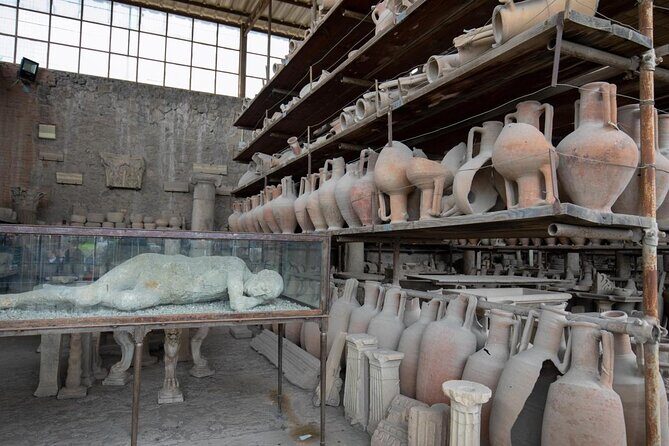
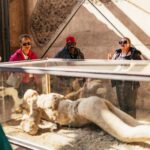
One detail worth knowing ahead: some of the material shown in Pompeii has changed over time. For example, plaster casts connected with the eruption are no longer shown in dwellings in the way you might expect from older depictions. Recent feedback notes they’re displayed in sealed glass cases (so you’re not always seeing them set into original rooms). The casts still matter, just plan for museum-style viewing.


Lupanar and the House of the Vettii: adult themes with a real purpose
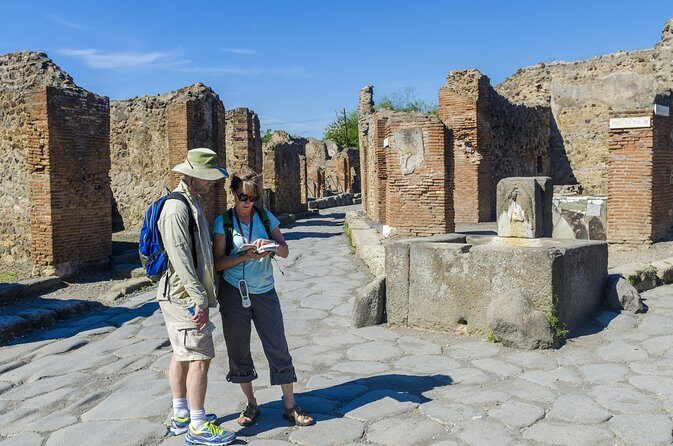
Not all Pompeii highlights are “family postcard” material. This tour includes stops such as the Lupanar (the brothel site) and sees you close to its preserved features, including stone beds and frescoes. It also covers how the site got its name.
This can be handled sensitively, but it’s still adult-themed content. So if you’re traveling with kids, I’d treat it like you would treat an adult-oriented museum stop: ask how the guide will frame context and decide based on your child’s maturity. One review noted that a 10-year-old in a group was mostly oblivious to context, which suggests the guide does a decent job steering through it without turning it into a crude lecture.
For adults, the value is that it adds a layer most casual visitors miss. The Lupanar isn’t scandal for shock value. It’s evidence of an entire social economy—one more way Pompeii shows real human behavior.
Villa of the Mysteries frescos: the big payoff of the 3-hour option

If you book the longer version, you add a stop that many people remember for the rest of the trip: the Villa of the Mysteries. The extra time is worth it if you care about art and symbolism, because this villa is famous for its preserved frescoes.
The guide’s focus here tends to be the “how to look” part: what scenes you’re seeing, what the imagery is suggesting, and why this villa stands out. If your 2-hour tour feels like you’re skimming the surface, the 3-hour option gives you a chance to slow down for one of Pompeii’s most striking art moments.
If you’re trying to choose between lengths, a simple rule helps:
- Pick 2 hours if you want a fast intro plus free roaming afterward.
- Pick 3 hours if you want a deeper hit of the villa fresco experience.
After the guided walk: use your free time like a pro
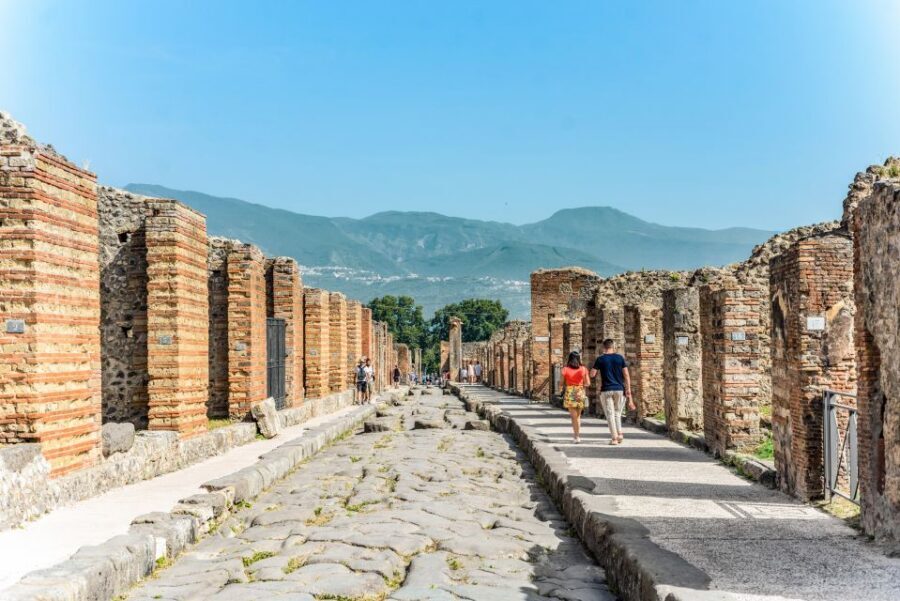
The tour includes time to explore the archaeological site on your own after the guided portion. I love this structure. You get the “here’s what matters” part from the guide, then you can spend your remaining time following your interests.
The guides on this tour are also known for giving practical recommendations at the end. You’re not just left with a general map. You’ll get ideas for where to head next based on what you already saw.
My advice for using your own time:
- Revisit the areas you found most interesting from the guided route.
- Spend extra time on preserved art stops. That’s where your eyes start to pick up patterns you missed earlier.
- If you’re photographing, plan to do it after you understand what you’re aiming at. Otherwise you’ll end up with a hard drive full of pretty walls and no idea why they matter.
Headsets, group style, and what $40 really buys you
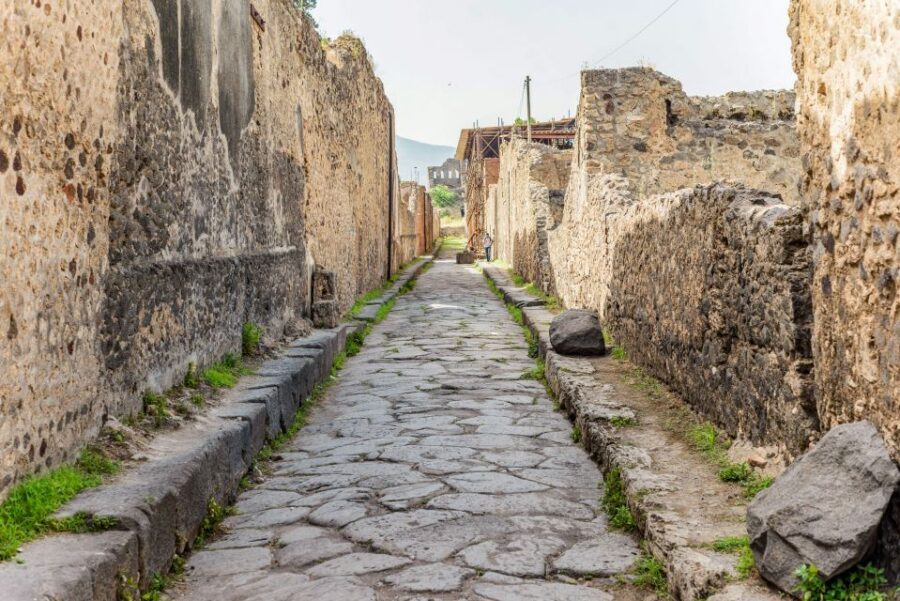
This tour is priced around $40 per person and it includes a few things that change the value equation:
- Your Pompei Express entry ticket
- A 2- or 3-hour guided tour by an archaeologist
- Skip-the-ticket-line
- Headsets (for groups of 16 or more)
- Freedom to explore afterward
At Pompeii, the biggest cost isn’t money. It’s time and confusion. Pay for a guide and you buy back hours you’d otherwise spend orienting yourself and trying to figure out what’s worth your attention. That’s why even a short guided window can feel like a bargain.
Group experience matters too. You can choose a shared small-group tour or a private tour for your group alone. One thing to watch: language availability isn’t always the same across shared versus private options, so confirm the language you want before you book.
Practical realities: what to bring and what to expect on your feet
Pompeii is outdoors, and it has plenty of uneven steps and ramps. This matters for pace, comfort, and how long you’ll feel good after the tour. The route includes walking between major areas, and the terrain can be choppy.
What I’d bring:
- Passport or ID card (a copy is accepted)
- A light day bag with what you truly need (no large luggage)
- Comfortable shoes with grip
- Water and sun protection (the tour doesn’t include food or drinks)
What to leave at home:
- Anything bulky (large bags, luggage)
- Mobility scooters
- Smoking
- Big dogs (dogs larger than 10 kg aren’t allowed)
Also, slight itinerary variations can happen due to overcrowding or temporary closures. That’s normal for Pompeii. The key is that the tour still aims to cover the major highlights without turning it into a chaotic scramble.
Who should book this Pompeii archaeologist tour
Book it if you want:
- A fast, structured way to grasp Pompeii’s layout
- An archaeologist-led explanation of Forum life, public buildings, and houses
- A guide who points out details you’ll miss on your own
- A short guided experience followed by self-guided wandering
Skip it if:
- You use a wheelchair or need mobility accommodations. This tour isn’t recommended for travelers with mobility impairments.
- You’re aiming for a slow pace with no steps and no crowds. Even with smart routing, Pompeii is Pompeii.
Families can work, but remember the route includes adult-themed stops like the Lupanar. If your child can handle “history lessons with context,” you’ll likely be fine. If not, you may want a different approach.
Should you book? My take on the best choice
I’d book this Pompeii Small Group Tour with an Archaeologist if you want the fastest path from confused ruins to meaningful places. The value is strong because it bundles skip-the-line entry, an archaeologist guide, and a structured walk through Pompeii’s core highlights, then gives you the freedom to keep exploring.
If your priority is art and symbolism, take the 3-hour version for the Villa of the Mysteries. If you want a solid intro and still want time to roam, the 2-hour option is the better fit.
Just be honest with your body and your expectations. This is a walking tour on ancient stone. Bring good shoes, plan for steps, and you’ll get a Pompeii day that feels organized, not exhausting.