REVIEW · POMPEI CAMPANIA
Pompeii Skip-the-Line Tour with Expert Archeological Guide
Book on GetYourGuide →Operated by WORLDTOURS S.r.l. · Bookable on GetYourGuide
Pompeii hits fast, then sticks with you. I like that you get an archaeologist guide instead of a generic walk-through, and I also love the skip-the-line setup for a place that can swallow your time. One thing to keep in mind: some groups report the meeting point and matching up with the guide can be a bit chaotic, so you’ll want to arrive early and keep an eye out for the sign outside Fortuna Village.
Inside, I’m a big fan of how the tour mixes the big postcard sights with the nitty-gritty stuff—shops, villas, temples, and the daily grind of Roman life. You’ll also see the moving plaster casts of Vesuvius victims, which makes the whole site feel less like a museum and more like a tragedy caught mid-breath. The cameo stop is short but hands-on in a way that helps you connect the art and craft of today with what Romans valued long ago.
In This Review
- Key Things I’d Prioritize on This Tour
- Pompeii in Two Hours: How This Tour Uses the Time
- Meeting at Fortuna Village: Don’t Let the Start Cost You
- Skip-the-Line Pompeii Entry: Why It’s Worth the Extra Planning
- The Cameo Workshop Stop: A Hands-On Break Before the Ruins
- First Stops: Theaters, Small Stages, and Food Stalls
- Foro Civile di Pompeii: Where Public Life Reads Like a Script
- The Houses You Actually Learn From: Vettii and Menander
- Market and Shops: Macellum and the Commercial City
- Temples in Photo Stops and Short Visits: Jupiter and Apollo
- Vesuvius Victim Casts: The Emotional Turn That Changes Everything
- Group Size, Guides, and the Headset Question
- What This Tour Does Well (and What It Won’t)
- Who Should Book This Pompeii Tour?
- Should You Book This Tour?
- FAQ
- How long is the Pompeii tour?
- Where do I meet the guide?
- What’s included in the price?
- Is Pompeii admission included, or do I need to buy a separate ticket?
- Are there any days when Pompeii is free?
- What language options are available?
- What items are not allowed?
Key Things I’d Prioritize on This Tour
- A licensed archaeologist sets the tone and helps you read what you’re looking at
- Skip-the-line entry saves precious time in a busy site
- Roman daily life stops (thermopolium, market, bath areas, Forum) make Pompeii feel real
- Plaster casts of the Vesuvius victims add an emotional anchor to the ruins
- Cameo workshop visit gives you a tangible break from stone and signage
Pompeii in Two Hours: How This Tour Uses the Time
Two hours at Pompeii is both short and perfect. Short, because the site is huge and you could easily spend a whole day. Perfect, because Pompeii gets better when you have a thread to follow: where you are, what you’re seeing, and why it mattered to real people in 79 AD.
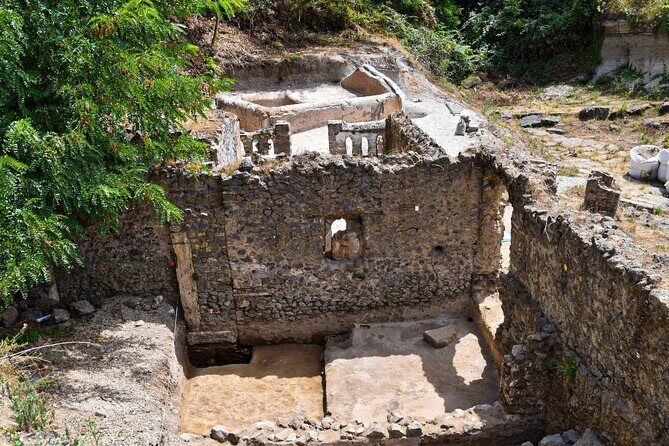
This tour is built around key Pompeii zones, not a “wander until you’re tired” plan. You’ll move through major areas that include a temple, a villa, and market-like spaces, then you’ll connect the dots with stories of daily life. That matters because Pompeii can feel like a pile of walls unless someone gives you the human context: what happened there, who used it, and what the details were trying to say.
The pace is guided and structured, and that’s usually a win. Just remember: with a short format, you won’t see everything. If you want the amphitheater and the less touristy edges, you’ll likely want extra time after the tour.
If you're still narrowing it down, here are other tours in Pompei Campania we've reviewed.



Meeting at Fortuna Village: Don’t Let the Start Cost You
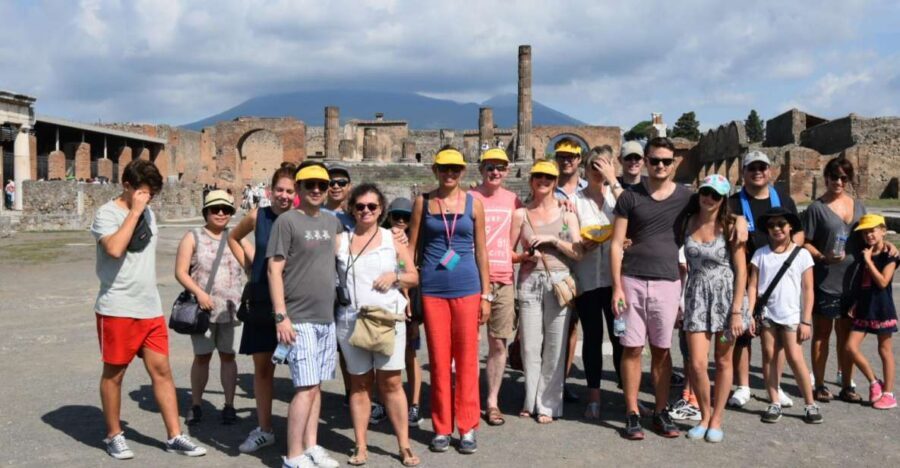
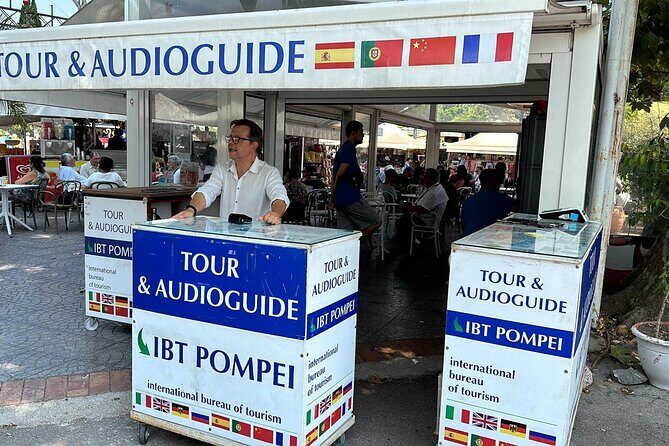
You meet the guide outside the entrance of Fortuna Village Pompei, and the guide holds a sign with the company name. That’s simple on paper. In real life, Pompeii area logistics can get messy: timing, crowds, and people trying to find each other.
Here’s how to keep it smooth: arrive a little early, stand by the entrance, and double-check the sign. If you’re the type to show up right on the minute, this is the one moment where a few extra minutes can save you a lot of stress.
Also note there’s no pick-up or drop-off included. You’re responsible for getting to the start point.
Skip-the-Line Pompeii Entry: Why It’s Worth the Extra Planning
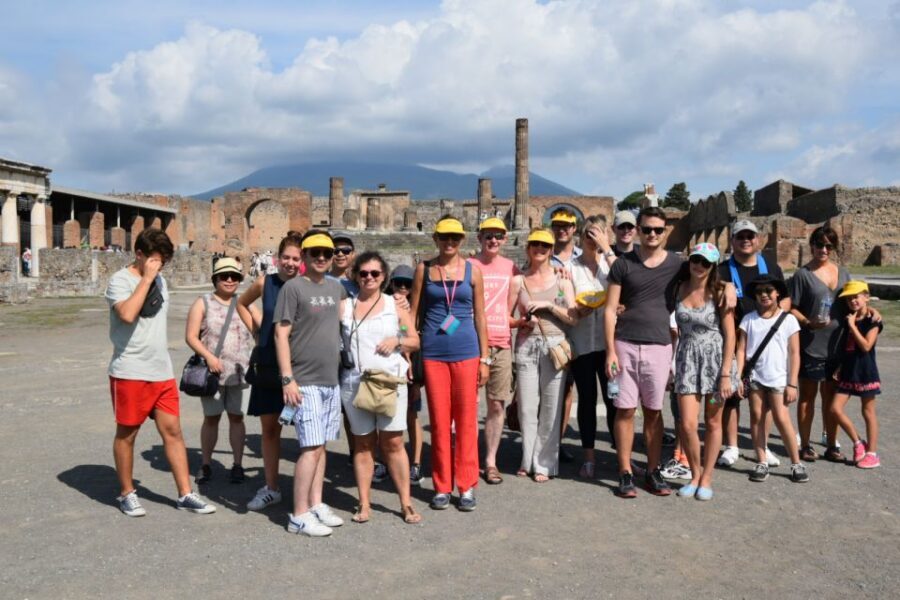
A skip-the-line ticket isn’t just a convenience. At Pompeii, it’s time you can spend walking instead of standing. This tour includes Pompeii skip-the-line entrance, which means you spend your energy on the ruins rather than the queue.
That can be especially valuable if you’re only doing Pompeii once on your trip. You’ll want that time for the guided route that hits the Forum area, baths, houses, temples, and everyday business spaces.
The Cameo Workshop Stop: A Hands-On Break Before the Ruins
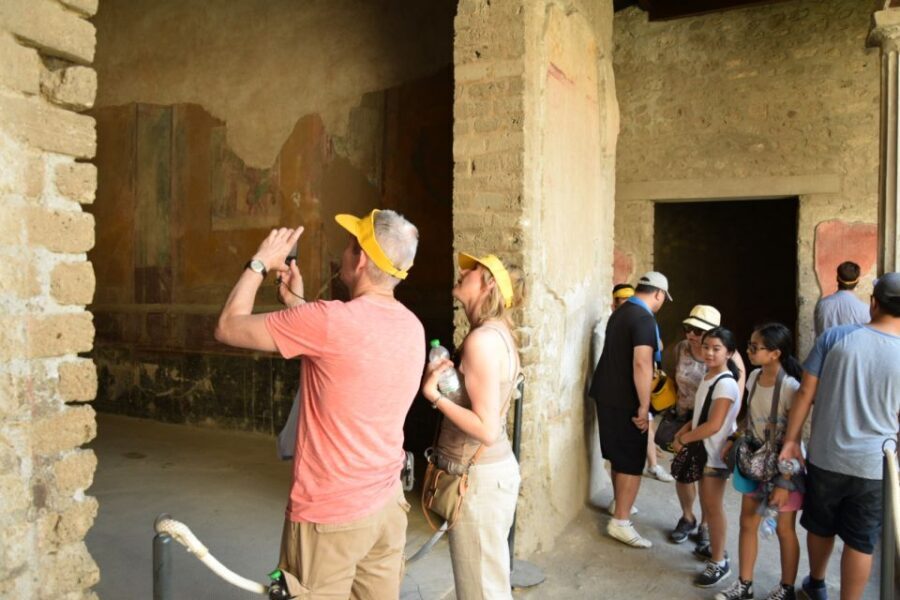
Before you go deeper into the ancient city, you get a brief stop at a traditional cameo workshop. You’ll watch artisans carve delicate shell pieces by hand, then you’ll have access to a shop.
I actually like this part because it changes your mental gear. After hours of stone signage and footpaths, it’s refreshing to see a real craft process. It also gives you an easy conversation starter while you’re in Pompeii: people in the Roman world weren’t just building and worshiping. They were trading, making, and owning things that could be carried, gifted, and displayed.
You also get a restroom break here. That’s not glamorous, but it’s the kind of detail that keeps the rest of your tour enjoyable.
First Stops: Theaters, Small Stages, and Food Stalls
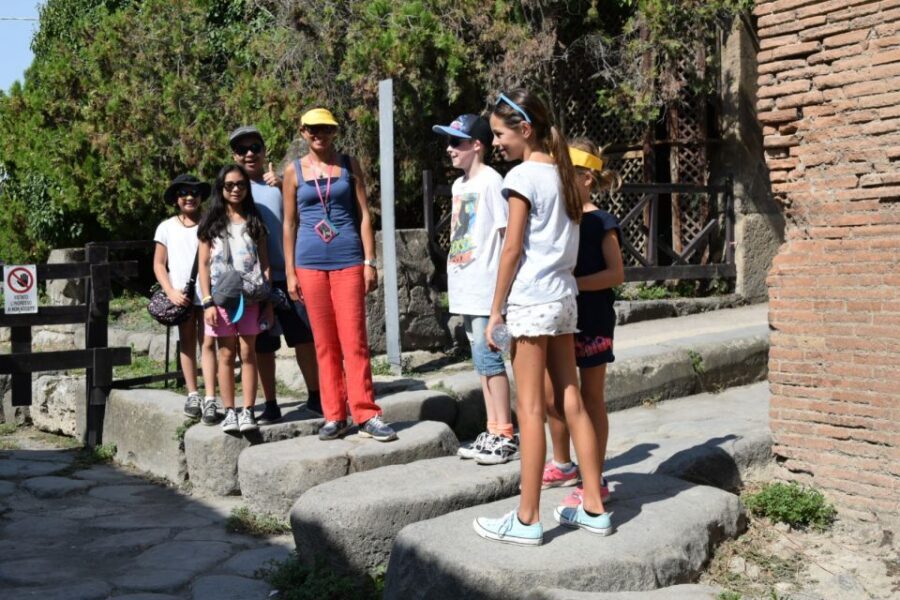
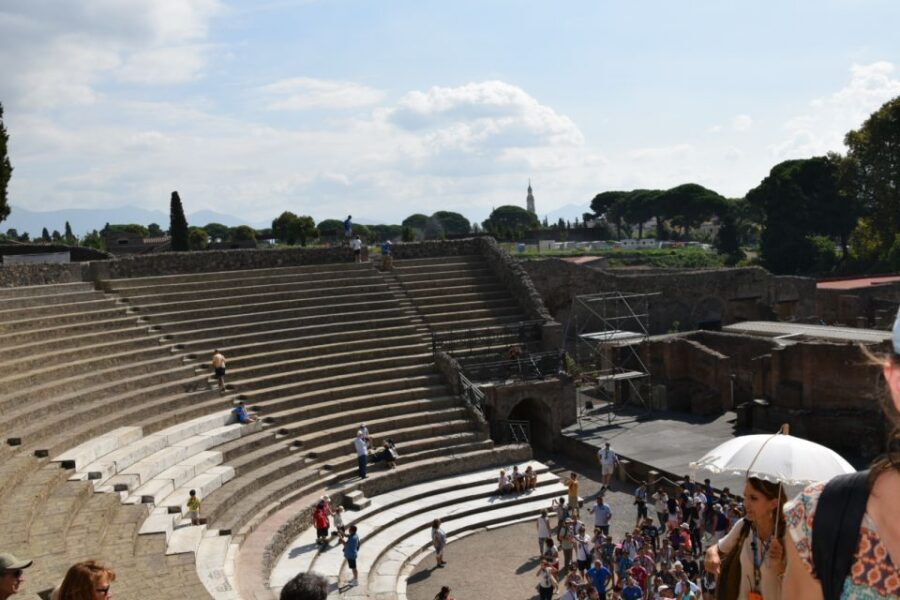
Once you’re inside, you start with a few quick, high-impact points. The route includes a visit to the Large Theatre and then a photo stop at the Teatro Piccolo. Even if you’re not a theater person, Pompeii’s performance spaces show you how social life worked. Romans didn’t just go out to eat; they gathered, watched, and used public spaces to feel connected.
Next comes the thermopolium, which is basically a Roman snack-and-drink counter. It’s the kind of stop that helps you see that Pompeii wasn’t only temples and mansions. People ate quickly, drank, and stopped by during the day like many cities today.
The value of these early stops is momentum. You get oriented fast—where public life happened, where people came together, and what “everyday” looked like.
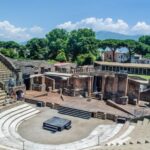
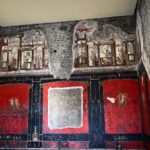

Foro Civile di Pompeii: Where Public Life Reads Like a Script
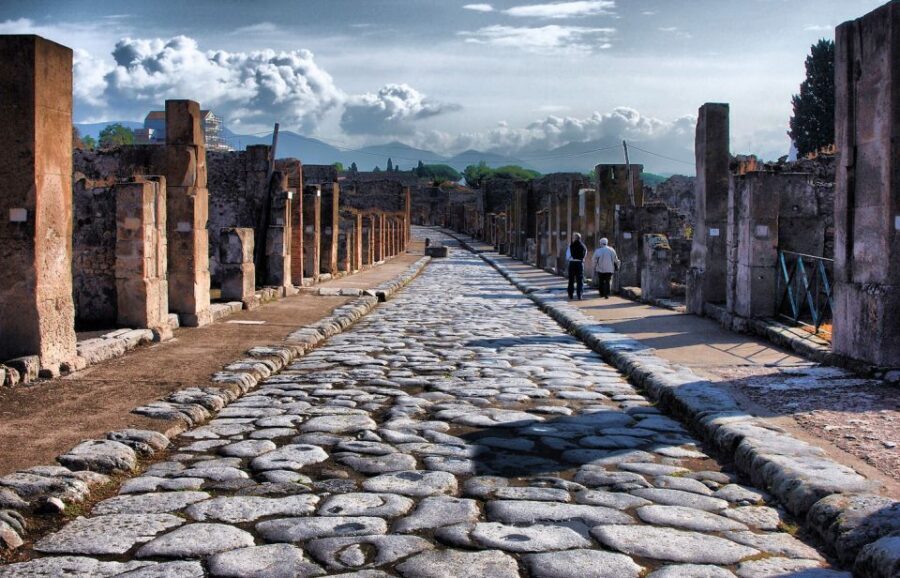
The tour then moves into the heart of civic action with time at the Forum area (listed as Foro Civile di Pompeii) and continues into a bath stop near the Forum baths.
The Forum is where Pompeii stops being a set of pretty ruins and starts being a functioning city layout. You’ll see the kinds of spaces where announcements mattered, people gathered, and status showed. Even in stone-and-ash form, the Forum area tells you what the Romans cared about: order, public identity, and community life.
Then you’ll hit the Forum Baths. Bathing in Roman culture wasn’t just hygiene. It was social time—an everyday ritual where you could talk, relax, and handle business in a relaxed setting. Seeing that in context helps you understand why Pompeii feels personal. It wasn’t built for tourists; it was built for routines.
The Houses You Actually Learn From: Vettii and Menander
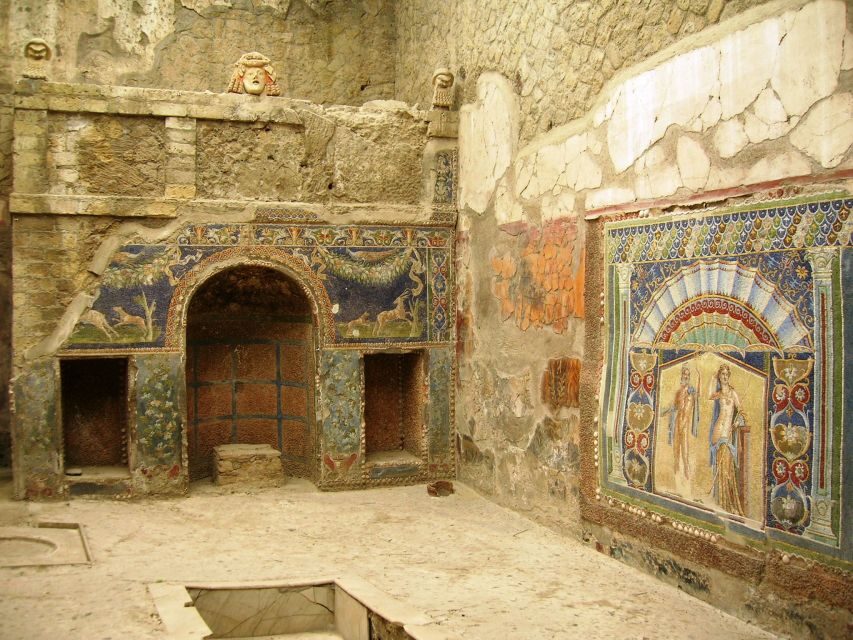
This tour includes two standout residential visits: the House of the Vettii and the House of Menander, each around 20 minutes.
A villa stop can go two ways: either you get a quick glance at rooms, or you get a real reading of what the house shows. The strength here is that the guide is an archaeologist, so you don’t just look—you understand.
In the House of the Vettii, you’re in a space that reflects wealth, taste, and how people wanted to be seen. The House of Menander is similarly valuable because it helps you see that Pompeii’s homes had function and social meaning, not just decoration.
If you’ve ever wondered why Roman houses feel so theatrical, this is where the answer starts to make sense. You see the layout and how people moved through it, and you realize that daily life was designed—like a set—around social experience.
Market and Shops: Macellum and the Commercial City
The route also includes the Macellum of Pompeii, plus earlier stops that point toward commerce and street life, including a brief look at shops/market areas and preserved spaces such as brothels.
The Macellum matters because it’s one of the places where you can almost imagine the noise: the trading, the quick conversations, the everyday purchases that kept the city running. Even though Pompeii is frozen in time, market spaces are where you can feel the city’s pulse.
What I like about including market-like stops in a short tour is this: it keeps Pompeii from becoming only a collection of religious and residential highlights. You get a better full picture of how a city survived day to day.
Temples in Photo Stops and Short Visits: Jupiter and Apollo
You’ll see the Temple of Jupiter with a photo stop and the Temple of Apollo with a brief visit.
Temple time in a two-hour tour is tight, so don’t expect a long, slow “sit and read every panel” experience. But short temple moments still work well when you have a guide who can explain what makes the spot significant. You get a mental map of Pompeii’s spiritual and civic priorities without spending your whole visit in one corner.
This is also where the tour’s structure helps. You’re not just collecting images; you’re assembling an understanding of what Pompeii valued across public life, private life, and faith.
Vesuvius Victim Casts: The Emotional Turn That Changes Everything
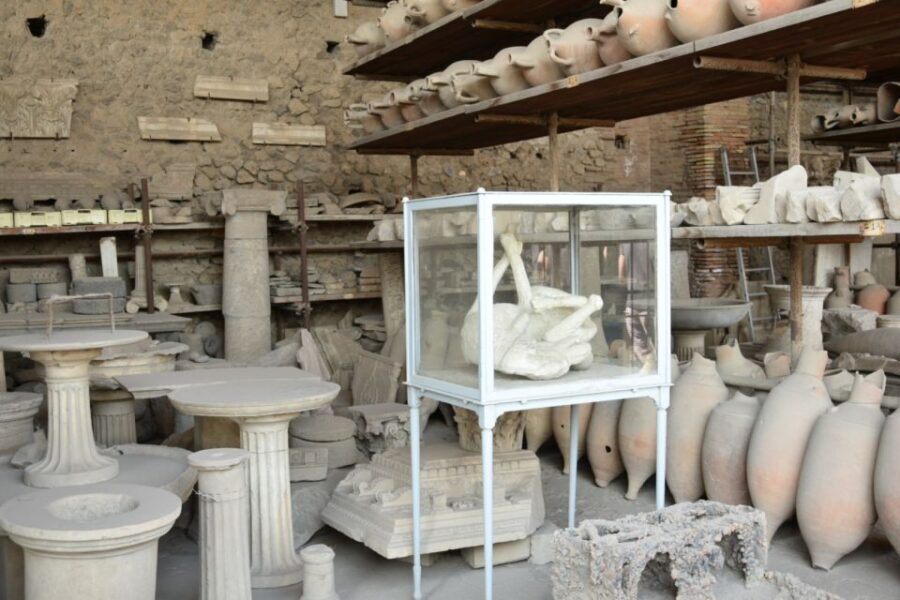
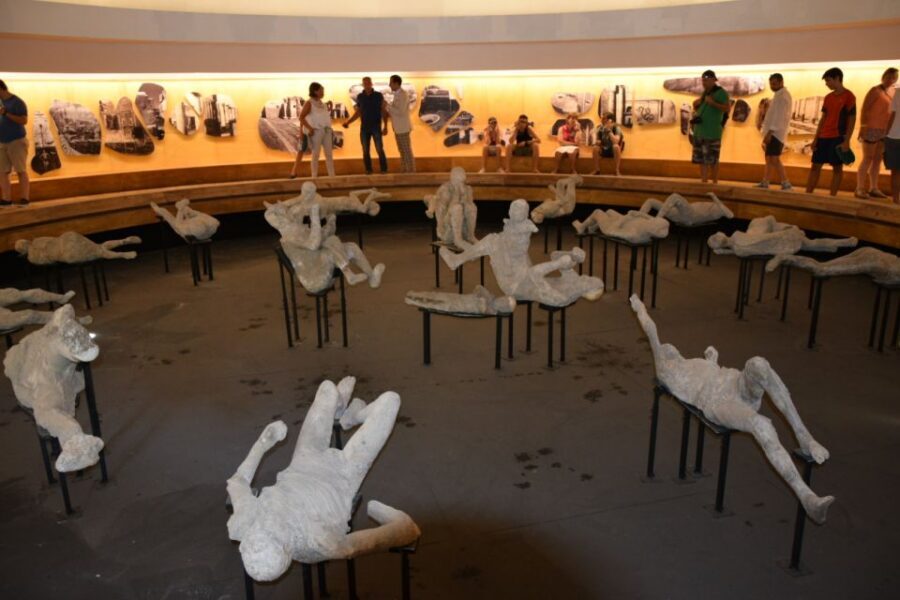
One of the most poignant elements of this experience is seeing the plaster casts of the victims from Vesuvius’ eruption in 79 AD.
This is the part of Pompeii that can hit hardest. The ruins already feel tragic, but the casts bring it down to bodies and moments. It shifts the ruins from scenery to evidence. You start noticing how small details—footprints, objects, and the arrangement of daily life—become deeply personal.
If you’re worried this will feel too heavy for a short tour, you’re not wrong to think about it. Still, this moment is exactly why a guided visit can be worth it: the guide’s context helps you face the material without getting lost in shock.
Group Size, Guides, and the Headset Question
This tour is set up for a small group, and there’s support for multiple languages: English, Italian, Spanish, and French. There’s also a rule of thumb depending on group minimums: if the minimum group count isn’t met, you may get an audio guide instead of the full guide.
A few reviews mention ear pieces that were uncomfortable or hard to use, and one comment suggested there may not always be headsets. I can’t promise what you’ll personally receive, but you can plan like this: if you know you’re sensitive about ear fit, bring a willingness to ask where to stand for hearing, and don’t count on perfect audio. The guide’s body position matters in open ruins where sound carries weirdly.
Guide quality is generally a highlight, and two names came up in feedback: Michael was praised for clear, understandable explanations, while Analisa was mentioned as a strong guide who kept things moving despite travel delays. Since guide assignments can vary, your best move is to treat the first few minutes as a “find your angle” moment—get close enough to hear, then let the guide’s explanations do their job.
What This Tour Does Well (and What It Won’t)
I think the best part of this experience is that it gives you a guided understanding of Pompeii’s major categories: public spaces, daily commerce, homes, and spiritual sites. That keeps Pompeii from turning into a photo scavenger hunt.
It also includes a thoughtful craft stop before the ruins, which gives you a sensory change and helps the day feel more rounded than just walking through stone.
On the downside, it’s a short format. Some people end up feeling like they only scratched the surface because Pompeii is so big and because a two-hour route can’t cover everything. If Pompeii is your one big stop in the region, plan a bit of extra time afterward so you can roam at your own pace.
Who Should Book This Pompeii Tour?
Book this if:
- You want Pompeii in a guided, organized format without spending hours planning your own route
- You value archaeologist-level explanations to help you interpret what you’re seeing
- You want a tour that mixes big sights with daily life details (markets, baths, houses, everyday spaces)
- You’d rather spend time walking than waiting in line
Skip it or add time elsewhere if:
- You’re the kind of visitor who wants to linger everywhere and read every inscription
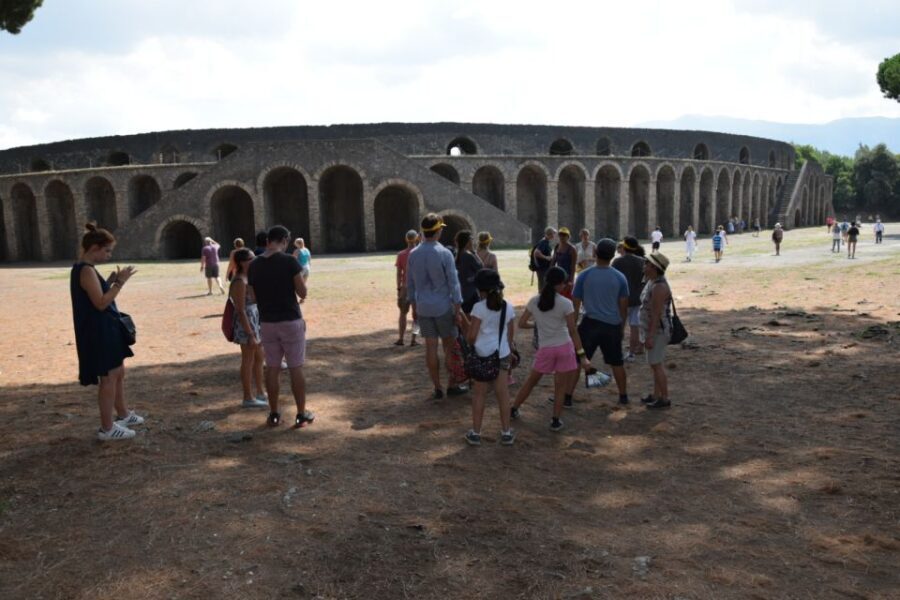
- You also want less-touristy corners like the amphitheater area as part of the guided portion
Should You Book This Tour?
Yes, with one smart condition: arrive early, find the guide sign quickly, and wear shoes that can handle uneven stone without drama. If you do that, you’ll get excellent value for your money because you’re paying for three things at once: guided archaeology context, skip-the-line entry, and a cameo workshop break that makes the day feel less rushed.
At about $31 per person for a 2-hour experience, it’s a solid way to start Pompeii—especially if it’s your only guided stop. If you can, consider building in extra free time after the tour so you can return to the places that hooked you the most. Pompeii rewards repeat visits, and your second pass will be so much better once you’ve got the basics from the guide.
FAQ
How long is the Pompeii tour?
The guided portion inside the ruins lasts about 2 hours.
Where do I meet the guide?
Meet outside the entrance of Fortuna Village Pompei. The guide holds a sign with the company name.
What’s included in the price?
The tour includes Pompeii skip-the-line entrance, a licensed archaeologist guide, and the cameo factory and shop visit (plus the meeting point in Pompeii).
Is Pompeii admission included, or do I need to buy a separate ticket?
This experience includes skip-the-line entrance to Pompeii. You’ll still want to check local rules for special free-admission dates, but admission for this tour is covered as part of the offering.
Are there any days when Pompeii is free?
Admission to the archaeological site is free on the first Sunday of each month. Tickets can’t be reserved ahead of time, so entry isn’t guaranteed.
What language options are available?
The live tour guide is available in English, Italian, Spanish, and French.
What items are not allowed?
Pets, luggage or large bags, drones, walking sticks, and unaccompanied minors are not allowed.