REVIEW · POMPEI CAMPANIA
Pompeii: Skip-the-Line Ticket with Audio Guide and Map
Book on GetYourGuide →Operated by Around Vesuvio · Bookable on GetYourGuide
Pompeii hits different when you can set your own pace. This skip-the-line ticket plus an audio guide and map lets you plan your day inside the ancient city between 9:00 am and 3:00 pm. I like that you’re not stuck waiting in a queue, and I like that the audio helps you connect the dots as you move from streets to major sights.
The main thing to watch is the audio-gadget requirement: you need a valid ID to rent the Audioguide. Also, if your audio experience depends on downloading anything, Pompeii’s internet can be unreliable—so plan for an offline-friendly setup.
In This Review
- Key Takeaways Before You Go
- Skip-the-Line Entry and Your Flexible 9:00–15:00 Window
- Meeting Point Outside Pasticceria De Vivo (and How to Find Your Team)
- How the Audio Guide Works (Languages, ID Rental, and Offline Reality)
- Using the Map to Actually Navigate Ancient Pompeii
- The Big Sights: Amphitheater and Victims’ Casts You Can’t Ignore
- The amphitheater
- The casts of the victims
- The broader sweep
- Frescoed Houses, Thermopolium, Temples, and Shops: Daily Life Under the Ash
- Spas, Theaters, and Brothels: How Roman Social Life Shows Up in Stone
- Spas
- Theaters
- Brothels
- Stamina, Shoes, and Bag Rules: What Can Trip Up Your Day
- Price and Value: Is $44 Worth It for Skip-Line Plus Audio?
- Should You Book This Pompeii Skip-the-Line Ticket with Audio and Map?
- FAQ
- What’s included in the ticket?
- How long do I have to visit Pompeii?
- What are the entry hours?
- Where is the meeting point?
- Do I need an ID for the audio guide?
- What languages is the audio guide available in?
- What languages can the instructor speak?
- Is there anything I can’t bring?
- Is it refundable if I change plans?
- Who should avoid this experience?
Key Takeaways Before You Go
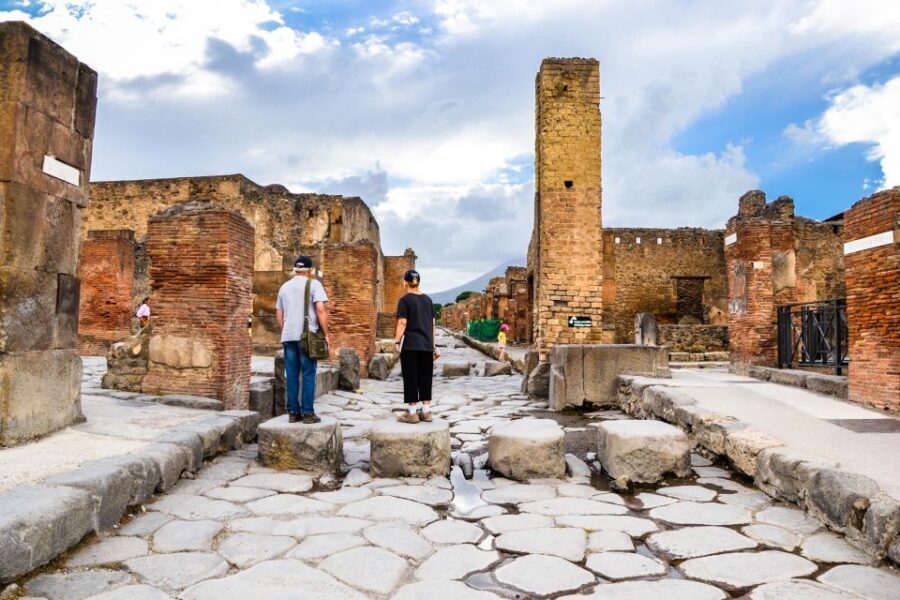
- Skip-the-line entry: fewer delays, more time on Pompeii’s main streets
- Audio guide included: interpret the eruption and everyday life as you walk
- Updated map in your package: helps you navigate without looping in circles
- You choose your start time (9:00–3:00): perfect for avoiding peak crush
- Don’t bring big luggage: oversize bags aren’t allowed inside
- ID required for the Audioguide rental: leave nothing behind at home
Skip-the-Line Entry and Your Flexible 9:00–15:00 Window
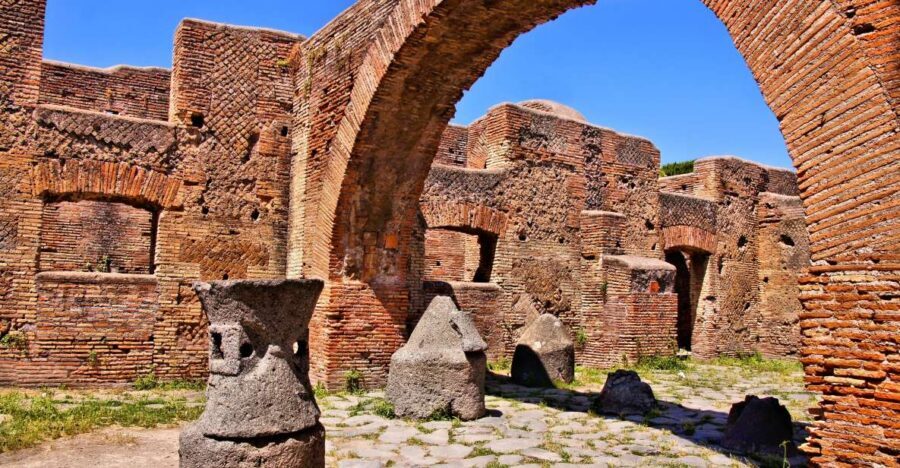
This is a 1-day experience that’s built for freedom. You can enter the Pompeii site any time from 9:00 am to 3:00 pm, which matters more than it sounds. In practice, the earlier you go, the easier it is to slow down and actually look at details—stone steps, worn thresholds, shopfront layouts, and the way streets channel foot traffic.
With a skip-the-line ticket, you’re not burning half your day just to get through the gate. That’s a big quality-of-life upgrade in a place that can feel like a checklist if you’re rushed. You’ll still need a plan, but it won’t be forced on you by a rigid group schedule.
If you want the best chance of a calmer visit, treat 9:00 am as your target entry time. Even if you arrive later, the self-paced format means you can choose quieter stretches for your slower stops like the frescoed interiors and the areas focused on the eruption victims.
If you're still narrowing it down, here are other tours in Pompei Campania we've reviewed.



Meeting Point Outside Pasticceria De Vivo (and How to Find Your Team)

You meet the team outside their office next to Pasticceria De Vivo. They’re usually wearing blue and yellow jackets, so you shouldn’t be guessing for long.
Why this matters: Pompeii days often start with trains, buses, and taxis, and that first “where do I go?” moment can get stressful. If you’re relying on public transit, leave a little buffer—some visitors note a walk of around 20 minutes from the train station to the meeting area, depending on where you’re coming from.
Once you’re at the meeting spot, expect a quick handoff that sets you up with the ticket and audio plan. After that, it’s mostly on you: follow the map, start your audio guide, and start walking.
How the Audio Guide Works (Languages, ID Rental, and Offline Reality)
The audio guide is a core part of the value here, not a bonus. It’s included, and it’s offered in many languages, including English, Italian, French, German, Hebrew, Russian, Chinese, Portuguese, and Spanish.
Here’s the key practical rule: you need a valid ID document to rent the Audioguide. That’s not a suggestion—it’s a must. Bring your passport or another valid ID, and make sure it’s accessible when you arrive. If you forget it, your audio device rental can become a problem, and you lose one of the biggest advantages of this experience.
One more practical note from real-world experience in Pompeii: internet connectivity can be unpredictable. If any part of your audio workflow depends on downloading content on the spot, plan for the possibility that it won’t be smooth. The safest mindset is to assume you’ll be using the device content without relying heavily on a mobile data connection.
Also, don’t expect the audio to be perfect in every moment. It’s still a self-paced tool: sometimes the walk pace will outrun narration, and sometimes you’ll be standing where sound is less clear. The audio guide works best when you treat it like a companion, not a soundtrack that must play continuously.
Using the Map to Actually Navigate Ancient Pompeii
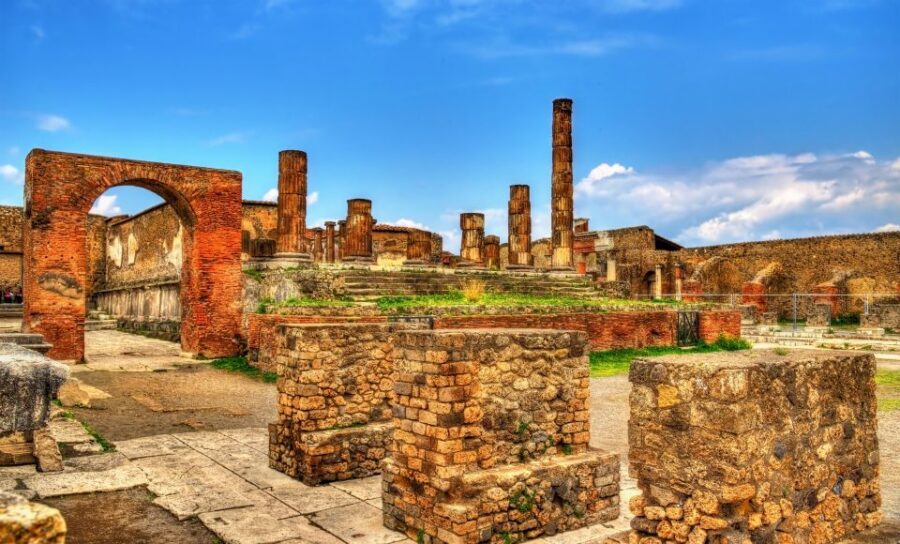
Pompeii is famous, which is great. It also means it’s easy to get turned around if you only rely on instincts. That’s why this ticket includes an updated map.
Here’s how I’d use it if you want your day to feel organized without turning into a rush:
- Pick 1–2 “anchor sights” you really want (like the amphitheater and the casts).
- Use the map to connect nearby streets and buildings.
- Treat everything else as optional “good surprises.”
That approach prevents the classic Pompeii problem: spending 45 minutes wondering where you are, then arriving at the big ticket items too tired to enjoy them.
The self-paced format is the point. The map keeps the freedom from becoming aimless wandering.
The Big Sights: Amphitheater and Victims’ Casts You Can’t Ignore

Even with a casual, walk-anywhere plan, Pompeii has a few stops that change how you understand the whole place.





The amphitheater
You’re getting access to one of the best-preserved Roman amphitheaters. Pompeii’s theater experience is especially meaningful because it shows public life in a way museums can’t fully replicate. You get the shape of the venue, the seating layout, and the scale of gatherings.
This is a good place to slow down. Look at the stonework and seating structure before your audio narration moves you along. If you’re into how cities worked day-to-day, the amphitheater is where that social rhythm becomes visible.
The casts of the victims
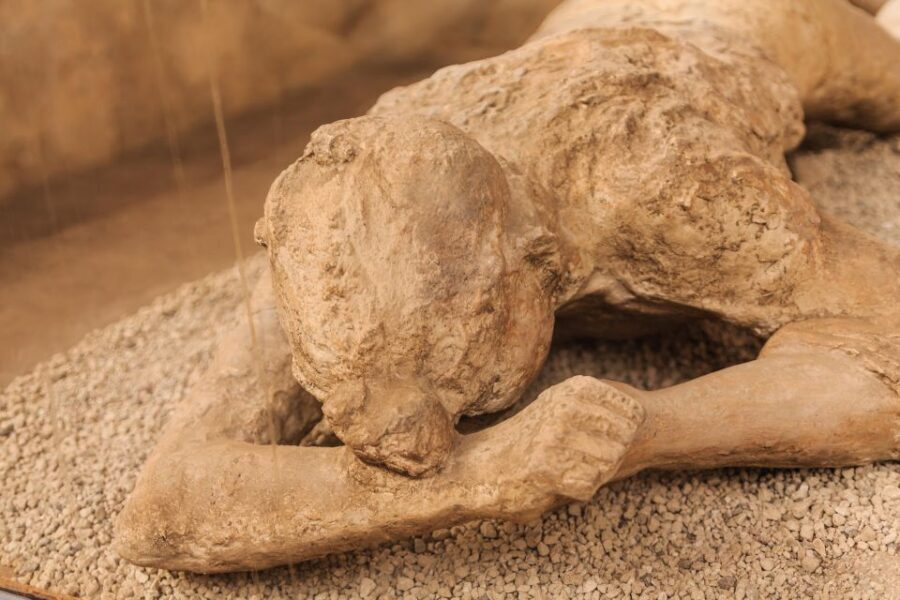
You’ll also see the casts of the victims from the eruption. This area carries emotional weight. The audio guide helps put the scene into context, so you’re not just looking at figures—you’re understanding what happened and why these preserved forms matter.
Practical tip: give yourself a few extra quiet minutes here. The rest of Pompeii is walk, look, move. This stop benefits from a slower pace so your brain catches up with what your eyes are seeing.
The broader sweep
Beyond those anchor sights, the city is filled with details that make the entire route feel connected: street corners, doorway thresholds, and recurring signs of commercial life. The audio helps you connect those dots so it doesn’t feel like a pile of unrelated ruins.
Frescoed Houses, Thermopolium, Temples, and Shops: Daily Life Under the Ash

One of the best reasons to do Pompeii with audio and a map is that the site isn’t only monuments. It’s homes, workplaces, and hangouts—built for real people.
You’ll pass frescoed houses, where wall decoration gives clues about status and taste. Even without going inside every space, you’ll see how common rooms were arranged and how decoration framed everyday life.
You’ll also see places tied to food and local business, including shops and a thermopolium (a type of Roman fast-food setup). That’s one of those details that changes your mental picture of Pompeii. You stop imagining it as only a historic stage set and start picturing meals, routines, and quick stop-and-go commerce.
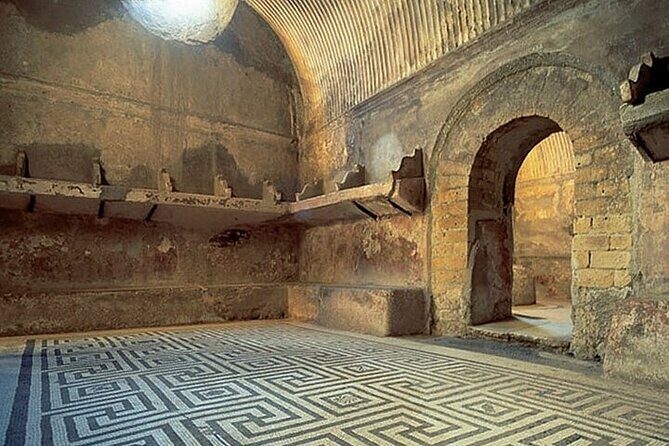
Then there are temples—structures that help you understand the civic and religious texture of the city. And there are spas, which point to leisure and social mingling. These aren’t just pretty stones. They show what people did when they weren’t working.
If you want your visit to feel cohesive, use the audio guide as your “connective tissue.” When it transitions from a house to a shop to a public space, you’re building a sense of flow: how people moved, ate, worshipped, shopped, and relaxed.
Spas, Theaters, and Brothels: How Roman Social Life Shows Up in Stone

Pompeii can feel intense because it doesn’t censor real life. This experience includes stops connected to spas, theaters, and brothels, plus other public and semi-public spaces.
Spas
The spas are a window into routine. Even if you don’t know the technicalities of Roman bathing, you’ll likely notice the layout and the way bathing was part of social behavior, not just hygiene.
Theaters
You’ll visit theaters, which pair well with the amphitheater experience. Together they help you see how entertainment was organized at different levels—public events and performance spaces.
Brothels
The mention of brothels signals that Pompeii shows the whole city experience, including the commerce and services tied to desire and money. The audio guide helps you avoid guessing and instead understand the physical layout and what it suggests about the era’s social world.
If you’re visiting with kids or teens, this is where your comfort level comes into play. The tour data doesn’t provide extra filtering here, so check your own boundaries before you choose this experience.
Stamina, Shoes, and Bag Rules: What Can Trip Up Your Day
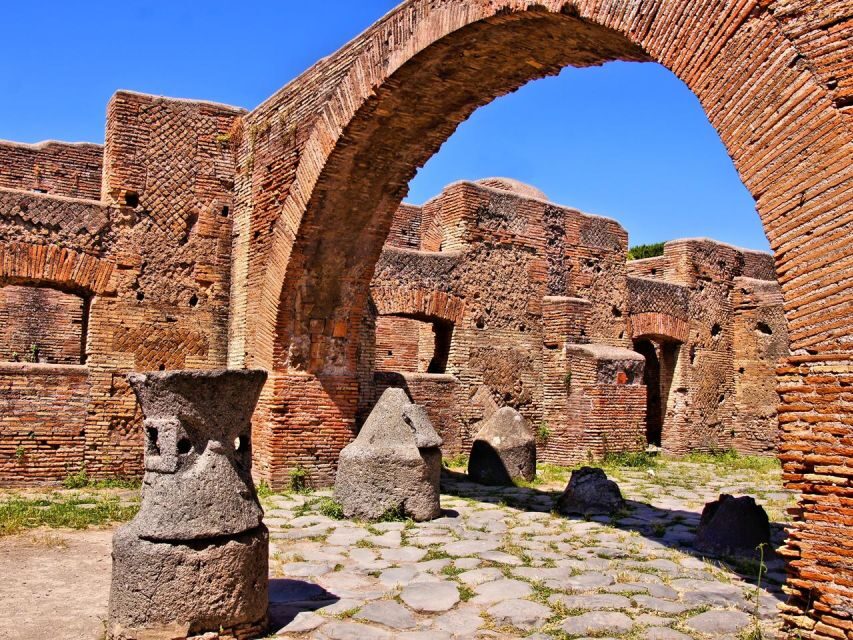
Pompeii is walk-forward sightseeing. Even with skip-the-line access, you still need to plan for time on your feet.
Bring comfortable shoes and comfortable clothes. That sounds basic, but it’s genuinely the difference between a day you enjoy and a day that feels like punishment. Pompeii’s surfaces are uneven in places, and you’ll be moving constantly between sites.
Bag rules are also important. Oversize luggage and large bags aren’t allowed, so travel light. If you’re used to dragging a roller suitcase around Italy, adjust your approach for Pompeii. A smaller daypack is your friend.
Also note the experience is not suitable for people with mobility impairments, and it’s listed as not suitable for people with heart problems and altitude sickness. Pompeii may not be high-altitude, but the site does involve walking and exertion, so the warning is worth taking seriously.
Price and Value: Is $44 Worth It for Skip-Line Plus Audio?
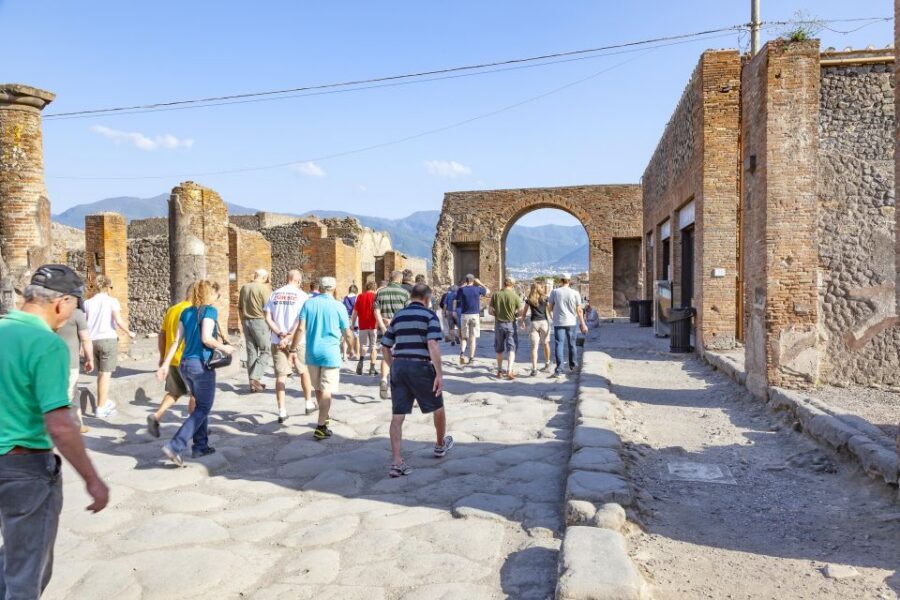
At about $44 per person, you’re paying for three concrete things:
- a Pompeii skip-the-line ticket
- an audio guide
- a map to help you navigate
The ticket portion is listed as €20, which helps explain where the money goes. The rest of the value is the audio layer and the convenience of not waiting in the entry line.
Here’s how I’d judge value for your situation:
- If you hate lines and want to start exploring fast, the skip-the-line piece is worth it by itself.
- If you want context while you’re walking (eruption story, how buildings functioned, what you’re looking at), the audio guide is a big part of the value.
- If you’re an independent traveler who already has a great free guide app and a map you trust, you might spend less elsewhere. But you’d still lose the convenience of the bundled audio plan.
For most people, the best value comes from using the audio guide actively—listening while you stop at the amphitheater, the casts, and the daily-life zones like shops and thermopolium.
Should You Book This Pompeii Skip-the-Line Ticket with Audio and Map?
If you’re deciding between doing Pompeii on your own versus buying a bundle, I’d lean toward booking this if you want structure without a rigid schedule. You get entry flexibility between 9:00 am and 3:00 pm, plus practical navigation tools.
Book it if:
- you want skip-the-line time savings
- you like self-paced travel with an audio companion
- you plan to visit key sites like the amphitheater and victims’ casts
- you’re the type of traveler who enjoys learning what you’re seeing, not just photographing it
Skip it (or at least reconsider) if:
- you’re worried about handling an Audioguide ID rental and don’t want to deal with that requirement
- you prefer to rely entirely on your own phone for info, especially if your comfort with unpredictable connectivity is low
- you need accessibility accommodations not supported by this format
If you do book, go early when you can, pack light, and treat the audio as your guide—not your boss. That balance is what makes Pompeii feel real.
FAQ
What’s included in the ticket?
You get a Pompeii skip-the-line ticket, an audio guide, and an updated map.
How long do I have to visit Pompeii?
This is a 1-day ticket.
What are the entry hours?
You can enter any time between 9:00 am and 3:00 pm.
Where is the meeting point?
Meet outside the office next to Pasticceria De Vivo. The team is usually in blue and yellow jackets.
Do I need an ID for the audio guide?
Yes. It’s important to bring a valid ID document to rent the Audioguide.
What languages is the audio guide available in?
The audio guide is available in English, Italian, French, German, Hebrew, Russian, Chinese, Portuguese, and Spanish.
What languages can the instructor speak?
The instructor is listed as English, Italian, Spanish, and French.
Is there anything I can’t bring?
Oversize luggage and large bags aren’t allowed.
Is it refundable if I change plans?
Free cancellation is available up to 24 hours in advance for a full refund.
Who should avoid this experience?
It’s listed as not suitable for people with mobility impairments, heart problems, or altitude sickness.