REVIEW · POMPEII
Pompeii Skip-the-Line Tour for Kids & Families with Archaelogist
Book on Viator →Operated by Tours of Pompeii with Lello & Co. · Bookable on Viator
Pompeii hits differently with kids in tow. This skip-the-line family tour pairs Roman archaeology with kid-friendly storytelling so the ruins feel like a living place, not a textbook. You’ll use fast-track entry and stay together as a private group, which makes the whole visit calmer and easier to manage.
I especially love how the guide turns Pompeii into a set of story stops kids can connect to—like the theaters, a richly decorated home, and the city’s daily-life streets. And because you’re not just wandering, you get context for what you’re seeing as you move through major sights like the Forum and Via dell’Abbondanza.
One consideration: it’s about 2 hours on uneven outdoor ground, and you’ll want to plan for walking and heat. If your child has a very short attention span (or you’re traveling with a stroller), you may need to pace carefully—this tour is built for families, but Pompeii is still Pompeii.
In This Review
- Key Things You’ll Notice on This Pompeii Family Tour
- Why Skip-the-Line Matters in Pompeii (Especially With Kids)
- Meeting Point, Timing, and Staying Together as a Private Group
- Teatro Piccolo and Teatro Grande: Where Roman Sound Becomes a Game
- Casa del Menandro: A Decorated Home Kids Can Understand
- The Forum and the Street of Commerce: Markets, Movement, and Meaning
- Stabian Baths (Terme Stabiane): Roman Hygiene That Feels Surprisingly Modern
- Teatro Grande: The Big Stage and Why It’s Not Just Another Theater Stop
- Casa del Menandro and Daily Streets in One Strong 2-Hour Package
- Price and Value: What You’re Paying For at $107.63 Per Person
- Who This Tour Fits Best (And Who Might Want Another Option)
- Guides Matter: The Storytelling Style You Can Expect
- Should You Book This Pompeii Skip-the-Line Family Tour?
- FAQ
- How long is the Pompeii skip-the-line family tour?
- Where does the tour start and end?
- Is this tour offered in English?
- Is skip-the-line entry included?
- Do you get admission tickets for the stops?
- What sites does the itinerary include?
- Is this tour private?
- Is transportation included?
- How much walking is involved?
- When should I book?
- Is there free cancellation?
Key Things You’ll Notice on This Pompeii Family Tour
- Skip-the-line entry with fast-track tickets included, so you’re not stuck at the worst pinch points.
- Kid-targeted archaeologist-style guide who adapts the pace and focus for children’s ages and interests.
- Acoustic theater moments at both Teatro Piccolo and Teatro Grande—sound and space are part of the fun.
- Casa del Menandro and decorated home life, so kids can picture what daily life looked like.
- Daily-life highlights like the Forum area, Stabian Baths, and Via dell’Abbondanza rather than random corners.
- Engagement tools like games and team challenges that help kids stay with it in the heat.
Why Skip-the-Line Matters in Pompeii (Especially With Kids)
Pompeii’s beauty is also its problem: it’s a popular place, and the entry bottleneck can eat up real energy. This tour deals with that immediately by pairing your group with skip-the-line entrance tickets. That matters when you’ve got kids who are hungry, tired, or just plain wired from the wait.
The other big win is that you’re not doing Pompeii the hard way—standing around while everyone tries to figure out where to go next. A guide keeps you moving through the right sections in the right order, so the ruins don’t blur together. When I look at Pompeii family tours, I focus on whether they help you see things, not just visit them.
Here, your tour is designed for families. The guide is described as kid-friendly and archaeologist-led, and the experience is private, so it’s tailored rather than generic. If you’re traveling with children ranging from younger kids up through early teens, this kind of structure often makes the difference between kids “tagging along” and kids actually asking questions.
Other skip-the-line Pompeii tours in Pompeii

Meeting Point, Timing, and Staying Together as a Private Group
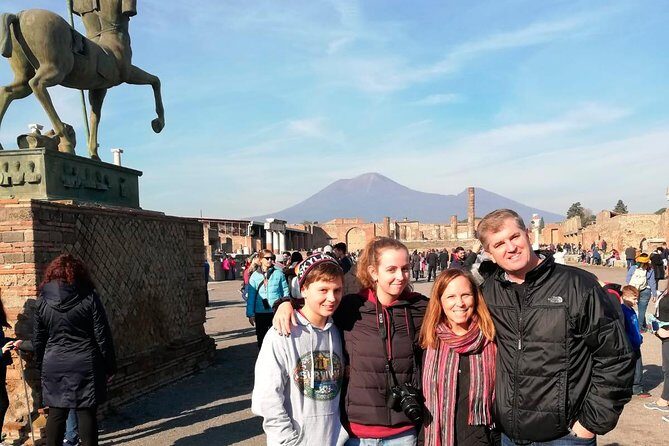
This experience starts at Hotel VittoriaPiazza Esedra, Pompei, and it ends back at the same meeting point. That round-trip setup is useful with children because you’re not scrambling for a new meetup later.
The tour lasts about 2 hours (approx.), and the provider notes that it’s private—meaning only your group participates. In plain terms: no headphones, no herd. For families, that’s huge. It also helps the guide manage pacing, which is often the difference between a fun outing and a meltdown.
One more timing tip: Pompeii is very weather- and crowd-dependent. Some families find that choosing an earlier time slot helps you beat the worst heat and larger groups. You don’t have to do this, but it’s a smart way to make your “kid attention window” last longer.
Teatro Piccolo and Teatro Grande: Where Roman Sound Becomes a Game
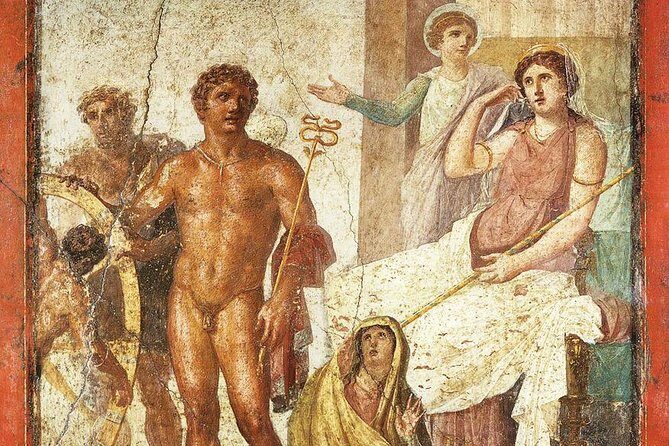
You start with a guided walk that centers on Pompeii’s performance spaces. The tour plan includes the Teatro Piccolo and later the Teatro Grande, and the guide focuses on what makes these theaters special—especially the acoustic effect.
For kids, the best part isn’t just seeing a Roman theater. It’s learning that the design is tied to how people could hear each other. When your guide points out where sound travels (and you understand why it matters), the ruins stop being “old rocks” and start being technology built for real human interaction.
Teatro Piccolo is handled as an auditory stop—your guide aims to let you experience the acoustic perfection. Then Teatro Grande returns to the same idea from a larger stage. If you’ve got a child who loves sound, performance, or “try-it-yourself” moments, this is one of the most naturally engaging portions of the itinerary.
Potential drawback: theaters are still outdoor spaces, so if the day is sunny, you’ll want hats and water. The upside is that theaters are often easier to structure for listening than some cramped museum rooms.
Casa del Menandro: A Decorated Home Kids Can Understand
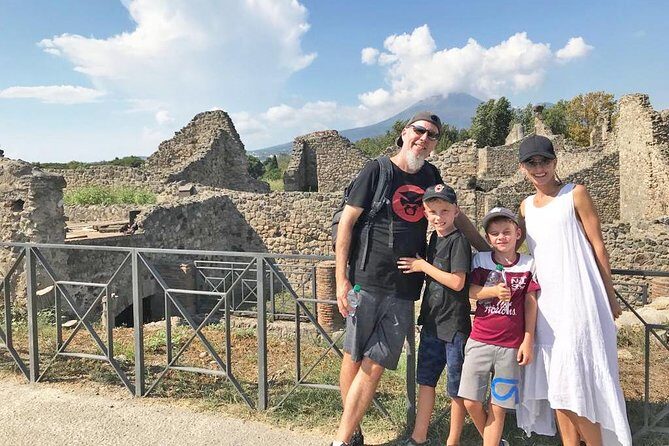
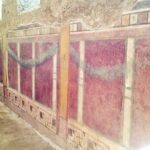
Next comes the Casa del Menandro, a house known for the richness of its decorations. This stop is where the tour shifts from monuments to everyday life—how people lived, not just how Romans built.
What makes this one a family favorite is that the guide can turn a house into a story. A decorated home has visual clues you can actually point at: patterns, surfaces, and details that show what mattered to the people who lived there. When you connect those details to daily routines—where family time happened, how spaces were used—kids can “see” Pompeii without needing a background degree.
Some guides also use visual aids to help kids picture the past. In one family experience, the guide used an iPad with clips to help connect what kids were seeing to what was happening at the time. If your guide does something similar, it’s especially helpful for younger children who may need a modern reference point.
One thing to keep in mind: houses in Pompeii can feel like a lot in a short span. Your guide’s job is to pick out the details that matter most for your group’s ages, and the itinerary time allocation suggests you’ll get a focused visit rather than an endless walkthrough.
The Forum and the Street of Commerce: Markets, Movement, and Meaning
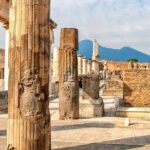
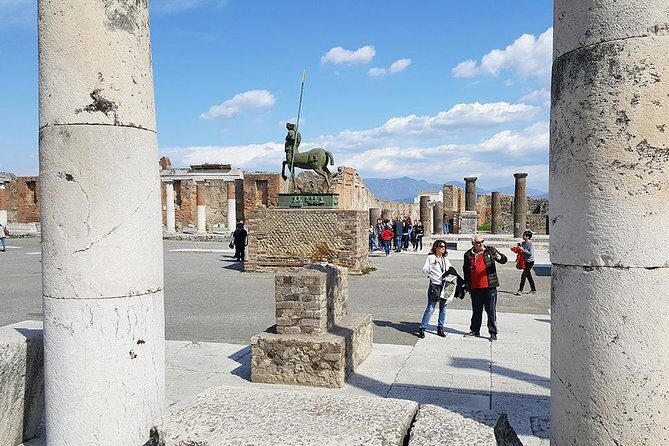
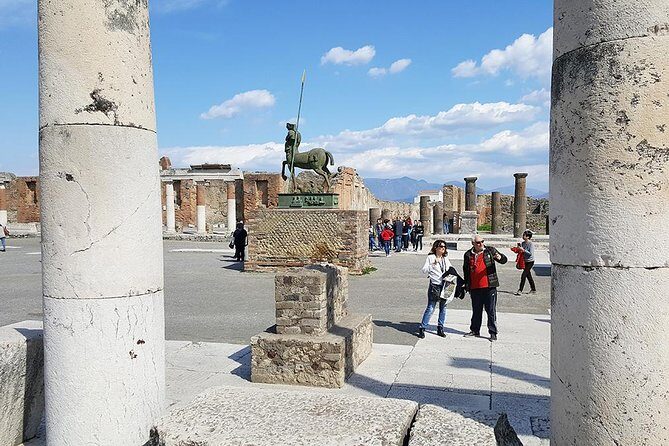
From the start, your route includes Pompeii’s principal commercial street and the Forum, described with markets in mind. This is a smart strategy because the Forum area anchors the city’s “public life.” It’s the kind of scene where kids can grasp that lots of people gathered for shared space—trading, news, and everyday social life.
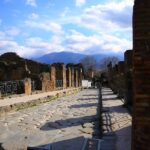
The tour later returns to this idea through Via dell’Abbondanza, the main shopping street. Walking this corridor with a guide helps kids understand that Pompeii wasn’t just a set of buildings. It was a place where movement mattered: people going to buy things, people going to meet, people going about their days.
This is where you’ll feel the benefit of a guided plan versus DIY touring. On your own, you might stand in the wrong place and miss the “why” behind what you’re seeing. With a guide, even a short stop becomes a mini lesson: what this area is, who would have used it, and what the layout tells you.
Possible drawback: some parts of Pompeii involve more walking between points than you might expect from a 2-hour tour. It’s manageable for many families, but if you’re traveling with very young kids, plan for a steady pace.
Other archaeologist-led tours in Pompeii





Stabian Baths (Terme Stabiane): Roman Hygiene That Feels Surprisingly Modern
The itinerary also includes the Stabian Baths. Baths are one of those Pompeii topics that often lands well with kids because it’s practical and human. People didn’t just live in fancy houses and theaters—they bathed, socialized, and spent time in public spaces.
A bath complex gives you lots of physical cues, too. You can usually spot how water flow, rooms, and layouts work. When a guide explains it in family terms, you get a real sense of how Romans handled everyday needs and leisure.
This stop also helps break up the tour rhythm. After theaters and a decorated home, baths feel like a natural reset. It’s still outdoor and still on stone paths, but thematically it’s different, which can make it easier for kids to stay engaged.
Teatro Grande: The Big Stage and Why It’s Not Just Another Theater Stop
You’ll circle back to the theater experience at Teatro Grande, with the tour including time to “listen” to the acoustic perfection in the theater area. This isn’t filler. It reinforces the central idea: these theaters weren’t random ruins; they were built to function.
The big-stage context can also help older kids and teens connect what they see to real Roman cultural life—public gatherings, performance, and civic identity. Even if your children are younger, the guide can keep it simple: where people stood, how voices carried, why the design mattered.
If you’ve ever tried to explain architecture to a child without visuals, you know how hard it can be. This part of the tour gives you a built-in explanation tool: sound. That makes Pompeii more experiential and less abstract.
Casa del Menandro and Daily Streets in One Strong 2-Hour Package
Pompeii can be overwhelming. Even adults get lost in the details. What I like about this tour length is that it’s short enough to keep energy up and focused enough to hit meaningful highlights.
You’re not only seeing monuments. You’re covering:
- a decorated home (Casa del Menandro),
- public gathering zones (the Forum),
- theaters with acoustic focus (Teatro Piccolo and Teatro Grande),
- daily-life infrastructure (Stabian Baths),
- and the shopping street experience (Via dell’Abbondanza).
That balance is why the tour works well for families. Kids tend to hold onto what feels concrete (houses, baths, streets), while adults often enjoy that the guide explains how these parts fit together as a city.
You also get that private-group advantage: you can ask questions without waiting for a massive group to shuffle forward. Several families highlight how guides manage to keep kids engaged with stories and structured activities, like scavenger-style challenges and team prompts.
Price and Value: What You’re Paying For at $107.63 Per Person
At $107.63 per person, this is not the cheapest way to see Pompeii. But the price makes more sense when you look at what’s included: skip-the-line entrance tickets plus a kids-friendly guide for a private family visit.
In Pompeii, time is part of the cost. Waiting can turn a fun morning into a cranky afternoon. The fast-track entry helps protect your limited family energy.
You’re also getting a guide who adapts the experience. That includes making the content readable for different ages, keeping kids from zoning out, and handling sensitive topics in a way that fits families. If you’ve ever tried to “teach yourself” Pompeii with a child, you know how quickly that becomes impossible—details get lost and you start making up stories on the fly.
Two more value notes:
- The tour is English-offered, and your tickets are handled with a mobile ticket format.
- It’s private, so you’re not paying for a generic crowd experience.
Could you do Pompeii for less? Sure. But if you want the ruins to feel alive for kids, paying for guidance and saved time often ends up cheaper than paying in tears.
Who This Tour Fits Best (And Who Might Want Another Option)
This is a great fit for families who want a structured Pompeii visit without the usual crowd pressure. It’s especially good when you have mixed ages—kids who love stories and hands-on attention, plus older children who want more context about Roman life.
It also helps if you want to avoid getting stuck in the wrong areas. The itinerary hits recognizable Pompeii landmarks in a workable time frame, and the guide’s approach is built to keep attention on track.
If you’re traveling with:
- toddlers who need lots of breaks,
- kids who can’t handle much walking on uneven surfaces,
- or anyone who strongly prefers museum-style indoor pacing,
you may find Pompeii itself challenging. The tour notes moderate physical fitness is expected. In that case, you can still consider booking—but go in with realistic pacing expectations and bring plenty of water, hats, and snacks.
Guides Matter: The Storytelling Style You Can Expect
One of the recurring themes in family experiences is the guide as a storyteller. Some guides are specifically associated with the Pompeii area and are praised for making ruins feel like scenes from real life.
You might see names like Lello, Marina, Claira, Roberta, Ines, Loretta, Daniela, Clelia, Raphaele (Lelo), and others connected with memorable family tours. Since you’re booking a kids-focused, private experience, the guide’s ability to connect with children is a core part of the value—humor, patience, and the ability to explain the same thing in different ways for different ages.
Also, expect the tour to use engagement tools. Some families describe scavenger hunts and team challenges. Even if the exact game changes by guide, the intent is consistent: keep kids actively looking rather than passively listening.
Should You Book This Pompeii Skip-the-Line Family Tour?
If your goal is to help kids actually enjoy Pompeii, I think this tour is a strong choice. The combo of skip-the-line entry, a kid-friendly guide, and a tight 2-hour route through big, meaningful sites is exactly what families need to make the day work.
Book it if:
- you’re traveling with children who need structure,
- you want skip-the-line convenience without negotiating every stop,
- you want Roman life explained in a way kids can understand.
Consider another option if:
- your group prefers very slow pacing with lots of free time,
- you’re looking for a long, deep architectural walkthrough rather than a family-focused highlights program,
- or your kids require frequent stops beyond what a 2-hour guided plan can comfortably support.
FAQ
How long is the Pompeii skip-the-line family tour?
It runs for about 2 hours (approx.).
Where does the tour start and end?
It starts at Hotel Vittoria, Piazza Esedra, 80045 Pompei NA, Italy, and ends back at the same meeting point.
Is this tour offered in English?
Yes, it’s offered in English.
Is skip-the-line entry included?
Yes. Skip-the-line entrance tickets are included.
Do you get admission tickets for the stops?
Yes. Admission tickets are included for the listed sites during the tour.
What sites does the itinerary include?
The tour includes Pompeii highlights such as Teatro Grande and Casa del Menandro, plus Stabian Baths (Terme Stabiane), and walks through areas like the Forum and Via dell’Abbondanza.
Is this tour private?
Yes. Only your group participates.
Is transportation included?
No. Private transportation is not included.
How much walking is involved?
It’s described as requiring moderate physical fitness.
When should I book?
On average, it’s booked about 60 days in advance.
Is there free cancellation?
Yes, free cancellation is offered up to 24 hours in advance for a full refund.