REVIEW · POMPEII
Pompeii Skip-the-Line Entry & Guided Tour with a certified guide
Book on Viator →Operated by Pompei Tour Organizer_Tempio Travel · Bookable on Viator
Pompeii is a time machine with a map. This skip-the-line Pompeii experience is interesting because you get a guide who can explain what you’re actually looking at, instead of staring at silent stone. I love that the ticket is handled for you, and I also like that you’ll hear the story clearly through headsets when the group gets bigger.
One thing to plan for: the tour starts in a very specific spot, and the wrong GPS pin can waste your time. With a steep approach and a tight 2-hour window, arriving a bit early matters.
In This Review
- Key takeaways at a glance
- Skip-the-Line Entry With a Guide Who Can Read Pompeii
- Where to Meet: The Circumvesuviana Station Spot You Must Find
- Foro di Pompeii: The Center That Explained Everything Else
- Macellum and the Pompeii Food Scene: More Than Just Ruins
- Terme del Foro: Baths With Sex, Water, and Marble Details
- Casa del Fauno: Elite Pompeii and the Mosaic You’ll Want to See Twice
- Casa dei Vettii: A Roman House With Erotic Frescoes and Names to Remember
- Via dell’Abbondanza and the Thermopolium Stop: The Ancient Takeout Window
- The 2-Hour Reality: What You Gain (and What You Don’t)
- Headsets and Group Size: Why the Tour Feels Easier Than DIY
- Price and Value: Is $58.87 Fair for Pompeii?
- Who Should Book This Pompeii Skip-the-Line Tour?
- Should You Book It? My Straight Answer
- FAQ
- What does the tour price include?
- How long is the guided Pompeii visit?
- Is this tour really skip-the-line?
- Where exactly do I meet the guide?
- Do I get headsets to hear the guide?
- Is the tour suitable for children?
- What’s the maximum group size?
Key takeaways at a glance
- Skip-the-line entry is included, so you don’t burn your vacation time in queues
- Certified guide + headsets makes the details easier to follow in crowded areas
- You’ll focus on life in Pompeii, not just big monuments
- Stops include the Forum, Macellum, baths, and two standout houses
- The walk features the Via dell’Abbondanza corridor and a real thermopolium (ancient takeout)
- Expect uneven ground and a brisk pace—great for seeing highlights, not for lingering everywhere
Skip-the-Line Entry With a Guide Who Can Read Pompeii
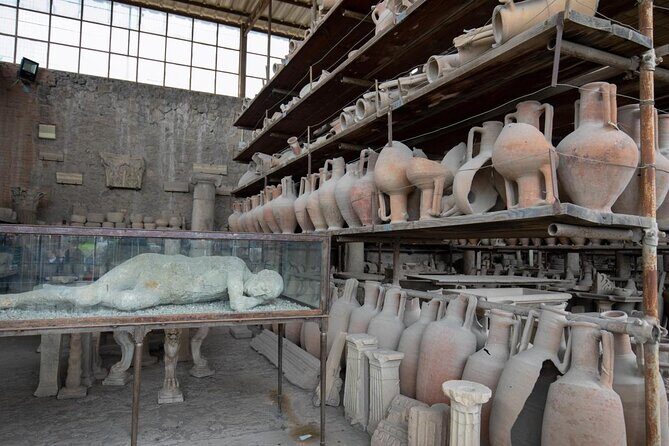
Pompeii is famous, but it can also feel chaotic on your first visit. Signs are limited, many buildings look similar from the outside, and there’s a lot of “wait… what am I looking at?” unless someone translates the place for you.
That’s where this tour earns its value. You’re paying for two things at once: the express entrance ticket and the guide’s time. The result is simple—less waiting at the entrance, and more understanding once you’re inside.
I also like that the tour is built around everyday structures, not only postcard scenes. You’ll hear about public life in the Forum, food and shopping in the Macellum, daily routine spaces in the baths, and the way elite households lived through mosaics and painted rooms.
Other skip-the-line Pompeii tours in Pompeii


Where to Meet: The Circumvesuviana Station Spot You Must Find
The meeting point is not the main gate. It’s inside the Circumvesuviana station (Pompei Scavi Villa dei Misteri), on the first floor, at Via Villa dei Misteri 1.
Here’s how to avoid a common headache:
- Go to the Circumvesuviana station building for Pompei Scavi Villa dei Misteri (it’s the red station building).
- Look for the office named Tempio Travel / Pompeii Tickets.
- Plan to arrive 15 minutes early, because that’s when you’ll be in the right place before the group funnels toward the entrance at Porta Marina Superiore (about 100 meters away).
Some guides and past guests have pointed out that Google maps can send you to the wrong “Villa dei Misteri” area. Your best move is to aim for the train station first, then walk toward the entrance.
Foro di Pompeii: The Center That Explained Everything Else
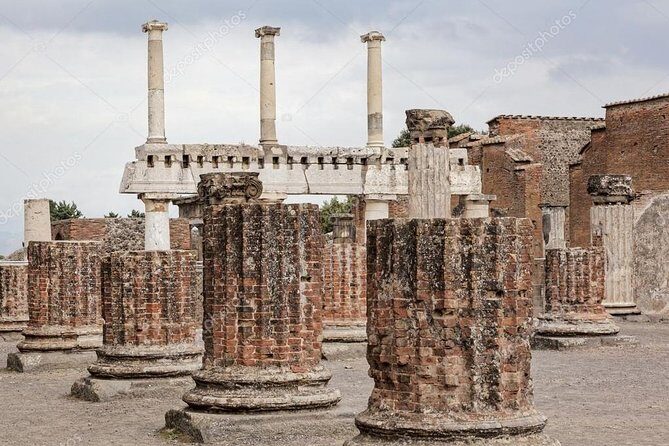
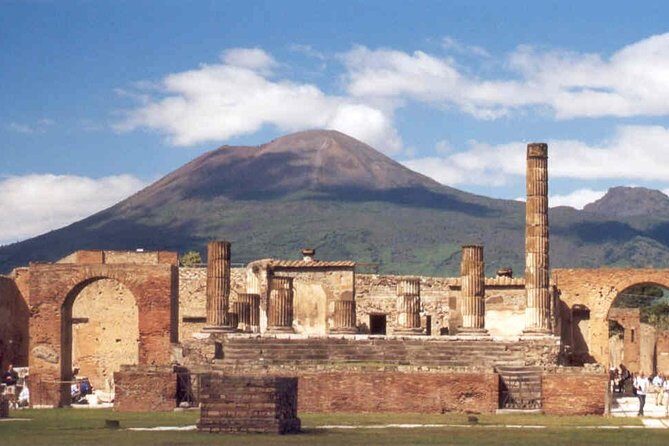
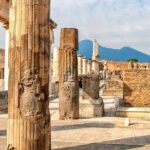
Your first major stop is the Foro di Pompei. This is the city’s main square—where political decisions happened, where religious life played out, and where commerce pulsed.
The best part of starting here is how it gives you a framework. Once you understand the Forum as the “center of gravity,” later stops make more sense. Even when you’re only walking between buildings, your guide can connect the dots: who used these spaces, what they needed from them, and why their locations mattered.
At this stage, the guided approach really shines because Pompeii’s layout feels big until you’re shown the logic. You’re not just collecting photos—you’re learning the map.
Macellum and the Pompeii Food Scene: More Than Just Ruins
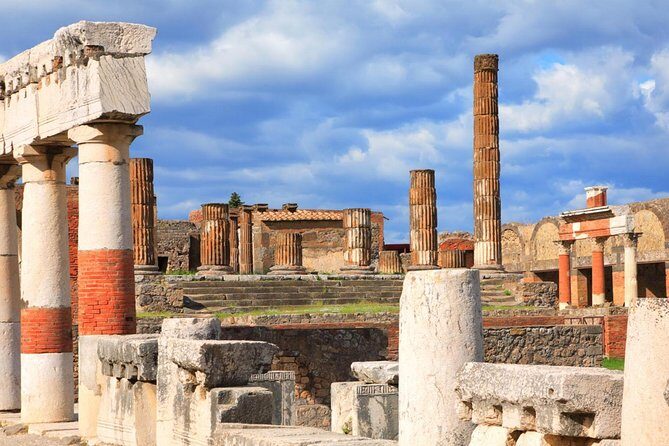
Next comes the Macellum, located on the Forum. Think of it as a food market area—especially associated with meat and fish sales. It’s one of those places where ancient life becomes oddly familiar, because people still shop, still eat, still gossip while waiting.
This stop includes painted wall scenes that show food choices from the 1st century AD. That detail is what makes the Macellum more than a quick glance. Your brain starts matching products to daily habits, and Pompeii shifts from “ancient city” to “real city full of routines.”
There’s also a practical reason I like this portion of the tour: it’s a good indoor-to-outdoor pace change. You get a compact stop with strong payoff before the walk gets more spread out.
Terme del Foro: Baths With Sex, Water, and Marble Details
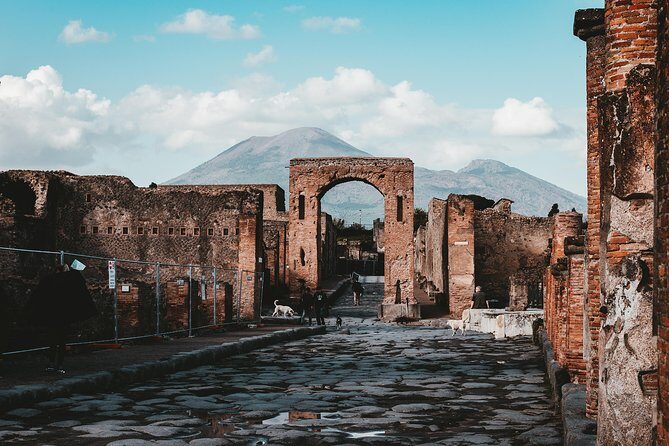
Behind the Temple of Jupiter, you’ll find the Terme del Foro (Foro Baths). This is a great stop for anyone who’s ever wondered how Romans managed hygiene, social time, and architecture all at once.
What I found especially useful here is the specificity:
- The bath complex covers about 410 square meters.
- There’s a male and a female section, each with independent entrances.
- Water came from the aqueduct of Serino, with a well available in case water was short.
- The tour highlights that you can still see original ceilings and stucco work.
- The calidarium has a marble tub, plus mosaic flooring.
Even if baths aren’t your thing, this stop is where you learn to spot how Roman design supported daily life. It’s not just “a room with steps.” It’s a system.
And it’s a good reminder that Pompeii wasn’t only temples and villas. It had public services too—busy places where people passed time.
Other guided tours in Pompeii




Casa del Fauno: Elite Pompeii and the Mosaic You’ll Want to See Twice
Then you move to the Casa del Fauno—one of Pompeii’s largest and most luxurious aristocratic homes. If you only had time for one “house” stop, this is a strong candidate because it gives scale and status.
The highlight is the Mosaic of Alexander. You’ll see a copy on site, while the original is preserved at MANN. That matters because it teaches you how museums and archaeology handle preservation: Pompeii shows you the location and story, while major collections protect the originals.
What you’ll likely appreciate here is the way the guide connects wealth to identity. In a city ruined overnight, these homes show what people valued and how they wanted guests to see them.
Casa dei Vettii: A Roman House With Erotic Frescoes and Names to Remember
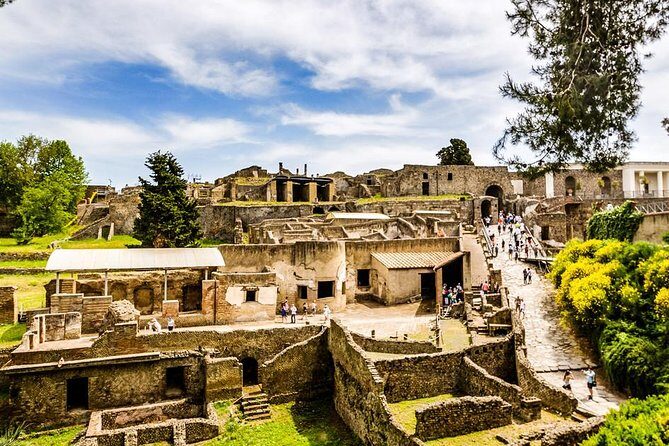
The tour then visits the Casa dei Vettii, another major domus (Roman house). This one has a strong narrative hook because it was buried during the eruption of Mount Vesuvius in 79 AD and later uncovered through archaeological digs.
This is one of the best stops on the walk if you want art + context. The name comes from the owners: Aulo Vettio Restituto and Aulo Vettio Conviva. Their identities aren’t just labels—they’re part of how the space is interpreted.
Inside, you’ll hear about a room with erotic paintings. The tour presents this in the context of how the household space worked in Pompeii, including the idea that the room may have been used in connection with a woman who lived there as part of the household arrangements. It’s the kind of stop that makes Pompeii feel less “romantic tragedy” and more “complicated human place.”
I also like that the tour pairs these private-house details with a broader sense of daily city life. You’re not left thinking, “Okay, rich people had art.” You’re shown how ordinary routines and social realities could coexist inside the same structures.
Via dell’Abbondanza and the Thermopolium Stop: The Ancient Takeout Window
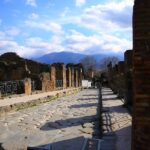
After the houses, you continue along Via dell’Abbondanza, the big connector street between major parts of the city. Your guide uses the route to frame what’s nearby, including areas such as the Terme Stabiane, the Theatres, the Tempio di Iside, and the Amphitheatre.
Even though you don’t tour every one of those spots in full, this street walk is valuable. It helps you understand Pompeii as a connected city instead of isolated “attractions.”
Then comes a classic crowd-pleaser: the Thermopolium Regio VI, Insula VIII, 8. The meaning is straightforward—literally a place where something hot is sold. Your guide explains it as the ancient version of quick, grab-and-go food.
This stop is short, but it’s memorable because the function is so clear. You get a window into how people ate without waiting for a full meal at home. The emotional tone of the site changes again here—from political and domestic to practical and everyday.
The 2-Hour Reality: What You Gain (and What You Don’t)
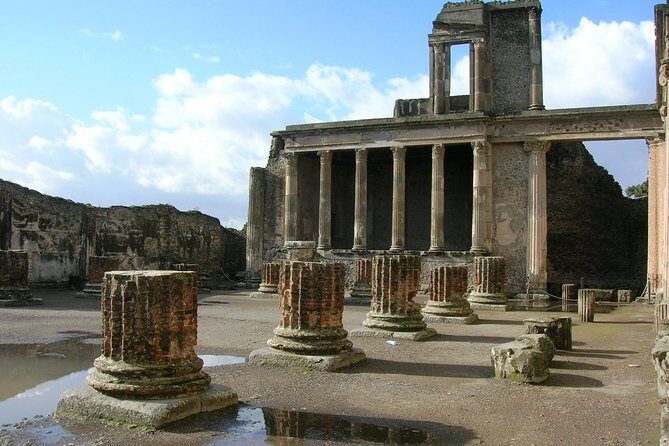
A tour like this is designed for people who want high impact in a limited time. That’s great in Pompeii, where the site is big and uneven, and where the best viewpoints are often spread out.
Still, there are two realities to expect:
- You’ll keep moving. This is not the style of tour where you wander freely for long stretches.
- The ground can be tough. One review specifically called out a steep hill to reach the site, and heat can also hit hard in summer. If you’re going in hot months, I’d plan on the basics—water and sun protection.
The upside is that you’ll finish with a stronger sense of the city. You’ll know what the Forum was for, what the market sold, why baths were split by sex, why mosaics mattered, and why a thermopolium was the quick-food answer.
Headsets and Group Size: Why the Tour Feels Easier Than DIY
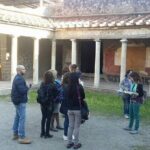
This tour caps at 35 travelers. For groups larger than 15, you’ll get headsets so you can hear the guide without craning your neck over other people.
That’s not a small detail. Pompeii can get loud—tour groups overlap, buses unload, and the site is open air. With headsets, you’re more likely to catch the stories that make each stop worthwhile.
And guide style matters. In past tours, names like Alfonso, Annaliza, and Eraldo have stood out for clear explanations and an ability to keep things lively without turning the place into a lecture.
Price and Value: Is $58.87 Fair for Pompeii?
At $58.87 per person for about 2 hours, you’re paying a fair middle-ground price between DIY entry and a full-day guided deep dive.
Here’s why it can feel like a smart deal:
- The price includes both admission and the guide.
- The express ticket handling can save time right at entry—valuable at popular times.
- The stop selection hits several “you’ll actually care” categories: public life (Forum), food market (Macellum), daily routine (baths), elite homes (two houses), and everyday eating (thermopolium).
Where value shifts for you is based on your style. If you love wandering slowly, you might feel the pace is too structured. If you want the highlights explained quickly and clearly, this is a strong use of a couple hours.
Who Should Book This Pompeii Skip-the-Line Tour?
This tour is especially good if:
- you’re short on time in Pompeii and want the main highlights with context
- you don’t want to guess your way through unmarked ruins
- you like structured walks where stops are picked for variety
It’s also a good fit for families with kids who can handle walking and listen along. The tour data says children must be accompanied by an adult, which is typical for Pompeii-day plans.
If you’re the type who needs long photo stops or deep on-site archaeology reading, you might prefer a longer guided option. But for many first-timers, this tour is the “get your bearings fast” pathway.
Should You Book It? My Straight Answer
Book it if you want Pompeii without the confusion. The combo of skip-the-line entry, a guide who can explain the Forum, markets, baths, and houses, and the smart inclusion of a thermopolium makes the visit feel like more than a box-checking exercise.
Skip it (or plan differently) if you know you’ll resent a strict pace, or if you’re very likely to get tripped up by meeting-point directions. Just treat the station meeting point like your anchor—arrive early, and you’ll glide into the experience.
If you finish early and want to extend your day, the guide can often point you toward what’s worth your extra time, especially if it’s your second visit—some guides have shared that kind of follow-up advice in past groups.
FAQ
What does the tour price include?
The price includes a professional guide, skip-the-line entrance tickets for the archaeological site, and headsets for listening when the group is over 15 people.
How long is the guided Pompeii visit?
The tour runs for about 2 hours (approx.).
Is this tour really skip-the-line?
Yes. The tour includes express entrance tickets for the archaeological site, meant to help you avoid the main entrance line.
Where exactly do I meet the guide?
Meet at Via Villa dei Misteri, 1, 80045 Pompei at the Circumvesuviana Pompei Scavi Villa dei Misteri station. You’ll be looking for Tempio Travel / Pompeii Tickets on the first floor, about 100 meters from the Porta Marina Superiore entrance.
Do I get headsets to hear the guide?
Yes. You’ll receive headsets if the group has more than 15 people.
Is the tour suitable for children?
Children are allowed, but they must be accompanied by an adult.
What’s the maximum group size?
The tour has a maximum of 35 travelers.