REVIEW · ROME
Semi-Private Day Trip to Pompeii and Naples from Rome
Book on Viator →Operated by ROMAETRAVEL · Bookable on Viator
One day, two eras of Italy. You’ll get hotel pickup within Rome’s Aurelian walls for a small group of 14, then ride out for UNESCO Amalfi Coast views before heading to Pompeii. At Pompeii, you’re covered with an official guide plus the Pompeii ticket included, so you spend your time on the ruins, not ticket lines.
The main drawback is the pace. Pompeii is about 3 hours, and Naples becomes a fast walking route with quick stops, so it’s not built for deep, slow exploration of every church or castle.
In This Review
- Key takeaways before you go
- A 12-hour run across Campania: what the clock feels like
- Getting picked up in Rome’s Aurelian walls and meeting your guide
- Amalfi Coast drive: scenery time, not shore-hopping
- Pompeii Archaeological Park: the Forum and amphitheater with an official guide
- Naples on foot: quick hits from Centro Storico to Spaccanapoli
- Piazza del Plebiscito and Royal power: where the city shows off
- Church stops and shopping streets: Gesù Nuovo, Via Toledo, and San Gregorio Armeno
- Castles and viewpoints in Naples: Castel Sant’Elmo, Maschio Angioino, and Castel dell’Ovo
- What’s not included that you should plan for (especially lunch)
- Price and logistics: does $401.24 make sense?
- Who this day trip suits best
- Should you book this semi-private Pompeii and Naples day trip?
- FAQ
- How long is the Pompeii and Naples day trip?
- What time does the tour start?
- Where does the tour start and end?
- Is hotel pick-up available in Rome?
- How big is the group?
- Is Pompeii admission included?
- Is lunch included?
- Are Naples stops guided?
- What should I wear?
Key takeaways before you go
- Small group of up to 14 with a semi-private feel
- Official guide and Pompeii ticket included, focused on the big sights
- Amalfi Coast drive for UNESCO-class scenery without hiking
- Naples time is tight, so treat it as orientation plus highlights
- Long day starting at 7:30 am, built for early arrivals and smooth connections
A 12-hour run across Campania: what the clock feels like

This tour runs about 12 hours, starting at 7:30 am and ending back at the meeting point. That means you’ll be up early, and you’ll likely feel it by mid-afternoon. The payoff is that you see Pompeii and a broad chunk of Naples in one shot.
The schedule is also designed around movement. Pompeii gets the concentrated attention (guided), while Naples is more of a guided walk-and-look route with short stop windows. If you like to linger, you’ll need to be ready to come back another day.
If you're still narrowing it down, here are other tours in Rome we've reviewed.



Getting picked up in Rome’s Aurelian walls and meeting your guide

If your hotel is inside the Aurelian walls, you can use hotel pick-up and drop-off. If not, you’ll meet at the start point: P.za della Repubblica, 48, 00184 Roma RM, Italy. A day before the trip, you should receive a mail with the exact pickup time.
In at least one recent experience, the meeting point included a point person named Piero, and when language gaps came up, a translation app helped keep things moving. That’s a good reminder: you don’t need perfect Italian, but having basic phrases can still make your day smoother.
Also note the group transport is typically a small vehicle (and a review mentioned limited leg room in the back). If you’re tall or prone to back stiffness, consider wearing supportive shoes and bringing a little “comfort kit” like a scarf for temperature swings.
Amalfi Coast drive: scenery time, not shore-hopping
Even though the tour doesn’t describe a stop-by-stop Amalfi plan, it does promise a drive along the UNESCO-listed Amalfi Coast. That’s valuable because it gives you the visual payoff without spending half a day on ferries or waiting for transfers.
Think of this portion as your buffer for the big emotional hit of Pompeii later. You’re getting coastline views and travel rhythm before the ruins. It’s also one reason the day feels packed: the drive is part of the itinerary, not just a commute.
Pompeii Archaeological Park: the Forum and amphitheater with an official guide
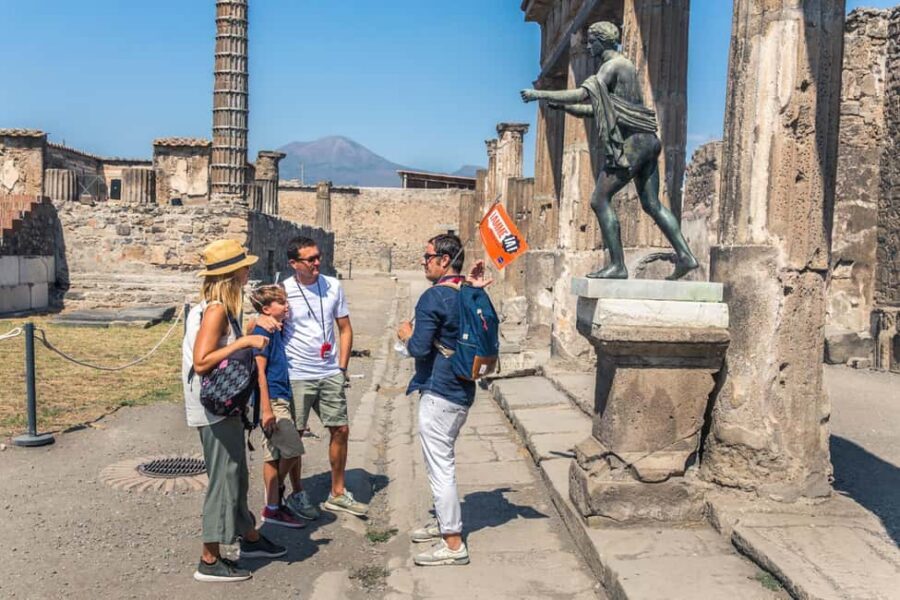
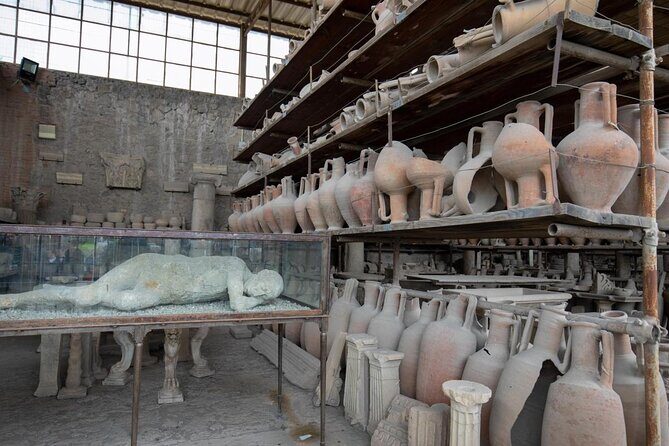
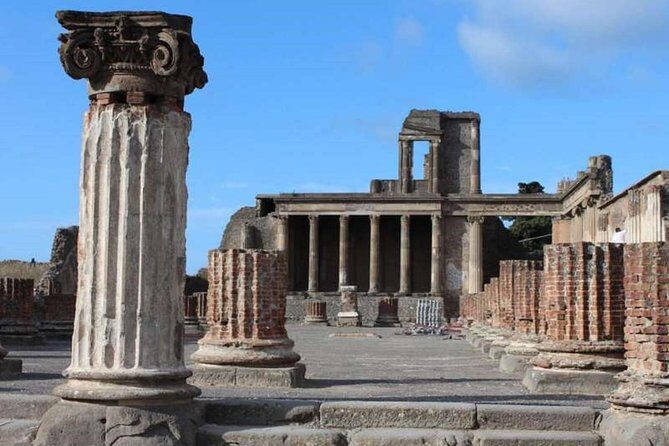
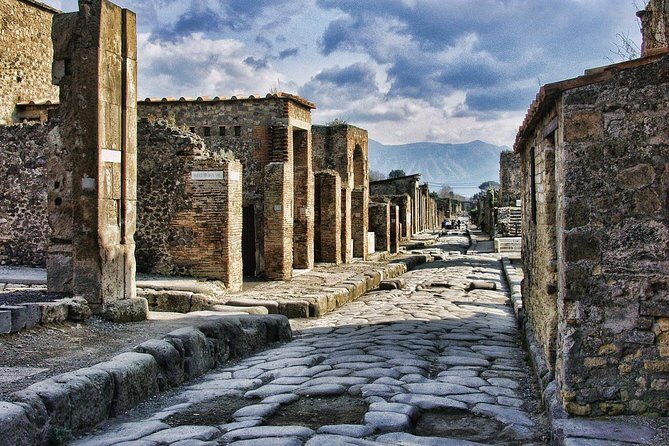
Pompeii is the heart of this tour. You get 3 hours at the Pompeii Archaeological Park, and admission is included. Most importantly, you’re not wandering alone: you’ll have an official guide to help you see what matters.
That official guide focus is exactly why this is worth considering if you’re new to Pompeii. With a good walkthrough, you can connect the dots fast: the layout of daily life, the feel of public spaces, and the reason people still react to what’s preserved. The overview promises a route that includes the Forum and time where you can stand in awe before the world’s oldest surviving Roman amphitheater.
A practical way to use the 3 hours: don’t try to cover everything. With Pompeii, that’s how you end up tired and underwhelmed. Instead, let your guide steer you toward the big-picture buildings and the most readable sections of the city.
Also, plan your body for the terrain. Pompeii involves a lot of walking on uneven ground, and 3 hours can feel longer than you expect once you stop for photos and explanations. Comfortable shoes are non-negotiable.
Naples on foot: quick hits from Centro Storico to Spaccanapoli

After Pompeii, Naples shifts from guided ruins to guided walking. The Naples stops are short (about 10 minutes each), so your goal isn’t to “see everything.” Your goal is to get the main landmarks into your mental map, then decide what deserves a return visit.
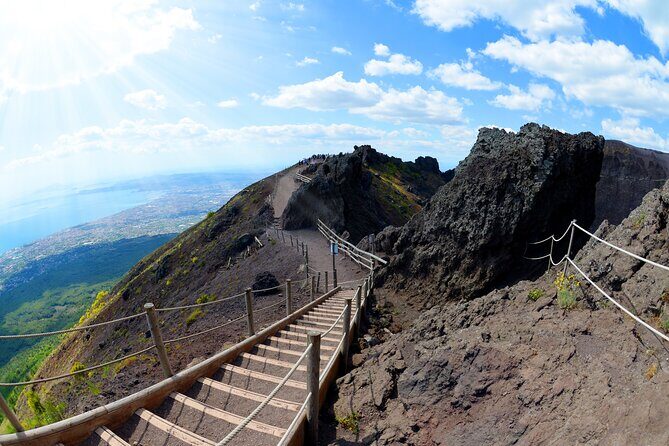
You start with Centro Storico, where you’ll get a sense of Naples itself: the cathedral area (Duomo di San Gennaro), plus major landmarks like the lavish Royal Palace and Castel Nuovo nearby. The tour also points out Vesuvius as the nearby active volcano connected to Pompeii’s story, so the geography feels less abstract.
Next is Spaccanapoli, the straight, narrow street through the historic center. The name—literally Naples splitter—matters because it helps you understand how this city is organized visually: long, linear streets that make the center easy to navigate on foot once you know the spine.
In Naples, this kind of orientation is gold. Even if you only catch fragments, you’ll leave knowing where you are and how the city moves. That makes your next hours in Naples much more confident.






Piazza del Plebiscito and Royal power: where the city shows off
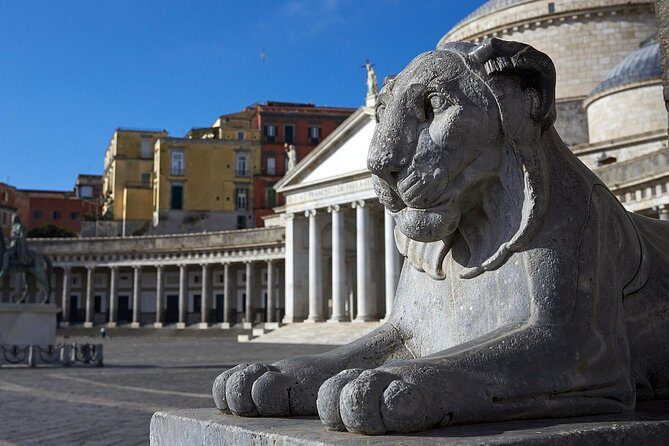
Piazza del Plebiscito is a set-piece square, close to the bay, and it anchors the tour’s “Naples grandeur” moment. It’s named for the plebiscite on October 2, 1860 that brought Naples into the unified Kingdom of Italy under the House of Savoy.
What you’ll notice is the geometry: the Royal Palace lines one side, while the church of San Francesco di Paola with its colonnades spreads along the opposite side. Even in a quick stop, it’s the kind of place that makes you stop walking for a minute just to take in scale.
This is also where your Naples route starts to feel like two different Napelses. There’s the street-level Naples of narrow lanes and everyday motion, and then there’s this ceremonial space with formal architecture.
Church stops and shopping streets: Gesù Nuovo, Via Toledo, and San Gregorio Armeno
One of the more interesting Naples stops is Chiesa del Gesu Nuovo. The tour frames it as a church and a square, connected to Spanish-era expansion in the early 1500s. Even if you don’t go inside, the square is part of how the area developed outward.
Then you get the walking pulse of the city on Via Toledo. It’s described as a major shopping thoroughfare, about 1.2 km long, running from Piazza Dante to Piazza Trieste e Trento near Piazza del Plebiscito. This is exactly the kind of street where Naples feels like Naples, not just a collection of monuments.
And if you travel during the Christmas season, don’t ignore Via San Gregorio Armeno. The tour calls it a major Baroque complex and highlights the nativity tradition shops. Even outside peak season, this is one of those streets that gives you cultural texture in a way that major museums often can’t.
Castles and viewpoints in Naples: Castel Sant’Elmo, Maschio Angioino, and Castel dell’Ovo

Naples doesn’t just do grand squares and shopping streets. It also does fortresses.
You’ll visit Castel Sant’Elmo, a medieval hilltop fortress that currently serves as a museum and exhibition space, near Certosa di San Martino. A stop like this is less about one specific detail and more about getting the city’s “shape” in your mind—how Naples rises and how views connect different neighborhoods.
Next is Castel Nuovo – Maschio Angioino. It sits by Piazza Municipio and the city hall area (Palazzo San Giacomo). The tour notes it began in 1279 and that it served as a royal seat until 1815 for kings of Naples, Aragon, and Spain.
You’ll also see Castel dell’Ovo, a seaside castle on the former island of Megaride (now a peninsula). The tour includes a legend connection to Virgil, which adds a little story flavor to what could otherwise feel like another stop on a long list.
Finally, there’s the Duomo di Napoli (Cattedrale di San Gennaro). It’s the main church of Naples and the seat of the Archbishop, known for Saint Januarius. The tour marks this as a free admission stop, so if you want to spend a little extra time and you have the energy, this is one of the places where it can pay off.
What’s not included that you should plan for (especially lunch)
Lunch isn’t included. The route also mentions a tour guide for Naples as not included, which matters because Naples time is short. You’ll likely get guidance and commentary during the walk, but you won’t have a full, sit-down “expert lecture” style Naples experience.
A review also mentioned lunch in Naples was sumptuous, but your cost and exact lunch choice are still yours. Bring cash or a card you’re comfortable using, and treat lunch as part of your timing strategy.
Also bring water if you can. You’ll be moving through several neighborhoods across the day, and once you’re on the road and in Pompeii, it’s not the moment to realize you’re thirsty.
Price and logistics: does $401.24 make sense?
At $401.24 per person for a full day, this isn’t a budget option. Still, it includes several expensive elements that add up quickly: transportation, hotel pick-up and drop-off (inside the Aurelian walls), the official Pompeii guide, and the Pompeii ticket.
So the value depends on what you would otherwise pay to assemble this day on your own. If you’d have to buy a Pompeii ticket, line up transport, and hire a guide to make Pompeii readable, then the price starts to look more reasonable.
But if you’re the kind of traveler who wants Naples to be slow and deep, you might feel the cost and then wish there were more time to enter places like Castel Sant’Elmo or Palazzo Reale. Those items are listed as “not included” for admission, so you’ll either skip inside stops or pay extra on the day if time allows.
There’s also the vehicle comfort factor. A review mentioned a small SUV and back seat legroom that made the ride uncomfortable for a long trip. If you’re sensitive to cramped seating, it’s worth thinking about before you book.
Who this day trip suits best
This tour is a strong match if you want a lot of “first views” in one day. You’re getting Pompeii with real guidance, plus an organized Naples walking route that hits major squares and streets like Spaccanapoli, Via Toledo, and San Gregorio Armeno.
It also suits you if you like the safety net of a planned itinerary. The small group size (max 14) helps you move as a unit without feeling lost in a crowd.
If you prefer quiet museums, long cathedral visits, or extra time inside specific buildings, you may find Naples too fast. In that case, consider using this tour as your Pompeii day, then plan a separate Naples day later.
Should you book this semi-private Pompeii and Naples day trip?
I’d book it if you want Pompeii to be the centerpiece and you want a guided, structured Naples overview to build your bearings. The biggest wins here are Pompeii with an official guide and included Pompeii admission, plus the convenience of hotel pick-up within the Aurelian walls and a small-group format.
I wouldn’t book it if you hate long days, you need lots of seating comfort, or you want Naples to feel unrushed with plenty of time to enter museums and churches. This is a “see a lot, decide what to return for” itinerary.
If your priority list is Pompeii first, Naples second, and you’re okay with quick stops, then this is a smart way to use one day.
FAQ
How long is the Pompeii and Naples day trip?
It lasts about 12 hours.
What time does the tour start?
The start time is 7:30 am.
Where does the tour start and end?
It starts at P.za della Repubblica, 48, 00184 Roma RM, Italy, and ends back at the meeting point.
Is hotel pick-up available in Rome?
Yes, pick-up and drop-off are offered for hotels inside the Aurelian walls. If your hotel is outside that area, you’ll meet at the meeting point.
How big is the group?
The tour is limited to a maximum of 14 travelers, with a semi-private feel.
Is Pompeii admission included?
Yes. Pompeii Archaeological Park admission is included, and the tour includes the ruins ticket.
Is lunch included?
No, lunch is not included.
Are Naples stops guided?
Pompeii has an official guide included. The Naples portion lists a tour guide in Naples as not included, though you do have a guided route through multiple Naples sights.
What should I wear?
Wear comfortable shoes, since you’ll do a lot of walking.