REVIEW · ARCHAEOLOGICAL SITE OF HERCULANEUM
2-Hour Private Tour of the Ruins of Herculaneum
Book on GetYourGuide →Operated by Leisure Italy · Bookable on GetYourGuide
Herculaneum lets you walk through a Roman town that froze in time. You’ll get a private, expert-led look at how daily life looked before the 79 AD eruption sealed it under ash. What I like most is the feeling of seeing real spaces, not just “ruins from far away.”
Two stops I really value are the mosaics and frescoes—the House of Neptune and Amphitrite, plus the Council Hall of the Augustali with scenes connected to Hercules. You also get the rare chance to see how the site is interpreted in layers, including the Big Gym area and the volcanic evidence that archaeologists work from every day.
One drawback to think about: two hours is tight for a site this rich, and it can run a bit under 2 hours. It’s still enough to hit the major highlights, but if you like slow wandering and long stops for photos, you’ll want to plan your expectations.
In This Review
- Key things to know before you go
- Herculaneum feels different from Pompeii
- Down into the archaeological hole: 75 feet of preserved town
- Grande Palestra (Big Gym): where the eruption meets daily life
- House of the Albergo garden: quince apple trees and carbonized roots
- Council Hall of the Augustali: frescoes and Hercules imagery
- House of Neptune and Amphitrite mosaics (plus carbonized containers)
- The Roman spa area: hot rooms, cold tubs, and mosaic floors
- Villa dei Cervi: the luxury finish with mosaics, frescoes, and statues
- Price and value for a $167.66 private tour
- Best timing: how to pair Herculaneum with Pompeii
- What to wear and the one practical limitation
- Who this private tour suits best
- Should you book this 2-hour private tour?
- FAQ
- How long is the tour?
- Is this tour private?
- What languages are available?
- What’s included in the price?
- Where do we meet the guide?
- Do we skip the ticket line?
- What should I bring?
- Is it wheelchair accessible?
Key things to know before you go
- Two hours, private guide, major highlights only: the route is built to cover the essential rooms without turning into a marathon.
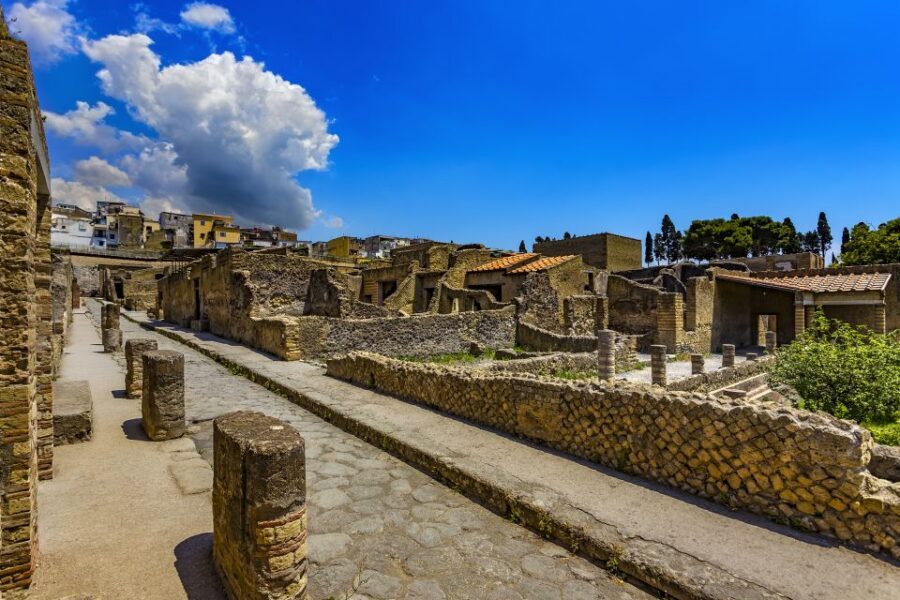
- 75 feet down changes the whole feel: you’ll tour an “archaeological hole,” where the scale of preservation is part of the story.
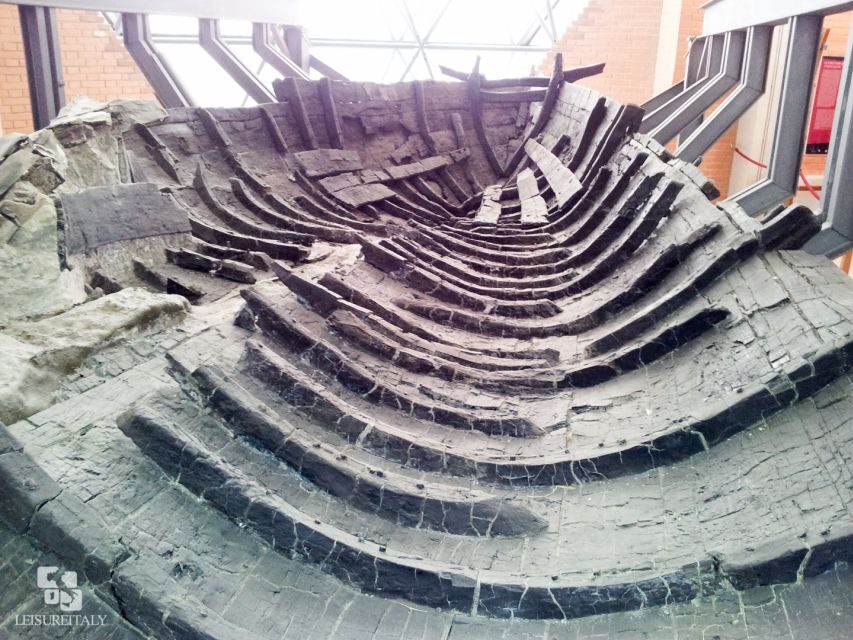
- Skeleton finds at the marina area: the excavation evidence includes human remains (and a boat displayed on weekends).
- Quince apple trees at the House of the Albergo: the garden has been replanted using evidence from carbonized roots.
- From mosaics to a Roman spa: you’ll move through houses, public spaces, and bathing areas with preserved floorwork.
Herculaneum feels different from Pompeii
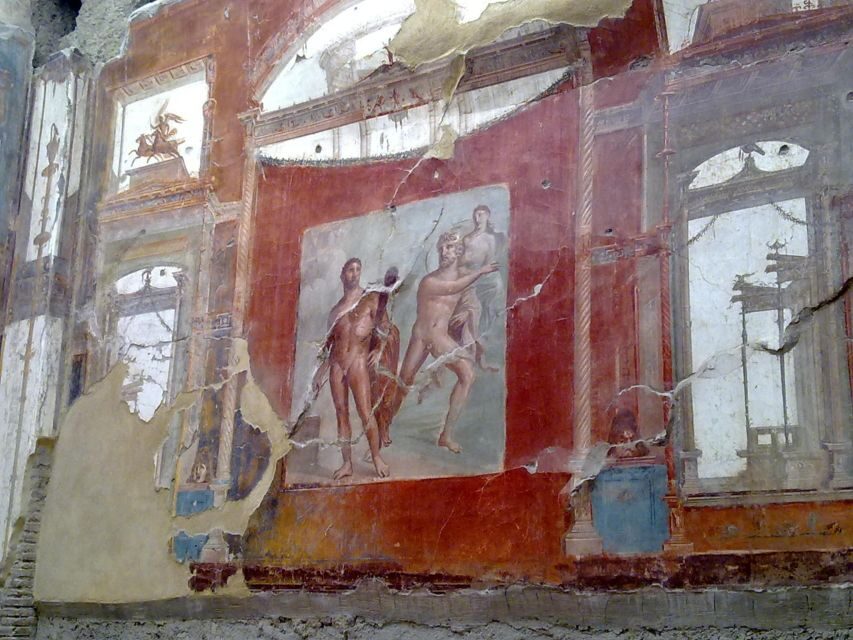
Herculaneum is often called the smaller sister of Pompeii, but don’t think smaller means less impressive. Here, the eruption of August 24, 79 AD didn’t just bury buildings—it preserved details in a way that makes rooms feel eerily usable. You’re looking at a town that stayed locked away until the 1700s, when rediscovery shocked the world.
If you’re comparing sites, this is a great partner for Pompeii. I like doing them back to back: Pompeii gives you scale and drama, while Herculaneum gives you intimacy—rooms, floors, and everyday settings. And because the tour is private, you can ask your guide to point out the differences as you go.
If you're still narrowing it down, here are other tours in Archaeological Site Of Herculaneum we've reviewed.
Down into the archaeological hole: 75 feet of preserved town
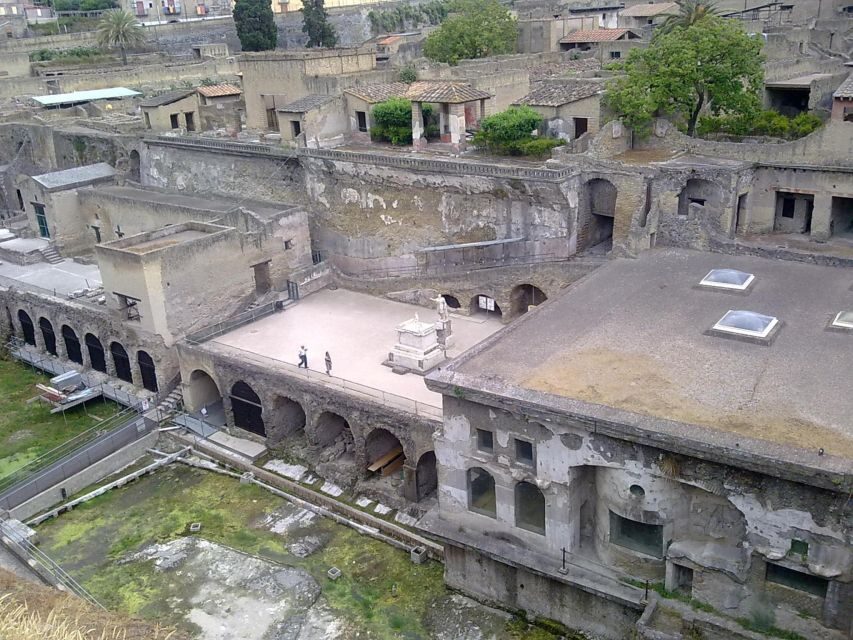
A big part of why Herculaneum hits hard is the setting. The ancient city sits at the bottom of an archaeological excavation hole, about 75 feet deep. That vertical element is more than a detail. It changes how you perceive the ruins because you’re moving through the town’s real layout while staying surrounded by what the eruption left behind.
This is also where the tour’s “expert lens” matters. With a guide, you’re not just reading signs. You’re getting the why behind what you see—how preservation conditions shaped what’s visible now, and what archaeologists focus on as they uncover more.
Grande Palestra (Big Gym): where the eruption meets daily life
The Grande Palestra, often described as the Big Gym, is a memorable early stop because it connects big public life to the evidence of the volcano. Even if you’re not a sports person, the Roman gym culture was serious business: training, socializing, and health routines all lived here.
This stop also helps you “think like an archaeologist” for a moment. You’ll see volcanic evidence in a way that makes the disaster feel physical, not abstract. It’s the kind of scene where a good guide can turn scattered facts into a clear story about how the town worked.
House of the Albergo garden: quince apple trees and carbonized roots
One of my favorite details on this tour is the garden at the House of the Albergo. You’ll see quince apple trees replanted after evidence of ancient fruit-tree roots was found carbonized beneath the ash. That’s a rare link between archaeology and living plants you can still recognize today.
In practical terms, this stop gives your brain a break from pure “ruins mode.” You look at a garden space, then connect it to what survived, what was found, and what researchers tried to restore. It’s also a reminder that Herculaneum wasn’t only marble villas and formal halls. It had domestic life, food habits, and the small choices of everyday people.
Council Hall of the Augustali: frescoes and Hercules imagery
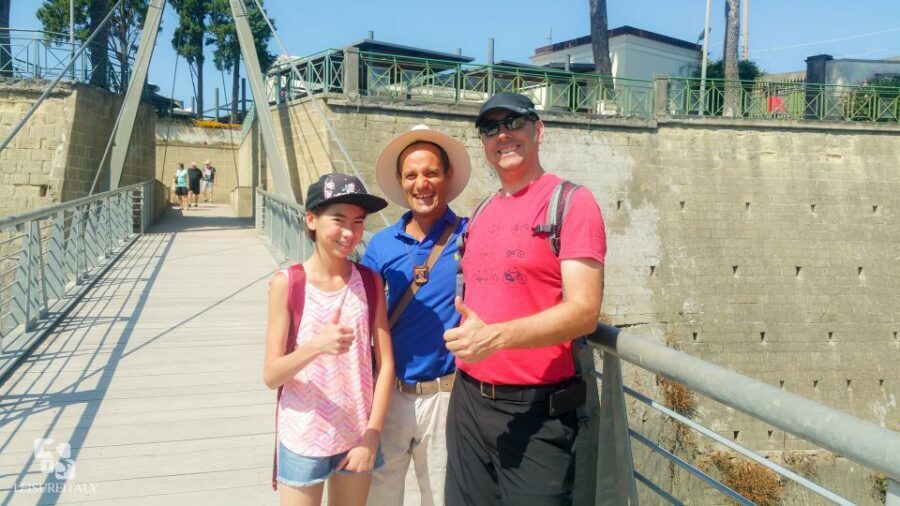
Next up is the Council Hall of the Augustali. Here, you get frescoes that bring Roman religion and civic identity into view. The tour includes a look at beautiful wall paintings connected to Hercules, which helps you place the site in the broader culture of the empire, not only in an archaeological timeline.
What I like about fresco-focused stops is that they make you slow down. You start looking for faces, figures, and patterns. Then your guide can help you understand what you’re seeing instead of letting it blur into “pretty art on a wall.”
House of Neptune and Amphitrite mosaics (plus carbonized containers)
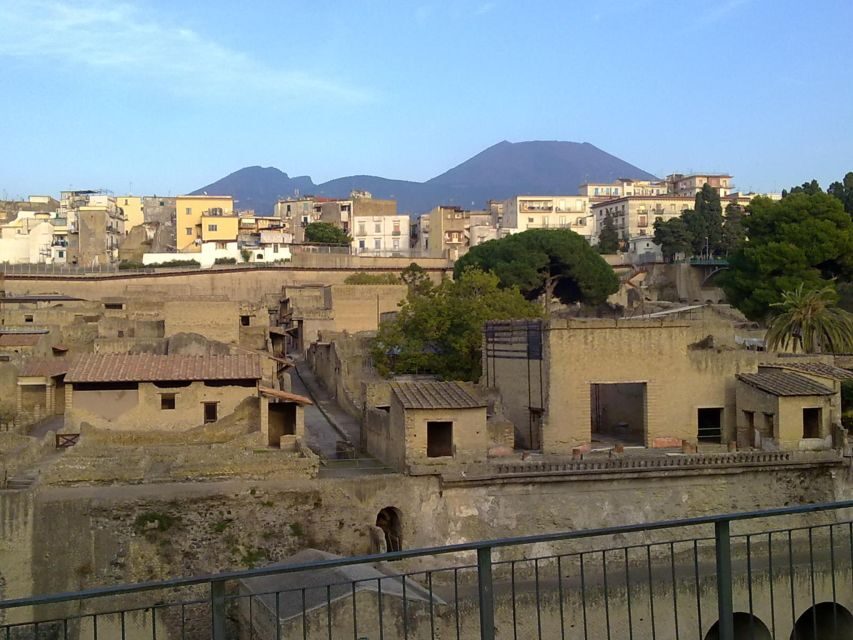
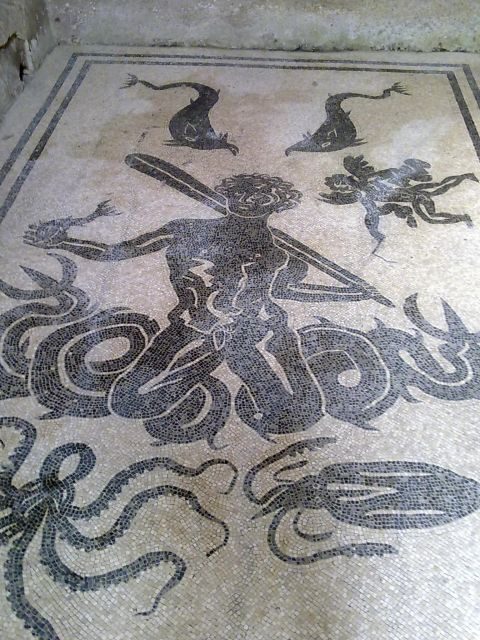
The mosaics in the House of Neptune and Amphitrite are a highlight because they show craftsmanship that’s hard to fully appreciate from a quick glance. These floor artworks don’t just decorate. They signal status and taste, and they also make the rooms feel more complete than you expect from a buried site.
Right next to that, the tour includes a neighboring space where you can see food and wine containers carbonized by the volcano, still hanging on the walls. That’s one of those moments that grabs your attention, because it’s not a museum display—it’s evidence of daily material life preserved in place.
If you care about how people lived, this is where the tour earns its ticket price. You’re connecting art to function: bathing rooms, eating habits, and the way households kept supplies.
The Roman spa area: hot rooms, cold tubs, and mosaic floors
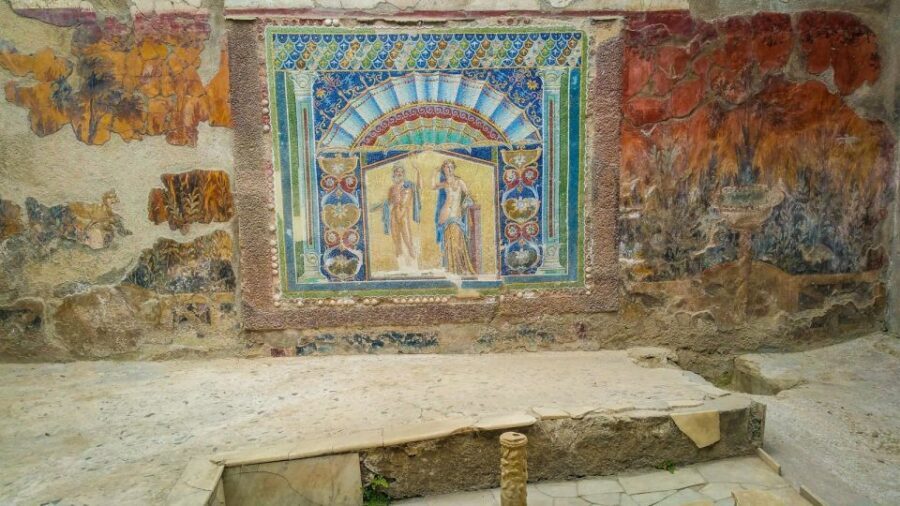
Then you’ll move to the ancient spa area, still covered with mosaics connected to Roman saunas, gyms, hot rooms, and cold tubs. The effect is surprisingly logical. A spa complex was a system, and seeing it as a connected series of spaces helps you understand what these people actually did for health and leisure.
This stop is also a good reminder that the eruption wasn’t only about “homes.” Herculaneum had infrastructure and public-style routines. Even if your only Roman experience is a museum floor, this one helps you map the idea onto real rooms.
Villa dei Cervi: the luxury finish with mosaics, frescoes, and statues
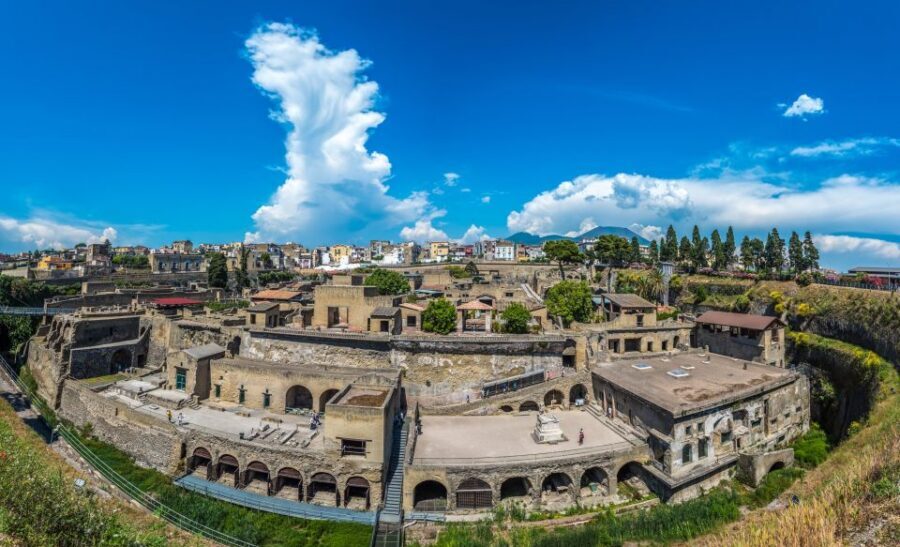
Your tour culminates with the most spectacular villa of Herculaneum at Villa dei Cervi. This is where you see luxury push to the front: mosaics, frescoes, and statues that communicate wealth and power in a way that’s easy to recognize even if you’re not fluent in Roman art history.
I like how this final stop changes the emotional tone of the tour. Earlier parts show the town’s public routines and household life. Villa dei Cervi brings the hierarchy into focus, making it clear that the residents were not all living the same way.
Price and value for a $167.66 private tour
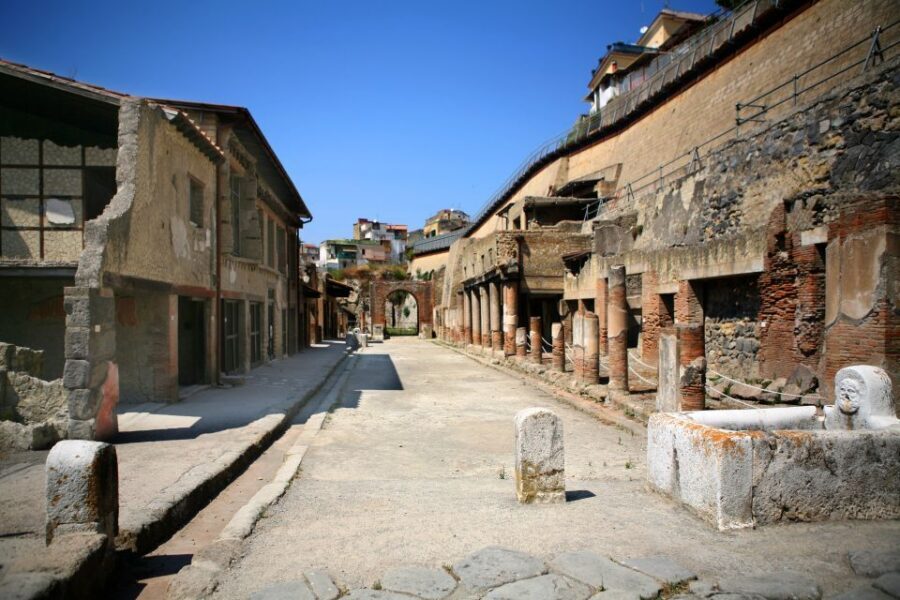
At $167.66 per person for about two hours, this is not a budget activity. But it can be good value depending on how you travel. A private guide means you’re not fighting for attention in a group, and you get to ask questions while you’re standing inside the rooms. Admission is included, and the tour is set up to skip the ticket line, which matters when you arrive and want to start walking fast.
Also, the site is compact enough that a private tour can actually feel efficient. You won’t waste time hunting down the key areas yourself. The trade-off is that time is limited, so you should treat the tour as a smart highlights route rather than a slow, full-day dig.
If your group is 2–3 people who really enjoy asking questions and want tailored pacing, the private format can feel worth it. If you like total independence and photo-style wandering, you might prefer to go without a guide and spend extra time inside the areas that grab you most.
Best timing: how to pair Herculaneum with Pompeii
If you’re doing both Herculaneum and Pompeii, I’d plan it like a comparison day. One strong strategy is doing Pompeii in the morning and Herculaneum later. That sequencing gives you a “before and after” feeling: Pompeii shows the bigger, broader spectacle, and Herculaneum then feels more personal and close-up.
This is also where a private guide helps. You can ask your guide to point out what’s similar and what’s genuinely different between the sites while you still have Pompeii fresh in your head.
What to wear and the one practical limitation
You’ll want comfortable shoes. The terrain inside an archaeological site can be uneven, and you’ll be walking more than you think. If you’re the type who hates discomfort, this tour punishes you lightly for bad footwear. Bring the good stuff.
Also note the restriction: no luggage or large bags. Plan to travel light. A small day bag is fine for essentials, but don’t assume you can bring big travel gear and just deal with it on-site.
Who this private tour suits best
This tour is a strong fit if you want:
- A guided explanation of mosaics, frescoes, and domestic Roman spaces
- A clear route that covers major highlights in a short time
- A private setting where you can ask questions while you’re looking at the actual rooms
It may be a less ideal match if you need wheelchair access or have mobility impairments, since it’s listed as not suitable for wheelchair users.
Should you book this 2-hour private tour?
I think you should book it if your goal is to understand Herculaneum quickly and well—especially if you care about art in context (mosaics and frescoes) and you want a guide who can connect the eruption evidence to daily life. The private format, the included admission, and the skip-the-line advantage make it feel smoother than DIY planning.
Skip it or rethink your approach if you’re aiming for a long, unhurried museum-style visit. Two hours is enough to hit the big scenes, but it can feel compressed. For the right pace and the right traveler, though, this is a smart way to experience why Herculaneum still feels so close to real life—even after 2,000 years.
FAQ
How long is the tour?
The tour lasts about 2 hours.
Is this tour private?
Yes. It’s a private group tour with your own live guide.
What languages are available?
The guide is available in Spanish, English, French, and Italian.
What’s included in the price?
Admission fee and a private guide are included.
Where do we meet the guide?
Meet at the only ticket office in Herculaneum Archaeological Park. The guide will hold your name on a sign.
Do we skip the ticket line?
Yes, the tour includes skipping the ticket line.
What should I bring?
Wear comfortable shoes. You should also avoid large items since luggage or large bags are not allowed.
Is it wheelchair accessible?
No. It is listed as not suitable for wheelchair users and people with mobility impairments.